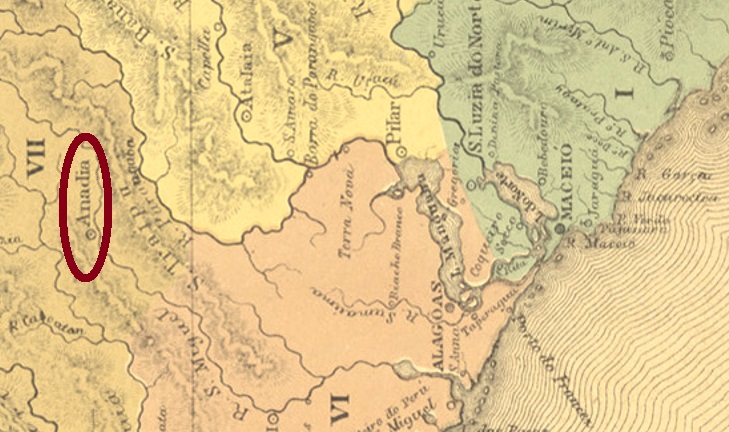
Another name: Campos do Arrozal de Inhauns
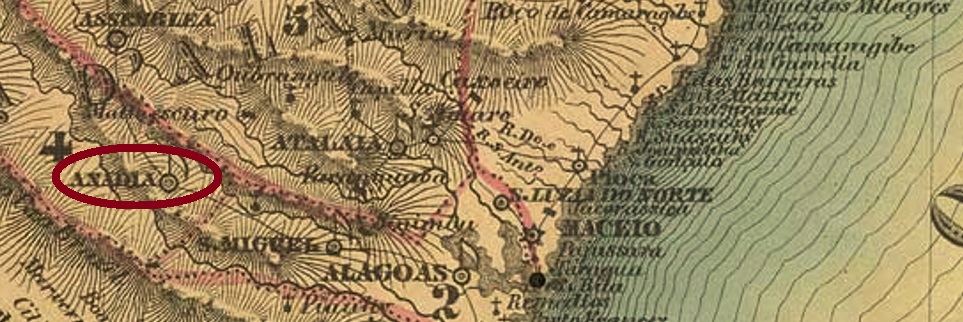
This settlement was originally called Campos do Arrozal de Inhauns (Rice Fields at Inhauns) and was located on the west bank of the river S. Miguel, 90 km west of the provincial capital Maceió. In July 1801, by Royal Decree (Alvará Real), it became Vila Nova de São João da Anadia, which has been a town since September 1895.
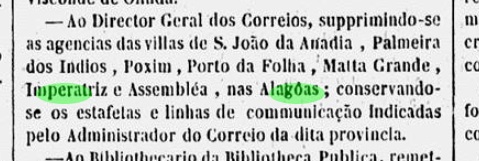
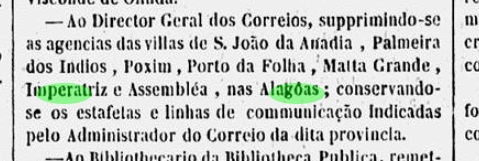
Three periods of operation were found for the local post office. For the first time, this agency was established in 1842, as stated in the Directory of Imperial Post Offices (Tabella das Agencias do Correio do Imperio, Rio de Janeiro, 1885) and confirmed by Aldo Cardoso in Contribuição para a História dos Correios de Alagoas (Maceió, 1969). The first period of operation ended in October 1847, as reported by the Rio de Janeiro press:
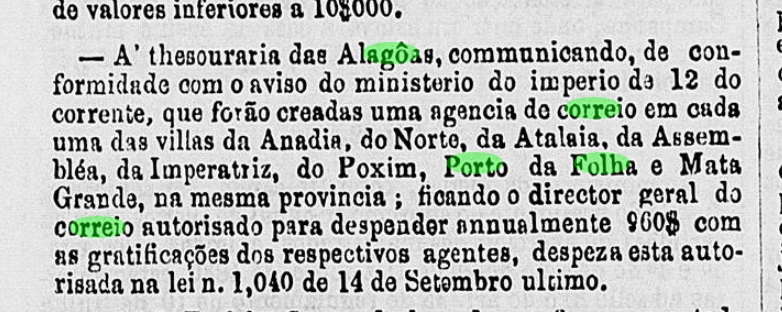
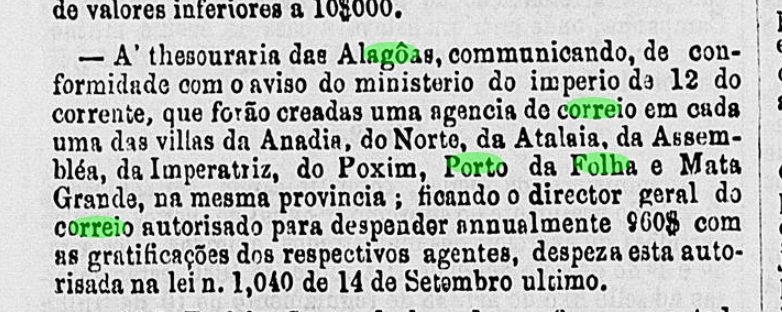
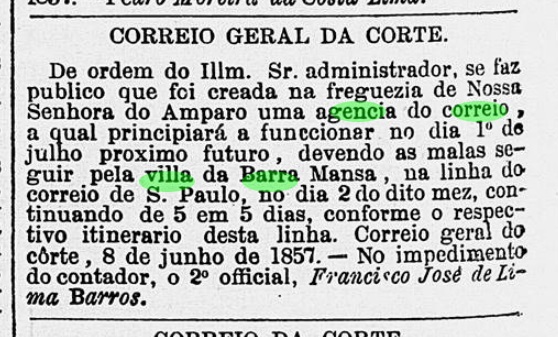
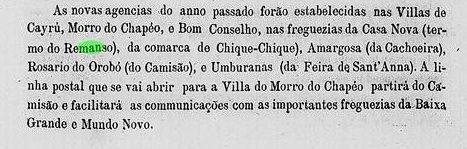
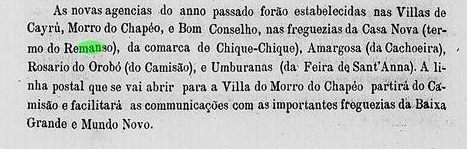
The second opening took place in November 1859, as reported by the capital’s official press:
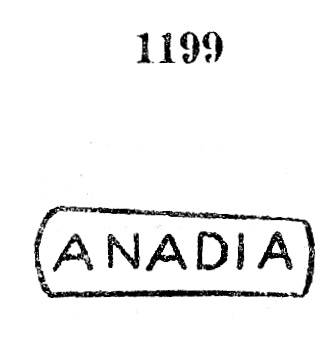
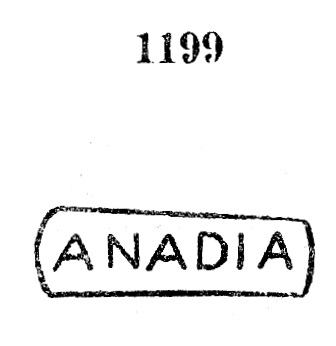
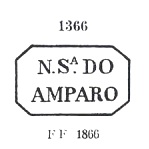
Finally, Nova Monteiro writes another opening date of February 1862 in Administrações e Agencias Postaes do Brasil Imperio (Brasil Filatelico/RJ, 1934-5; Reprint SPP 1994-1999). The oldest postmark so far is AAL-0015b, which was used from about 1878 and is already known by Paulo Ayres (Catálogo de Carimbos Brasil-Império, S. Paulo, 1937, 1942) under no. 1199:
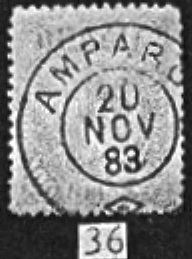
It was followed by AAL-0015c (image from the internet): a double circle with the inscription ANADIA on top and inner dates from ca. 1878 to 1886.
Anderer Name: Campos do Arrozal de Inhauns
Diese Siedlung hieß ursprünglich Campos do Arrozal de Inhauns (Reisfelder bei Inhauns) und lag am Westufer des Flusses S. Miguel, 90 km westlich der Provinzhauptstadt Maceió entfernt. Im Juli 1801 wurde daraus durch Königliche Verfügung (Alvará Real ) die Vila Nova de São João da Anadia, die seit September 1895 eine Stadt ist.
Es wurden drei Betriebsperioden fürs örtliche Postamt gefunden. Erstmals entstand 1842 diese Agentur, wie im Verzeichnis der kaiserlichen Postämter (Tabella das Agencias do Correio do Imperio, Rio de Janeiro, 1885) zu lesen ist und durch Aldo Cardoso in Contribuição para a História dos Correios de Alagoas (Maceió, 1969) bestätigt wurde. Die erste Betriebsperiode endete im Oktober 1847, wie die Presse aus Rio de Janeiro berichtete:
Die zweite Eröffnung fand im November 1859 statt, wie die hauptstädtische Amtspresse meldete:
Schließlich schreibt Nova Monteiro ein weiteres Eröffnungsdatum aus Februar 1862 in Administrações e Agencias Postaes do Brasil Imperio (Brasil Filatelico/RJ, 1934-5; Reprint SPP 1994-1999). Der bisher älteste Poststempel ist AAL-0015b, der ab ca. 1878 verwendet wurde und bereits durch Paulo Ayres (Catálogo de Carimbos Brasil-Império, S. Paulo, 1937, 1942) unter Nr. 1199 bekannt ist:
Ihm folgte AAL-0015c (Abb. aus dem Internet): ein Doppelkreis mit der Inschrift ANADIA oben und inneren Daten von ca. 1878 bis 1886.














 Carimbologia