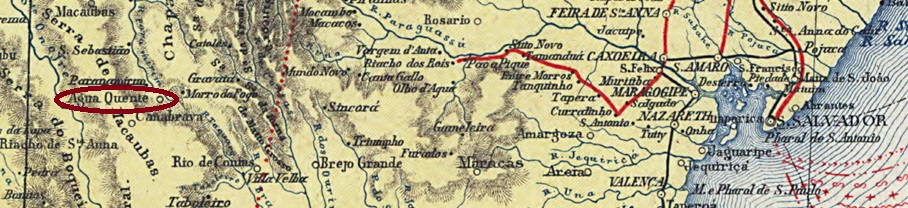
Other names: Arraial do Morro do Fogo, Erico Cardoso (1985)
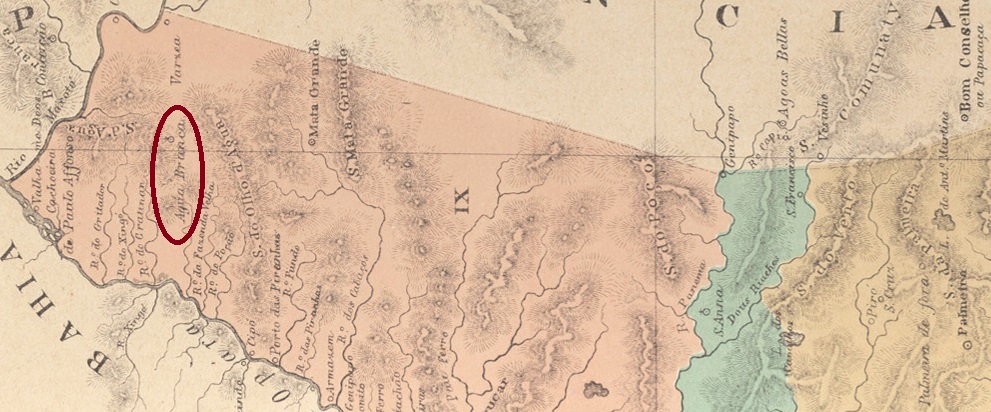
The history of the village begins in May 1843, with the foundation of the Freguesia of N. Sra. do Carmo do Morro do Fogo in the Município of Paramirim, which was located on the south bank of the Paramirim River, 560 km west of the provincial capital Salvador. Afterwards, the village received its autonomy three times: in September 1878 as Industrial Villa de Agua Quente, in May 1890 and in June 1962, as an independent Município. In between, Agua Quente became a district of Rio de Contas in June 1881 and a district of the Município of Paramirim in June 1909. Since July 1985, the municipality has had the name of its first mayor: Erico Cardoso (1918-1984).
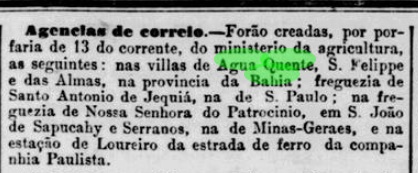
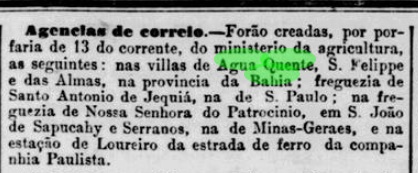
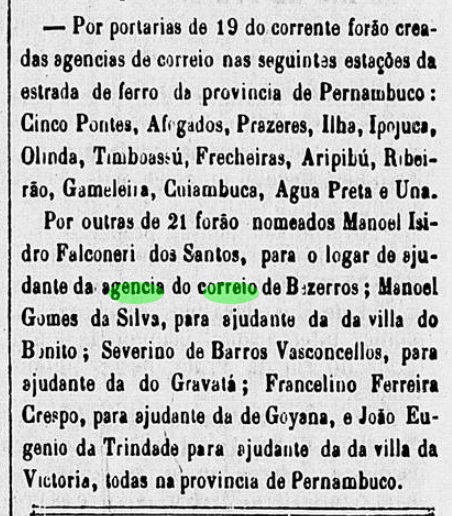
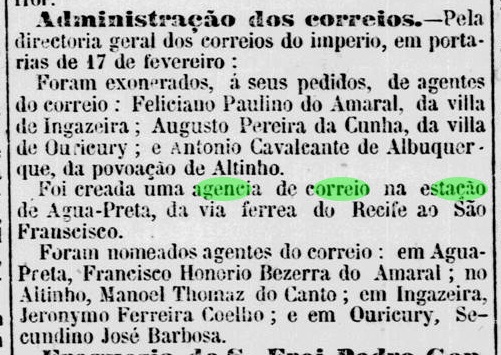
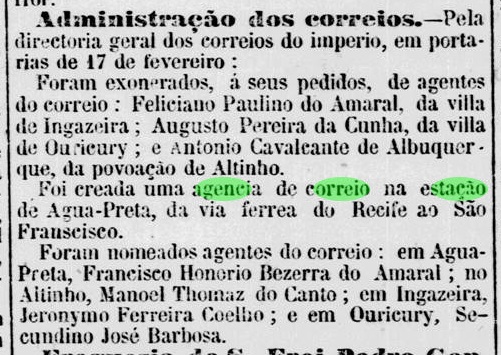
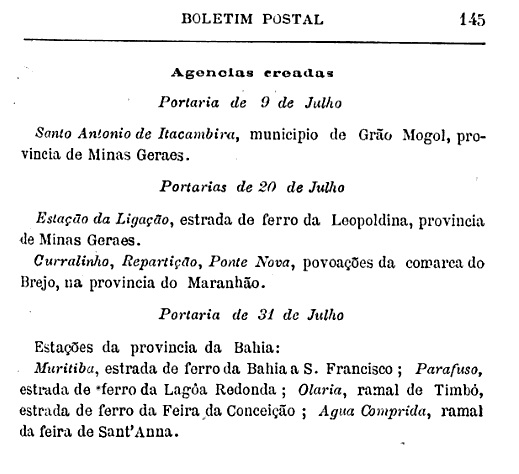
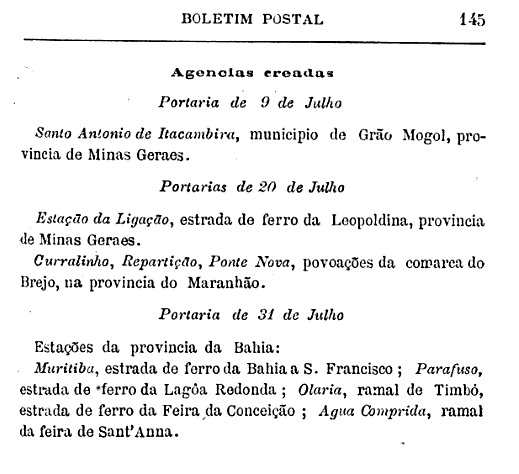
The local post office was established in August 1881, according to the Rio press:
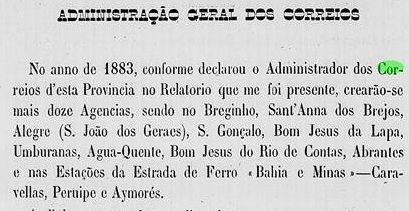
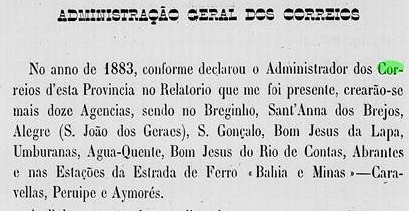
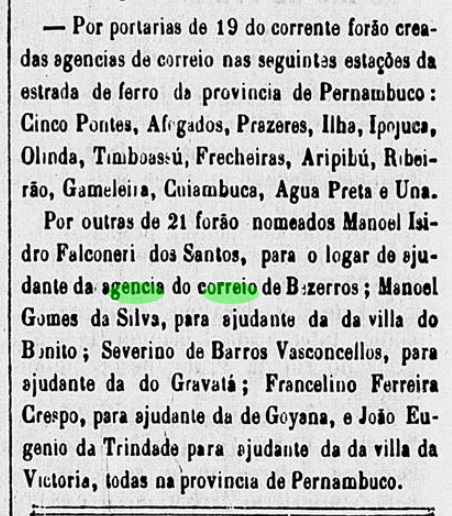
Another date of creation is probably 1883, according to the report of the provincial government council for the following year:
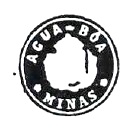
The first postmark is probably ABA-0030a (Coll. FM): a simple double circle with the above inscription AGUA QUENTE. The only specimen so far bears a date from 1890 in the centre.
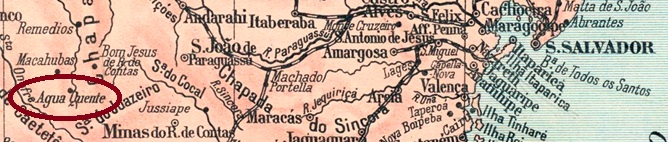
Andere Namen: Arraial do Morro do Fogo, Erico Cardoso (1985)
Die Ortsgeschichte fängt im Mai 1843 an, mit der Gründung der Freguesia von N. Sra. do Carmo do Morro do Fogo im Município von Paramirim, die am Südufer des Flusses Paramirim lag, 560 km westlich der Provinzhauptstadt Salvador entfernt. Danach erhielt der Ort seine Autonomie dreimal: im September 1878 als Industrial Villa de Agua Quente, im Mai 1890 und im Juni 1962, als eigenständiger Município. Zwischendurch wurde Agua Quente im Juni 1881 ein Distrikt von Rio de Contas und im Juni 1909 ein Distrikt vom Município von Paramirim. Seit Juli 1985 trägt die Gemeinde den Namen seines ersten Prefeito: Erico Cardoso (1918-1984).
Das örtliche Postamt wurde im August 1881 ins Leben gerufen, wie die Presse aus Rio mitteilt:
Ein weiterer Entstehungstermin wird vermutlich 1883 sein, laut Bericht des provinzialen Regierungsrats fürs folgende Jahr:
Der erste Poststempel ist vermutlich ABA-0030a (Samml. FM): ein schlichter Doppelkreis mit der obigen Inschrift AGUA QUENTE. Das bisher einzige Exemplar trägt ein Datum aus 1890 in der Mitte.



 Carimbologia