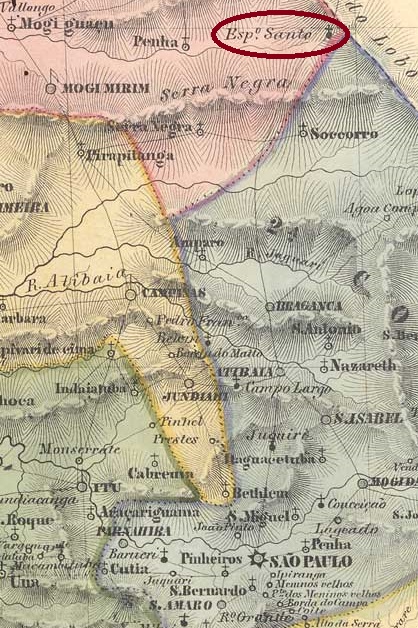
Villiers de l’Ile Adam: Carta (…) da Provincia de São Paulo, 1847
Other names: Pinhal
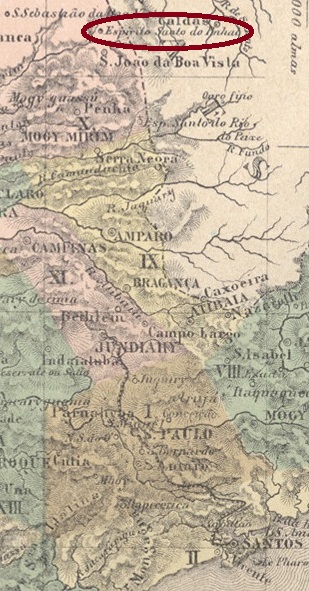
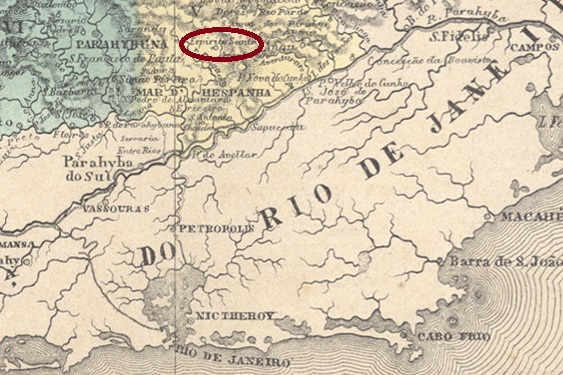
The Freguesia do Espirito Santo do Pinhal was founded in March 1860 and belonged to the Vila de Mogi-Mirim, 190 kilometres north of the provincial capital of São Paulo, close to the border with Minas Gerais. In April 1877 it became a Vila and in March 1883 a city. In November 1938, the município was renamed Pinhal, but in December 1974 the old place name returned.
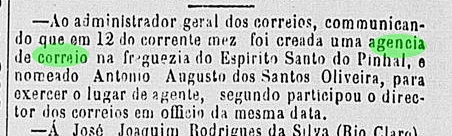
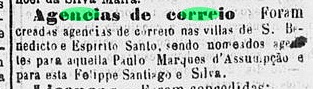
Nova Monteiro writes in Administrações e Agencias Postaes do Brasil Imperio (Brasil Filatelico/RJ, 1934-5; reprint SPP 1994-1999) that there had been a post office there since December 1867. This is confirmed by the regional press:
Correio Paulistano, 24/12/1867
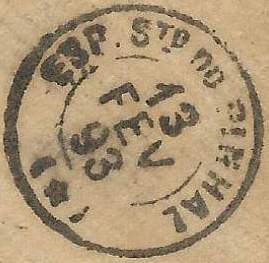
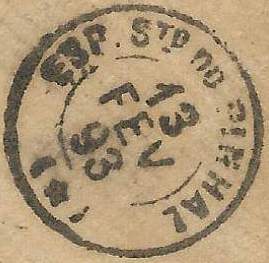
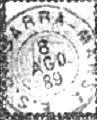
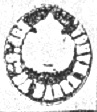
The only imperial postmark to date is probably not the oldest. The French type ESP-0485b (fig. José L. Fevereiro) only has dates from 1886 onwards:
ESP-0485b (JLF) 1886-1894Atlas do Imperio do Brasil, 1868
Die Freguesia do Espirito Santo do Pinhal wurde im März 1860 gegründet und gehörte zur Vila de Mogi-Mirim, 190 km nördlich der Provinzhauptstadt São Paulo, nahe der Grenze zu Minas Gerais. Im April 1877 wurde sie zur Vila und im März 1883 zur Stadt erhoben. Im November 1938 wurde das Município in Pinhal umbenannt, aber im Dezember 1974 kehrte der alte Ortsname zurück.
Nova Monteiro schreibt in Administrações e Agencias Postaes do Brasil Imperio (Brasil Filatelico/RJ, 1934-5; Nachdruck SPP 1994-1999), dass es dort seit Dezember 1867 ein Postamt gab. Dies wird von der regionalen Presse bestätigt:
Correio Paulistano, 24.12.1867
Der bisher einzige kaiserliche Poststempel ist wahrscheinlich nicht der älteste. Der französische Typ ESP-0485b (Abb. José L. Fevereiro) hat erst Daten ab 1886:
Other names: Espirito Santo do Guarará, Guarará (1891)
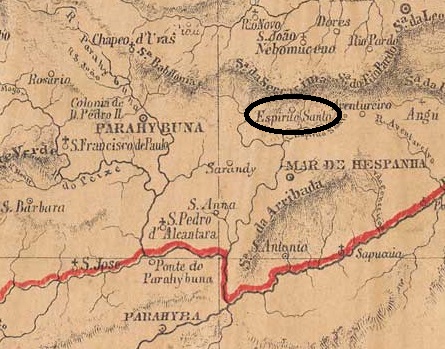
From 1839, Divino Espirito Santo was a distrito of the Vila de Barbacena, which lay 260 kilometres south of the provincial capital of Ouro Preto. In January 1868 it became a freguesia of the Vila de Mar d’Hespanha and in December 1890 an independent Vila. Since January 1891 it has been called Municipio Guarará. The name from the Tupi-Guarani language is said to refer to an indigenous drum.
Both Paula Sobrinho (História Postal de Minas Gerais, Belo Horizonte, 1997) and R. Koester (Carimbologia XVIII) write that there has been a post office there since April 1861. However, its creation was already reported as to February of that year by the Rio press:
Correio Mercantil/RJ, 15/03/1861
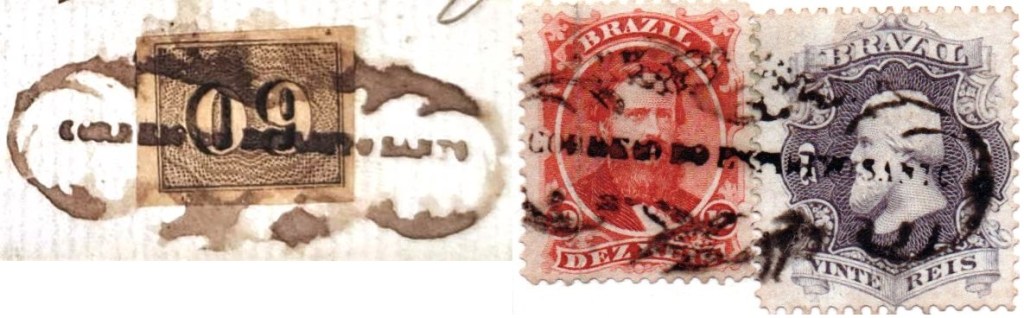
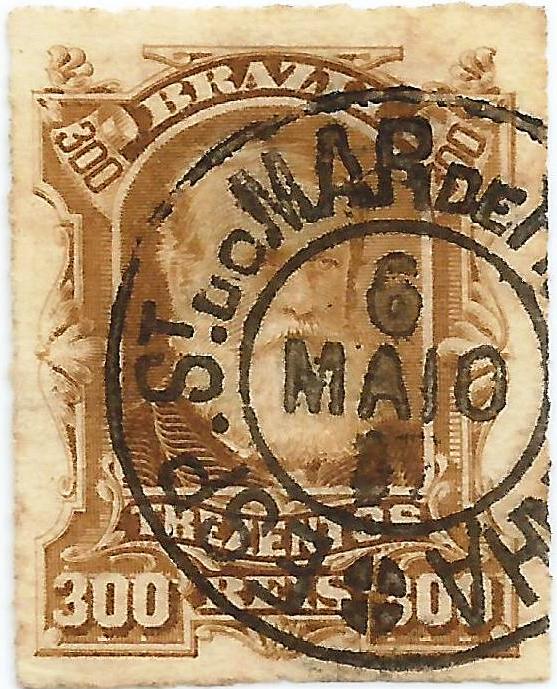
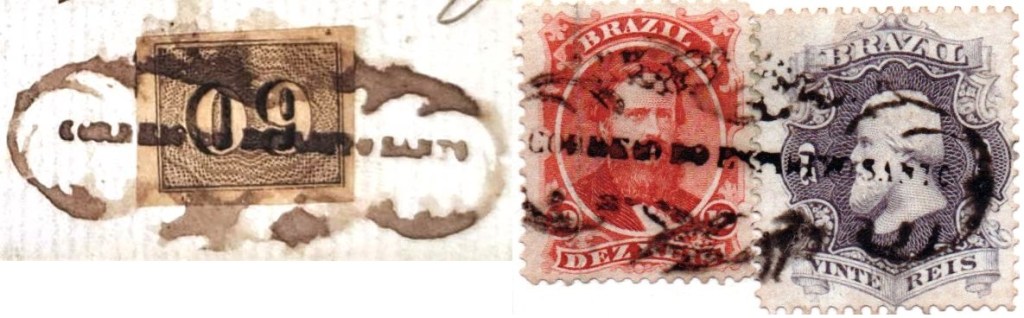
The oldest postmark is EMG-1145a (fig. C. Papazoglou and José A. Junges), which is often mistakenly assumed to be from the province of Espirito Santo:
EMG-1145a (CP_JJ) 1861ff-1871ff
Its successor is EMG-1145b (image from the Internet):
EMG-1145b (EB) 1877-1885
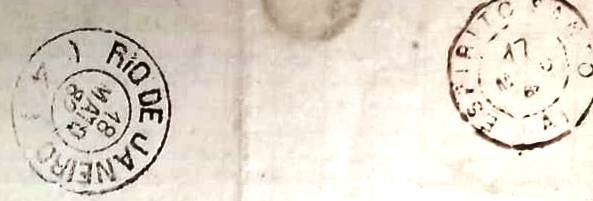
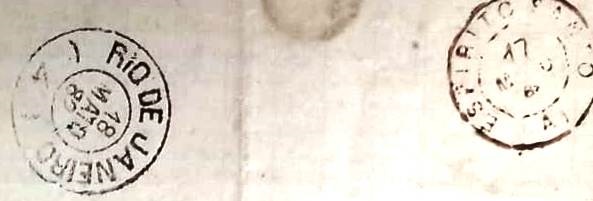
This postmark could also not be assigned for a very long time. Only thanks to a letter from the Fuad Ferreira Filho collection do we know that it comes from Espirito Santo do Mar d’Hespanha. The letter was written in 1882 in the neighbouring parish of S. Sebastião do Córrego do Meio and took one day to travel from Espirito Santo to Rio de Janeiro, as its postmarks tell us:
Letter Córrego do Meio – Rio de Janeiro, May 1882 (collect. Fuad Ferreira Fo.)
The last imperial postmark is EMG-1145c (Klerman Lopes collection):
EMG-1145c (KL) 1880ff-1893Provincia de Minas Geraes, 1873
Andere Namen: Espirito Santo do Guarará, Guarará (1891)
Seit 1839 war Divino Espirito Santo ein Distrito der Vila de Barbacena, 260 km südlich der Provinzhauptstadt Ouro Preto. Im Januar 1868 wurde es eine Freguesia der Vila de Mar d’Hespanha und im Dezember 1890 eine eigenständige Vila. Seit Januar 1891 heißt das Municipio Guarará. Der Name stammt aus der Tupi-Guarani-Sprache und soll eine indigene Trommel bezeichnen.
Sowohl Paula Sobrinho (História Postal de Minas Gerais, Belo Horizonte, 1997) als auch R. Koester (Carimbologia XVIII) schreiben, dass es dort seit April 1861 ein Postamt gab. Die Gründung wurde jedoch bereits zum Februar desselben Jahres in der Presse von Rio bekannt gegeben:
Correio Mercantil/RJ, 15.03.1861
Der älteste Poststempel ist EMG-1145a (Abb. C. Papazoglou und José A. Junges), der oft fälschlicherweise für einen Stempel aus der Provinz Espirito Santo gehalten wird:
EMG-1145a (CP_JJ) 1861ff-1871ff
Sein Nachfolger ist EMG-1145b (Bild aus dem Internet):
EMG-1145b (EB) 1877-1885
Auch dieser Stempel konnte lange Zeit nicht zugeordnet werden. Erst durch einen Brief aus der Sammlung Fuad Ferreira Filho wissen wir, dass er aus Espirito Santo do Mar d’Hespanha stammt. Der Brief wurde 1882 in der Nachbargemeinde S. Sebastião do Córrego do Meio geschrieben und brauchte einen Tag von Espirito Santo nach Rio de Janeiro, wie die Poststempel belegen:
Aus dem Brief Córrego do Meio – Rio de Janeiro, Mai 1882 (Samml. Fuad Ferreira Fo.)
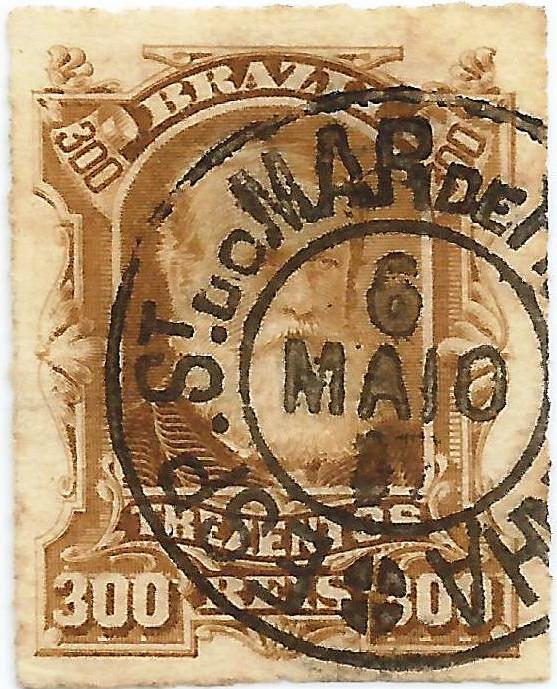
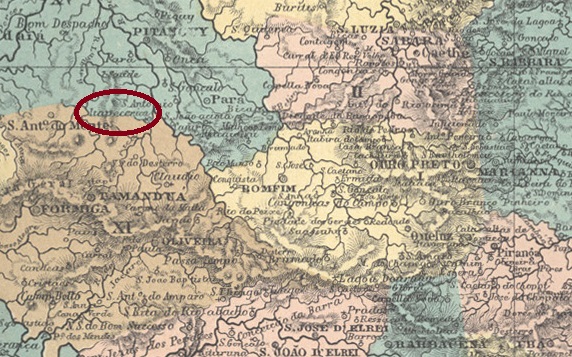
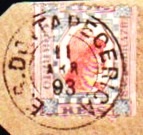
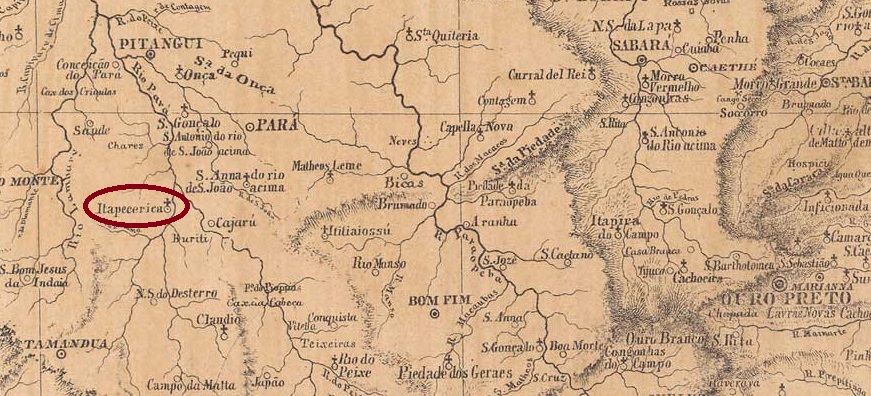
The Distrito do Divino Espírito Santo was founded in April 1839 and is located on the west bank of the Itapecerica River, 200 kilometres west of the provincial capital of Ouro Preto. In August 1911, it was elevated to the status of a Vila under the name Henrique Galvão. The name was intended to commemorate an engineer from the railway company, which had a station there, but the new município was renamed Divinópolis in September 1912, and Divinópolis has been a town since September 1915.
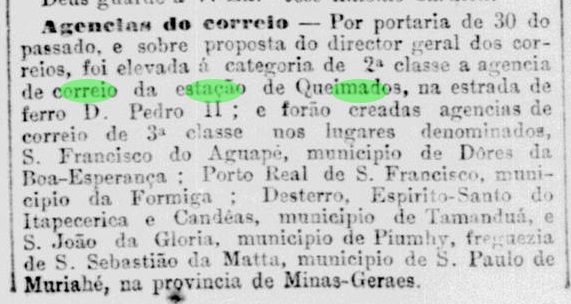
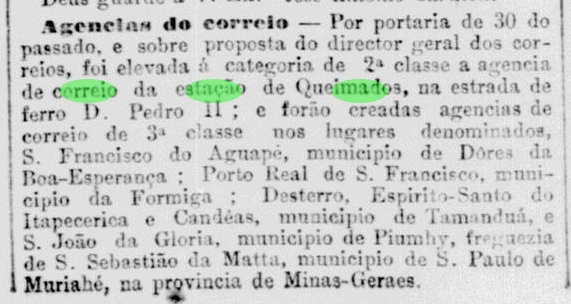
Both Paula Sobrinho (História Postal de Minas Gerais, Belo Horizonte, 1997) and R. Koester (Carimbologia XVIII) state that there has been a post office there since November 1881. This is confirmed by the press in Rio:
Jornal do Commercio/RJ, 02/12/1881
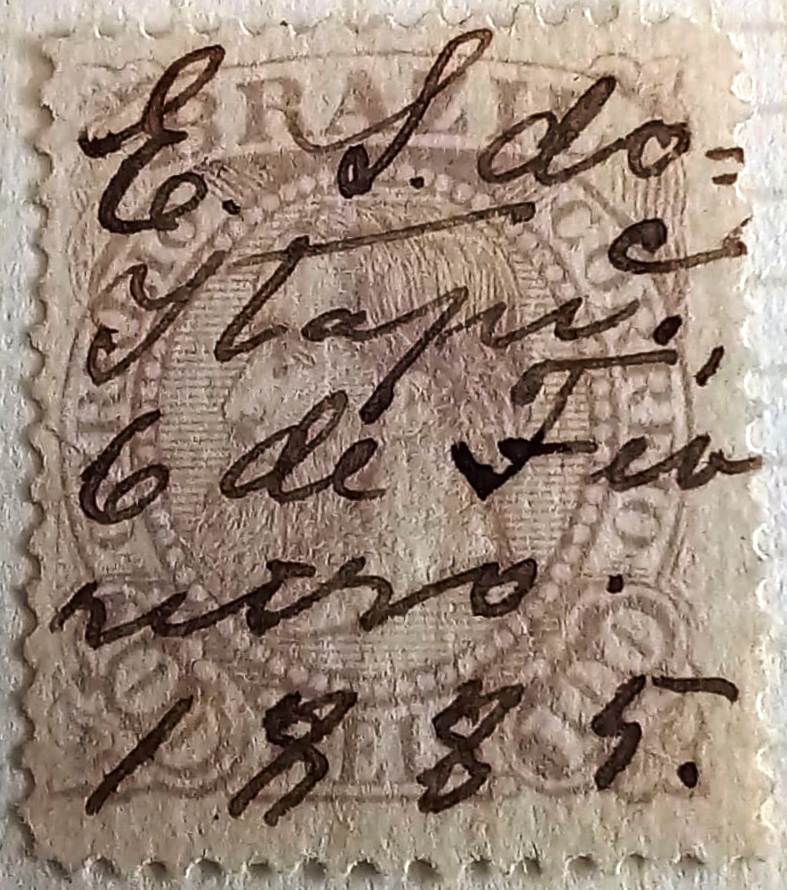
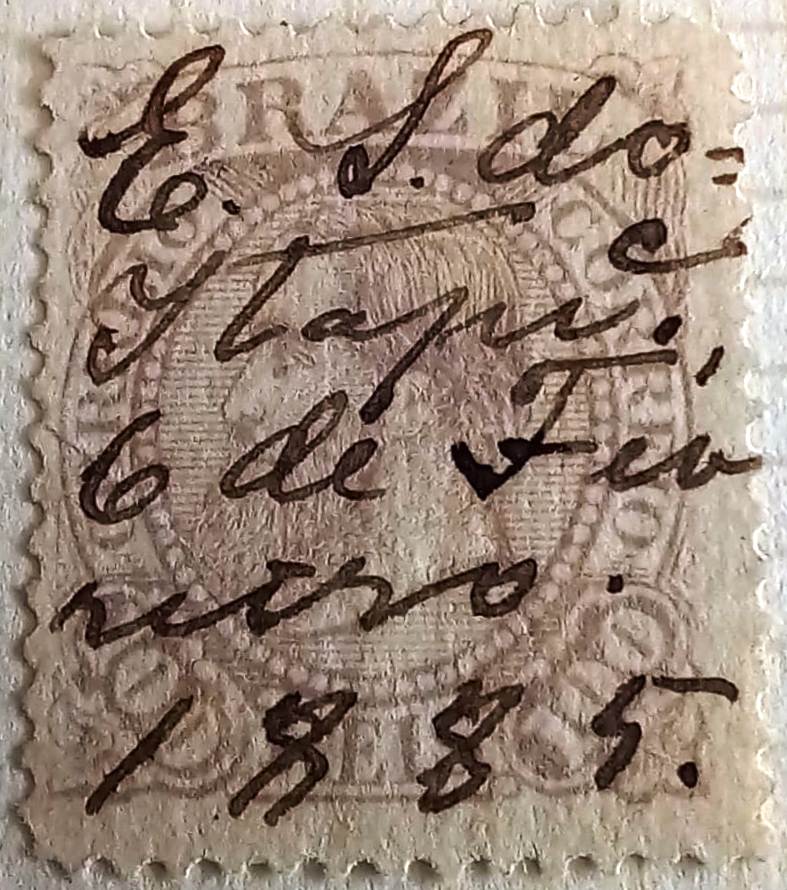
The philatelist Fuad Ferreira Filho has a handwritten cancellation from 1885:
1885 (FF)
The cancel EMG-1140a (fig. Felipe Piccinini) appeared at about the same time:
EMG-1140a (FP) 1885-1893Provincia de Minas Geraes, 1873
Andere Namen: Henrique Galvão, Divinópolis (1912)
Der Distrito do Divino Espírito Santo wurde im April 1839 gegründet und lag am Westufer des Flusses Itapecerica, 200 km westlich der Provinzhauptstadt Ouro Preto. Im August 1911 erfolgte die Erhebung zur Vila unter dem Namen Henrique Galvão. Der Name sollte an einen Ingenieur der Eisenbahngesellschaft erinnern, die dort einen Bahnhof unterhielt, doch schon im September 1912 wurde das neue Município in Divinópolis umbenannt; seit September 1915 ist Divinópolis eine Stadt.
Sowohl Paula Sobrinho (História Postal de Minas Gerais, Belo Horizonte, 1997) als auch R. Koester (Carimbologia XVIII) schreiben, dass es dort seit November 1881 ein Postamt gab. Dies wird von der Presse in Rio bestätigt:
Jornal do Commercio/RJ, 02.12.1881
Der Philatelist Fuad Ferreira Filho hat eine handschriftliche Entwertung von 1885:
1885 (FF)
Etwa zur gleichen Zeit erschien der Stempel EMG-1140a (Abb. Felipe Piccinini):
J. M. Ribeiro Lisboa: Provincia de São Paulo, 1884
Other names: Nuporanga (1896)
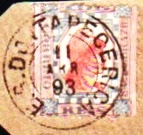
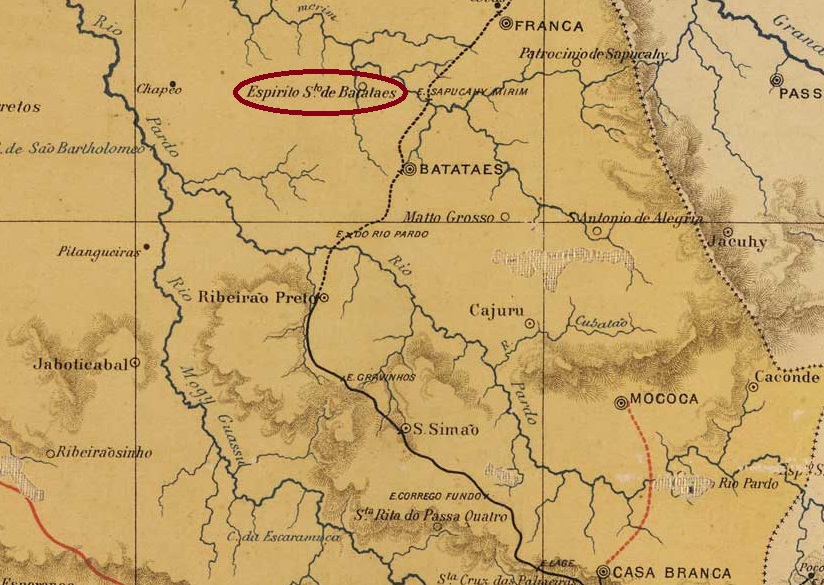
The Freguesia do Divino Espirito Santo was founded in April 1873 370 kilometres north of the provincial capital of São Paulo and belonged to the Vila de Batataes. In March 1885 it was elevated to a Vila and renamed Nuporanga in December 1896. Nuporanga was downgraded to a Distrito in the Município de Orlândia in November 1909, but regained its political autonomy as a Município in December 1926. The name comes from the Tupi-Guarani language and means “beautiful meadow”.
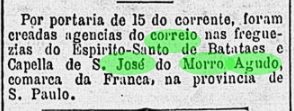
R. Koester writes in Carimbologia XVIII that there had been a post office there since July 1884. This is confirmed by the press in Rio:
Gazeta de Noticias/RJ 17/07/1884
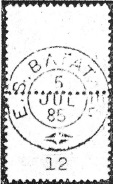
The imperial postmark is ESP-0480a (fig. R. Koester, op. cit.):
ESP-0480a (RK) 1885-1893Provincia de São Paulo, 1886
Andere Namen: Nuporanga (1896)
Die Freguesia do Divino Espirito Santo wurde im April 1873 370 km nördlich der Provinzhauptstadt São Paulo gegründet und gehörte zur Vila de Batataes. Im März 1885 wurde es zur Vila erhoben und im Dezember 1896 in Nuporanga umbenannt. Nuporanga wurde im November 1909 zu einem Distrito im Município de Orlândia herabgestuft, erlangte aber im Dezember 1926 seine politische Autonomie als Município zurück. Der Name stammt aus der Sprache der Tupi-Guarani und bedeutet “schöne Wiese”.
R. Koester schreibt in Carimbologia XVIII, dass es dort seit Juli 1884 ein Postamt gab. Dies wird von der Presse in Rio bestätigt:
Gazeta de Noticias/RJ 17.07.1884
Der kaiserliche Poststempel ist ESP-0480a (Abb. R. Koester, op. cit.):
Other names: Espirito Santo das Catanduvas, Varginha (1923)
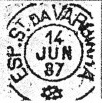
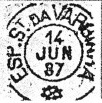
The Arraial do Espirito Santo das Catanduvas was established around 1800 on the north bank of the Rio Verde, 360 km south-west of the provincial capital Ouro Preto. In June 1850, it was elevated to the Freguesia do Espirito Santo da Varginha, which belonged to the Vila de Três Pontas. It was elevated to a Vila in July 1881 and to a town in October 1882. The abbreviated name Município de Varginha has been used since September 1923.
Three foundation dates have been found for the local post office. Once in June 1859, as Paula Sobrinho (História Postal de Minas Gerais, Belo Horizonte, 1997) writes, although he himself was not convinced of this. Then again in July 1864, as Nova Monteiro and R. Koester (Carimbologia XVIII) report. And finally in June 1879, as can be read in the postal report (Relatorio dos Correios) for the year 1887.
Seen in this light, the oldest postmark to date, EMG-1135b (fig. R. Koester, op. cit.), is probably not the very first:
EMG-1135b (RK) 1887-1900Atlas do Imperio do Brasil, 1868
Andere Namen: Espirito Santo das Catanduvas, Varginha (1923)
Der Arraial do Espirito Santo das Catanduvas entstand um 1800 am Nordufer des Rio Verde, 360 km südwestlich der Provinzhauptstadt Ouro Preto. Im Juni 1850 wurde es zur Freguesia do Espirito Santo da Varginha erhoben, die zur Vila de Três Pontas gehörte. Die Erhebung zur Vila erfolgte im Juli 1881, die zur Stadt im Oktober 1882. Seit September 1923 wird der abgekürzte Name Município de Varginha verwendet.
Für das örtliche Postamt wurden drei Gründungsdaten gefunden. Einmal im Juni 1859, wie Paula Sobrinho (História Postal de Minas Gerais, Belo Horizonte, 1997) schreibt, obwohl er selbst davon nicht überzeugt war. Dann wieder im Juli 1864, wie Nova Monteiro und R. Koester (Carimbologia XVIII) berichten. Und schließlich im Juni 1879, wie im Postbericht (Relatorio dos Correios) für das Jahr 1887 zu lesen ist.
So gesehen dürfte der bisher älteste Poststempel EMG-1135b (Abb. R. Koester, op. cit.) nicht der allererste sein:
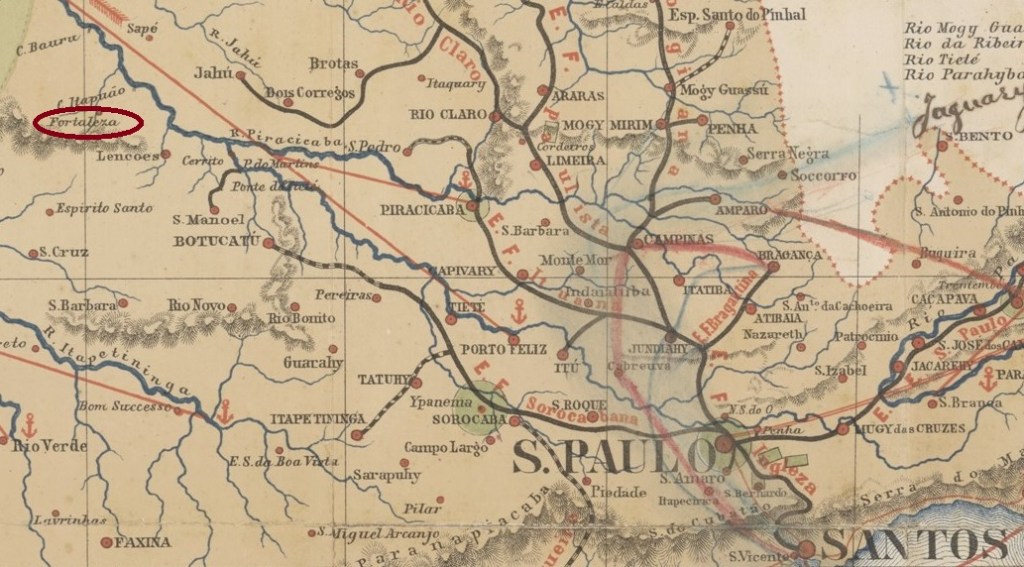
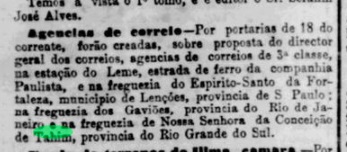
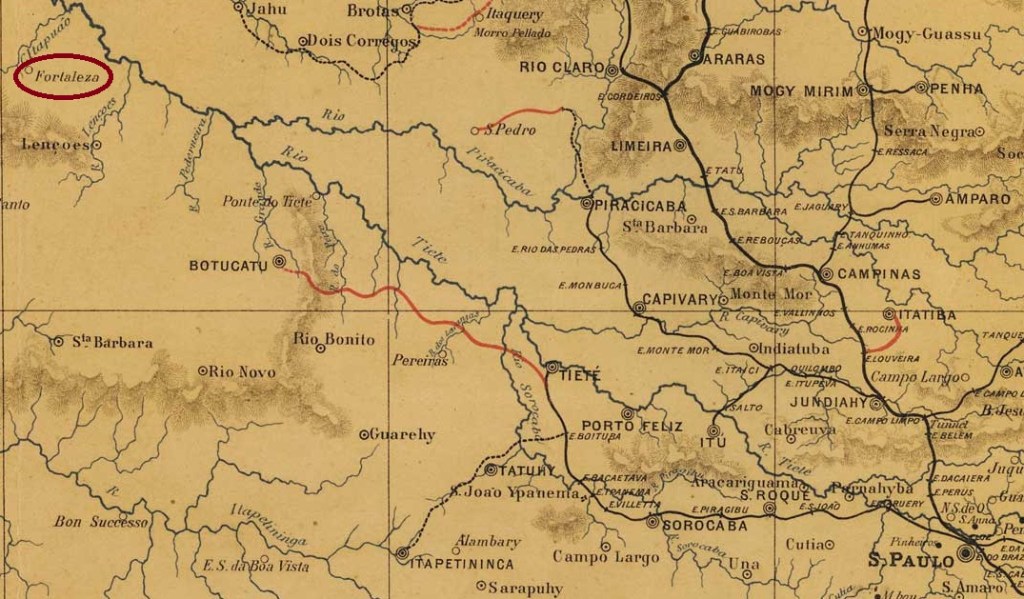
From April 1880, Espírito Santo da Fortaleza was a freguesia of the Vila de Lençóis on the south bank of the river Itapuão, 330 kilometres northwest of the provincial capital São Paulo. The village was elevated to a Vila in April 1887 and renamed Bauru in August 1896. Bauru has been a city since December 1906. The name from the Tupi-Guarani language can mean both wild waters and fruit basket (which seems less likely here).
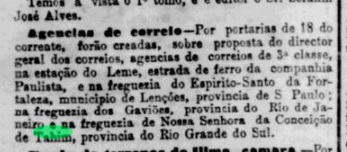
As the press in Rio reported, there had been a post office there since June 1883:
Jornal do Commercio/RJ, 19/06/1883
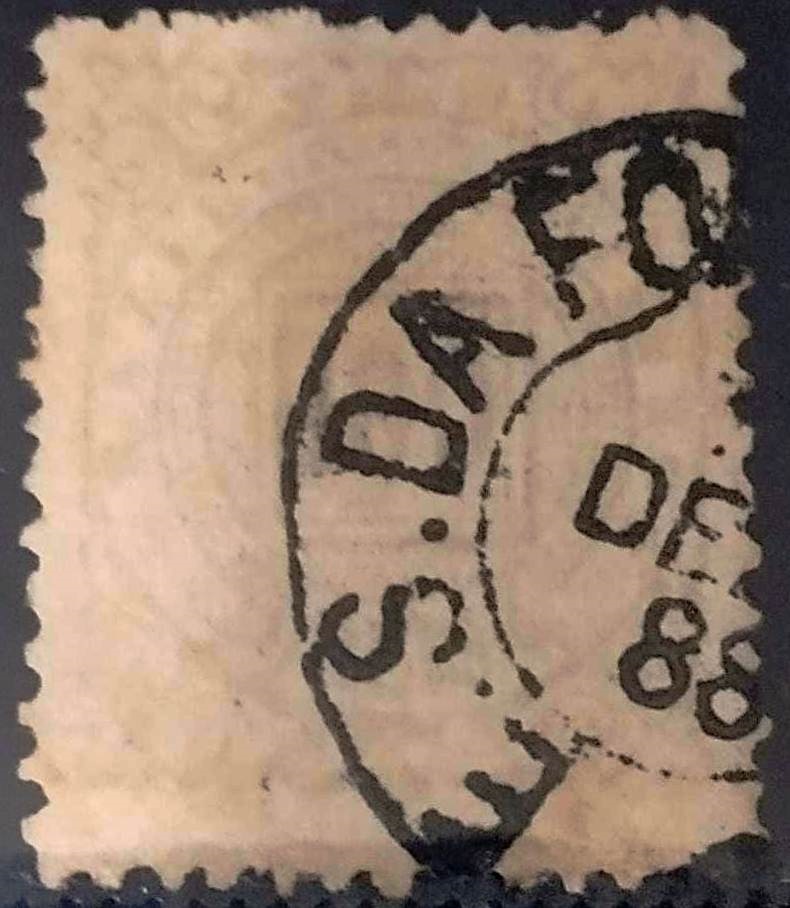
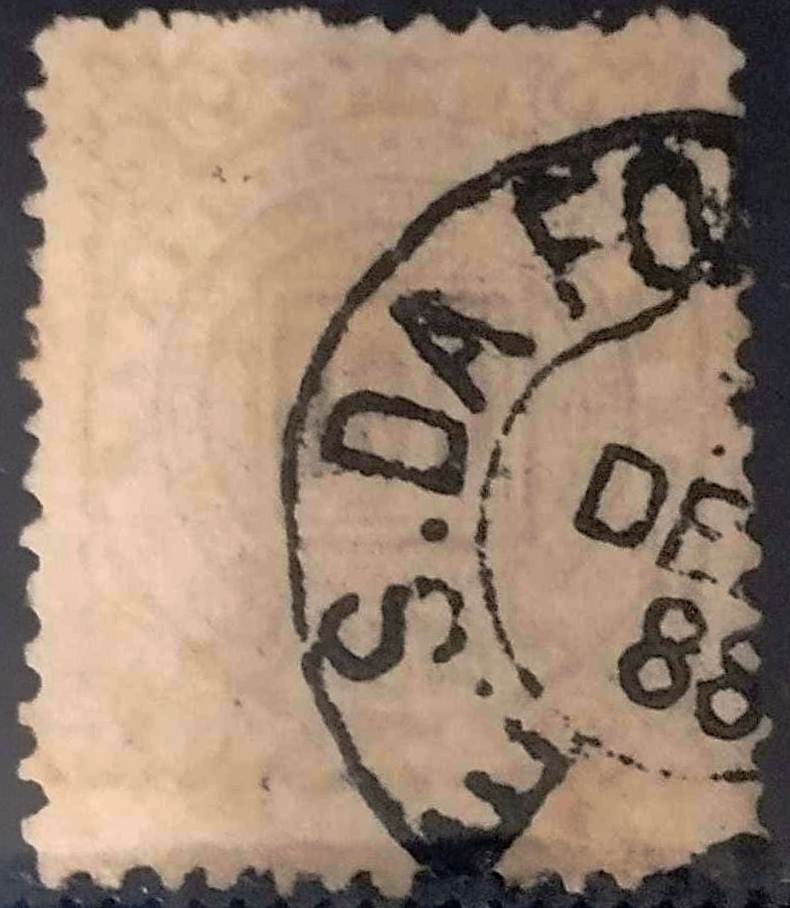
R. Koester writes in Carimbologia XVIII that the agency was closed in June 1900 and replaced by the nearby Borebi railway station post office. This is unlikely, as the Borebi railway station was only opened in 1917 by the E.F. Sorocabana railway company. The imperial postmark is ESP-0475a (illus. Carlos Aldir):
ESP-0475a (CAL) 1888J. M. Ribeiro Lisboa: Provincia de São Paulo, 1884
Andere Namen: Bauru (1896)
Seit April 1880 war Espírito Santo da Fortaleza eine Freguesia der Vila de Lençóis am Südufer des Flusses Itapuão, 330 km nordwestlich der Provinzhauptstadt São Paulo. Der Ort wurde im April 1887 zur Vila erhoben und im August 1896 in Bauru umbenannt. Seit Dezember 1906 ist Bauru eine Stadt. Der Name aus der Tupi-Guarani-Sprache kann sowohl wilde Gewässer als auch Fruchtkorb bedeuten (was hier weniger wahrscheinlich erscheint).
Wie die Presse in Rio berichtete, gab es dort seit Juni 1883 ein Postamt:
Jornal do Commercio/RJ, 19.06.1883
R. Koester schreibt in Carimbologia XVIII, dass die Agentur im Juni 1900 geschlossen und durch das nahe gelegene Bahnhofspostamt Borebi ersetzt wurde. Dies ist unwahrscheinlich, da der Bahnhof Borebi erst 1917 von der Eisenbahngesellschaft E.F. Sorocabana eingeweiht wurde. Der kaiserliche Poststempel ist ESP-0475a (Abb. Carlos Aldir):
Other Names: Ribeirão Grande do Palmital, Angatuba (1908)
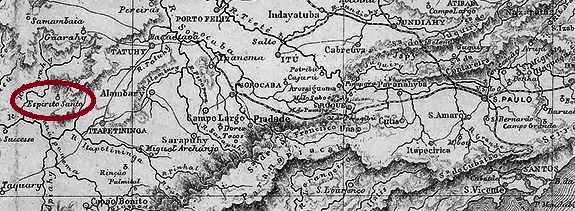
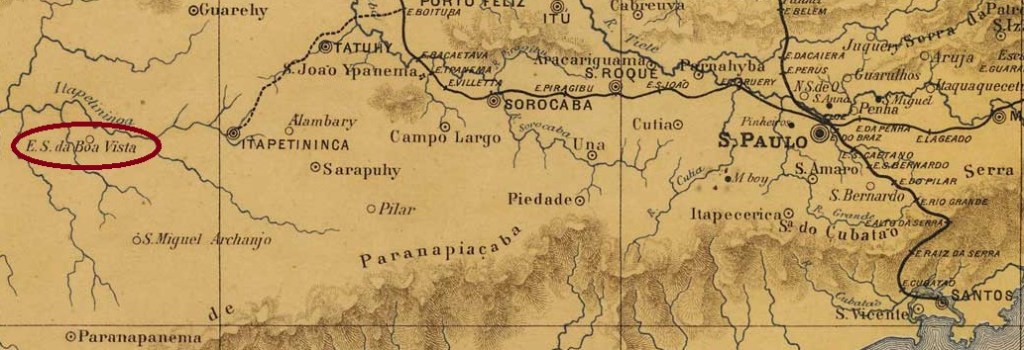
From March 1872, Espirito Santo da Boa Vista was a freguesia of the Vila de Itapetininga, 210 kilometres west of the provincial capital of São Paulo. It became a vila in March 1885 and a town in December 1906, which was renamed Angatuba two years later. The word from the Tupi-Guarani language is said to mean the abode of spirits.
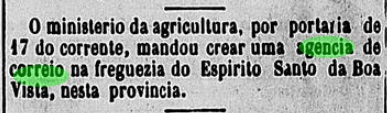
There had been a post office there since November 1880, as reported in the regional press:
Jornal da Tarde, 20/11/1880
The imperial postmark is the French type ESP-0470a (illustration by Mário Celso Orsi Jr.):
ESP-0470a (MO) 1885-1889J. Mo. Ribeiro Lisboa: Provincia de São Paulo, 1884
Andere Namen: Ribeirão Grande do Palmital, Angatuba (1908)
Seit März 1872 war Espirito Santo da Boa Vista eine Freguesia der Vila de Itapetininga, 210 km westlich der Provinzhauptstadt São Paulo. Sie wurde im März 1885 zur Vila und im Dezember 1906 zur Stadt, die zwei Jahre später in Angatuba umbenannt wurde. Das Wort aus der Sprache der Tupi-Guarani soll Wohnort der Geister bedeuten.
Seit November 1880 gab es dort ein Postamt, wie die regionale Presse berichtete:
Jornal da Tarde, 20.11.1880
Der kaiserliche Poststempel ist der französische Typ ESP-0470a (Abb. Mário Celso Orsi Jr.):
Villiers de l’Ile Adam: Carta (…) da Provincia do Rio de Janeiro, 1850
Other names: Rialto (1943)
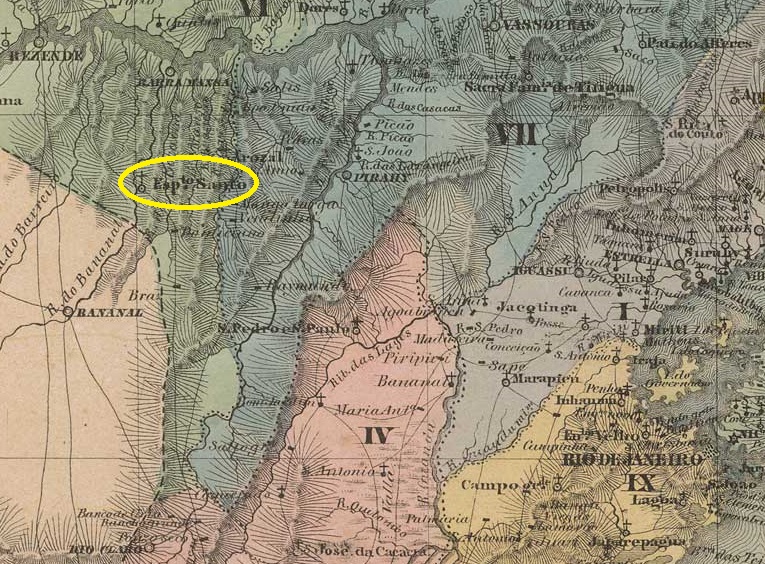
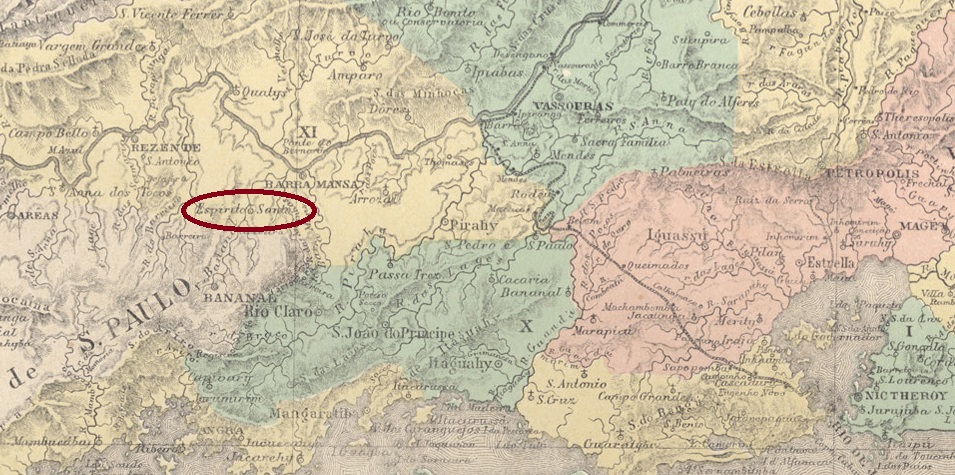
This Freguesia do Espirito Santo, founded in March 1884, belonged to the Vila de Barra Mansa and was located on the east bank of the Bananal, 150 kilometres northwest of the capital Rio de Janeiro. In March 1890, it was downgraded to a distrito, which has borne the name of the nearby Rialto railway station since December 1943.
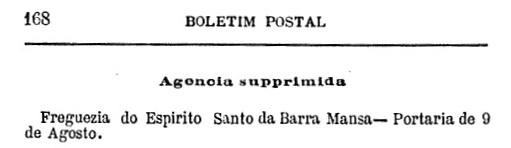
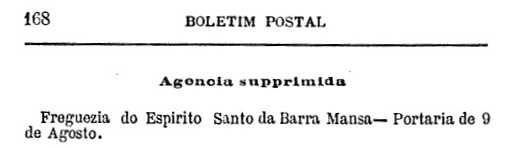
R. Koester writes in Carimbologia XVIII that there had been a post office there since December 1866. However, this was closed in August 1889, as can be seen from the postal bulletin (Boletim Postal) of the following month:
Boletim Postal No. 5 (September 1889)
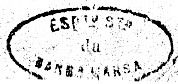
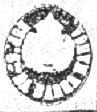
After that, mail to and from this locality was probably handled by the Realto railway station post office (RRJ-1670). The oldest postmark of Espirito Santo da Barra Mansa to date is the rare ERJ-0485a (fig. R. Koester, op. cit.):
ERJ-0485a (RK) 1866ff
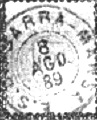
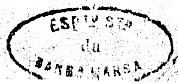
This was followed by the double circle ERJ-0485b (Fig. R. Koester, op. cit.), here with the date of the penultimate day of operation:
ERJ-0485b (RK) 1880-1889
Koester also showed the stamp with the imperial seal ERJ-0485c:
ERJ-0485c (RK) 1880Atlas do Imperio do Brasil, 1868
Andere Namen: Rialto (1943)
Die im März 1884 gegründete Freguesia do Espirito Santo gehörte zur Vila de Barra Mansa und lag am Ostufer des Bananal, 150 km nordwestlich der Hauptstadt Rio de Janeiro. Im März 1890 wurde sie zu einem Distrito herabgestuft, der seit Dezember 1943 den Namen des nahe gelegenen Bahnhofs Rialto trägt.
R. Koester schreibt in Carimbologia XVIII, dass es dort seit Dezember 1866 ein Postamt gab. Dieses wurde jedoch im August 1889 geschlossen, wie aus dem Postbulletin (Boletim Postal) des folgenden Monats hervorgeht:
Boletim Postal Nr. 5 (September 1889)
Danach wurde die Post von und nach diesem Ort wahrscheinlich über das Bahnhofspostamt Realto (RRJ-1670) abgewickelt. Der bisher älteste Poststempel von Espirito Santo da Barra Mansa ist der seltene ERJ-0485a (Abb. R. Koester, op. cit.):
ERJ-0485a (RK) 1866ff
Es folgte der Doppelkreis ERJ-0485b (Abb. R. Koester, op. cit.), hier mit dem Datum des vorletzten Betriebstages:
ERJ-0485b (RK) 1880-1889
Koester zeigte auch den Stempel mit dem kaiserlichen Siegel ERJ-0485c:
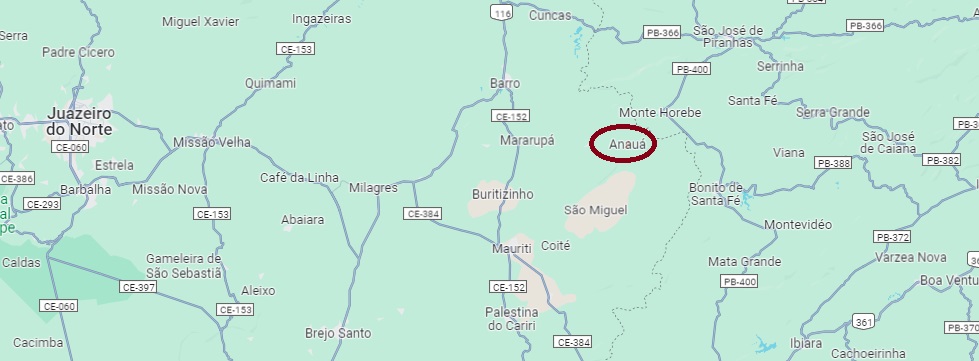
The Freguesia do Espírito Santo in the province of Ceará was founded in September 1873 and belonged to the Vila de Milagres, 490 kilometres south of the capital Fortaleza. In August 1882 it was elevated to the status of a Vila but lost this status in August 1890 and became an Arraial of the Município de Mauriti. In December 1933, it was modestly upgraded to a distrito, which was renamed Anauá ten years later. The beautiful word from the Tupi-Guarani language means blossoming tree.
R. Koester writes in Carimbologia XVIII that there had been a post office there since the end of May 1877, but the regional press had already reported on it in April:
Cearense, 15/04/1877
The only imperial postmark to date is ECE-0130a (fig. R. Koester, op.cit.)
ECE-0130a (RK)Google Maps
Andere Namen: Anauá (1943)
Die Freguesia do Espírito Santo in der Provinz Ceará wurde im September 1873 gegründet und gehörte zur Vila de Milagres, 490 km südlich der Hauptstadt Fortaleza. Im August 1882 wurde sie zur Vila erhoben, verlor diesen Status aber im August 1890 und wurde ein Arraial des Município de Mauriti. Im Dezember 1933 erfolgte eine bescheidene Aufwertung zum Distrito, der zehn Jahre später in Anauá umbenannt wurde. Das schöne Wort aus der Sprache der Tupi-Guarani bedeutet blühender Baum.
R. Koester schreibt in Carimbologia XVIII, dass es dort seit Ende Mai 1877 ein Postamt gab, aber die regionale Presse berichtete bereits im April darüber:
Cearense, 15.04.1877
Der bisher einzige kaiserliche Poststempel ist ECE-0130a (Abb. R. Koester, op.cit.)
Other names: Espirito Santo do Rio Pardo, Muniz Freire (1896)
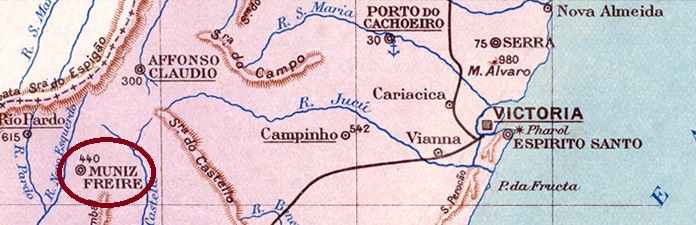
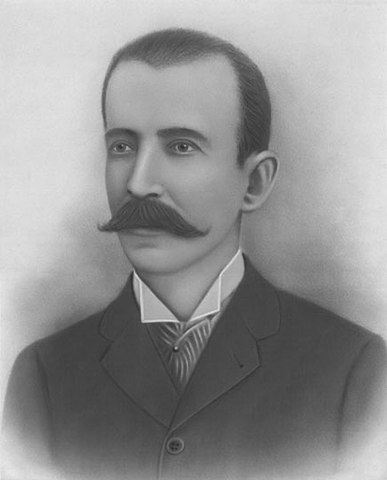
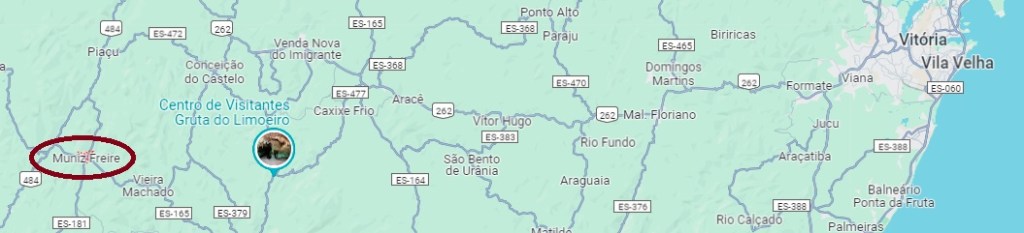
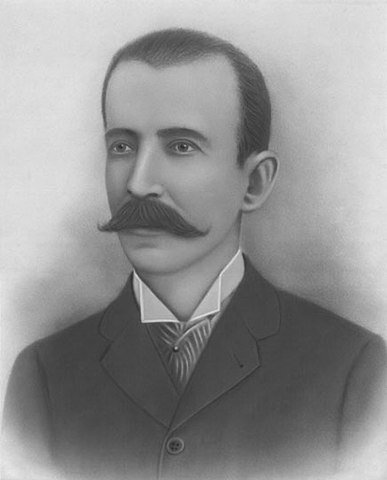
The Arraial do Espirito Santo belonged to the Vila de Cachoeiro do Itapemirim and was located near the Rio Pardo, 170 kilometres west of the provincial capital Vitória. In April 1890 it was elevated to freguesia status and seven months later to Vila do Espírito Santo do Rio Pardo. Since November 1896, the município has borne the name Muniz Freire, in memory of the lawyer, journalist and politician (1861-1918), who was governor of the state of Espírito Santo for two terms.
Wikipedia (CC BY-SA 4.0)
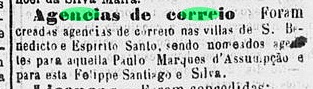
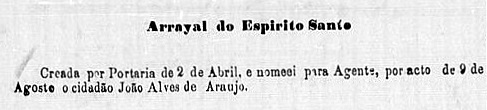
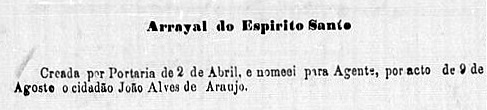
The local post office was created in April 1881, as reported in the regional press:
O Horizonte, 12/05/1882
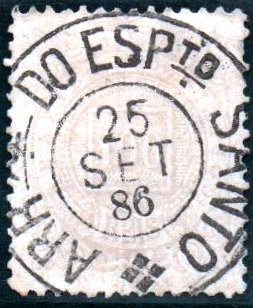
The imperial postmark is EES-0220a (coll. José A. Junges):
EES-0220a (JJ) 1884-1896Google Maps
Andere Namen: Espirito Santo do Rio Pardo, Muniz Freire (1896)
Der Arraial do Espirito Santo gehörte zur Vila de Cachoeiro do Itapemirim und lag in der Nähe des Rio Pardo, 170 km westlich der Provinzhauptstadt Vitória. Im April 1890 erfolgte die Erhebung zur Freguesia und sieben Monate später zur Vila do Espírito Santo do Rio Pardo. Seit November 1896 trägt der Município den Namen Muniz Freire, in Erinnerung an den Juristen, Journalisten und Politiker (1861-1918), der zwei Amtszeiten lang Gouverneur des Staates Espírito Santo war.
Wikipedia (CC BY-SA 4.0)
Das örtliche Postamt wurde im April 1881 gegründet, wie die regionale Presse berichtete:
O Horizonte, 12.05.1882
Der kaiserliche Poststempel ist EES-0220a (Samml. José A. Junges):












 Carimbologia