Categories
Carimbologia A-B

Bello Monte, Alagoas (BAL-0030)

Atlas do Imperio do Brasil, 1868

Another name: Lagoa Funda

The parish of N. Sra. do Bom Conselho da Lagoa Funda was created in July 1885, located on the north bank of the São Francisco River in the Município of Traipu, 210 km west of the provincial capital Maceió. The village became the vila of Bello Monte in June 1886, and in May 1893 was again elevated as a district from the Município of Traipu, only to become an independent município again in July 1895.

As Aldo Cardoso writes in Contribuição para a História dos Correios de Alagoas (Maceió, 1969), there was a post office there since July 1869. So far, no imperial postmark from Bello Monte has been seen.

Arthur D. Ribeiro: Estado de Alagoas, 1923

Anderer Name: Lagoa Funda

Die Pfarrei von N. Sra. do Bom Conselho da Lagoa Funda entstand im Juli 1885, sie lag am Nordufer des Flusses São Francisco im Município von Traipu, 210 km westlich der Provinzhauptstadt Maceió. Der Ort wurde im Juni 1886 zur Vila von Bello Monte, im Mai 1893 wieder als Distrikt vom Município von Traipu, um im Juli 1895 wieder als eigenständiger Município erhoben zu werden.

Wie Aldo Cardoso in Contribuição para a História dos Correios de Alagoas (Maceió, 1969) schreibt, gab es dort ein Postamt seit Juli 1869. Bisher war kein kaiserlicher Poststempel aus Bello Monte zu sehen.

Categories
Carimbologia A-B

Bello Jardim, Pernambuco (BPE-0090)

Carta Corographica da Provincia de Pernambuco, 1880

Other names: Capim, Caropotós

This settlement originated around 1854 with the name Capim (Grasses), it was located on the west bank of the river Ipojuca, 190 km west of the provincial capital Recife. In 1881, it became the Arraial of N. Sra. da Conceição do Bello Jardim, belonging to the Vila of Brejo da Madre de Deus. The place became a vila in July 1909 and a town in September 1928.

The local post office was established in July 1882, as reported in the Rio Press:

Gazeta de Noticias/RJ, 25/07/1882

There was no imperial postmark from Bello Jardim yet. A handwritten cancellation appeared on the internet on an issue from 1888:

1888 (EB)
Arthur D. Ribeiro: Estado de Pernambuco, 1924

Andere Namen: Capim, Caropotós

Diese Siedlung entstand ca. 1854 mit dem Namen Capim (Gräser), sie lag am Westufer des Flusses Ipojuca, 190 km westlich der Provinzhauptstadt Recife entfernt. 1881 wurde daraus der Arraial von N. Sra. da Conceição do Bello Jardim, der der Vila von Brejo da Madre de Deus gehörte. Der Ort wurde im Juli 1909 zu einer Vila und im September 1928 eine Stadt.

Das örtliche Postamt entstand im Juli 1882, wie in der Rio Presse zu lesen war:

Gazeta de Noticias/RJ, 25.07.1882

Noch war kein kaiserlicher Poststempel aus Bello Jardim zu sehen. Eine handschriftliche Entwertung tauchte im Internet auf einer Ausgabe aus 1888 auf:

1888 (EB)
Categories
Carimbologia A-B

Bella Vista, São Paulo (BSP-0150)

Arthur D. Ribeiro: Estado de São Paulo, 1924

Other names: Santo Antonio do Rio Feio, Porangaba (1919)

See also Rio Feio (RSP-1333)

Rio Feio means Ugly River, so it does not wonder that other names followed for this locality. Santo Antonio do Rio Feio was founded in April 1880 as a district of the municipality of Tatuhy (now written Tatuí), situated about 170 km west from São Paulo. It changed the toponym for the first time in February 1885 to Bela Vista (= Beautiful Sight, probably from the river perspective), and for the second time in November 1919 to Porangaba, which in the tupi-guarani language means “The Beauty”. Since December 1927 has Porangaba an own municipality.

An Indian legend calls porangaba all plants capable to make humans more beautiful, such as the Cordia salicifolia, also known as chá-de-bugre (= Indian Tea) or …porangaba (see above).

Photo: Stephanie Weege-Susa

According to the Imperial Mail Register (Tabella das Agencias do Correio do Império) of 1885, a post office was created in Rio Feio in 1881, which is confirmed by the regional press:

Jornal da Tarde, 09.04.1881

No imperial cancel from this locality was found to date.

Google Maps

Andere Namen: Santo Antonio do Rio Feio, Porangaba (1919)

Siehe auch Rio Feio (RSP-1333)

Santo Antonio do Rio Feio wurde im April 1880 als ein Distrikt des Município von Tatuhy (heute Tatuí geschrieben) gegründet, etwa 170 km westlich von São Paulo entfernt. Der Ortsname wechselte erstmals im Februar 1885 zu Bela Vista (= Schöne Aussicht, womöglich aus der Flussperspektive) und zum zweiten Mal im November 1919 zu Porangaba, was in der tupi-guarani Indianersprache so viel wie „Die Schönheit“ bedeutet. Seit 1927 ist Porangaba als Município unabhängig.

Eine Indianerlegende nennt porangaba alle Pflanzen, die die Menschen schöner machen können, so wie die Cordia salicifolia, auch chá-de-bugre (= Indianertee) genannt, oder auch … porangaba (siehe oben)

Foto: Stephanie Weege-Susa

Laut Verzeichnis der kaiserlichen Postämter (Tabella das Agencias do Correio do Império) von 1885 entstand das Postamt in Rio Feio in 1881, was durch die Regionalpresse bestätigt wird:

Jornal da Tarde, 09.04.1881

Bisher wurde kein Stempel der Kaiserzeit mit dem Ortsnamen Bella Vista gefunden.

Categories
Carimbologia A-B

Bella Vista, Goiás (BGO-0020)

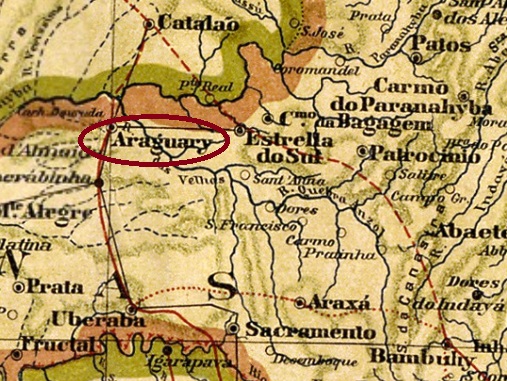
Carta da Republica dos Estados Unidos do Brazil, 1892

Other names: Sussuapara, Bela Vista de Goiás

Sussuapara was the name of a small river at the mouth of which a small settlement was established in 1866. In March 1880, it became the Freguesia of N. Sra. da Piedade da Bella Vista, which belonged to the Município of Bomfim and was 200 km southeast of the provincial capital of Goyaz (now Goiás Velho). The village continued to grow and in June 1896 became a vila, which was named Suçuapara (in a new spelling) in December 1943 and has been the Município of Bela Vista de Goiás since July 1953. Suçuapara is the indigenous name for the South American swamp deer:

Blastocerus dichotomus, Illiger 1815 (Photo: Jonathan Wilkins, CC BY-SA 3.0)

A local post office existed from December 1882, as reported by the provincial official press:

Correio Official de Goyaz, 03.03.1883

So far, no imperial postmark could be assigned to this locality with certainty.

Carta da Provincia de Goyaz, 1875

Andere Namen: Sussuapara, Bela Vista de Goiás

Sussuapara hieß ein kleiner Fluss, an dessen Mündung ins Piracanjuba eine kleine Siedlung anno 1866 entstanden ist. Im März 1880 wurde daraus die Freguesia von N. Sra. da Piedade da Bella Vista, die dem Município von Bomfim gehörte und 200 km südöstlich der Provinzhauptstadt Goyaz (heute Goiás Velho) entfernt lag. Der Ort wuchs weiter und wurde im Juni 1896 zu einer Vila, die im Dezember 1943 Suçuapara (in neuer Schreibweise) genannt wurde und seit Juli 1953 der Município von Bela Vista de Goiás ist. Suçuapara ist der indigene Name für den südamerikanischen Sumpfhirsch:

Blastocerus dichotomus, Illiger 1815 (Foto: Jonathan Wilkins, CC BY-SA 3.0)

Ein örtliches Postamt gab es ab Dezember 1882, wie die provinzielle Amtspresse berichtete:

Correio Official de Goyaz, 03.03.1883

Bisher konnte kein kaiserlicher Poststempel dieser Ortschaft mit Sicherheit zugeordnet werden.

Categories
Carimbologia A-B

Bella Joanna (train station/Bahnhof), Rio de Janeiro (BRJ-0160)

Almanak Laemmert, 1892

The Bella Joanna (Beautiful Joanna) railway station was inaugurated in August 1885 by the E.F. Leopoldina railway company (Sumidouro Branch), and located on the east bank of the Paquequer River in the Município of Carmo, 170 km northeast of the capital Rio de Janeiro. From June 1890, the area belonged to the Vila of Sumidouro. The railway line was operated until 1967, but today the rails are disappeared, and the station building has been demolished (estacoesferroviarias.com.br). Bella Joanna was the name of a fazenda in the area.

Photo: Amarildo Mayrink (estacoesferroviarias.com.br)

The station post office was created in November 1886, as reported by the capital’s press:

Gazeta de Noticias, 13/11/1886

Two postmarks were found for the 19th century. BRJ-0160a has already been made known by R. Koester in Carimbologia IV:

BRJ-0160a (RK) 1887-1893

Paulo Ayres (Catálogo de Carimbos Brasil-Império, S. Paulo, 1937, 1942) showed us BRJ-0160b:

BRJ-0160b (P.A. p. 145)
agenciaspostais.com.br

Der Bahnhof Bella Joanna (Schöne Johanna) wurde im August 1885 durch die Bahngesellschaft E.F. Leopoldina (Sumidouro Abzweigung) eingeweiht und lag am Ostufer des Flusses Paquequer im Município von Carmo, 170 km nordöstlich der Hauptstadt Rio de Janeiro entfernt. Ab Juni 1890 gehörte das Areal der Vila von Sumidouro. Die Bahnlinie wurde bis 1967 betrieben, heute sind die Schienen weg, das Bahnhofsgebäude wurde abgerissen (estacoesferroviarias.com.br). Bella Joanna hieß eine Fazenda in der Gegend.

Foto: Amarildo Mayrink (estacoesferroviarias.com.br)

Das Bahnhofspostamt wurde im November 1886 ins Leben gerufen, wie die Hauptstadtpresse berichtete:

Gazeta de Noticias, 13.11.1886

Zwei Poststempel wurden für den 19. Jahrhundert gefunden. BRJ-0160a wurde bereits durch R. Koester in Carimbologia IV bekannt gemacht:
BRJ-0160a (RK) 1887-1893

Paulo Ayres (Catálogo de Carimbos Brasil-Império, S. Paulo, 1937, 1942) zeigte uns BRJ-0160b:
BRJ-0160b (P.A. S. 145)
Categories
Carimbologia A-B

Belem (train station/Bahnhof), São Paulo (BSP-0141)

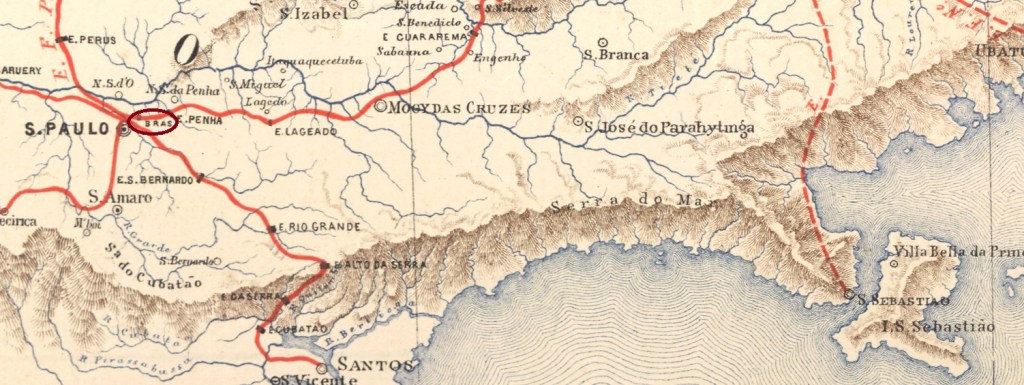
Cia. Sorocabana e Ytuana, 1898

Another name: Francisco Morato (1954)

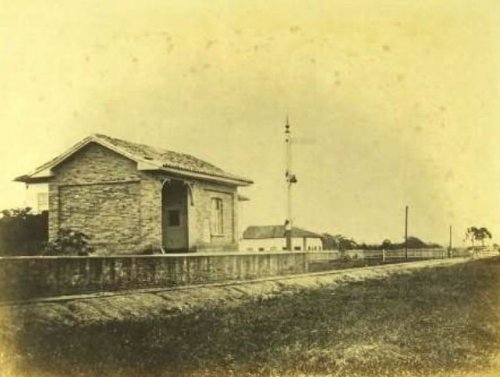
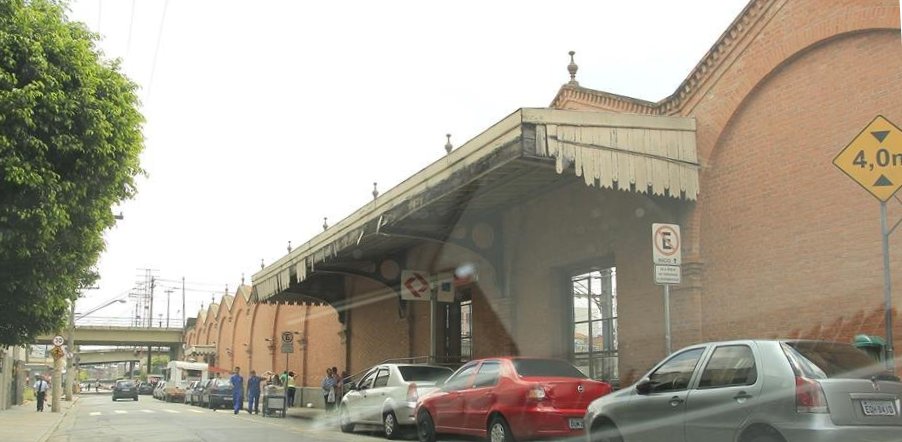
Belem station was inaugurated in February 1867 by the São Paulo Railway (main line) and was located on the east bank of the Juqueri River in the Município of Jundiahy, 45 km north of the provincial capital of São Paulo. The railway line changed hands in 1946 to the E.F. de Santos a Jundiaí and in 1975 to the Rede Ferroviaria Federal S.A. (estacoesferroviarias.com.br). Since 1992 it has been operated by the Cia. Paulista de Trens Metropolitanos (CPTM).

The area around the station went to Franco da Rocha Município in December 1948 as a district called Francisco Morato. Francisco Morato (1868-1948) was a lawyer, politician, and historian from Piracicaba. He also gave his name to the railway station (1954) and the newly created Município (February 1964).

Wikimedia

As the regional press reported, there was a station post office there from December 1879:

Correio Paulistano, 27.12.1879

However, it was closed again within five years:

Correio Paulistano, 06.05.1884

The imperial station postmark was the French type BSP-0141a (Coll. Fuad Ferreira Fo.): a double circle with the inscription EST. DE BELEM at the top and the star between brackets at the bottom. The only specimen so far is dated 1882 in the centre. There is also a cancel by letters on the same item:

1882 (FF)
Estrada de Ferro Central do Brasil, 1890

Anderer Name: Francisco Morato (1954)

Der Bahnhof Belem wurde im Februar 1867 durch die Bahngesellschaft São Paulo Railway (Hauptlinie) eingeweiht und lag am Ostufer des Flusses Juqueri im Município von Jundiahy, 45 km nördlich der Provinzhauptstadt São Paulo entfernt. Die Bahnlinie wechselte 1946 zur E.F. de Santos a Jundiaí und 1975 zur Rede Ferroviaria Federal S.A. (estacoesferroviarias.com.br). Seit 1992 wird sie von der Cia. Paulista de Trens Metropolitanos (CPTM) betrieben.

Das Gebiet um den Bahnhof ging im Dezember 1948 als ein Distrikt namens Francisco Morato zum Município von Franco da Rocha. Francisco Morato (1868-1948) war ein Jurist, Politiker und Historiker aus Piracicaba. Er wurde ebenfalls Namensgeber für den Bahnhof (1954) und den neu gegründeten Município (Februar 1964).

Wikimedia

Wie die Regionalpresse berichtete, gab es dort ein Bahnhofpostamt ab Dezember 1879:

Correio Paulistano, 27.12.1879

Dieses wurde allerdings binnen fünf Jahren wieder geschlossen:

Correio Paulistano, 06.05.1884

Der Poststempel des Bahnhofs war der französische Typus BSP-0141a (Samml. Fuad Ferreira Fo.): ein Doppelkreis mit der Inschrift EST. DE BELEM oben und dem Stern zwischen Klammern unten. Das bisher einzige Exemplar ist 1882 in der Mitte datiert. Am gleichen Objekt befindet sich auch ein Entwerterstempel:

1882 (FF)
Categories
Carimbologia A-B

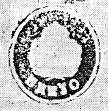
Belem (train station/Bahnhof – E.F. D. Pedro II), Rio de Janeiro (BRJ-0155)

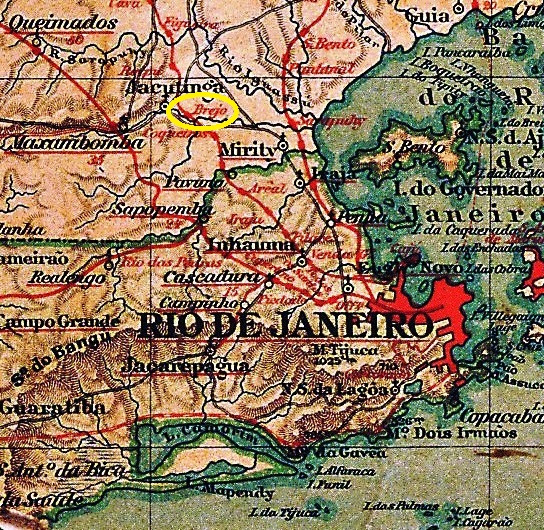
Atlas do Imperio do Brasil, 1868

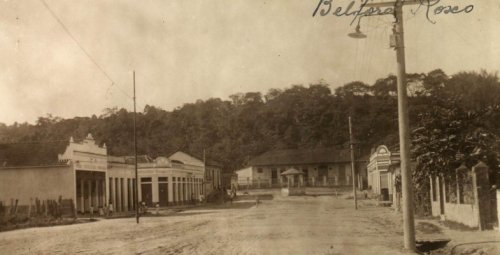
Belém station was inaugurated in May 1859 by the state railway company E.F. D. Pedro II (Main Line), located close to the north bank of the Guandu river in the Município of Iguassú, 80 km northwest of the capital Rio de Janeiro.

Jornal do Commercio, 29.05.1859

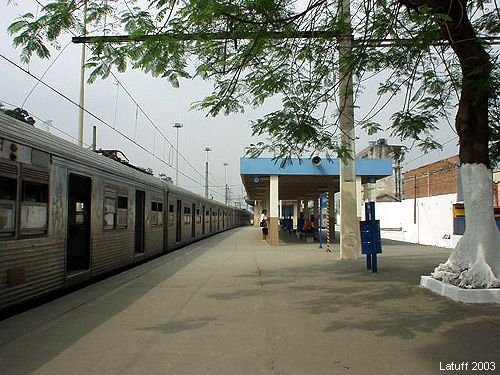
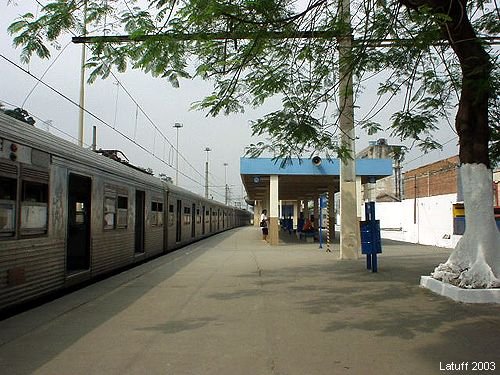
The railway line went to E.F. Central do Brasil in 1889 and to Rede Ferroviária Federal S.A. in 1975 (estacoesferroviárias.com.br). Since 1997 it has been operated by the Supervia consortium. The station building was destroyed by fire in 2020.

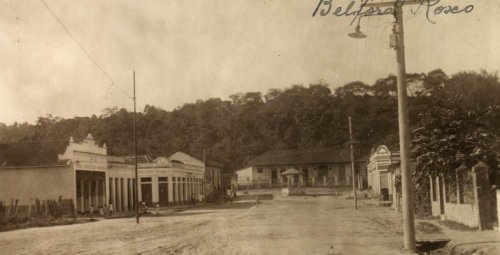
1928 (Photo : Eduardo G. David in estacoesferroviarias.com.br)
2020 (Photo : Zilmar Reis in estacoesferroviarias.com.br)

The area around the station went to the municipio of Nova Iguaçu in November 1916. The resulting settlement became the district of Belfort Roxo in December 1938, renamed Japeri in April 1952. Since December 1991, Japeri has been an independent município.

Two dates of creation for the station post office have been found. First in 1859, as listed in the Directory of Imperial Post Offices (Tabella das Agencias do Correio do Imperio, Rio de Janeiro, 1885). Then in June 1865, as Nova Monteiro writes in Administrações e Agencias Postaes do Brasil Imperio (Brasil Filatelico/RJ, 1934-5; Reprint SPP 1994-1999). There is confirmation of the earlier date from the capital press, a few days before the inauguration of the station:

Jornal do Commercio, 25.05.1859

At least four postmarks from this station are seen in the 19th century. The first one is BRJ-0155a, which was used until at least 1876, also occurs in purple and is known under Paulo Ayres (Catálogo de Carimbos Brasil-Império, S. Paulo, 1937, 1942) with no. 1235:

BRJ-0155a (P.A. 1235) 1859-1876ff

It was followed by BRJ-0155b (Fig. Claudio Coelho): a double circle with the inscriptions BELEM above and (E) below. The only specimen is dated 1880 in the centre. The other postmarks have been presented by R. Koester in Carimbologia IV:

BRJ-0155c (RK) 1883ff-1886
BRJ-0155d (RK) 1890-1895
Estações (…) do Rio de Janeiro, São Paulo e Minas Geraes (1880)

Der Bahnhof Belém wurde im Mai 1859 durch die staatliche Bahngesellschaft E.F. D. Pedro II (Hauptlinie) eingeweiht und lag nah am Nordufer des Flusses Guandu im Município von Iguassú, 80 km nordwestlich der Hauptstadt Rio de Janeiro entfernt.

Jornal do Commercio, 29.05.1859

Die Bahnlinie ging 1889 an die E.F. Central do Brasil und 1975 an die Rede Ferroviária Federal S.A. (estacoesferroviárias.com.br). Seit 1997 wird sie vom Konsortium Supervia betrieben. Das Bahnhofsgebäude wurde 2020 durch Brand zerstört.

1928 (Foto : Eduardo G. David in estacoesferroviarias.com.br)
2020 (Foto : Zilmar Reis in estacoesferroviarias.com.br)

Das Gebiet um den Bahnhof ging im November 1916 zum Municipio von Nova Iguaçu. Die entstandene Siedlung wurde im Dezember 1938 zum Distrikt von Belfort Roxo, die im April 1952 zu Japeri umbenannt ist. Seit Dezember 1991 ist Japeri ein eigenständiger Município.

Zwei Gründungszeitpunkte fürs Bahnhofspostamt wurden gefunden. Erstmals 1859, wie im Verzeichnis der kaiserlichen Postämter (Tabella das Agencias do Correio do Imperio, Rio de Janeiro, 1885) aufgelistet. Dann im Juni 1865, wie Nova Monteiro in Administrações e Agencias Postaes do Brasil Imperio (Brasil Filatelico/RJ, 1934-5; Reprint SPP 1994-1999) schreibt. Vom früheren Datum gibt es eine Bestätigung durch die Hauptstadtpresse, wenige Tage vor der Einweihung des Bahnhofs:

Jornal do Commercio, 25.05.1859

Zumindest vier Poststempel aus diesem Bahnhof sind im 19. Jahrhundert zu sehen. Erstens BRJ-0155a, der bis mindestens 1876 verwendet wurde, auch in lila vorkommt und unter Paulo Ayres (Catálogo de Carimbos Brasil-Império, S. Paulo, 1937, 1942) mit Nr. 1235 bekannt ist:

BRJ-0155a (P.A. 1235) 1859-1876ff

Ihm folgte BRJ-0155b (Abb. Claudio Coelho): ein Doppelkreis mit den Inschriften BELEM oben und (E) unten. Das einzige Exemplar ist 1880 in der Mitte datiert. Die weiteren Poststempel sind von R. Koester in Carimbologia IV vorgestellt worden:

BRJ-0155c (RK) 1883ff-1886
BRJ-0155d (RK) 1890-1895

Categories
Carimbologia A-B

Belem (train station/Bahnhof – E.F. de Carangola), Rio de Janeiro (BRJ-0154)

Estrada de Ferro Central do Brasil, 1890

Belém station was inaugurated in August 1880 by the E.F. do Carangola railway company and was located on the west bank of the Muriaé River in the município of Campos, 320 km northeast of the capital Rio de Janeiro. The railway line changed to the E.F. Leopoldina in 1890 and belonged to Rede Ferroviária Federal S.A. (estacoesferroviarias.com.br) from 1975 until its closure. The area around the station went to the Vila of Natividade de Itaperuna in November 1885, which became the município of Itaperuna in December 1889. The station was probably decommissioned in 1899, the rails having long since disappeared.

As can be read in the Directory of Imperial Post Offices (Tabella das Agencias do Correio do Imperio, Rio de Janeiro, 1885), there was a post office in the station since 1880, which was closed in May 1899, as Paulo Novaes (agenciaspostais.com.br) writes. The corresponding postmark is BRJ-0154a, found so far with dates from 1880 to 1881 and registered in Paulo Ayres’ Catálogo de Carimbos Brasil-Império, (S. Paulo, 1937, 1942) under no. 1236:

BRJ-0154a (P.A. 1236)
Almanak Laemmert, 1892

Der Bahnhof Belém wurde im August 1880 durch die E.F. do Carangola-Bahngesellschaft eingeweiht und lag am Westufer des Muriaé-Flusses im Município von Campos, 320 km nordöstlich der Hauptstadt Rio de Janeiro. Die Bahnlinie wechselte 1890 zur E.F. Leopoldina und gehörte von 1975 bis zur Stilllegung der Rede Ferroviária Federal S.A. (estacoesferroviarias.com.br). Das Gebiet um den Bahnhof ging im November 1885 zur Vila von Natividade de Itaperuna, die im Dezember 1889 der Município von Itaperuna wurde. Der Bahnhof wurde vermutlich 1899 außer Betrieb gesetzt, die Schienen sind schon längst verschwunden.

Wie im Verzeichnis der kaiserlichen Postämter /Tabella das Agencias do Correio do Imperio, Rio de Janeiro, 1885) zu lesen ist, gab es im Bahnhof ein Postamt seit 1880, das im Mai 1899 geschlossen wurde, wie Paulo Novaes (agenciaspostais.com.br) schreibt. Der Poststempel dazu ist BRJ-0154a, der bisher mit Daten von 1880 bis 1881 gefunden wurde und im Paulo Ayres‘ Catálogo de Carimbos Brasil-Império, (S. Paulo, 1937, 1942) unter Nr. 1236 registriert wurde:

BRJ-0154a (P.A. 1236)
Categories
Carimbologia A-B

Belem do Descalvado, São Paulo (BSP-0145)

Atlas do Imperio do Brasil, 1868

Another name: Descalvado (1908)

The chapel of N. Sra. de Belém was built in 1832 and was located on the west bank of the Bonito River at the Vila of Araraquara, 240 km north of the provincial capital of São Paulo. The village was elevated to Freguesia in February 1844 and passed to the Município of Rio Claro the following year. In April 1864, it was promoted to Vila in its own Município, and in April 1889, it became a town, simply called Descalvado since December 1908.

In June 1865 came the official decree for a post office on site, as reported in the capital press:

Jornal do Commercio/RJ, 30/06/1865

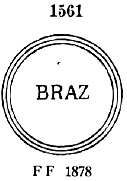
The first postmark is BSP-0145a, which also occurs in blue and dark purple, was used until about 1874 and is also known by Paulo Ayres in Catálogo de Carimbos Brasil-Império (S. Paulo, 1937, 1942) under No. 1559. However, his illustration lacks the inner circle, when compared to the original:

BSP-0145a (P.A. 1559, recte FF)

It was followed by the emergency or transitional solution BSP-0145b, used from 1870 to 1877 and already shown by R. Koester in Carimbologia IV.

BSP-0145b (RK)

James Dingler and Klerman W. Lopes reported three mute cancellations from Belém do Descalvado, which were given the nos. BPA 3233, 3235 and 4325 in Mute Cancellations of the Brazil Empire / Carimbos Mudos do Brasil Império (Brazil Philatelic Association, Rio de Janeiro, 2000):

BPA 3233 – 3235 (P.A. 411, 1869, also in blue) – 4325

Another mute cancel was presented by R. Koester (op. cit.):

1873 (RK)

From about 1878 onwards, local postmarks bore the place name DESCALVADO.

Villiers de l’Ile Adam: Carta (…) da Provincia de São Paulo, 1847

Anderer Name: Descalvado (1908)

Die Kapelle von N. Sra. de Belém wurde 1832 errichtet und lag am Westufer des Flusses Bonito bei der Vila von Araraquara, 240 km nördlich der Provinzhauptstadt São Paulo entfernt. Die Ortschaft wurde zu Freguesia im Februar 1844 erhoben und ging im folgenden Jahr zum Município von Rio Claro. Im April 1864 erfolgte der Aufstieg zur Vila im eigenen Município, und im April 1889 die Ernennung zur Stadt, die seit Dezember 1908 einfach Descalvado heißt.

Im Juni 1865 kam die behördliche Verfügung über ein Postamt vor Ort, wie die Hauptstadtpresse berichtete:

Jornal do Commercio/RJ, 30.06.1865

Der erste Poststempel ist BSP-0145a, der bis ca. 1874 auch in Blau und Dunkellila Verwendung fand und auch durch Paulo Ayres in Catálogo de Carimbos Brasil-Império (S. Paulo, 1937, 1942) unter Nr. 1559 bekannt ist. Allerdings fehlt in seiner Abbildung der innere Kreis, wie man gegenüber dem Original sehen kann:

BSP-0145a (P.A. 1559, recte FF)

Ihm folgte die Not- oder Übergangslösung BSP-0145b, die von 1870 bis 1877 gebraucht und bereits durch R. Koester in Carimbologia IV gezeigt wurde.

BSP-0145b (RK)

Aus Belém do Descalvado meldeten James Dingler und Klerman W. Lopes drei stumme Abstempelungen, die in Mute Cancellations of the Brazil Empire / Carimbos Mudos do Brasil Império (Brazil Philatelic Association, Rio de Janeiro, 2000) die Nr. BPA 3233, 3235 und 4325 bekamen:

BPA 3233 – 3235 (P.A. 411, 1869, auch in Blau) – 4325

Einen weiteren stummen Stempel stellte R. Koester (op. cit.) vor:

1873 (RK)

Ab ca. 1878 trugen die Poststempel die Ortsbezeichnung DESCALVADO.

Categories
Carimbologia A-B

Belem de Maria, Pernambuco (BPE-0085)

Carta Corographica da Provincia de Pernambuco,1880

Text update of April 3, 2023

Another name: Capoeiras

Belém de Maria was originally a small settlement called Capoeiras (Scrub), belonging to the Freguesia of Catende in the Município of Palmares, located on the south bank of the Panelas River, 150 km southwest of the provincial capital Recife. The place rose to freguesia in July 1909, to district in September 1930 and to município in December 1958.

According to different sources, the local post office was created in 1873, but it did not start operating until July of the following year, as the regional press reported:

Diario de Pernambuco, 02.07.1874

The imperial postmark from this locality is the French type BPE-0085a (Coll. Fuad Ferreira Fo.) A double circle with the inscription BELEM DE MARIA above and the small star between brackets below. The date had to be entered by hand, in the only specimen so far shows the year 1885.

Arthur D. Ribeiro: Estado de Pernambuco (1924)

Textaktualisierung vom 3. April 2023

Anderer Name: Capoeiras

Belém de Maria war ursprünglich eine kleine Siedlung namens Capoeiras (Gestrüpp), die zur Freguesia von Catende im Município von Palmares gehörte und am Südufer des Flusses Panelas lag, 150 km südwestlich der Provinzhauptstadt Recife entfernt. Der Ort stieg im Juli 1909 zur Freguesia, im September 1930 zum Distrikt und im Dezember 1958 zum Município auf.

Nach übereinstimmenden Quellen gab es dort ein Postamt seit 1873, das allerdings erst im Juli des Folgejahres seinen Betrieb aufnahm, wie die Regionalpresse berichtete:

Diario de Pernambuco, 02.07.1874

Der kaiserliche Poststempel aus dieser Ortschaft ist der französische Typus BPE-0085a (Samml. Fuad Ferreira Fo.) Ein Doppelkreis mit der Inschrift BELEM DE MARIA oben und dem kleinen Stern zwischen Klammern unten. Das Datum musste per Hand eingetragen werden, im bisher einzigen Exemplar war das Jahr 1885 zu sehen.