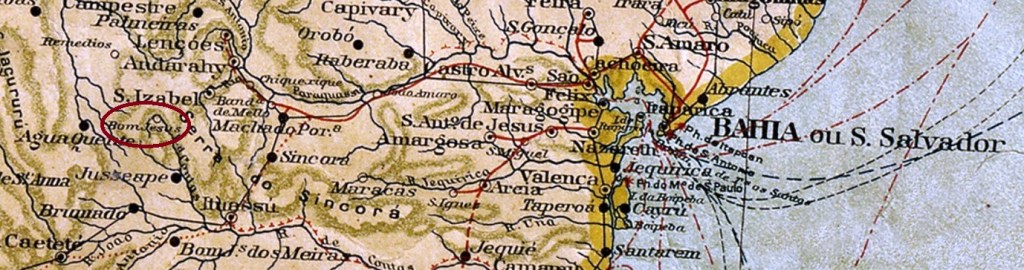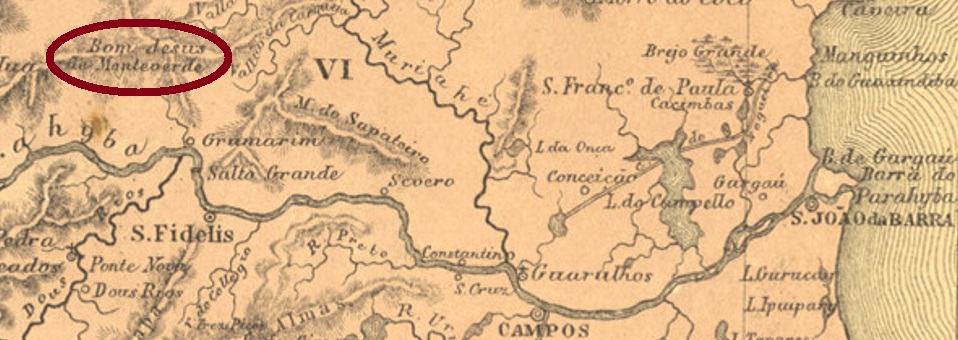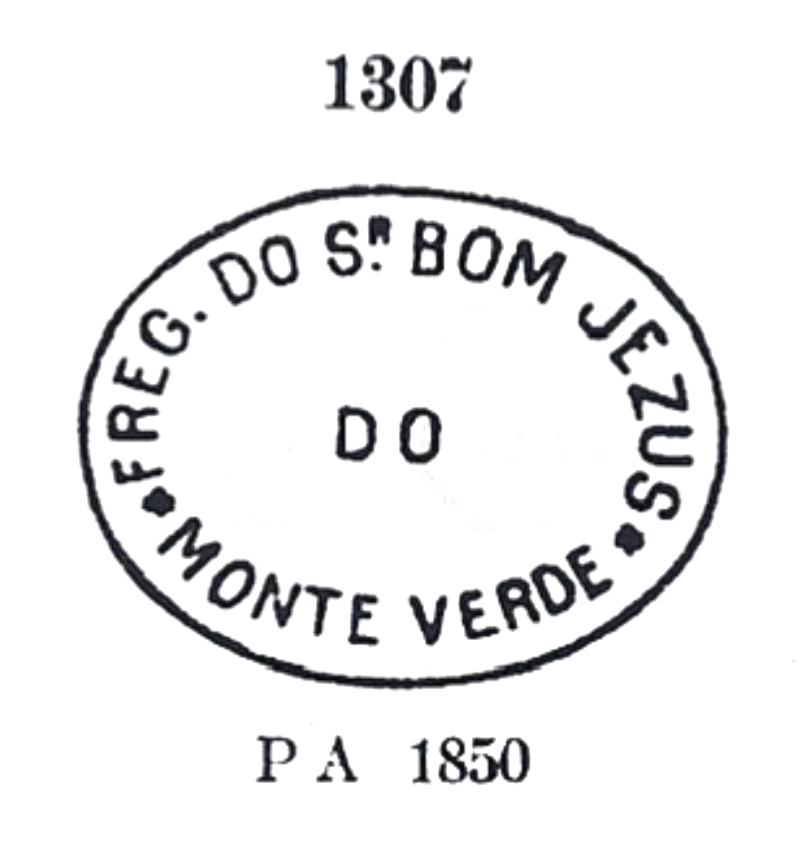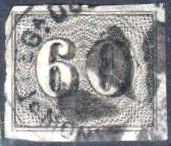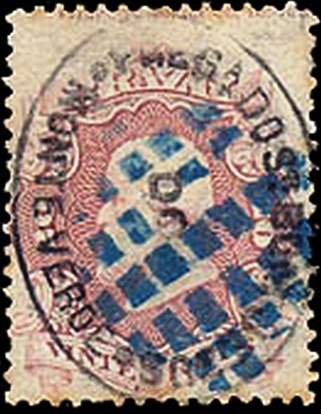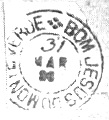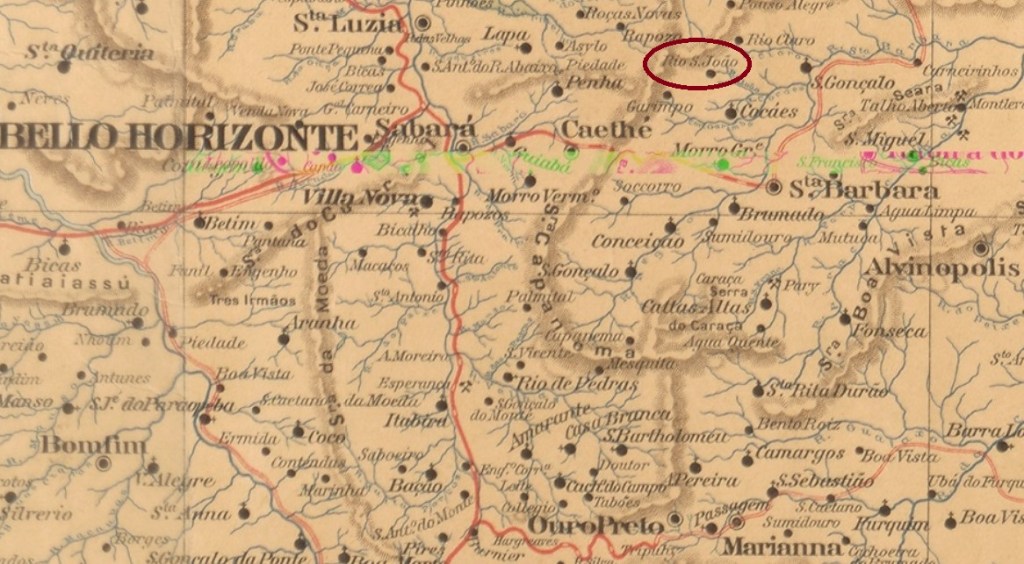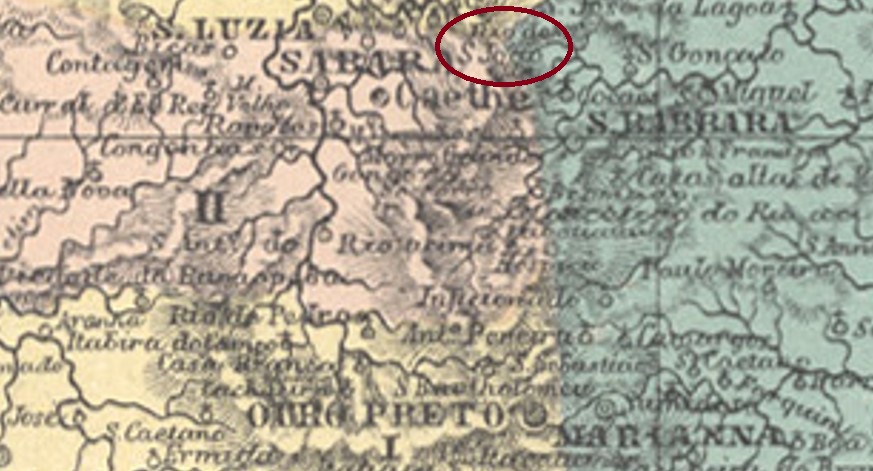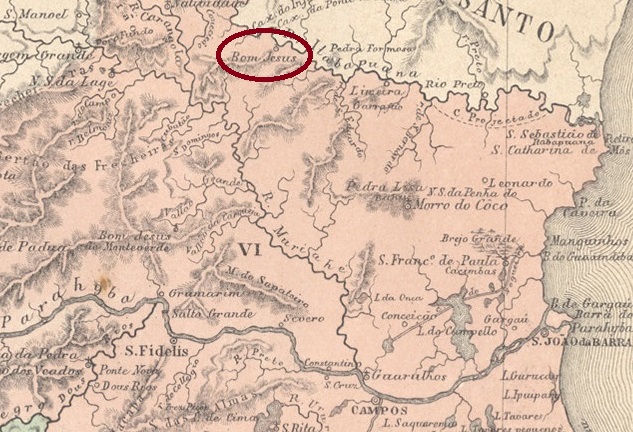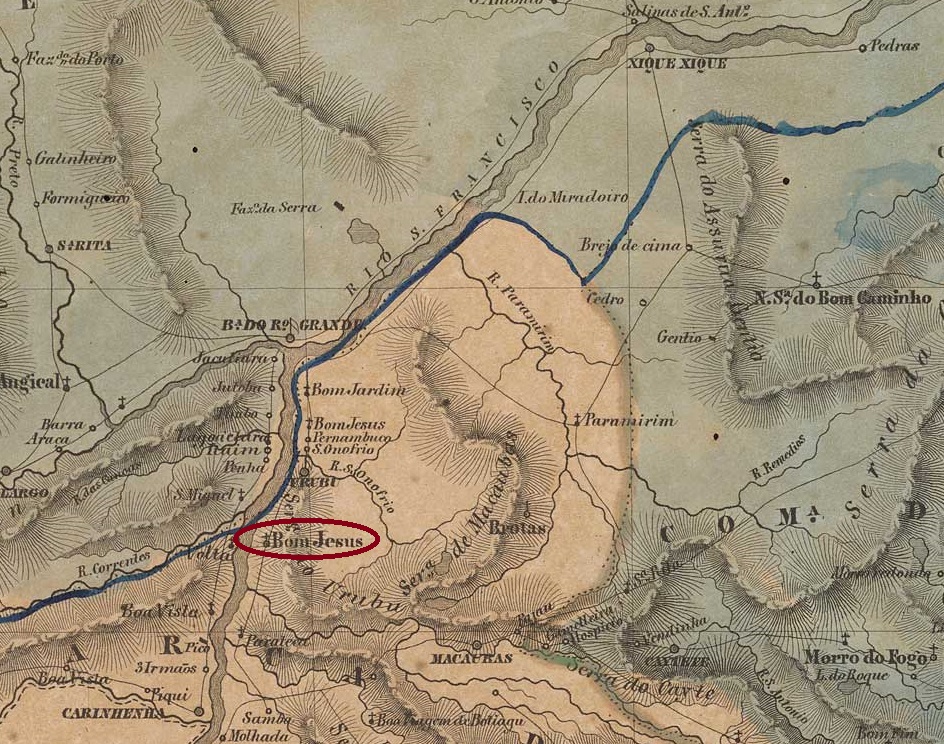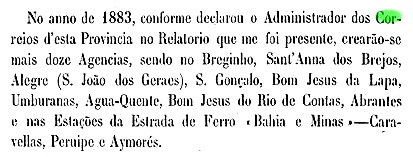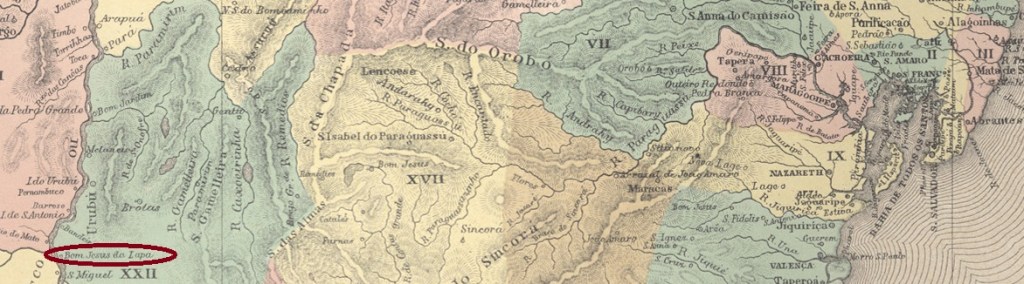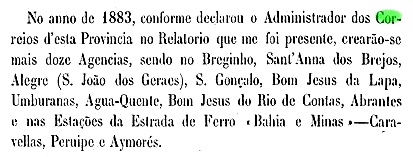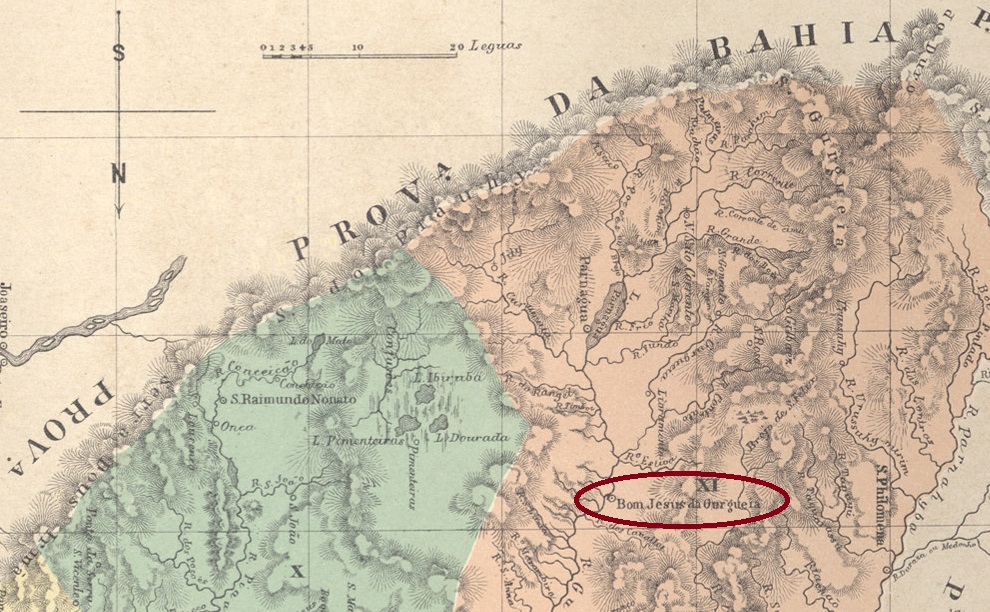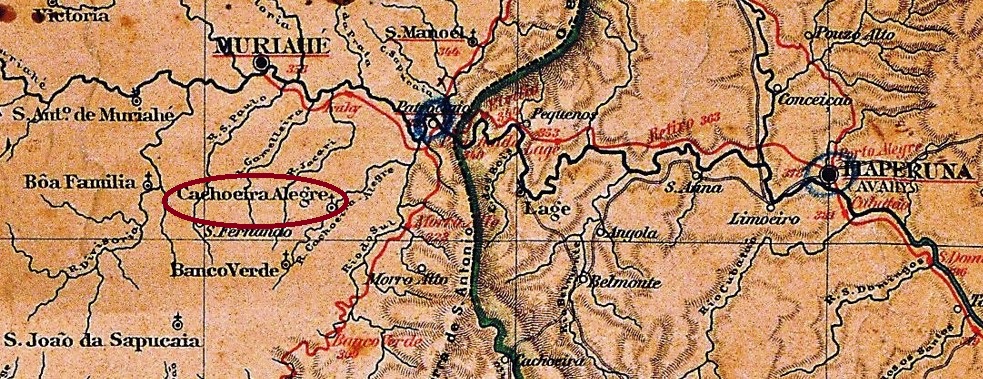
This locality was the freguesia of S. Sebastião do Barreado, which came into being in October 1884 in the município of Rio Preto and was located on the north bank of the Rio Preto, 290 km south of the provincial capital of Ouro Preto. Since December 1995, S. Sebastião do Barreado has been a district in the município of Sta. Bárbara do Monte Verde.
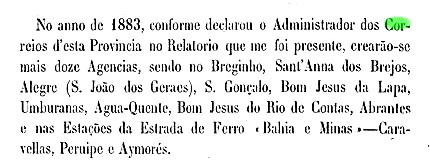
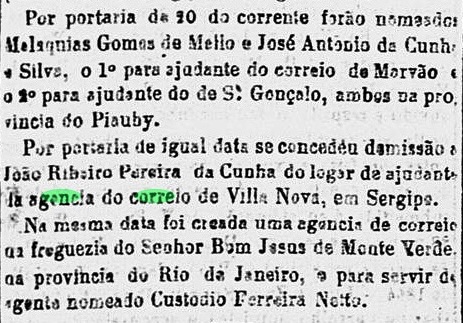
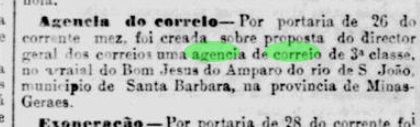
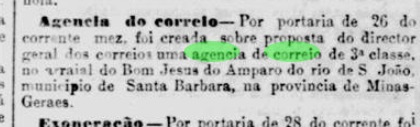
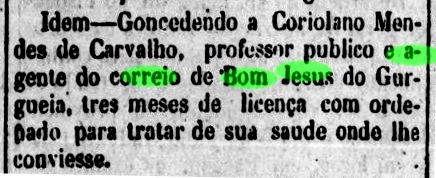
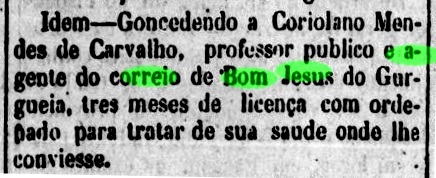
The imperial post office was created in January 1879, as Paula Sobrinho writes in História Postal de Minas Gerais (Belo Horizonte, 1997). The information is confirmed by the Postal Report (Relatorio Postal) for 1887. However, operations did not start until March, as announced in the Rio press:
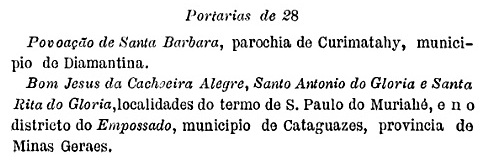
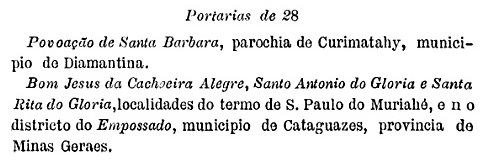
Jornal do Commercio/RJ, 28/02/1879
In the early Republic, the agency closed twice, as Paula Sobrinho also tells us: in December 1896 and February 1899, to reopen in January 1898 and December 1912 respectively.
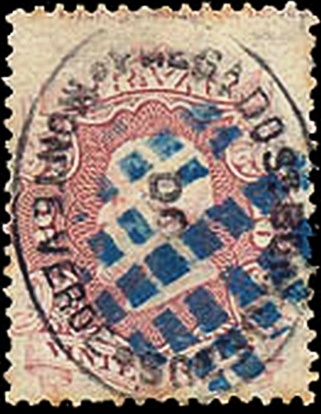
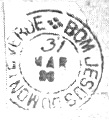
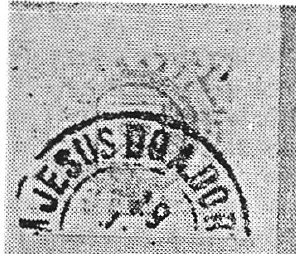
The only imperial postmark so far is BMG-0250b, as shown by R. Koester in Carimbologia III:
BMG-0250b (RK) 1889agenciaspostais.com.br
Diese Ortschaft war die Freguesia von S. Sebastião do Barreado, die im Oktober 1884 im Município von Rio Preto entstand und am Nordufer des Rio Preto lag, 290 km südlich der Provinzhauptstadt Ouro Preto. Seit Dezember 1995 ist S. Sebastião do Barreado ein Distrikt im Município von Sta. Bárbara do Monte Verde.
Das kaiserliche Postamt wurde im Januar 1879 ins Leben gerufen, wie Paula Sobrinho in História Postal de Minas Gerais (Belo Horizonte, 1997) schreibt. Die Angabe wird durch den Postbericht (Relatorio Postal) für 1887 bestätigt. Allerdings startete der Betrieb erst im März, wie in der Presse aus Rio angekündigt:
Jornal do Commercio/RJ, 28.02.1879
In der frühen Republik schloss die Agentur zweimal, wie uns Paula Sobrinho ebenfalls mitteilt: im Dezember 1896 und im Februar 1899, um im Januar 1898 bzw. im Dezember 1912 wieder zu öffnen.
Der bisher einzige kaiserliche Poststempel ist BMG-0250b und wurde durch R. Koester in Carimbologia III gezeigt:
The freguesia of N. Sa. da Conceição das Barras was established as early as October 1823 and was located on the north bank of the Maratauã River, where six waterways come together, barely 130 km north of the later provincial capital of Teresina. The village was elevated to a district in the Município of Campo Maior in September 1836 and to a vila in September 1841. It has been the town of Barras since December 1889.
Two creation years for the local post office have been found. First in May 1856, as Nova Monteiro writes in Administrações e Agencias Postaes do Brasil Imperio (Brasil Filatelico/RJ, 1934-5; Reprint SPP 1994-1999). Then 1882, as listed in the Directory of Imperial Post Offices (Tabella das Agencias do Correio do Imperio, Rio de Janeiro, 1885). The earliest postmark is BPI-0030a, already presented by Paulo Ayres in Catálogo de Carimbos Brasil-Império (S. Paulo, 1937, 1942) under no. 1229:
BPI-0030a (P.A. 1229)
Later postmarks already bear the inscription VILLA DAS BARRAS (see VPI-0220).
Villiers de l’Ile Adam: Carta (…) da Provincia do Piauhy, 1850
Andere Namen: Barras de Maratahoan, Maratahoan
Siehe auch Villa das Barras (VPI-0220)
Die Freguesia von N. Sa. da Conceição das Barras entstand bereits im Oktober 1823 und lag am Nordufer des Maratauã-Flusses, wo sechs Wasserwege zusammenkommen, knapp 130 km nördlich der späteren Provinzhauptstadt Teresina entfernt. Der Ort wurde im September 1836 zum Distrikt im Município von Campo Maior und im September 1841 zur Vila erhoben. Seit Dezember 1889 ist er die Stadt von Barras.
Zwei Gründungsjahre fürs örtliche Postamt wurden gefunden. Erstmals im Mai 1856, wie Nova Monteiro in Administrações e Agencias Postaes do Brasil Imperio (Brasil Filatelico/RJ, 1934-5; Reprint SPP 1994-1999) schreibt. Dann 1882, wie im Verzeichnis der kaiserlichen Postämter (Tabella das Agencias do Correio do Imperio, Rio de Janeiro, 1885) aufgelistet. Der früheste Poststempel ist BPI-0030a, der bereits durch Paulo Ayres in Catálogo de Carimbos Brasil-Império (S. Paulo, 1937, 1942) unter Nr. 1229 vorgestellt wurde:
BPI-0030a (P.A. 1229)
Spätere Poststempel tragen schon die Inschrift VILLA DAS BARRAS (s. VPI-0220).
This locality was the former Freguesia of N. Sra. do Livramento do Brejo Grande (Our Lady of Liberation at the Great Swamp), located in the Município of Itapicuru close to the provincial border with Sergipe, 210 km north of the capital Salvador da Bahia. In July 1870, it became the Vila of Barracão, which has been the Município of Rio Real since June 1931.
As Reinhold Koester writes in Carimbologia III, there was a post office there since July 1887, which is confirmed by the Rio press:
Novidades/RJ, 28.07.1887
So far, no imperial postmark from Barracão has been seen.
Atlas do Imperio do Brasil, 1868
Andere Namen: Brejo Grande, Rio Real (1931)
Diese Ortschaft war die frühere Freguesia von N. Sra. do Livramento do Brejo Grande (Unsere Liebe Frau der Befreiung am Großen Sumpf), die im Município von Itapicuru nah an der Provinzgrenze zu Sergipe lag, 210 km nördlich der Hauptstadt Salvador da Bahia entfernt. Im Juli 1870 wurde daraus die Vila von Barracão, die seit Juni 1931 der Município von Rio Real ist.
Wie Reinhold Koester in Carimbologia III schreibt, gab es dort ein Postamt seit Juli 1887. Das wird durch die Presse aus Rio bestätigt:
Novidades/RJ, 28.07.1887
Bisher war kein kaiserlicher Poststempel aus Barracão zu sehen.
The Freguesia of São Pedro d’Alcantara da Barra Velha originally belonged to the Vila of S. Francisco and was located on the Atlantic Ocean, 130 km north of the provincial capital of Desterro (today: Florianópolis). In April 1876, it changed to the Vila of Paraty, which was renamed Araquary in December 1943. Since November 1961, Barra Velha has been an independent município.
According to the Imperial Post Office Directory (Tabella das Agencias do Correio do Imperio, Rio de Janeiro, 1885), there has been a post office there since 1875. This information is confirmed by the provincial president’s report for the following year:
Relatorio do Presidente da Provincia /SC 1876
The only imperial postmark so far is BSC-0015b, which can be seen in Paulo Ayres’ Catálogo de Carimbos Brasil-Império, (S. Paulo, 1937, 1942) unfortunately without further data:
BSC-0015b (P.A. p. 145)Atlas do Imperio do Brasil 1868
Die Freguesia von São Pedro d’Alcantara da Barra Velha gehörte ursprünglich der Vila von S. Francisco und lag am Atlantik, 130 km nördlich der Provinzhauptstadt Desterro (heute: Florianópolis). Im April 1876 wechselte sie zur Vila von Paraty, die im Dezember 1943 zu Araquary umbenannt wurde. Seit November 1961 ist Barra Velha ein eigenständiger Município.
Wie aus demVerzeichnis der kaiserlichen Postämter /(Tabella das Agencias do Correio do Imperio, Rio de Janeiro, 1885) hervorgeht, gab es dort ein Postamt seit 1875. Die Angabe wird durch den Bericht des Provinzpräsidenten fürs folgende Jahr bestätigt:
Relatorio do Presidente da Provincia /SC 1876
Der bisher einzige kaiserliche Poststempel ist BSC-0015b, der im Paulo Ayres‘ Catálogo de Carimbos Brasil-Império, (S. Paulo, 1937, 1942) leider ohne weitere Daten zu sehen ist:
There has been a great deal of puzzlement about this post office. R. Koester (Carimbologia III) could not definitively find out whether this was a small settlement near S. José do Norte or the present town of Barra do Ribeiro. We believe that the first alternative is the correct one and are talking about the Povoação de N. Sra. da Boa Viagem da Barra do Rio Grande (Settlement of Our Lady of the Good Voyage at the mouth of the Rio Grande), a small sleepy village that is still a rural suburb of S. José do Norte, located 320 km south of the capital Porto Alegre.
As Nova Monteiro points out in Administrações e Agencias Postaes do Brasil Imperio (Brasil Filatelico/RJ, 1934-5; Reprint SPP 1994-1999), there had been a post office there since November 1867. At that time, what is now Barra do Ribeiro was not a settlement worth mentioning, while Barra do Rio Grande was eminently important for two reasons. First, the mouth of the canal to Lagoa dos Patos was a strategic defence point in a region that had experienced centuries of war. And secondly, this very mouth was a challenge for all ship captains, as the open sea access with a bottom of thin sand caused a constant change of navigation channel, causing countless ships to run aground over time.
This problem was recognised early on and can also explain why the settlement of Brazil’s southernmost province went relatively slowly. But a solution was a long time coming. It was not until about 1880 that an appointed team of engineers from England tackled the task, and it was not until 1919 that the two breakwaters protecting the entrance to the canal were completed.
Google Maps
Imperial postmarks from Barra are also a long time coming. The example below (Coll. Klerman Lopes) was initially assumed to be BRS-0025a, but is more likely to belong to Barra de S. Matheus in Espirito Santo province (see BES-0035):
(KL) 1866ff
Since the Barra agency was not listed in the Directory of Imperial Post Offices (Tabella das Agencias do Correio do Imperio, Rio de Janeiro, 1885) and thereafter, we may assume that the works on the navigation canal made it redundant and it was closed around 1880. Or was it simply replaced in the 80s by a telegraph post that could report the respective navigation status more quickly:
A Federação, 09.01.1885
In July 1890 – i.e. in the early Republic – a Barra post office was established, but this is probably Barra do Ribeiro. The postmarks are double circles with inscriptions BARRA above and (S.P. DO SUL) below.
Google Maps
Textaktualisierung vom 10.03.2023
Über dieses Postamt wird sehr lange gerätselt. R. Koester (Carimbologia III) konnte nicht endgültig herausfinden, ob es sich hier um eine kleine Siedlung bei S. José do Norte oder um die heutige Stadt Barra do Ribeiro handelt. Wir glauben, dass die erste Alternative die richtige ist, und reden über die Povoação de N. Sra. da Boa Viagem da Barra do Rio Grande (Siedlung von Unseren Lieben Frau der Guten Fahrt an der Mündung des Rio Grande), eine kleine verschlafene Ortschaft, die noch heute ein ländlicher Vorort von S. José do Norte ist, 320 km südlich der Hauptstadt Porto Alegre gelegen.
Wie Nova Monteiro in Administrações e Agencias Postaes do Brasil Imperio (Brasil Filatelico/RJ, 1934-5; Reprint SPP 1994-1999) schreibt, gab es dort ein Postamt seit November 1867. Zu dieser Zeit war die heutige Barra do Ribeiro keine erwähnenswerte Siedlung, während Barra do Rio Grande aus zwei Gründen eminent wichtig war. Erstens war die Mündung des Kanals zur Lagoa dos Patos ein strategischer Verteidigungspunkt in einer Region, die jahrhundertlang Krieg erlebt hatte. Und zweitens war eben diese Mündung eine Herausforderung für alle Schiffskapitäne, da der offener Meerzugang mit Boden aus dünnem Sand einen ständigen Wechsel des Navigationskanals verursachte und dadurch im Lauf der Zeit unzählige Schiffe auf Grund laufen ließ.
Dieses Problem wurde zwar früh erkannt und kann auch erklären, warum die Siedlung der südlichsten Provinz Brasiliens relativ langsam verlief. Aber eine Lösung ließ auf sich warten. Erst ca. 1880 packte ein bestellter Ingenieurteam aus England die Aufgabe, und erst 1919 waren die zwei Mole zum Schutz der Einfahrt in den Kanal fertig.
Google Maps
Auch kaiserliche Poststempel aus Barra lassen auf sich warten. Das untere Beispiel (Samml. Klerman Lopes) wurde zunächst als BRS-0025a angenommen, dürfte aber eher zu Barra de S. Matheus in der Provinz Espirito Santo (siehe BES-0035) gehören:
(KL) 1866ff
Da die Barra-Agentur im Verzeichnis der kaiserlichen Postämter (Tabella das Agencias do Correio do Imperio, Rio de Janeiro, 1885) und danach nicht mehr aufgelistet wurde, dürfen wir annehmen, dass die Arbeiten am Navigationskanal sie überflüssig gemacht haben, und sie um 1880 geschlossen wurde. Oder wurde sie einfach in den 80er Jahren durch einen Telegraphenposten ersetzt, der den jeweiligen Navigationsstand schneller melden konnte:
A Federação, 09.01.1885
Im Juli 1890 – also in der frühen Republik – wurde ein Postamt Barra ins Leben gerufen, aber hier dürfte es sich um Barra do Ribeiro handeln. Die Poststempel sind Doppelkreise mit Inschriften BARRA oben und (S.P. DO SUL) unten.
The former Freguesia de S. Sebastião da Barra Mansa was founded around 1820 at the Vila of Resende on the south bank of the Paraiba do Sul, 140 km northwest of the capital Rio de Janeiro. It became a vila in October 1832 and a town in October 1857.
As Nova Monteiro writes in Administrações e Agencias Postaes do Brasil Imperio (Brasil Filatelico/RJ, 1934-5; Reprint SPP 1994-1999), there was a post office at the site from March 1833. The first postmark is BRJ-0145a, found so far with dates between 1843 and 1863 and known through Paulo Ayres in Catálogo de Carimbos Brasil-Império (S. Paulo, 1937, 1942) as No. 1230:
BRJ-0145a (P.A. 1230)
It was followed by BRJ-0145b (image from the Internet), which occurred in the period 1854ff-1866ff:
BRJ-0145b (Imperio e rep – estudo)
Then came the French type BRJ-0145c (Coll. Klerman W. Lopes): a double circle with the inscription BARRA – MANSA at the top and the star between brackets at the bottom, with internal dates from 1874 to 1886. The next postmark is BRJ-0145d (image by Luís C. Fritzen): a double circle with the inscription BARRA MANSA at the top and an ornament in lozenge at the bottom, formed by four small lozenges. It also appears in blue and red with dates from 1885 to 1897.
The last postmark in the Empire is BRJ-0145e (image from the Internet). In this double circle we have the inscription BARRA – MANSA at the top and an ornament in branches at the bottom, dates in the middle: 1889 to 1894. But before it, there came BRJ-0145f, already known through P. Ayres (op. cit.), unfortunately without dates.
BRJ-0145f (P.A. p. 144)
Alfred J. Dingler and Klerman w. Lopes have also registered a mute cancellation from Barra Mansa in Mute Cancellations of the Brazil Empire / Carimbos Mudos do Brasil Império, /Brazil Philatelic Association, Rio de Janeiro, 2000) under No. 281 :
BPA 281
Another mute postmark came to light through R. Koester in Carimbologia III:
1880-1883 (RK)Villiers de l’Ile Adam: Carta (…) da Provincia do Rio de Janeiro, 1850
Die ehemalige Freguesia de S. Sebastião da Barra Mansa wurde um 1820 gegründet und lag bei der Vila von Resende am Südufer des Paraiba do Sul, 140 km nordwestlich der Hauptstadt Rio de Janeiro entfernt. Im Oktober 1832 wurde daraus eine Vila und im Oktober 1857 eine Stadt.
Wie Nova Monteiro in Administrações e Agencias Postaes do Brasil Imperio (Brasil Filatelico/RJ, 1934-5; Reprint SPP 1994-1999) schreibt, gab es vor Ort ein Postamt seit März 1833. Der erste Poststempel ist BRJ-0145a, der bisher mit Daten zwischen 1843 und 1863 gefunden wurde und durch Paulo Ayres in Catálogo de Carimbos Brasil-Império (S. Paulo, 1937, 1942) unter der Nr. 1230 bekannt ist:
BRJ-0145a (P.A. 1230)
Ihm folgte BRJ-0145b (Abb. aus dem Internet), der im Zeitraum 1854ff-1866ff vorgekommen ist:
BRJ-0145b (Imperio e Rep – estudo)
Danach kam der französische Typus BRJ-0145c (Samml. Klerman W. Lopes): ein Doppelkreis mit der Inschrift BARRA – MANSA oben und dem Stern zwischen Klammern unten, dazu inneren Daten von 1874 bis 1886. Der nächste Poststempel ist BRJ-0145d (Abb. Luís C. Fritzen): ein doppelkreis mit der Inschrift BARRA MANSA oben und einem Ornament in Raute unten, das aus vier kleinen Rauten gebildet wird. Er kommt auch in Blau und Rot mit Daten von 1885 bis 1897 vor.
Der letzte Poststempel im Kaiserreich ist BRJ-0145e (Abb. aus dem Internet). In diesem Doppelkreis haben wir oben die Inschrift BARRA – MANSA und unten ein Ornament in Zweigen, Daten in der Mitte: 1889 bis 1894. Vor ihm kam aber BRJ-0145f, der bereits durch P. Ayres (op. cit.) bekannt ist, leider ohne Datumsangaben.
BRJ-0145f (P.A. S. 144)
Alfred J. Dingler und Klerman W. Lopes haben auch eine stumme Entwertung aus Barra Mansa in Mute Cancellations of the Brazil Empire / Carimbos Mudos do Brasil Império, /Brazil Philatelic Association, Rio de Janeiro, 2000) unter Nr. 281 registriert :
BPA 281
Eine weitere stumme Abstempelung kam durch R. Koester in Carimbologia III zu Tage:
Villiers de l’Ile Adam: Carta (…) da Provincia de Minas Geraes, 1849
The freguesia of S. José da Barra Longa was founded as early as February 1740, it belonged to the Vila of Mariana and was located on the south bank of the river Carmo, 70 km east of the later provincial capital Ouro Preto. In April 1841, the village was promoted to a Vila, but in July 1857 it was downgraded as a district in the Município of Ponte Nova. Barra Longa then moved back to the Município of Mariana (in October 1870), returning to Ponte Nova in September 1923. Barra Longa has been an independent município since December 1938.
Two dates of origin have been found for the local post office. The first was in February 1865, as reported by the Rio press:
Correio Mercantil/RJ, 20.02.1865
The second date is one month later and was found by Paula Sobrinho in História Postal de Minas Gerais (Belo Horizonte, 1997), and adopted by R. Koester in Carimbologia III. This could be the date of the commissioning of the agency. The only postmark in the Empire so far is BMG-0240b, found with dates from 1879 to 1890 and already shown by R. Koester (op. cit.):
BMG-0240b (RK)
James A. Dingler and Klerman W. Lopes have also presented a mute cancellation from Barra Longa in Mute Cancellations of the Brazil Empire / Carimbos Mudos do Brasil Império (Brazil Philatelic Association, Rio de Janeiro, 2000) under No. 448, which was used from about 1878 to 1882:
BPA 448Atlas do Imperio do Brasil, 1868
Die Freguesia von S. José da Barra Longa wurde bereits im Februar 1740 gegründet, sie gehörte der Vila von Mariana und lag am Südufer des Flusses Carmo, 70 km östlich der späteren Provinzhauptstadt Ouro Preto entfernt. Im April 1841 stieg der Ort zur Vila auf, wurde aber im Juli 1857 als Distrikt im Município von Ponte Nova herabgestuft. Danach wechselte Barra Longa zurück zum Município von Mariana (im Oktober 1870), um im September 1923 zu Ponte Nova zurückzukehren. Seit Dezember 1938 ist Barra Longa ein eigenständiger Município.
Es wurden zwei Entstegungsdaten fürs örtliche Postamt gefunden. Erstmals im Februar 1865, wie die Presse aus Rio berichtete:
Correio Mercantil/RJ, 20.02.1865
Das zweite Datum liegt ein Monat später und wurde durch Paula Sobrinho in História Postal de Minas Gerais (Belo Horizonte, 1997) ermittelt, sowie von R. Koester in Carimbologia III übernommen. Das könnte das Datum der Inbetriebnahme der Agentur sein. Der bisher einzige Ortsstempel im Kaiserreich ist BMG-0240b, der mit Daten von 1879 bis 1890 gefunden und bereits durck R. Koester (op. cit.) gezeigt wurde:
BMG-0240b (RK)
James A. Dingler und Klerman W. Lopes haben auch eine stumme Entwertung aus Barra Longa in Mute Cancellations of the Brazil Empire / Carimbos Mudos do Brasil Império (Brazil Philatelic Association, Rio de Janeiro, 2000) unter Nr. 448 präsentiert, die von ca. 1878 bis 1882 verwendet wurde:
Villiers de l’Ile Adam: Carta (…) das Provincias de Pernambuco, Alagoas e Sergipe, 1848
Barra Grande was a small port on the north bank of the estuary of the Rio de Paus into the Atlantic Ocean, belonging to the Freguesia of São Bento in the imperial Município of Porto Calvo, 150 km northeast of the provincial capital of Maceió. In April 1875, the place changed to the newly created Município of Isabel, which was called Maragogy from the following year.
Aldo Cardoso writes in Contribuição para a História dos Correios de Alagoas (Maceió, 1969) that there was a post office there from July 1869. The Almanac for the Province of Alagoas for 1874 even names the post agent:
Almanak da Provincia das Alagoas, 1874
Since this agency is missing from the Almanac edition for 1877, we may assume that it was closed around 1876. Since then, no imperial post office has been mentioned for Barra Grande. So far, no postmark from the period has been found either.
Atlas do Imperio do Brasil, 1868
Barra Grande war ein kleiner Hafen am Nordufer der Flussmündung des Rio de Paus in den Atlantik, der zur Freguesia von São Bento im kaiserlichen Município von Porto Calvo gehörte und 150 km nordöstlich der Provinzhauptstadt Maceió lag. Im April 1875 wechselte der Ort zum neu gegründeten Município von Isabel, der ab dem folgenden Jahr Maragogy hieß.
Aldo Cardoso schreibt in Contribuição para a História dos Correios de Alagoas (Maceió, 1969), dass es dort ab Juli 1869 ein Postamt gab. Der Almanak für die Provinz Alagoas für 1874 nennt sogar seinen Postagenten:
Almanak da Provincia das Alagoas, 1874
Da diese Agentur in der Almanak-Ausgabe für 1877 fehlt, darf man annehmen, dass sie um 1876 geschlossen wurde. Seitdem wurde für Barra Grande kein kaiserliches Postamt mehr erwähnt. Bisher wurde auch kein Poststempel aus der Zeit gefunden.
Barra do Rio Negro is the former name of the present-day Amazon metropolis of Manaus. The town was founded around 1670, when the fortress of S. José da Barra do Rio Negro was built at the mouth of the river into the Amazon. The place became a freguesia in 1695, also serving as the capital of the former Capitania of S. José do Rio Negro, until its designation as a vila in 1790.
In November 1832, the Vila was renamed Manaos, in memory of an Indian tribe of the region. It then belonged to the province of Grão-Pará. In October 1848, it was promoted to the city of N. Sra. da Conceição da Barra do Rio Negro, which became the capital of the then newly founded province of Amazonas in September 1850. Finally, in September 1856, the name Manaus returned for good.
As Nova Monteiro writes in Administrações e Agencias Postaes do Brasil Imperio (Brasil Filatelico/RJ, 1934-5; Reprint SPP 1994-1999), the local postal agency was created in March 1829. So far, no imperial postmark has been seen under Barra do Rio Negro.
Villiers de l’Ile Adam: Carta (…) das Provincias do Grão-Pará e Alto Amazonas, 1850
Anderer Name: Manaos/Manaus (1832)
Barra do Rio Negro ist der frühere Name der heutigen Amazonasmetropole Manaus. Die Ortsgründung fand um 1670 statt, als die Festung von S. José da Barra do Rio Negro an der Mündung des Flusses in den Amazonas errichtet wurde. Der Ort wurde 1695 zu einer Freguesia, die auch als „Hauptstadt“ der ehemaligen Capitania von S. José do Rio Negro fungierte, bis zur Ernennung zur Vila im Jahre 1790.
Im November 1832 wurde die Vila zu Manaos umbenannt, in Erinnerung an einem Indianerstamm der Region. Da gehörte sie dann der Provinz Grão-Pará. Im Oktober 1848 erfolgte der Aufstieg zur Stadt N. Sra. da Conceição da Barra do Rio Negro, die im September 1850 zur Hauptstadt der damals neu gegründeten Provinz Amazonas wurde. Schließlich kehrte im September 1856 der Name Manaus endgültig zurück.
Wie Nova Monteiro in Administrações e Agencias Postaes do Brasil Imperio, (Brasil Filatelico/RJ, 1934-5; Reprint SPP 1994-1999) schreibt, wurde die örtliche Postagentur im März 1829 ins Leben gerufen. Bisher wurde kein kaiserlicher Poststempel unter Barra do Rio Negro gesehen.
Villiers de l’Ile Adam: Carta (…) da Provincia da Bahia, 1848
Another name: Itacaré (1931)
The freguesia of Barra do Rio de Contas originated in 1718 on the southern shore of the mouth of the Rio de Contas into the Atlantic Ocean, it was located 250 km south of the later provincial capital Salvador da Bahia and belonged to the Vila of Valença. The place rose to the status of Vila in January 1732 and has been called Itacaré since December 1931. The word from the Tupi-Guarani means stonecrocodile.
There were no less than four dates for the creation of the post office there. First in May 1832, as Nova Monteiro writes in Administrações e Agencias Postaes do Brasil Imperio, (Brasil Filatelico/RJ, 1934-5; Reprint SPP 1994-1999). Then in 1852, as can be read in the report of the Imperial Ministry:
Relatorio do Ministerio do Imperio, 1852
The next creation should have taken place in 1858, as shown in the Directory of Imperial Post Offices (Tabella das Agencias do Correio do Imperio, Rio de Janeiro, 1885). And finally, in February 1882, the Rio press reported the new postal agency in Barra do Rio de Contas:
Gazeta de Noticias/RJ, 12.02.1882
Despite the many creation dates, no imperial postmark has yet been seen from this place.
Atlas do Imperio do Brasil, 1868
Anderer Name: Itacaré (1931)Die Freguesia von Barra do Rio de Contas entstand 1718 am Südufer der Mündung des Rio de Contas in den Atlantik, sie lag 250 km südlich der späteren Provinzhauptstadt Salvador da Bahia und gehörte der Vila von Valença. Der Ort stieg im Januar 1732 zur Vila auf und heißt seit Dezember 1931 Itacaré. Das Wort aus dem Tupi-Guarani bedeutet Krokodil aus Stein.
Es wurden nicht weniger als vier Zeitpunkte für die Entstehung des Postamts dort. Erstmals im Mai 1832, wie Nova Monteiro in Administrações e Agencias Postaes do Brasil Imperio, (Brasil Filatelico/RJ, 1934-5; Reprint SPP 1994-1999) schreibt. Dann 1852, wie im Bericht des Imperialministeriums zu lesen ist:
Relatorio do Ministerio do Imperio, 1852
Die nächste Gründung des Postamts sollte 1858 stattgefunden haben, wie aus dem Verzeichnis der kaiserlichen Postämter (Tabella das Agencias do Correio do Imperio, Rio de Janeiro, 1885) hervorgeht. Und schließlich berichtete die Presse aus Rio im Februar 1882 über die Entstehung einer Postagentur in Barra do Rio de Contas:
Gazeta de Noticias/RJ, 12.02.1882
Trotz der vielen Gründungsdaten wurde bisher kein kaiserlicher Poststempel aus diesem Ort gesehen.