Categories
Carimbologia A-B

Barra do Pirahy (train station/Bahnhof), Rio de Janeiro (BRJ-0140)

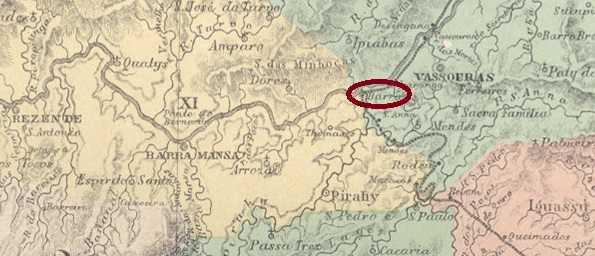
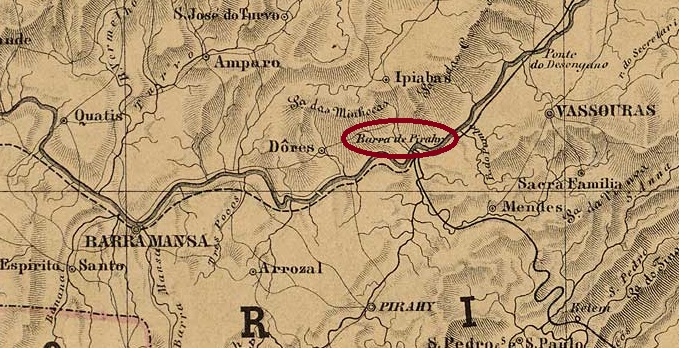
Atlas do Imperio do Brasil, 1868

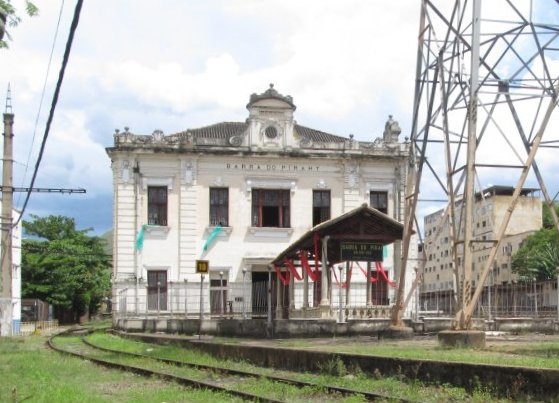
Barra do Pirahy station was inaugurated in July 1864 by the E.F. D. Pedro II railway company (Main Line) and was located at the mouth of the Piraí River in the Paraíba do Sul in the Município of Pirahy, 120 km northwest of the capital Rio de Janeiro. The railway line went to the E.F. Central do Brasil in 1889 and to Rede Ferroviária Federal S.A. in 1975 (estacoesferroviarias.com.br). Since 1996 it has been operated by the MRS railway company.
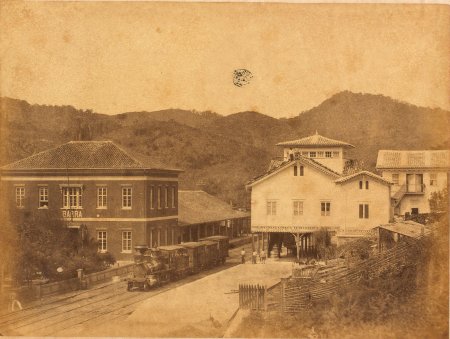
1881 (in estacoesferroviarias.com.br)
2019 (photo Júlio C. Alves, in estacoesferroviarias.com.br)

The settlement around the station continued to grow, becoming a freguesia of S. Benedicto da Barra do Pirahy in November 1885 and a vila in its own município in February 1890.

As Nova Monteiro writes in Administrações e Agencias Postaes do Brasil Imperio (Brasil Filatelico/RJ, 1934-5; Reprint SPP 1994-1999), there had been a post office there since July 1864, before the station was opened. The first postmark is BRJ-0140a which was used until at least 1874 and is already known by P. Ayres in Catálogo de Carimbos Brasil-Império, (S. Paulo, 1937, 1942) under No. 1231. However, in his illustration the dots to the right and left of the place name are missing, as can be seen from the picture (Coll. José A. Junges):
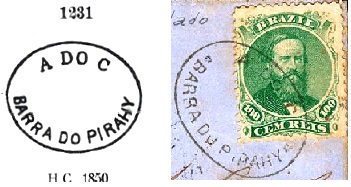
BRJ-0140a (P.A. 1231 recte JJ)

It was followed by BRJ-0140b (Coll. José A. Junges): a double circle with the inscription B. DE PIRAHY at the top. This postmark also occurs in green and has been found so far with internal dates from 1879 to 1893.

James A. Dingler and Klerman W. Lopes, in Mute Cancellations of the Brazil Empire / Carimbos Mudos do Brasil Império (Brazil Philatelic Association, Rio de Janeiro, 2000), recorded two mute cancellations from Barra do Pirahy, with nos. 279 (also P. Ayres no. 19, found with date from 1879) and 1435 respectively:
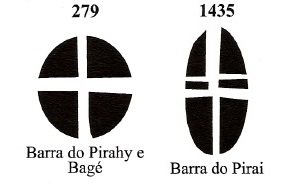
BPA 279 (P.A. 19, 1879) – 1435
Almanak Laemmert, 1866

Der Bahnhof Barra do Pirahy wurde im Juli 1864 durch die Bahngesellschaft E.F. D. Pedro II (Hauptlinie) eingeweiht und lag an der Mündung des Flusses Piraí in den Paraíba do Sul im Município von Pirahy, 120 km nordwestlich der Hauptstadt Rio de Janeiro entfernt. Die Bahnlinie ging 1889 zur E.F. Central do Brasil und 1975 zur rede Ferroviária Federal S.A. (estacoesferroviarias.com.br). Seit 1996 wird sie von der MRS-Bahngesellschaft betrieben.
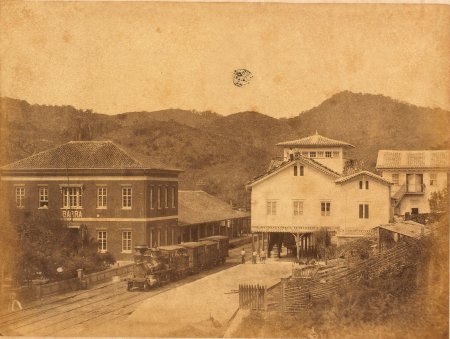
1881 (in estacoesferroviarias.com.br)
2019 (Foto Júlio C. Alves, in estacoesferroviarias.com.br)

Die Siedlung um den Bahnhof wuchs weiter, wurde im November 1885 zur Freguesia von S. Benedicto da Barra do Pirahy und im Februar 1890 zu einer Vila im eigenen Município.

Wie Nova Monteiro in Administrações e Agencias Postaes do Brasil Imperio (Brasil Filatelico/RJ, 1934-5; Reprint SPP 1994-1999) schreibt, gab es dort ein Postamt seit Juli 1864 und damit noch vor der Inbetriebnahme des Bahnhofs. Der erste Poststempel ist BRJ-0140a der bis mindestens 1874 benutzt wurde und bereits durch P. Ayres in Catálogo de Carimbos Brasil-Império, (S. Paulo, 1937, 1942) unter der Nr. 1231 bekannt ist. Allerdings fehlen in seiner Abbildung die Punkte rechts und links des Ortsnamens, wie man aus der Bild (Samml. José A. Junges) entnehmen kann:
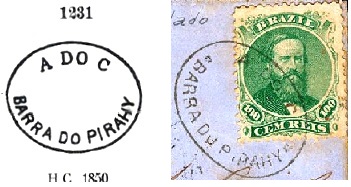
BRJ-0140a (P.A. 1231 recte JJ)

Ihm folgte BRJ-0140b (Samml. José A. Junges): ein Doppelkreis mit der Inschrift B. DE PIRAHY oben. Dieser Poststempel kommt auch in grün vor und wurde bisher mit inneren Daten von 1879 bis 1893 gefunden.

James A. Dingler und Klerman W. Lopes registrierten in Mute Cancellations of the Brazil Empire / Carimbos Mudos do Brasil Império (Brazil Philatelic Association, Rio de Janeiro, 2000) zwei stumme Entwertungen aus Barra do Pirahy, mit Nr. 279 (auch P. Ayres Nr. 19, gefunden mit Datum aus 1879) resp. 1435:
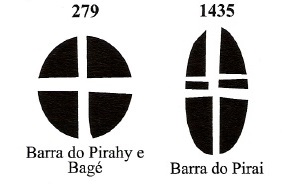
BPA 279 (P.A. 19, 1879) – 1435
Categories
Carimbologia A-B

Barra do Mossoró, Rio Grande do Norte (BRN-0035)

Atlas do Imperio do Brasil, 1868

Other names: Porto da Barra de Mossoró, Areia Branca (ca. 1890)
Around 1872, the settlement of Porto da Barra de Mossoró was established on the west bank of the Apodi River on the provincial border with Ceará, 290 km northwest of the provincial capital Natal. The name was later shortened to Barra do Mossoró and around 1890 changed to Areia Branca (White Sand), now as a district. This was the name of the settlement on the other side of the Apodi. Areia Branca became a vila in February 1892 and has been a town since October 1927.

As R. Koester writes in Carimbologia III, there was a post office there since June 1872. The only 19th century postmark so far is BRN-0035b (image: Jorge L. Pedreira): a double circle with the inscription BARRA DO MOSSORÓ at the top and an ornament in lozenge below. Two copies found, dated 1890 in the centre.

Villiers de l’Ile Adam: Carta (…) das Provincias do Rio Grande do Norte e Parahiba, 1848

Andere Namen: Porto da Barra de Mossoró, Areia Branca (ca. 1890)

Um 1872 entstand die Siedlung Porto da Barra de Mossoró am Westufer des Flusses Apodi an der Provinzgrenze zu Ceará, 290 km nordwestlich der Provinzhauptstadt Natal. Der Name wurde später zu Barra do Mossoró abgekürzt und um 1890 zu Areia Branca (Weißer Sand) geändert, nun als Distrikt. So hieß die Siedlung auf der anderen Seite des Apodi. Areia Branca wurde im Februar 1892 eine Vila und ist seit Oktober 1927 eine Stadt.

Wie R. Koester in Carimbologia III schreibt, gab es dort ein Postamt seit Juni 1872. Der bisher einzige Poststempel im 19 Jahrhundert ist BRN-0035b (Abb. Jorge L. Pedreira): ein Doppelkreis mit der Inschrift BARRA DO MOSSORÓ oben und einem Ornament in Raute unten. Zwei Exemplare gefunden, datiert 1890 in der Mitte.

Categories
Carimbologia A-B

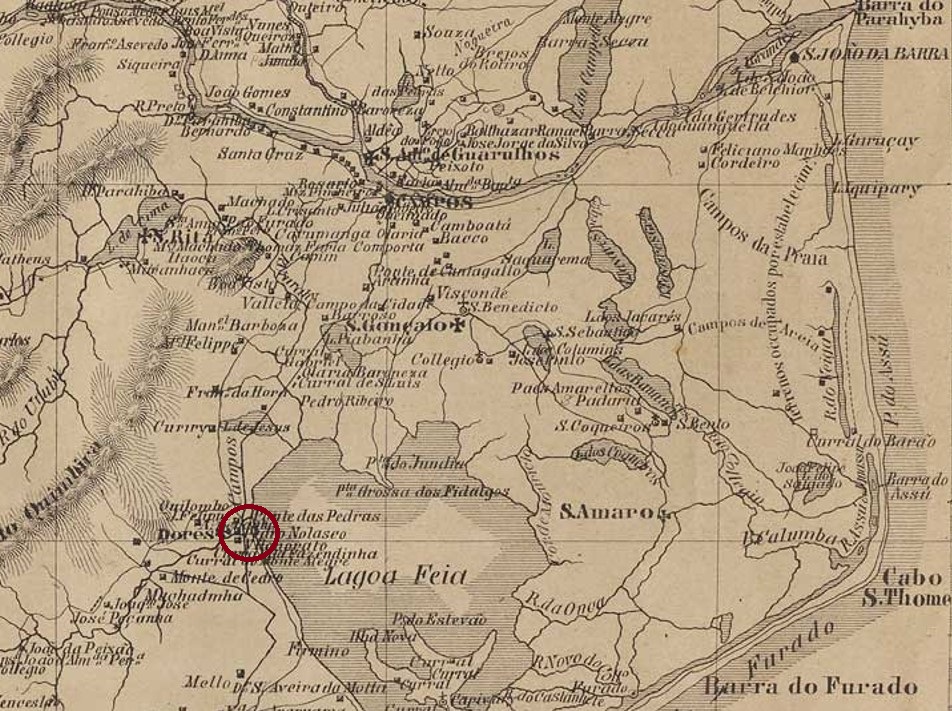
Barra do Macabu, Rio de Janeiro (BRJ-0123)

Bellegard-Niemeyer: Carta Corographica da Provincia do Rio de Janeiro, 1867

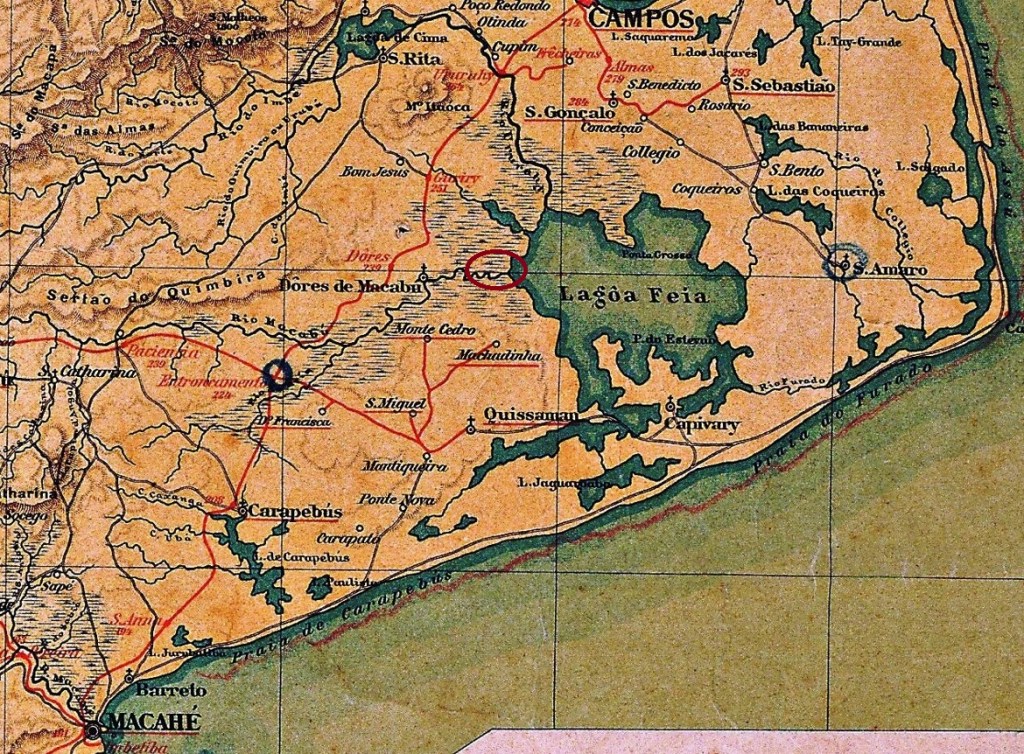
The Macabu River rises from the mountain range of the same name in the state of Rio de Janeiro and used to flow eastwards for about 120 km to its mouth in Lagoa Feia (Ugly Lake). With the construction of a hydroelectric power plant at the Tapera Dam in 1950 in the Município of Trajano de Morais, the Macabu was diverted through an underground channel into the Macaé River. However, 5 km further on, the river rises again and resumes its original direction. So, the Macabu has two sources and two mouths.

At the mouth of the river at Lagoa Feia there was a now disappeared settlement called Barra do Macabu, which belonged to the Freguesia of Dores do Macabu and was in the Município of Campos, 250 km northeast of the capital Rio de Janeiro.

The Barra do Macabu post office was created in August 1869, as Nova Monteiro writes in Administrações e Agencias Postaes do Brasil Imperio (Brasil Filatelico/RJ, 1934-5; Reprint SPP 1994-1999), but was already closed “around 1875”, as Paulo Novaes tells us in agenciaspostais.com.br. No imperial postmark from this locality has been found so far, it must be extremely rare.

Almanak Laemmert, 1892

Der Fluss Macabu entspringt dem gleichnamigen Gebirge im Bundesstaat Rio de Janeiro und floß früher ostwärts ca. 120 km bis zur Mündung in die Lagoa Feia (Häßlicher See). Mit dem Bau eines Wasserkraftwerks am Tapera-Staudamm 1950 im Município von Trajano de Morais wurde der Macabu durch einen unterirdischen Kanal in den Fluss Macaé umgeleitet. Allerdings entspringt 5 km weiter der Fluss nochmals und nimmt die ursprüngliche Richtung wieder ein. Also hat der Macabu zwei Quellen und zwei Mündungen.

An der Flussmündung zur Lagoa Feia gab es eine inzwischen verschwundene Siedlung namens Barra do Macabu, die der Freguesia von Dores do Macabu angehörte und im Município von Campos lag, 250 km nordöstlich der Hauptstadt Rio de Janeiro entfernt.

Das Postamt Barra do Macabu entstand im August 1869, wie Nova Monteiro in Administrações e Agencias Postaes do Brasil Imperio (Brasil Filatelico/RJ, 1934-5; Reprint SPP 1994-1999) schreibt, wurde aber bereits “ca. 1875” geschlossen, wie Paulo Novaes uns in agenciaspostais.com.br berichtet. Bisher wurde kein kaiserlicher Poststempel aus dieser Ortschaft gefunden, er muss äußerst selten sein.

Categories
Carimbologia A-B

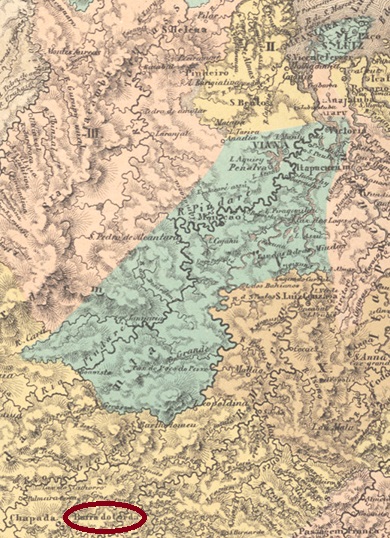
Barra do Corda, Maranhão (BMA-0035)

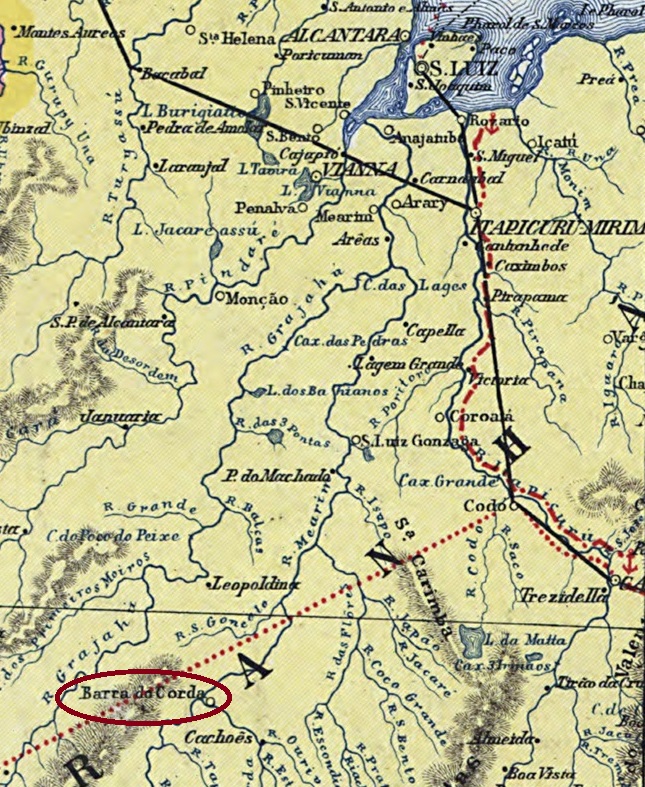
Atlas do Imperio do Brasil, 1868

Text update on January 30, 2024

The chapel of Barra do Corda (or da Corda) was built in November 1849 at the mouth of the Corda River in the Mearim in the Município of Chapada, 450 km south of the provincial capital São Luís. The place rose to the status of vila in May 1854 and town in June 1894.

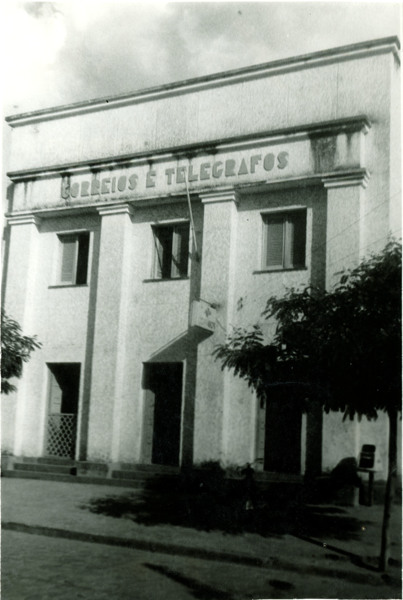
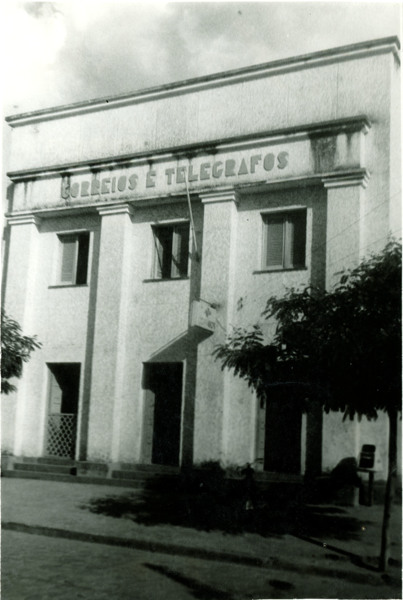
The post office, ca. 1975 (IBGE)

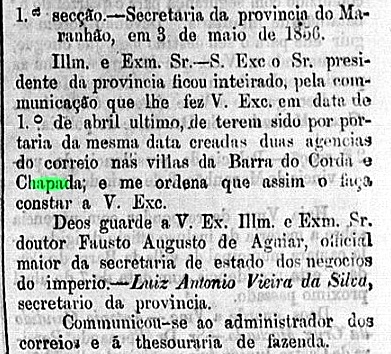
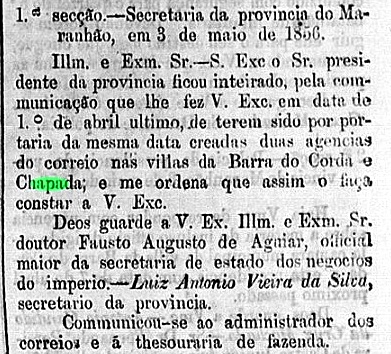
There had been a post office there since August 1856, as shown in the postal report (Relatorio Postal) for 1887. The regional official press gives April 1st of that year as the creation date:

Publicador Maranhense, 06/05/1856

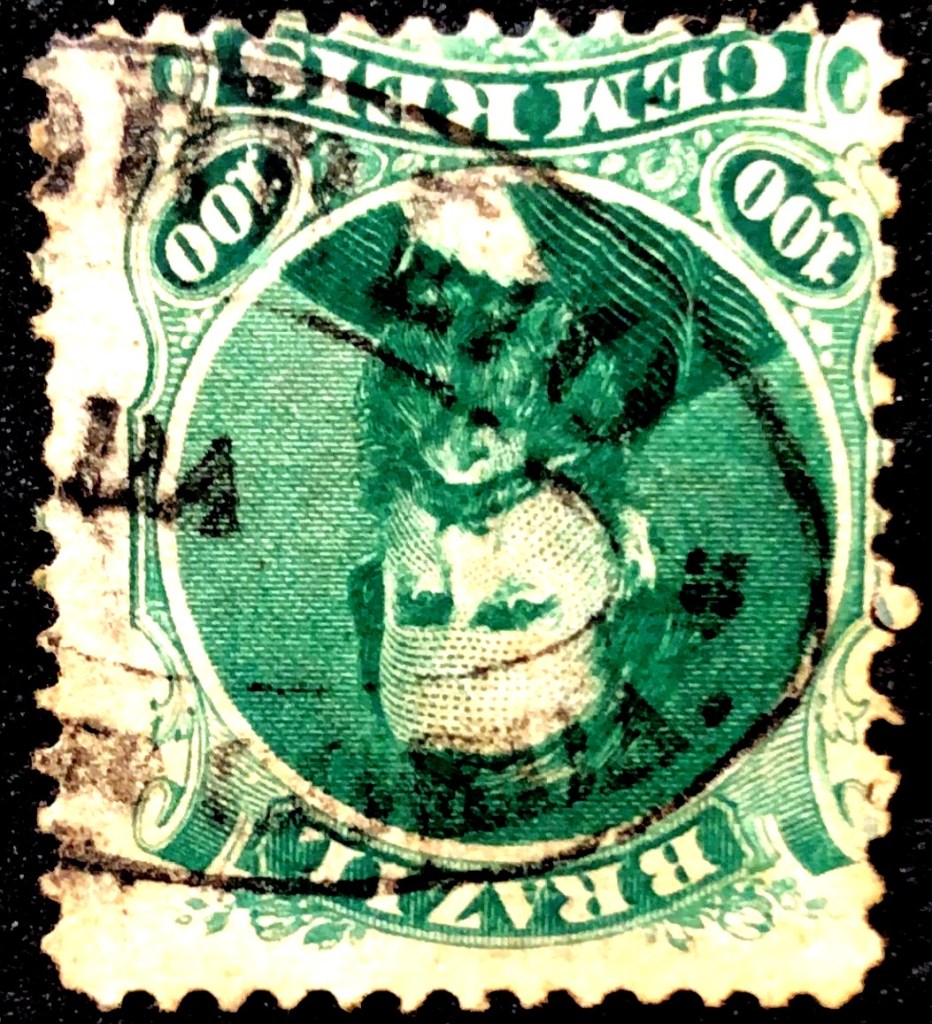
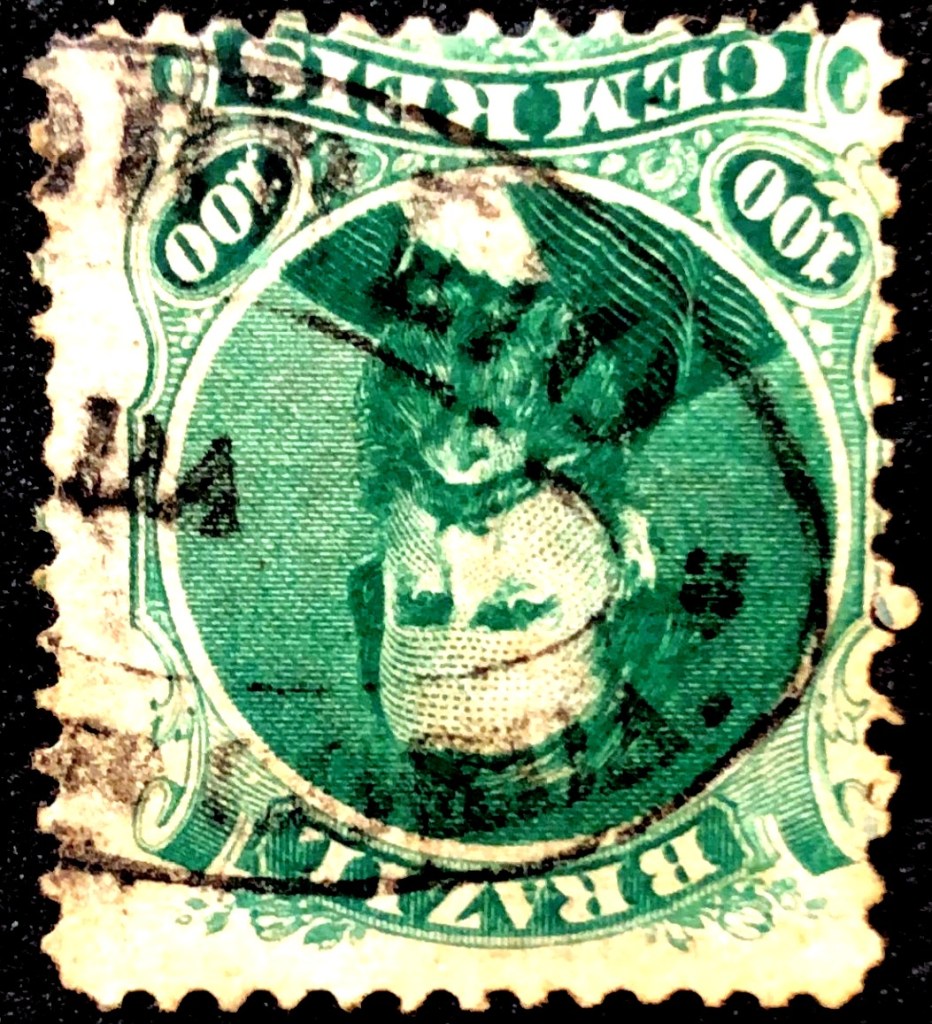
The oldest postmark BMA-0035a was found by philatelist Felipe Piccinini on a D. Pedro issue of 1866:

BMA-0035a (FP) 1866ff

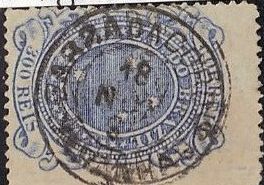
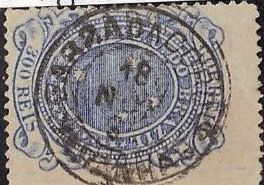
BMA-0035c appeared much later (illustration from the Internet):

BMA-0035c (EB) 1891-1900ff
Carta da Republica dos Estados Unidos do Brazil, 1892

Textaktualisierung am 30.01.2024

Die Kapelle von Barra do Corda (oder auch da Corda) wurde im November 1849 an der Mündung des Flusses Corda in den Mearim im Município von Chapada, 450 km südlich der Provinzhauptstadt São Luís. Der Ort stieg im Mai 1854 zur Vila und im Juni 1894 zur Stadt auf.

Das Postamt, ca. 1975 (IBGE)

Dort gab es ein Postamt seit August 1856, wie aus dem Postbericht (Relatorio Postal) für 1887 hervorgeht. Die regionale Amtspresse gibt dafür den 1. April d.J. an:

Publicador Maranhense, 06.05.1856

Der älteste Poststempel BMA-0035a wurde vom Philatelisten Felipe Piccinini auf einer D. Pedro-Ausgabe von 1866 gefunden:

BMA-0035a (FP) 1866ff

Viel später erschien BMA-0035c (Abb. aus dem Internet):

BMA-0035c (EB) 1891-1900ff
Categories
Carimbologia A-B

Barra do Bacalhao, Minas Gerais (BMG-0225)

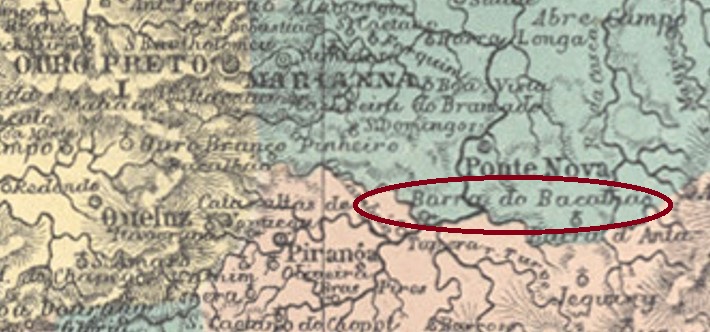
Atlas do Imperio do Brasil, 1868

Other names: Sant’Anna de Guaraciaba, Guaraciaba (1948).

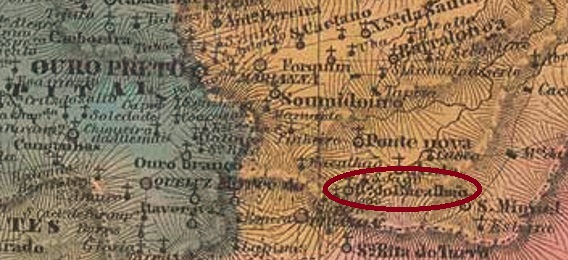
Bacalhao (today spelled bacalhau) is the Portuguese name for the codfish (Gadus morhua) but also the name of a river in Minas Gerais, for some unknown reason. The parish of Sant’Anna da Barra do Bacalhao was established in July 1832, located on the north bank of this Bacalhau River, just before it flows into the Piranga, 90 km east of the provincial capital Ouro Preto. The place became a freguesia called Sant’Anna de Guaraciaba in October 1884 and has been the Município of Guaraciaba since December 1948. The Tupi word means hair bright as sunbeams.

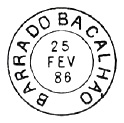
As the postal report (Relatorio Postal) for 1887 states, there was a post office on site since September 1878. The imperial postmark is BMG-0225a and has already been shown by Paulo Ayres in the Catálogo de Carimbos Brasil-Império (S. Paulo, 1937, 1942):

BMG-0225a (P.A. p. 120) 1886
Villiers de l’Ile Adam: Carta (…) da Provincia de Minas Geraes, 1849

Andere Namen: Sant’Anna de Guaraciaba, Guaraciaba (1948)

Bacalhao (heute bacalhau geschrieben) ist die port. Bezeichnung für den Kabeljau (Gadus morhua) aber auch der Name eines Flusses in Minas Gerais geworden, aus unerfindlichen Gründen. Die Pfarrei von Sant’Anna da Barra do Bacalhao wurde im Juli 1832 errichtet und lag am Nordufer dieses Flusses Bacalhau kurz vor der Einmündung in den Piranga, 90 km östlich der Provinzhauptstadt Ouro Preto entfernt. Der Ort wurde im Oktober 1884 zu einer Freguesia mit Namen Sant’Anna de Guaraciaba und ist seit Dezember 1948 der Sitz des Município von Guaraciaba. Das Tupi-Wort bedeutet Haare hell wie Sonnenstrahlen.

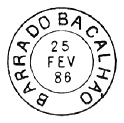
Wie im Postreport (Relatorio Postal) für 1887 geschrieben, gab es ein Postamt vor Ort seit September 1878. Der kaiserliche Poststempel ist BMG-0225a und wurde bereits durch Paulo Ayres im Catálogo de Carimbos Brasil-Império (S. Paulo, 1937, 1942) abgebildet:

BMG-0225a (P.A. S. 120) 1886
Categories
Carimbologia A-B

Barra de São Matheus, Espírito Santo (BES-0035)

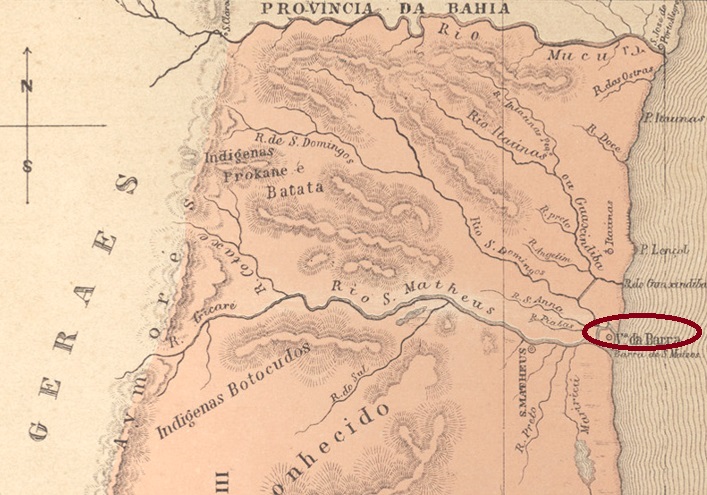
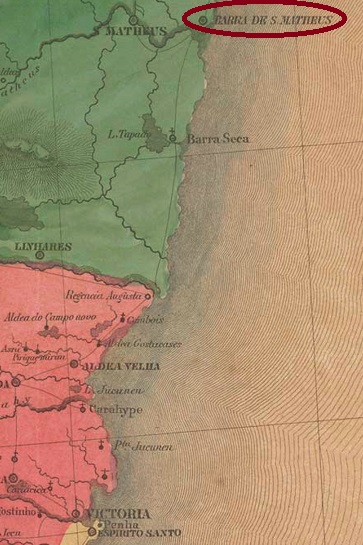
Atlas do Imperio do Brasil, 1868

Text update of March 10, 2023

Other name: Conceição da Barra (1891)

The parish of N. Sra. da Conceição da Barra de S. Matheus was founded in August 1831 and was situated on the north bank of the mouth of the river S. Mateus in the area of the vila of the same name, 250 km north of the provincial capital Vitória. It became a vila in April 1833 and has been the town of Conceição da Barra since September 1891.

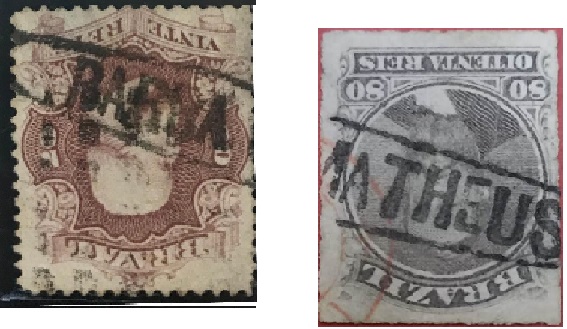
Nova Monteiro writes in Administrações e Agencias Postaes do Brasil Imperio (Brasil Filatelico/RJ, 1934-5; Reprint SPP 1994-1999) that there has been a post office there since October 1831. Three postmarks for the empire have been found so far, probably the very first one among them is still missing.

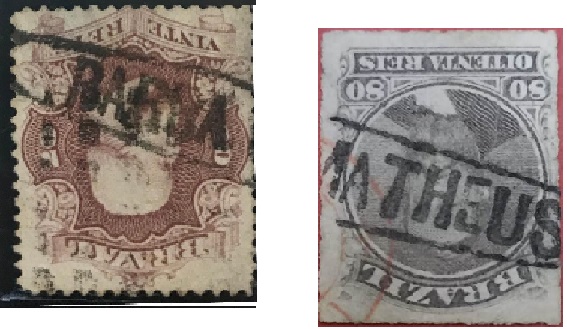
Presumably BES-0035a is the first postmark, which has been partially reconstructed by two examples from the Klerman W. Lopes e Fuad Ferreira Fo. collections:

BES-0035a (KL-FF) 1866ff-1876ff

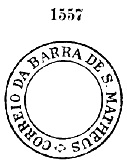
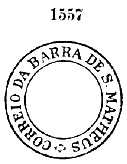
BES-0035b was in use between ca. 1866 and 1878ff and was already presented by Paulo Ayres (Catálogo de Carimbos Brasil-Império, S. Paulo, 1937, 1942) under no. 1557:

BES-0035b (P.A. 1557)

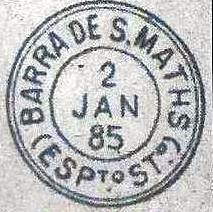
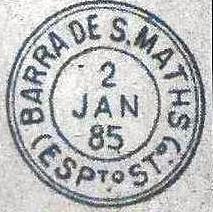
Then came BES-0035c (image: Jorge L. Pedreira): a double circle with the inscription B. DE S. MATHEUS at the top and internal dates from 1877 to 1897. Through R. Koester (Carimbologia III) we also know BES-0035d, which occurs with dates from 1885 in blue and red:

BES-0035d (RK)
Villiers de l’Ile Adam: Carta (…) da Provincia do Espirito Santo, 1850

Textaktualisierung vom 10.03.2023

Anderer Name: Conceição da Barra (1891)

Die Pfarrei von N. Sra. da Conceição da Barra de S. Matheus wurde im August 1831 gegründet und lag am Nordufer der Mündung von Fluss S. Mateus im Gebiet der gleichnamigen Vila, 250 km nördlich der Provinzhauptstadt Vitória. Der Ort wurde im April 1833 eine Vila und ist seit September 1891 die Stadt Conceição da Barra.

Nova Monteiro schreibt in Administrações e Agencias Postaes do Brasil Imperio (Brasil Filatelico/RJ, 1934-5; Reprint SPP 1994-1999), dass es dort seit Oktober 1831 ein Postamt gibt.

Vermutlich ist BES-0035a der erste Poststempel, er wurde durch zwei Beispiele aus den Sammlungen Klerman W. Lopes e Fuad Ferreira Fo. teilweise rekonstruiert:

BES-0035a (KL-FF), 1866ff-1876ff

BES-0035b war zwischen ca. 1866 und 1878ff verwendet und wurde bereits durch Paulo Ayres (Catálogo de Carimbos Brasil-Império, S. Paulo, 1937, 1942) unter der Nr. 1557 vorgestellt:

BES-0035b (P.A. 1557)

Danach kam BES-0035c (Abb. Jorge L. Pedreira): ein Doppelkreis mit der Inschrift B. DE S. MATHEUS oben und inneren Daten von 1877 bis 1897. Durch R. Koester (Carimbologia III) kennen wir auch BES-0035d (RK) der mit Daten von 1885 in den Farben Blau und Rot vorkommt:

BES-0035d (RK)
Categories
Carimbologia A-B

Barra de São João, Rio de Janeiro (BRJ-0130)

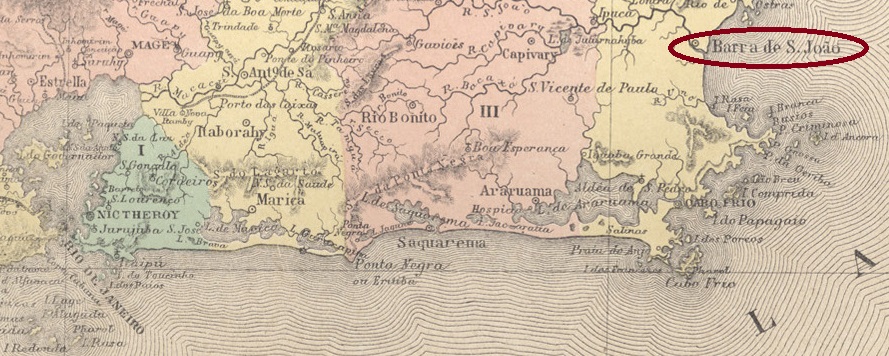
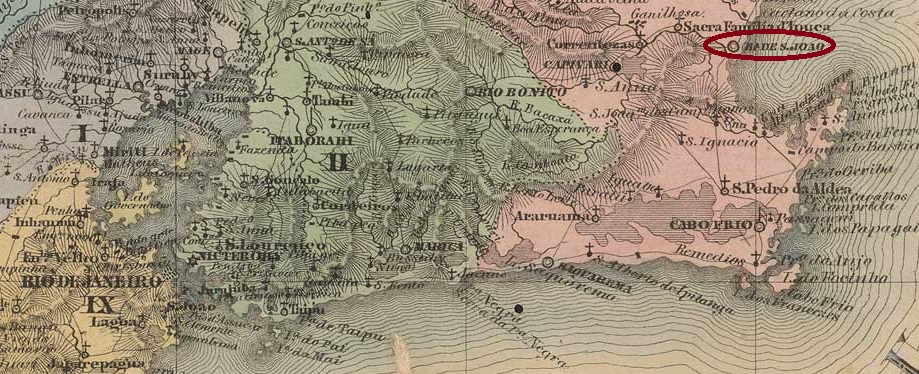
Atlas do Imperio do Brasil, 1868

Other names: Indayassú, Casimiro de Abreu (1925)

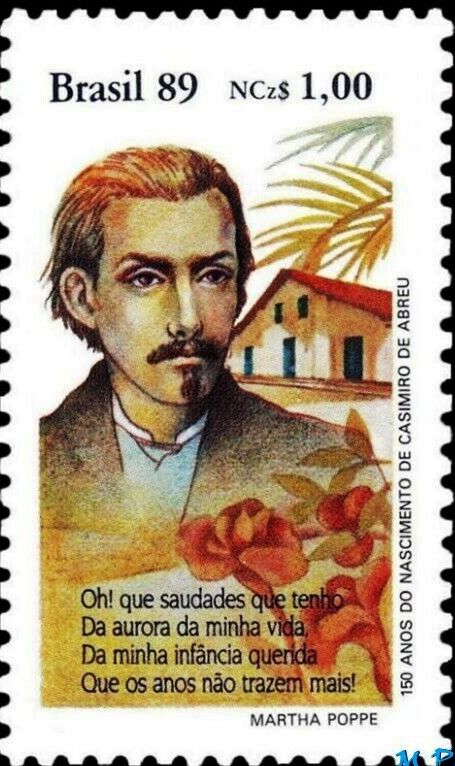
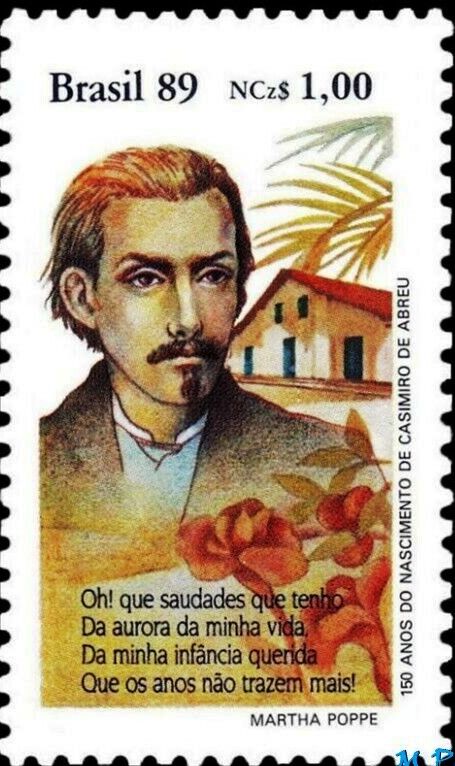
The freguesia of Barra de S. João was founded in 1800 and was located close to the north bank of the São João River in the territory of the Vila of Macaé, 130 km northeast of the capital Rio de Janeiro. In May 1846 it became a vila and in February 1890 a town, which has since changed its name three times: in December 1901 to Indayassú, in September 1904 back to Barra de S. João and in March 1938 to Casimiro de Abreu, which is still current today. The name is to commemorate the poet (1839-1860) who died young and was born in the region.

Scott 2211 Mi 2326 RHM C-1654

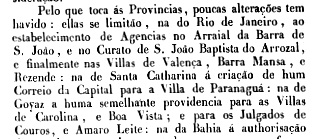
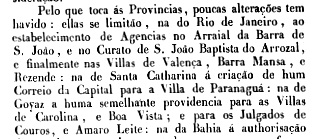
The local post office is dated March 1835, as Nova Monteiro writes in Administrações e Agencias Postaes do Brasil Imperio (Brasil Filatelico/RJ, 1934-5; reprint SPP 1994-1999). However, a local postal agency had already been mentioned a year earlier in the Imperial Ministry’s report:

Relatorio do Ministerio do Imperio, 1834 (p. 32)

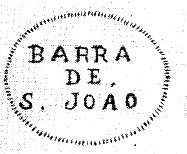
The first postmark is BRJ-0130a, used at least between 1839 and 1844 in the colours orange, blue and red, and known to us through R. Koester (Carimbologia III):

BRJ-0130a (RK)

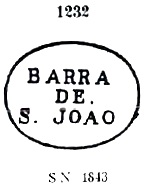
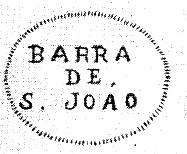
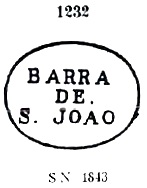
It was followed by the variant BRJ-0130b, with dates from about 1866 to 1871, occurs also in blue and violet, and was already presented by Paulo Ayres (Catálogo de Carimbos Brasil-Império, S. Paulo, 1937, 1942) under no. 1232:

BRJ-0130b (P.A. 1232)

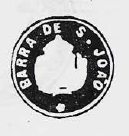
Then came BRJ-0130c, also known through P. Ayres (op.cit.), unfortunately without dates:

BRJ-0130c (P.A. p. 144)

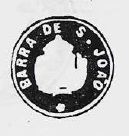
The last local cancel within the Empire is BRJ-0130d (fig. from the internet): a double circle with the inscription B. DE S. JOAO above and internal dates of 1888-1911.

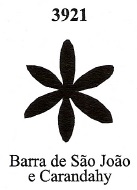
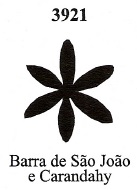
James Dingler and Klerman W. Lopes have also shown in Mute Cancellations of the Brazil Empire / Carimbos Mudos do Brasil Império (Brazil Philatelic Association, Rio de Janeiro, 2000) presented a mute cancellation from Barra de S. João under no. 3921:

BPA 3921, 1866ff
Villiers de l’Ile Adam: Carta (…) da Provincia do Rio de Janeiro, 1850

Andere Namen: Indayassú, Casimiro de Abreu (1925)

Die Freguesia von Barra de S. João wurde 1800 gegründet und lag nah am Nordufer des Flusses São João im Gebiet der Vila von Macaé, 130 km nordöstlich der Hauptstadt Rio de Janeiro entfernt. Im Mai 1846 wurde daraus eine Vila und im Februar 1890 eine Stadt, die ihren Namen seitdem dreimal gewechselt hat: im Dezember 1901 zu Indayassú, im September 1904 zurück zu Barra de S. João und im März 1938 zum heute noch aktuellen Casimiro de Abreu. Der Name soll an den jung verstorbenen Dichter (1839-1860), der in der Region geboren wurde.

Scott 2211 Mi 2326 RHM C-1654

Das örtliche Postamt ist vom März 1835, wie Nova Monteiro in Administrações e Agencias Postaes do Brasil Imperio (Brasil Filatelico/RJ, 1934-5; Reprint SPP 1994-1999) schreibt. Allerdings wurde bereits ein Jahr zuvor eine Postagentur vor Ort im Bericht des Imperialministeriums erwähnt:

Relatorio do Ministerio do Imperio, 1834 (S. 32)

Der erste Poststempel ist BRJ-0130a, der zumindest zwischen 1839 und 1844 in den Farben Orange, Blau und Rot verwendet wurde, und uns durch R. Koester (Carimbologia III) bekannt ist:

BRJ-0130a (RK)

Ihm folgte die Variante BRJ-0130b, die mit Daten von ca. 1866 bis 1871 einzutreffen ist, auch in Blau und Violett, und bereits durch Paulo Ayres (Catálogo de Carimbos Brasil-Império, S. Paulo, 1937, 1942) unter Nr. 1232 vorgestellt wurde:

BRJ-0130b (P.A. 1232)

Danach kam BRJ-0130c, der ebenfalls durch P. Ayres (op.cit.) bekannt ist, leider ohne Datumsangaben:

BRJ-0130c (P.A. S. 144)

Der letzte Ortsstempel aus dem Kaiserreich ist BRJ-0130d (Abb. aus dem Internet): ein Doppelkreis mit der Inschrift B. DE S. JOAO oben und inneren Daten von 1888-1911.

James Dingler und Klerman W. Lopes haben dazu in Mute Cancellations of the Brazil Empire / Carimbos Mudos do Brasil Império, (Brazil Philatelic Association, Rio de Janeiro, 2000) eine stumme Entwertung aus Barra de S. João unter der Nr. 3921 präsentiert :

BPA 3921, 1866ff
Categories
Carimbologia A-B

Barra de Santa Rita, Rio de Janeiro (BRJ-0125)

agenciaspostais.com.br

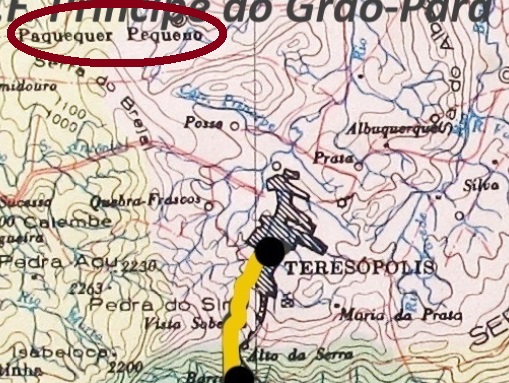
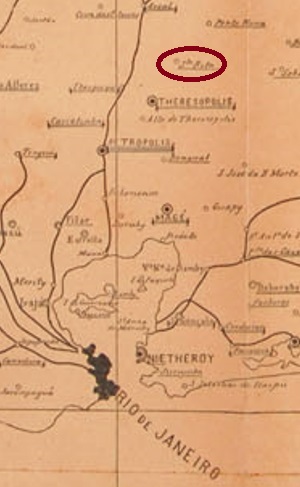
Barra de Santa Rita was a freguesia in the municipality of Magé, situated round 120 km north of the empire capital Rio de Janeiro. In May 1892 it was declared a district of the recently founded municipality of Theresopolis and has changed its name twice since then: in December 1938 to Paquequer Pequeno, and in April 1990 to Vale do Paquequer.

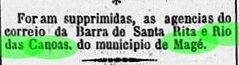
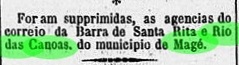
The local post office came into being in 1879, as can be read in the Directory of Imperial Post Offices (Tabella das Agencias do Correio do Imperio, Rio de Janeiro, 1885), but was closed in February 1886, as reported by the Rio press:

Diario de Noticias, 27.02.1886

So far, no imperial postmark has been seen from Barra de Santa Rita. There had been a post office called Santa Rachel (see SRJ-0883) in this freguesia between January and June 1874.

Mappa Geographico Postal 1906

Barra de Santa Rita war eine Freguesia im Município von Magé, die rund 120 km nördlich der kaiserlichen Hauptstadt Rio de Janeiro entfernt lag. Im Mai 1892 wurde sie ein Distrikt des kurz zuvor gegründeten Município von Theresopolis and hat seitdem den Ortsnamen zweimal gewechselt: im Dezember 1938 zu Paquequer Pequeno und im April 1990 zu Vale do Paquequer.

Das örtliche Postamt entstand 1879, wie im Verzeichnis der kaiserlichen Postämter (Tabella das Agencias do Correio do Imperio, Rio de Janeiro, 1885) zu lesen ist, und wurde allerdings im Februar 1886 geschlossen, wie die Presse aus Rio berichtet:

Diario de Noticias, 27.02.1886

Bisher wurde kein kaiserlicher Poststempel aus Barra de Santa Rita gesehen. In dieser Freguesia hatte es zwischen Januar und Juni 1874 ein Postamt namens Santa Rachel (siehe SRJ-0883) gegeben.

Categories
Carimbologia A-B

Barra de Guaratiba, Município Neutro (BMN-0060)

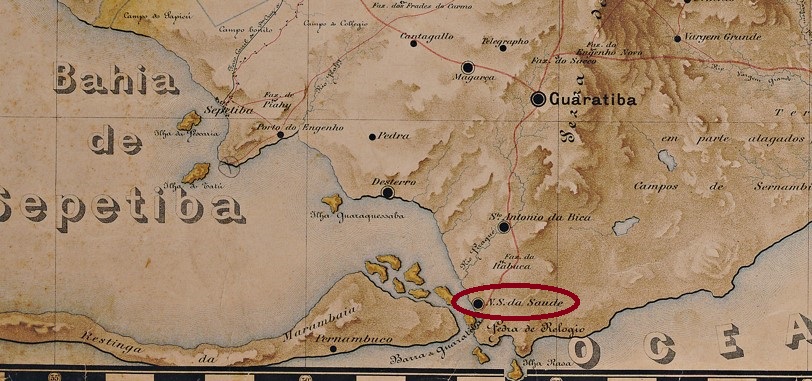
Mappa do Municipio Neutro, ca. 1875

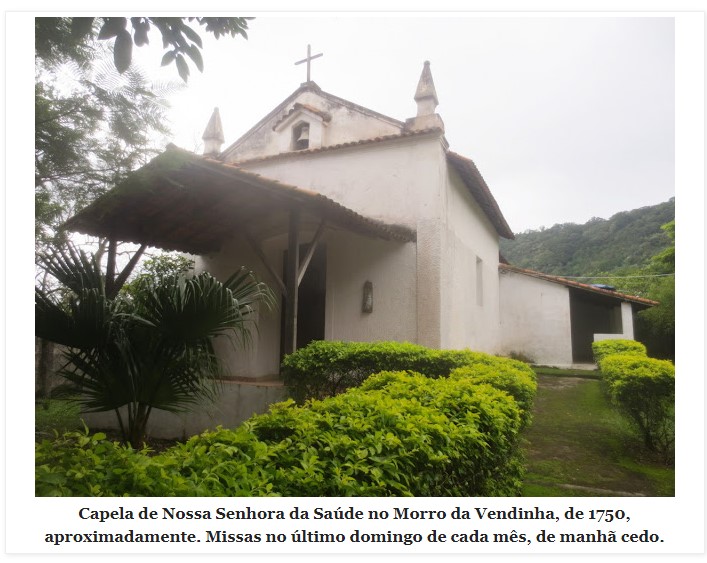
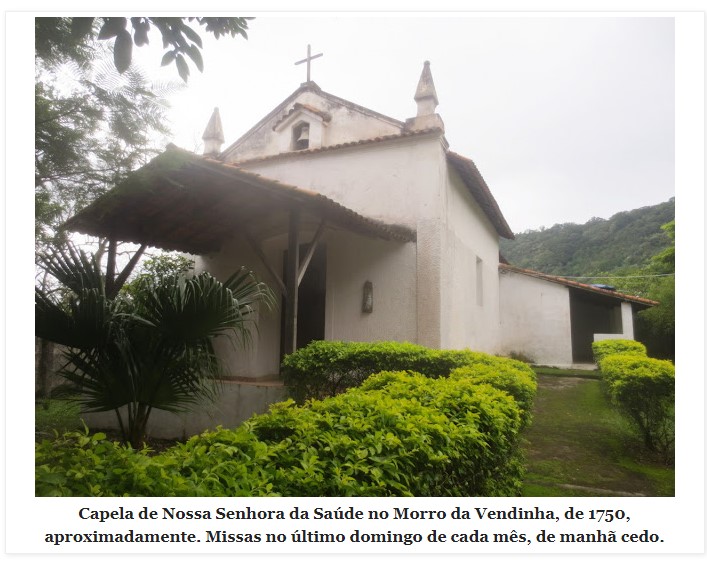
Around 1750, the chapel of N. Sra. da Saúde da Barra de Guaratiba was built, which still stands between Sepetiba Bay and the Atlantic Ocean, 50 km west of the capital Rio de Janeiro.

literaturaeriodejaneiro.blogspot.com

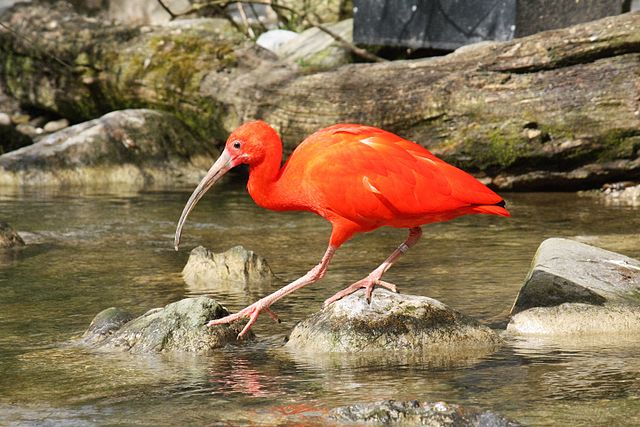
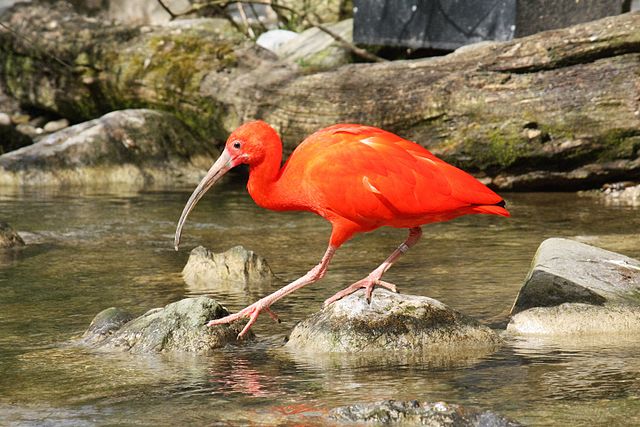
The settlement around the chapel grew slowly, it belonged to the Freguesia of Guaratiba and has been a district of the administrative region of Guaratiba since July 1981. The name from the Tupi-guarani means many guarás. Guará is the Brazilian name for the Eudocimus ruber (Linnaeus 1758), a beautiful member of the family Threskiornithidae:

Photo: J. Patrick Fischer (CC BY-SA, 2016)

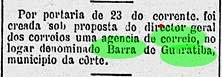
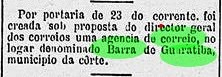
The local post office came into being in October 1883, according to the Rio Press:

Gazeta de Noticias, 25/10/1883

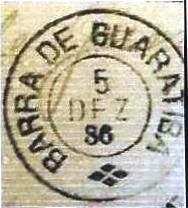
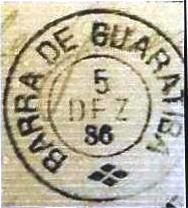
According to Paulo Novaes (agenciaspostais.com.br), the agency closed around 1948. The first postmark is BMN-0060a (Coll. Fuad Ferreira Fo), found so far with dates between 1884 and 1886 and can already be seen in agenciaspostais.com.br:

BMN-0060a (FF)

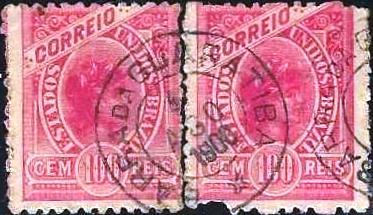
It was followed by BMN-0060b, which is probably Republican, as its dates go from 1900 to 1902:

BMN-0060b (PN)
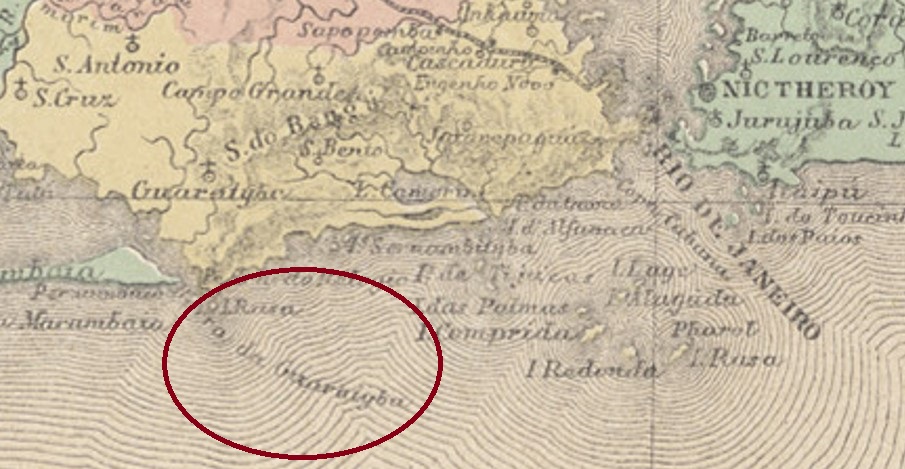
Atlas do Imperio do Brasil, 1868

Um 1750 wurde die Kapelle von N. Sra. da Saúde da Barra de Guaratiba errichtet, die bis heute an der Straße zwischen der Bucht von Sepetiba und dem Atlantik liegt, 50 km westlich der Hauptstadt Rio de Janeiro.

literaturaeriodejaneiro.blogspot.com

Die Siedlung um die Kapelle wuchs langsam, sie gehörte der Freguesia von Guaratiba und ist seit Juli 1981 ein Ortsteil der Verwaltungsregion Guaratiba. Der Name aus dem Tupi-guarani bedeutet viele Guarás. Guará ist die bras. Bezeichnung für den Schlarlachsichler (Eudocimus ruber, Linnaeus 1758), ein schönes Mitglied der Familie Threskiornithidae:

Foto J. Patrick Fischer (CC BY-SA, 2016)

Das örtliche Postamt entstand im Oktober 1883, wie in der Rio-Presse zu lesen ist:

Gazeta de Noticias, 25.10.1883

Laut Paulo Novaes (agenciaspostais.com.br) wurde die Agentur um 1948 geschlossen. Der erste Poststempel ist BMN-0060a (Samml. Fuad Ferreira Fo), der bisher mit Daten zwischen 1884 und 1886 gefunden wurde und bereits in agenciaspostais.com.br zu sehen ist:

BMN-0060a (FF)

Ihm folgte BMN-0060b, der wohl in der Republik erschien, da seine Daten von 1900 bis 1902 gehen:

BMN-0060b (PN)

Categories
Carimbologia A-B

Barra da Jangada (train station/Bahnhof), Pernambuco (BPE-0065)

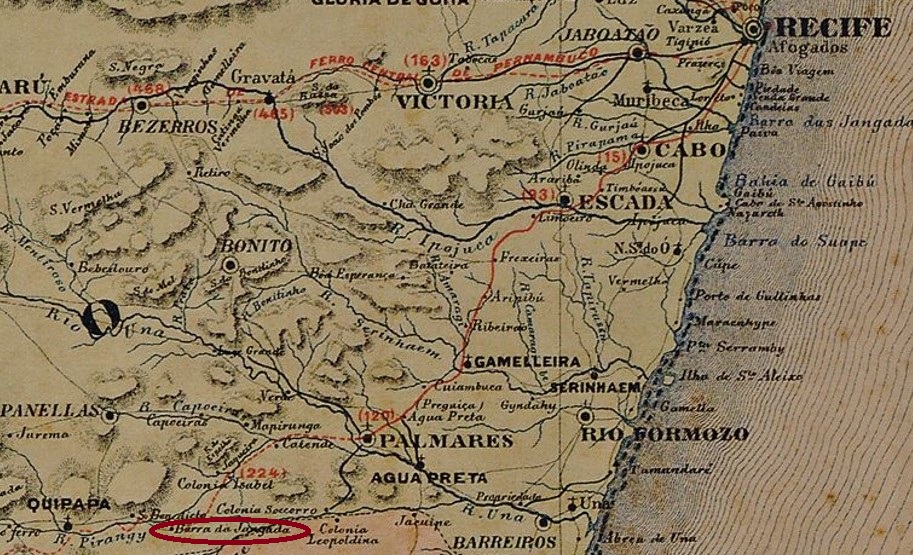
Carta Corographica da Provincia de Pernambuco, 1880

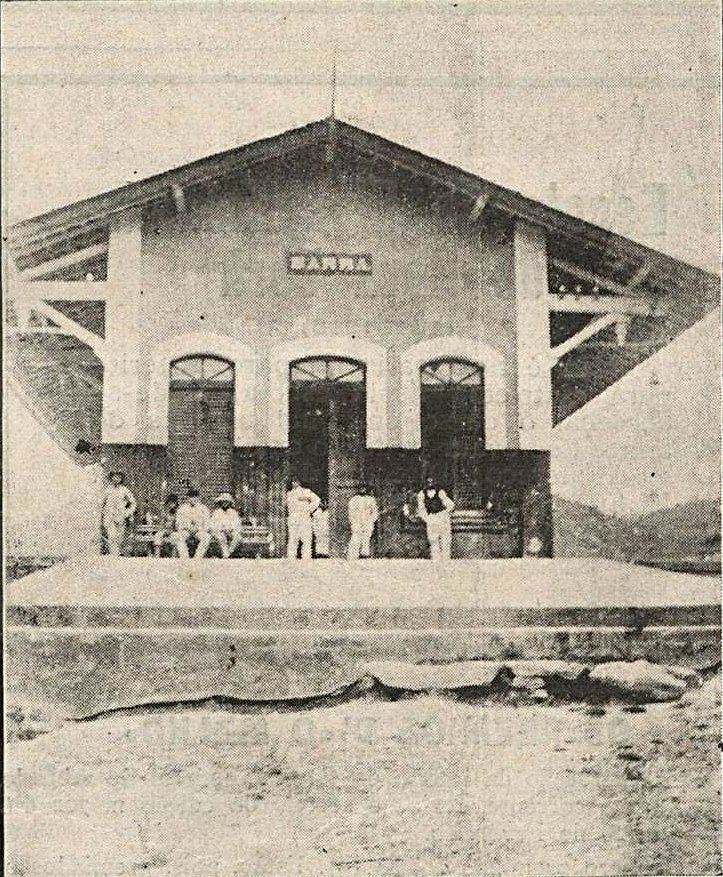
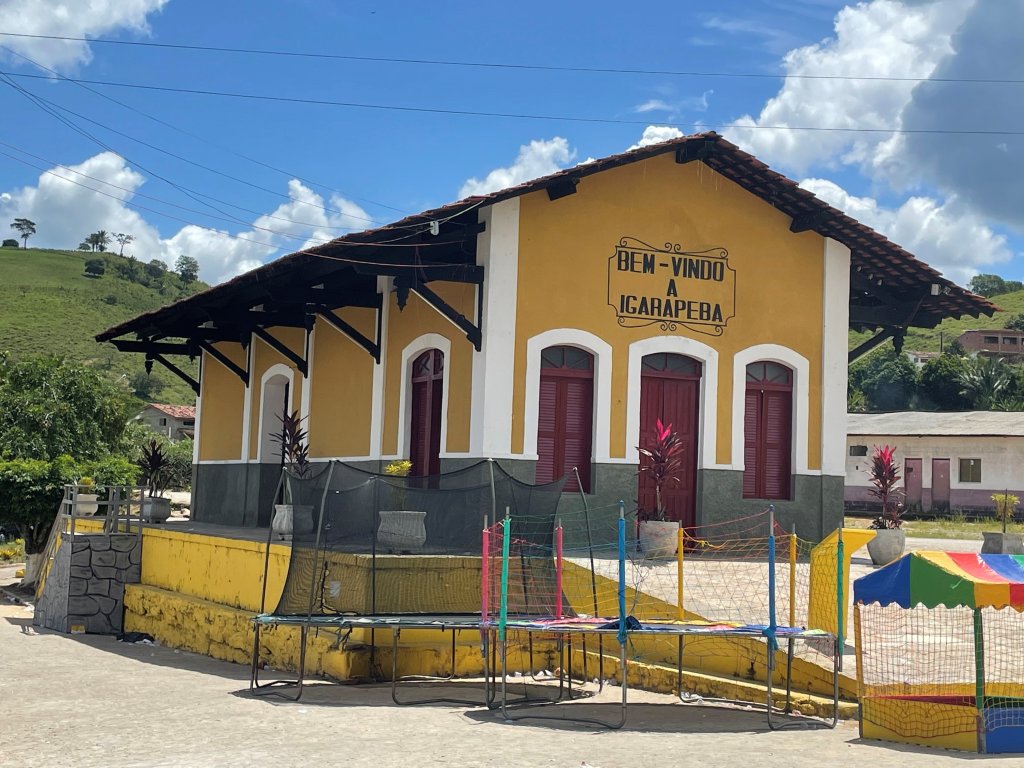
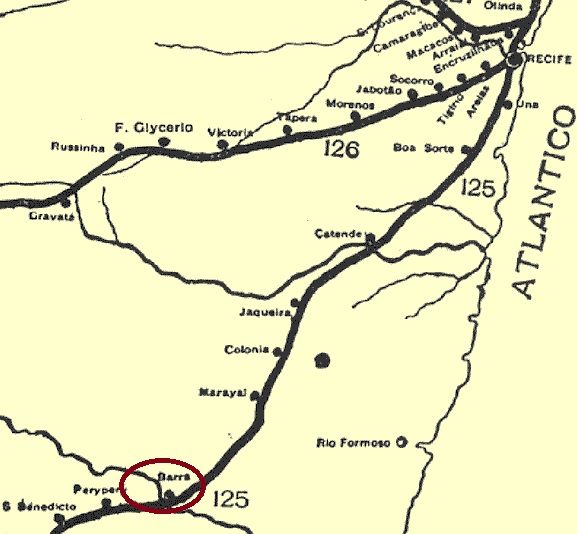
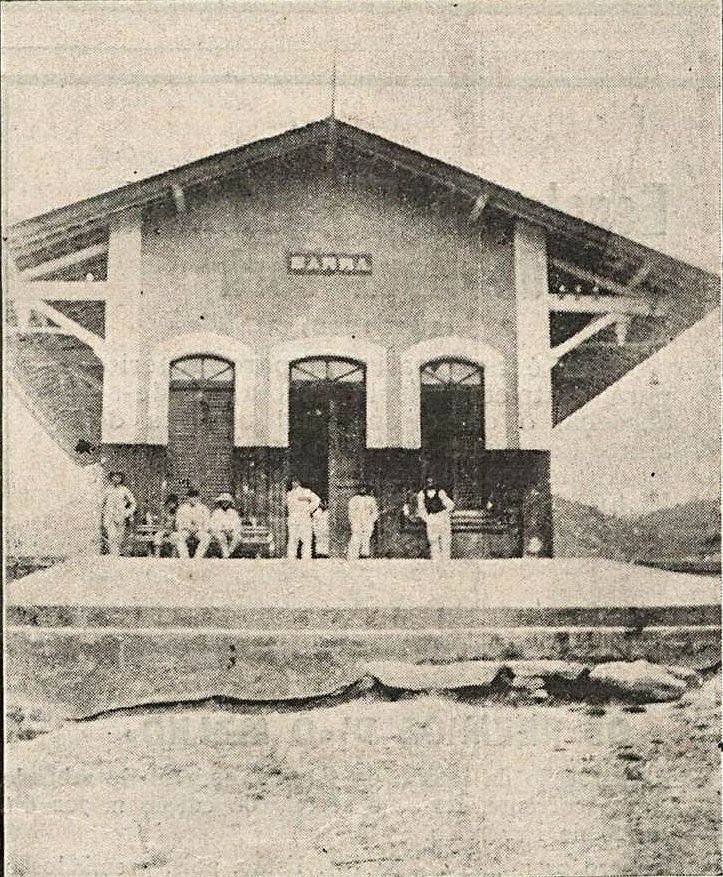
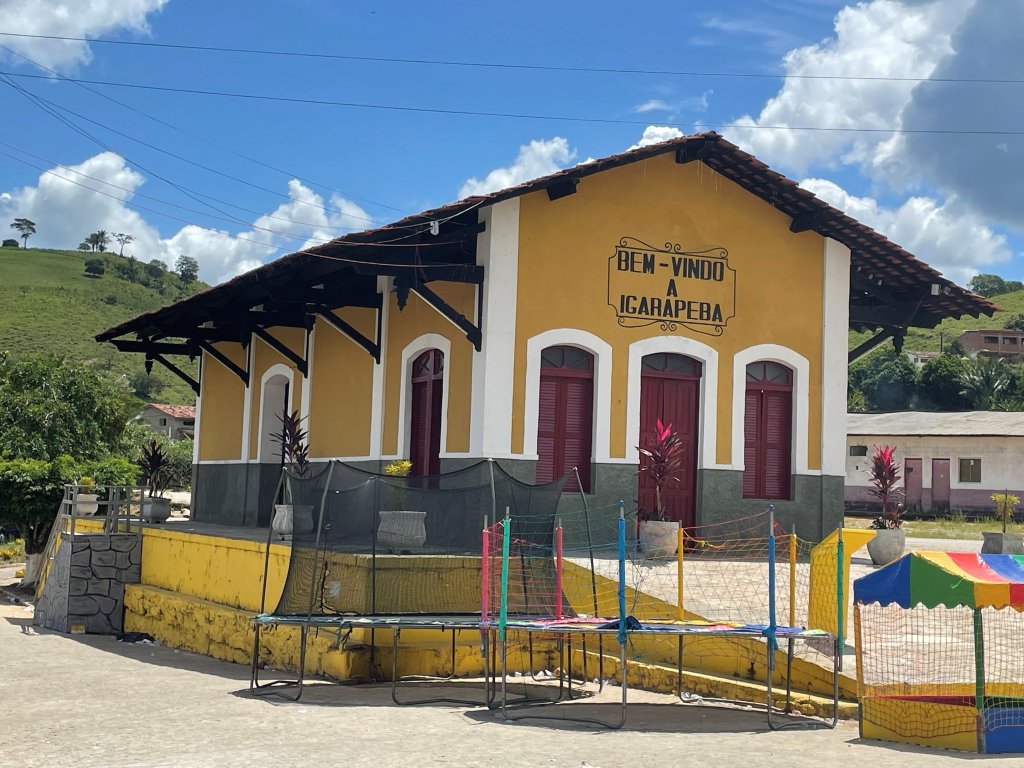
Barra de Jangada station (sometimes spelled “das Jangadas”) was inaugurated in June 1884 on the southern line of the E.F. Recife ao S. Francisco railway company, close to the south bank of the Piranji River in the Município of Quipapá, 160 km southwest of the provincial capital Recife. The railway line passed to the Great Western railway company in 1901 and to Rede Ferroviária do Nordeste in 1950. From 1975 until its closure in 1996, it belonged to Rede Ferroviária Federal S.A. (estacoesferroviarias.com.br). The station building has recently been restored.

Ca. 1916 (Photo: O Malho, in estacoesferroviarias.com.br)
2022 (Photo: Paulo Marconi, in estacoesferroviarias.com.br)

The village of Barra da Jangada was originally in the Freguesia of S. Benedito, which became the District of Iraci in December 1943 and 20 years later the District of Igarapeba in the newly created Município of S. Benedito do Sul.

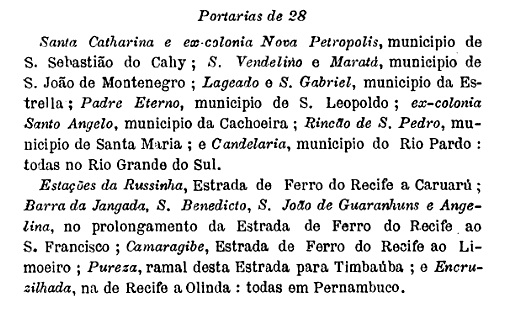
As can be seen from Boletim Postal No. 7 (November 1889), there had been a station post office since October 1889, and thus just over two weeks before the end of the Empire of Brazil.

Dieses Bild hat ein leeres alt-Attribut; sein Dateiname ist bp_89-7.jpg

Boletim Postal, November 1889

So far, no imperial postmark of this station has been seen. If it exists, it is extremely rare.

Instituto Brasileiro de Geografia e Estatistica, 1898

Der Bahnhof Barra de Jangada (auch mal “das Jangadas” geschrieben) wurde im Juni 1884 auf der Südlinie der Bahngesellschaft E.F. Recife ao S. Francisco eingeweiht und lag nah am Südufer des Flusses Piranji im Município von Quipapá, 160 km südwestlich der Provinzhauptstadt Recife entfernt. Die Bahnlinie ging 1901 zur Great Western-Bahngesellschaft und 1950 zur Rede Ferroviária do Nordeste über. Von 1975 bis zur Stilllegung 1996 gehörte sie der Rede Ferroviária Federal S.A. (estacoesferroviarias.com.br). Das Bahnhofsgebäude wurde vor kurzem restauriert.

Ca. 1916 (Foto: O Malho, in estacoesferroviarias.com.br)
2022 (Foto: Paulo Marconi, in estacoesferroviarias.com.br)

Der Ort Barra da Jangada lag ursprünglich in der Freguesia von S. Benedito, die im Dezember 1943 zum Distrikt von Iraci und 20 Jahre später zum Distrikt von Igarapeba im neu gegründeten Município von S. Benedito do Sul wurde.

Wie aus dem Boletim Postal Nr. 7 (November 1889) hervorgeht, gab es ein Bahnhofspostamt seit Oktober 1889, und damit gut zwei Wochen vor dem Ende des Kaiserreichs Brasilien.

Boletim Postal, November 1889

Bisher wurde kein kaiserlicher Poststempel dieses Bahnhofs gesehen. Falls es ihn gibt, ist er äußerst selten.