Categories
Carimbologia A-B

Assemblea, Alagoas (AAL-0020)

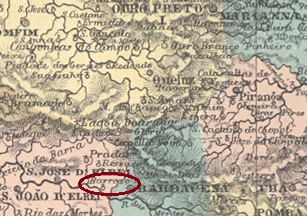
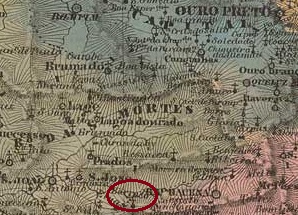
Atlas do Imperio do Brasil, 1868

Other names: Riacho do Meio, Viçosa (1890-1943, 1949).

This settlement originated around 1809 under the name of Riacho do Meio (Middle Brook) and belonged at that time to the Villa of Atalaia, 90 km northwest of the later provincial capital Maceió. The place was declared a vila in October 1831, three and a half years before it became a freguesia. In November 1890 – in the early Republic – the place name changed to Villa Viçosa, which was declared a town in May 1892. Between December 1943 and September 1949, the old name Assembléia returned, before the Município was finally called Viçosa.

Two periods of operation were found for the local post office. The first began in 1845, as shown in the Directory of Imperial Post Offices (Tabella das Agencias do Correio do Imperio, Rio de Janeiro, 1885), and ended in October 1847, as announced by the official press in Rio:

Gazeta Official/RJ, 13/10/1847

In November 1859, the order to reopen the post office came out:

Boletim do Ministerio do Imperio, 14.11.1859

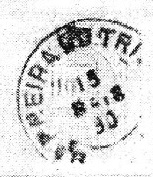
So far only one imperial postmark from this locality has been seen, unfortunately not the oldest. AAL-0020b (Coll. Karlheinz Wittig) is a plain double circle with the inscription ASSEMBLEA at the top. The dates in the middle go from 1880 to 1890.

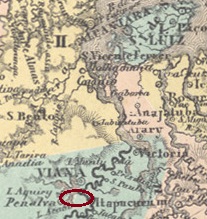
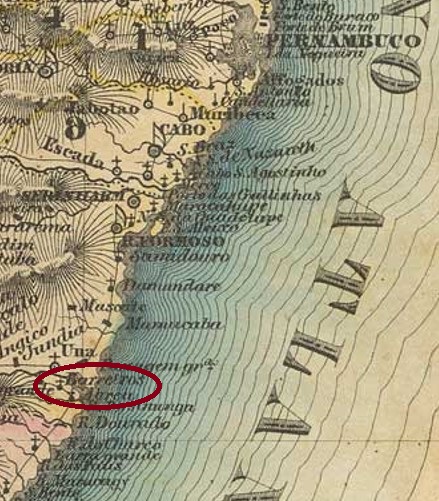
Villiers de l’Ile Adam: Carta (…) das Provincias de Pernambuco, Alagoas e Sergipe, 1848

Andere Namen: Riacho do Meio, Viçosa (1890-1943, 1949)

Diese Siedlung entstand um 1809 unter dem Namen Riacho do Meio (Mittelbach) und gehörte damals der Villa von Atalaia, 90 km nordwestlich der späteren Provinzhauptstadt Maceió entfernt. Der Ort wurde im Oktober 1831 zur Vila erklärt und damit dreieinhalb Jahre bevor er eine Freguesia wurde. Im November 1890 – also in der frühen Republik – wechselte der Ortsname zu Villa Viçosa, die im Mai 1892 zur Stadt erklärt wurde. Zwischen Dezember 1943 und September 1949 kehrte der alte Name Assembléia zurück, bevor der Município endgültig Viçosa hieß.

Es wurden zwei Betriebsperioden fürs örtliche Postamt gefunden. Die erste begann 1845, wie aus demVerzeichnis der kaiserlichen Postämter (Tabella das Agencias do Correio do Imperio, Rio de Janeiro, 1885) hervorgeht, und endete im Oktober 1847, wie die Amtspresse in Rio angekündigt hat:

Gazeta Official/RJ, 13.10.1847

Im November 1859 kam die Anordnung zur Wiedereröffnung des Postamtes heraus:

Boletim do Ministerio do Imperio, 14.11.1859

Bisher war nur ein kaiserlicher Poststempel aus dieser Ortschaft zu sehen, leider nicht der älteste. AAL-0020b (Samml. Karlheinz Wittig) ist ein schlichter Doppelkreis mit der Inschrift ASSEMBLEA oben. Die Daten in der Mitte gehen von 1880 bis 1890.
Categories
Carimbologia A-B

Assaré, Ceará (ACE-0035)

Atlas do Imperio do Brasil, 1868

The Freguesia of N. Sra. das Dores de Assaré was founded in December 1850 at the Vila of Saboeiro, 480 km south of the provincial capital Fortaleza. In July 1865, the place was declared a vila in its own município.

The local post office was established in January 1877, according to the regional press:

Cearense, 25.01.1877

No imperial postmark from this locality has yet appeared.

Villiers de l’Ile Adam: Carta (…) da Provincia do Ceara, 1849

Die Freguesia von N. Sra. das Dores de Assaré wurde im Dezember 1850 bei der Vila von Saboeiro gegründet und lag 480 km südlich der Provinzhauptstadt Fortaleza. Im Juli 1865 wurde der Ort zur Vila im eigenen Município erklärt.

Das örtliche Postamt wurde im Januar 1877 ins Leben gerufen, wie aus der Regionalpresse hervorgeht:

Cearense, 25.01.1877

Bisher ist kein kaiserlicher Poststempel aus dieser Ortschaft aufgetaucht.

Categories
Carimbologia A-B

Arujá, São Paulo (ASP-0060)

Atlas do Imperio do Brasil, 1868

The Freguesia of Senhor Bom Jesus de Arujá originated in June 1852 in the Vila of Mogy das Cruzes and was located 40 km northeast of the provincial capital of São Paulo. The village only became a district of Santa Isabel in November 1938 and has been an independent município since February 1959. The name clearly has its origins in the Tupi language, but its meaning is not clear: according to some sources it means owner of the sky. Others say it means home of the frogs

Also, still unclear is when the local post office was established. It is not even listed in the Imperial Postal Guide (Guia Postal do Imperio, 1880). Yet the regional press regularly reported postal traffic via Arujá from August 1875 onwards:

Correio Paulistano, 29.08.1875

The imperial postmark is the French type ASP-0060a (coll. Mario Nacimovic): a small double circle with the inscription ARUJA above and the small star between brackets below. The dates in the middle so far go from 1880 to 1886.

J.M. Ribeiro Lisboa: Provincia de São Paulo, 1884

Die Freguesia von Senhor Bom Jesus de Arujá entstand im Juni 1852 in der Vila von Mogy das Cruzes und lag 40 km nordöstlich der Provinzhauptstadt São Paulo entfernt. Der Ort wurde erst im November 1938 zu einem Distrikt von Santa Isabel und ist seit Februar 1959 ein eigenständiger Município. Der Name hat eindeutig seinen Ursprung in der Tupi-Sprache, aber seine Bedeutung ist nicht klar: nach einigen Quellen heißt er Besitzer des Himmels. Andere sagen, es bedeutet Heimat der Frösche

Ebenfalls noch unklar ist, wann das örtliche Postamt entstanden ist. Im Kaiserlichen Postführer (Guia Postal do Imperio, 1880) ist es gar nicht aufgelistet. Dabei wurde in der Regionalpresse ab August 1875 regelmäßig über Postverkehr über Arujá gemeldet:

Correio Paulistano, 29.08.1875

Der kaiserliche Poststempel ist der französische Typus ASP-0060a (Samml. Mario Nacimovic): ein kleiner Doppelkreis mit der Inschrift ARUJA oben und dem kleinen Stern zwischen Klammern unten. Die Daten in der Mitte gehen bisher von 1880 bis 1886.

Categories
Carimbologia A-B

Arrozal (Pirahy), Rio de Janeiro (ARJ-0080)

Atlas do Imperio do Brasil, 1868

Other name: São João Baptista do Arrozal

The parish of S. João Baptista do Arrozal originally belonged to the Vila of S. João do Príncipe but changed to the Vila of Pirahy as a freguesia in April 1839, located 115 km northwest of the capital Rio de Janeiro. Since December 1938, the place has been a district.

The local post office was established as early as December 1832, as Nova Monteiro writes in Administrações e Agencias Postaes do Brasil Imperio (Brasil Filatelico/RJ, 1934-5; Reprint SPP 1994-1999). The first postmark is probably ARJ-0080a, which was in use at least until 1848 and is known to us through the RHM catalogue:

ARJ-0080a (RHM) 1843ff-1848

It was followed by ARJ-0080b, which occurs in two versions. The better known of these is the one by Paulo Ayres (Catálogo de Carimbos Brasil-Império, S. Paulo, 1937, 1942) with the no. 1212. The RHM catalogue shows a variant of it, which seems a bit strange:

ARJ-0080b (P.A. 1212-recte RHM) 1843ff-1866ff

From about 1850 there came ARJ-0080c (coll. Klerman Lopes), with features the seal of the Empire. And towards the end of this period, we have ARJ-0080d (agenciaspostais.com.br): a simple double circle with the inscription ARROZAL on top and internal dates so far between 1885 and 1887.
From Arrozal we also have, thanks to James Dingler and Klerman Lopes (Mute Cancellations of the Brazil Empire / Carimbos Mudos do Brasil Império, Brazil Philatelic Association, Rio de Janeiro, 2000), a mute postmark with no. 915:

BPA 915
Villiers de l’Ile Adam: Carta (…) da Provincia do Rio de Janeiro, 1850

Anderer Name: São João Baptista do Arrozal

Die Pfarrei von S. João Baptista do Arrozal gehörte ursprünglich der Vila von S. João do Príncipe, wechselte aber im April 1839 als Freguesia zur Vila von Pirahy und lag 115 km nordwestlich der Hauptstadt Rio de Janeiro entfernt. Seit Dezember 1938 ist der Ort ein Distrikt.

Das lokale Postamt wurde bereits im Dezember 1832 ins Leben gerufen, wie Nova Monteiro in Administrações e Agencias Postaes do Brasil Imperio (Brasil Filatelico/RJ, 1934-5; Reprint SPP 1994-1999) schreibt. Der erste Poststempel dürfte ARJ-0080a sein, der zumindest bis 1848 in Gebrauch war und uns durch den RHM-Katalog bekannt ist:

ARJ-0080a (RHM) 1843ff-1848

Ihm folgte ARJ-0080b, der in zwei Versionen vorkommt. Die bekanntere davon ist die von Paulo Ayres (Catálogo de Carimbos Brasil-Império, S. Paulo, 1937, 1942) mit der Nr. 1212. Der RHM-Katalog zeigt eine Variante davon, die etwas merkwürdig vorkommt:

ARJ-0080b (P.A. 1212-recte RHM) 1843ff-1866ff

Ab ca. 1850 kam ARJ-0080c (Samml. Klerman Lopes), mit dem Siegel des Kaiserreiches. Und gegen Ende dieser Zeit haben wir ARJ-0080d (agenciaspostais.com.br): ein einfacher Doppelkreis mit der Inschrift ARROZAL oben und inneren Daten bisher zwischen 1885 und 1887.

Aus Arrozal haben wir auch dank James Dingler und Klerman Lopes (Mute Cancellations of the Brazil Empire / Carimbos Mudos do Brasil Império, Brazil Philatelic Association, Rio de Janeiro, 2000) einen stummen Poststempel mit Nr. 915:

BPA 915
Categories
Carimbologia A-B

Arrozal de São Sebastião, Rio de Janeiro (ARJ-0085)

Atlas do Imperio do Brasil, 1868

Another name: Arraial do Principe (1939-1943).

This locality is another one that has literally disappeared from the map. The former settlement of the Vila of S. João Marcos became a district in 1890, changing to the newly created Município of Rio Claro the following year. In 1939 came a new place name: Arrozal do Principe (The Prince’s Rice Fields), which lasted only 4 years. Then the whole place was flooded by the Ribeirão das Lajes reservoir.

The local post office was established in August 1877, but the Rio press mistakenly assigned it to the Municipio of Pirahy. This seems to be confusion with the other place Arrozal (ARJ-0080):

Jornal do Commercio, 24.08.1877

The first postmark is ARJ-0085a, which also exists in blue, and was presented by Paulo Ayres (Catálogo de Carimbos Brasil-Império, S. Paulo, 1937, 1942) under no. 1213:

ARJ-0085a (P.A. 1213) 1877ff

It was followed by ARJ-0085b (Coll. José A. Junges): a double circle with the inscription A. DE S: SEBASTIÃO above and an ornament in lozenge below. It also occurs in blue and has inner dates between 1882 and 1887.

agenciaspostais.com.br

Anderer Name: Arraial do Principe (1939-1943)

Diese Ortschaft ist eine weitere, die buchstäblich aus der Landkarte verschwunden ist. Die ehemalige Siedlung der Vila von S. João Marcos wurde 1890 zu einem Distrikt, der im darauf folgenden Jahr zum neu gegründeten Município von Rio Claro wechselte. Im Jahre 1939 kam ein neuer Ortsname: Arrozal do Principe (Des Prinzen Reisfelder), der nur 4 Jahre andauerte. Dann wurde der ganze Ort durch den Stausee Ribeirão das Lajes überschwemmt.

Das örtliche Postamt entstand im August 1877, dabei wurde es durch die Presse aus Rio irrtümlicherweise dem Municipio von Pirahy zugeordnet. Hier liegt offenbar eine Verwechslung mit dem anderen Ort Arrozal (ARJ-0080) vor:

Jornal do Commercio, 24.08.1877

Der erste Poststempel ist ARJ-0085a, den es auch in Blau gibt, und der durch Paulo Ayres (Catálogo de Carimbos Brasil-Império, S. Paulo, 1937, 1942) unter Nr. 1213 vorgestellt wurde:

ARJ-0085a (P.A. 1213) 1877ff

Ihm folgte ARJ-0085b (Samml. José A. Junges): ein Doppelkreis mit der Inschrift A. DE S: SEBASTIÃO oben und einem Ornament in Raute unten. Er kommt auch in blau vor und hat innere Daten zwischen 1882 und 1887.

Categories
Carimbologia A-B

Arroio Grande, Rio Grande do Sul (ARS-0015)

Villiers de l’Ile Adam: Carta (…) da Provincia de São Pedro do Sul, 1847

Text update on January 10, 2023

Another name: Federação

The Freguesia of N. Sra. da Graça do Arroio Grande was founded in January 1812 and was on the north bank of the Arroio Grande River at the Vila of Jaguarão, 340 km southwest of the future provincial capital Porto Alegre. The place was declared a vila in March 1873 and a town called Federação in December 1890. This name apparently did not go down well, and as early as July 1891 the old place name Arroio Grande definitively returned.

It has not yet been possible to determine the exact date of origin of the local post office, but it must have been between 1880 and 1882. The agency was not yet listed in the postal guide (Guia Postal do Imperio) of 1880, but was already offering telegraph services in June 1882:

Diario do Brazil/RJ, 04.06.1882

The first postmark is ARS-0015a and was already presented by R. Koester in Carimbologia II:

ARS-0015a (RK) 1884ff-1889

ARS-0015b (Coll. Fuad Ferreira Fo.) seems to be older, but it appeared in lilac on an 1888 issue:

ARS-0015b (FF)
Atlas do Imperio do Brasil, 1868

Textaktualisierung am 10. Januar 2023

Anderer Name: Federação

Die Freguesia von N. Sra. da Graça do Arroio Grande wurde im Januar 1812 gegründet und lag am Nordufer des Flusses Arroio Grande bei der Vila von Jaguarão, 340 km südwestlich der späteren Provinzhauptstadt Porto Alegre entfernt. Der Ort wurde im März 1873 zur Vila und im Dezember 1890 zur Stadt Federação erklärt. Dieser Name kam offenbar nicht gut an, der schon im Juli 1891 kehrte der alte Ortsname Arroio Grande endgültig zurück.

Es war bisher nicht möglich, den genauen Enstehungszeitpunkt fürs örtliche Postamt zu ermitteln, muss aber zwischen 1880 und 1882 gewesen sein. Denn die Agentur war noch nicht im Postführer (Guia Postal do Imperio) von 1880 aufgelistet, hatte aber bereits im Juni 1882 Telegraphie-Dienste anzubieten:

Diario do Brazil/RJ, 04.06.1882

Der erste Poststempel ist ARS-0015a und wurde bereits durch R. Koester in Carimbologia II vorgestellt:

ARS-0015a (RK) 1884ff-1889

ARS-0015b (Samml. Fuad Ferreira Fo.) scheint älter zu sein, erschien aber in Lila auf einer Ausgabe von 1888:

ARS-0015b (FF)
Categories
Carimbologia A-B

Arraias, Goiás (AGO-0015)

Atlas do Imperio do Brasil, 1868

Other names: Arraial da Chapada dos Negros, Arrayas

This place was originally called Arraial de N. Sra. dos Remédios de Arraias and was located on the east bank of the Arraias River, 700 km northeast of the former provincial capital Goyaz (now Goiás Velho). Although it was declared a vila in April 1833, it was downgraded again as a district, first to Cavalcante, then to the município of Monte Alegre in July 1852. In July 1861, it was promoted again to Vila, and in August 1914 to a town, which has been in the state of Tocantins since 1988. Arraia is the generic name of various freshwater rays (Potamotrygon sp.) in Brazil:

Potamotrygon sp. (Wikimedia commons)

As Nova Monteiro writes in Administrações e Agencias Postaes do Brasil Imperio (Brasil Filatelico/RJ, 1934-5; Reprint SPP 1994-1999), there was a post office there from January 1851. So far, no imperial postmark of Arraias has been seen.

Provincia de Goyaz, 1875

Andere Namen: Arraial da Chapada dos Negros, Arrayas

Dieser Ort hieß ursprünglich Arraial de N. Sra. dos Remédios de Arraias und lag am Ostufer des Flusses Arraias, 700 km nordöstlich der ehemaligen Provinzhauptstadt Goyaz (heute: Goiás Velho) entfernt. Er wurde zwar im April 1833 zur Vila ernannt, wurde aber wieder als Distrikt herabgestuft, zunächst zu Cavalcante, dann im Juli 1852 zum Município von Monte Alegre. Im Juli 1861 erfolgte der Wiederaufstieg zu Vila, und im August 1914 zu einer Stadt, die seit 1988 im Bundesstaat Tocantins liegt. Arraia ist der generische Name von diversen Süßwasserrochen (Potamotrygon sp.) in Brasilien:

Potamotrygon sp. (Wikimedia commons)

Wie Nova Monteiro in Administrações e Agencias Postaes do Brasil Imperio (Brasil Filatelico/RJ, 1934-5; Reprint SPP 1994-1999) schreibt, gab es ein Postamt dort seit Januar 1851. Bisher war kein kaiserlicher Poststempel von Arraias zu sehen.

Categories
Carimbologia A-B

Arraial Queimado, Paraná (APR-0015)

Estado do Paraná, 1892

Other names: Queimados, Bocaiuva, Imbuial, Bocaiuva do Sul (1947)

The freguesia of Sto. Antonio do Arraial Queimado came into being in April 1870 and was located more than 40 km north of the provincial capital Curitiba. Just one year later, the place was promoted to Município. Two relegations as a district followed: in May 1875 back to Curitiba and in July 1932 to the then newly founded Município of Capivari. In between there was a period as a município that began in April 1876 and continued in January 1890 under the name of Bocaiúva. Since March 1934, Bocaiúva has finally been independent. However, the name changed thereafter twice: in October 1943 to Imbuial and four years later to Bocaiúva do Sul, which is still valid today. The name originally refers to a palm tree (Acrocomia totai), but it is meant to remember the politician Quintino Bocaiúva (1836-1912), whose real name was Quintino Antonio Ferreira de Souza:

Sc 948, Mi 1026

The local post office was established in 1879; the first postal employee had already been replaced in October:

Relatorio do Presidente da Provincia, February 1880

So far, no imperial-era postmark has been seen from this locality.

Carta da Republica dos Estados Unidos do Brazil, 1892

Andere Namen: Queimados, Bocaiuva, Imbuial, Bocaiuva do Sul (1947)

Die Freguesia von Sto. Antonio do Arraial Queimado entstand im April 1870 und lag über 40 km nördlich der Provinzhauptstadt Curitiba entfernt. Gleich ein Jahr später stieg der Ort zum Município auf. Es folgten zwei Abstiege als Distrikt: im Mai 1875 zurück zu Curitiba und im Juli 1932 zum damals neu gegründeten Município von Capivari. Dazwischen lag eine Periode als Município, die im April 1876 begann und im Januar 1890 unter dem Namen Bocaiúva weiter ging. Seit März 1934 ist Bocaiúva endgültig eigenständig. Allerdings wechselte der Name wieder zweimal: im Oktober 1943 zu Imbuial und vier Jahre später zum heute noch gültigen Bocaiúva do Sul. Der Name bezeichnet zwar ursprünglich eine Palme (Acrocomia totai), soll aber an den Politiker Quintino Bocaiúva (1836-1912) erinnern, der eigentlich Quintino Antonio Ferreira de Souza hieß:

RHM C-482, Sc 948, Mi 1026

Das örtliche Postamt entstand 1879; der erste Postangestellte wurde im Oktober bereits ersetzt:

Relatorio do Presidente da Provincia, Februar 1880

Bisher wurde kein Poststempel der Kaiserzeit aus dieser Ortschaft gesehen.

Categories
Carimbologia A-B

Arraial do Falcão, Rio de Janeiro (ARJ-0075)

agenciaspostais.com.br

This locality originally belonged to the Freguesia of São Joaquim in the Vila of Barra Mansa and was close to the provincial border with Minas Gerais, 170 km northwest of the capital Rio de Janeiro. In November 1919, it became a district, which has belonged to the newly created Município of Quatis from January 1991 on.

As Paulo Novaes writes in agenciaspostais.com.br, there was a post office there since December 1873. The first postmark is ARJ-0075a, already known by R. Koester in Carimbologia XIX:

ARJ-0075a (RK) 1873ff

It was followed by ARJ-0075b (agenciaspostais.com.br): a plain double circle with the inscription FALCAO above and internal dates from 1885 to 1893.

Google Maps

Dieser Ortschaft gehörte ursprünglich der Freguesia von São Joaquim in der Vila von Barra Mansa und lag nah an der Provinzgrenze zu Minas Gerais, 170 km nordwestlich der Hauptstadt Rio de Janeiro entfernt. Im November 1919 wurde daraus ein Distrikt, der seit Januar 1991 dem neu gegründeten Município von Quatis gehört.

Wie Paulo Novaes in agenciaspostais.com.br schreibt, gab es dort ein Postamt seit Dezember 1873. Der erste Poststempel ist ARJ-0075a, der bereits durch R. Koester in Carimbologia XIX bekannt ist:

ARJ-0075a (RK) 1873ff

Ihm folgte ARJ-0075b (agenciaspostais.com.br): ein einfacher Doppelkreis mit der obigen Inschrift FALCAO und inneren Daten von 1885 bis 1893.

Categories
Carimbologia A-B

Arraial do Espirito Santo, Espirito Santo (AES-0025)

Briguiet: Estado do Espirito Santo, 1923

Other names: Espírito Santo do Rio Pardo, Muniz Freire (1896)

The parish of Espirito Santo do Rio Pardo was established in May 1750, located at the vila of Cachoeiro do Itapemirim, 170 km west of the future provincial capital Vitória. In November 1890, the place was declared a vila, which was renamed Muniz Freire six years later. The name commemorates José de Melo Carvalho Muniz Freire (1861-1918), lawyer, journalist, politician and for two times governor of the state of Espirito Santo in the early Republic.

Muniz Freire (SCHAIDER, José P: História do Espirito Santo, 2014)

The local post office was created in April 1881, as Paulo Novaes writes in agenciaspostais.com.br. The imperial postmark is AES-0025a (coll. Jorge L. Pedreira). A double circle – which also exists in turquoise – which presents the inscription ARRAL DO ESPTO SANTO above and an ornament in lozenge below, formed by four small lozenges. The dates in the middle are from the period 1885-1891.

Muniz Freire, Post Office ca. 1975
Google Maps

Andere Namen: Espírito Santo do Rio Pardo, Muniz Freire (1896)

Die Pfarrei von Espirito Santo do Rio Pardo wurde im Mai 1750 errichtet und lag bei der Vila von Cachoeiro do Itapemirim, 170 km westlich der späteren Provinzhauptstadt Vitória entfernt. Im November 1890 wurde der Ort zu einer Vila erklärt, die sechs Jahre später zu Muniz Freire umbenannt wurde. Der Name erinnert an José de Melo Carvalho Muniz Freire (1861-1918), Anwalt, Journalist, Politiker und zweiter Gouverneur des Staates Espirito Santo in der frühen Republik.

Muniz Freire (SCHAIDER, José P: História do Espirito Santo, 2014)

Das örtliche Postamt wurde im April 1881 ins Leben gerufen, wie Paulo Novaes in agenciaspostais.com.br schreibt. Der kaiserliche Poststempel ist AES-0025a (Samml. Jorge L. Pedreira). Ein Doppelkreis – den es auch in türkis gibt – mit der Inschrift ARRAL DO ESPTO SANTO oben und einem Ornament in Raute unten, das durch vier kleine Rauten gebildet wird. Die Daten in der Mitte entstammen aus dem Zeitraum 1885-1891.

Postamt von Muniz Freire, ca. 1975