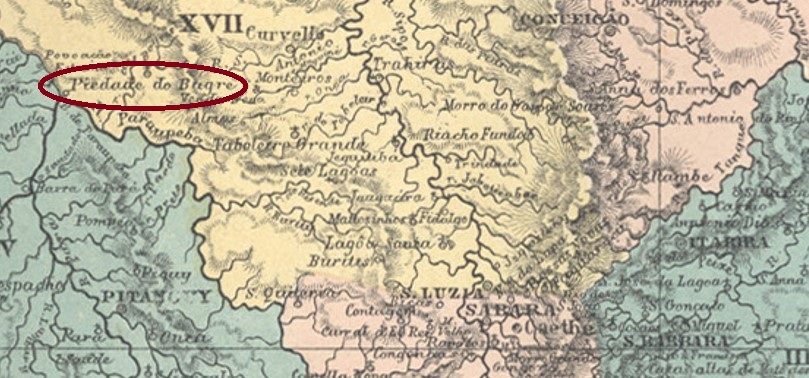
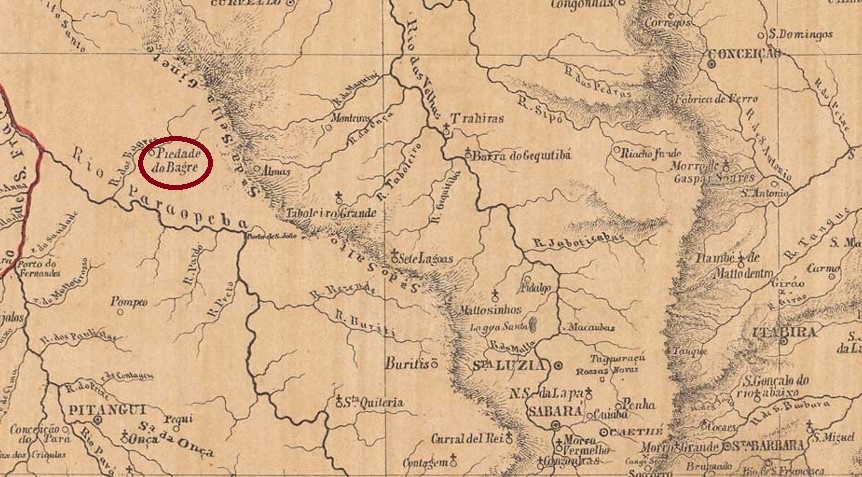
The parish of N. Sa. da Piedade do Bagre (Our Lady of the Piety of the Catfish) was established in April 1858 in the Município of Curvelo and was located on the north bank of the Bagre River, 280 km northwest of the provincial capital of Ouro Preto. Since December 1948, the village has been the municipal seat of Felixlândia. The name commemorates the priest Felix Ferreira da Rocha, who is said to have helped build a local chapel as early as April 1762.
The local post office was established in October 1880, as can be read in the postal report (Relatório dos Correios) for 1887. The agency was closed in April 1893 (Boletim Postal) and did not reopen until December 1903, as Paula Sobrinho writes in História Postal de Minas Gerais (Belo Horizonte, 1997). So far, no imperial postmark has been seen from this locality.
Provincia de Minas Geraes, 1873
Andere Namen: Piedade do Bagre, Felixlândia
Die Pfarrei von N. Sa. da Piedade do Bagre (Unsere Liebe Frau der Pietät des Welses) wurde im April 1858 im Município von Curvelo errichtet und lag am Nordufer des Flusses Bagre, 280 km nordwestlich der Provinzhauptstadt Ouro Preto entfernt. Seit Dezember 1948 ist der Ort Gemeindesitz von Felixlândia. Der Name erinnert an den Pfarrer Felix Ferreira da Rocha, der bereits im April 1762 eine Kapelle vor Ort mit gebaut haben soll.
Das örtliche Postamt entstand im Oktober 1880, wie man im Postbericht (Relatório dos Correios) für 1887 lesen kann. Die Agentur wurde im April 1893 geschlossen (Boletim Postal) und eröffnete erst im Dezember 1903 wieder, wie Paula Sobrinho in História Postal de Minas Gerais (Belo Horizonte, 1997) schreibt. Bisher wurde kein kaiserlicher Poststempel aus dieser Ortschaft gesehen.
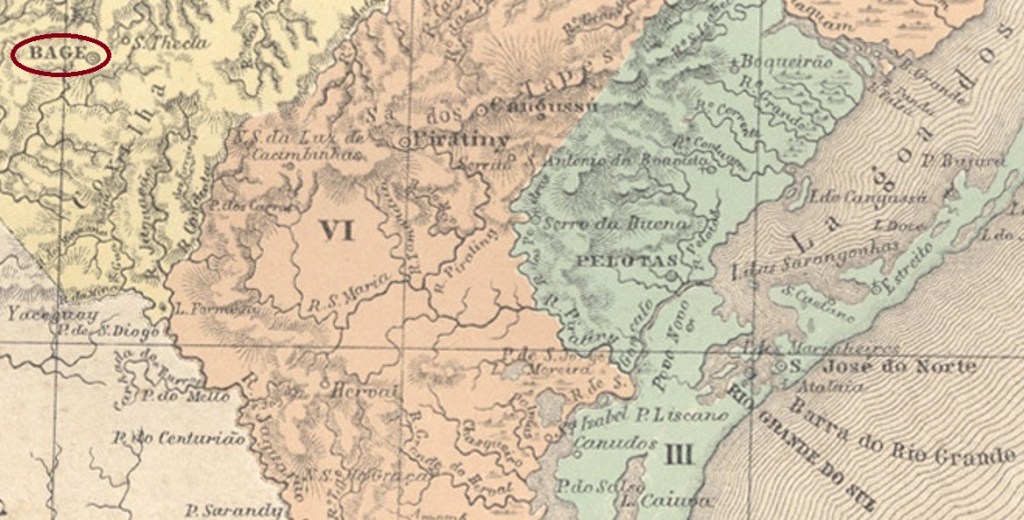
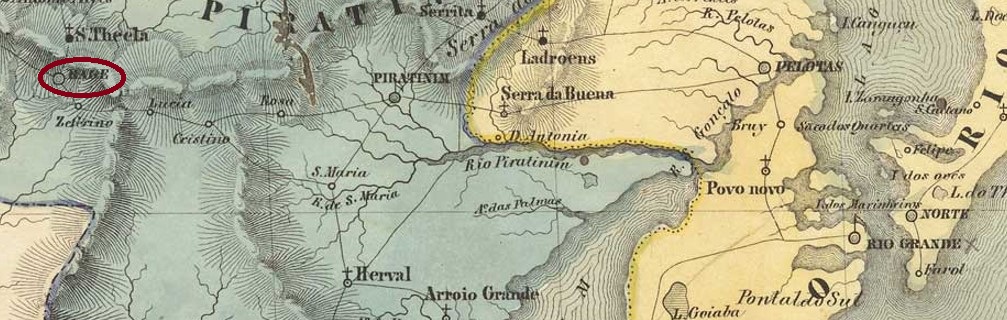
The settlement of Bagé began – as so often in border areas – as a soldiers’ camp, this time in July 1811 on the west bank of the Bagé stream, 380 km southwest of the later provincial capital Porto Alegre. Then, in January 1813, the chapel of S. Sebastião de Bagé was built, and by September 1815, the village had become a district to the Vila of Piratini. In June 1846 it was promoted to the status of Vila, and in December 1859 to the status of town.
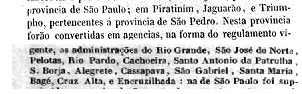
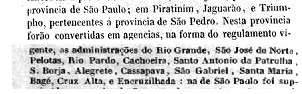
Three dates for the emergence of the local post office have been found. First in October 1831, as Nova Monteiro writes in Administrações e Agencias Postaes do Brasil Imperio (Brasil Filatelico/RJ, 1934-5; reprint SPP 1994-1999). Then in 1833, as one can read in the Directory of Imperial Post Offices (Tabella das Agencias do Correio do Imperio, Rio de Janeiro, 1885). And finally, around 1845 – that is, after the end of the Farroupilha Revolution, as can be seen in the Annuario Politico, Historico e Estatistico (Yearbook of Politics, History and Statistics, 1846):
Annuario 1846, pp. 53-54
The first postmarks were therefore from the pre-philatelic period. BRS-0020a was already registered in the RHM catalogue under P-RS-01, unfortunately without giving the exact period of use:
BRS-0020a (RHM P-RS-01)
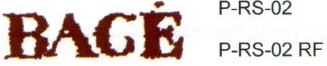
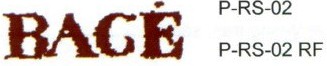
Its successor BRS-0020b (was also registered in the RHM, this time under P-RS-02, and was used from 1841 to at least 1843:
BRS-0020b (RHM P-RS-02)
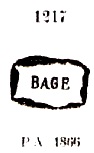
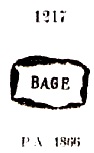
This was followed by a longer period without founded postmarks, and BRS-0020c was not registered until around 1866, then with dates until at least 1883. This postmark can be seen in Paulo Ayres’ Catálogo de Carimbos Brasil-Império, (S. Paulo, 1937, 1942) under no. 1217:
BRS-0020c (P.A. 1217)
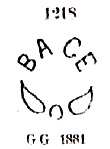
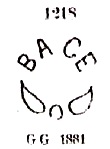
Then came the French type BRS-0020d (Fig. Fuad Ferreira Fo.): a double circle with the inscription BAGÉ above and the star between brackets below. A specimen found on a letter from 1879.From about 1881 also came the enigmatic BRS-0020e, also known through Ayres (op. cit.), this time under no. 1218:
BRS-0020e (P.A. 1218)
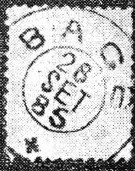
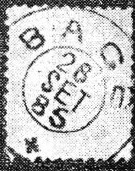
Bagé’s following postmarks were introduced to us by R Koester in Carimbologia III. BRS-0020f also occurs in dark purple and shows dates from 1881 to 1893:
BRS-0020f (RK)
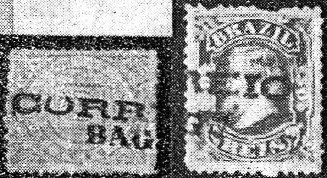
BRS-0020g was used between 1881 and 1885 and consists of two separated stamp lines, as the relative position of these is variable:
BRS-0020g (RK)
BRS-0020h (Collect. FM) is again a double circle with the inscription BAGÉ at the top, but compared to BRS-0020e, here the letters are smaller and there is no ornament at the bottom. Dates in the middle from 1889 to 1891. And BRS-0020i (fig. from the internet) should already be republican, as its inner dates so far are between 1891 and 1894. In this double circle one reads below (S. PEDRO DO SUL).
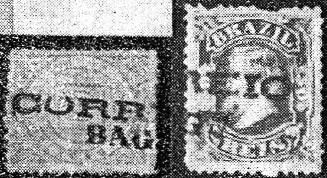
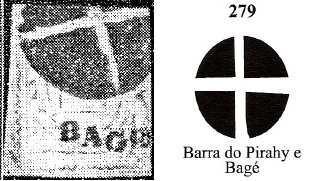
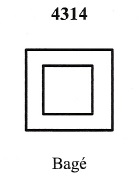
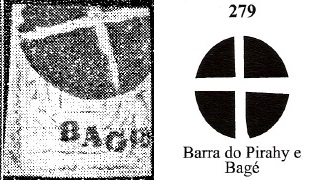
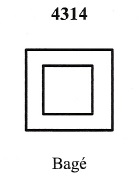
Four mute postmarks from Imperial Bagé were listed in Mute Cancellations of the Brazil Empire / Carimbos Mudos do Brasil Império (Brazil Philatelic Association, Rio de Janeiro, 2000) by James Dingler and Klerman W. Lopes:
BPA 274BPA 279 (+ BRS-0020f/RK)BPA 4314 (1876ff-1879)BPA 4478 (P.A. 1041) 1883ffVilliers de l’Ile Adam: Carta (…) da Provincia de S. Pedro do Sul, 1847
Textaktualisierung am 6. Februar 2023
Die Siedlung Bagés begann – wie so oft in Grenzgebieten – als ein Soldatenlager, diesmal im Juli 1811 am Westufer des Bachs Bagé, 380 km südwestlich der späteren Provinzhauptstadt Porto Alegre. Im Januar 1813 wurde dann die Kapelle von S. Sebastião de Bagé errichtet, und schon im September 1815 war die Ortschaft ein Distrikt zur Vila von Piratini geworden. Im Juni 1846 erfolgte der Aufstieg zur Vila, und im Dezember 1859 zur Stadt.
Drei Zeitpunkte zur Entstehung des örtlichen Postamts wurden gefunden. Erstmals im Oktober 1831, wie Nova Monteiro in Administrações e Agencias Postaes do Brasil Imperio (Brasil Filatelico/RJ, 1934-5; Reprint SPP 1994-1999) schreibt. Dann 1833, wie man im Verzeichnis der kaiserlichen Postämter (Tabella das Agencias do Correio do Imperio, Rio de Janeiro, 1885) lesen kann. Und schließlich ca. 1845 – also nach dem Ende der Farroupilha-Revolution, wie aus dem Jahrbuch für Politik, Geschichte und Statistik (AnnuarioPolitico, Historico e Estatistico, 1846) hervorgeht:
Annuario 1846, S. 53-54
Die ersten Poststempel waren demnach aus der Vorphila-Zeit. BRS-0020a wurde bereits im RHM- Katalog unter P-RS-01 registriert, leider ohne den genauen Verwendungszeitpunkt zu nennen:
BRS-0020a (RHM P-RS-01)
Sein Nachfolger BRS-0020b (wurde ebenfalls im RHM eingetragen, diesmal unter P-RS-02, und wurde von 1841 bis mindestens 1843 gebraucht:
BRS-0020b (RHM P-RS-02)
Es folgte eine längere Zeit noch ohne gefundene Poststempel, und BRS-0020c wurde erst um 1866 registriert, dann mit Daten bis mindestens 1883. Dieser Stempel ist im Paulo Ayres‘ Catálogo de Carimbos Brasil-Império, (S. Paulo, 1937, 1942) unter Nr.1217 zu sehen:
BRS-0020c (P.A. 1217)
Danach kam der französischer Typ BRS-0020d (Abb. Fuad Ferreira Fo.): ein Dopplkreis mit der Inschrift BAGÉ oben und dem Stern zwischen Klammern unten. Ein Exemplar auf einem Brief aus 1879 gefunden. Ab ca. 1881 kam auch der rätselhafte BRS-0020e, der auch durch Ayres (op. cit.) bekannt ist, diesmal mit Nr. 1218:
BRS-0020e (P.A. 1218)
Die nächsten Poststempel Bagés wurden uns durch R Koester in Carimbologia III vorgestellt. BRS-0020f kommt auch in dunkellila vor und zeigt Daten von 1881 bis 1893:
BRS-0020f (RK)
BRS-0020g wurde zwischen 1881 und 1885 verwendet und besteht eigentlich aus zwei Stempelzeilen, da die relative Position derselben variabel ist:
BRS-0020g (RK)
BRS-0020h (Samml. FM) ist wieder ein Doppelkreis mit der Inschrift BAGÉ oben, aber im Vergleich zu BRS-0020e sind hier die Buchstaben kleiner, und unten ist kein Ornament zu sehen. Daten in der Mitte von 1889 bis 1891. Und BRS-0020i (Abb. aus dem Internet) dürfte bereits republikanisch sein, da seine inneren Daten bisher zwischen 1891 und 1894 liegen. In diesem Doppelkreis liest man unten (S. PEDRO DO SUL).
Vier stumme Poststempel aus dem kaiserlichen Bagé wurden im Mute Cancellations of the Brazil Empire / Carimbos Mudos do Brasil Império (Brazil Philatelic Association, Rio de Janeiro, 2000) von James Dingler und Klerman W. Lopes aufgelistet:
Other names: Diamantino da Bagagem, Estrela do Sul (1901)
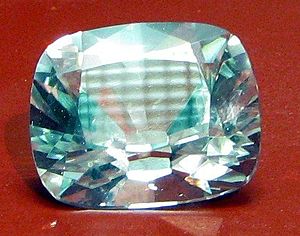
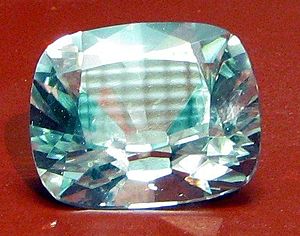
The freguesia of Diamantino de N. Sra. Mãe dos Homens da Bagagem was founded in April 1854 on the west bank of the Bagagem River in the Município of Patrocínio, 590 km west of the provincial capital Ouro Preto. The place became a vila in May 1856 and a town in September 1861, which was named Estrela do Sul (South Star) exactly 40 years later. This was the name of the famous diamond that was discovered in the Bagagem River in July 1853 with over 250 carats. In the meantime, it has only barely 130 carats, but no less beautiful:
The Star of the South (copy: Reich der Kristalle Museum, Munich)
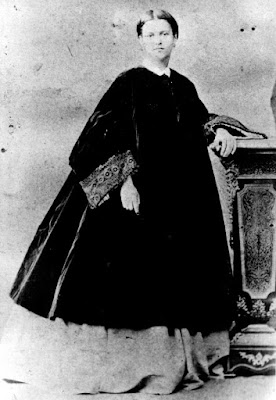
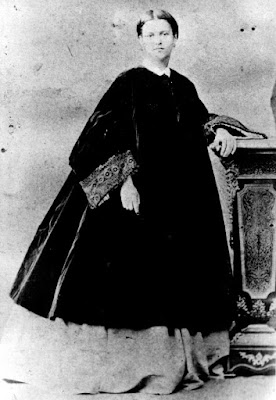
At least as famous and shrouded in mystery as the diamond is the most famous resident of Bagagem, the courtesan Ana Jacinta de São José (1800-1873), called Dona Beja:
Unknown photographer
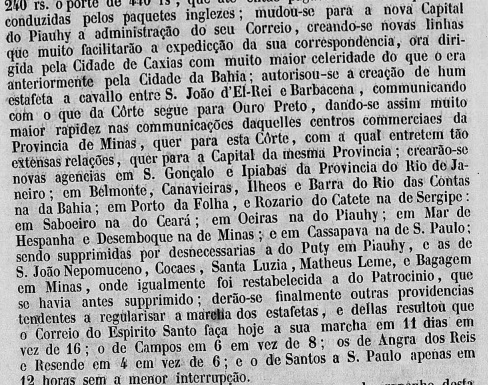
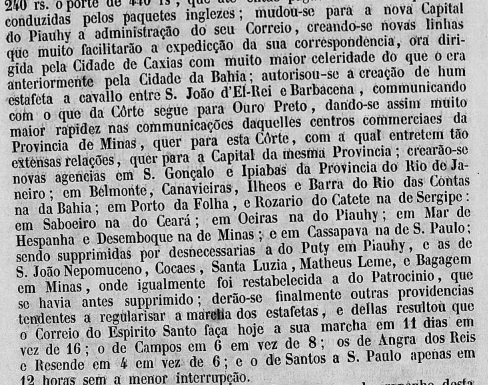
Four periods of operation for the local post office have been found so far, although it is not yet known when the first period began. However, it ended around 1851, when the agency was probably moved to the neighboring Patrocinio, as the official press announced the following year:
Relatorio do Ministerio do Imperio/1852
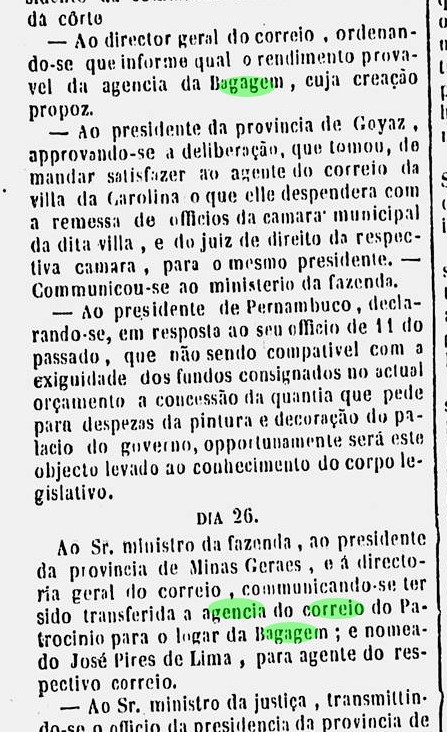
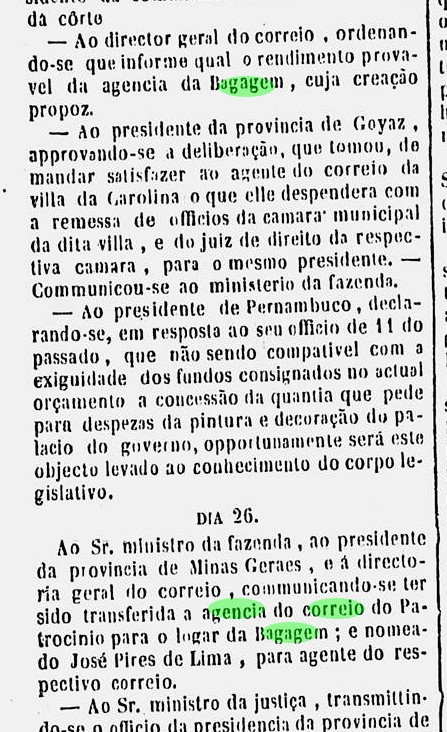
The reopening of the post office in Bagagem, however, was immediately detrmined in January 1852. Diamonds were discovered in the river and the post office moved back from Patrocínio’s villa to Bagagem, which was not even a freguesia at the time:
Diario do Rio de Janeiro, 24.02.1852
It is not known exactly when the second postal period ended, but it is likely to be after the discovery of the South Star. However, the third postal opening was decided in August 1855, as Aureo G. Santos writes in Agências de Correio Criadas e Suprimidas 1851, 1855, 1856 e 1857 (Brasil Filatélico 181, Rio de Janeiro, 1977):
Aureo G. Santos (op. cit.)
Finally, a fourth post opening was arranged in October 1860, as noted in the postal report (Relatorio Postal) for 1887.
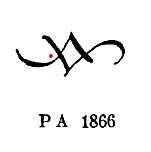
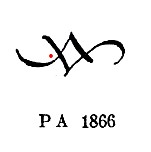
The turbulent history of the town is reflected in its postmarks. The first one, for example, has not yet been found; it could even be that people had to make do without a postmark for decades. For Paulo Ayres shows in Catálogo de Carimbos Brasil-Império (S. Paulo, 1937, 1942) on p. 146 a handwritten cancellation that was in use from about 1866 until at least 1879:
P.A. p. 146
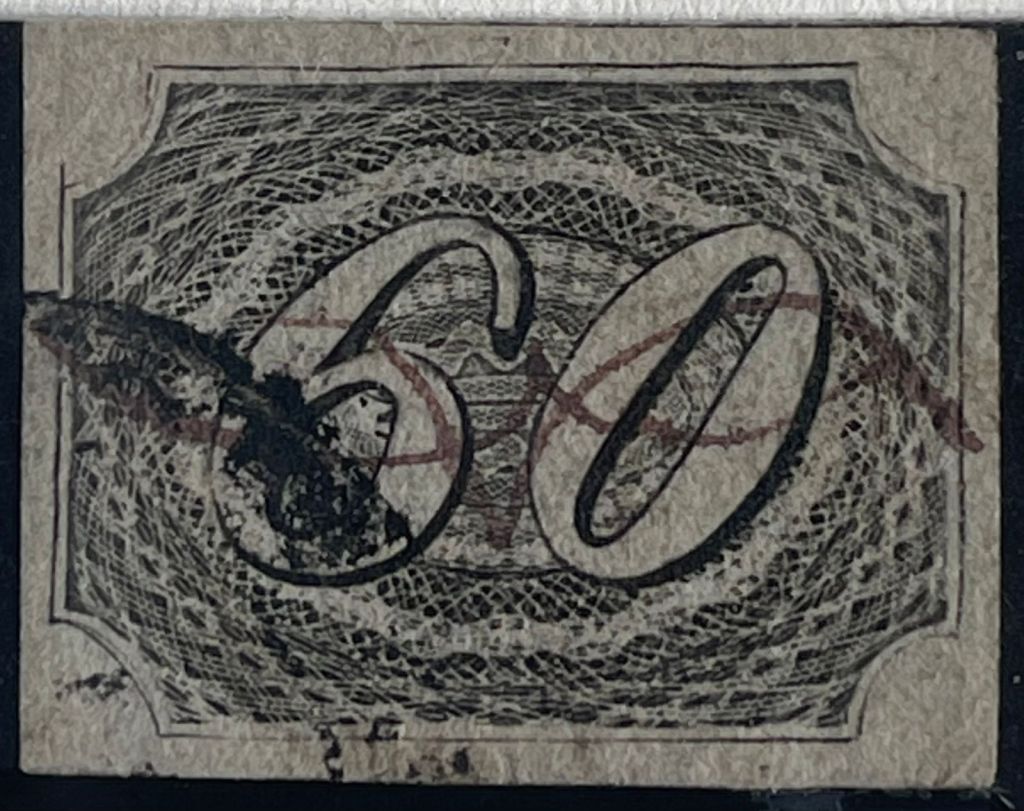
In the meantime, this cancellation even appeared on a stamp issue from 1844, but in connection with an unidentifiable postmark.
Coll. Paulo Corchaki
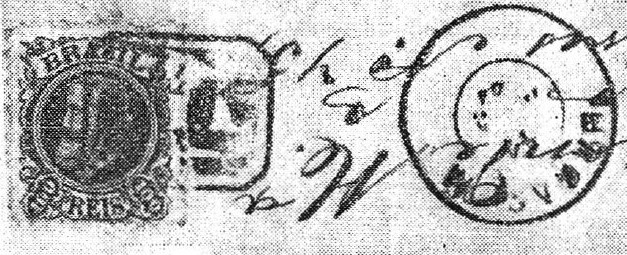
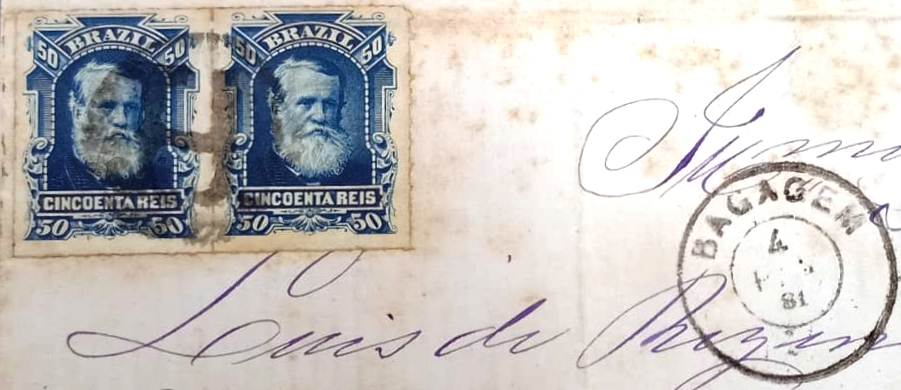
Whether this cancellation is a genuine one from Bagagem has yet to be verified. In any case, BMG-0175b (image from the Internet) is no fake: a double circle with the inscription BAGAGEM at the top, plus dates from 1878 to 1888. It was followed by BMG-0175c (coll. FM); in this double circle the inscription at the top is CID. DA BAGAGEM at the bottom, reading (M.G.), with dates from 1890 to 1893.
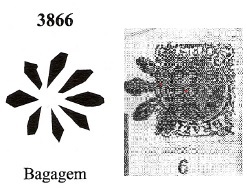
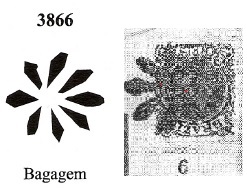
From Mute Cancellations of the Brazil Empire/ Carimbos Mudos do Brasil Império (Brazil Philatelic Association, Rio de Janeiro, 2000) from James Dingler and Klerman W. Lopes come two mute cancellations from Bagagem, with nos. 1793 and 3866:
BPA 1793 (FF) 1882BPA 3866 (RK) 1883
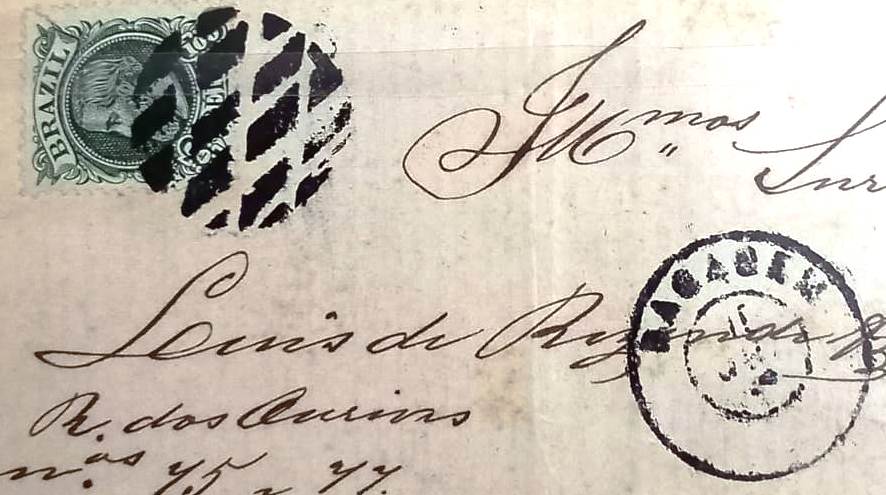
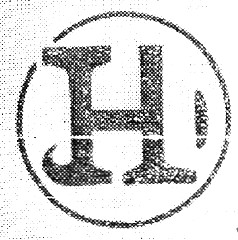
The philatelist Fuad Ferreira Fo. found two more mute cancellations, both from 1881, the first of which had already been made known by R. Koester (Carimbologia III) and could represent the initials of the postal agent:
And finally, Koester found another example of initials as mute cancel:
1881ff (RK)Estado de Minas Geraes, 1910
Andere Namen: Diamantino da Bagagem, Estrela do Sul (1901)
Die Freguesia von Diamantino de N. Sra. Mãe dos Homens da Bagagem wurde im April 1854 am Westufer de Flusses Bagagem (Gepäck) im Município von Patrocínio, 590 km westlich der Provinzhauptstadt Ouro Preto entfernt. Der Ort wurde im Mai 1856 eine Vila und im September 1861 eine Stadt, die genau 40 Jahre später Estrela do Sul (Südstern) genannt wurde. So hieß der berühmte Diamant, der im Juli 1853 mit über 250 Karat im Fluss Bagagem entdeckt wurde. Inzwischen ist er nur knapp 130 Karat groß, aber nicht weniger schön:
Der Stern des Südens (Kopie: Reich der Kristalle Museum, München)
Mindestens so berühmt und geheimnisumwittert wie der Diamant ist die bekannteste Bewohnerin von Bagagem, die Kurtisane Ana Jacinta de São José (1800-1873), genannt Dona Beja:
Unbekannter Fotograph
Es wurden bisher vier Betriebsperioden fürs örtliche Postamt gefunden, wobei noch nicht bekannt ist, wann die erste Periode begann. Sie endete aber um 1851, als die Agentur wohl zum benachbarten Patrocinio verlegt wurde, wie die Amtspresse im folgenden Jahr bekannt gab:
Relatorio do Ministerio do Imperio/1852
Die Wiedereröffnung des Postamts in Bagagem wurde aber gleich im Januar 1852 veranlasst. Da wurden Diamanten im Fluss entdeckt, und die Post zog von der Villa von Patrocínio zum Ort Bagagem zurück, der damals nicht einmal eine Freguesia war:
Diario do RJ, 24.02.1852
Es ist nicht bekannt, wann genau die zweite Postperiode endete, es dürfte aber erst nach der Entdeckung des Südsterns sein. Über die dritte Posteröffnung wurde aber im August 1855 entschieden, wie Aureo G. Santos in Agências de Correio Criadas e Suprimidas 1851, 1855, 1856 e 1857 (Brasil Filatélico 181, Rio de Janeiro, 1977) schreibt:
Aureo G. Santos (op. cit.)
Schließlich wurde eine vierte Posteröffnung im Oktober 1860 veranlasst, wie der Postbericht (Relatorio Postal) für 1887 notierte.
Die bewegte Geschichte des Orts spiegelt sich in seinen Poststempeln wider. So wurde der erste darunter bisher noch nicht gefunden; es könnte sogar sein, dass man jahrzehntelang ohne Poststempel auskommen musste. Denn Paulo Ayres zeigt in Catálogo de Carimbos Brasil-Império (S. Paulo, 1937, 1942) auf S. 146 eine handschriftliche Entwertung, die ab ca. 1866 bis mindestens 1879 Verwendung fand:
P.A. p/S. 146
Und inzwischen tauchte diese Entwertung sogar auf einer Markenausgabe aus 1844 auf, aber in Verbindung mit einem nicht identifizierbaren Stempel.
Samml. Paulo Corchaki
Ob diese Entwertung eine echte aus Bagagem ist, muss noch geprüft werden. Echt ist jedenfalls BMG-0175b (Abb. aus dem Internet): ein Doppelkreis mit der Inschrift BAGAGEM oben, dazu Daten von 1878 bis 1888. Ihm folgte BMG-0175c (Samml. FM); in diesem Doppelkreis lautet die Inschrift oben CID. DA BAGAGEM, unten liest man (M.G.), die bisherigen Daten gehen von 1890 bis 1893.
Aus Mute Cancellations of the Brazil Empire/ Carimbos Mudos do Brasil Império (Brazil Philatelic Association, Rio de Janeiro, 2000) von James Dingler und Klerman W. Lopes kommen zwei stumme Entwertungen aus Bagagem, mit Nr. 1793 und 3866:
BPA 1793 (FF) 1882BPA 3866 (RK) 1883
Dann fand der Philatelist Fuad Ferreira Fo. zwei weitere stumme Stempel, beide aus 1881. Der erste davon war schon durch R. Koester (Carimbologia III) bekannt gemacht und könnte die Initialen des Postagenten darstellen:
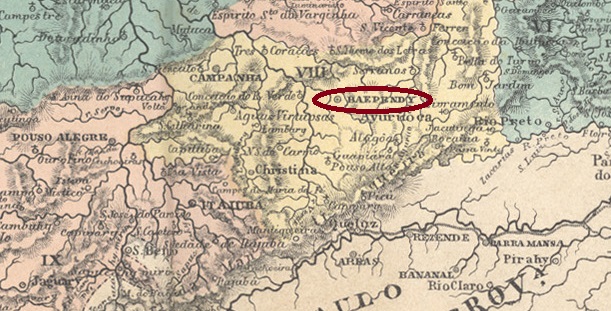
In August 1752, the freguesia called Sta. Maria de Baependi came into being, located at the Vila of Campanha da Princesa on the south bank of the Baependi River, more than 30 km southwest of the provincial capital Ouro Preto. It became a vila in July 1814 and a town in May 1856.
Two dates of origin for the local post office have been found. First in March 1829, as Nova Monteiro writes in Administrações e Agencias Postaes do Brasil Imperio (Brasil Filatelico/RJ, 1934-5; Reprint SPP 1994-1999). Then again in October 1833, as can be read both in the postal report (Relatorio dos Correios) for 1887 and in Paula Sobrinho (História Postal de Minas Gerais, Belo Horizonte, 1997).
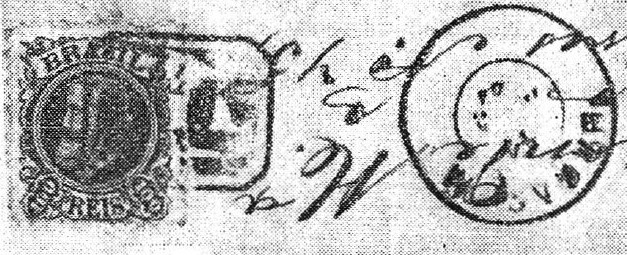
The first postmark is BMG-0170a, which was in use from 1829 and can already be found in the RHM catalogue under P-MG-04:
BMG-0170a (RHM P-MG-04)
Its successor BMG-0170b is very similar and was also presented in the RHM catalogue:
BMG-0170b (RHM P-MG-05) 1835-1837
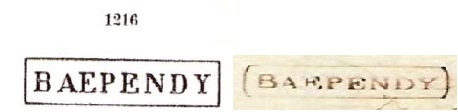
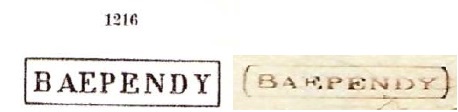
After that there came BMG-0170c, used from 1837 to at least 1877, also occurring in brown, crimson and green-blue and already shown by Paulo Ayres in Catálogo de Carimbos Brasil-Império, (S. Paulo, 1937, 1942) under No. 1216. However, his illustration has some inaccuracies, as can be seen by comparison:
BMG-0170c (P.A. 1216, RHM P-MG-06, recte JLF)
The last postmark in the Empire was BMG-0170d (illustration from the internet): a plain double circle with the inscription BAEPENDY at the top. The dates in the middle go from 1877 to 1895.
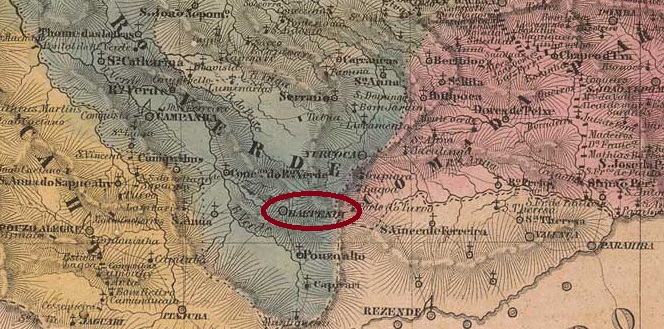
Villiers de l’Ile Adam: Carta (…) da Provincia de Minas Gerais, 1849
Im August 1752 entstand die Freguesia namens Sta. Maria de Baependi, die bei der Vila von Campanha da Princesa am Südufer des Flusses Baependi lag, über 30 km südwestlich der Provinzhauptstadt Ouro Preto entfernt. Im Juli 1814 wurde der Ort eine Vila und bereits im Mai 1856 eine Stadt.
Zwei Entstehungstermine fürs örtliche Postamt wurden gefunden. Erstmals im März 1829, wie Nova Monteiro in Administrações e Agencias Postaes do Brasil Imperio (Brasil Filatelico/RJ, 1934-5; Reprint SPP 1994-1999) schreibt. Dann wieder im Oktober 1833, wie sowohl im Postbericht (Relatorio dos Correios) für 1887 als auch bei Paula Sobrinho (História Postal de Minas Gerais, Belo Horizonte, 1997) zu lesen ist.
Der erste Poststempel ist BMG-0170a, der ab 1829 in Gebrauch war und bereits im RHM-Katalog unter P-MG-04 zu finden ist:
BMG-0170a (RHM P-MG-04) 1829
Sein Nachfolger BMG-0170b ist ihm sehr ähnlich und wurde ebenfalls im RHM-Katalog präsentiert:
BMG-0170b (RHM P-MG-05) 1835-1837
Danach kam BMG-0170c, der von 1837 bis mindestens 1877 verwendet wurde, auch in braun, karminrot und grünblau vorkommt und schon von Paulo Ayres in Catálogo de Carimbos Brasil-Império, (S. Paulo, 1937, 1942) unter Nr. 1216 gezeigt wurde. Allerdings hat seine Abbildung einige Ungenauigkeiten, wie man beim Vergleich feststellen kann:
BMG-0170c (P.A. 1216, RHM P-MG-06, recte JLF)
Der letzte Poststempel im Kaiserreich war BMG-0170d (Abb. aus dem Internet): ein schlichter Doppelkreis mit der Inschrift BAEPENDYoben. Die Daten in der Mitte gehen von 1877 bis 1895.
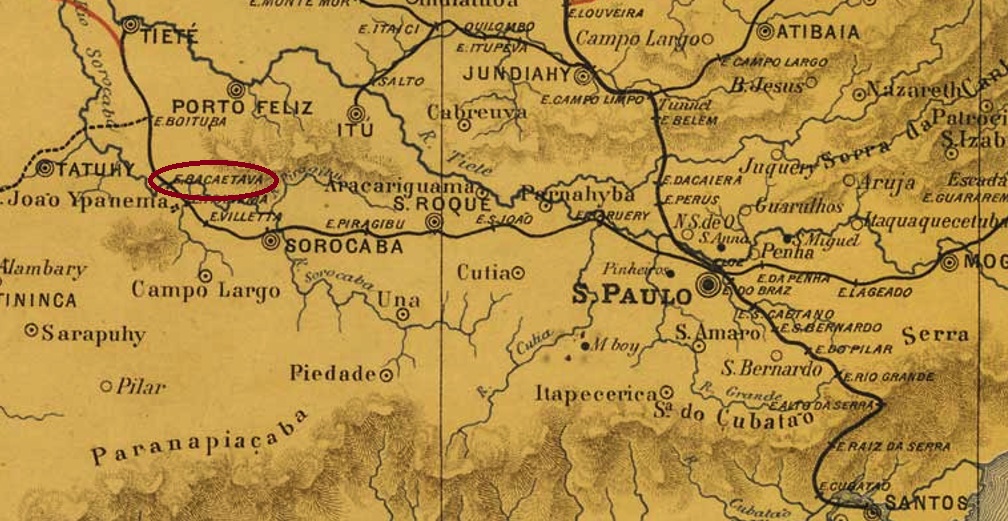
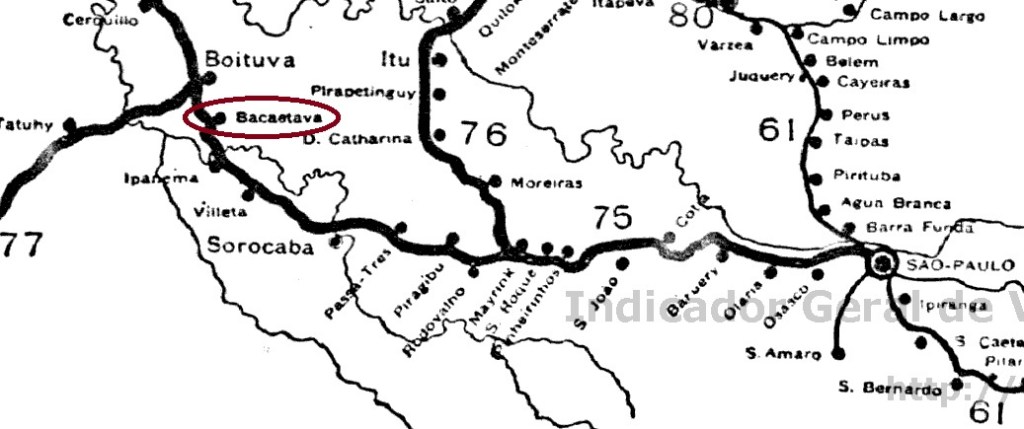
Bacaetava station was inaugurated in August 1880 by the E.F. Sorocabana Railway Company, Main Line, located in the Município of Porto Feliz, 130 km west of the provincial capital São Paulo. The railway line changed hands in 1892 to the Cia. União Sorocabana e Ytuana and from 1905 to 1928 it belonged to the E.F. Sorocabana e Ytuana. Then the station was deactivated, as the new company Sorocabana built a new railway line that relocated the station.
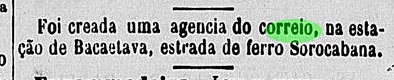
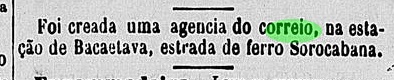
There was a station post office from August 1880 on, as reported by the regional press:
Jornal da Tarde, 01.09.1880
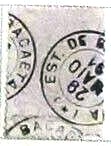
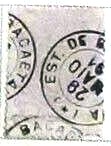
The imperial postmark BSP-0075a (image: F. Piccinini) is a French type:
BSP-0075a (FP) 1880ff-1891Cia. Sorocabana e Ytuana, 1898
Textaktualisierung am 2. Mai 2024
Der Bahnhof Bacaetava wurde im August 1880 durch die E.F. Sorocabana-Bahngesellschaft, Hauptlinie, eingeweiht und lag im Município von Porto Feliz, 130 km westich der Provinzhauptstadt São Paulo entfernt. Die Bahnlinie wechselte 1892 zur Cia. União Sorocabana e Ytuana und von 1905 bis 1928 gehörte sie der E.F. Sorocabana e Ytuana. Dann wurde der Bahnhof deaktiviert, da die neue Gesellschaft Sorocabana eine neue Bahntrasse baute, die den Bahnhof verlegt hat.
Ein Bahnhofspostamt gab es ab August 1880, wie die Regionalpresse meldete:
Jornal da Tarde, 01.09.1880
Der kaiserliche Poststempel BSP-0075a (Abb. Felipe Piccinini) ist ein französischer Typus:
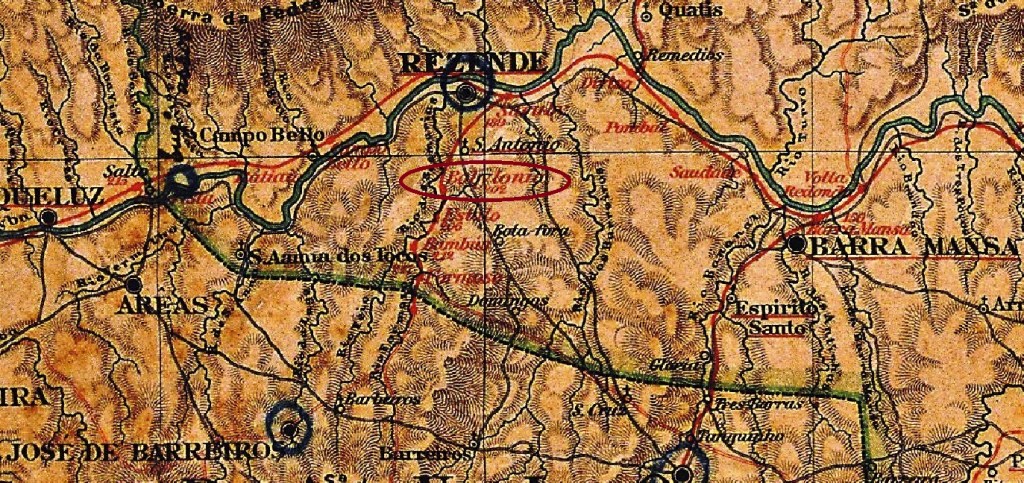
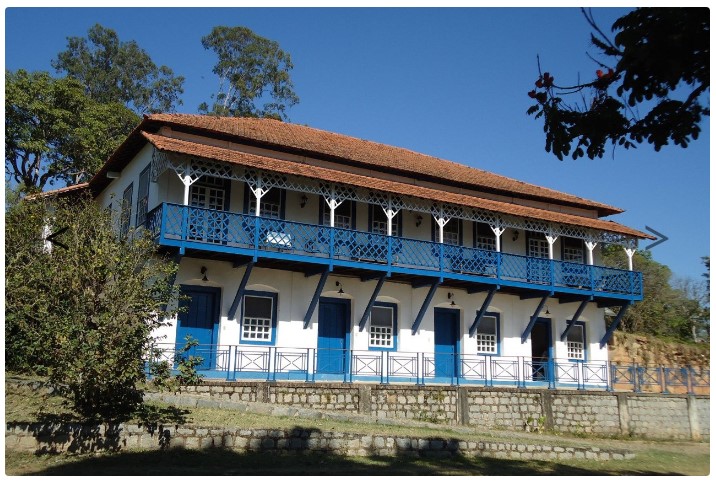
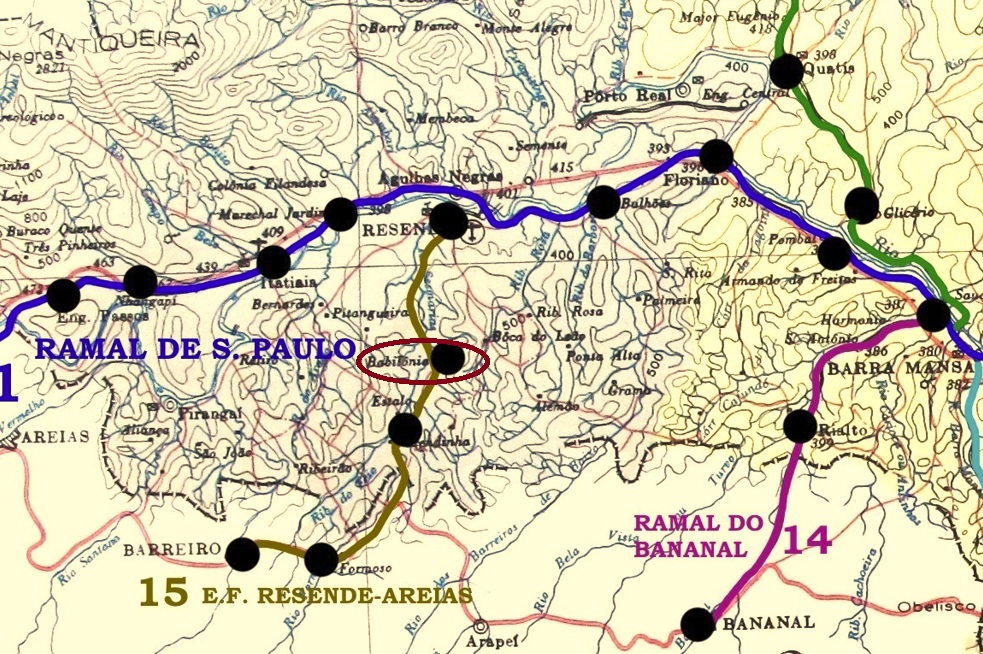
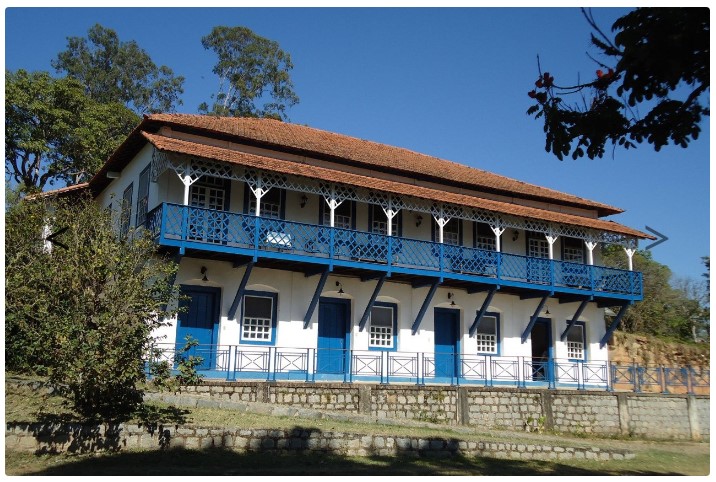
Babylonia station was inaugurated in November 1877 by the E.F. Resende a Bocaina Railway Company, Main Line, and was located near Resende, 180 km west of the capital Rio de Janeiro. The biblical name probably comes from an important fazenda in the area.
fazendasantigas.com
The railway line only remained in operation until the late 1920s, the rails are long gone, and the station building has been demolished.
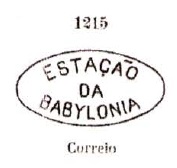
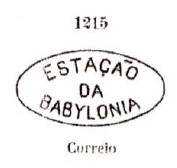
As Paulo Novaes writes in agenciaspostais.com.br, there was a station post office there since July 1878, active until December 1916. The first imperial postmark is BRJ-0100a, it has already been made known by Paulo Ayres in Catálogo de Carimbos Brasil-Imperio (S. Paulo 1937, 1942) under No. 1215.
P. A. 1215
After this came BRJ-0100b (coll. Fuad Ferreira Fo.): a double circle with the inscriptions BABYLONIA above and (ESTAÇÃO) below. The only specimen so far has a date of December 1889 in the centre.
agenciaspostais.com.br
Textaktualisierung am 17. Mai 2023
Der Bahnhof Babylonia wurde im November 1877 durch die E.F. Resende a Bocaina, Hauptlinie, eingeweiht und lag bei Resende, 180 km westlich der Hauptstadt Rio de Janeiro entfernt. Der biblische Name kommt wahrscheinlich von einer wichtigen Fazenda der Gegend.
fazendasantigas.com
Die Bahnlinie blieb nur bis Ende der 20er Jahre in Betrieb, die Schienen sind längst weg, und das Bahnhofsgebäude wurde abgerissen.
Wie Paulo Novaes in agenciaspostais.com.br schreibt, gab es dort ein Bahnhofspostamt seit Juli 1878, das bis Dezember 1916 aktiv war. Der erste kaiserliche Poststempel ist BRJ-0100a und wurde bereits durch Paulo Ayres in Catálogo de Carimbos Brasil-Imperio (S. Paulo 1937, 1942) unter Nr. 1215 bekannt gemacht.
P. A. 1215, 1878ff
Nach diesem kam BRJ-0100b (Samml. Fuad Ferreira Fo.): ein Doppelkreis mit den Inschriften BABYLONIA oben und (ESTAÇÃO) unten. Das bisher einzige Exemplar hat ein Datum aus Dezember 1889 in der Mitte.
Carta da Republica dos Estados Unidos do Brazil, 1892
See also Urussanga (USC-0270)
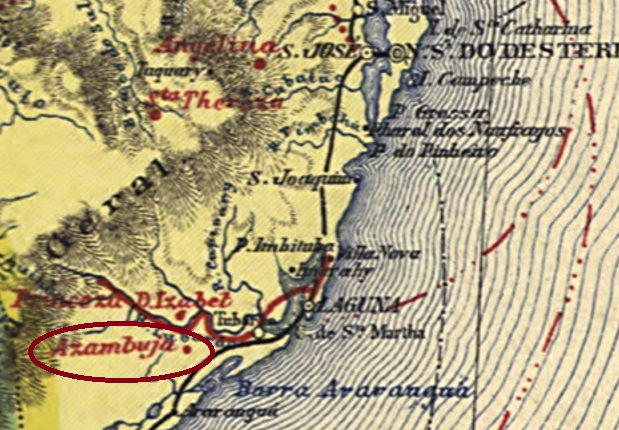
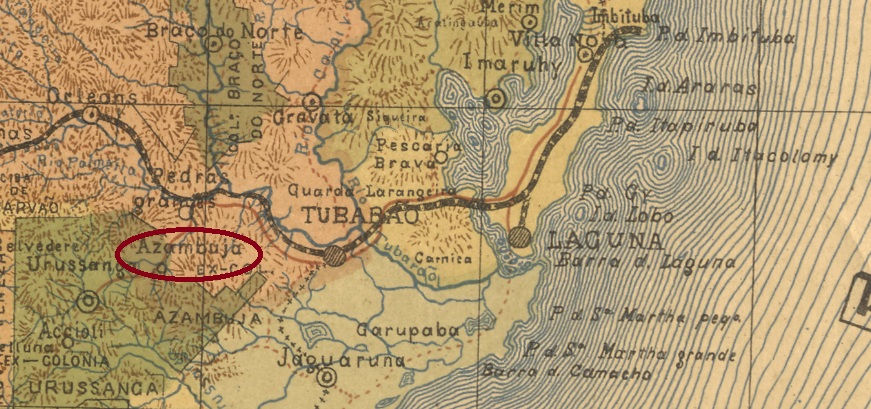
The Italian colony called S. Marcos de Azambuja was established in April 1877 in the Município of Tubarão, located barely 180 km south of the provincial capital of Desterro (today: Florianópolis). In January 1900, it became a district, which has belonged to the newly established Município of Pedras Grandes since December 1961.
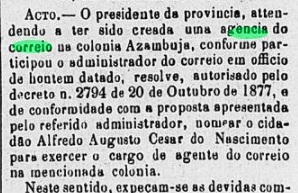
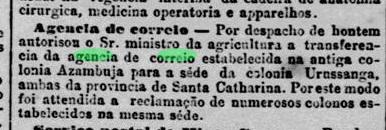
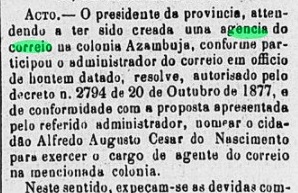
The local post office was established in the early 1880s, according to the regional press:
O Despertador, 01.05.1880
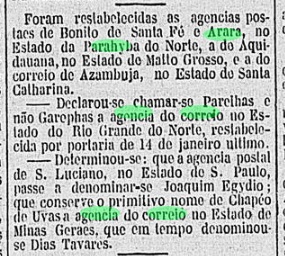
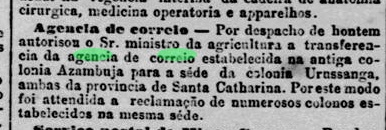
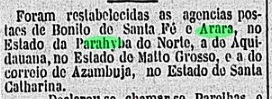
However, the agency was transferred to neighbouring Urussanga in September 1887, and it was not until February 1898 that the post office reopened in Azambuja.
Jornal do Commercio/RJ, 06.09.1887Gazeta de Noticias/RJ, 13.02.1898
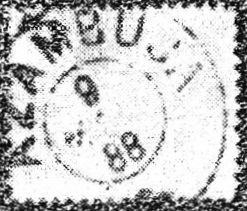
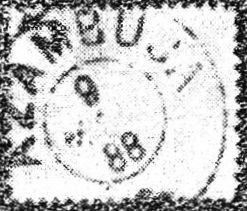
The imperial postmark is ASC-0010a and has already been made known by R. Koester (Carimbologia II):
ASC-0010a (RK) 1888-1890ff
Since all postmark dates are so far from the time after the postal transfer to Urussanga, it can be assumed that the Azambuja postmarks continued to be used there without any problems, for no imperial Urussanga postmark has been seen yet.
Estado de Santa Catharina, 1907
Siehe auch Urussanga (USC-0270)
Die italienische Kolonie namens S. Marcos de Azambuja entstand im April 1877 im Município von Tubarão und lag knapp 180 km südlich der Provinzhauptstadt Desterro (heute: Florianópolis). Im Januar 1900 wurde daraus ein Distrikt, der seit Dezember 1961 dem neu gegründeten Município von Pedras Grandes angehört.
Das örtliche Postamt entstand Anfang 1880, wie aus der Regionalpresse hervorgeht:
O Despertador, 01.05.1880
Die Agentur wurde allerdings im September 1887 zum benachbarten Urussanga verlegt, und erst im Februar 1898 eröffnete in Azambuja wieder die Post.
Jornal do Commercio/RJ, 06.09.1887Gazeta de Noticias/RJ, 13.02.1898
Der kaiserliche Poststempel ist ASC-0010a und wurde bereits durch R. Koester (Carimbologia II) bekannt gemacht:
ASC-0010a (RK) 1888-1890ff
Da die bisherigen Stempeldaten aus der Zeit nach der Postverlegung nach Urussanga stammen, ist es anzunehmen, dass man dort ohne Probleme die Azambuja-Stempel weiter verwendete, zumal bisher kein Urussanga-Stempel aus dem Kaiserreich zu sehen war.
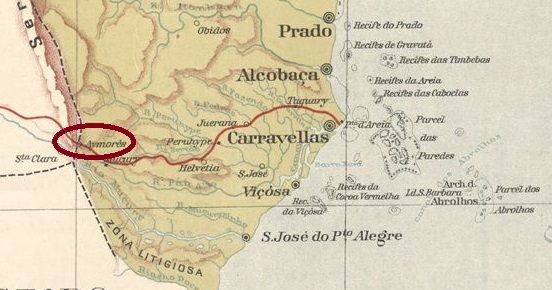
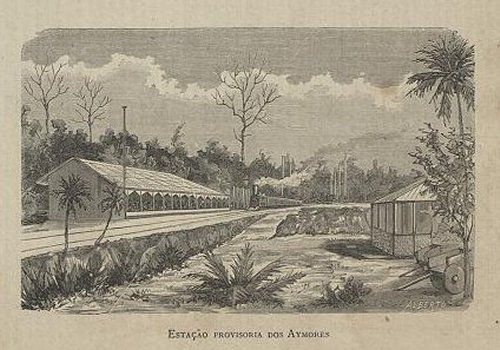
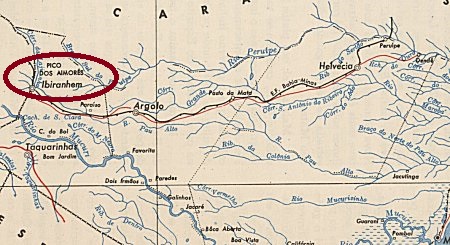
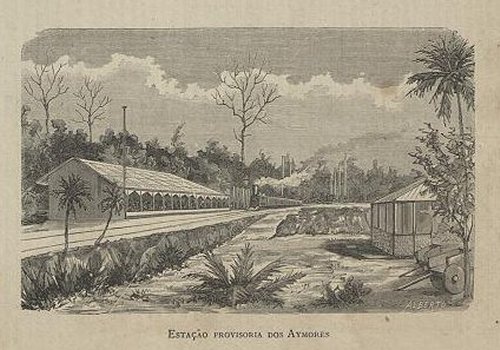
Aymorés station was inaugurated in November 1882 by the E.F. da Bahia a Minas and was located close to the east bank of the Pau Alto River in the Município of Mucury, 1020 km south of the provincial capital Salvador da Bahia. The railway line went to Chemins de Fer Fédéraux de l’Est Brésilien in 1912 and to E.F. Bahia-Minas Railway Company in 1936. From 1965 until its closure the following year, it belonged to V.F. Centro-Oeste (estacoesferroviarias.com.br). The name Aymorés recalls an Indian tribe of the border region between Bahia and Espirito Santo.
ca. 1883 (estacoesferroviarias.com.br)
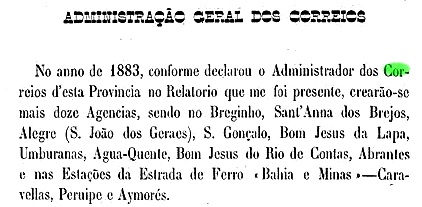
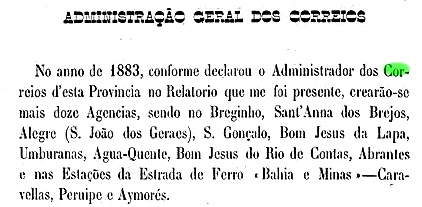
The station post office came into being in 1883, as the provincial postal administration’s report for 1884 announced:
Relatorio do Conselho Interino do Governo da Bahia, 1884
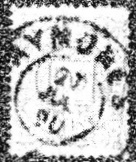
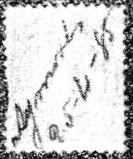
The imperial postmark is ABA-0090a, with dates from 1887 to 1890, already presented by R. Koester (Carimbologia II):
ABA-0090a (RK)
We know from Koester (op. cit.) about a handwritten cancellation from there:
1885 (RK)Instituto Brasileiro de Geografia e Estatística, 1958
Andere Namen : Aymorezinho, Ibiranhém
Der Bahnhof Aymorés wurde im November 1882 durch die E.F. da Bahia a Minas eingeweiht und lag nah am Ostufer des Flusses Pau Alto im Município von Mucury, 1020 km südlich der Provinzhauptstadt Salvador da Bahia. Die Bahnlinie ging 1912 zur Fa. Chemins de Fer Fédéraux de l’Est Brésilien und 1936 zu E.F. Bahia-Minas Bahngesellschaft. Von 1965 bis zur Stilllegung im folgenden Jahr gehörte sie der V.F. Centro-Oeste (estacoesferroviarias.com.br). Der Name Aymorés erinnert an einem Indianerstamm der Grenzregion zwischen Bahia und Espirito Santo.
ca. 1883 (estacoesferroviarias.com.br)
Das Bahnhofspostamt entstand 1883, wie der Bericht der provinziellen Postverwaltung für 1884 bekannt gab:
Relatorio do Conselho Interino do Governo da Bahia, 1884
Der kaiserliche Poststempel ist ABA-0090a, der mit Daten von 1887 bis 1890 versehen ist und bereits durch R. Koester (Carimbologia II) vorgestellt wurde:
ABA-0090a (RK)
Auch durch Koester (op. cit.) kennen wir eine handschriftliche Entwertung von dort:
Avellar (train station/Bahnhof), Rio de Janeiro (ARJ-0095)
Other names: Parada do Barão, Est. Boa Vista, Desvio da Boa Vista, Vieira Cortez (1924)
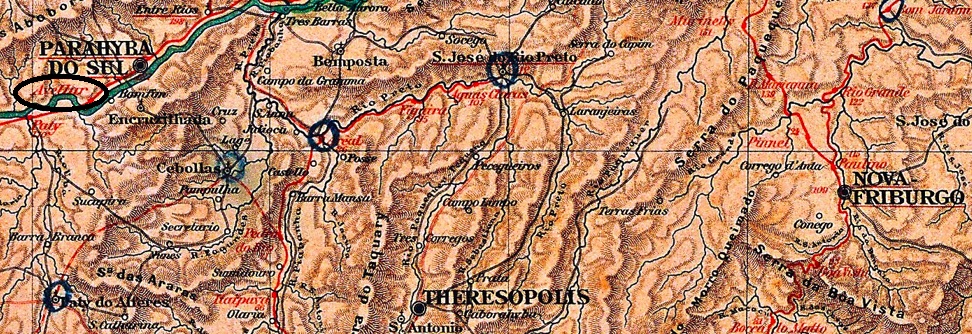
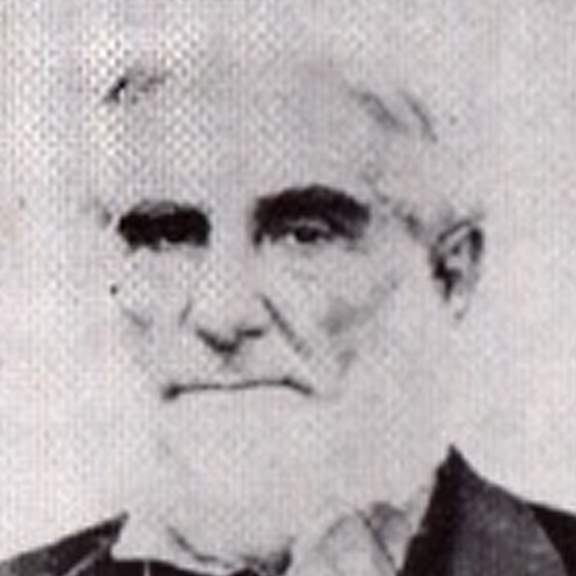
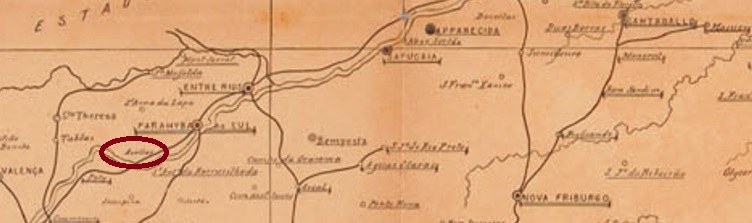
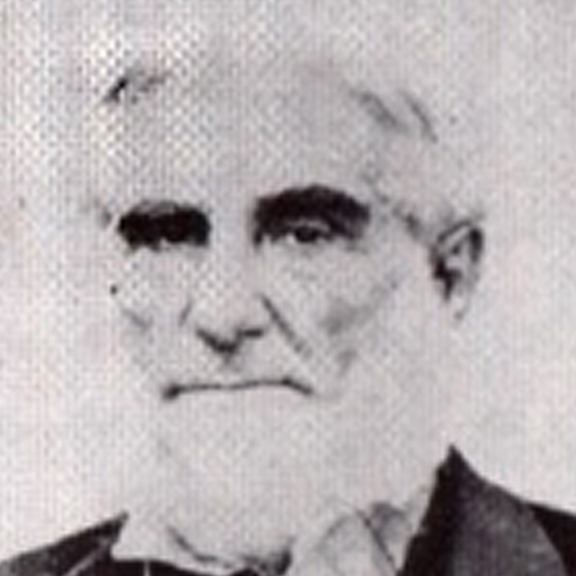
This station was inaugurated in July 1885 by the E.F. Dom Pedro II Railway Company in the Freguesia of S. Pedro and S. Paulo in the Município of Parahyba do Sul on the north bank of the river of the same name, 140 km north of the capital Rio de Janeiro. The railway line went to E.F. Central do Brasil in 1889, and from 1975 until its closure in 1996 it belonged to Rede Ferroviária Federal S.A. However, since 1924 the station was called Vieira Cortez (estacoesferroviarias.com.br), because another station called Avellar was inaugurated in March 1898, 30 km further south at Paty do Alferes. The name Avellar apparently comes from the Baron of Capivary, née Joaquim Ribeiro de Avellar (1791-1863), a large landowner of the region, while Vieira Cortez was an engineer of the E.F. Central do Brasil.
Joaquim R. de Avellar, 1st Baron of Capivary
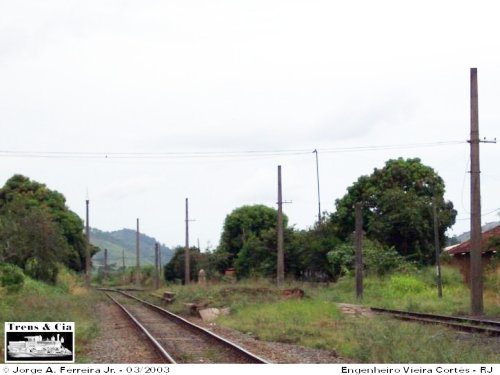
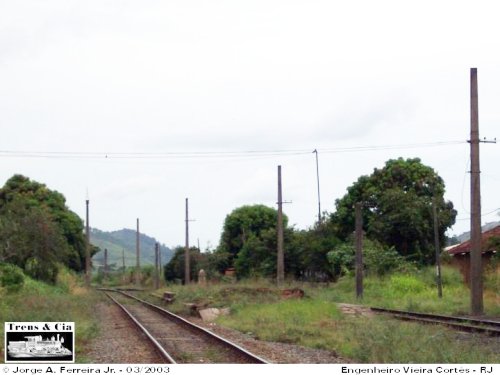
Today the rails are still there, but the station building no longer exists:
2002 (Photo Jorge A. Ferreira Jr, in estacoesferroviarias.com.br)
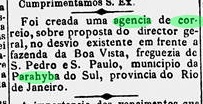
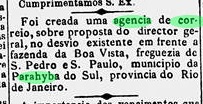
The station post office came into being in September 1884, according to the Rio press:
Gazeta da Tarde, 13/09/1884
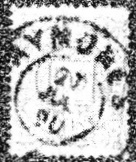
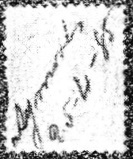
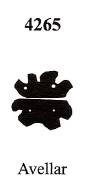
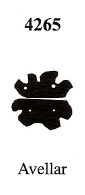
The imperial postmark is ARJ-0095a (image: agenciaspostais.com.br): a double circle with the inscription AVELLAR above and an ornament in flower below, reflected horizontally. The dates in the centre go from 1889 to 1896. From Mute Cancellations of the Brazil Empire/ Carimbos Mudos do Brasil Império (Brazil Philatelic Association, Rio de Janeiro, 2000) by James Dingler and Klerman W. Lopes there also comes a mute cancellation, with no. 4265:
BPA 4265Mappa Postal do Rio de Janeiro, 1906
Andere Namen: Parada do Barão, Est. Boa Vista, Desvio da Boa Vista, Vieira Cortez (1924)
Dieser Bahnhof wurde im Juli 1885 durch die E.F. Dom Pedro II Bahngesellschaft eingeweiht und lag in der Freguesia von S. Pedro und S. Paulo im Município von Parahyba do Sul am Nordufer des gleichnamigen Flusses, 140 km nördlich der Hauptstadt Rio de Janeiro entfernt. Die Bahnlinie ging 1889 zur E.F. Central do Brasil, von 1975 bis zur Stilllegung 1996 gehörte sie der Rede Ferroviária Federal S.A. Allerdings hieß der Bahnhof seit 1924 Vieira Cortez (estacoesferroviarias.com.br), denn ein anderer Bahnhof namens Avellar wurde im März 1898 30 km weiter südlich bei Paty do Alferes eingeweiht. Der Name Avellar kommt offenbar vom Baron von Capivary, geb. Joaquim Ribeiro de Avellar (1791-1863), einem Großgrundbesitzer der Region, während Vieira Cortez ein Ingenieur der E.F. Central do Brasil war.
Joaquim R. de Avellar, 1. Baron von Capivary
Heute sind die Schienen noch da, doch das Bahnhofsgebäude existiert nicht mehr:
2002 (Foto Jorge A. Ferreira Jr, in estacoesferroviarias.com.br)
Das Bahnhofspostamt wurde im September 1884 ins Leben gerufen, wie die Presse aus Rio mitteilte:
Gazeta da Tarde, 13.09.1884
Der kaiserliche Poststempel ist ARJ-0095a (Abb. agenciaspostais.com.br): ein Doppelkreis mit der Inschrift AVELLAR oben und einem Ornament in Blume unten, das sich horizontal spiegelt. Die Daten in der Mitte gehen von 1889 bis 1896. Aus Mute Cancellations of the Brazil Empire/ Carimbos Mudos do Brasil Império (Brazil Philatelic Association, Rio de Janeiro, 2000) von James Dingler und Klerman W. Lopes kommt auch eine stumme Entwertung, mit Nr. 4265:
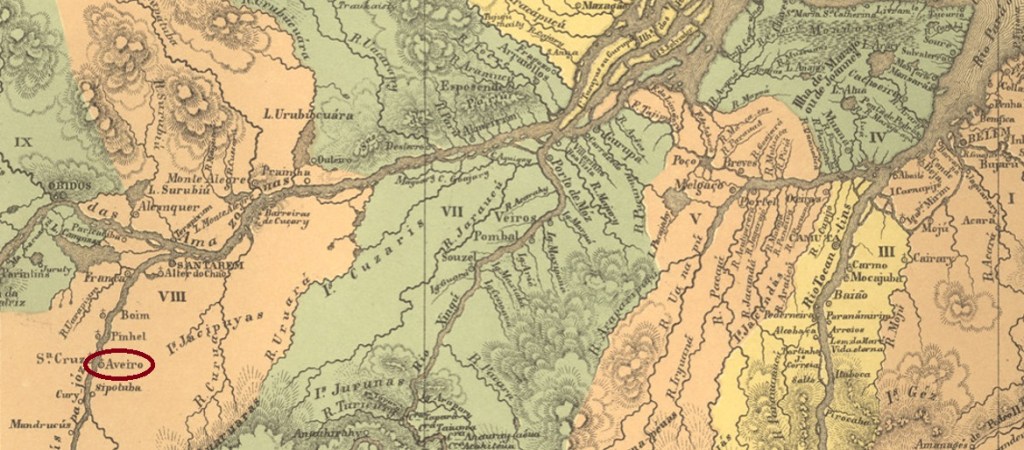
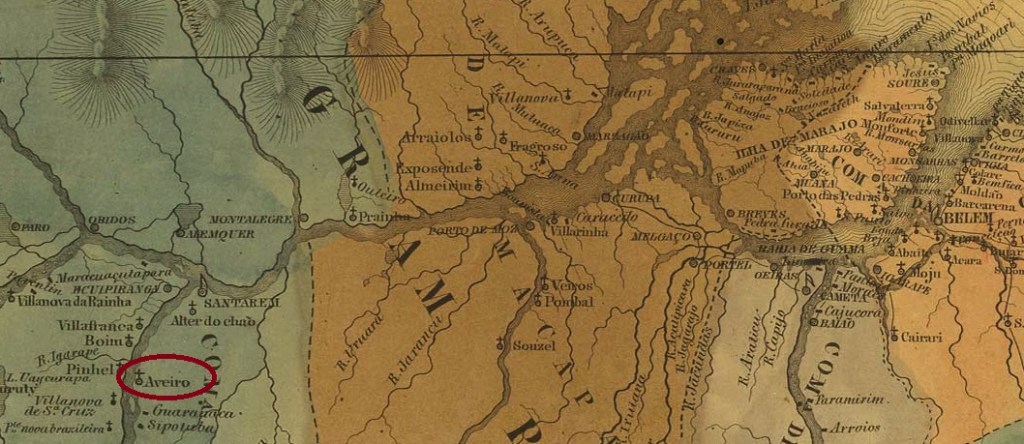
This place is said to have been a vila called N. Sra. da Conceição do Aveiro as early as 1781, located 800 km (as the crow flies) southwest of the later provincial capital Belém do Pará. However, today it still takes 1,300 km by car to get there. Vila status was lost in November 1848 when it was relegated as a freguesia in the Município of Itaituba, but returned in April 1883. In November 1930, it was again downgraded as a district – this time to the Município of Santarém. Aveiro has been an independent municipality again since December 1961. The name – like many other place names in Pará – is reminiscent of a Portuguese town.
As can be seen from the Directory of Imperial Post Offices (Tabella das Agencias do Correiodo Imperio, Rio de Janeiro, 1885), there had been a post office there since 1878. Since the agency was not listed either in the Imperial Postal Guide (Guia Postal do Império) from 1880 or in the Directory of Pará Post Offices from 1881, it can be assumed that it did not start operating until around 1883. So far, no imperial postmark from Aveiro has been seen.
Villiers de l’Ile Adam: Carta (…) das Provincias do Grão Pará e Alto Amazonas, 1850
Dieser Ort soll bereits 1781 eine Vila mit Namen N. Sra. da Conceição do Aveiro gewesen sein, die 800 km (Luftlinie) südwestlich der späteren Provinzhauptstadt Belém do Pará lag. Allerdings braucht man heute noch 1.300 km mit dem Auto zu fahren, um dorthin zu kommen. Der Vila-Status ging im November 1848 mit dem Abstieg als Freguesia im Município von Itaituba verloren, kehrte aber im April 1883 zurück. Im November 1930 erfolgte erneut eine Herabstufung als Distrikt – diesmal zum Município von Santarém. Seit Dezember 1961 ist Aveiro wieder eine eigenständige Gemeinde. Der Name – wie viele andere Ortsnamen in Pará – erinnert an eine portugiesische Stadt.
Wie aus dem Verzeichnis der kaiserlichen Postämter (Tabella das Agencias do Correio do Imperio, Rio de Janeiro, 1885) entnommen wird, gab es dort ein Postamt seit 1878. Da die Agentur weder im Kaiserlichen Postführer (Guia Postal do Império) aus 1880 noch im Verzeichnis der Pará-Postämter aus dem Jahr 1881 aufgelistet wurde, ist es anzunehmen, dass sie ihren Betrieb erst ca. 1883 aufnahm. Bisher war kein kaiserlicher Poststempel aus Aveiro zu sehen.














 Carimbologia