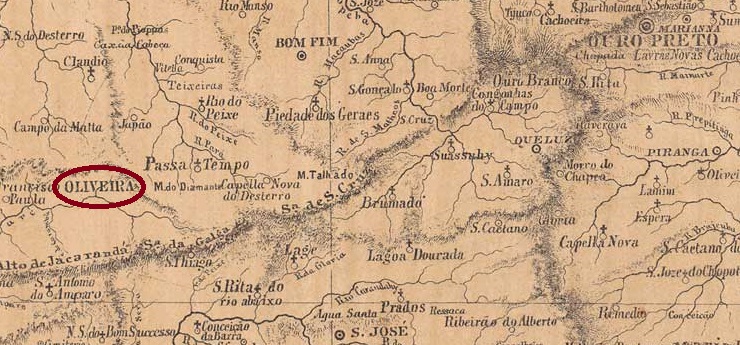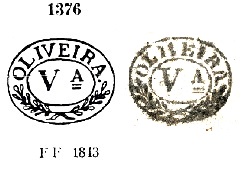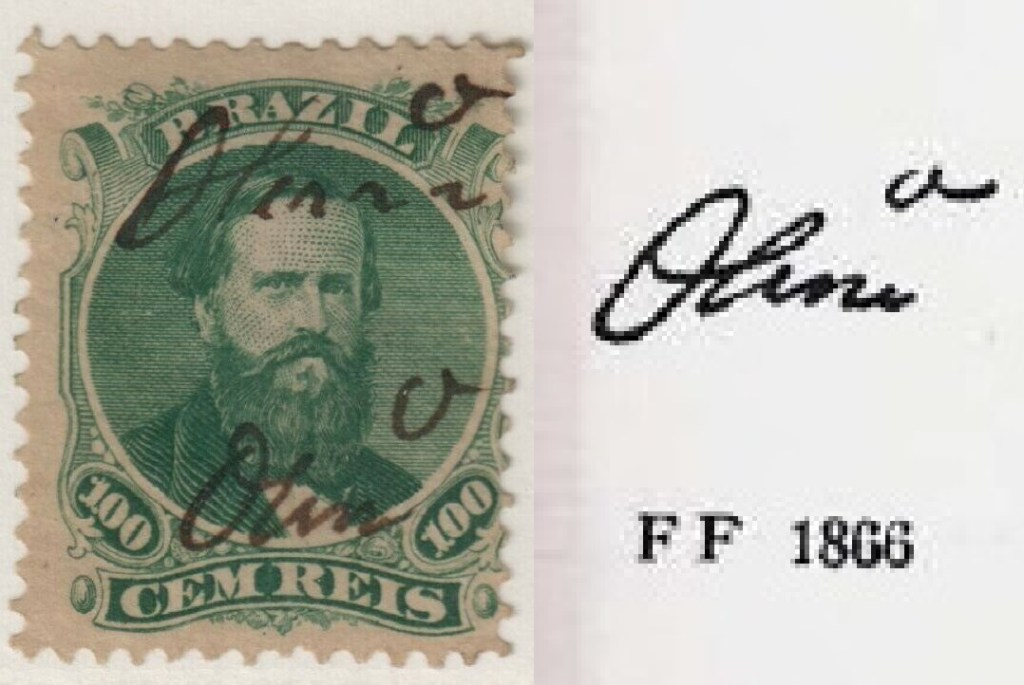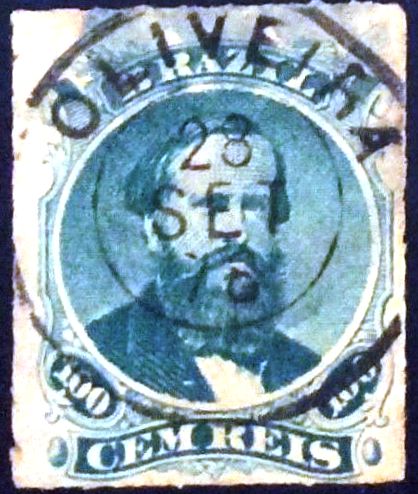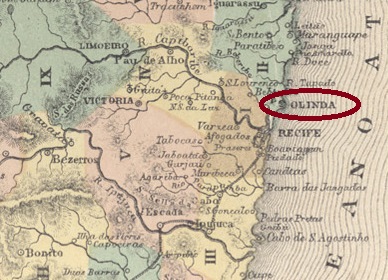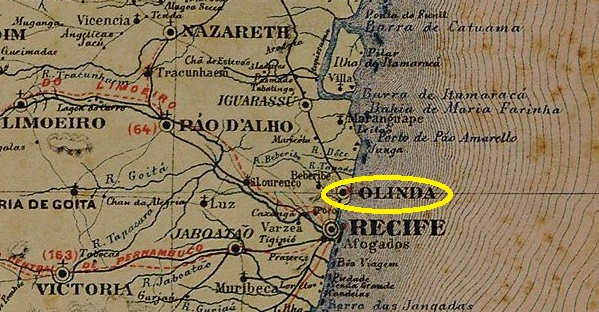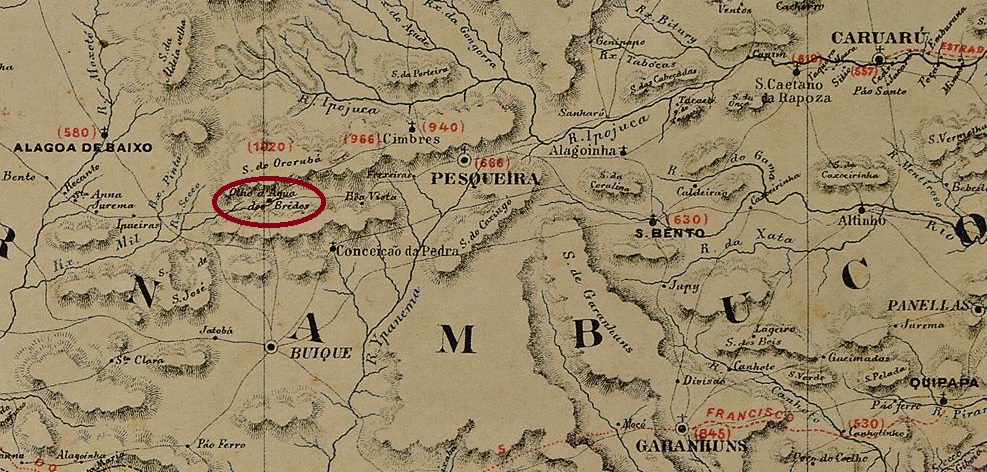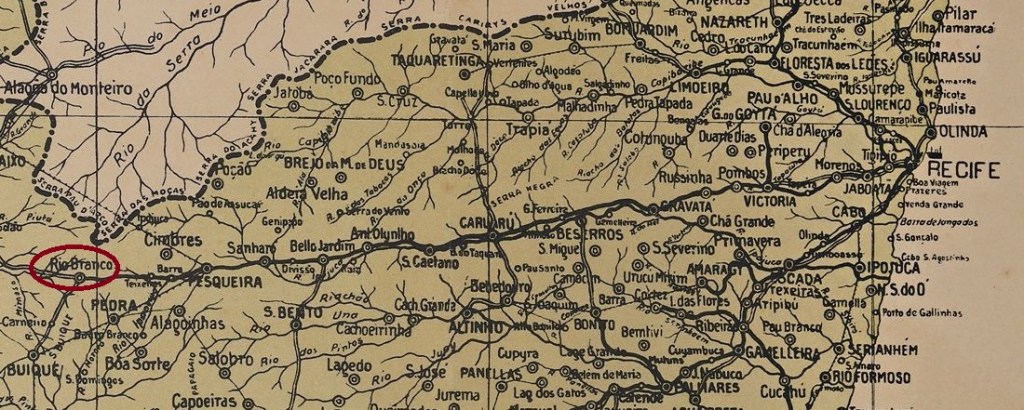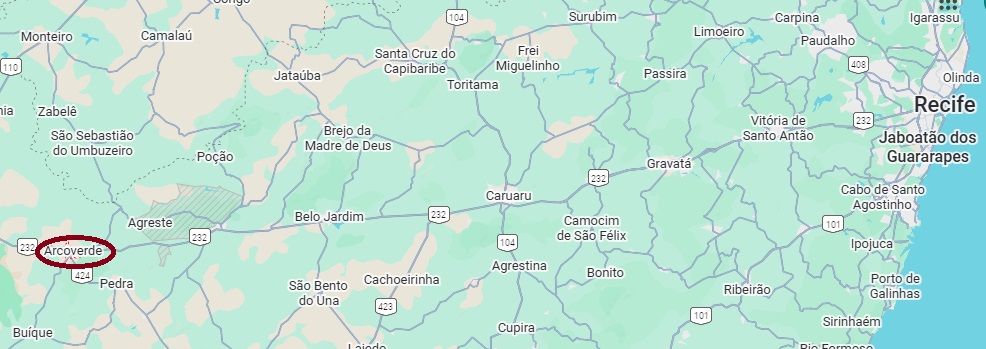
Carta Corographica da Provincia de Pernambuco, 1880
Around 1890, Malhadinha, which was probably the name of a fazenda in the region, became a district of Vila de Limoeiro, located 120 kilometres west of the capital Recife. In December 1938, the place name was changed to Cumaru. Cumaru has been an independent município since December 1963. The name, which comes from the Tupi-Guaraní language, supposedly means ‘inedible food’.
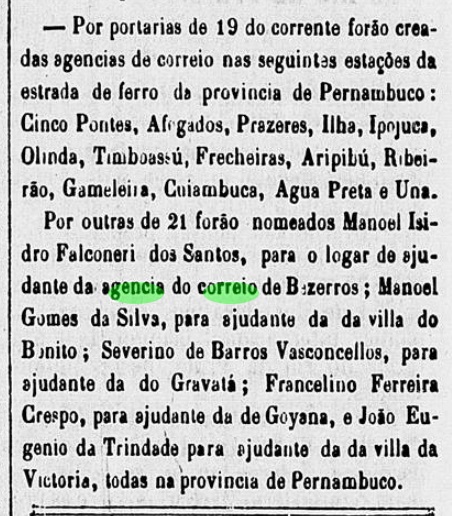
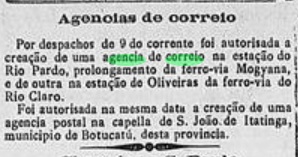
According to the Rio press, there has been a post office there since August 1884:
Diario do Brazil/RJ, 15 August 1884
No imperial postmark from Malhadinha has been seen to date.
Arthur D. Ribeiro: Estado de Pernambuco, 1924
Andere Namen: Cumaru (1938)
Um 1890 wurde Malhadinha, der wohl der Name einer Fazenda in der Region war, ein Distrikt der Vila de Limoeiro, die 120 Kilometer westlich der Hauptstadt Recife lag. Im Dezember 1938 wurde der Ortsname in Cumaru geändert. Seit Dezember 1963 ist Cumaru ein selbstständiger Município. Der Name aus dem Tupi-Guaraní bedeutet angeblich „ungenießbares Essen”.
Wie aus der Rio-Presse hervorgeht, gab es dort seit August 1884 ein Postamt:
Diario do Brazil/RJ, 15.08.1884
Bisher wurde kein kaiserlicher Poststempel aus Malhadinha gesehen.
Villiers de l’Ile Adam: Carta (…) das Provincias do Rio Grande e Parahiba, 1848
Other names: Serra do Martins, Imperatriz, Martins (1890)
See also Imperatriz (IRN-0090)
Maioridade in north-east Brazil also went through several place names for political reasons. From November 1840 it was the Freguesia de N. Sra. da Conceição da Serra do Martins, which belonged to the Vila de Portalegre and was located on the mountain range of the same name 380 kilometres west of the provincial capital Natal. In November 1841, it became Vila da Maioridade to celebrate the (premature) coming of age of Emperor D. Pedro II, who was not yet 16 years old at the time. In October 1847, it was elevated to the status of a town: Cidade de Imperatriz. Since the beginning of the Republic, in February 1890, the old name Município de Martins has been used again.
According to R. Koester (Carimbologia XXII), there is also said to have been a post office here since April 1818, even before Brazil’s independence. This information has not yet been confirmed; it is more likely that it was opened later. There are also no known imperial postmarks from this location.
Atlas do Imperio do Brasil, 1868
Andere Namen: Serra do Martins, Imperatriz, Martins (1890)
Siehe auch Imperatriz (IRN-0090)
Diese Maioridade im Nordosten Brasiliens hat aus politischen Gründen mehrere Ortsnamen durchlaufen. Seit November 1840 war sie die Freguesia de N. Sra. da Conceição da Serra do Martins, die zur Vila de Portalegre gehörte und am gleichnamigen Gebirge 380 km westlich der Provinzhauptstadt Natal lag. Im November 1841 wurde sie zur Vila da Maioridade, um die (verfrühte) Volljährigkeit des Kaisers D. Pedro II. zu feiern, der zu diesem Zeitpunkt noch keine 16 Jahre alt war. Im Oktober 1847 wurde sie zur Stadt erhoben: Cidade de Imperatriz. Seit Beginn der Republik, im Februar 1890, ist der alte Name Município de Martins wieder gültig.
Nach R. Koester (Carimbologia XXII) soll es auch hier seit April 1818, also noch vor der Unabhängigkeit Brasiliens, ein Postamt gegeben haben. Diese Angabe konnte bisher nicht bestätigt werden, wahrscheinlicher ist eine spätere Inbetriebnahme. Auch sind bisher keine kaiserlichen Poststempel aus diesem Ort bekannt.
Colton & Colton: Provincia do Rio de Janeiro, 1866
The settlement of Magepe existed since 1565 on the eastern bank of the Magé River, 60 kilometres north of the future capital Rio de Janeiro. In January 1696, it became the parish of Nossa Senhora da Piedade de Magé, which became a small town in June 1789 and a city in October 1857.
Nova Monteiro writes in ‘Administrações e Agencias Postaes do Brasil Imperio’ (Brasil Filatelico/RJ, 1934-5; reprinted by SPP 1994-1999) that there had been a post office there since December 1829. The oldest postmark is MRJ-0700a (illustration in the RHM catalogue):
MRJ-0700a (RHM) 1843ff
This was followed by MRJ-0700b, which was given the number 1348 by Paulo Ayres in Catálogo de Carimbos Brasil-Império (S. Paulo, 1937, 1942):
MRJ-0700b (P.A. 1348) 1866ff
P. Ayres also showed the following cancel, MRJ-0700c, this time with number 1151:
MRJ-0700c (P.A. 1151) 1878ff
Then came the double circle MRJ-0700d (Fig. agenciaspostais.com.br):
MRJ-0700d (PN) 1878-1887
At the end of the Empire, MRJ-0700e (Fig. Luiz C. Fritzen) also appeared, which also exists in blue:
MRJ-0700e (LCF) 1889-1894
The collection of Jacques R. Benchimol also presents a mute postmark that was used in 1882:
1882 (JB)Villiers de l’Ile Adam: Carta (..) da Provincia do Rio de Janeiro, 1850
Die Siedlung Magepe bestand seit 1565 am Ostufer des Magé, 60 Kilometer nördlich der späteren Hauptstadt Rio de Janeiro. Im Januar 1696 wurde sie zur Freguesia de Nossa Senhora da Piedade de Magé, die im Juni 1789 zur Vila und diese im Oktober 1857 zur Stadt wurde.
Nova Monteiro schreibt in ‘Administrações e Agencias Postaes do Brasil Imperio’ (Brasil Filatelico/RJ, 1934-5; reprint SPP 1994-1999), dass es dort seit Dezember 1829 ein Postamt gab. Der älteste Poststempel ist MRJ-0700a (Abb. RHM-Katalog):
MRJ-0700a (RHM) 1843ff
Es folgte MRJ-0700b , der von Paulo Ayres im Catálogo de Carimbos Brasil-Império (S. Paulo, 1937, 1942) die Nr. 1348 erhielt:
MRJ-0700b (P.A. 1348) 1866ff
P. Ayres zeigte ebenfalls den Folgestempel MRJ-0700c, diesmal mit Nr. 1151:
MRJ-0700c (P.A. 1151) 1878ff
Danach kam der Doppelkreis MRJ-0700d (Abb. agenciaspostais.com.br):
MRJ-0700d (PN) 1878-1887
Gegen Ende des Kaiserreichs erschien auch MRJ-0700e (Abb. Luiz C. Fritzen), der auch in Blau vorkommt:
MRJ-0700e (LCF) 1889-1894
Aus der Sammlung von Jacques R. Benchimol stammt auch ein stummer Poststempel, der 1882 verwendet wurde:
Other names: Cianita, Madre de Deus de Minas (1953)
The Freguesia de Madre de Deus do Rio Grande existed since July 1859 and belonged to the Vila de Aiuruoca. It was located on the north bank of the Rio Grande, 210 kilometres southwest of the provincial capital Ouro Preto. In July 1864, it was subordinated to the Freguesia of Vila Bella do Turvo. In September 1923, it became the district of Cianita. This is the Portuguese name for kyanite, a mineral commonly found in the region. The place name changed, then as a municipality, to Madre de Deus de Minas in December 1953.
Kyanite (photo: Francisco M. Ruiz Contreras, CC BY SA 2.0)
As reported by the Rio press, it was decided in December 1881 to establish a post office there.
Gazeta de Noticias/RJ, 18 December 1881
However, no imperial postmark from Madre de Deus do Turvo has been seen to date.
Minas Geraes, 1910
Andere Namen: Cianita, Madre de Deus de Minas (1953)
Die Freguesia de Madre de Deus do Rio Grande bestand seit Juli 1859 und gehörte zur Vila de Aiuruoca. Sie lag am Nordufer des Rio Grande, 210 Kilometer südwestlich der Provinzhauptstadt Ouro Preto. Im Juli 1864 wurde sie als Freguesia der Vila Bella do Turvo untergeordnet. Im September 1923 wurde sie zum Distrikt Cianita. Dies ist die portugiesische Bezeichnung für Kyanit, ein in der Region häufig vorkommendes Mineral. Seit Dezember 1953 besteht der Município de Madre de Deus de Minas.
Kyanit (Foto: Francisco M. Ruiz Contreras, CC BY SA 2.0)
Wie die Presse aus Rio bekannt gab, wurde im Dezember 1881 beschlossen, vor Ort ein Postamt einzurichten.
Gazeta de Noticias/RJ, 18.12.1881
Bisher wurde jedoch kein kaiserlicher Poststempel aus Madre de Deus do Turvo gesehen.
Villiers de l’Ile Adam: Carta (…) da Provincia de Minas Geraes, 1849
See also Angustura (AMG-0080)
The word Angu has African origins and means thick porridge (usually made of cassava, maize or also bananas). The chapel of N. Sra. da Madre de Deus do Angu was built in March 1841 on the south bank of the (presumably viscous) Angu River and was in the Município of Rio Pomba, 250 km south of the provincial capital Ouro Preto. The place was elevated to freguesia status in July 1857 and was given the name Madre de Deus d’Angustura in October 1883, when it changed to the Município of Além Parahyba.
Two dates of origin were found for the local post office. First on 5 April 1860, as Paula Sobrinho writes in História Postal de Minas Gerais (Belo Horizonte, 1997). This could be a transcription error, because the second date is exactly 6 years later, on 5 April 1866, as several sources report. However, the agency did not start operations until December of that year, as a note from the Rio press reveals:
Jornal do Commercio/RJ, 05.12.1866
The oldest postmark to date is MMG-3380a (Fuad Ferreira Fo. collection):
MMG-3380a (FF) 1877
James Dingler and Klerman W. Lopes listed the mute cancellation above with number 743 in Mute Cancellations of the Brazil Empire / Carimbos Mudos do Brasil Império (Brazil Philatelic Association, Rio de Janeiro, 2000):
BPA 743 (1877)
For postmarks with place name Angustura see AMG-0080.
Atlas do Imperio do Brasil, 1868
Siehe auch Angustura (AMG-0080)
Das Wort Angu hat einen afrikanischen Ursprung und bedeutet Dicker Brei (meist aus Maniok, Mais oder auch Bananen). Die Kapelle von N. Sra. da Madre de Deus do Angu wurde im März 1841 am Südufer des (vermutlich zähfließenden) Flusses Angu errichtet und lag im Município von Rio Pomba, 250 km südlich der Provinzhauptstadt Ouro Preto entfernt. Der Ort wurde im Juli 1857 zur Freguesia erhoben und erhielt im Oktober 1883 den Namen Madre de Deus d’Angustura, als er zum Município von Além Parahyba wechselte.
Zwei Entstehungstermine wurden fürs örtliche Postamt gefunden. Zuerst am 5. April 1860, wie Paula Sobrinho in História Postal de Minas Gerais (Belo Horizonte, 1997) schreibt. Dies könnte ein Abschreibfehler sein, denn der zweite Termin liegt genau 6 Jahre später, am 5. April 1866, wie mehrere Quellen belegen. Allerdings nahm die Agentur den Betrieb erst im Dezember d. J., wie eine Meldung aus der Rio-Presse verrät:
Jornal do Commercio/RJ, 05.12.1866
Der bisher älteste Poststempel ist MMG-3380a (Samml. Fuad Ferreira Fo.):
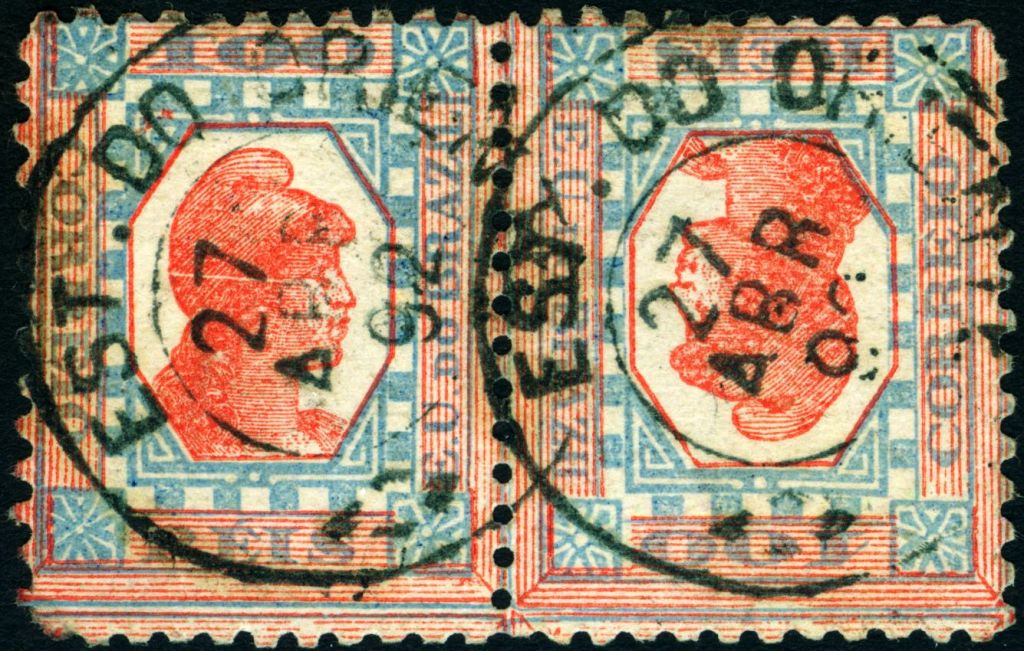
MMG-3380a (FF) 1877
James Dingler und Klerman W. Lopes haben in Mute Cancellations of the Brazil Empire / Carimbos Mudos do Brasil Império (Brazil Philatelic Association, Rio de Janeiro, 2000) den obigen stummen Poststempel mit Nr. 743 aufgeführt:
BPA 743 (1877)
Für Poststempel mit dem neuen Ortsnamen Angustura siehe AMG-0080.
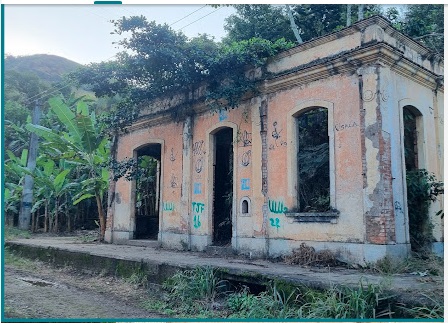
Macuco Station was opened in September 1876 by the E.F. do Cantagallo railway company. It was located near the north bank of the Rio Grande in the municipality of Cantagallo, 200 kilometres northeast of the capital Rio de Janeiro. From 1887 until its closure, the railway line belonged to E.F. Leopoldina. Today, the tracks have disappeared and the station building has been demolished (estacoesferroviarias.com.br).
Around 1950 (Photo: Sergio Felga on estacoesferroviarias.com.br)
Macuco became a district in September 1890 and an independent municipality in May 1891. However, it lost this status in June 1892 when it became part of the district of Cantagallo, and as such was transferred to the district of Cordeiro in December 1943. The municipality of Macuco has existed again since September 1995.
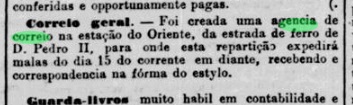
As reported by the Rio press, it was decided in October 1876 to establish a railway station post office there.
Gazeta de Noticias, 19 October 1876
However, the directory of imperial post offices (Tabella das Agencias do Correio do Imperio, Rio de Janeiro, 1885) mentions the year 1877, which is more likely to refer to the agency’s commissioning.
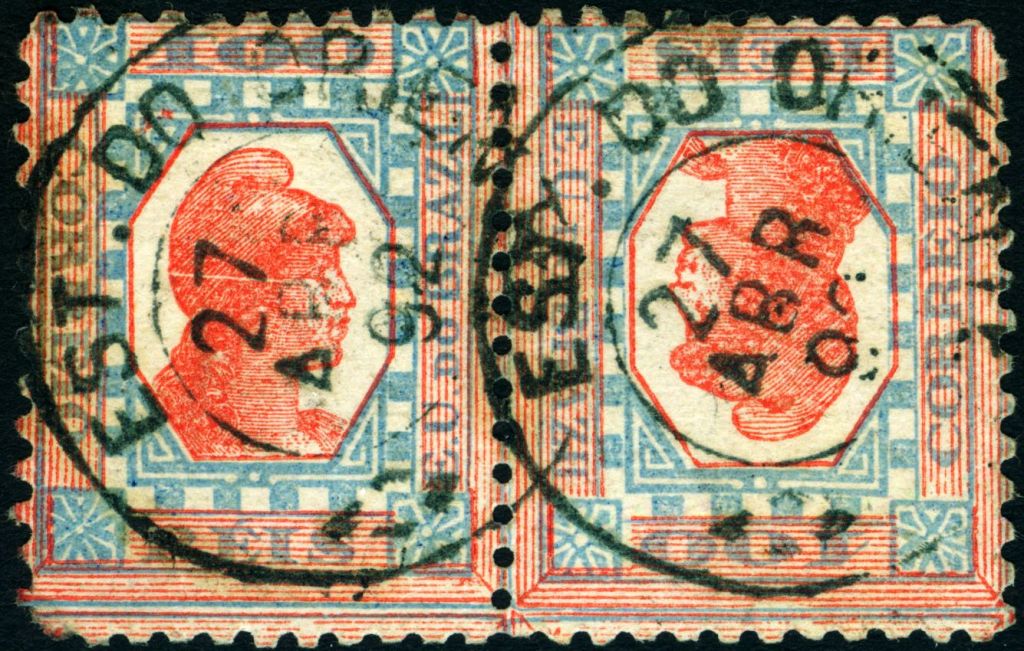
The oldest postmark, MRJ-1805a, also appears in blue and was listed by P. Ayres in Catálogo de Carimbos Brasil-Império (S. Paulo, 1937, 1942) with number 1347:
MRJ-1805a (P.A. 1347) 1876ff-1877ff
This was followed by MRJ-1805b, also appearing in blue and presented by P. Ayres:
MRJ-1805b (P.A. p. 122) 1881-1896
Then MRJ-1805c appeared (illustration from the Internet):
MRJ-1805c (EB) 1883-1899, also in blue
Towards the end of the empire, MRJ-1805d also appeared (image from the Internet):
MRJ-1805d (EB) 1888-1890, also in blue
R. Koester also showed the rare MRJ-1805e cancel in Carimbologia XXVII:
MRJ-1805e (RK)Almanak Laemmert, 1892
Der Bahnhof Macuco wurde im September 1876 von der Eisenbahngesellschaft E.F. do Cantagallo eröffnet. Er lag nahe dem Nordufer des Rio Grande im Gebiet des Município de Cantagallo, 200 Kilometer nordöstlich der Hauptstadt Rio de Janeiro. Die Bahnlinie gehörte von 1887 bis zur Stilllegung zur E.F. Leopoldina. Heute sind die Gleise verschwunden und das Bahnhofsgebäude wurde abgerissen (estacoesferroviarias.com.br).
Um 1950 (Foto: Sergio Felga auf estacoesferroviarias.com.br)
Macuco wurde im September 1890 ein Distrito und im Mai 1891 ein selbstständiger Município. Es verlor jedoch diesen Status im Juni 1892, als es zum Distrikt von Cantagallo wurde, und ging als solcher im Dezember 1943 zum Distrikt von Cordeiro. Seit September 1995 besteht wieder der Município de Macuco.
Wie die Presse aus Rio bekannt gab, wurde im Oktober 1876 beschlossen, dort ein Bahnhofspostamt einzurichten.
Gazeta de Noticias, 19.10.1876
Im Verzeichnis der kaiserlichen Postämter (Tabella das Agencias do Correio do Imperio, Rio de Janeiro, 1885) wird hingegen das Jahr 1877 genannt, was eher der Inbetriebnahme der Agentur entsprechen könnte.
Der älteste Poststempel MRJ-1805a kommt auch in Blau vor und wurde von P. Ayres in Catálogo de Carimbos Brasil-Império (S. Paulo, 1937, 1942) mit Nr. 1347 aufgeführt:
MRJ-1805a (P.A. 1347) 1876ff-1877ff
Es folgte MRJ-1805b, ebenfalls in Blau vorkommend und von P. Ayres präsentiert:
MRJ-1805b (P.A. S. 122) 1881-1896
Danach erschien MRJ-1805c (Abb. aus dem Internet):
MRJ-1805c (EB) 1883-1899, auch in Blau
Gegen Ende des Kaiserreichs fand sich auch MRJ-1805d (Abb. aus dem Internet):
MRJ-1805d (EB) 1888-1890, auch in Blau
R. Koester zeigte in Carimbologia XXVII auch den seltenen Stempel MRJ-1805e:
The district of Santo Antonio do Machado was created in July 1857 in the municipality of Alfenas, situated on the west bank of the Machado River, over 400 km southwest of the provincial capital Ouro Preto. The name derivates supposedly from an old farmer family of the region. The locality obtained the political autonomy as a villa in November 1880 and was elevated to a town in September 1923, under the simplified name of Machado.
Both Nova Monteiro (Administrações e Agencias Postaes do Brasil Imperio, in Brasil Filatelico/RJ, 1934-5; Reprint SPP 1994-1999) and Paul Sobrinho (História Postal de Minas Gerais, Belo Horizonte, 1997) state that the local post office was created in July 1864.
The oldest postmark is MMG-3830a (Fig. Marcio Duarte), which also exists in brown and dark purple:
MMG-3830a (MDu) 1864-1876ff
This was followed by MMG-3830b, which was given the number 1150 by P. Ayres (Catálogo de Carimbos Brasil-Império, S. Paulo, 1937, 1942), shown here in an example from the José A. Junges collection:
MMG-3830b (P.A. 1150 – JJ) 1876ff
P. Ayres (op. cit.) also showed, under no. 1346, a postmark that has not yet been confirmed:
P.A. 1346
For cancels with Santo Antonio do Machado see SMG-3035.
Villiers de l’Ile Adam: Carta (…) da Provincia de Minas Geraes, 1849
Siehe auch Santo Antonio do Machado (SMG-3035)
Der Distrikt von Santo Antonio do Machado wurde im Juli 1857 im Município von Alfenas gegründet und lag am Westufer des Flusses Machado, über 400 km südwestlich der Provinzhauptstadt Ouro Preto. Der Name stammt vermutlich aus einem alten Stammesgeschlecht von Großgrundbesitzern der Region. Die Ortschaft erhielt die politische Selbständigkeit als eine Villa im November 1880 und stieg – unter dem vereinfachten Namen Machado – zu einer Stadt im September 1923 auf.
Sowohl Nova Monteiro (Administrações e Agencias Postaes do Brasil Imperio, in Brasil Filatelico/RJ, 1934-5; Reprint SPP 1994-1999) als auch Paul Sobrinho (História Postal de Minas Gerais, Belo Horizonte, 1997) sind sich darüber einig, dass das örtliche Postamt im Juli 1864 entstanden ist. Der älteste Poststempel ist MMG-3830a (Abb. Marcio Duarte), den es auch in Braun und Dunkelviolett gibt:
MMG-3830a (MDu) 1864-1876ff
Es folgte MMG-3830b, der von P. Ayres (Catálogo de Carimbos Brasil-Império, S. Paulo, 1937, 1942), die Nr. 1150 erhielt, hier in einem Beispiel aus der Sammlung José A. Junges:
MMG-3830b (P.A. 1150 – JJ) 1876ff
P. Ayres (op. cit.) zeigte auch unter Nr. 1346 einen Poststempel, der bisher nicht bestätigt werden konnte:
P.A. 1346
Für Poststempel mit Santo Antonio do Machado siehe SMG-3035.
Since September 1870, Machadinho had been a district of Vila de Sto. Antonio do Machado, located 430 km southwest of the provincial capital Ouro Preto. A year later, it was elevated to the Freguesia de São Francisco de Paula do Machadinho, then this Freguesia was assigned to Vila de Alfenas a year later and returned to Machado in November 1880. In September 1923, the place became the Município de Gimirim and two years later a city, which has been called Poço Fundo since December 1953.
Paula Sobrinho (História Postal de Minas Gerais, Belo Horizonte, 1997) and R. Koester (Carimbologia XXVII) agree that there has been a post office there since January 1880. The oldest postmark to date is MMG-1525a (Fig. José L. Fevereiro):
MMG-1525a (JLF) 1884-1899Google Maps
Andere Namen: Gimirim, Poço Fundo (1953)
Machadinho war seit September 1870 ein Distrikt der Vila de Sto. Antonio do Machado, das 430 km südwestlich der Provinzhauptstadt Ouro Preto lag. Ein Jahr später wurde er zur Freguesia de São Francisco de Paula do Machadinho erhoben, dann wechselte diese Freguesia ein Jahr später zur Vila de Alfenas und kehrte im November 1880 zu Machado zurück. Im September 1923 wurde der Ort zum Município de Gimirim und zwei Jahre später zur Stadt, die seit Dezember 1953 Poço Fundo heißt.
Paula Sobrinho (História Postal de Minas Gerais, Belo Horizonte, 1997) und R. Koester (Carimbologia XXVII) sind sich einig, dass es dort seit Januar 1880 ein Postamt gab. Der bisher älteste Poststempel ist MMG-1525a (Abb. José L. Fevereiro):
Villiers de l’Ile Adam: Carta (…) da Provincia da Bahia, 1848
Text update on June 30, 2025
Macaúbas was declared a village in July 1832. It was located on the eastern bank of the Riacho do Peixe, 620 kilometres west of the provincial capital Salvador da Bahia. In May 1840, it became the parish of Nossa Senhora da Conceição de Macaúbas and in June 1925, it became a town.
Two different dates have been found for the establishment of the local post office. One is March 1836, as Nova Monteiro writes in Administrações e Agencias Postaes do Brasil Imperio (Brasil Filatelico/RJ, 1934–1935; reprinted by SPP 1994–1999). The second date is 1861, as stated in the directory of imperial post offices (Tabella das Agencias do Correio do Imperio, Rio de Janeiro, 1885).
The oldest imperial postmark to date is MBA-0795a (Fig. Felipe Piccinini):
MBA-0795a (FP) 1847
MBA-0795b (Marcio Duarte Collection) did not appear until the 1880s:
MBA-0795b (MD) 1885-1886Atlas do Imperio do Brasil, 1868
Textaktualisierung am 30. Juni 2025
Macaúbas wurde im Juli 1832 zur Vila erklärt. Sie lag am Ostufer des Riacho do Peixe, 620 Kilometer westlich der Provinzhauptstadt Salvador da Bahia. Im Mai 1840 wurde sie zur Freguesia de Nossa Senhora da Conceição de Macaúbas und im Juni 1925 zur Stadt.
Es wurden zwei verschiedene Daten für die Einrichtung des örtlichen Postamts gefunden. Zum einen im März 1836, wie Nova Monteiro in Administrações e Agencias Postaes do Brasil Imperio (Brasil Filatelico/RJ, 1934–1935; Nachdruck SPP 1994–1999) schreibt. Ein zweites Mal im Jahr 1861, wie aus dem Verzeichnis der kaiserlichen Postämter (Tabella das Agencias do Correio do Imperio, Rio de Janeiro, 1885) hervorgeht.
Der bisher älteste kaiserliche Poststempel ist MBA-0795a (Abb. Felipe Piccinini):
MBA-0795a (FP) 1847
Erst in den 1880er Jahren erschien MBA-0795b (Samml. Marcio Duarte):
Villiers de l’Ile Adam: Carta (…) das Provincias do Rio Grande do Norte e Parahiba, 1850
This locality, located at the mouth of the Piranhas River (now the Açu River), 180 kilometres northwest of the provincial capital Natal, became a village in October 1847 and later, in August 1854, the parish of Nossa Senhora da Conceição de Macau. Since October 1875, Macau has been a town. The name is of Chinese origin and was given by Portuguese settlers in honour of the Asian colony of the same name. Originally, the place was called Ama-ngao, which means ‘port of the goddess of sailors.
Three dates of creation were found for the local post office. It was first mentioned with creation year 1836 in the directory of imperial post offices (Tabella das Agencias do Correio do Imperio, Rio de Janeiro, 1885), then in October 1837, as Nova Monteiro writes in Administrações e Agencias Postaes do Brasil Imperio (Brasil Filatelico/RJ, 1934–1935; reprinted by SPP 1994–1999), and finally in October 1886, as noted by R. Koester in Carimbologia XXVII. However, the latter date must be incorrect, as the agency was still in operation in August of that year, according to the local press.
O Macauense, 07/09/1886
The oldest postal cancellation to date is handwritten and was shown by Denis Forte:
1850ff (DF)
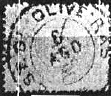
The oldest postmark to date is MRN-0105b (fig. Koester, op. cit.):
MRN-0105b (RK) 1878ff
In the 1880s, MRN-0105c (fig. from the Internet) also appeared:
MRN-0105c (Philasearch) 1885-1899Atlas do Imperio do Brasil, 1868
Diese Ortschaft an der Mündung des Piranhas (heute Rio Açu), die 180 Kilometer nordwestlich der Provinzhauptstadt Natal lag, wurde im Oktober 1847 zur Vila und erst später, im August 1854, zur Freguesia de Nossa Senhora da Conceição de Macau. Seit Oktober 1875 ist Macau eine Stadt. Der Name hat einen chinesischen Ursprung und soll von portugiesischen Siedlern nach der gleichnamigen Kolonie benannt worden sein. Ursprünglich hieß der Ort Ama-ngao, was „Hafen der Göttin der Seefahrer” bedeutet.
Es wurden drei Entstehungsdaten für das örtliche Postamt gefunden. Es wurde erstmals mit Datum 1836 im Verzeichnis der kaiserlichen Postämter (Tabella das Agencias do Correio do Imperio, Rio de Janeiro, 1885) aufgeführt, dann im Oktober 1837, wie Nova Monteiro in Administrações e Agencias Postaes do Brasil Imperio (Brasil Filatelico/RJ, 1934–1935; Nachdruck SPP 1994–1999) schreibt, und zuletzt im Oktober 1886, wie R. Koester in Carimbologia XXVII vermerkt. Das letzte Datum dürfte jedoch inkorrekt sein, da die Agentur im August desselben Jahres noch in Betrieb war, wie aus der lokalen Presse hervorgeht.
O Macauense, 07/09/1886
Die bisher älteste postalische Entwertung ist handschriftlich und wurde von Denis Forte gezeigt:
1850ff (DF)
Der älteste Poststempel ist bisher MRN-0105b (Abb. Koester, op. cit.):
MRN-0105b (RK) 1878ff
In den 1880er Jahren erschien auch MRN-0105c (Abb. aus dem Internet):