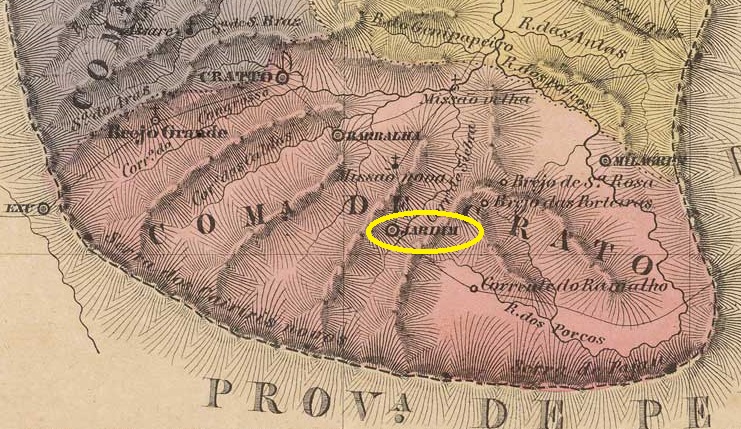
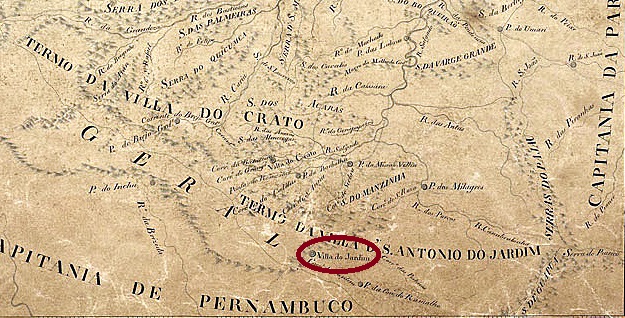
Villiers de l’Ile Adam: Carta (…) da Provincia do Ceara, 1849
The village originally belonged to the Vila de Crato and became a Vila in August 1814, but only two months later became the Freguesia de Sto. Antonio do Jardim. It was located on the west bank of the Jardim River, 560 kilometres south of the provincial capital Fortaleza. Jardim has been a town since September 1879.
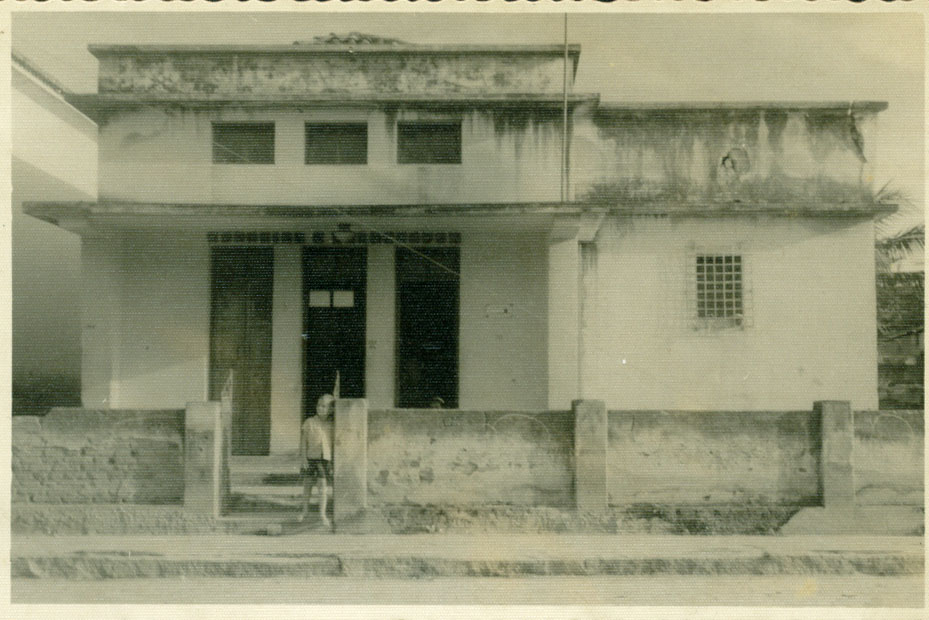
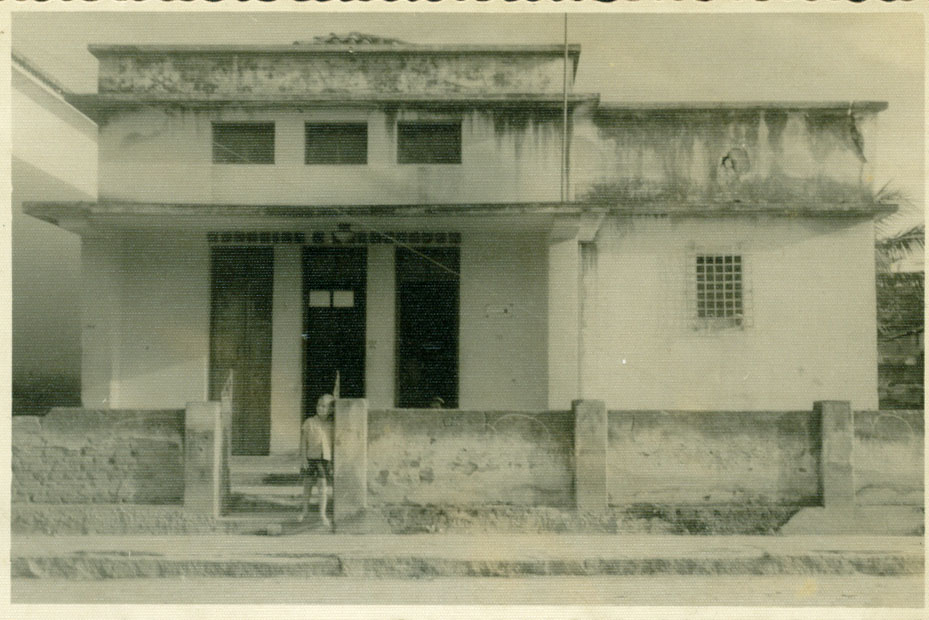
Jardim post office, ca. 1950 (IBGE)
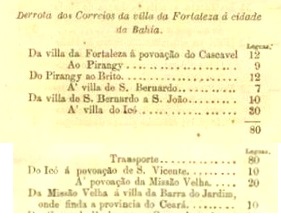
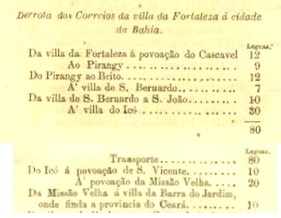
Nova Monteiro writes in Administrações e Agencias Postaes do Brasil Imperio (Brasil Filatelico/RJ, 1934-5; reprint SPP 1994-1999) that there has been a post office there since August 1866. However, this date is a reopening, as a postal route from Fortaleza to Salvador da Bahia already ran via Jardim in 1843, as can be seen from the journal of the Brazilian Institute of History and Geography:
Revista IHGB 1843, p. 480
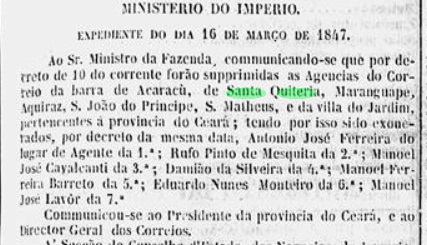
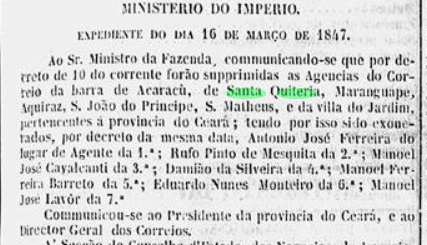
As reported by the official press in Rio, the agency was closed in March 1847:
Gazeta Official/RJ, 24/03/1847
So far, no imperial postmark could be assigned to this place with certainty.
Carta da Capitania do Ceara, 1818
Der Ort gehörte ursprünglich zur Vila de Crato und wurde im August 1814 zur Vila, aber erst zwei Monate später zur Freguesia de Sto. Antonio do Jardim. Sie lag am Westufer des Jardim, 560 km südlich der Provinzhauptstadt Fortaleza. Seit September 1879 ist Jardim eine Stadt.
Postamt Jardim, ca. 1950 (IBGE)
Nova Monteiro schreibt in Administrações e Agencias Postaes do Brasil Imperio (Brasil Filatelico/RJ, 1934-5; Reprint SPP 1994-1999), dass es dort seit August 1866 ein Postamt gab. Bei diesem Datum handelt es sich jedoch um eine Wiedereröffnung, da bereits 1843 eine Postroute von Fortaleza nach Salvador da Bahia über Jardim führte, wie aus der Zeitschrift des Brasilianischen Instituts für Geschichte und Geografie hervorgeht:
Revista IHGB, 1843, S. 480
Wie die offizielle Presse von Rio berichtete, wurde die Agentur im März 1847 geschlossen:
Gazeta Official/RJ, 24.03.1847
Bisher konnte kein kaiserlicher Poststempel mit Sicherheit diesem Ort zugeordnet werden.
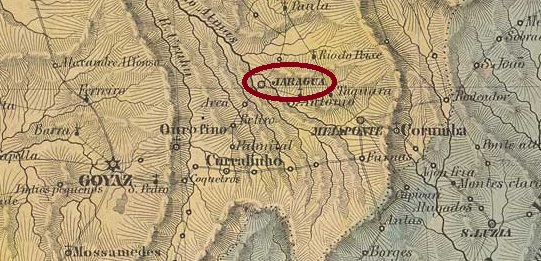
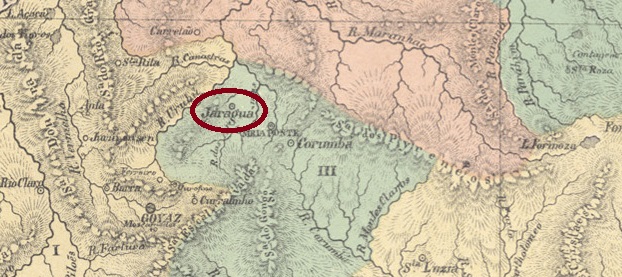
Villiers de l’Ile Adam: Carta (…) da Provincia de Goyaz, 1849
It is not known exactly when the chapel of N. Sra. da Penha de Jaraguá was built around 1800; it belonged to the Vila de Meia Ponte and was located on the banks of the Jaraguá, 120 kilometres east of the later provincial capital Goiás (today Goiás Velho). In July 1833, Jaraguá was elevated to a Vila and in July 1882 to a town.
Two creation dates have been found for the local post office. Once in March 1829, as Nova Monteiro writes in Administrações e Agencias Postaes do Brasil Imperio (Brasil Filatelico/RJ, 1934-5; reprint SPP 1994-1999). Then again in 1832, as can be seen from the list of imperial post offices (Tabella das Agencias do Correio do Imperio, Rio de Janeiro, 1885).
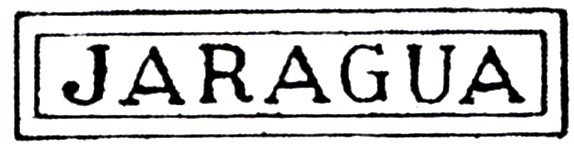
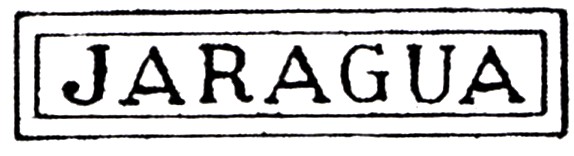
The oldest postmark to date is JGO-0090a (fig. Henrique B. Ferreira, in Catálogo ilustrado dos carimbos sobre os olhos-de-boi, Porto Alegre, 2017), which was found on Bull’s Eyes from 1843 – also in red.
JGO-0090a (HBF) 1843ff
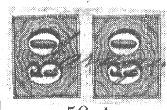
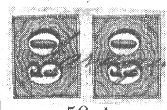
In the 50s, the stamps were cancelled by hand, as R. Koester shows in Carimbologia XXV:
1850ff (RK)
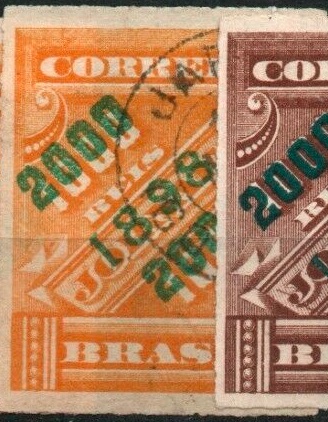
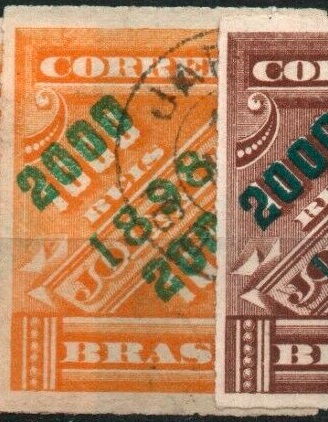
JGO-0090c also appeared at the end of the 19th century (illustration from the Internet):
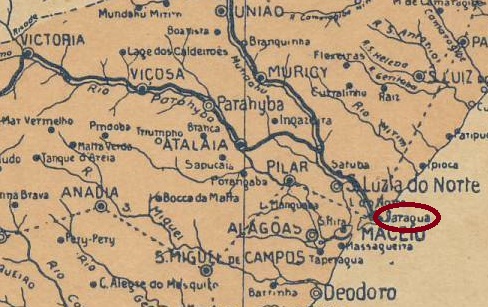
JGO-0090c (EB) 1898ffAtlas do Imperio do Brasil, 1868
Man weiß nicht genau, wann die Kapelle N. Sra. da Penha de Jaraguá um 1800 errichtet wurde; sie gehörte zur Vila de Meia Ponte und lag am Ufer des Jaraguá, 120 km östlich der späteren Provinzhauptstadt Goiás (heute Goiás Velho). Im Juli 1833 wurde Jaraguá zur Vila und im Juli 1882 zur Stadt erhoben.
Für das örtliche Postamt wurden zwei Gründungsdaten gefunden. Einmal im März 1829, wie Nova Monteiro in Administrações e Agencias Postaes do Brasil Imperio (Brasil Filatelico/RJ, 1934-5; Nachdruck SPP 1994-1999) schreibt. Dann wieder 1832, wie aus dem Verzeichnis der kaiserlichen Postämter (Tabella das Agencias do Correio do Imperio, Rio de Janeiro, 1885) hervorgeht.
Der bisher älteste Poststempel ist JGO-0090a (Abb. Henrique B. Ferreira, in Catálogo ilustrado dos carimbos sobre os olhos-de-boi, Porto Alegre, 2017), der auf Ochsenaugen von 1843 – ebenfalls in rot – gefunden wurde.
JGO-0090a (HBF) 1843ff
In den 50er Jahren wurden die Marken von Hand entwertet, wie R. Koester in Carimbologia XXV zeigt:
1850ff (RK)
Ende des 19. Jahrhunderts erschien auch JGO-0090c (Abb. aus dem Internet):
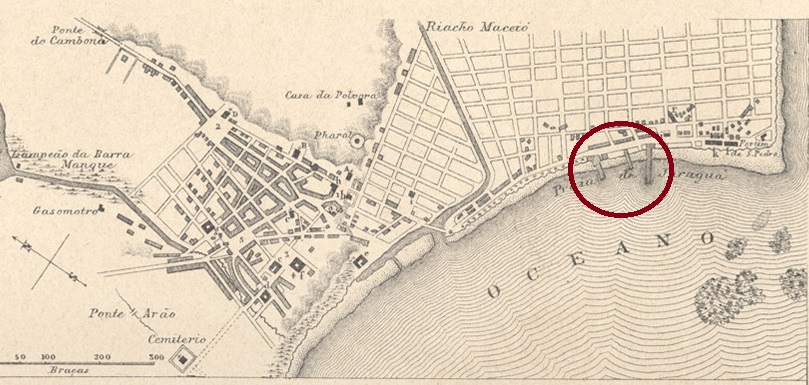
A port in Jaraguá was already mentioned in documents before 1818, which was located east of the city centre of the later provincial capital of Maceió in Alagoas and as such gained outstanding importance in the later empire. In June 1865, the Freguesia de N. Sra. Mãe do Povo de Jaraguá was founded there, which became an administrative zone (Zona Administrativa) of Maceió in March 1938 and has been a district of the capital since January 1998.
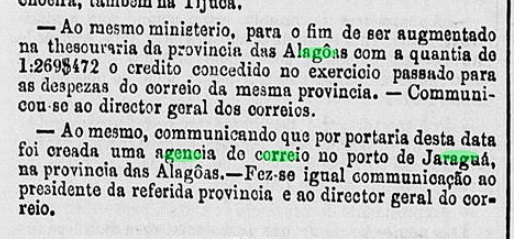
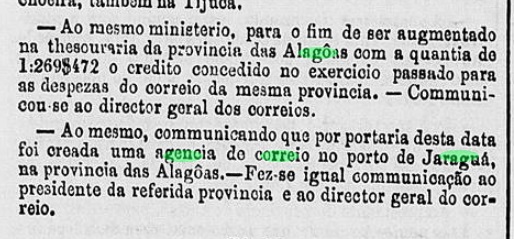
In November 1859, it was decided to establish a post office in the harbour of Jaraguá, as can be seen from the minutes of the Ministry of the Empire:
Expediente do Ministerio do Imperio, 15/11/1859
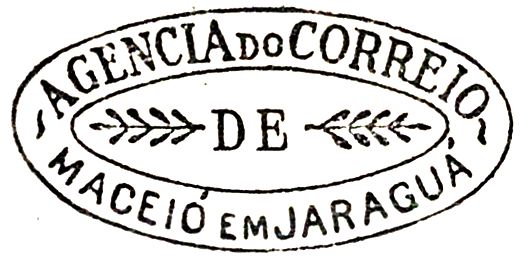
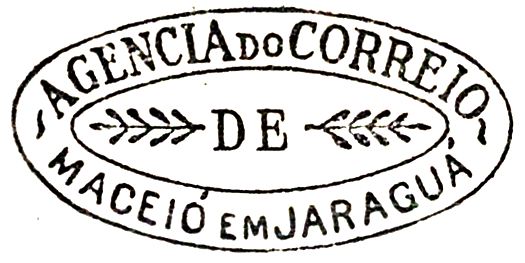
In Administrações e Agencias Postaes do Brasil Imperio (Brasil Filatelico/RJ, 1934-5; reprint SPP 1994-1999), Nova Monteiro gives March 1864 as the date, which is probably a transcription error. The oldest cancel is MAL-0105b, which was given the number 1345 in P. Ayres’ Catálogo de Carimbos Brasil-Império (S. Paulo, 1937, 1942):
MAL-0105b (P.A. 1345) 1859ff-1866ff
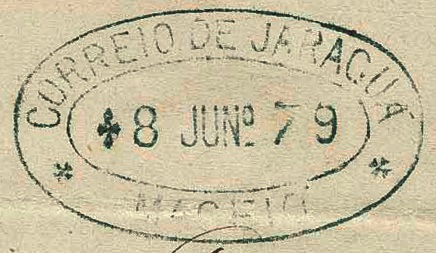
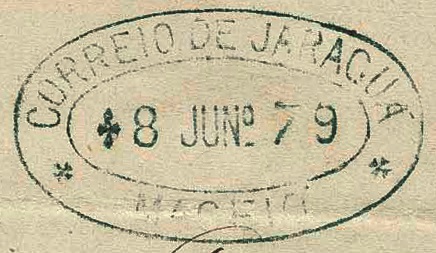
This was followed by MAL-0105d (illus. Corinphila Auctions):
MAL-0105d (CO) 1877-1879
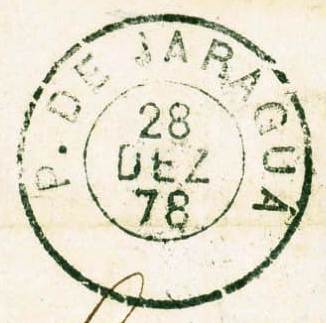
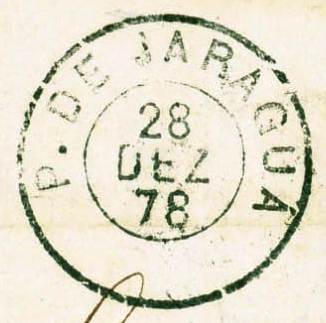
The double circle PAL-0325a (ill. Felipe Piccinini) appeared almost simultaneously:
PAL-0325a (FP) 1878-1890
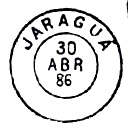
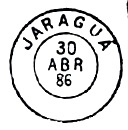
Then JAL-0090a also came into use, also presented by P. Ayres:
JAL-0090a (P.A. p. 121) 1880-1904ff
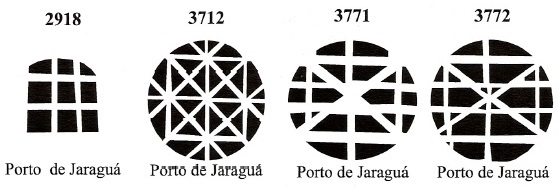
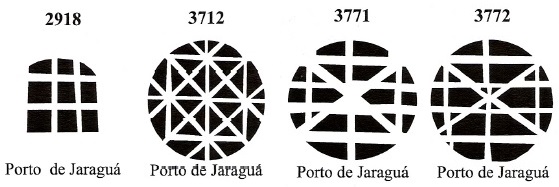
Many mute cancels are known from Jaraguá, four of which have already been presented by James Dingler and Klerman W. Lopes in Mute Cancellations of the Brazil Empire / Carimbos Mudos do Brasil Império (Brazil Philatelic Association, Rio de Janeiro, 2000):
BPA 2912 – 3712 – 3771 – 3772
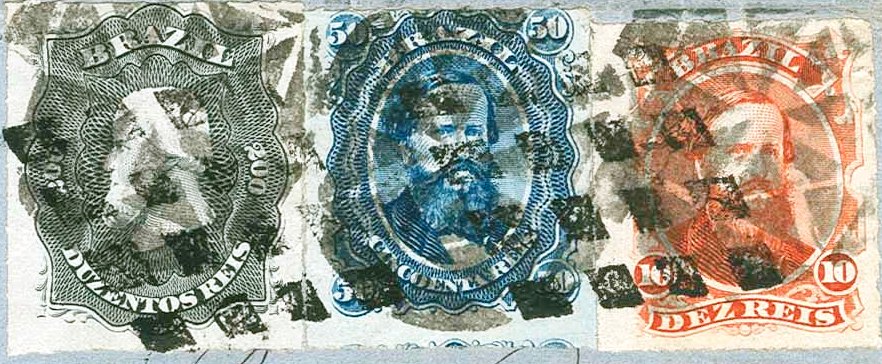
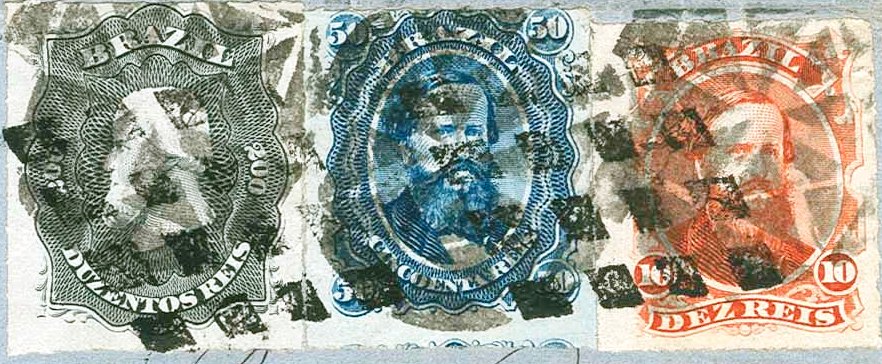
In the meantime, another 6 mute cancellations have been found from this port:
1877 (fig. Corinphila Auctions)1878 (fig. Felipe Piccinini)1879 (ill. Corinphila Auctions)1882 (ill. José Junges)1883 (ill. José Junges)1890 (ill. Luiz C. Fritzen)Atlas do Imperio do Brasil, 1868
Andere Namen: Porto de Jaraguá, Praia de Jaraguá
Siehe auch Alagoas (Carimbologia 2023)
Bereits vor 1818 wurde ein Hafen in Jaraguá urkundlich erwähnt, der östlich des Stadtzentrums der späteren Provinzhauptstadt Maceió von Alagoas lag und als solcher im späteren Kaiserreich eine herausragende Bedeutung erlangte. Im Juni 1865 wurde dort die Freguesia de N. Sra. Mãe do Povo de Jaraguá gegründet, die im März 1938 zu einer Verwaltungszone (Zona Administrativa) von Maceió wurde und seit Januar 1998 ein Stadtteil von Maceió ist.
Im November 1859 wurde die Einrichtung eines Postamtes im Hafen von Jaraguá beschlossen, wie aus dem Protokoll des Reichsministeriums hervorgeht:
Expediente do Ministerio do Imperio, 15.11.1859
Nova Monteiro gibt dafür in Administrações e Agencias Postaes do Brasil Imperio (Brasil Filatelico/RJ, 1934-5; Reprint SPP 1994-1999) den März 1864 an, was ein Abschreibfehler sein dürfte. Der älteste Stempel ist MAL-0105b, der in P. Ayres’ Catálogo de Carimbos Brasil-Império (S. Paulo, 1937, 1942) die Nummer 1345 erhielt:
MAL-0105b (P.A. 1345) 1859ff-1866ff
Es folgte MAL-0105d (Abb. Corinphila Auktionen):
MAL-0105d (CO) 1877-1879
Fast gleichzeitig erschien der Doppelkreis PAL-0325a (Abb. Felipe Piccinini):
PAL-0325a (FP) 1878-1890
Dann kam auch JAL-0090a in Gebrauch, ebenfalls von P. Ayres bekannt gemacht:
JAL-0090a (P.A. S. 121) 1880-1904ff
Aus Jaraguá sind viele stumme Stempel bekannt, vier davon wurden bereits von James Dingler und Klerman W. Lopes in Mute Cancellations of the Brazil Empire / Carimbos Mudos do Brasil Império (Brazil Philatelic Association, Rio de Janeiro, 2000) vorgestellt:
BPA 2912 – 3712 – 3771 – 3772
Inzwischen sind weitere 6 stumme Stempel aus diesem Hafen gefunden worden:
1877 (Abb. Corinphila Auktionen)1878 (Abb. Felipe Piccinini)1879 (Abb. Corinphila Auktionen)1882 (Abb. José Junges)1883 (Abb. José Junges)1890 (Abb. Luiz C. Fritzen)
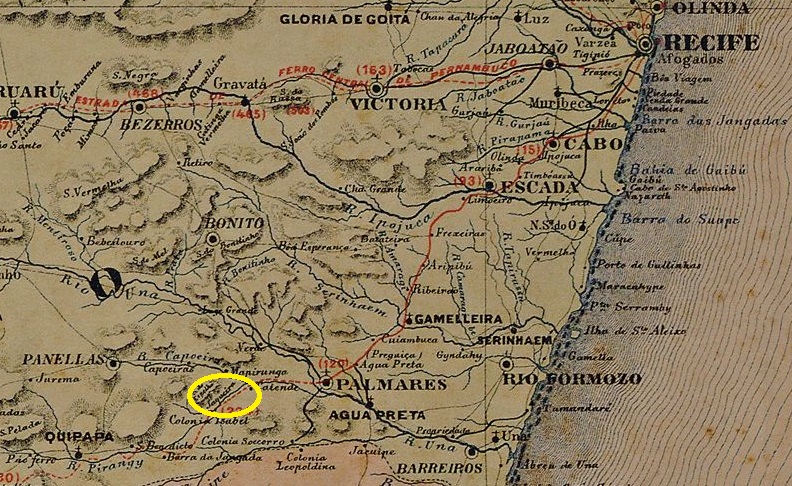
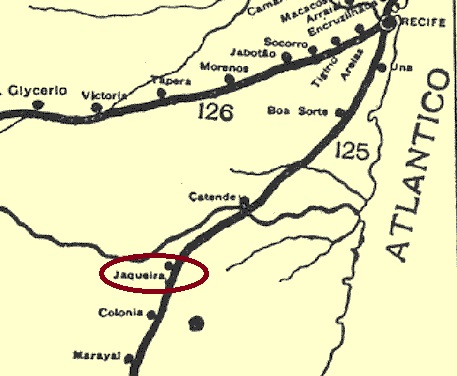
Caera Corographica da Provincia de Pernambuco, 1880
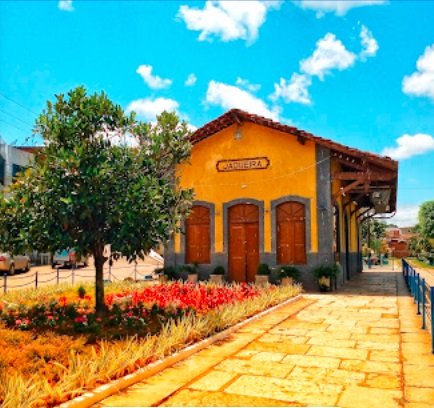
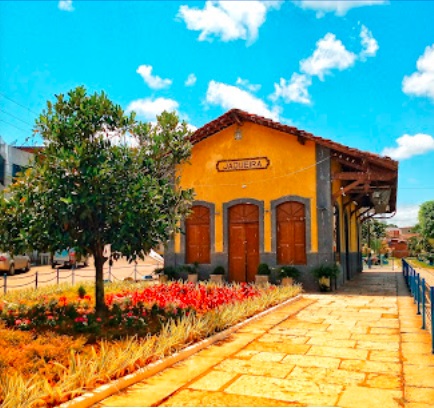
Jaqueira station was opened in July 1883 by the railway company E.F. Recife ao S. Francisco (Southern Line) and was located on the banks of the Jaqueira in the Município de Palmares, 150 km south-west of the provincial capital Recife. The line changed hands three more times: in 1901 it went to Great Western, in 1950 to Rede Ferroviária do Nordeste and from 1975 until its closure in 1996 it belonged to Rede Ferroviária Federal S.A. (estacoesferroviarias.com.br). The tracks still exist and the restored station building serves as a cultural centre for the municipality.
In September 2022 (Photo: viagemassa, on Google Maps)
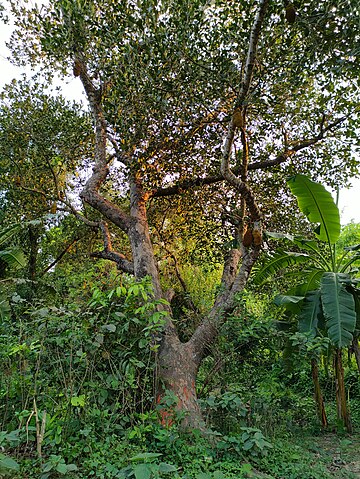
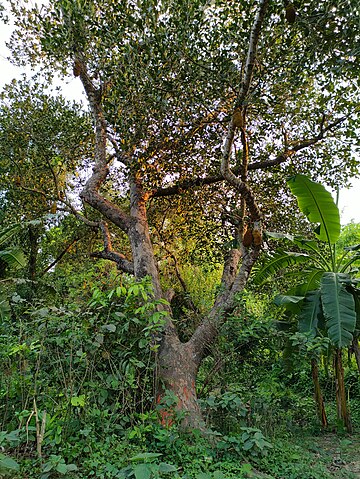
The area around the railway station became the Distrito de Jaqueira around 1910 and went to the Município de Maraial in September 1928. It belongs to the Município de Jaqueira since September 1995. This is the Brazilian name of the jackfruit tree from the Moraceae family:
Artocarpus heterophyllus (Lam.), Photo: Nafiur CC BY-SA 4.0
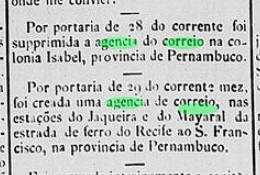
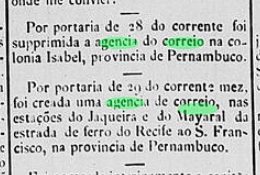
The Rio press reports that there has been a post office at the railway station since May 1884:
Diario do Brazil/RJ, 31/05/1884
Unfortunately, an imperial postmark of Jaqueira has not yet been found.
Rede Ferroviaria de Pernambuco, 1898 (IBGE)
Der Bahnhof Jaqueira wurde im Juli 1883 von der Eisenbahngesellschaft E.F. Recife ao S. Francisco (Südlinie) eröffnet und lag am Ufer des Jaqueira im Município de Palmares, 150 km südwestlich der Provinzhauptstadt Recife. Die Strecke wechselte noch dreimal den Besitzer: 1901 ging sie an die Great Western, 1950 an die Rede Ferroviária do Nordeste und von 1975 bis zu ihrer Stilllegung 1996 gehörte sie der Rede Ferroviária Federal S.A. (estacoesferroviarias.com.br). Die Gleise sind noch vorhanden, das restaurierte Bahnhofsgebäude dient als Kulturzentrum der Gemeinde.
Im September 2022 (Foto: viagemassa, auf Google Maps)
Das Gebiet um den Bahnhof wurde um 1910 zum Distrito de Jaqueira und ging im September 1928 zum Município de Maraial. Seit September 1995 gehört es zum Município de Jaqueira. Dies ist der brasilianische Name des Jackfruchtbaumes aus der Familie der Moraceae:
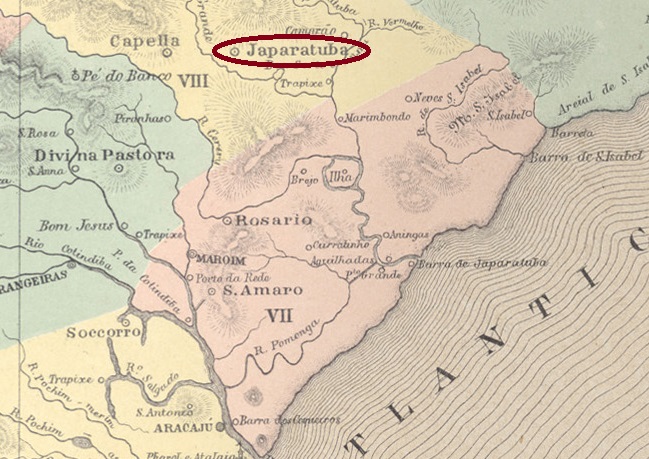
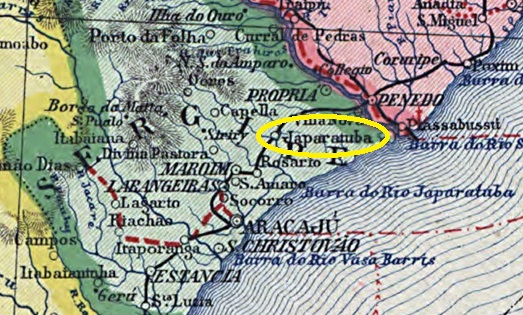
The Distrito de Japaratuba was founded in January 1811, belonged to the Vila de Sto. Amaro das Brotas and was located on the east bank of the Japaratuba River, 55 kilometres north of the later provincial capital Aracaju. In June 1854, it became the Freguesia de N. Sra. da Saúde de Japaratuba, which in turn belonged to the Vila de Capella and five years later was itself named a Vila. The place name is of indigenous origin and can stand for many beaches with white sand, among others.
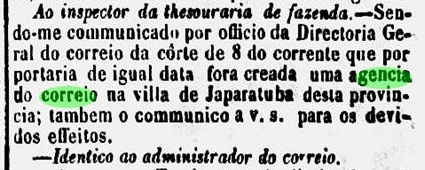
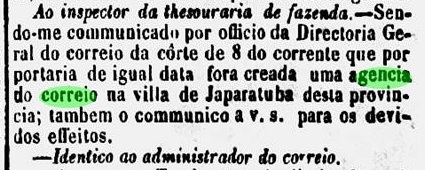
As reported in the regional press, there had been a post office since March 1864:
Correio Sergipense, 02/04/1864
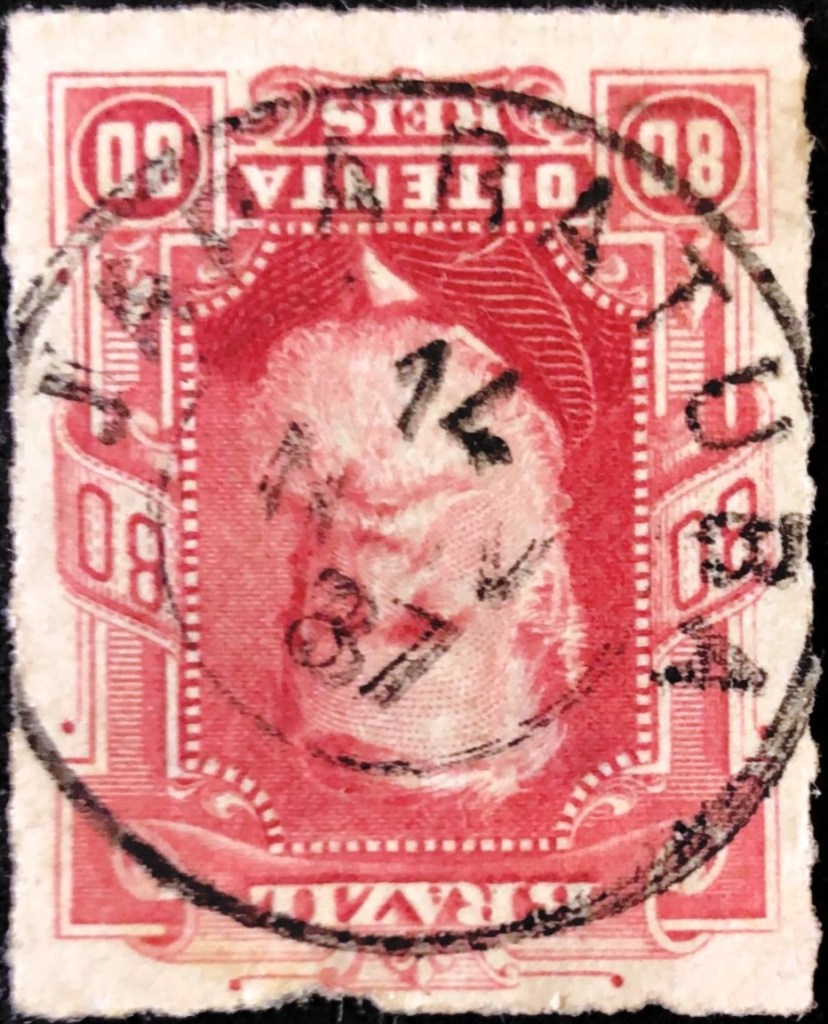
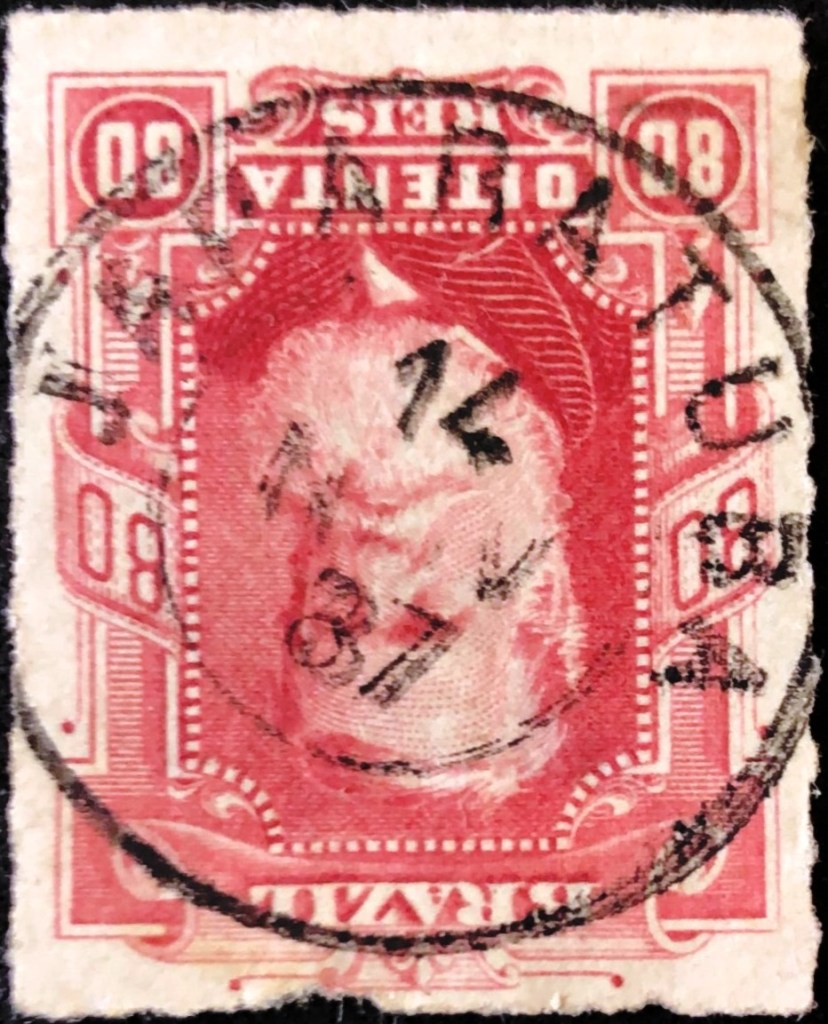
The only imperial postmark to date is JSE-0100b (Fig. Felipe Piccinini):
JSE-0100b (FP) 1881-1892
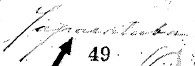
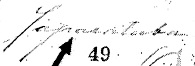
R. Koester also shows a handwritten cancellation from Japaratuba in Carimbologia XXV:
1887 (RK)Carta da Republica dos Estados Unidos do Brazil, 1892
Der Distrito de Japaratuba wurde im Januar 1811 gegründet, gehörte zur Vila de Sto. Amaro das Brotas und lag am Ostufer des gleichnamigen Flusses, 55 km nördlich der späteren Provinzhauptstadt Aracaju. Im Juni 1854 wurde daraus die Freguesia de N. Sra. da Saúde de Japaratuba, die wiederum zur Vila de Capella gehörte und fünf Jahre später selbst zur Vila ernannt wurde. Der Ortsname ist indigenen Ursprungs und kann u.a. für viele Strände mit weißem Sand stehen.
Wie die regionale Presse berichtete, gab es seit März 1864 ein Postamt:
Correio Sergipense, 02.04.1864
Der bisher einzige kaiserliche Poststempel ist JSE-0100b (Abb. Felipe Piccinini):
JSE-0100b (FP) 1881-1892
R. Koester zeigt in Carimbologia XXV auch eine handschriftliche Entwertung aus Japaratuba:
Other names: Other names: Brejo do Amparo, Brejo do Salgado, Porto do Salgado
See also Villa Januária (VMG-1416)
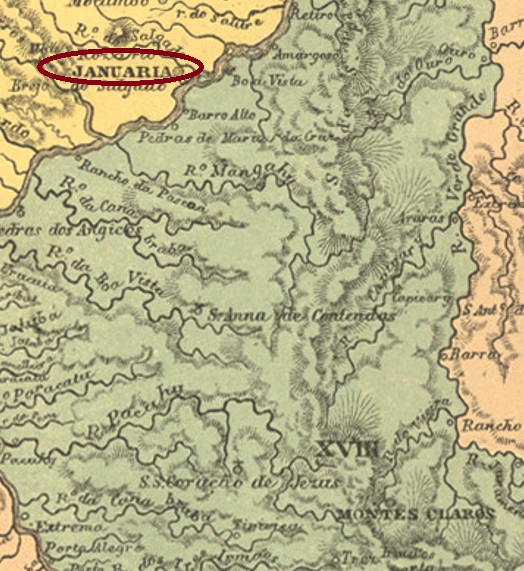
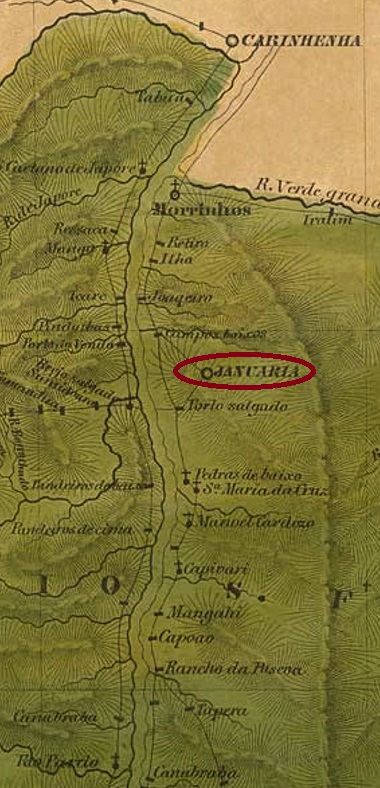
This locality also causes some headaches for researchers, as it has not only been renamed many times, but can also be seen in different places on old maps. What seems certain is that from January 1811 it was the old freguesia of Brejo do Amparo, which belonged to the Vila of Paracatu and was initially located on the right bank of the São Francisco River, about 680 km north of the later provincial capital of Ouro Preto. In June 1833, the place was elevated to a vila, called Villa Januaria de N. Sra. do Amparo do Brejo do Salgado. The Salgado is a tributary of the left bank of the São Francisco, and accordingly the vila was henceforth to be seen on the opposite side of the river. In October 1860, the Vila became a town called Porto do Salgado, but by September 1871, the Município was called Brejo do Amparo, as before. Finally, since September 1884, the municipality has been called Januária, after a daughter of Emperor Pedro I. Presumably, this was the Solomonic solution after a long name dispute between right- and left-bank inhabitants.
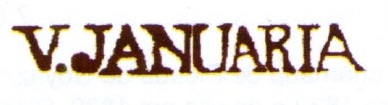
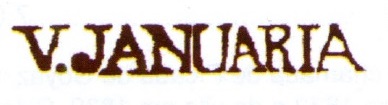
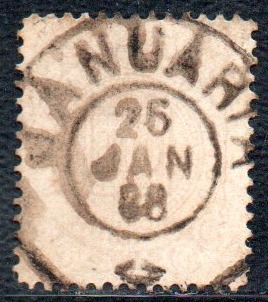
At least as far as the origin of the post office is concerned, there is agreement among researchers. Nova Monteiro (Administrações e Agencias Postaes do Brasil Imperio, in Brasil Filatelico/RJ, 1934-5; Reprint SPP 1994-1999), Paula Sobrinho (História Postal de Minas Gerais, Belo Horizonte, 1997) and Reinhold Koester (Carimbologia XXV) unanimously name October 1833. The oldest postmark is VMG-1416a; it also occurs in sepia with dates of use from 1836 to at least 1850 and has already been presented in the RHM catalogue under P-MG-32:
VMG-1416a (RHM P-MG-32) 1836-1850ff
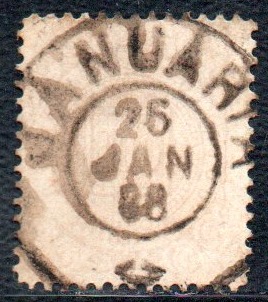
JMG-1415b (fig. Felipe Piccinini) did not appear until around 1887, which suggests that another postmark was used in the meantime, the image of which is still missing:
JMG-1415b (FP) 1887-1889Villiers de l’Ile Adam: Carta (…) da Provincia de Minas Geraes, 1849
Andere Namen: Brejo do Amparo, Brejo do Salgado, Porto do Salgado
Siehe auch Villa Januária (VMG-1416)
Auch diese Ortschaft bringt einige Kopfzerbrechen für die Forscher, da sie nicht nur oft umbenannt wurde, sondern auch an verschiedenen Stellen auf alten Karten zu sehen ist. Sicher scheint es zu sein, sie war ab Januar 1811 die alte Freguesia von Brejo do Amparo, die der Vila von Paracatu gehörte und zunächst am rechten Ufer des Flusses São Francisco lag, etwa 680 km nördlich der späteren Provinzhauptstadt Ouro Preto entfernt. Im Juni 1833 wurde der Ort zu einer Vila erhoben, die Villa Januaria de N. Sra. do Amparo do Brejo do Salgado hieß. Nun ist der Salgado ein Nebenfluss des linken Ufers vom São Francisco, und dementsprechend war die Vila fortan auf der gegenüberliegenden Flussseite zu sehen. Im Oktober 1860 wurde aus der Vila eine Stadt mit Namen Porto do Salgado, aber schon im September 1871 hieß der Município Brejo do Amparo, wie früher. Schließlich seit September 1884 heißt die Gemeinde Januária, nach einer Tochter des Kaisers Pedro I. Vermutlich war das die salomonische Lösung nach einem langen Namensstreit zwischen Rechts- und Linksufereinwohnern.
Zumindest was die Entstehung des Postamts betrifft, herrscht Einigkeit unter den Forschern. Nova Monteiro (Administrações e Agencias Postaes do Brasil Imperio, in Brasil Filatelico/RJ, 1934-5; Reprint SPP 1994-1999), Paula Sobrinho (História Postal de Minas Gerais, Belo Horizonte, 1997) und Reinhold Koester (Carimbologia XXV) nennen dafür einstimmig den Oktober 1833. Der älteste Poststempel ist VMG-1416a; er kommt auch in sepia mit Verwendungsdaten von 1836 bis in die 50er Jahre vor und wurde bereits im RHM-Katalog unter P-MG-32 vorgestellt:
VMG-1416a (RHM P-MG-32) 1836-1850ff
Erst ab ca. 1887 erschien JMG-1415b (Abb. Felipe Piccinini), was vermuten lässt, dass zwischenzeitlich ein weiterer Poststempel verwendet wurde, dessen Abbildung noch fehlt:
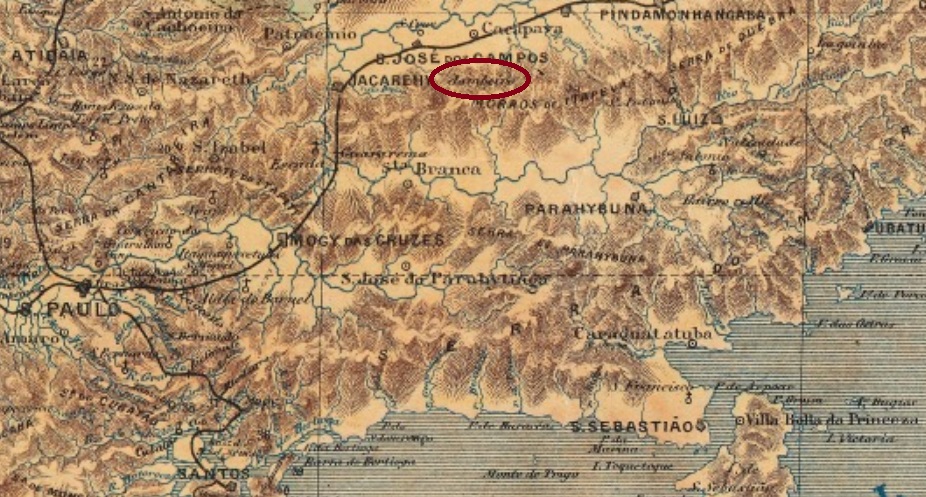
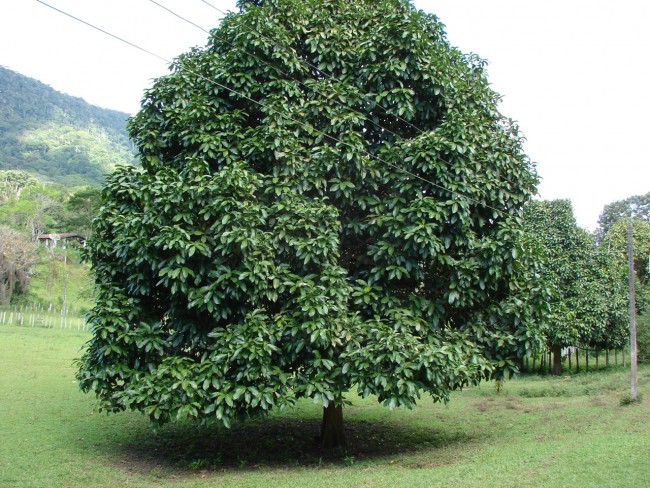
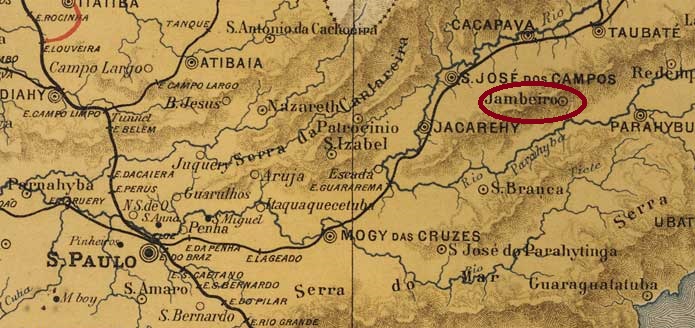
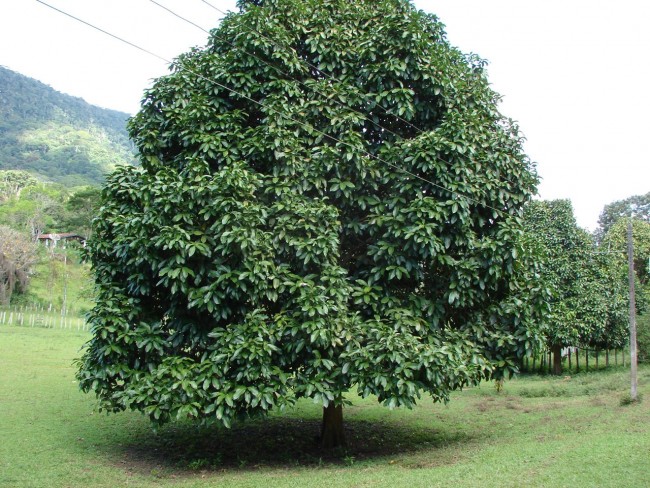
The Freguesia de N. Sra. das Dores de Capivary had existed since April 1872. It belonged to the Vila de Caçapava and was located on the Capivari, 120 kilometres east of the provincial capital of São Paulo. In March 1876, it was elevated to a Vila, but changed its name to Jambeiro in May of the following year, presumably to avoid confusion with the other Vila de Capivary in São Paulo. Jambeiro has been a town since July 1898. The name comes from a beautiful tree from the myrtle family (Myrtaceae), which bears juicy, sweet fruit.
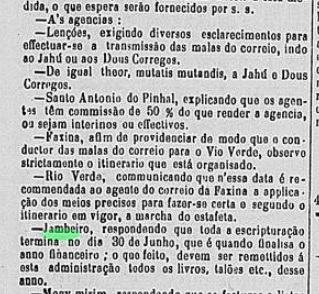
R. Koester writes in Carimbologia XXV that there has been a post office there since around 1878. In fact, it must have already existed in July of the previous year, as can be seen from the regional press:
Correio Paulistano, 17/08/1877
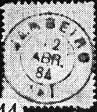
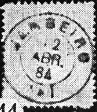
The oldest postmark is the French type JSP-0710a (fig. R. Koester, op. cit.)
JSP-0710a (RK) 1877ff-1884
It was followed by the double circle JSP-0710b (fig. Koester):
JSP-0710b (RK) 1885-1886J.M. Ribeiro Lisboa: Provincia de São Paulo, 1884
Andere Namen: N. Sra. das Dores de Capivary
Die Freguesia de N. Sra. das Dores de Capivary bestand seit April 1872. Sie gehörte zur Vila de Caçapava und lag am Ufer des Capivari, 120 Kilometer östlich der Provinzhauptstadt São Paulo. Im März 1876 wurde sie zur Vila erhoben, änderte aber im Mai des folgenden Jahres ihren Namen in Jambeiro, vermutlich um Verwechslungen mit der anderen Vila de Capivary in São Paulo zu vermeiden. Jambeiro ist seit Juli 1898 eine Stadt. Der Name stammt von einem schönen Baum aus der Familie der Myrtengewächse (Myrtaceae), der saftige, süße Früchte trägt.
R. Koester schreibt in Carimbologia XXV, dass es dort seit etwa 1878 ein Postamt gibt. Tatsächlich muss es aber schon im Juli des Vorjahres bestanden haben, wie aus der regionalen Presse hervorgeht:
Correio Paulistano, 17/08/1877
Der älteste Poststempel ist der französische Typ JSP-0710a (Abb. R. Koester, op. cit.)
JSP-0710a (RK) 1877ff-1884
Ihm folgte der Doppelkreis JSP-0710b (Abb. Koester):
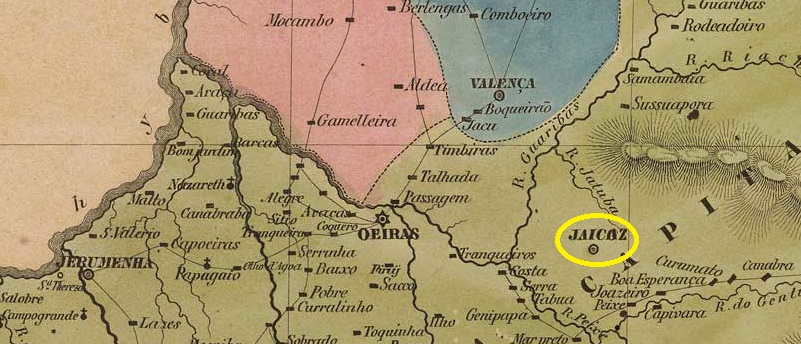
Villiers de l’Ile Adam: Carta (…) da Provincia do Piauhy, 1850
Other spelling: Jaicós
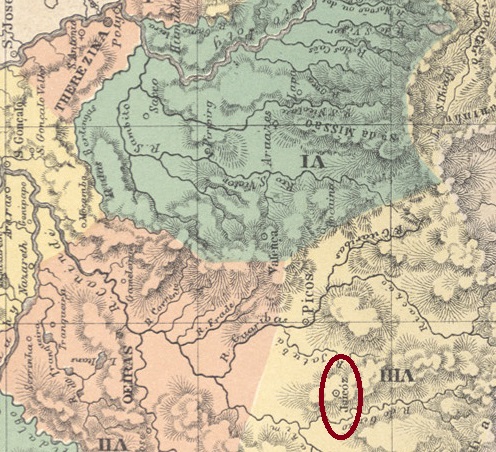
The Jaicós were members of an indigenous tribe in the hinterland of the Capitania de Piauí, after whom the Freguesia de N. Sra. das Mercês de Jaicoz was named in September 1801. It belonged to the Vila de Oeiras and was located on the west bank of the Bonsucesso, almost 400 kilometres south-east of the later provincial capital Teresina. In July 1832 it was elevated to the status of a Vila and since December 1889 Jaicós, as it is spelt today, has been a town.
R. Koester writes in Carimbologia XXV that there had been a post office there since 1882. However, this is probably either a mistake or a reopening, as Nova Monteiro gives a much earlier date – September 1817 – in Administrações e Agencias Postaes do Brasil Imperio (Brasil Filatelico/RJ, 1934-5; reprint SPP 1994-1999). This postal agency is then also listed in the postal guides of 1857 and 1880 and appears repeatedly in the regional press between 1839 and 1874.
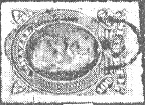
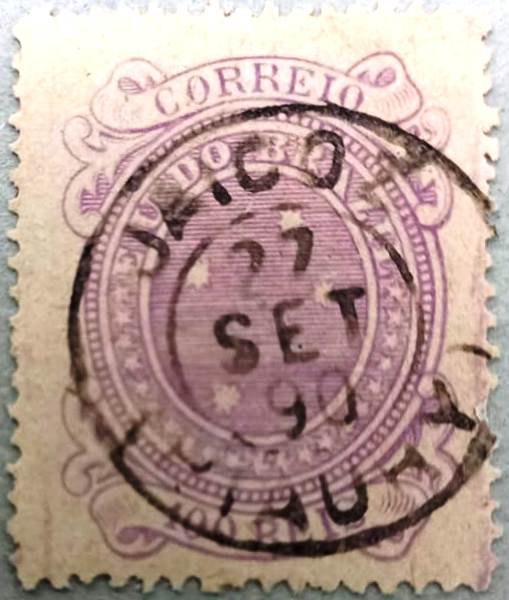
Two postmarks were found for the 19th century. The rare JPI-0080b (fig. R. Koester, op. cit.) is shown in an unfortunately poor quality:
JPI-0080b (RK) 1877ff
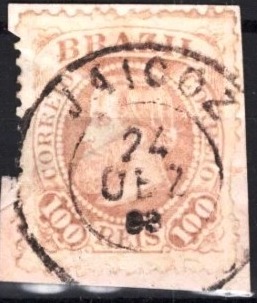
It was followed by the double circle JPI-0080c (image by Felipe Piccinini):
JPI-0080c (FP) 1883
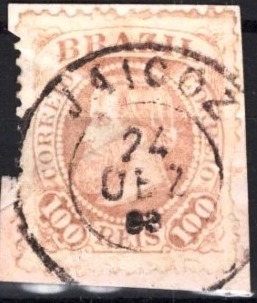
Later came JPI-0080d (collect. Fuad Ferreira Fo.):
JPI-0080d (FF) 1890-1894Atlas do Imperio do Brasil, 1868
Textaktualisierung vom 2. Juli 2025
Andere Schreibweise: Jaicós
Die Jaicós waren Angehörige eines indigenen Stammes im Hinterland der Capitania de Piauí, nach dem im September 1801 die Freguesia de N. Sra. das Mercês de Jaicoz benannt wurde. Sie gehörte zur Vila de Oeiras und lag am Westufer des Bonsucesso, knapp 400 km südöstlich der späteren Provinzhauptstadt Teresina. Im Juli 1832 erfolgte die Erhebung zur Vila und seit Dezember 1889 ist Jaicós, wie es heute geschrieben wird, eine Stadt.
R. Koester schreibt in Carimbologia XXV, dass es dort seit 1882 ein Postamt gab. Das dürfte aber entweder ein Irrtum oder eine Wiedereröffnung sein, denn Nova Monteiro gibt in Administrações e Agencias Postaes do Brasil Imperio (Brasil Filatelico/RJ, 1934-5; Reprint SPP 1994-1999) dafür ein viel früheres Datum – September 1817 (NM) – an. Diese Postagentur ist dann auch in den Postführern von 1857 und 1880 verzeichnet und taucht zwischen 1839 und 1874 wiederholt in der regionalen Presse auf.
Für das 19. Jahrhundert wurden zwei Poststempel gefunden. Der seltene JPI-0080b (Abb. R. Koester, op. cit.) ist in einer leider schlechten Abbildung dargestellt:
JPI-0080b (RK) 1877ff
Ihm folgte der Doppelkreis JPI-0080c (Abb. Felipe Piccinini):
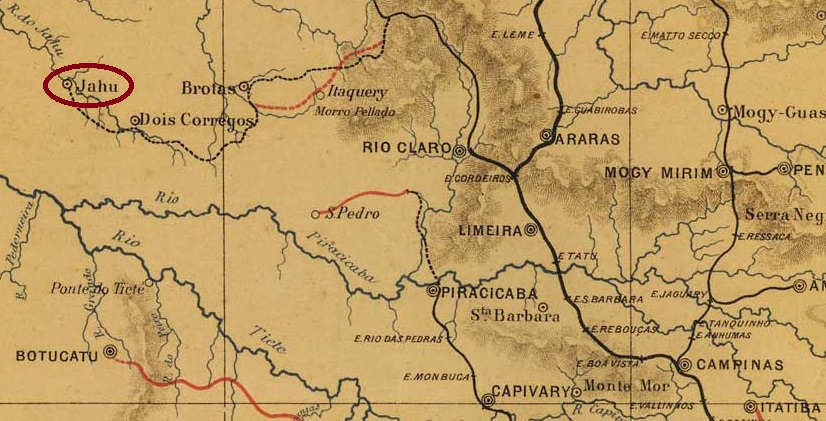
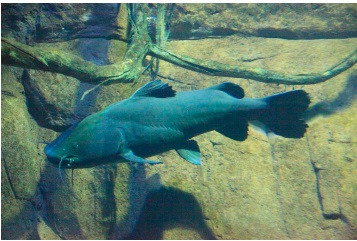
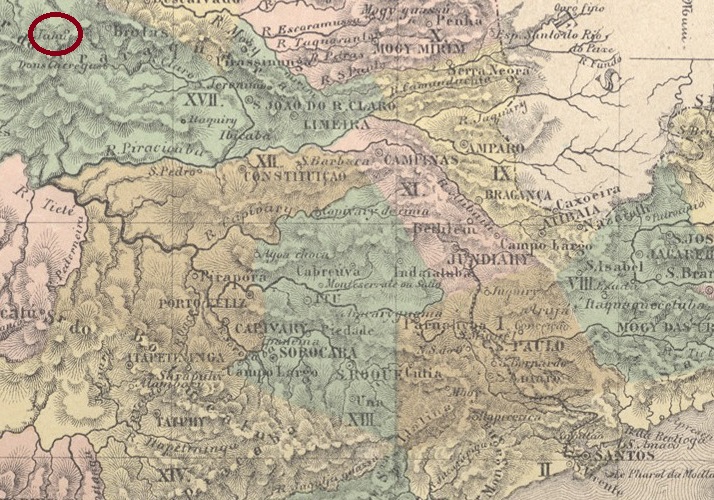
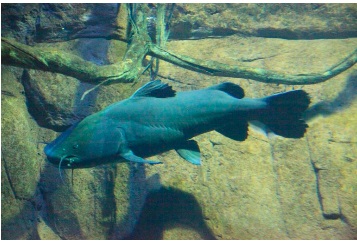
In March 1859, the Freguesia de N. Sra. do Patrocínio do Jahu was founded on the south bank of the Jaú in the Vila de Brotas, 300 kilometres northwest of the provincial capital of São Paulo. It was declared a vila in April 1866 and a town in February 1889. The indigenous name refers to a large catfish from the Pimelodidae family:
Zungaro zungaro (Humboldt & Valenciennes, 1821)
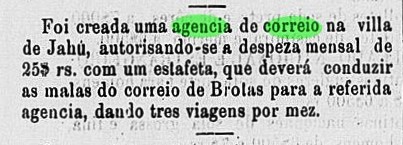
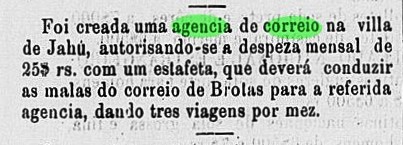
According to the São Paulo press, in December 1867 it was decided to set up a post office in the Vila:
Diario de São Paulo, 09.01.1868
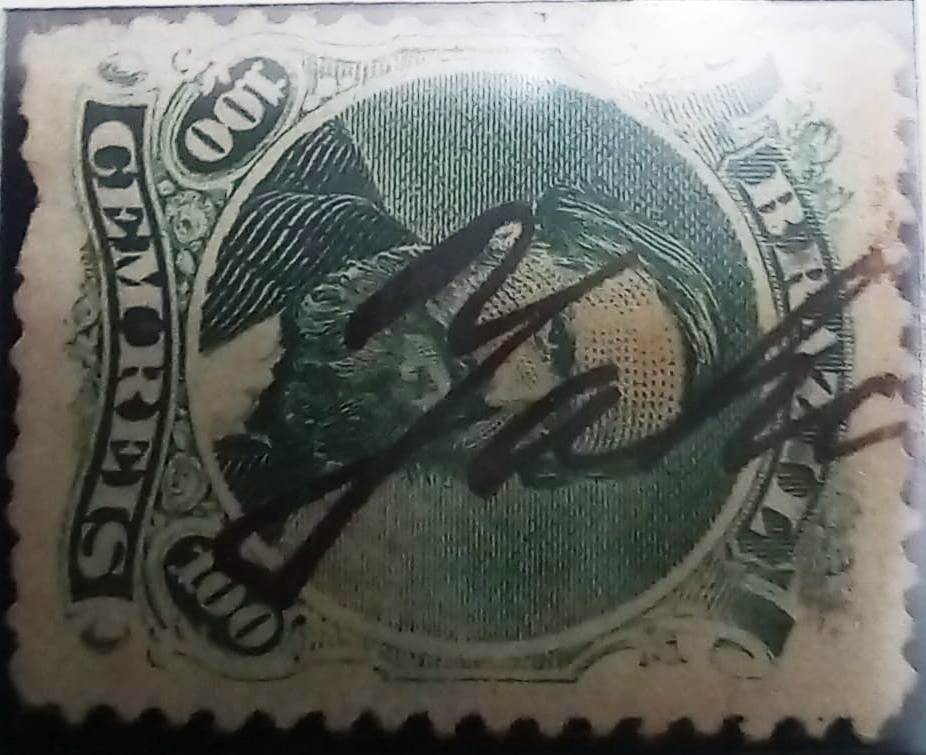
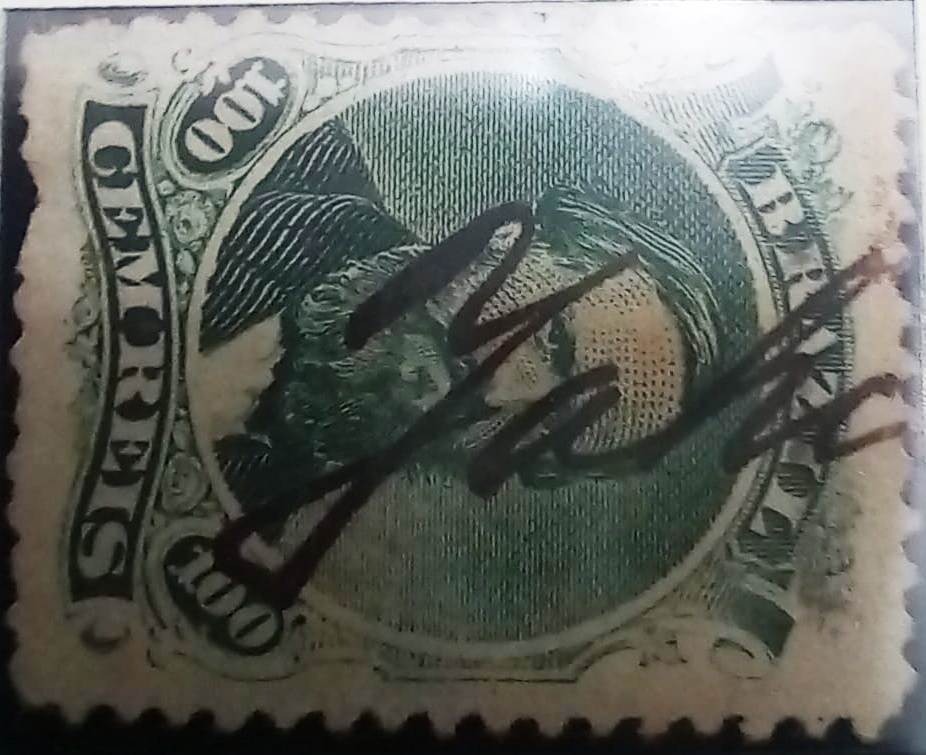
The first postmark was probably not delivered on time, as early hand cancellations are known:
1867ff (FF)
The beautiful double circle JSP-0705a (fig. Mário Celso Orsi Jr.), which is also available in blue and green, did not appear until the 70s:
JSP-0705a (MO) 1875-1880
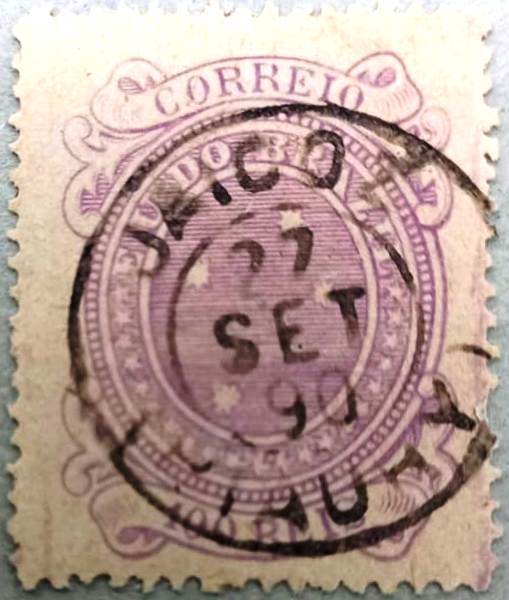
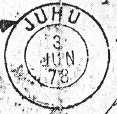
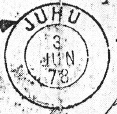
Shortly afterwards, JSP-0705b also appeared, with the incorrect spelling JUHU (fig. R. Koester, in Carimbologia XXV):
JSP-0705b (RK) 1878
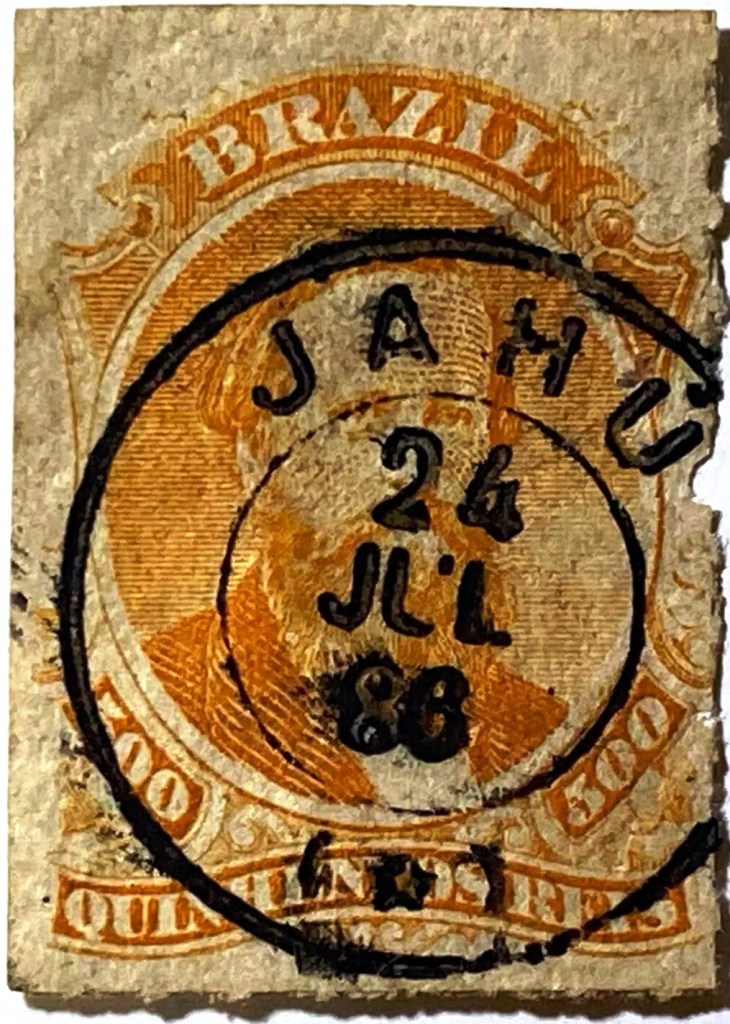
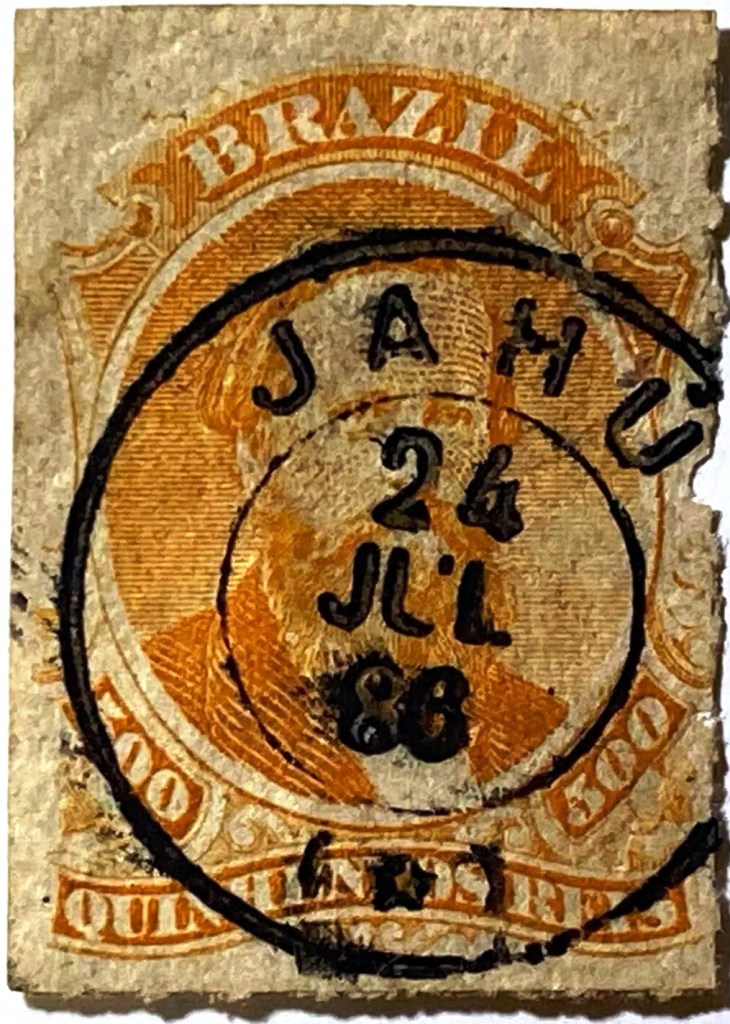
The French type JSP-0705c (fig. Felipe Piccinini) was also used in the late imperial period:
JSP-0705c (FP) 1885-1892
The railway postmark JSP-0706a (fig. Koester, op. cit.) came at about the same time:
JSP-0706a (RK) 1891
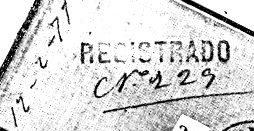
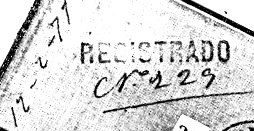
Koester also showed a registered postmark from the 70s:
1877 (RK)
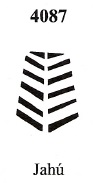
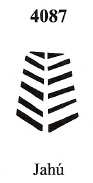
James Dingler and Klerman W. Lopes presented in Mute Cancellations of the Brazil Empire / Carimbos Mudos do Brasil Império (Brazil Philatelic Association, Rio de Janeiro, 2000) the mute cancellation with no. 4087:
BPA 4087
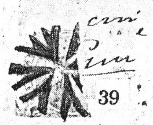
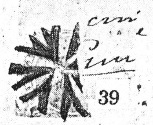
Further mute cancels of Jahú were presented by R. Koester:
1878 (RK)1878 (RK)Atlas do Imperio do Brasil, 1868
Andere Schreibweise: Juhu
Im März 1859 wurde die Freguesia de N. Sra. do Patrocínio do Jahu am Südufer des Jaú in der Vila de Brotas, 300 km nordwestlich der Provinzhauptstadt São Paulo, gegründet. Sie wurde im April 1866 zur Vila und im Februar 1889 zur Stadt ernannt. Der indigene Name bezeichnet einen großen Wels aus der Familie Pimelodidae:
Zungaro zungaro (Humboldt & Valenciennes, 1821)
Wie die Presse von São Paulo berichtet, wurde im Dezember 1867 beschlossen, in der Vila ein Postamt einzurichten:
Diario de São Paulo, 09.01.1868
Vermutlich wurde der erste Poststempel nicht rechtzeitig geliefert, da frühe Handentwertungen bekannt sind:
1867ff (FF)
Erst in den 70er Jahren erschien der schöne Doppelkreis JSP-0705a (Abb. Mário Celso Orsi Jr.), den es auch in blau und grün gibt:
JSP-0705a (MO) 1875-1880
Kurz danach erschien auch JSP-0705b, mit der falschen Schreibweise JUHU (Abb. R. Koester, in Carimbologia XXV):
JSP-0705b (RK) 1878
In der späten Kaiserzeit wurde auch der französische Typ JSP-0705c (Abb. Felipe Piccinini) verwendet:
JSP-0705c (FP) 1885-1892
Etwa zur gleichen Zeit kam der Bahnpoststempel JSP-0706a (Abb. Koester, op. cit.) hinzu:
JSP-0706a (RK) 1891
Koester zeigte auch einen Einschreibstempel aus den 70er Jahren:
1877 (RK)
James Dingler und Klerman W. Lopes zeigten in Mute Cancellations of the Brazil Empire / Carimbos Mudos do Brasil Império (Brazil Philatelic Association, Rio de Janeiro, 2000) den stummen Stempel mit Nr. 4087:
BPA 4087
Weitere stumme Stempel von Jahú wurden von R. Koester präsentiert:
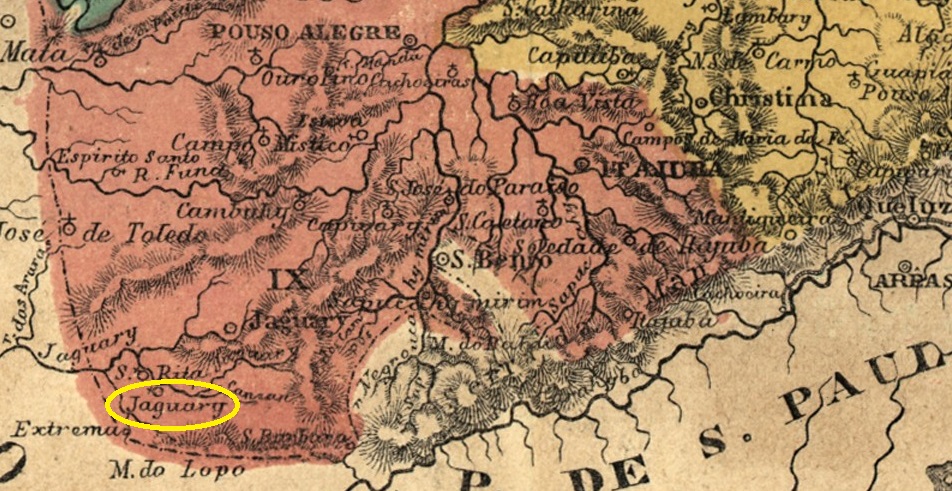
Villiers de l’Ile Adam: Carta (…) da Provincia de Minas Geraes, 1849
Other names: Camanducaia (1925)
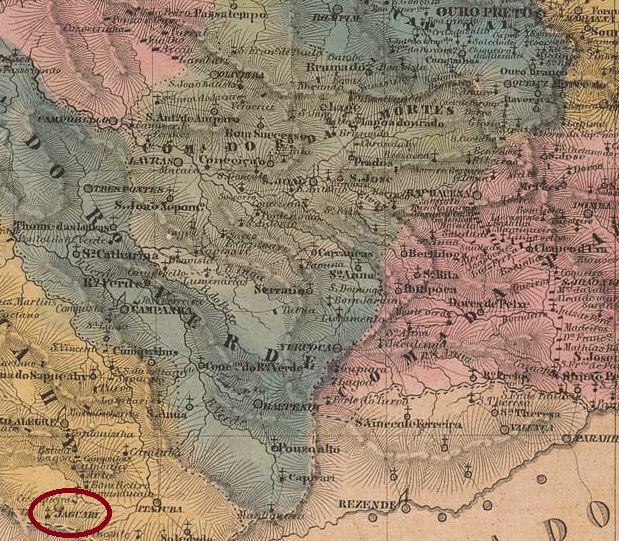
The Freguesia de Camanducaia on the north bank of the river of the same name, 500 kilometres southwest of the later provincial capital Ouro Preto, had existed since 1775. In March 1840 it became Vila de Jaguary (River of the Jaguars, in Tupi-guarani) and in July 1868 it was elevated to the status of a town. In September 1930, the original place name Camanducaia returned, probably to distinguish it from other Jaguaris (as it is spelt today). The meaning of the word Camanduacaia is not clear; some believe it means cooked beans, others are in favour of the translation ‘fireplace for hunting’.
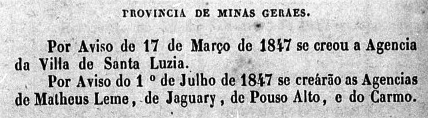
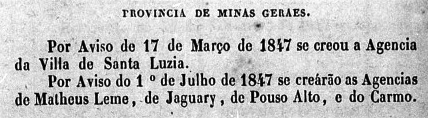
In July 1847, it was decided to establish a post office in Jaguary, according to the report of the Imperial Ministry:
Relatorio do Ministerio do Imperio, 1847
R. However, Koester shows in Carimbologia XXV that postal routes were routed via Jaguary (then Camanducaia) at least as early as 1835, as a tax control office (Registro) still existed there.
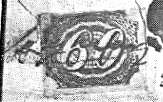
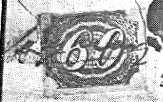
Initially, the stamps were cancelled by hand, as R. Koester (op. cit.) shows:
1849 (RK)
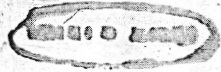
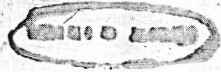
Then came the unfortunately poorly legible cancel JMG-1410a (fig. Koester). The inscription would read ‘Correio de Jaguary’:
JMG-1410a (RK) 1867
Later, the double circle JMG-1410b (ill. Claudio Neumann) was added, which also exists in blue:
JMG-1410b (CN) 1879-1891
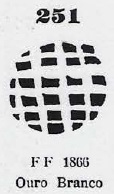
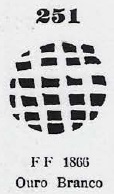
According to Koester, the following mute cancel no. 251 in P. Ayres (Catálogo de Carimbos Brasil-Império, S. Paulo, 1937, 1942) also comes from Jaguary:
P.A. 251 (BPA 1328) 1866ff-1879
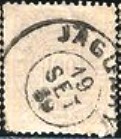
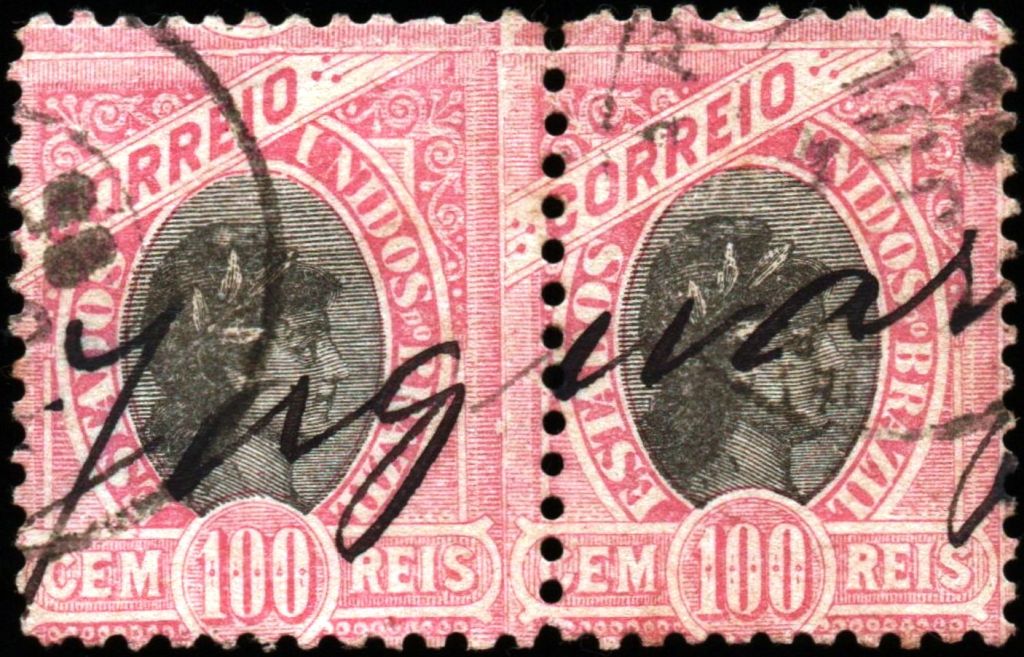
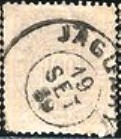
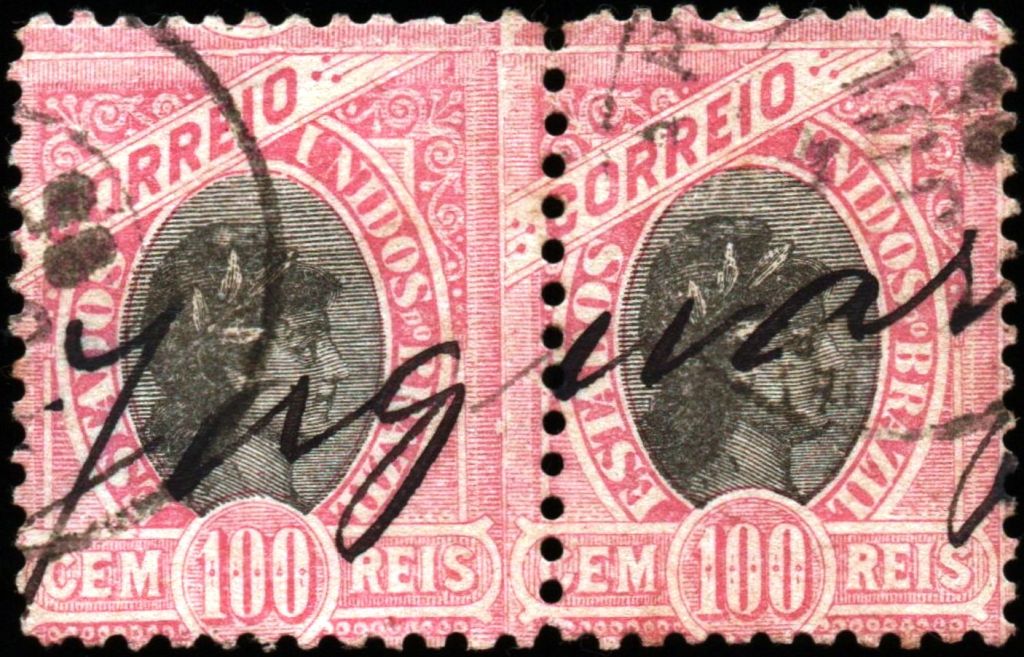
At the beginning of the Republic, cancellations were again made by hand, as the following image shows (ill. Cláudio Coelho):
1895 (CC)Atlas do Imperio do Brasil, 1868
Andere Namen: Camanducaia (1925)
Seit 1775 bestand die Freguesia de Camanducaia am Nordufer des gleichnamigen Flusses, 500 km südwestlich der späteren Provinzhauptstadt Ouro Preto. Im März 1840 wurde sie zur Vila de Jaguary (Fluss der Jaguare, auf Tupi-guarani) und im Juli 1868 zur Stadt erhoben. Im September 1930 kehrte der ursprüngliche Ortsname Camanducaia zurück, wahrscheinlich um sich von anderen Jaguaris (wie es heute geschrieben wird) zu unterscheiden. Die Bedeutung des Wortes Camanduacaia ist nicht eindeutig; einige glauben, dass es gekochte Bohnen bedeutet, andere sind für die Übersetzung “Feuerstelle für die Jagd”.
Im Juli 1847 wurde beschlossen, in Jaguary ein Postamt einzurichten, wie aus dem Bericht des kaiserlichen Ministeriums hervorgeht:
Relatorio do Ministerio do Imperio, 1847
R. Koester weist jedoch in Carimbologia XXV nach, dass zumindest schon 1835 Postrouten über Jaguary (damals Camanducaia) geführt wurden, da dort noch eine Steuerkontrollstelle (Registro) existierte.
Anfangs wurden die Marken noch von Hand entwertet, wie R. Koester (op. cit.) zeigt:
1849 (RK)
Dann kam der leider schlecht lesbare Stempel JMG-1410a (Abb. Koester). Die Inschrift soll “Correio de Jaguary” lauten:
JMG-1410a (RK) 1867
Später kam der Doppelkreis JMG-1410b (Abb. Claudio Neumann) hinzu, den es auch in blau gibt:
JMG-1410b (CN) 1879-1891
Aus Jaguary stammt nach Koester auch der folgende stumme Stempel Nr. 251 in P. Ayres (Catálogo de Carimbos Brasil-Império, S. Paulo, 1937, 1942):
P.A. 251 (BPA 1328) 1866ff-1879
Zu Beginn der Republik wurde wieder von Hand gestempelt, wie das folgende Bild zeigt (Abb. Cláudio Coelho):











 Carimbologia