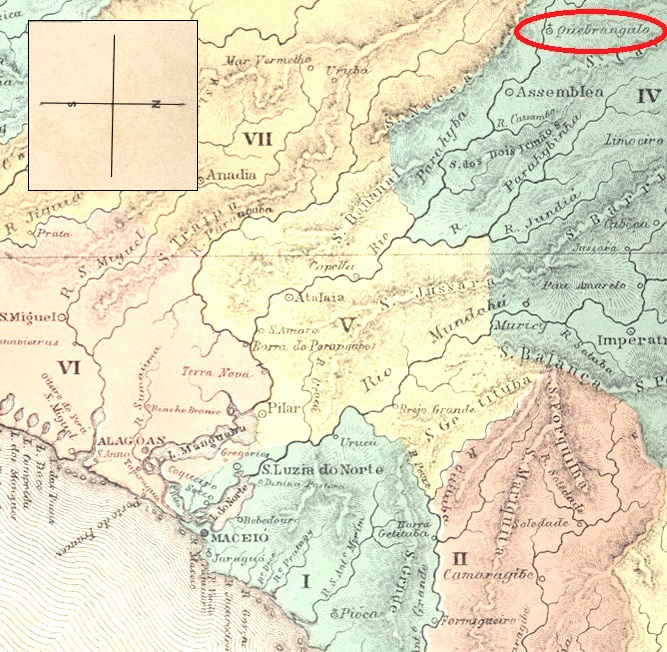
The name Quebrangulo is quite strange even for a Brazilian. According to the IBGE, it has African origin and would mean “Killer of wild pigs”. Originally, this was a settlement of fled African slaves, who organized their living in a quilombo and whose first leader was apparently an expert caititu hunter. Caititu is the Collared peccary (Pecari tajacu), a wild pig of the family Tayassuidae found in North, Central and South America:
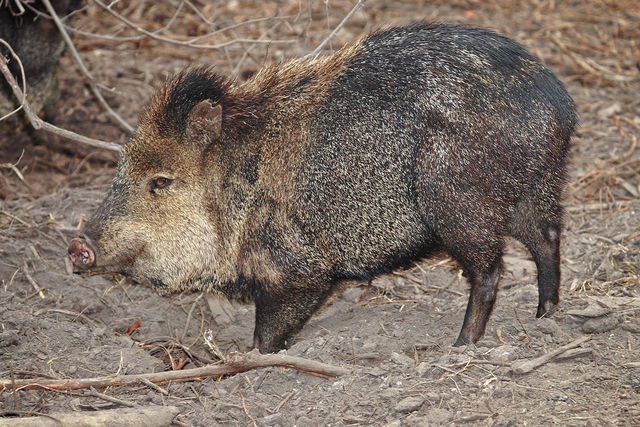
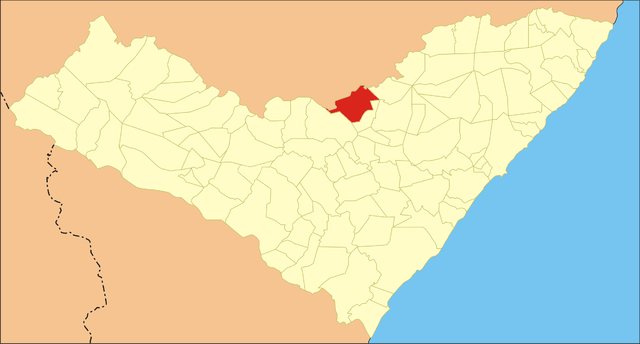
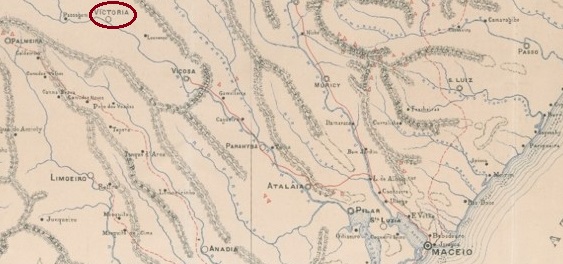
In 1872, Quebrangulo became a Villa, through emancipation from Assemblea. Aldo Cardoso (Contribuição para a História dos Correios de Alagoas, Maceió, 1969) states the post office there was created in 1874, a date that still has to be confirmed. At the beginning of the Republic, the Villa was named Victoria, but recovered the old designation in 1928.
QAL-0195a (Coll. José A. Junges): is by now the only cancellation found from Quebrangulo: a double circle with the name in-between and the date inside. The known copies were used between 1885 and 1893, a couple of years after the name change to Victoria.
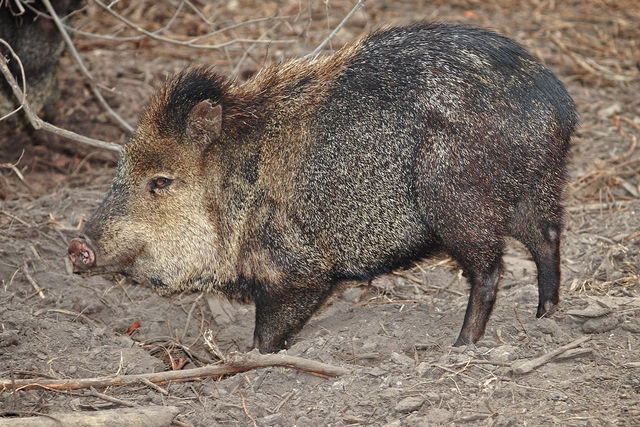
O nome Quebrangulo soa estranho mesmo para um brasileiro. Segundo o IBGE, ele teria origem africana e significaria “o matador de porcos selvagens”. O lugar originou-se dum esconderijo de escravos fugidos, que teriam se organizado num quilombo, e cujo primeiro líder fora um exímio caçador de caititus. O caititu, ou pecari (Pecari tajacu), é um porco selvagem americano da família Tayassuidae:
Em 1872, Quebrangulo tornou-se vila, com autonomia municipal, emancipando-se de Assembleia. Aldo Cardoso (Contribuição para a História dos Correios de Alagoas, Maceió, 1969) afirma que a agência do correio local foi criada em 1874, uma data ainda não confirmada. No início da República, a vila foi renomeada como Victoria, mas recuperou a toponímia anterior em 1928. Hoje, Quebrangulo é famosa por ser a terral natal do escritor Graciliano Ramos (1892-1953).
QAL-0195a (Col. José A. Junges): é até agora o único carimbo imperial conhecido de lá: dois círculos concêntricos com o nome entre eles e a data dentro do círculo interno. Exemplares conhecidos entre 1885 e 1893, ou seja, algum tempo depois da mudança toponímica para Victoria.
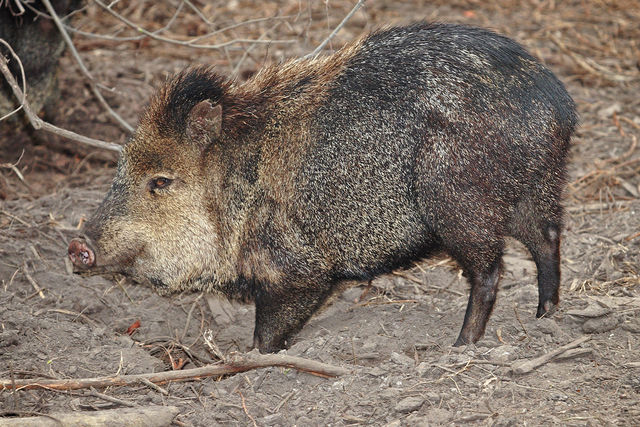
Der Name Quebrangulo klingt sogar für einen Brasilianer merkwürdig. Laut IBGE hätte er einen afrikanischen Ursprung und würde „Wildschweintöter“ bedeuten. Der Ort entstand durch eine Siedlung von geflüchteten Sklaven; diese lebten also in einem Quilombo, und ihr erster Anführer soll ein ausgezeichneter Caititu-Jäger gewesen sein. Caititu nennt man den amerikanischen Halsbandpekari (Pecari tajacu), einen Wildschwein der Familie Tayassuidae. (Bild s.o.)
In 1872 erhielt Quebrangulo den Status einer Villa, nach knapp 16 Jahren als Distrikt von Assemblea. Aldo Cardoso (Contribuição para a História dos Correios de Alagoas, Maceió, 1969) schreibt, dass das Postamt in 1874 gegründet wurde; das Datum konnte bisher nicht bestätigt werden. Kurz nach der Ausrufung der Republik wurde der Ort in Victoria umgetauft, aber in 1928 kam der alte Ortsname zurück.
QAL-0195a (Samml. José A. Junges) ist bisher der einzige gefundene Stempel aus Quebrangulo, ein Doppelkreis mit Ortsname dazwischen und Datum in der Mitte. Vorhandene Exemplare von 1885 bis 1893; also ein Paar Jahre nach der Umbenennung auf Victoria.

 Carimbologia