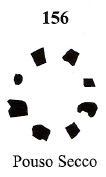
Other names: Banco d’Areia
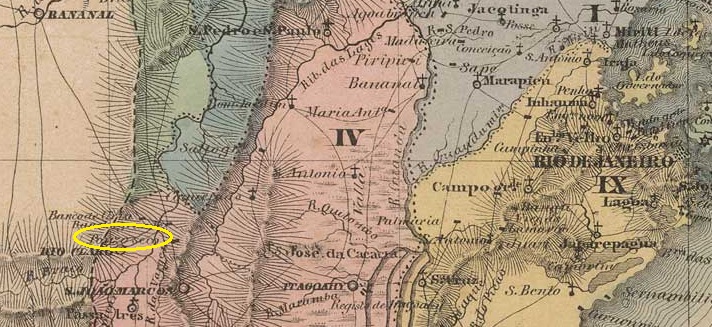
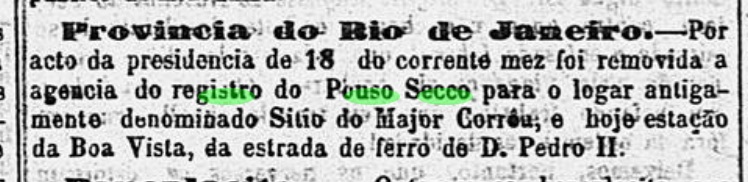
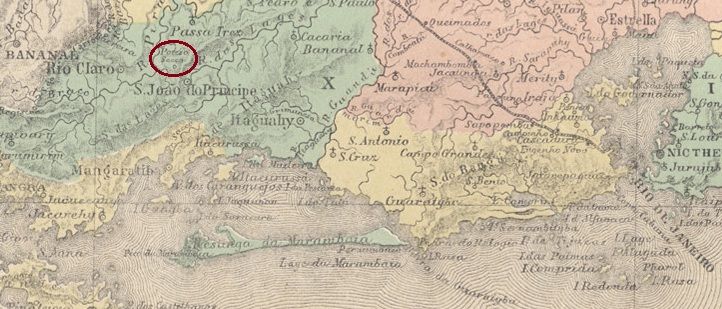
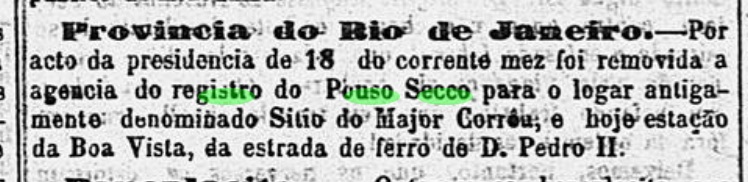
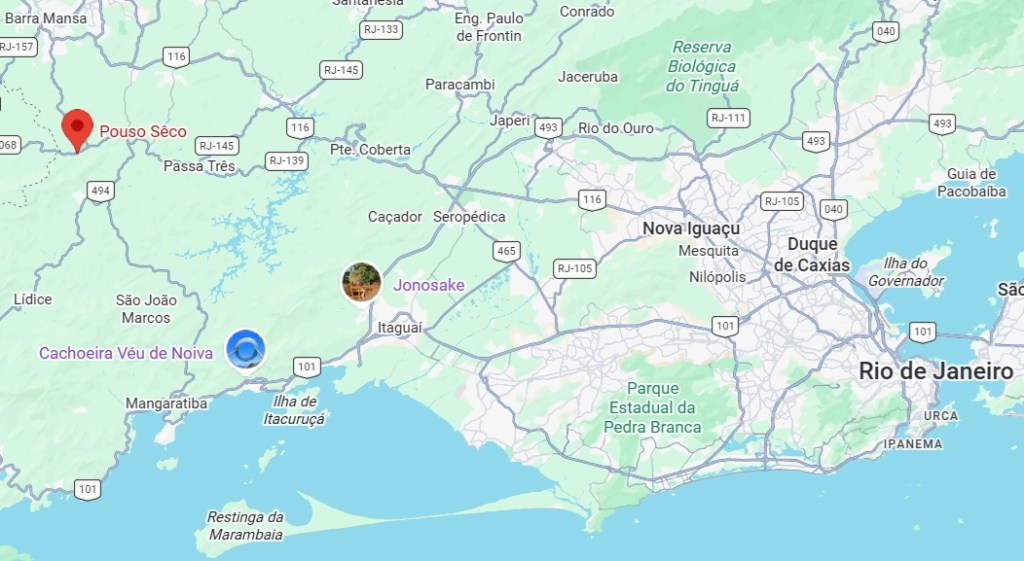
This hamlet was originally called Banco d’Areia (‘sandbank’). It was situated 130 kilometres west of the capital, Rio de Janeiro, in the area of Vila de São João do Príncipe. Around 1837, a tax collection office (Registro) was established there to levy tax on coffee transported from São Paulo. At that time, Banco d’Areia was already situated within the territory of Vila de Rio Claro. This Registro remained in operation until September 1873, when it was relocated to the newly built Boa Vista station on the E.F. D. Pedro II railway line:
In December 1943, the area was situated in the neighbourhood of Pouso Seco (current spelling) in the Getulândia district of the municipality of Itaverá (formerly Rio Claro). This has not changed to this day, apart from the fact that the municipality has been called Rio Claro again since June 1956.
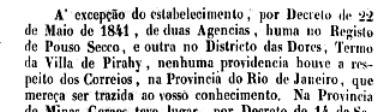
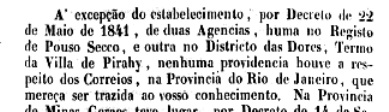
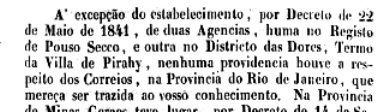
As can be seen from the minutes of the Imperial Ministry, there had been a post office there since May 1841:
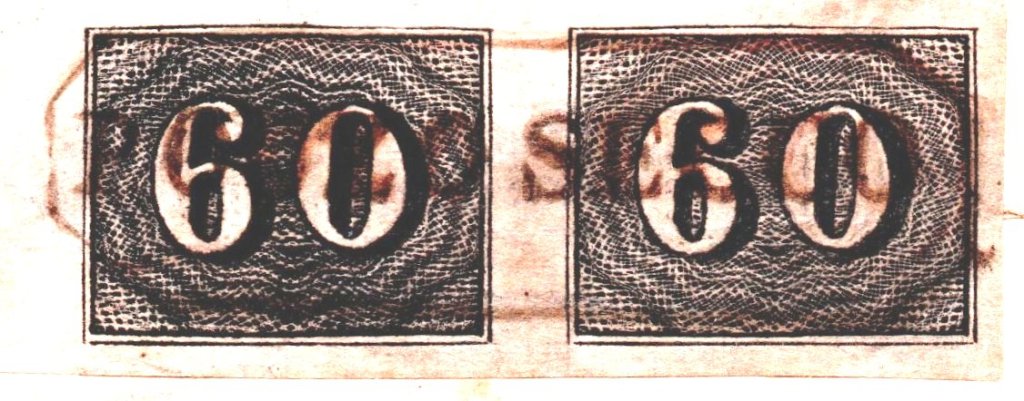
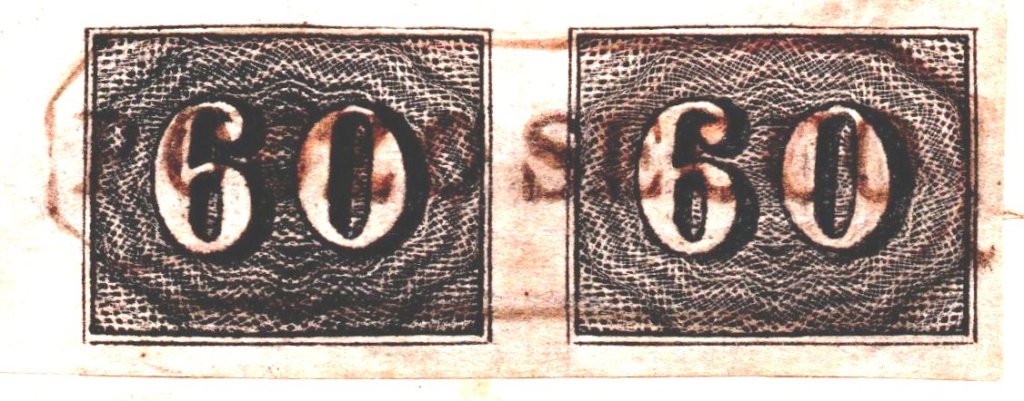
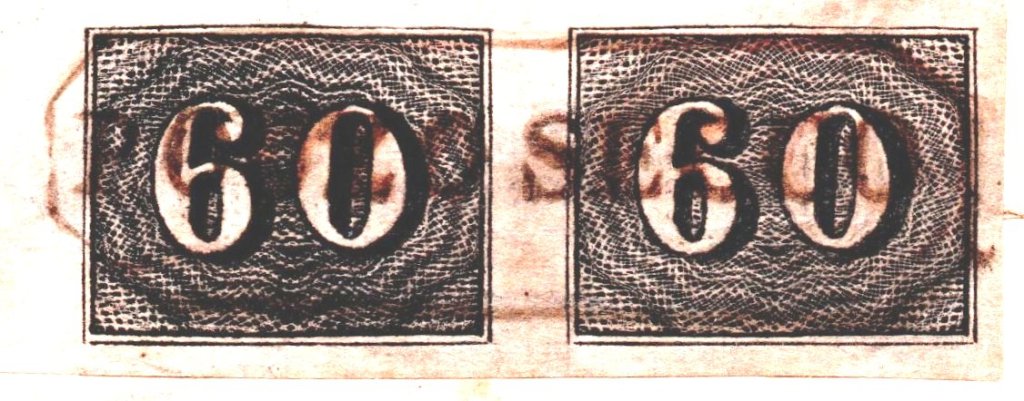
This remained in operation even after the registry office moved and did not close until January 1943, as P. Novaes writes on agenciaspostais.com.br. The oldest postmark is PRJ-0810a (José A. Junges collection):
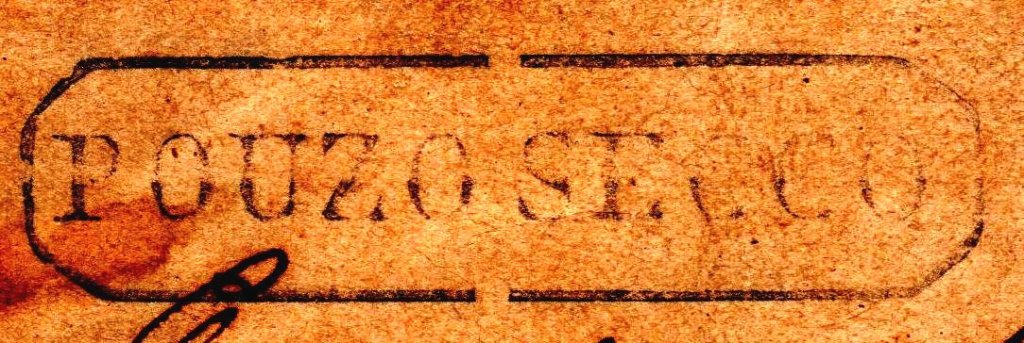
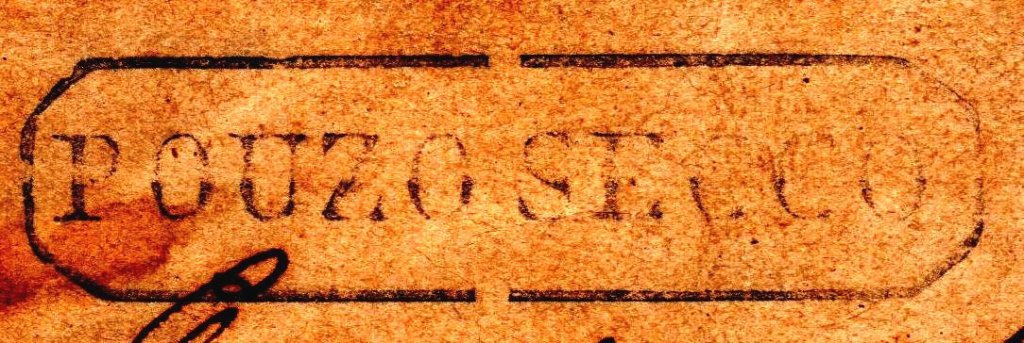
This postmark later appeared in a slightly modified form as PRJ-0810b (José A. Junges collection):
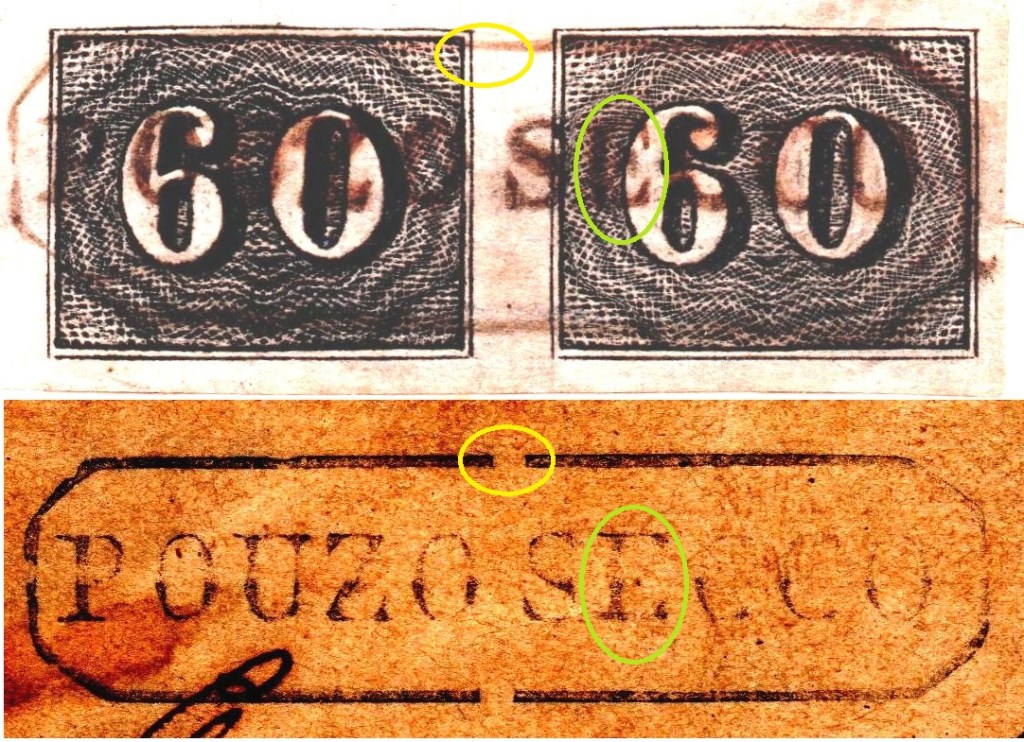
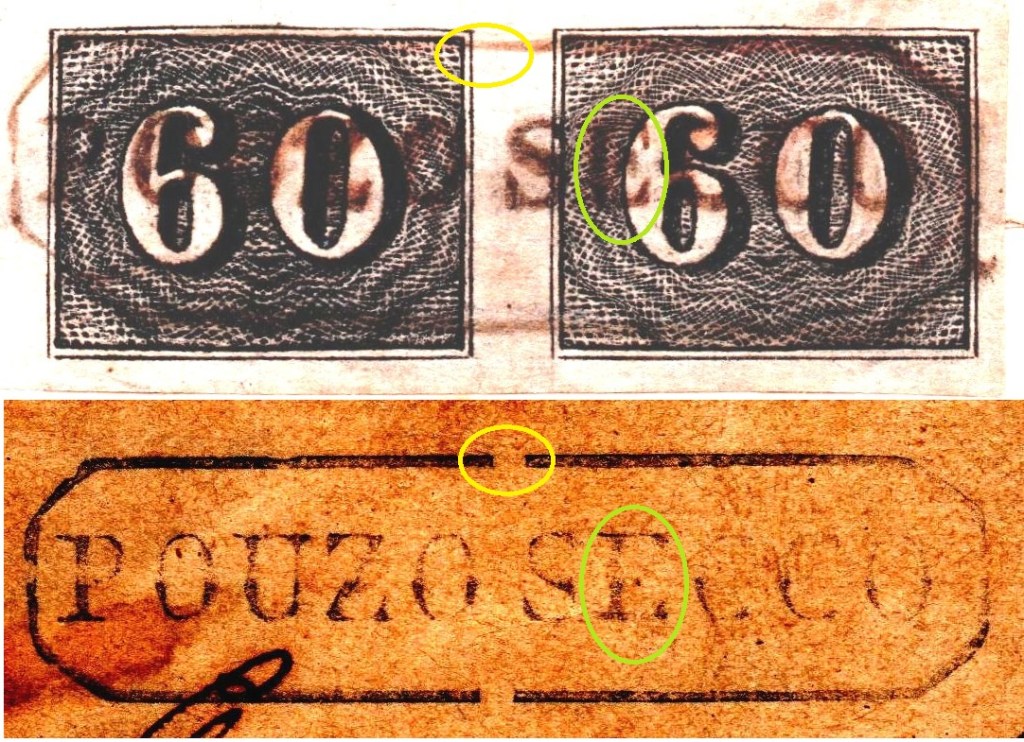
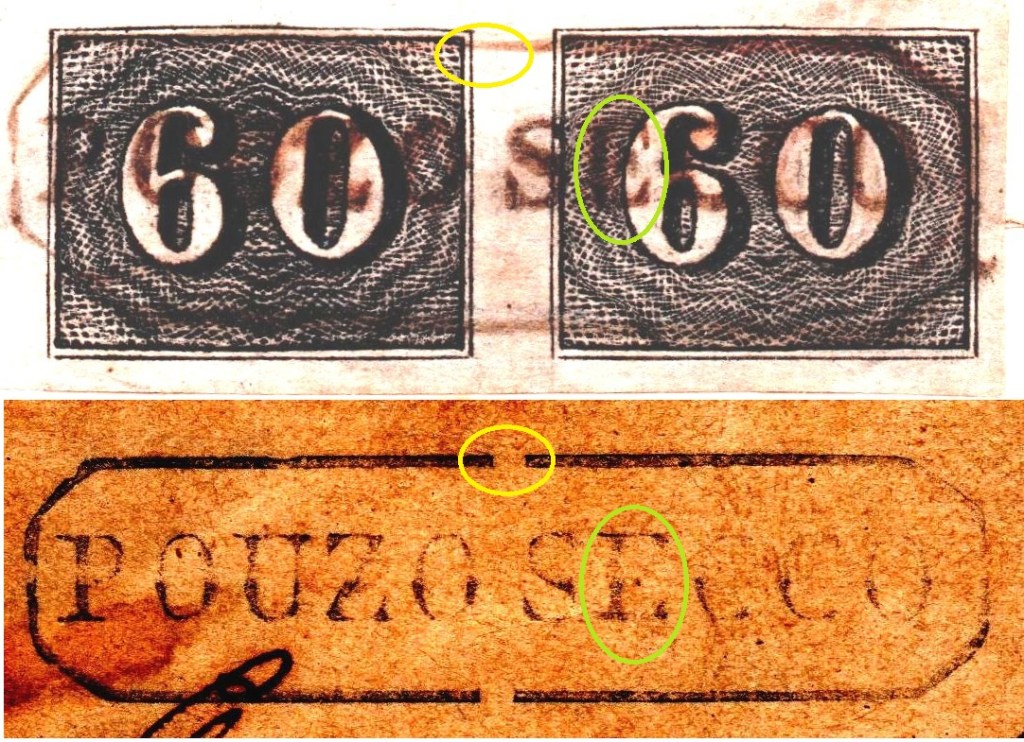
The main differences between the two postmarks lie in the border and the letter E:
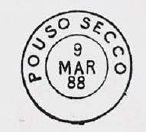
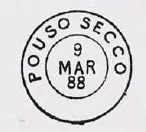
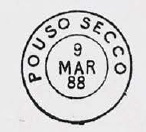
They were followed by the double-circle PRJ-0810c, which had already been presented by P. Ayres in Catálogo de Carimbos Brasil-Império (São Paulo, 1937, 1942):
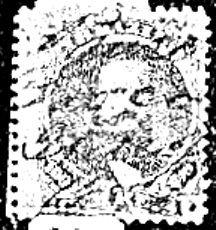
R. Koester showed a handwritten cancellation from there in Carimbologia XXXII:
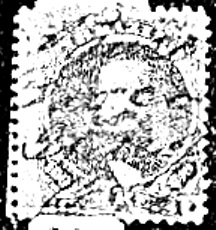
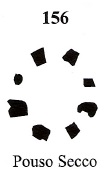
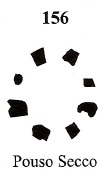
Finally, James Dingler and Klerman W. Lopes have also listed a mute postmark from Pouso Secco in Mute Cancellations of the Brazil Empire / Carimbos Mudos do Brasil Império (Brazil Philatelic Association, Rio de Janeiro, 2000):
Outros nomes: Banco d’Areia
Originalmente, esse arraial chamava-se Banco d’Areia. Ele ficava a 130 quilômetros a oeste da capital, Rio de Janeiro, no território da Vila de São João do Príncipe. Por volta de 1837, foi criado ali um Registro para tributar o café proveniente de São Paulo. Naquela época, Banco d’Areia já se chamava Pouso Seco (grafia atual) e pertencia à Vila de Rio Claro. Esse Registro funcionou lá até setembro de 1873, quando foi transferido para a recém-construída estação Boa Vista, na linha ferroviária da E.F. D. Pedro II:
Em dezembro de 1943, a área ficava no bairro de Pouso Seco, no distrito de Getulândia, do município de Itaverá (antigo Rio Claro). Isso não mudou até hoje, exceto pelo fato de que, desde junho de 1956, o município voltou a se chamar Rio Claro.
Conforme consta da ata do Ministério do Império, havia ali uma agência dos correios desde maio de 1841:
Esta agência continuou funcionando mesmo após a transferência do Registro e só foi fechada em janeiro de 1943, conforme escreve P. Novaes no site agenciaspostais.com.br. O carimbo postal mais antigo é o PRJ-0810a (coleção de José A. Junges):
Este carimbo postal apareceu depois em uma versão ligeiramente alterada, como PRJ-0810b (Coleção José A. Junges):
As principais diferenças entre os dois carimbos estão na moldura e na letra E:
Seguiu-se o carimbo circular PRJ-0810c, que já havia sido apresentado por P. Ayres no Catálogo de Carimbos Brasil-Império (S. Paulo, 1937, 1942):
R. Koester apresentou, em Carimbologia XXXII, uma obliteração manuscrita proveniente daquela localidade:
Por fim, James Dingler e Klerman W. Lopes também listaram um carimbo postal mudo de Pouso Secco em Mute Cancellations of the Brazil Empire / Carimbos Mudos do Brasil Império (Clube Filatélico do Brasil, Rio de Janeiro, 2000):
Andere Namen: Banco d’Areia
Ursprünglich hieß dieser Weiler Banco d’Areia („Sandbank“). Er lag 130 Kilometer westlich der Hauptstadt Rio de Janeiro im Gebiet der Vila de São João do Príncipe. Um 1837 wurde dort eine Steuereinnahmestelle (Registro) errichtet, um den Kaffeetransport aus São Paulo zu besteuern. Zu diesem Zeitpunkt lag Banco d’Areia bereits im Gebiet der Vila de Rio Claro. Dieser Registro blieb bis September 1873 in Betrieb und wurde dann zum neu gebauten Bahnhof Boa Vista auf der Bahnlinie der E.F. D. Pedro II verlegt:
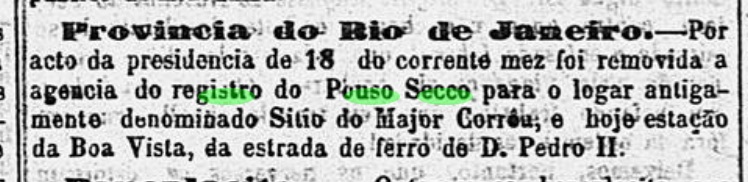
Im Dezember 1943 lag das Areal im Stadtteil Pouso Seco (aktuelle Schreibweise) im Distrikt Getulândia der Gemeinde Itaverá (ehemals Rio Claro). Dies hat sich bis heute nicht geändert, abgesehen davon, dass der Município seit Juni 1956 wieder Rio Claro heißt.
Wie aus dem Protokoll des Imperialministeriums hervorgeht, gab es dort seit Mai 1841 ein Postamt:
Dieses blieb im Betrieb auch nach dem Umzug des Registro und schloss erst im Januar 1943, wie P. Novaes auf agenciaspostais.com.br schreibt. Der älteste Poststempel ist PRJ-0810a (Sammlg. José A. Junges):
Dieser Poststempel erschien später in leicht veränderter Form als PRJ-0810b (Sammlg. José A. Junges):
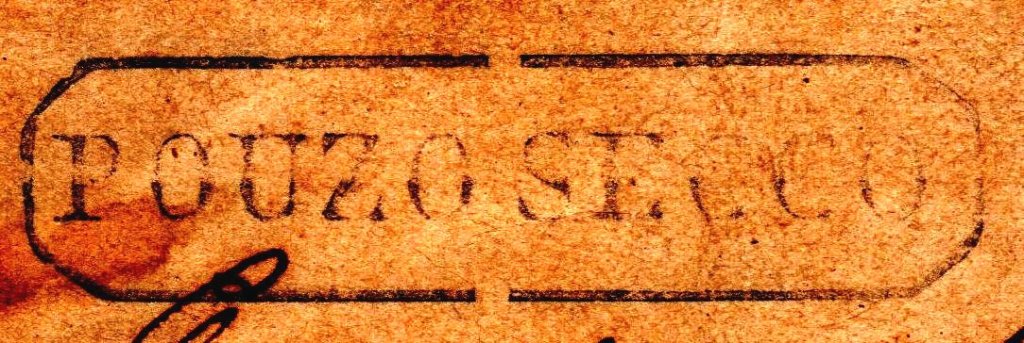
Die Hauptunterschiede zwischen den beiden Stempeln liegen im Rahmen und im Buchstaben E:
Es folgte der Doppelkreis PRJ-0810c, der bereits von P. Ayres in Catálogo de Carimbos Brasil-Império (S. Paulo, 1937, 1942) vorgestellt wurde:
R. Koester zeigte in Carimbologia XXXII eine schriftliche Entwertung von dort:
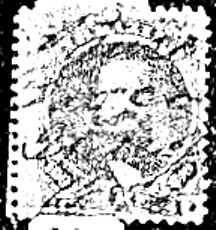
Schließlich haben James Dingler und Klerman W. Lopes auch einen stummen Poststempel aus Pouso Secco in Mute Cancellations of the Brazil Empire / Carimbos Mudos do Brasil Império (Brazil Philatelic Association, Rio de Janeiro, 2000) aufgeführt: