Categories
Carimbologia S

Santa Izabel, São Paulo (SSP-1295)

Atlas do Imperio do Brasil, 1868

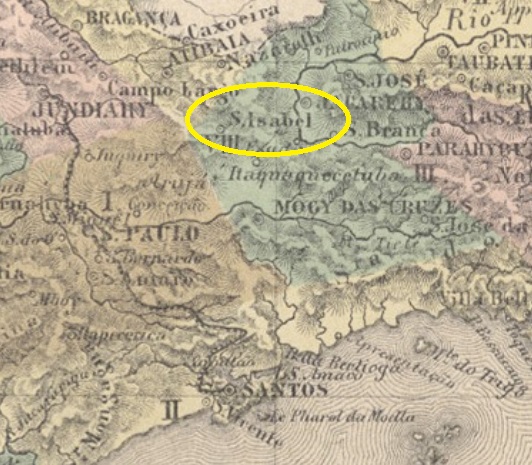
The freguesia of Santa Izabel was created in June 1812 in the municipality of Mogy das Cruzes, round 60 km northeast of the town of São Paulo. In June 1832 it emancipated as a villa, and became a town in May 1893.

According to Nova Monteiro (Administrações e Agencias Postaes do Brasil Imperio, in Brasil Filatelico/RJ, 1934-5; Reprint SPP 1994-1999) the local post office was created in November 1859. Since Roberto Baylongue inform us that this agency at the beginning has run with high deficit (http://www.abrafite.com.br/bibliotecad.htm), the earliest cancel, SSP-1295a (Coll. José A. Junges), would be quite rare: it only has the inscription SANTA IZABEL within an oval frame, was found on a D. Pedro issue of 1866 and is absent in Paulo Ayres (Catálogo de Carimbos Brasil-Império, S. Paulo, 1937, 1942). On the other side, Ayres presents a mute cancel from there under #71, which was allegedly found on a D. Pedro issue of 1876:

P. Ayres #71 (op. cit, pg.7)

There was also a French-type cancel from Santa Izabel, SSP-1295b (Baylongue, op.cit.): a double circle with the inscription SANTA ISABEL above and the typical star between parentheses below. Found on objects between 1878 and 1888.
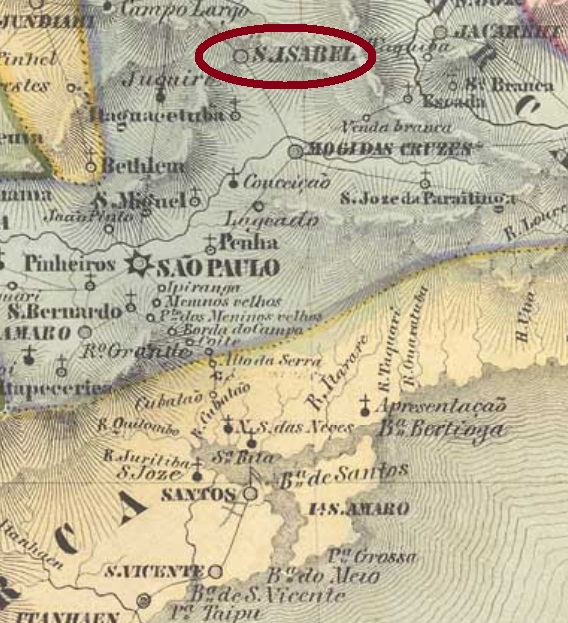
Villiers de l’Ile Adam: Carta (…) da Provincia de São Paulo, 1847

Die Freguesia von Santa Izabel wurde im Juni 1812 im Bezirk Mogy das Cruzes gegründet und lag rund 60 km nordöstlich von der Stadt São Paulo entfernt. Im Juni 1832 wurde daraus eine Villa, die im Mai 1893 zur Stadt erhoben wurde.

Laut Nova Monteiro (Administrações e Agencias Postaes do Brasil Imperio, in Brasil Filatelico/RJ, 1934-5; Reprint SPP 1994-1999) entstand das örtliche Postamt im November 1859. Da Roberto Baylongue berichtet, dass diese Agentur am Anfang tiefrote Zahlen schrieb (http://www.abrafite.com.br/bibliotecad.htm), sollte der älteste Stempel, SSP-1295a (Samml. José A. Junges), ziemlich selten sein: er zeigt lediglich SANTA IZABEL in einem ovalen Rahmen, wurde auf einer D. Pedro-Ausgabe vom 1866 gefunden und ist nicht im Paulo Ayres (Catálogo de Carimbos Brasil-Império, S. Paulo, 1937, 1942) vorhanden. Auf der anderen Seite, Ayres stellt uns einen stummen Stempel aus Santa Izabel unter Nr. 71 vor, der angeblich auf einer D. Pedro-Ausgabe von 1876 zu sehen war:

P. Ayres Nr. 71 (op. cit. S.7)

Darüber hinaus gibt es einen Santa Izabel-Stempel französischen Typs: SSP-1295b (Baylongue, op.cit.) hat einen Doppelkreis mit der Inschrift SANTA ISABEL oben und dem typischen Stern zwischen Klammern unten. Gefunden auf Objekten, die von 1878 bis 1888 datiert sind.
Categories
Carimbologia S

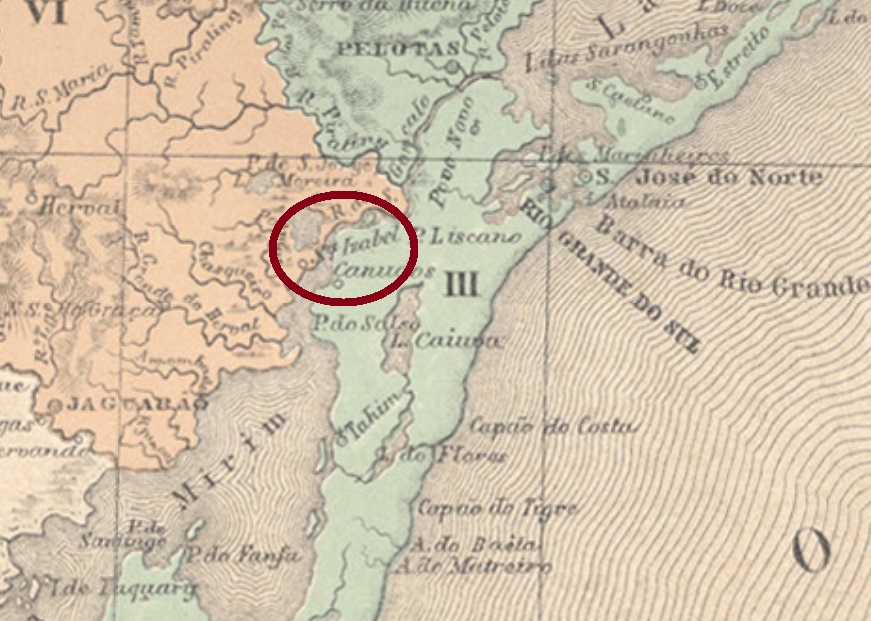
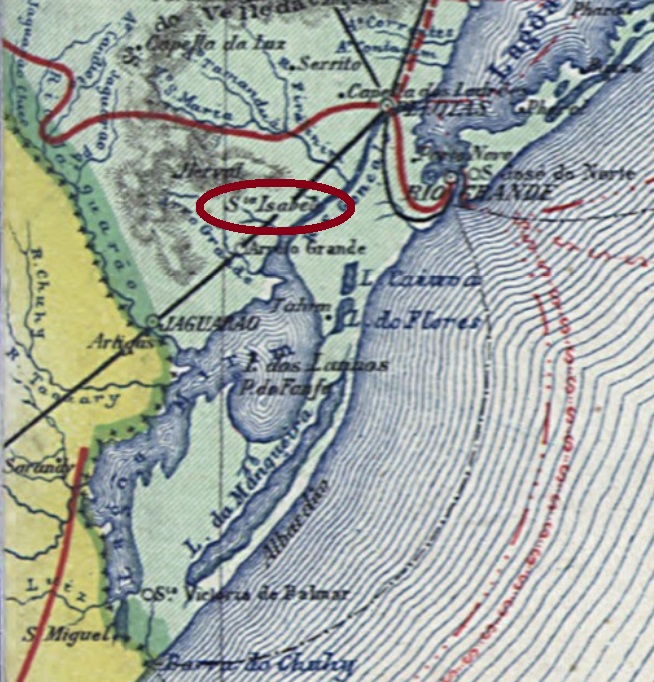
Santa Izabel, Rio Grande do Sul (SRS-0395)

Atlas do Imperio do Brasil, 1868

Santa Izabel was since July 1832 a district of the municipality of Jaguarão, situated over 300 km southwest of the province capital Porto Alegre. In March 1873 it passed to the newly formed municipality of Arroio Grande and was later emancipated as a villa during five years, between 1884 and 1889, before returning as a district to Arroio Grande. After that, the toponym has changed twice: in 1944 to Açoriano, and in November 1952, to the actual Santa Isabel do Sul.

Although there was a private mail service by coach (diligencia) operating regularly as early as 1863 in lines to Jaguarão, Rio Grande and Arroio Grande, the post office was created only in 1881, according to the Imperial Mail Register (Tabella das Agencias do Correio do Imperio ) of 1885. No imperial post cancel has appeared until now.

Carta da Republica dos Estados Unidos do Brazil, 1892

Santa Izabel war seit Juli 1832 ein Distrikt im Município von Jaguarão und lag über 300 km südwestlich der Provinzhauptstadt Porto Alegre entfernt. Im März 1873 wurde die Ortschaft ein Distrikt des neu gegründeten Município von Arroio Grande; später kam sogar ein kurzlebiges Dasein als emanzipierte Villa zwischen 1884 und 1889, bevor die Gemeinde nach Arroio Grande zurückkam. In der Zeit danach wurde Santa Izabel zweimal umbenannt: 1944 zu Açoriano und im November 1952, zum heutigen Santa Isabel do Sul.

Obwohl ein privater Postdienst durch Kutsche (diligencia) zumindest seit 1863 vorhanden war, der regelmäßige Linien nach Jaguarão, Rio Grande und Arroio Grande unterhielt, wurde das örtliche Postamt erst 1881 ins Leben gerufen, laut Verzeichnis der kaiserlichen Postämter (Tabella das Agencias do Correio do Imperio) von 1885. Bisher war kein Poststempel aus der Kaiserzeit zu sehen.

Categories
Carimbologia S

Santa Izabel/E.F. de Maricá (train station/Bahnhof), Rio de Janeiro (SRJ-1892)

agenciaspostais.com.br

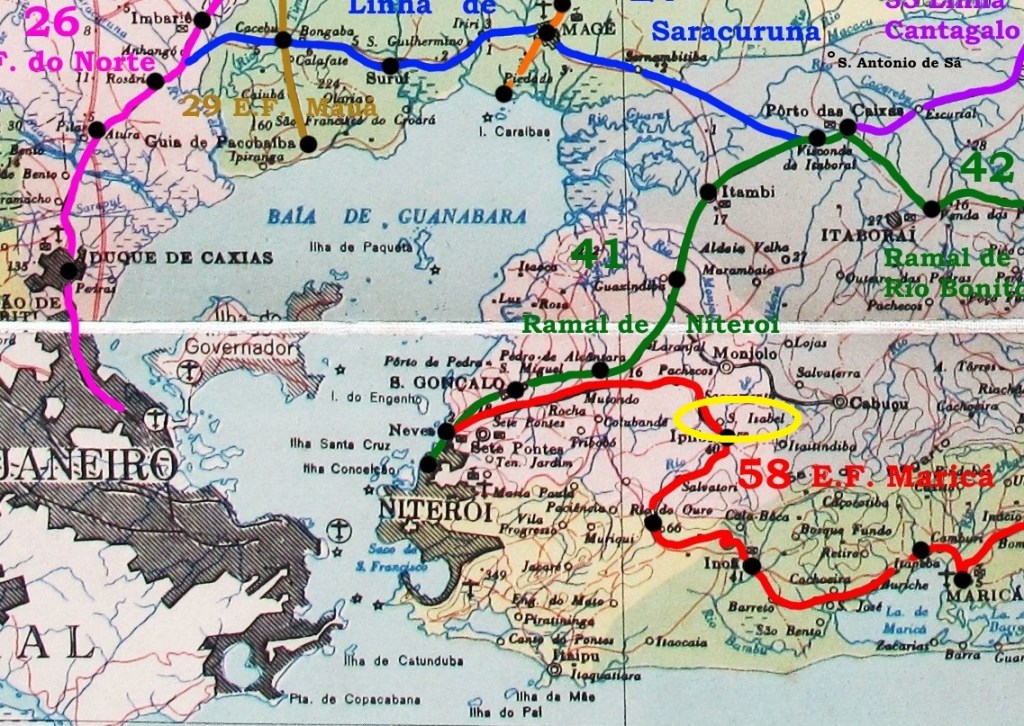
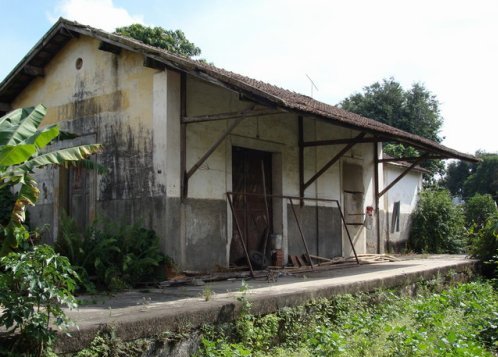
The Santa Izabel train station was built in November 1888 by the Estrada de Ferro de Maricá, Cabo Frio branch, in the municipality of São Gonçalo, round 40 km east of Rio de Janeiro. In 1913 the station name was changed to José Mariano. In 1943 the railway passed to the Estrada de Ferro Central do Brasil, and the station was renamed again, to Ipiíba. From 1960 until operation end in 1966, the railway belonged to the Estrada de Ferro Leopoldina. Now the tracks have been removed, and the station house seems abandoned (estacoesferroviarias.com.br).

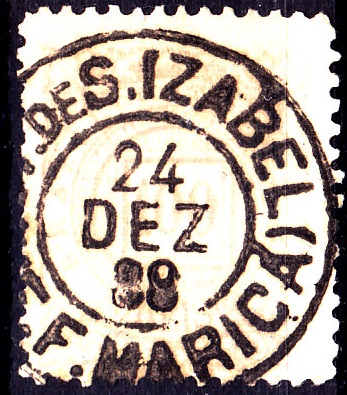
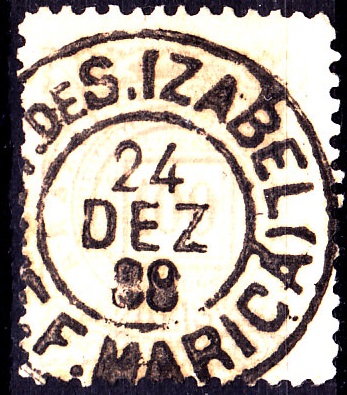
According to Paulo Novaes (agenciaspostais.com.br), the station post office was created in October 1889 and closed in October 1913. Indeed, the post office must have opened shortly after the station was inaugurated, for the earliest station post cancel, SRJ-1892a (Coll. Karlheinz Wittig), is clearly dated December 24, 1888, having been used at least until 1895:

SRJ-1892a (KW)
In 2010 (Photo: Cleiton Pieruccini, apud estacoesferroviarias.com.br)

Der Bahnhof Santa Izabel wurde im November 1888 durch die Estrada de Ferro de Maricá, Cabo Frio Abzweigung, im Município von São Gonçalo errichtet und lag rund 40 km östlich von Rio de Janeiro. Später wechselte die Station zweimal den Namen: 1913 zu José Mariano und 1943 zu Ipiíba. Auch 1943 ging die Bahnlinie in Besitz der Estrada de Ferro Central do Brasil über, und von 1960 bis Betriebsende 1966 gehörte sie der Estrada de Ferro Leopoldina. Nun wurden die Schienen entfernt, und das Bahnhaus scheint verwahrlost zu sein (estacoesferroviarias.com.br).

Laut Paulo Novaes (agenciaspostais.com.br) entstand das Bahnhofspostamt im Oktober 1889 und wurde im Oktober 1913 geschlossen. Tatsächlich müsste das Postamt doch kurz nach der Einweihung des Bahnhofs geöffnet haben, da der früheste Bahnhofsstempel, SRJ-1892a (Samml. Karlheinz Wittig), deutlich mit 24. Dezember 1888 datiert ist. Er wurde zumindest bis 1895 benutzt:

SRJ-1892a (KW)
Categories
Carimbologia S

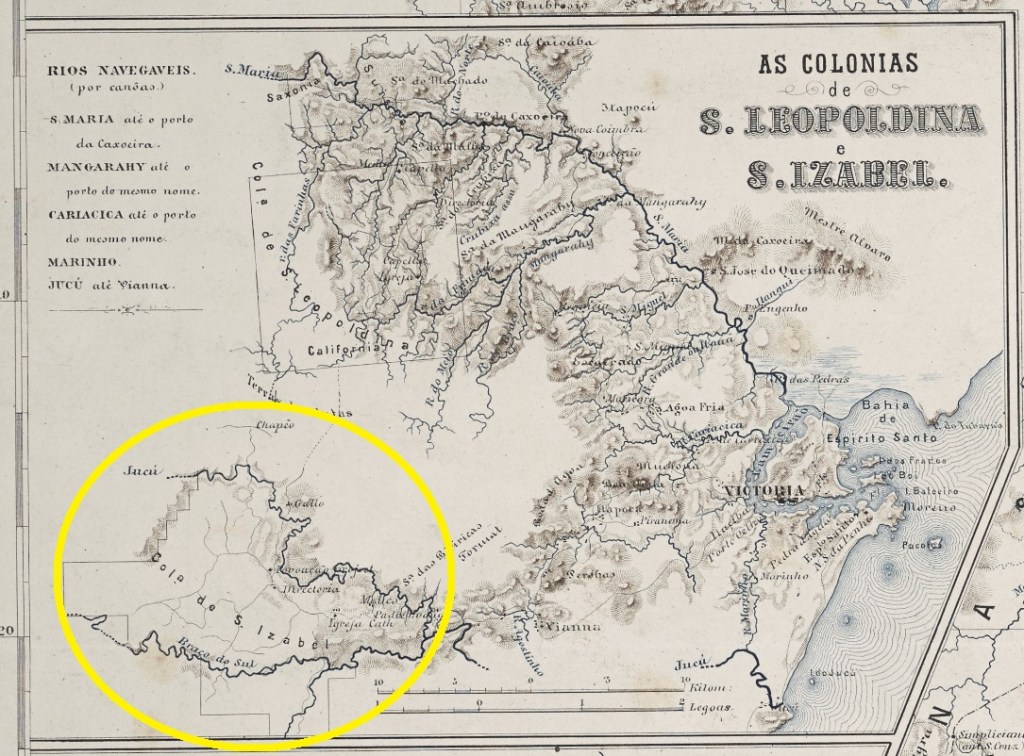
Santa Izabel, Espírito Santo (SES-0167)

Ch. Krauss: Mappa da Provincia do Espirito Santo, 1865

Other names: Colonia de Santa Izabel, Isabel (1943)

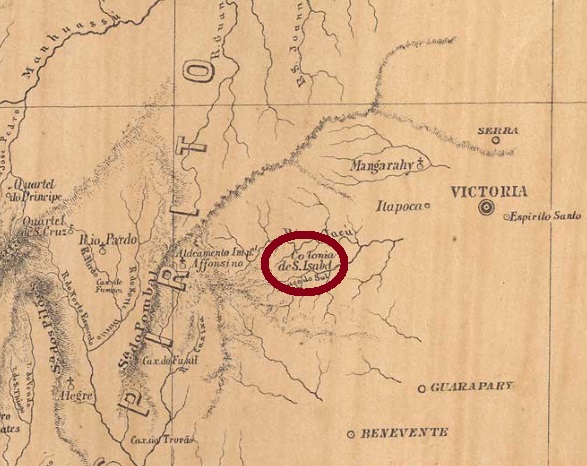
Santa Izabel was a colony of german catholics, established in January 1847 on the south bank of the Jucu River in the municipality of Vianna, under 50 km west of the province capital Victoria. In November 1869 it was made a freguesia, which later ascended twice to a villa, in 1891 and in 1893. In December 1921 it was made a district of the newly created municipality of Domingos Martins, and acquired a simplified name, the actual Isabel, in December 1943.

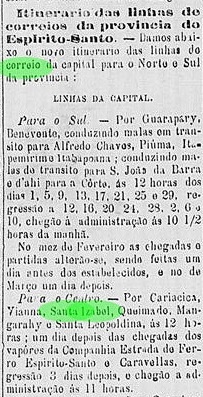
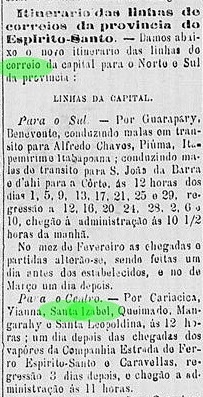
The local post office must have been created by May 1887, given that there was a regular mail line between the capital and Santa Izabel at that time:

O Espirito Santense, May 28, 1887

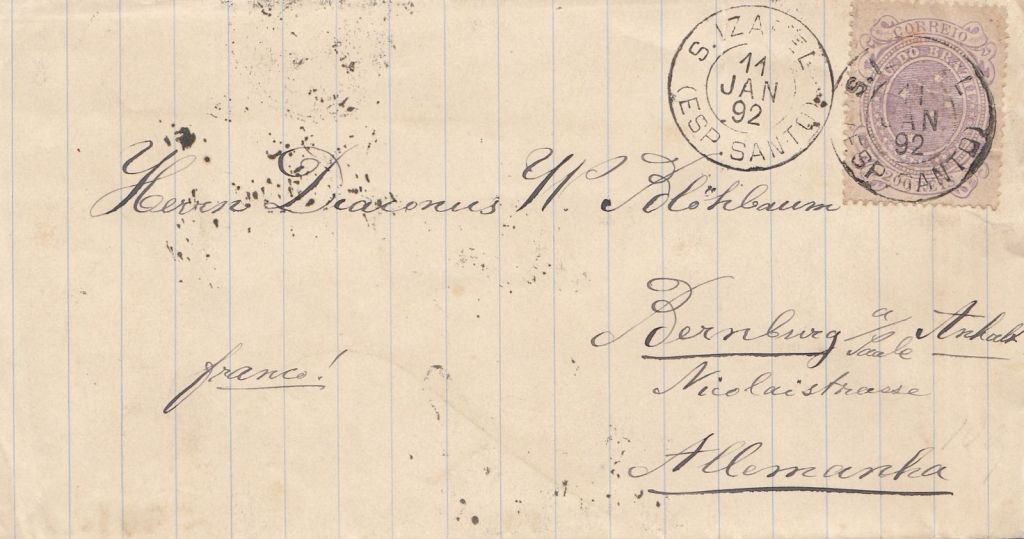
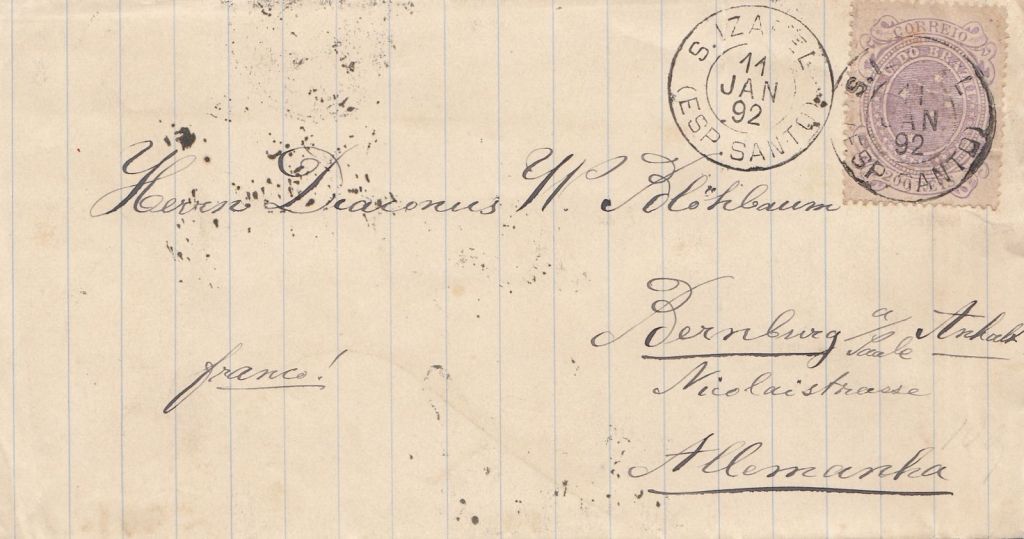
The only example of an early cancel, SES-0167a (image from the internet) was found on an envelope, dated January 1892:

SES-0167 (EB)
Minas Gerais e Espírito Santo, 1873

Andere Namen: Colonia de Santa Izabel, Isabel (1943)

Santa Izabel war eine Siedlung von deutschen katholischen Einwanderern, die im Januar 1847 am Südufer des Flusses Jucu im Município von Vianna gegründet wurde, unter 50 km westlich der Provinzhauptstadt Victoria gelegen. Im November 1869 wurde daraus eine Freguesia, die später zweimal zur Villa aufstieg, 1891 und 1893. Im Dezember 1921 wurde die Ortschaft ein Distrikt des neu gegründeten Município von Domingos Martins, der den einfachen Ortsnamen Isabel im Dezember 1943 erhielt.

Das örtliche Postamt wird wohl bis Mai 1887 entstanden sein, denn zu diesem Zeitpunkt gab es eine reguläre Postlinie zwischen der Hauptstadt und Santa Izabel:

O Espirito Santense, 28. Mai 1887

Die einzige Abbildung eines frühen Stempels aus Santa Izabel, SES-0167a (Bild aus dem Internet), wurde auf einem mit Januar 1892 datierten Umschlag gefunden:

SES-0167a (EB)
Categories
Carimbologia S

Santa Isabel (train station/Bahnhof), Minas Gerais (SMG-2855)

Estrada de Ferro Central do Brasil, 1890

Text Update of August 1, 2020

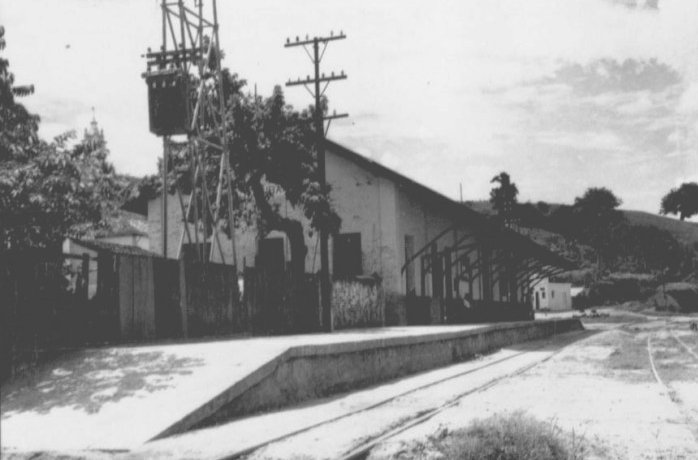
The Santa Isabel train station was inaugurated in May 1875 by the Estrada de Ferro Leopoldina railway in the municipality of Leopoldina, over 270 km southeast of the ancient province capital Ouro Preto. The settlement around the station was elevated to a district in November 1890. In ca. 1940 the district and the station were renamed Abaíba, a tupi word that means evil man. From 1975 until operation end in 1996, the rail line belonged to the Rede Ferroviária Federal SA. Nowadays the tracks still lie there, and the station house hosts a sewing store (estacoesferroviarias.com.br).

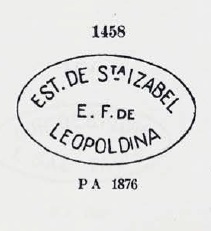
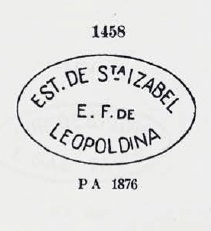
According to Paula Sobrinho (História Postal de Minas Gerais, Belo Horizonte, 1997), the station post office opened in November 1875, but given that the Imperial Mail Register (Tabella das Agencias do Correio do Imperio) of 1885 registers the year 1878, the office could have been closed in-between. The first station cancel, SMG-2855a, was already presented by Paulo Ayres (Catálogo de Carimbos Brasil-Império, S. Paulo, 1937, 1942) under #1458:

SMG-2855a, P.Ayres #1458

However, Ayres‘ image shows erroneously IZABEL, instead of the correct ISABEL. Found on D. Pedro emissions of 1866 and 1876. It was followed by SMG-2855b (Coll. José A. Junges), which has a double circle with the inscription EST. DE STA. IZABEL and the date inside. One single example was found in turquoise, dated 1885. SMG-2855c (Coll. Karlheinz Wittig) has also a double circle, now the inscription is S.ISABEL (ESTAÇÃO), with dates from 1885 to 1889 in the centre.

ca. 1958 (Photo: IBGE, apud estacoesferroviarias.com.br)

Textaktualisierung vom 1. August 2020

Der Bahnhof Santa Isabel wurde im Mai 1875 durch die Estrada de Ferro Leopoldina Bahngesellschaft im Município von Leopoldina eingeweiht und lag über 270 km südöstlich der ehemaligen Provinzhauptstadt Ouro Preto entfernt. Die Siedlung um den Bahnhof wuchs schnell und stieg im November 1890 zum Distrikt auf. Ca. 1940 wurden Distrikt und Bahnhof Abaíba umbenannt, ein Tupi-Begriff, der böser Mann bedeutet. Von 1975 bis zum Betriebsende 1996 gehörte die Bahnlinie der Rede Ferroviária Federal SA. Heute sind die Schienen noch da, und das Stationshaus dient als Nähwerkstätte (estacoesferroviarias.com.br).

Laut Paula Sobrinho (História Postal de Minas Gerais, Belo Horizonte, 1997) eröffnete das Bahnhofspostamt im November 1875, da aber das Verzeichnis der kaiserlichen Postämter (Tabella das Agencias do Correio do Imperio) von 1885 das Entstehungsjahr 1878 angibt, war das Postamt zwischendurch wohl geschlossen. Der erste Bahnhofsstempel, SMG-2855a, wurde bereits durch Paulo Ayres (Catálogo de Carimbos Brasil-Império, S. Paulo, 1937, 1942) unter #1458 vorgestellt:

SMG-2855a, P. Ayres 1458

Auf Ayres‘ Abbildung liest man dennoch IZABEL, anstatt der richtigen Schreibweise ISABEL. Anzutreffen auf D. Pedro-Ausgaben von 1866 und 1876. Ihm folgte SMG-2855b (Samml. José A. Junges), dieser hat einen Doppelkreis mit der Inschrift EST. DE STA. IZABEL und dem Datum in der Mitte. Ein einziges Exemplar in türkis gefunden, datiert 1885. SMG-2855c (Samml. Karlheinz Wittig): hat auch einen Doppelkreis; hier lautet die Inschrift S.ISABEL (ESTAÇÃO), mit Daten von 1885 bis 1889 in der Mitte.

Categories
Carimbologia S

Santa Ignacia (train station/Bahnhof), Rio de Janeiro (SRJ-1665)

Almanak Laemmert, 1892

See also Flores/RJ (Koester: Carimbologia XIX)

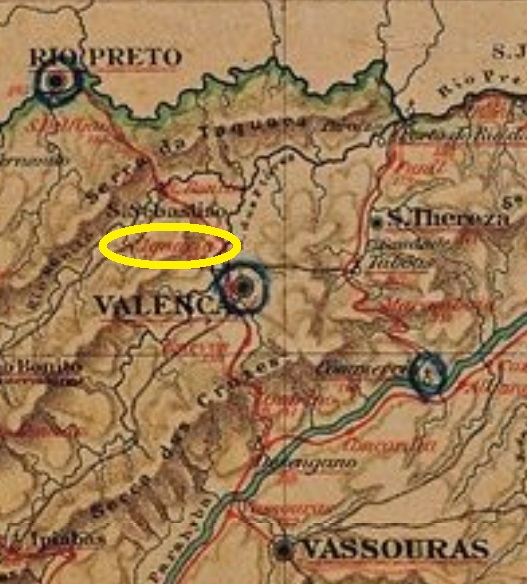
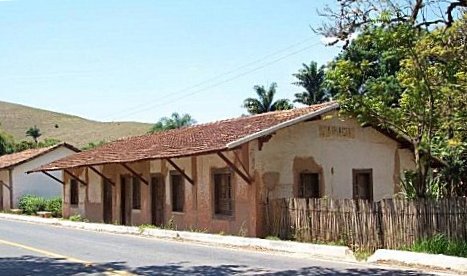
The Santa Ignacia train station was inaugurated in October 1879 under the name of Flores by the Cia. Estrada de Ferro Valenciana in the municipality of Valença, over 150 km northwest of Rio de Janeiro. Three years later the station name was changed to Santa Ignacia. From 1910 until operation end in 1970 the railway was managed by the Estrada de Ferro Central do Brasil. Now the tracks have been removed, and the station house is a private habitation (estacoesferroviarias.com.br).

According to Paulo Novaes (agenciaspostais.com.br), the station post office was created in July 1880, still under the name of Flores, and switched to Santa Ignacia from June 1882 on. One imperial cancel is known: SRJ-1665a (Coll. José A. Junges) has a double circle with the inscription E.DE SANTA=IGNACIA. and the date in the centre. Found for the period 1882-1893. For cancel images under Flores see R. Koester’s Carimbologia XIX.

In 2002 (Photo: Jorge A. Ferreira Jr, after estacoesferroviarias.com.br)

Siehe auch Flores/RJ (Koester: Carimbologia XIX)

Der Bahnhof Santa Ignacia wurde im Oktober 1879 unter den Namen Flores durch die Cia. Estrada de Ferro Valenciana eingeweiht und lag im Município vom Valença, über 150 km nordwestlich von Rio de Janeiro entfernt. Drei Jahre später wurde der Bahnhof zu Santa Ignacia umbenannt. Von 1910 bis Betriebsende 1970 stand die Linie unter der Kontrolle der Estrada de Ferro Central do Brasil. Nun sind die Schienen entfernt worden, und das Bahnhofsgebäude dient als Wohnung (estacoesferroviarias.com.br).

Laut Paulo Novaes (agenciaspostais.com.br) entstand das Bahnhofspostamt im Juli 1880, noch unter den Namen Flores, und wechselte zu Santa Ignacia ab Juni 1882. Ein Stempel der Kaiserzeit ist überliefert: SRJ-1665a (Samml. José A. Junges) hat einen Doppelkreis mit der Inschrift E.DE SANTA=IGNACIA. dazu das Datum in der Mitte. Gefunden für den Zeitraum 1882-1893. Für Flores-Abstempelungen siehe R. Koesters Carimbologia XIX.

Categories
Carimbologia S

Santa Helena (train station/Bahnhof), Minas Gerais (SMG-2851)

Almanak Laemmert, 1892

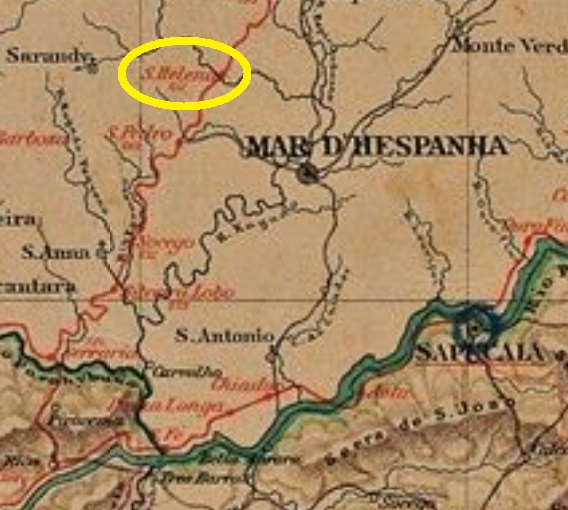
This Santa Helena train station has nothing to do with the Santa Helena post office presented before (SMG-2845). It was built in July (or September, after P. Sobrinho) 1879 by the Companhia União Mineira railway, Caratinga Line, in the municipality of Mar d’Hespanha, over 250 km south of the former province capital Ouro Preto. In 1884 the railway control passed to the Estrada de Ferro Leopoldina, and from 1975 until operation end in 1994, to the Rede Ferroviária Federal. In 1890 the station passed to the newly founded municipality of Guarará, and since 1925 it belongs to Bicas. Now the station house is demolished, and the tracks have been removed (estacoesferroviarias.com.br).

According to Paula Sobrinho (História Postal de Minas Gerais, Belo Horizonte, 1997), the station post office was created in July 1881. The Imperial Mail Guide (Guia Postal do Império) of 1880 refers to an earlier date (page VI), but since no confirming record has been found for that either in the press or through cancels, Paula Sobrinho’s input seems more reliable. A single imperial cancel is known: SMG-2851a (Coll. Karlheinz Wittig) occurs in black and blue and has a double circle with the inscription S.HELENA (ESTAÇÃO), with the date in the centre. Found within the period 1885-1891.

ca.1983 (Photo: Cassio Paulo Fernandes, apud estacoesferroviarias.com.br)

Dieser Bahnhof Santa Helena steht in keiner Beziehung zur vorhin vorgestellten gleichnamigen Ortschaft (SMG-2845). Er wurde im Juli (oder September, laut P. Sobrinho) 1879 durch die Companhia União Mineira Eisenbahngesellschaft gebaut und lag in der Caratinga-Linie, im Município von Mar d’Hespanha, über 250 km südlich der ehemaligen Provinzhauptstadt Ouro Preto entfernt. Die Bahnlinie ging 1884 zur Estrada de Ferro Leopoldina über und von 1975 bis Betriebsende 1994 gehörte sie der Rede Ferroviária Federal. Der Bahnhof stand ab 1890 im neu gegründeten Município von Guarará, und seit 1925 ist er im Município von Bicas. Nun ist das Bahnhaus abgerissen, und die Schienen wurden bereits entfernt (estacoesferroviarias.com.br).

Laut Paula Sobrinho (História Postal de Minas Gerais, Belo Horizonte, 1997) entstand das Bahnhofspostamt im Juli 1881. Zwar liest man im Kaiserlichen Postführer (Guia Postal do Império) von 1880 ein früheres Datum (auf Seite VI), aber dieses konnte weder durch die Presse noch durch Stempel bestätigt werden, und somit scheint Paula Sobrinhos Angabe zuverlässiger zu sein. Ein einziger Stempel der Kaiserzeit ist überliefert: SMG-2851a (Samml. Karlheinz Wittig) kommt in schwarz und blau vor und hat einen Doppelkreis mit der Inschrift S.HELENA (ESTAÇÃO), dazu das Datum in der Mitte. Anzutreffen im Zeitraum 1885-1891.

Categories
Carimbologia S

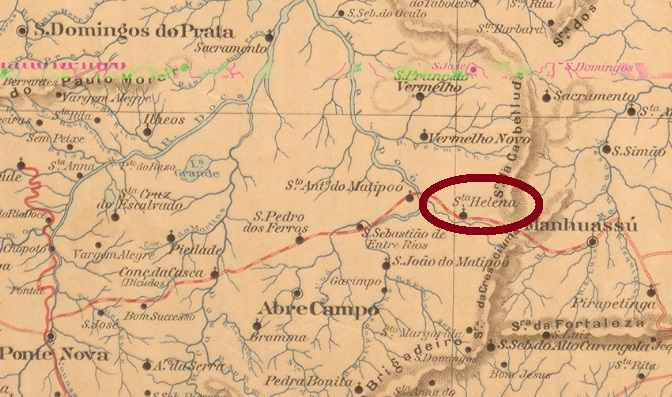
Santa Helena, Minas Gerais (SMG-2845)

Mappa de Minas Geraes, 1910

Other names: Santa Helena (Abre Campo), Santa Helena da Cabelluda, Santa Helena de Manhuassú, Amazonita, Caputira (1943)

Santa Helena was since November 1865 a district of the municipality of Ponte Nova, situated almost 200 km east of the province capital Ouro Preto. In November 1875 it was elevated to a freguesia and changed two years later to the newly founded municipality of Manhuassu. Since then, the toponym has changed three times: in September 1923 to Amazonita, in August 1927 back to Santa Helena, and in December 1943 to Caputira, an Indian word that means forest flower. Since December 1962 Caputira has an own municipality.

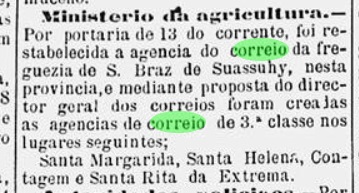
According to Paulo Sobrinho (História Postal de Minas Gerais, Belo Horizonte, 1997), the local post office was created in June 1881, which can be ratified by the regional press:

A Actualidade, June 18, 1881

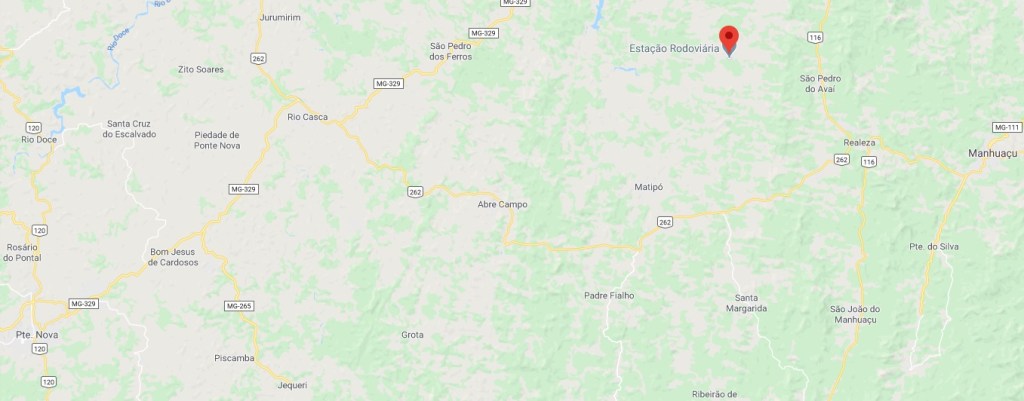
Oddly enough, the only known imperial cancel for this Santa Helena, SMG-2845a (Coll. José A. Junges), has a double circle with the inscriptions S. HELENA above and (ABRE CAMPO) below, a municipality to which Santa Helena has apparently never belonged. Given that such cancel specifications should not only avoid confusion with other localities of same name but also eventually facilitate mail shipping, probably the mail route to Santa Helena went through Abre Campo. The dates in the centre were found for the period 1885-1900.  

GoogleMaps

Andere Namen: Santa Helena (Abre Campo), Santa Helena da Cabelluda, Santa Helena de Manhuassú, Amazonita, Caputira (1943)

Santa Helena war seit November 1865 ein Distrikt des Município von Ponte Nova und lag fast 200 km östlich der Provinzhauptstadt Ouro Preto entfernt. Im November 1875 wurde die Ortschaft zu einer Freguesia ernannt, zwei Jahre später wechselte sie zum neu gegründeten Município von Manhuassu. Seitdem änderte sich der Orstname dreimal: im September 1923 zu Amazonita, im August 1927 wieder zurück zu Santa Helena, und im Dezember 1943 zu Caputira, ein indianisches Wort, das Waldblume bedeutet. Seit Dezember 1962 ist Caputira ein eigener Município.

Laut Paulo Sobrinho (História Postal de Minas Gerais, Belo Horizonte, 1997) entstand das örtliche Postamt im Juni 1881, was durch die Regionalpresse bestätigt werden kann:

A Actualidade, 18. Juni 1881

Merkwürdigerweise zeigt der einzig bekannte Stempel des Kaiserreichs für diese Ortschaft, SMG-2845a (Samml. José A. Junges) einen Doppelkreis mit den Inschriften S. HELENA oben und (ABRE CAMPO) unten. Nun ist es aber nicht bekannt, dass Santa Helena jemals im Município von Abre Campo lag. Da aber solche Anmerkungen auf den Stempeln nicht nur Verwechslungen vermeiden, sondern auch gelegentlich Hinweise über den Postweg geben sollten, möglicherweise ging Letzterer über Abre Campo. Die Daten in der Mitte des Stempels stammen aus dem Zeitraum 1885-1900.  

Categories
Carimbologia S

Santa Helena, Maranhão (SMA-0250)

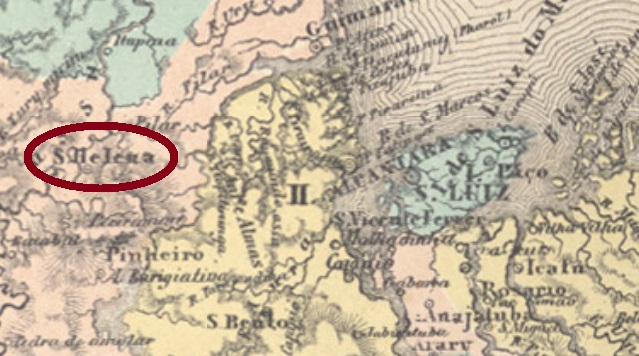
Atlas do Imperio do Brasil, 1868

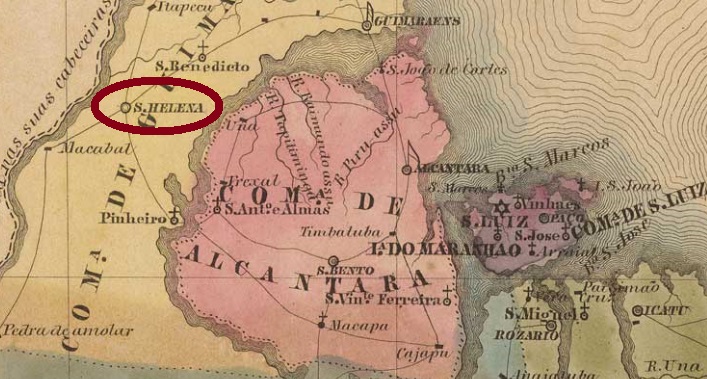
Santa Helena in the Maranhão province was since May 1835 a district of the municipality of Guimarães, situated on the east bank of the Turiaçu River, over 150 km west of the province capital São Luís. In June 1838 it was already declared a villa, but after that the locality has developed slowly, and in April 1932 it became a district of Pinheiro. Finally, in September 1935 it recovered the actual municipality status.

According to Nova Monteiro (Administrações e Agencias Postaes do Brasil Imperio, in Brasil Filatelico/RJ, 1934-5; Reprint SPP 1994-1999), the local post office was created in February 1860; this year is confirmed by the Imperial Mail Register (Tabella das Agencias do Correio do Imperio) of 1885. One cancel from the late Empire is known, of uncertain attribution: SMA-0250b (Coll. Karlheinz Wittig) has a double circle with the inscription SANTA HELENA above. The dates in the centre are occasionally missing, they were found for the period ca.1878-1885.

Villiers de l’Ile Adam: Carta (…) da Provincia do Maranhão. 1850

Santa Helena in der Provinz Maranhão war seit Mai 1835 ein Distrikt im Municipio vom Guimarães, der am Ostufer des Flusses Turiaçu, über 150 westlich von der Provinzhauptstadt São Luís entfernt lag. Bereits im Juni 1838 wurde daraus eine Villa, danach aber entwickelte sich die Ortschaft langsam, so dass sie im April 1932 wieder ein Distrikt wurde, diesmal von Pinheiro. Erst im September 1935 erhielt Santa Helena den bis heute gültigen Município-Status.

Laut Nova Monteiro (Administrações e Agencias Postaes do Brasil Imperio, in Brasil Filatelico/RJ, 1934-5; Reprint SPP 1994-1999) gibt es dort ein Postamt seit Februar 1860. Diese Jahresangabe wird durch das Verzeichnis der kaiserlichen Postämter (Tabella das Agencias do Correio do Imperio) aus 1885 bestätigt. Ein Stempel aus der Spätzeit im Kaiserreich ist überliefert, dessen Zuordnung noch nicht zweifelsfrei steht: SMA-0250b (Samml. Karlheinz Wittig) hat einen Doppelkreis mit der Inschrift SANTA HELENA oben. Das Datum in der Mitte kann gelegentlich fehlen, die Abstempelungen entstammen dem Zeitraum ca.1878-1885.

Categories
Carimbologia S

Santa Fé de Macabu (train station/Bahnhof), Rio de Janeiro (SRJ-2235)

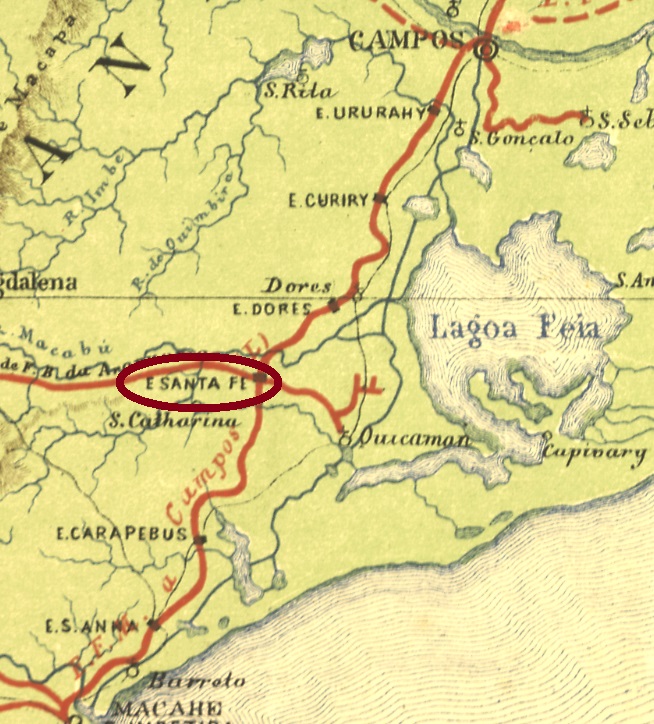
Estrada de Ferro Central do Brasil, 1890

See also Entroncamento (R. Koester: Carimbologia XVII)

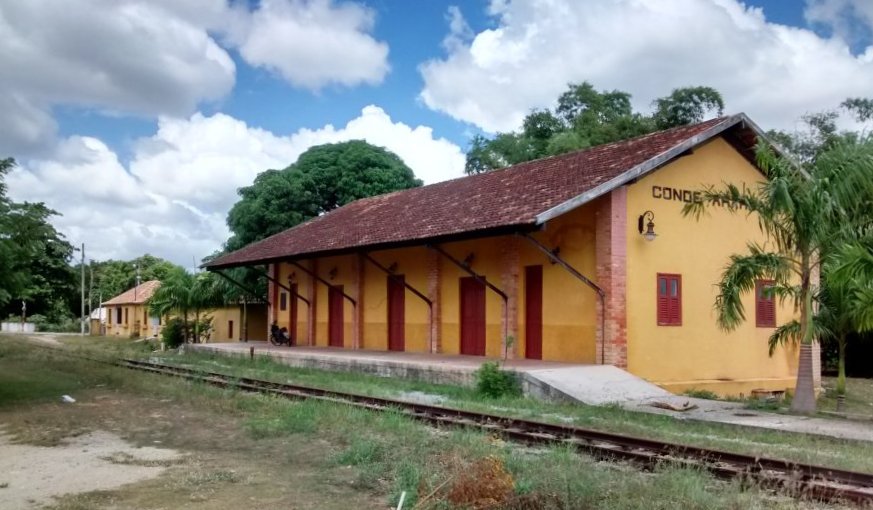
The Santa Fé de Macabu (or simply Santa Fé) train station was built in 1875 by the Estrada de Ferro de Macaé a Campos in the municipality of Quissaman, over 200 km northeast of Rio de Janeiro. Three years later, it moved two kilometers away, to stay directly at the crossing with the Santa Maria Magdalena railway branch. For this reason, the station was renamed as Entroncamento (= crossing) in December 1886, and changed the name again in August 1897, to Conde de Araruama. The railway control changed too, in 1887 to the Estrada de Ferro Leopoldina, and from 1975 until operation end in 1996, to the Rede Ferroviária Federal S.A. The station house is nowadays a restaurant.

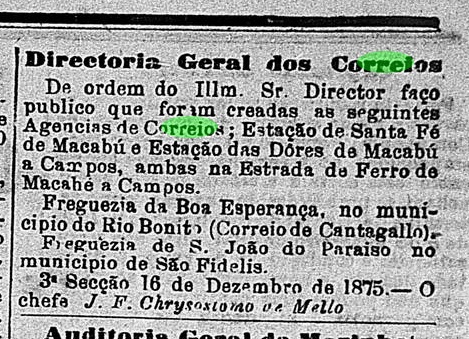
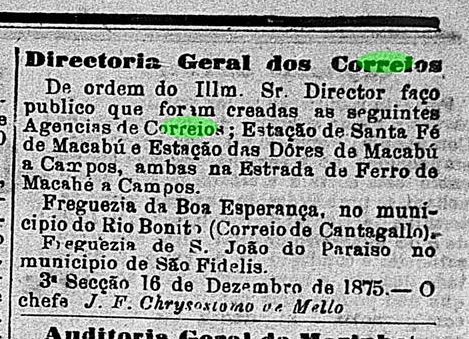
The station post office was created in December 1875, as noticed by the Rio press:

O Globo, December 17, 1875

One imperial cancel is known: SRJ-2235a (image from the internet) has a double circle with the inscription STA. FÉ de MACABÚ above and the date in the centre. Found within the years 1881-1890. Later cancels show ENTRONCAMENTO (see R. Koester: Carimbologia XVII).

In 2017 (Photo Leandro Santos, apud estacoesferroviarias.com.br)

Der Bahnhof Santa Fé de Macabu (oder einfach Santa Fé) wurde 1875 durch die Estrada de Ferro de Macaé a Campos im Município von Quissaman erbaut und lag über 200 km nordöstlich von Rio de Janeiro entfernt. Drei Jahre später zog er 2 km weiter nördlich, dadurch lag er direkt an der Linienkreuzung mit der Abzweigung nach Santa Maria Magdalena. Deswegen wurde der Bahnhof im Dezember 1886 Entroncamento (= Kreuzung) umbenannt. Er wechselte abermals den Namen im August 1897 und hieß fortan Conde de Araruama. Die Bahnlinie wechselte ebenfalls: 1887 zur Estrada de Ferro Leopoldina, und von 1975 bis Betriebsende 1996, zur Rede Ferroviária Federal S.A. Heute wird das Bahnhofsgebäude als Restaurant benutzt.

Das Bahnhofspostamt entstand im Dezember 1875, wie die Presse aus Rio berichtet:

O Globo, 17. Dezember 1875

Ein Stempel aus der Kaiserzeit ist überliefert: SRJ-2235a (Abb. aus dem Internet) hat einen Doppelkreis mit der Inschrift STA. FÉ de MACABÚ oben und dem Datum in der Mitte. Anzutreffen 1881-1890. Spätere Stempel zeigen bereits ENTRONCAMENTO (siehe R. Koester: Carimbologia XVII).