Categories
Carimbologia H-L

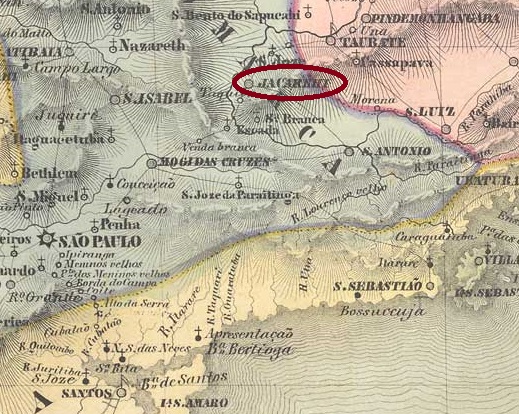
Imperatriz, Ceará (ICE-0165)

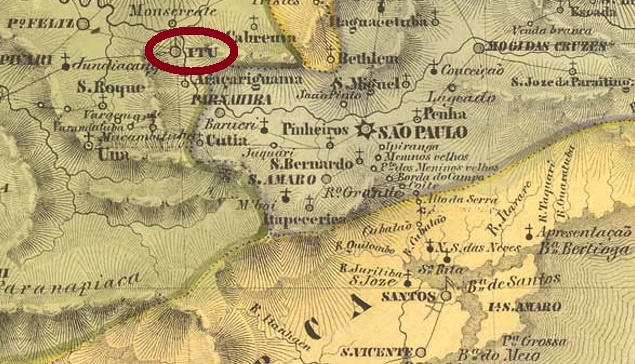
Atlas do Imperio do Brasil, 1868

Other names: Arraial de São José, Vila Velha, Itapipoca

From April 1744, this place was the Arraial de São José, which belonged to the Vila de Fortaleza, although it was 150 kilometres to the west. In February 1823, it was renamed Vila da Imperatriz for the first time in honour of the new empress. Two weeks after the proclamation of the republic, in December 1889, the empress was forgotten, and the Vila was henceforth called Itapipoca. The Indian word means bursting stone. Itapipoca has been a city since August 1915.

As R. Koester writes in Carimbologia XXII, there had been a post office there since July 1846.

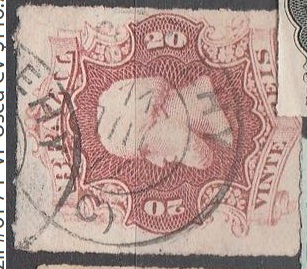
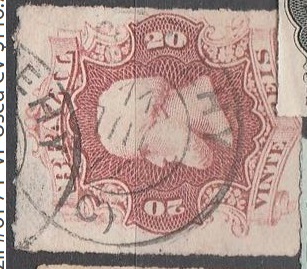
So far, no imperial postmark could be assigned to this place with certainty.

Villiers de l’Ile Adam: Carta (…) da Provincia do Ceara, 1849

Andere Namen: Arraial de São José, Vila Velha, Itapipoca

Seit April 1744 war dieser Ort der Arraial de São José, der zur Vila de Fortaleza gehörte, obwohl er 150 km westlich lag. Im Februar 1823 erfolgte die erste Umbenennung in Vila da Imperatriz zu Ehren der neuen Kaiserin. Zwei Wochen nach der Ausrufung der Republik, im Dezember 1889, war die Kaiserin vergessen und die Vila hieß fortan Itapipoca. Das indianische Wort bedeutet zerplatzender Stein. Seit August 1915 ist Itapipoca eine Stadt.

Wie R. Koester in Carimbologia XXII schreibt, gab es dort seit Juli 1846 ein Postamt.

Bisher konnte kein kaiserlicher Poststempel mit Sicherheit diesem Ort zugeordnet werden.

Categories
Carimbologia H-L

Imperatriz, Alagoas (IAL-0075)

Villiers de l’Ile Adam: Carta (…) das Provincias de Pernambuco, Alagoas e Sergipe, 1848

Other names: Santa Maria Magdalena, União, União dos Palmares

See also Villa Nova da Imperatriz (VAL-0075)

The former freguesia of Santa Maria Magdalena was located near the vila of Atalaia on the east bank of the river Mundaú, 75 km northwest of the later provincial capital Maceió. In October 1831, the place became Villa Nova da Imperatriz. In July 1876, it was downgraded to the district of Atalaia, but regained villa status nine years later and became a town in August 1889. After the military coup that introduced the Republic, the empress was not even tolerated as a place name, and the town was renamed União (Unity) in September 1890. Since December 1943, it has been the Municipio of União dos Palmares, in memory of the quilombo (refuge for escaped slaves) that existed there from 1580 to 1694.

Three periods of operation for the local post office were found. A first opening is said to have taken place around 1835, as Aldo Cardoso writes in Contribuição para a História dos Correios de Alagoas (Maceió, 1969). The second period began in 1845, as both Cardoso and the Directory of Imperial Post Offices (Tabella das Agencias do Correio do Imperio, Rio de Janeiro, 1885) record, and ended in October 1847, according to the Official Press in Rio:

Gazeta Official/RJ, 13/10/1847

The agency was created for the third time in November 1859, according to a report by the Imperial Ministry:

Boletim do Ministerio do Imperio, 14/11/1859

The oldest postmark here so far is IAL-0075a, which was given the no. 1.318 by P. Ayres in the Catálogo de Carimbos Brasil-Império (S. Paulo, 1937, 1942). R. Koester wrote in Carimbologia that this stamp belonged to Imperatriz in Rio Grande do Norte (IRN-0090) or Ceará (ICE-0165). However, Henrique B. Ferreira in Catálogo ilustrado dos carimbos sobre os olhos-de-boi (4a. ed., Porto Alegre, 2017) pictured the cancel under a date of 1845, which was only possible in Alagoas at the time.

IAL-0075a (P.A. 1318, HBF) 1845ff

The next postmark is still to be confirmed. It bears below a (I), and since the Imperatriz post office in Alagoas is both alphabetically and chronologically the first of the four places of the same name in north-east Brazil, IAL-0075b (coll. Fuad Ferreira Fo.) is provisionally listed here:

IAL-0075b (FF) 1885-1886
Atlas do Imperio do Brasil, 1868

Andere Namen: Santa Maria Magdalena, União, União dos Palmares

Siehe auch Villa Nova da Imperatriz (VAL-0075)

Die ehemalige Freguesia von Santa Maria Magdalena lag bei der Vila von Atalaia am Ostufer des Flusses Mundaú, 75 km nordwestlich der Provinzhauptstadt Maceió. Im Oktober 1831 wurde der Ort zur Villa Nova da Imperatriz. Im Juli 1876 wurde die Villa zum Distrikt von Atalaia herabgestuft, erlangte aber neun Jahre später den Villa-Status wieder und wurde im August 1889 eine Stadt. Nach dem Militärputsch, der die Republik einführte, wurde die Kaiserin nicht mal als Ortsbezeichnung toleriert, und die Stadt wurde im September 1890 zu União (Eintracht) umbenannt. Seit Dezember 1943 ist es der Municipio von União dos Palmares, in Erinnerung an den Quilombo (Zufluchtstätte für geflohene Sklaven), der dort von 1580 bis 1694 existierte.

Drei Betriebsperioden fürs örtliche Postamt wurden gefunden. Eine erste Eröffnung soll ca. 1835 stattgefunden haben, wie Aldo Cardoso in Contribuição para a História dos Correios de Alagoas (Maceió, 1969) schreibt. Die zweite Periode fing 1845 an, wie sowohl Cardoso als auch das Verzeichnis der kaiserlichen Postämter (Tabella das Agencias do Correio do Imperio, Rio de Janeiro, 1885) registrieren, und endete im Oktober 1847, wie aus der Amtspresse in Rio hervorgeht:

Gazeta Official/RJ, 13.10.1847

Die Agentur wurde im November 1859 zum dritten Mal ins Leben gerufen, laut Bericht des Imperialministeriums:

Boletim do Ministerio do Imperio, 14.11.1859

Der bisher älteste Stempel hier ist IAL-0075a, der von P. Ayres die Nr. 1.318 im Catálogo de Carimbos Brasil-Império (S. Paulo, 1937, 1942) erhielt. R. Koester schrieb in Carimbologia, dass dieser Stempel zu Imperatriz in Rio Grande do Norte (IRN-0090) oder Ceará (ICE-0165) gehörte. Allerdings hat Henrique B. Ferreira in Catálogo ilustrado dos carimbos sobre os olhos-de-boi (4a. ed., Porto Alegre, 2017) den Stempel mit einer Datierung von 1845 abgebildet, was damals nur in Alagoas möglich war.

IAL-0075a (P.A. 1318, HBF) 1845ff

Der nächste Poststempel ist noch zu bestätigen. Er trägt unten eine (I), und da das Postamt Imperatriz in Alagoas sowohl alphabetisch als auch chronologisch an erster Stelle der vier gleichnamigen Orte im Nordosten Brasiliens steht, wird hier vorläufig IAL-0075b (Samml. Fuad Ferreira Fo.) aufgeführt:

IAL-0075b (FF) 1885-1886
Categories
Carimbologia H-L

Imboassica (train station/Bahnhof), Rio de Janeiro (IRJ-0625)

Almanak Laemmert, 1892

Imboassica station was opened in November 1888 by the railway company E.F. Leopoldina (Ramal de Rio Bonito) and was located on the northern shore of Lake Imboassica in the Município Barra de S. João, 180 km north-east of the capital Rio de Janeiro. The area around the railway station belonged to the Município de Indaiassú from December 1901, to the Município de Casimiro de Abreu from March 1938 and to the district of Rio das Ostras from March 1970, which has been an independent Município since April 1992. The line belonged to Rede Ferroviária Federal S.A. from 1975 until its closure in 1996, as R. Giesbrecht writes on estacoesferroviarias.com.br. The tracks are still there today, but the station building was demolished around 2013.

In July 2014 (Photo: Sydney Correia, on estacoesferroviarias.com.br)

According to R. Koester (Carimbologia XXII), there had been a post office at the station since January 1889, which is confirmed by the press in Rio:

Cidade do Rio, 09.01.1889

The oldest postmark to date is IRJ-0625a (illus. Luiz C. Fritzen):

IRJ-0625a (LCF) 1897

Koester (op. cit.) also shows a postmark with the imperial seal IRJ-0625b:

IRJ-0625b (RK)
Estrada de Ferro Leopoldina

Der Bahnhof Imboassica wurde im November 1888 von der Eisenbahngesellschaft E.F. Leopoldina (Ramal de Rio Bonito) eröffnet und lag am Nordufer des Imboassica-Sees im Município Barra de S. João, 180 km nordöstlich der Hauptstadt Rio de Janeiro. Das Gebiet um den Bahnhof gehörte ab Dezember 1901 zum Município de Indaiassú, ab März 1938 zum Município de Casimiro de Abreu, ab März 1970 zum Distrikt Rio das Ostras, der seit April 1992 ein eigenständiges Município ist. Die Strecke gehörte von 1975 bis zur Stilllegung 1996 der Rede Ferroviária Federal S.A., wie R. Giesbrecht auf estacoesferroviarias.com.br schreibt. Heute sind die Gleise noch vorhanden, das Bahnhofsgebäude wurde um 2013 abgerissen.

Im Juli 2014 (Foto: Sydney Correia, auf estacoesferroviarias.com.br)

Laut R. Koester (Carimbologia XXII) gab es seit Januar 1889 ein Postamt am Bahnhof, was von der Presse in Rio bestätigt wird:

Cidade do Rio, 09.01.1889

Der bisher älteste Poststempel ist IRJ-0625a (Abb. Luiz C. Fritzen):

IRJ-0625a (LCF) 1897

Koester (op. cit.) zeigt auch einen Stempel mit dem kaiserlichen Siegel IRJ-0625b:

IRJ-0625b (RK)
Categories
Carimbologia H-L

Icarahy, Rio de Janeiro (IRJ-0595)

Mappa do Municipio Neutro, ca. 1880

The chapel of Sant’Anna de Icarahy was idyllically situated on the beach in a suburb of Vila de Niterói, 20 kilometres east of the imperial capital of Rio de Janeiro. Icaraí (as it is now spelt) became a separate distrito in May 1892, but lost this status in March 1938 and has been a district of the city of Niterói ever since.

R. Koester writes in Carimbologia XXII that there has been a post office there since 1881, P. Novaes (agenciaspostais.com.br) states ‘ca. 1875’. In the meantime, an earlier date for the founding of the local postal agency has been found in the regional press:

Jornal do Commercio, 16/04/1872

The only imperial postmark to date is IRJ-0595a (Fig. Felipe Piccinini):

IRJ-0595a (FP) 1877ff-1880
Almanak LAemmert, 1892

Die Kapelle Sant’Anna de Icarahy lag idyllisch am Strand in einem Vorort der Vila de Niterói, 20 km östlich der kaiserlichen Hauptstadt Rio de Janeiro. Icaraí (wie es heute geschrieben wird) wurde im Mai 1892 ein eigener Distrito, verlor diesen Status aber im März 1938 und ist seitdem ein Stadtteil der Großstadt Niterói.

R. Koester schreibt in Carimbologia XXII, dass es dort seit 1881 ein Postamt gab, P. Novaes (agenciaspostais.com.br) gibt dafür „ca. 1875“ an. Inzwischen wurde in der regionalen Presse ein früheres Datum für die Gründung der örtlichen Postagentur gefunden:

Jornal do Commercio, 16.04.1872

Der bisher einzige kaiserliche Poststempel ist IRJ-0595a (Abb. Felipe Piccinini):

IRJ-0595a (FP) 1877ff-1880
Categories
Carimbologia H-L

Imbituba, Santa Catarina (ISC-0120)

Atlas do Imperio do Brasil, 1868

Other names: Villa Nova de Sant’Anna, Henrique Lage, Imbitiba

The indigenous word Imbituba means many Imbés. This plant (Philodendron imbe) was also sacred to the Indians because it embodied strength, resistance and protection.

Philodendron imbe (on maniadeplantas.com.br)

The history of the village of Imbituba is inextricably linked to the Freguesia of Villa Nova de Sant’Anna, which began in 1811, belonged to the Vila of Laguna and was located barely 100 km south of the later provincial capital Desterro (now Florianópolis). In January 1927, the place was designated a district called Imbituba. After that, the place name changed four times: back to Villa Nova (1930), then to Henrique Lage (1949), in honour of the founder (1881-1941) of the port there. But the name Imbituba returned twice: in 1938 and 1959.

After the establishment of the post office in Vila Nova in May 1881, a post office was also set up in Imbituba in April 1882, as Luiz. C. Fritzen writes in Agências Postais da Província de Santa Catharina durante o Império Brasileiro (Boletim da AFSC no. 56, Florianópolis, 2007). This is confirmed by the press in Rio:

Jornal do Commercio/RJ, 25/04/1882

The oldest postmark to date is probably not the first. ISC-0120b (image from the Internet) was found with a date from 1906:

ISC-0120b (EB) 1906

After the opening of the E.F. Dona Teresa Christina railway station in September 1884, the local post office probably moved there.

Estado de Santa Catharina, 1907

Andere Namen: Villa Nova de Sant’Anna, Henrique Lage, Imbitiba

Das indigene Wort Imbituba bedeutet viele Imbés. Diese Pflanze (Philodendron imbe) war auch den Indanern heilig, denn sie verkörperte Kraft, Widerstand und Schutz.

Philodendron imbe (auf maniadeplantas.com.br)

Die Geschichte der Ortschaft Imbituba ist untrennbar mit der Freguesia von Villa Nova de Sant’Anna verbunden. Diese entstand 1811 bei der Vila von Laguna und lag knapp 100 km südlich der späteren Provinzhauptstadt Desterro (heute Florianópolis) entfernt. Im Januar 1927 wurde der Ort zu einem Distrikt namens Imbituba ernannt. Danach wechselte der Ortsname viermal: zurück zu Villa Nova (1930), dann zu Henrique Lage (1949), zu Ehren vom Gründer (1881-1941) des dortigen Hafens. Aber der Name Imbituba kehrte zweimal zurück: 1938 und 1959.

Nach der Entstehung des Postamts in Vila Nova im Mai 1881, wurde im April 1882 auch ein Postamt in Imbituba ins Leben gerufen, wie Luiz. C. Fritzen in Agências Postais da Província de Santa Catharina durante o Império Brasileiro (Boletim da AFSC no. 56, Florianópolis, 2007) schreibt. Dies wird von der Presse in Rio bestätigt:

Jornal do Commercio/RJ, 25.04.1882

Der bisher älteste Poststempel ist vermutlich nicht der erste. ISC-0120b (Abb. aus dem Internet) wurde mit einem Datum aus 1906 gefunden:

ISC-0120b (EB) 1906

Nach der Eröffnung des Bahnhofs der E.F. Dona Teresa Christina im September 1884 zog das örtliche Postamt vermutlich dorthin um.

Categories
Carimbologia H-L

Imbetiba (train station/Bahnhof), Rio de Janeiro (IRJ-1775)

Almanak Laemmert, 1892

Imbetiba station was opened in June 1873 by the railway company E.F. Macaé e Campos, Imbetiba branch, and was located almost on the beach in the Município Macaé, 190 km north-east of the capital Rio de Janeiro. The railway line went to E.F. Leopoldina around 1890 and belonged to Rede Ferroviária Federal S.A. from 1975 until its closure in 1996 (estacoesferroviarias.com.br). Today, the tracks have disappeared, the entire harbour facility belongs to the oil giant Petrobras and it is not known what has become of the former railway station.

Around 1940 (Photo Ricardo Q. de Matos, on estacoesferroviarias.com.br)

As Paulo Novaes writes on agenciaspostais.com, there had been a post office in the station since August 1875, which was closed for the first time in July 1897. The oldest postmark to date is IRJ-1775a (Image: Fuad Ferreira Fo.) 1882-1885

IRJ-1775a (FF) 1882-1885

Two very similar postmarks followed: IRJ-1775b (Image: R. Koester, in Carimbologia XXII) and IRJ-1775c (Image: Felipe Piccinini):

IRJ-1775b (RK) 1884-1885
IRJ-1775c (FP) 1885-1887

R. Koester showed in Carimbologia XXII two postmarks with the imperial seal, IRJ-1775d (Image: R. Koester – Felipe Piccinini) and IRJ-1775e (R. Koester):

IRJ-1775d (RK-FP) 1875ff
IRJ-1775e (RK)

James Dingler and Klerman W. Lopes have listed two mute cancellations of Imbetiba in Mute Cancellations of the Brazil Empire / Carimbos Mudos do Brasil Império (Brazil Philatelic Association, Rio de Janeiro, 2000):
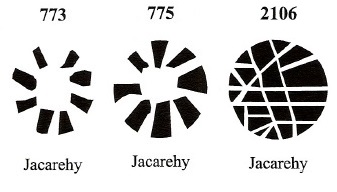
BPA 3419 (1883ff) – 3426 (P.A. 116, 1883ff)
E. F. Leopoldina

Der Bahnhof Imbetiba wurde im Juni 1873 von der Eisenbahngesellschaft E.F. Macaé e Campos, Imbetiba- Zweig eröffnet und lag fast am Strand im Município Macaé, 190 km nordöstlich der Hauptstadt Rio de Janeiro. Die Bahnlinie ging um 1890 an die E.F. Leopoldina und gehörte von 1975 bis zu ihrer Stilllegung 1996 der Rede Ferroviária Federal S.A. (estacoesferroviarias.com.br). Heute sind die Gleise verschwunden, die gesamte Hafenanlage gehört dem Ölgiganten Petrobras und es ist nicht bekannt, was aus dem ehemaligen Bahnhof geworden ist.

Um 1940 (Foto Ricardo Q. de Matos, auf estacoesferroviarias.com.br)

Wie Paulo Novaes auf agenciaspostais.com schreibt, gab es im Bahnhof seit August 1875 ein Postamt, das im Juli 1897 zum ersten Mal geschlossen wurde. Der bislang älteste Poststempel ist IRJ-1775a (Abb. Fuad Ferreira Fo.):

IRJ-1775a (FF) 1882-1885

Es folgten zwei sehr ähnliche Stempel: IRJ-1775b (Abb. Koester in Carimbologia XXII) und IRJ-1775c (Abb. F. Piccinini):

IRJ-1775b (RK) 1884-1885
IRJ-1775c (FP) 1885-1887

R. Koester zeigte in Carimbologia XXII zwei Poststempel mit dem kaiserlichen Siegel, IRJ-1775d (Abb. Koester – F. Piccinini) und IRJ-1775e (Abb. Koester):

IRJ-1775d (RK-FP) 1875ff
IRJ-1775e (RK)

James Dingler und Klerman W. Lopes haben in Mute Cancellations of the Brazil Empire / Carimbos Mudos do Brasil Império (Brazil Philatelic Association, Rio de Janeiro, 2000) zwei stumme Abstempelungen von Imbetiba aufgeführt:

BPA 3419 (1883ff) – 3426 (P.A. 116, 1883ff)
Categories
Carimbologia H-L

Imaruhy, Santa Catarina (ISC-0110)

Atlas do Imperio do Brasil, 1868

Other names: Imarohy, Maruhi

The Freguesia de S. João Baptista de Imaruí, which belonged to the Vila de Laguna and was located on the northern shore of the Imaruí lagoon, 110 kilometres south of the provincial capital Florianópolis, had existed since August 1833. In August 1890, Imaruí (as it is spelt today) became an independent vila. The name comes from the indigenous language Tupi-guarani and means small mosquito.

R. Koester writes in Carimbologia XXII that there had been a post office there since May 1881. This is confirmed by the regional press:

O Despertador, 08/06/1881

The imperial postmark is ISC-0110a (Coll. Marcio Duarte):

ISC-0110a (MDu) 1885-1891
Villiers de l’Ile Adam: Carta (…) da Provincia de Santa Catharina, 1848

Andere Namen: Imarohy, Maruhi

Seit August 1833 bestand die Freguesia de S. João Baptista de Imaruí, die zur Vila de Laguna gehörte und am Nordufer der Imaruí-Lagune, 110 km südlich der Provinzhauptstadt Florianópolis, lag. Im August 1890 wurde Imaruí (wie es heute geschrieben wird) eine eigenständige Vila. Der Name aus der Indigenensprache Tupi-guarani bedeutet Kleine Mücke.

R. Koester schreibt in Carimbologia XXII, dass es dort seit Mai 1881 ein Postamt gab. Dies wird von der regionalen Presse bestätigt:

O Despertador, 08.06.1881

Der kaiserliche Poststempel ist ISC-0110a (Samml. Marcio Duarte):

ISC-0110a (MDu) 1885-1891
Categories
Carimbologia H-L

Ilheos (train station/Bahnhof), Minas Gerais (IMG-1330)

Estado de Minas Gerais, 1910

Other names: Padre Brito

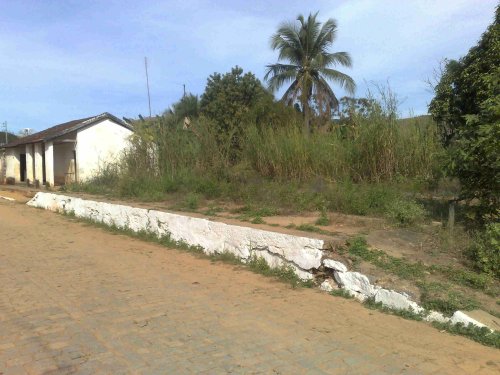
Ilheos station was opened in September 1880 by the railway company E.F. Oeste de Minas, Paraopeba Line, located in the Município de Barbacena on the south bank of the Rio das Mortes, 150 km south of the provincial capital Ouro Preto. The name is said to come from Portuguese immigrants from the islands (Ilhas), who founded the settlement of Ilheos nearby. The railway line went to Rede Mineira de Viação in 1931, to V.F. Centro-Oeste in 1965 and belonged to Rede Ferroviária Federal S.A. from 1975 until its closure in 1984. Today, neither the station nor the tracks have been preserved (estacoesferroviarias.com.br).

Ca. 1975 (Photo NN, on estacoesferroviarias.com.br)
In 2006 (Photo Edmilson Gomes, on estacoesferroviarias.com.br)

As Paula Sobrinho writes in História Postal de Minas Gerais (Belo Horizonte, 1997), there was a post office in the station from February 1883 with the imperial postmark IMG-1330a (illustration by Carlos A. Balata), which also appears in blue:
IMG-1330a (CB) 1887-1891
Estrada de Ferro Oeste de Minas, 1917

Andere Namen: Padre Brito

Der Bahnhof Ilheos wurde im September 1880 von der Eisenbahngesellschaft E.F. Oeste de Minas, Linie Paraopeba, eröffnet und liegt im Município de Barbacena am Südufer des Rio das Mortes, 150 km südlich der Provinzhauptstadt Ouro Preto. Der Name soll von portugiesischen Einwanderern von den Inseln (Ilhas) stammen, die in der Nähe die Siedlung Ilheos gründeten. Die Bahnlinie ging 1931 an die Rede Mineira de Viação, 1965 an die V.F. Centro-Oeste und gehörte von 1975 bis zu ihrer Stilllegung 1984 der Rede Ferroviária Federal S.A. Heute sind weder der Bahnhof noch die Gleise erhalten (estacoesferroviarias.com.br).

Ca. 1975 (Foto NN, auf estacoesferroviarias.com.br)
2006 (Foto Edmilson Gomes, auf estacoesferroviarias.com.br)

Wie Paula Sobrinho in História Postal de Minas Gerais (Belo Horizonte, 1997) schreibt, gab es im Bahnhof seit Februar 1883 ein Postamt mit dem kaiserlichen Poststempel IMG-1330a (Abb. Carlos A. Balata), der auch in blau vorkommt:

IMG-1330a (CB) 1887-1891
Categories
Carimbologia H-L

Ilheos, Bahia (IBA-0385)

Villiers de l’Ile Adam: Carta (…) da Provincia da Bahia, 1848

Other names: Ilhéus

The history of this town, which is very old by Brazilian standards, is rather atypical: S. Jorge dos Ilheos became a capitania by royal letter (Carta Régia) as early as 1534, a vila the following year and a freguesia in 1556. Ilhéus – as it is spelt today – has been a town at the mouth of the river Cachoeira (formerly: Rio dos Ilheos) into the Atlantic Ocean, 310 kilometres south of the state capital Salvador da Bahia, since June 1881.

The local post office was created in December 1852, as can be seen from the report of the imperial ministry:

Relatorio do Ministerio do Imperio, 1852

The oldest postmark to date is IBA-0385a, which was given the number 1317 by P. Ayres in Catálogo de Carimbos Brasil-Império (S. Paulo, 1937, 1942):

IBA-0385a (P.A. 1317) 1878ff

This was followed by the double circle IBA-0385b (illustration from the Internet):

IBA-0385b (EB) 1887-1890
Atlas do Imperio do Brasil, 1868

Andere Namen: Ilhéus

Der Werdegang dieses für brasilianische Verhältnisse sehr alten Ortes ist eher untypisch: Bereits 1534 wurde S. Jorge dos Ilheos durch königlichen Brief (Carta Régia) zur Capitania, im Jahr darauf zur Vila und erst 1556 zur Freguesia. Ilhéus – wie es heute geschrieben wird – ist seit Juni 1881 eine Stadt an der Mündung des Flusses Cachoeira (früher: Rio dos Ilheos) in den Atlantik, 310 km südlich der Landeshauptstadt Salvador da Bahia.

Das örtliche Postamt wurde im Dezember 1852 gegründet, wie aus dem Bericht des kaiserlichen Ministeriums hervorgeht:

Relatorio do Ministerio do Imperio, 1852

Der bisher älteste Poststempel ist IBA-0385a, der von P. Ayres in Catálogo de Carimbos Brasil-Império (S. Paulo, 1937, 1942) die Nr. 1317 erhielt:

IBA-0385a (P.A. 1317) 1878ff

Es folgte der Doppelkreis IBA-0385b (Abb. aus dem Internet):

IBA-0385b (EB) 1887-1890
Categories
Carimbologia H-L

Ilha Grande, Rio de Janeiro (IRJ-0605)

Almanak Laemmert, 1892

Other names: Lazareto da Ilha Grande, Abraão (1938)

Around 1844, the Freguesia de Sant’Anna da Ilha Grande was founded on the large island (Ilha Grande) off Angra dos Reis, 140 kilometres west of the capital Rio de Janeiro. Around 1890, it became a district of the Município de Angra dos Reis, which was renamed Abraão in March 1938.

Between 1882 and 1884, a military hospital was built in the freguesia, where ship travellers should spend their quarantine period if necessary. This hospital was closed in 1913. During the Vargas dictatorship in the 1930s, a prison for political prisoners was built here. Today, only ruins remain:

(Photo: Paulo G. Belarmino, on Google Maps)

According to the press in Rio, there was a post office on place from December 1886:

Gazeta de Noticias, 31/12/1886

The postal agency was closed in June 1887:

Gazeta de Noticias, 14/06/1887

According to Paulo Novaes (agenciaspostaiscom.br), this post office was only reopened in March 1891 and closed again in December 1896 (Boletim Postal). The imperial postmark is IRJ-0605a (collect. Klerman w. Lopes):

IRJ-0605a (KL) 1886-1890

As this postmark is also known with a date of October 1890, this would indicate that the post office had a further period of operation between 1887 and 1891.

Google Maps

Andere Namen: Lazareto da Ilha Grande, Abraão (1938)

Um 1844 wurde auf der großen Insel (Ilha Grande) vor Angra dos Reis, 140 km westlich der Hauptstadt Rio de Janeiro, die Freguesia de Sant’Anna da Ilha Grande gegründet. Um 1890 wurde es ein Distrikt des Município de Angra dos Reis, das im März 1938 in Abraão umbenannt wurde.

Zwischen 1882 und 1884 wurde in der Freguesia ein Lazarett errichtet, in dem Schiffsreisende bei Bedarf ihre Quarantänezeit verbringen mussten. Das Lazarett wurde 1913 aufgelöst. Während der Vargas-Diktatur in den 30er Jahren des 20. Jahrhunderts wurde hier ein Gefängnis für politische Gefangene errichtet. Heute sind nur noch Ruinen zu sehen:

(Foto: Paulo G. Belarmino, auf Google Maps)

Wie der Presse in Rio zu entnehmen ist, befand sich seit Dezember 1886 ein Postamt im Lazarett:

Gazeta de Noticias, 31.12.1886

Die Postagentur wurde im Juni 1887 geschlossen:

Gazeta de Noticias, 14.06.1887

Laut Paulo Novaes (agenciaspostaiscom.br) wurde dieses Postamt erst im März 1891 wieder eröffnet und im Dezember 1896 wieder geschlossen (Boletim Postal). Der kaiserliche Poststempel ist IRJ-0605a (Samml. Klerman W. Lopes):

IRJ-0605a (KL) 1886-1890

Da dieser Stempel auch mit einem Datum vom Oktober 1890 bekannt ist, wäre dies ein Hinweis darauf, dass das Postamt zwischen 1887 und 1891 eine weitere Betriebsperiode hatte.