Categories
Carimbologia C-D

Cajuru, São Paulo (CSP-0230)

Villiers de l’Ile Adam: Carta (…) da Provincia de São Paulo, 1847

The Chapel S. Bento do Cajuru was built in March 1835 in the Município Batatais, 300 km north of the provincial capital São Paulo. In February 1846, it became a freguesia of the municipality of Casa Branca, but returned to Batatais in June 1850. Since March 1865, Cajuru has been a vila in its own município, which became a town in December 1906.

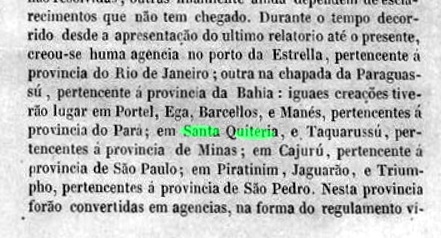
The local post office existed from about 1845, as shown in the yearbook of the following year:
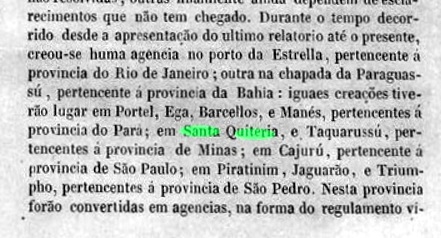
Annuario Politico, Historico e Estatistico do Brazil, 1846

However, the office was closed in May 1847, as shown in the report of the Imperial Ministry:
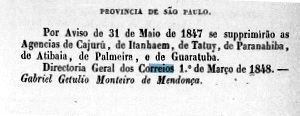
Relatorio do Ministerio do Imperio, 1847

A reopening of the post office was ordered in February 1849, as Nova Monteiro writes in Administrações e Agencias Postaes do Brasil Imperio (Brasil Filatelico/RJ, 1934-5; reprinted by SPP 1994-1999).

Three place cancels and one mute one were found for the imperial period. CSP-0230a is certainly the oldest, as it was used on Bull’s-Eye issues and until 1876. It also exists in red, it was already presented by Paulo Ayres in the Catálogo de Carimbos Brasil-Império (S. Paulo, 1937, 1942) with No. 1251:
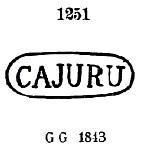
CSP-0230a (P.A. 1251)

Two double circle cancels followed: CSP-0230b (ill. Jorge L. Pedreira) is quite plain and bears the dates 1881-1882 in the centre. The French type CSP-0230c (ill. from the Internet) bears the broad inscription CAJURU above and the star between brackets below, dated 1886-1894.

There is also a mute cancel from Cajuru which was given No. 3143 in Mute Cancellations of the Brazil Empire / Carimbos Mudos do Brasil Império (Brazil Philatelic Association, Rio de Janeiro, 2000) by James Dingler and Klerman W. Lopes:
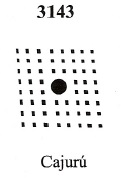
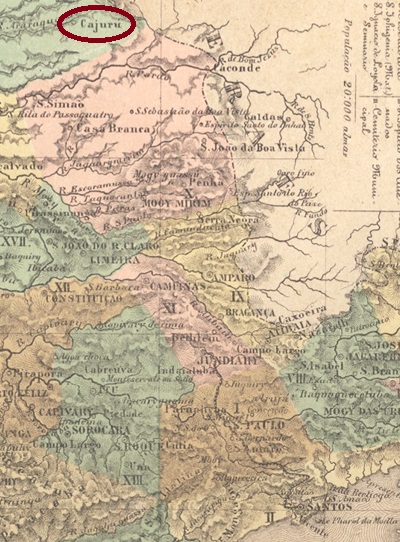
BPA 3143
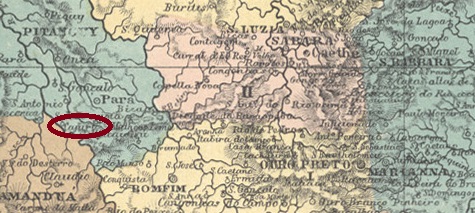
Atlas do Imperio do Brasil, 1868

Die Capela de S. Bento do Cajuru wurde im März 1835 errichtet und befand sich im Município Batatais, 300 km nördlich der Provinzhauptstadt São Paulo. Im Februar 1846 wurde es zur Freguesia der Gemeinde Casa Branca, die jedoch im Juni 1850 wieder zu Batatais zurückkehrte. Seit März 1865 ist Cajuru eine Vila in einem eigenen Município, das im Dezember 1906 zur Stadt erklärt wurde.

Das örtliche Postamt bestand seit etwa 1845, wie aus dem Jahrbuch des folgenden Jahres hervorgeht:
Annuario Politico, Historico e Estatistico do Brazil, 1846

Das Amt wurde jedoch im Mai 1847 geschlossen, wie man im Bericht des kaiserlichen Ministeriums lesen kann:
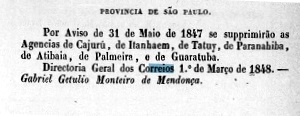
Relatorio do Ministerio do Imperio, 1847

Über eine Wiedereröffnung des Postamts wurde im Februar 1849 verfügt, wie Nova Monteiro in Administrações e Agencias Postaes do Brasil Imperio (Brasil Filatelico/RJ, 1934-5; Nachdruck SPP 1994-1999) schreibt.

Für die Kaiserzeit wurden drei Ortsstempel und ein stummer Stempel gefunden. CSP-0230a ist sicherlich der älteste, da er auf Ochsenaugen-Ausgaben und bis 1876 verwendet wurde. Es gibt ihn auch in rot, er wurde bereits von Paulo Ayres im Catálogo de Carimbos Brasil-Império (S. Paulo, 1937, 1942) mit der Nr. 1251 vorgestellt:
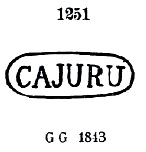
CSP-0230a (P.A. 1251)

Zwei Doppelkreis-Stempel folgten: CSP-0230b (Abb. Jorge L. Pedreira) ist recht schlicht und trägt in der Mitte die Jahreszahlen 1881-1882. Der französische Typ CSP-0230c (Abb. aus dem Internet) trägt oben die breite Inschrift CAJURU und unten den Stern zwischen Klammern, datiert 1886-1894.

Aus Cajuru stammt auch ein stummer Stempel, der in den Mute Cancellations of the Brazil Empire / Carimbos Mudos do Brasil Império (Brazil Philatelic Association, Rio de Janeiro, 2000) von James Dingler und Klerrman W. Lopes die Nr. 3143 erhielt:
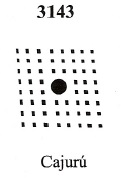
BPA 3143
Categories
Carimbologia C-D

Cajuru, Minas Gerais (CMG-0460)

Atlas do Imperio do Brasil, 1868

Another name: Carmo do Cajuru

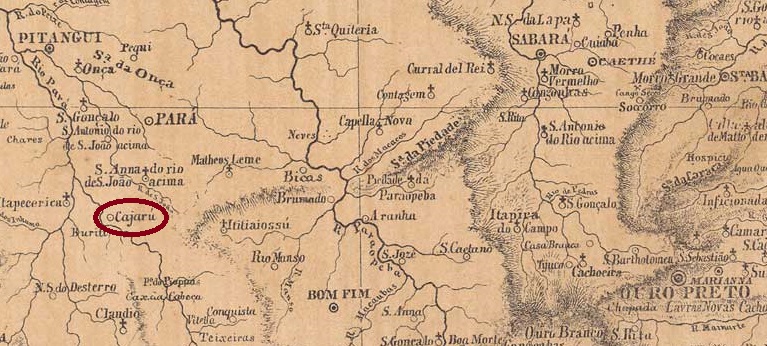
The chapel of N. Sra. do Carmo do Cajuru was built in March 1840, belonged to the Vila de Pará and was located on the eastern bank of the Pará, 200 km west of the provincial capital Ouro Preto. In August 1864, it became a freguesia and, in September 1901, a district of the Município Itaúna. The name of the district was simplified to Cajuru in April 1926 and has been Município Carmo do Cajuru since December 1948. The Indian term means forest estuary.

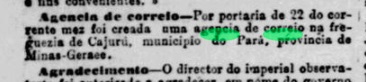
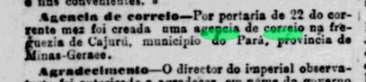
As reported by the Rio press, there had been a post office there since October 1887:

Jornal do Commercio/RJ, 27.10.1887

An imperial postmark from Cajuru in Minas Gerais is not yet known.

Provincia de Minas Geraes, 1873

Anderer Name: Carmo do Cajuru

Die Kapelle N. Sra. do Carmo do Cajuru wurde im März 1840 erbaut, gehörte zur Vila de Pará und lag am Ostufer des Pará, 200 km westlich der Provinzhauptstadt Ouro Preto. Im August 1864 wurde der Ort zur Freguesia und im September 1901 als Distrikt zum Município Itaúna. Der Name des Distrikts wurde im April 1926 in Cajuru vereinfacht und ist seit Dezember 1948 Município Carmo do Cajuru. Der indianische Begriff bedeutet Waldmündung.

Wie die Presse von Rio berichtet, gab es dort seit Oktober 1887 ein Postamt:
Jornal do Commercio/RJ, 27.10.1887

Ein kaiserlicher Poststempel aus Cajuru in Minas Gerais ist bisher nicht bekannt.

Categories
Carimbologia C-D

Cajá, Espírito Santo (CES-0043)

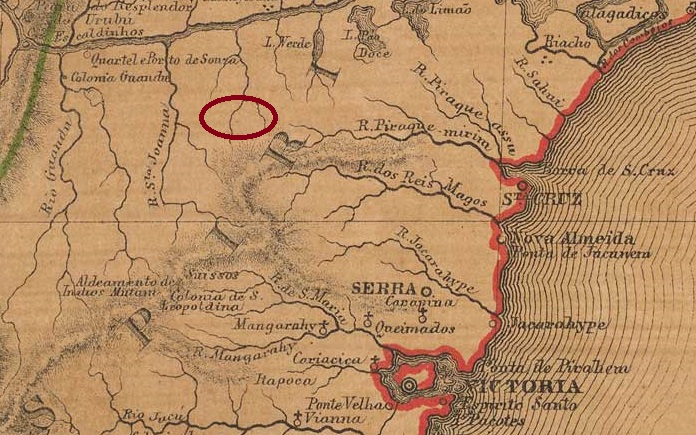
Provincia do Espirito Santo, 1873

Other names: Petrópolis, S. João de Petrópolis (1906)
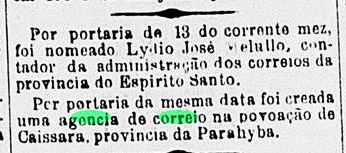
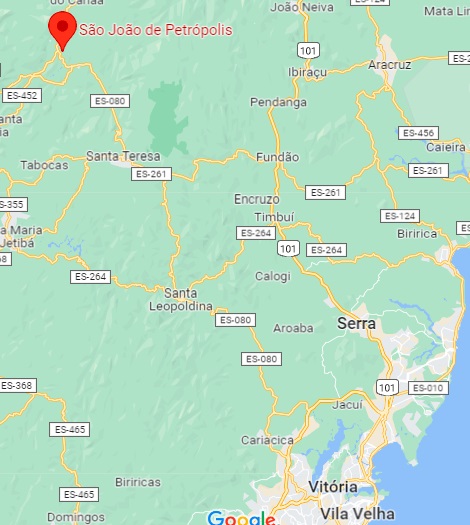
This is another village with a convoluted history. As early as 1874, there is said to have been a Barracão de S. João Baptista de Petrópolis on the eastern bank of the Santa Maria do Doce, 100 km northwest of the provincial capital of Vitória, which belonged to the Vila de Cachoeiro de Sta. Leopoldina. However, the arraial was called simply Barracão or also Cajá and passed into the administration of the Freguesia of Santa Teresa in August 1888. Santa Teresa became a vila in November 1890 and Cajá became its district in December 1895, called also de facto S. João de Petrópolis since then.

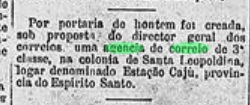
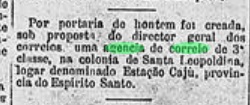
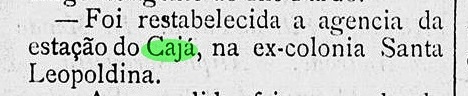
As the place became an important port of call for many colonist families from Italy, it was also called Estação (station) Cajá, although there was no railway station there. In April 1881, the decision was made to establish a post office, as the Rio press reported, despite the wrong place name:

Gazeta de Notícias/RJ, 14.04.1881

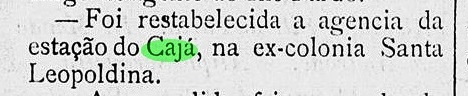
However, since no Cajá post office is listed in the Directory of Imperial Post Offices (Tabella das Agencias do Correio do Imperio, Rio de Janeiro, 1885), it is assumed that it was not put into operation until later. It was closed in April 1890 and reopened in February the following year, as reported in the regional press:

O Estado do Espirito Santo, 26.02.1891

No imperial postmarks are known from Cajá so far.

Google Maps

Andere Namen: Petrópolis, S. João de Petrópolis (1906)

Dies ist eine weitere Ortschaft mit verworrener Geschichte. Bereits 1874 soll ein Barracão de S. João Baptista de Petrópolis am Ostufer des Santa Maria do Doce, 100 km nordwestlich der Provinzhauptstadt Vitória, bestanden haben, der zur Vila de Cachoeiro de Sta. Leopoldina gehörte. Der Arraial wurde jedoch nur Barracão oder auch Cajá genannt und ging im August 1888 in die Verwaltung der Freguesia von Santa Teresa über. Santa Teresa wurde im November 1890 zur Vila und Cajá im Dezember 1895 zu ihrem Distrikt, der seitdem auch de facto S. João de Petrópolis heißt.

Da der Ort für viele Kolonistenfamilien aus Italien ein wichtiger Anlaufpunkt wurde, nannte man ihn auch Estação (Station) Cajá, obwohl es dort keinen Bahnhof gab. Im April 1881 fiel die Entscheidung für ein eigenes Postamt, wie die Presse in Rio berichtete, allerdings mit dem falschen Ortsnamen:

Gazeta de Notícias/RJ, 14.04.1881

Da aber im Verzeichnis der kaiserlichen Postämter (Tabella das Agencias do Correio do Imperio, Rio de Janeiro, 1885) kein Postamt Cajá verzeichnet ist, wird vermutet, dass es erst später in Betrieb genommen wurde. Es wurde im April 1890 geschlossen und im Februar des folgenden Jahres wiedereröffnet, wie die regionale Presse berichtete:

O Estado do Espirito Santo, 26.02.1891

Aus Cajá sind bisher keine kaiserlichen Poststempel bekannt.

Categories
Carimbologia C-D

Cajazeira(s), Paraíba (CPB-0095)

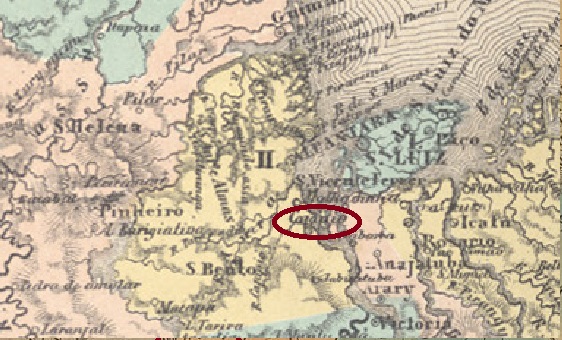
Atlas do Imperio do Brasil, 1868

Text update of August 10, 2023

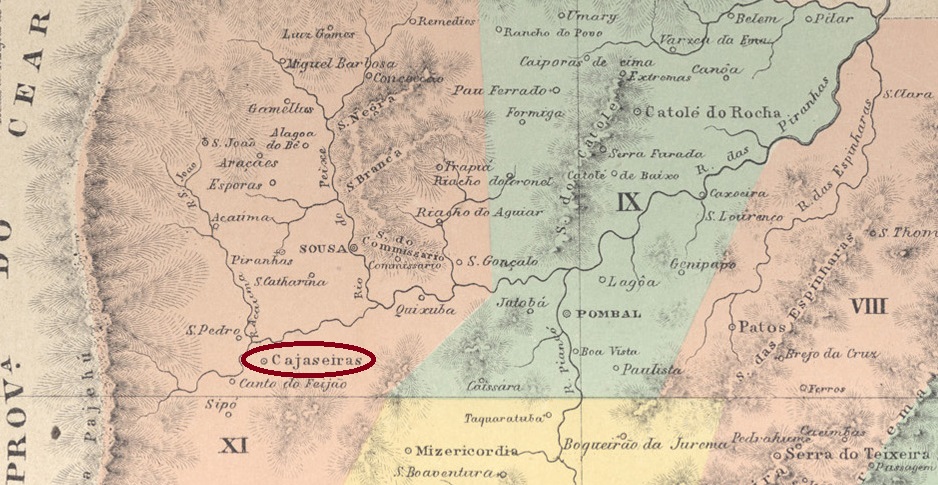
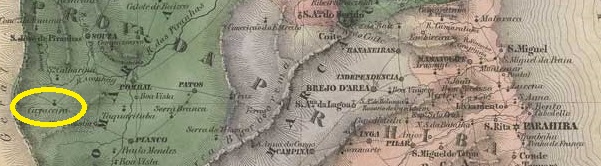
Cajazeiras was the name of an 18th century fazenda located 480 km west of the later provincial capital of Parahyba (now João Pessoa) near the border with Ceará. The settlement that developed there became the Freguesia de N. Sra. da Piedade de Cajazeiras, which was part of the Vila de Sousa, in August 1859, a Vila in November 1863 and a town in July 1876.

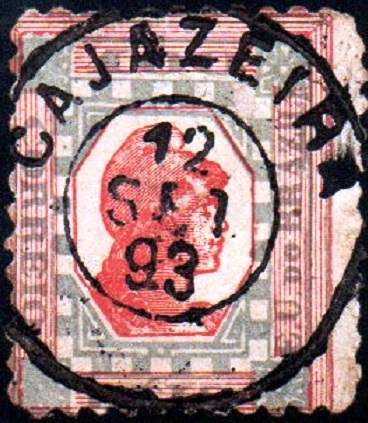
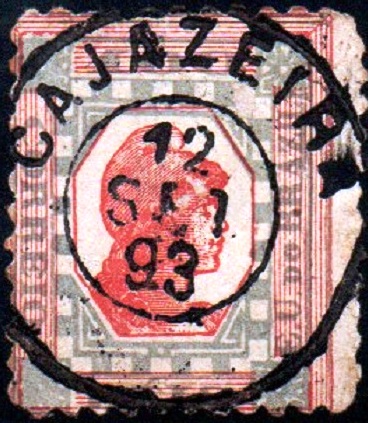
As Nova Monteiro writes in Administrações e Agencias Postaes do Brasil Imperio (Brasil Filatelico/RJ, 1934-5; Reprint SPP 1994-1999), there was a post office there since September 1867. Reinhold Koester mentions in Carimbologia VII a postmark as a simple double circle with the inscription CAJAZEIRA, dated 1893, which should correspond to this image provided by Luís C. Fritzen, as CPB-0095b:

CPB-0095b (LCF) 1893
Villiers de l’Ile Adam: Carta (…) das Provincias do Rio Grande do Norte e Parahiba, 1848

Textaktualisierung am 10. August 2023

Cajazeiras war der Name einer Fazenda aus dem 18. Jahrhundert, die 480 km westlich der späteren Provinzhauptstadt Parahyba (heute João Pessoa) nahe der Grenze zu Ceará lag. Die dort entstandene Siedlung wurde im August 1859 zur Freguesia de N. Sra. da Piedade de Cajazeiras, die zur Vila de Sousa gehörte, im November 1863 zur Vila und im Juli 1876 zur Stadt.

Wie Nova Monteiro in Administrações e Agencias Postaes do Brasil Imperio (Brasil Filatelico/RJ, 1934-5; Reprint SPP 1994-1999) schreibt, gab es dort seit September 1867 ein Postamt. Reinhold Koester erwähnt in Carimbologia VII einen Stempel als einfachen Doppelkreis mit der Aufschrift CAJAZEIRA, datiert 1893, der diesem von Luís C. Fritzen zur Verfügung gestellten Bild als CPB-0095b entsprechen dürfte:

CPB-0095b (LCF) 1893
Categories
Carimbologia C-D

Cajapió, Maranhão (CMA-0065)

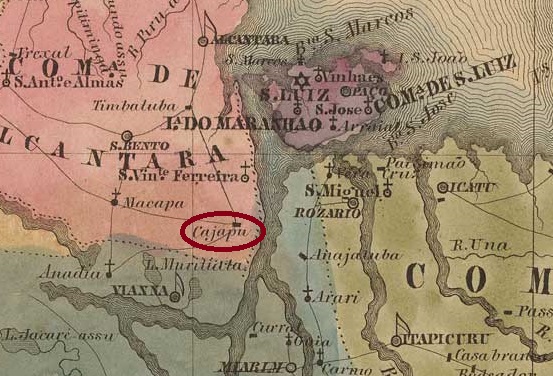
Atlas do Imperio do Brasil, 1868

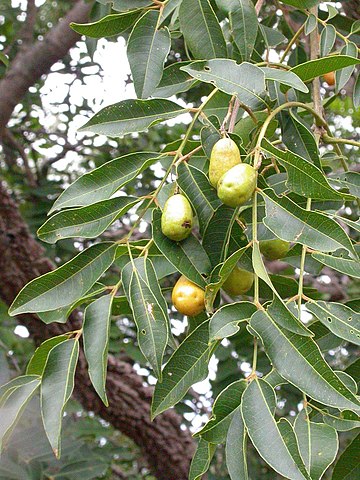
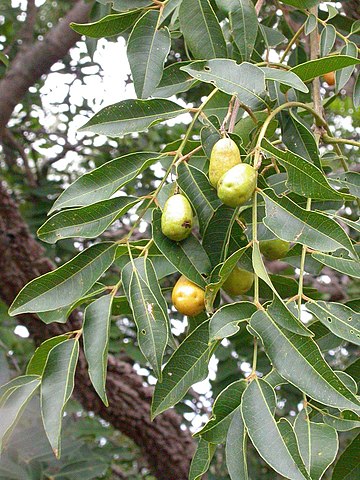
The village was originally an arraial of the Vila de S. Bento dos Perizes on the west bank of the Mearim, 160 km southwest of the provincial capital São Luís do Maranhão. It was elevated to vila status in May 1876 and to town status in April 1924. Cajapió was then downgraded to district and passed to the Município S. Vicente Ferrer in January 1932 and to S. Bento dos Perizes in December 1933, before being promoted again to Município in June 1935. The indigenous word cajapió means ripe cajá fruit. It is the yellow mombin plum (Spondias mombin, L.) from the Anacardiaceae family:

Wikipedia (Photo: Marco Schmidt, CC BY-SA 2.5)

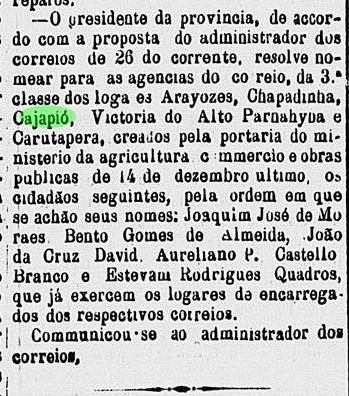
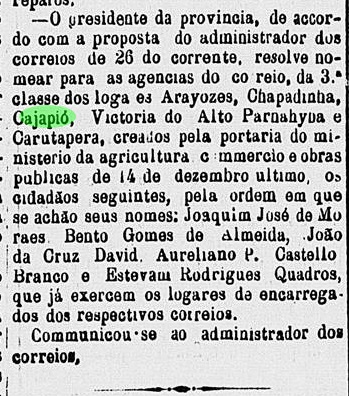
According to the regional press, there was a post office here from December 1882:

Publicador Maranhense, 01.02.1883

So far, no imperial postmark from Cajapió has been seen.

Villiers de l’Ile Adam: Carta (…) da Provincia do Maranhão, 1850

Der Ort war ursprünglich ein Arraial der Vila de S. Bento dos Perizes am Westufer des Mearim, 160 km südwestlich der Provinzhauptstadt São Luís do Maranhão. Im Mai 1876 wurde es zur Vila und im April 1924 zur Stadt erhoben. Danach wurde Cajapió zum Distrikt herabgestuft und ging als solcher im Januar 1932 zum Município S. Vicente Ferrer und im Dezember 1933 zu S. Bento dos Perizes, bevor der Wiederaufstieg zum Município im Juni 1935 erfolgte. Das indigene Wort Cajapió bedeutet reife Cajá-Frucht. Es handelt sich um die Gelbe Mombinpflaume (Spondias mombin, L.) aus der Familie der Anacardiaceae:

Wikipedia (Foto: Marco Schmidt, CC BY-SA 2.5)

Wie aus der regionalen Presse hervorgeht, gab es hier ab Dezember 1882 ein Postamt:

Publicador Maranhense, 01.02.1883

Bislang war kein kaiserlicher Poststempel aus Cajapió zu sehen.

Categories
Carimbologia C-D

Cairary, Pará (CPA-0065)

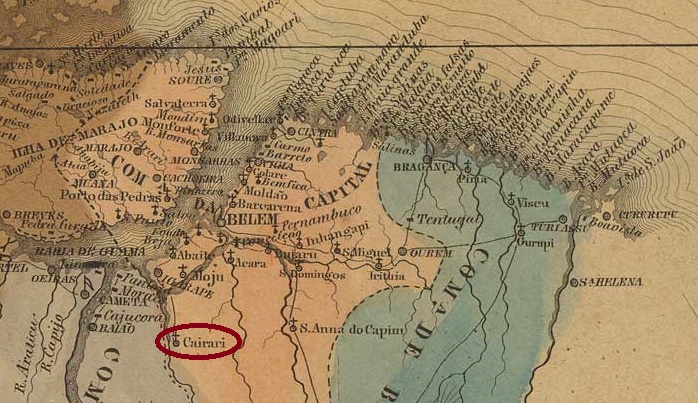
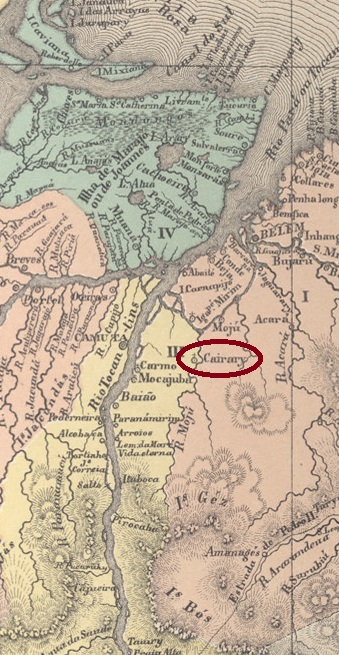
Villiers de l’Ile Adam: Carta (…) das Provincias do Grão Pará e Alto Amazonas, 1850

The chapel of Nossa Senhora da Soledade de Cairary was built in August 1856 on the north bank of the Moju River, 260 km south of the provincial capital Belém do Pará. It initially belonged to the Vila of Moju but passed as a freguesia to the Município of Igarapé-Miry three times (September 1869, November 1887, and December 1930) and was also a district of Belém (November 1930), but always returned to the Município of Moju: October 1870, October 1889 and most recently in October 1935, now written as a district, Cairari.

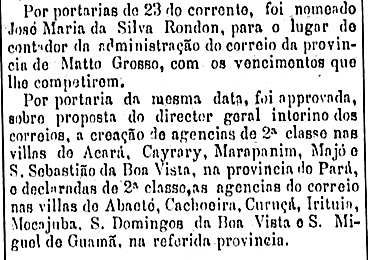
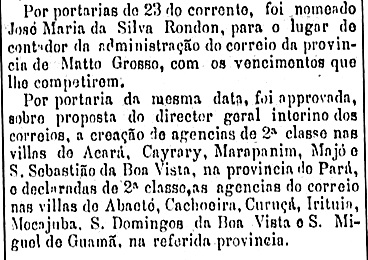
As can be seen from the Rio press, there had been a post office there since March 1882:

O Globo/RJ, 24.03.1882

No imperial postmark from Cairari has yet been seen.

Atlas do Imperio do Brasil, 1868

Die Kapelle Nossa Senhora da Soledade de Cairary wurde im August 1856 am Nordufer des Flusses Moju, 260 km südlich der Provinzhauptstadt Belém do Pará, errichtet. Sie gehörte zunächst zur Vila von Moju, ging aber als Freguesia dreimal an das Município von Igarapé-Miry (September 1869, November 1887 und Dezember 1930) und war auch ein Distrikt von Belém (November 1930), kehrte aber immer wieder zum Município von Moju zurück: Oktober 1870, Oktober 1889 und zuletzt im Oktober 1935, nun als Distrikt, Cairari geschrieben.

Wie aus der Presse von Rio hervorgeht, gab es dort seit März 1882 ein Postamt:

O Globo/RJ, 24.03.1882

Bisher wurde noch kein kaiserlicher Poststempel aus Cairary gesehen.

Categories
Carimbologia C-D

Caieiras (train station/Bahnhof), São Paulo (CSP-0225)

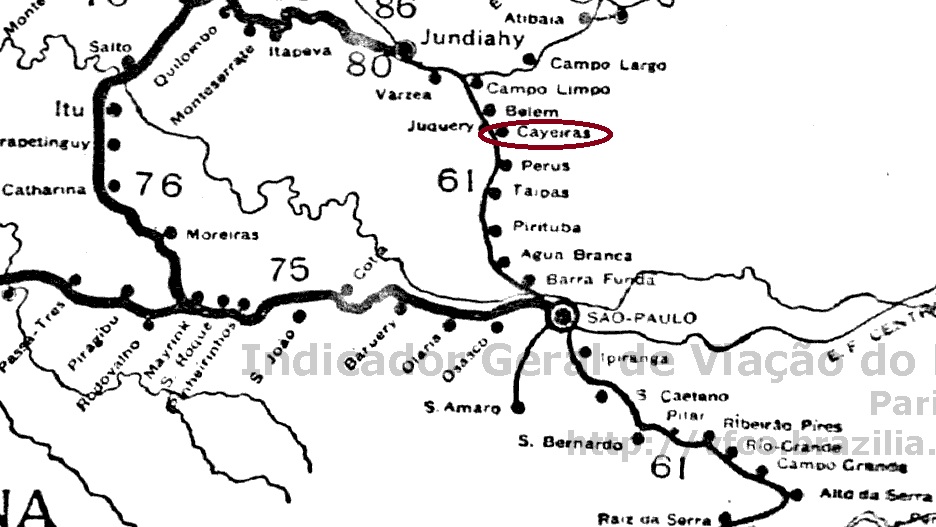
Cia. Sorocabana e Ytuana, 1898

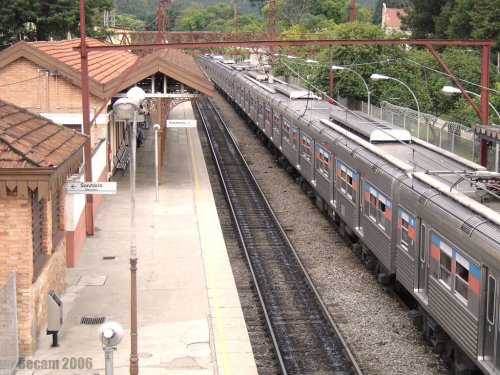
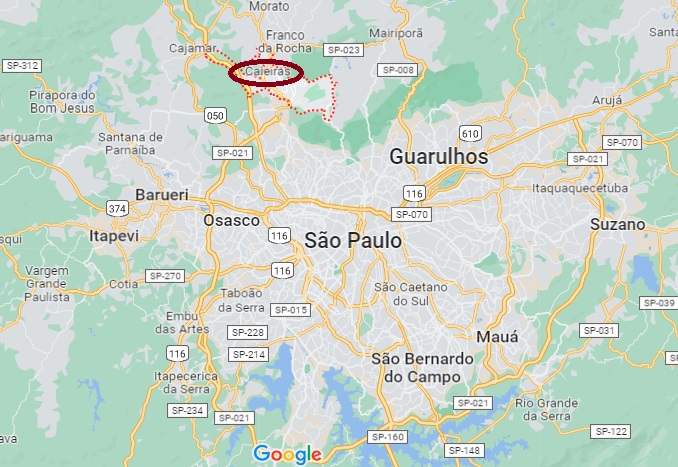
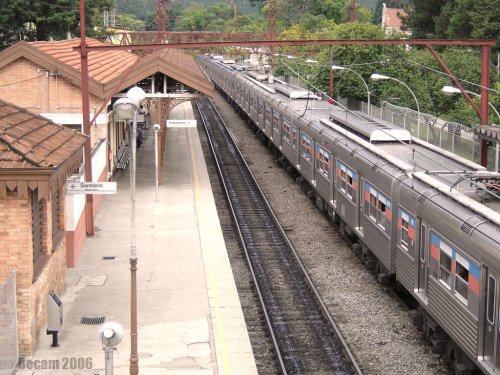
Caieiras station was inaugurated by the São Paulo Railway (Main Line) in July 1883 and is located on the east bank of the Juqueri in the Município Guarulhos, just under 40 km north of the provincial capital São Paulo. The area around the station passed to the Município Juqueri in March 1889 and became a district in November 1838. Six years later the district was assigned to the Município Franco da Rocha and since February 1959 Caieiras has been an independent Município.

The railway line passed to the E.F. de Santos a Jundiaí in 1946 and to the Rede Ferroviária Federal S.A. (estacoesferroviarias.com.br) in 1975. Since 1994, the line has been operated by Cia. Paulista de Transportes Metropolitanos.

2006 (estacoesferroviarias.com.br)

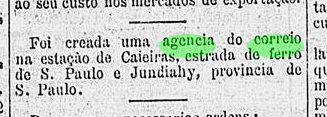
The Rio press reports that there had been a station post office since August 1889:

Gazeta de Noticias/RJ, 31/08/1889

No imperial postmark has yet been seen from Caieiras station, it must be very rare.

Google Maps

Der Bahnhof Caieiras wurde im Juli 1883 von der São Paulo Railway (Hauptlinie) eingeweiht und liegt am Ostufer des Juqueri im Município Guarulhos, knapp 40 km nördlich der Provinzhauptstadt São Paulo. Das Gebiet um den Bahnhof ging im März 1889 zum Município Juqueri über und wurde im November 1838 zu einem Distrikt. 6 Jahre später wurde der Distrikt dem Município Franco da Rocha zugeordnet und seit Februar 1959 ist Caieiras ein eigenständiger Município.

Die Eisenbahnlinie ging 1946 an die E.F. de Santos a Jundiaí und 1975 an die Rede Ferroviária Federal S.A. (estacoesferroviarias.com.br) über. Seit 1994 wird die Strecke von der Cia. Paulista de Transportes Metropolitanos.

2006 (estacoesferroviarias.com.br)

Die Presse von Rio berichtet, dass es seit August 1889 ein Bahnhofspostamt gab:

Gazeta de Noticias/RJ, 31.08.1889

Bisher wurde noch kein kaiserlicher Poststempel vom Bahnhof Caieiras gesehen, er muss sehr selten sein.

Categories
Carimbologia A-B

Barra de Itabapoanna, Rio de Janeiro (BRJ-0120)

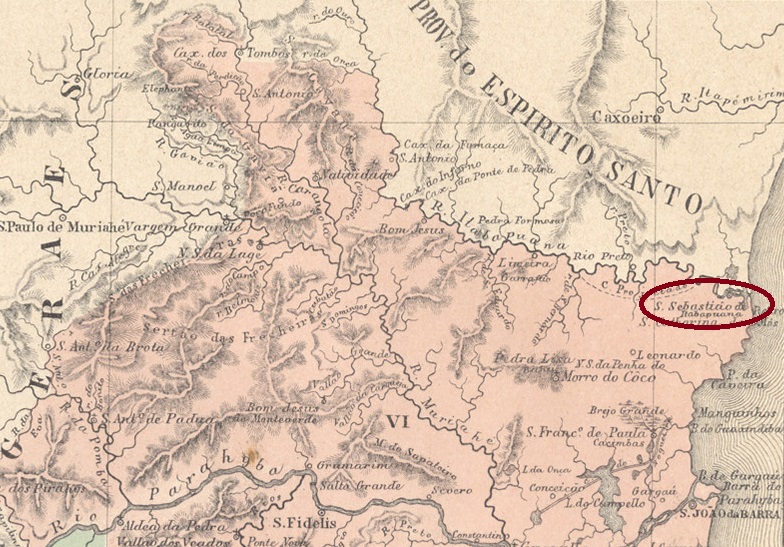
Atlas do Imperio do Brasil, 1868

Other names: S. Sebastião de Itabapoana, Itabapoana

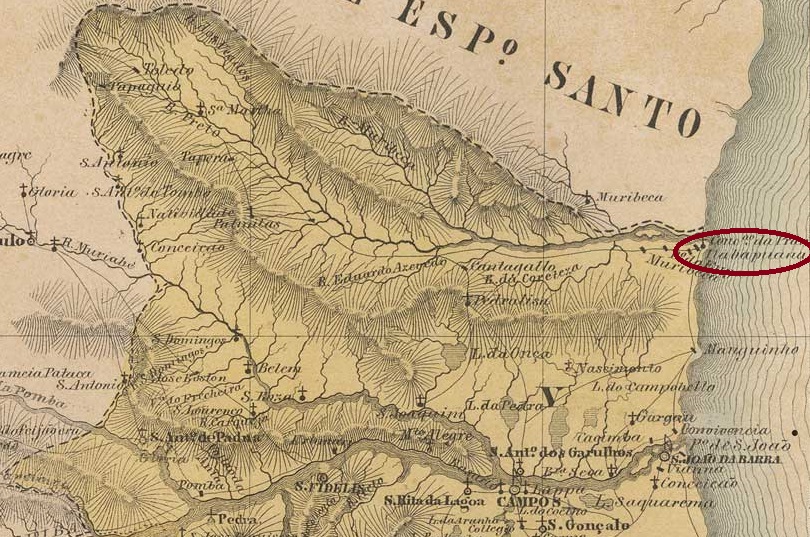
São Sebastião de Itabapoana was a small arraial on the south bank of the mouth of the Itabapoana on the provincial border between Rio de Janeiro and Espírito Santo, 360 km northeast of the capital Rio de Janeiro. In October 1857, it became a freguesia in the newly founded Município de S. João da Barra. Since January 1995 it has been the district of Itabapoana in the Município S. Francisco do Itabapoana.

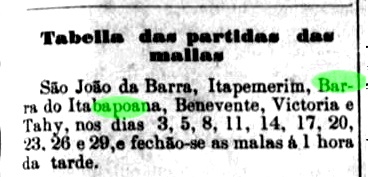
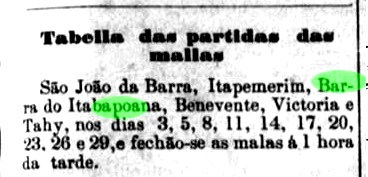
Two creation dates have been found for the local post office. Paulo Novaes writes in agenciaspostais.com.br “ca. 1885”, while in the Directory of Imperial Post Offices (Tabella das Agencias do Correio do Imperio, Rio de Janeiro, 1885) the year is 1879, which is confirmed by a note in the regional press about 10 postal connections per month between Campos and Barra do Itabapoana:

Monitor Campista, 18.06.1879

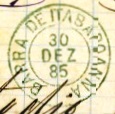
The imperial postmark is the double circle BRJ-0120a (Fig. D. Feldman Auction) with the inscription BARRA DE ITABAPOANNA and internal dates from 1885 to 1899.

BRJ-0120a (DF)
Villiers de l’Ile Adam: Carta (…) da Provincia do Rio de Janeiro, 1850

Andere Namen: S. Sebastião de Itabapoana, Itabapoana

São Sebastião de Itabapoanna war ein kleiner Arraial am Südufer der Mündung des Itabapoana an der Provinzgrenze zwischen Rio de Janeiro und Espírito Santo, 360 km nordöstlich der Hauptstadt Rio de Janeiro. Im Oktober 1857 wurde es eine Freguesia im neu gegründeten Município de S. João da Barra. Seit Januar 1995 ist es der Bezirk Itabapoana im Município S. Francisco do Itabapoana.

Für das örtliche Postamt wurden zwei Gründungsdaten ermittelt. Paulo Novaes schreibt in agenciaspostais.com.br „ca. 1885“, während im Verzeichnis der kaiserlichen Postämter (Tabella das Agencias do Correio do Imperio, Rio de Janeiro, 1885) das Jahr 1879 zu lesen ist, was durch einen Bericht der regionalen Presse über 10 Postverbindungen pro Monat zwischen Campos und Barra do Itabapoana bestätigt wird:

Monitor Campista, 18.06.1879

Der kaiserliche Poststempel ist der Doppelkreis BRJ-0120a (Abb. D. Feldman Auktion) mit der Inschrift BARRA DE ITABAPOANNA und internen Daten von 1885 bis 1899.

BRJ-0120a (DF)
Categories
Carimbologia C-D

Caiçara, Paraíba (CPB-0085)

Atlas do Imperio do Brasil, 1868

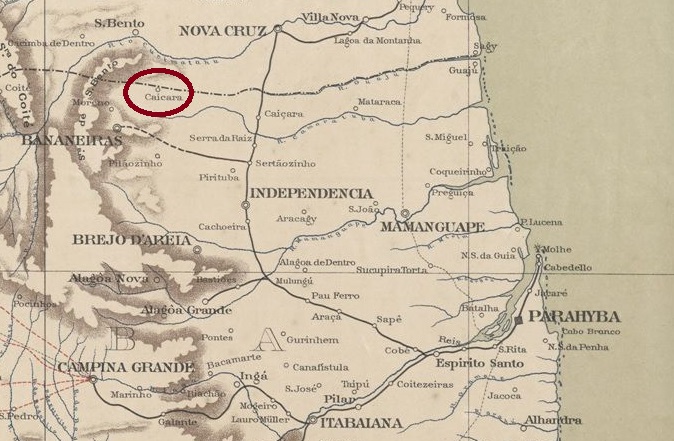
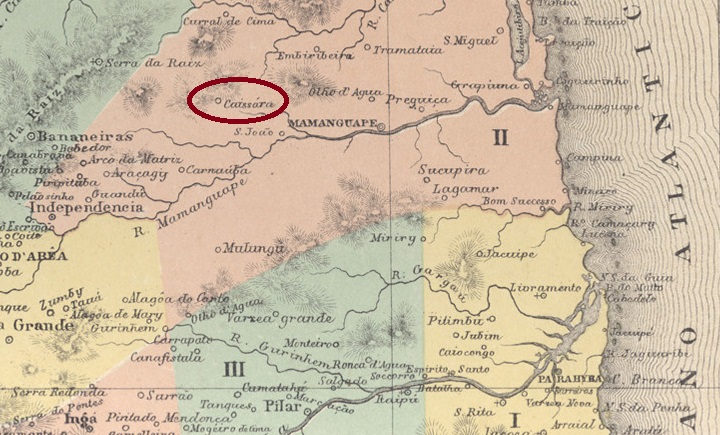
The beautiful Indian word Caiçara (formerly also spelled Caissara) means fisherman’s hut and can still be heard all over Brazil by the sea or rivers. The Arraial of N. Sra. do Rosário de Caiçara was founded around 1841, belonged to the Vila of Serra da Raiz and was located on the banks of the Curimataú, 130 km northwest of the provincial capital Parahyba do Norte (today: João Pessoa). The village was elevated to the status of a vila in December 1883, but passed to the Município Guarabira as a freguesia as early as October of the following year and was not elevated to the status of an independent município again until November 1908. 

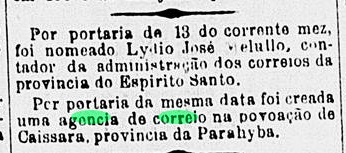
As was learned from the Rio press, there had been a post office there since May 1884:

Brazil/RJ 15.05.1884

However, this was moved to the neighbouring Serra da Raiz in October 1885, as R. Koester writes in Carimbologia VII, and was not reopened until July 1893. Imperial postmarks from Caiçara have not been seen so far.

Serviço Geologico e Mineralogico, 1910

Das schöne indianische Wort Caiçara (früher auch Caissara geschrieben) bedeutet Fischerhütte und ist noch heute in ganz Brasilien am Meer oder an Flüssen zu hören. Der Arraial von N. Sra. do Rosário de Caiçara entstand um 1841, gehörte zur Vila von Serra da Raiz und lag am Ufer des Curimataú, 130 km nordwestlich der Provinzhauptstadt Parahyba do Norte (heute: João Pessoa). Der Ort wurde im Dezember 1883 zur Vila erhoben, ging aber bereits im Oktober des folgenden Jahres als Freguesia zum Município Guarabira und wurde erst im November 1908 wieder zum eigenständigen Município erhoben. 

Wie aus der Presse von Rio zu erfahren war, gab es dort seit Mai 1884 ein Postamt:

Brazil/RJ 15.05.1884

Dieses wurde jedoch im Oktober 1885 in die benachbarte Serra da Raiz verlegt, wie R. Koester in Carimbologia VII schreibt, und erst im Juli 1893 wiedereröffnet. Kaiserliche Poststempel aus Caiçara wurden bisher nicht gesichtet.

Categories
Carimbologia C-D

Caeteté, Bahia (CBA-0200)

Atlas do Imperio do Brasil, 1868

Text update of August 15, 2023

See also: Villa de Caetete (VBA-0880); Vila Nova do Principe (RK XXXII)

The freguesia called “Villa” Nova do Principe was mentioned in documents as early as 1754 and was located on the west bank of the São João River, 630 km southwest of the provincial capital Salvador da Bahia. A royal decree (Decreto Real) from February 1810 declared the place a vila, which rose to the town of Sant’Anna de Caeteté in October 1867, now written Caetité. The Tupi word means forest with large stones.

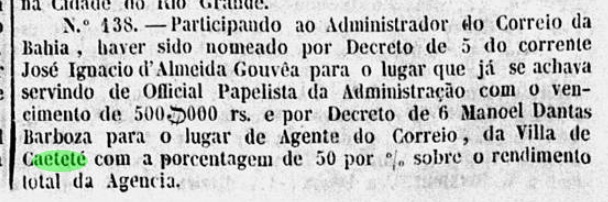
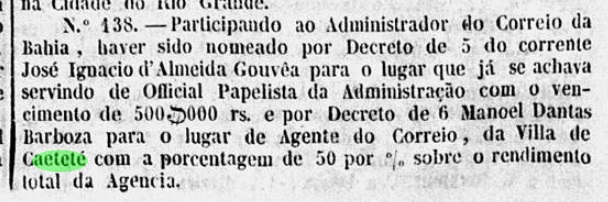
Two creation dates for the local post office were found. In Administrações e Agencias Postaes do Brasil Imperio (Brasil Filatelico/RJ, 1934-5; Reprint SPP 1994-1999), Nova Monteiro writes August 1841, while Reinhold Koester notes May 1865 in his Carimbologia. If Nova Monteiro’s information is correct, there was probably a pre-philatelic postmark from Villa Nova do Principe. However, the agency was already officially called Caeteté in November 1846:

Gazeta Official/RJ, 25.11.1846

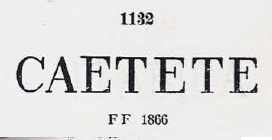
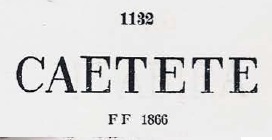
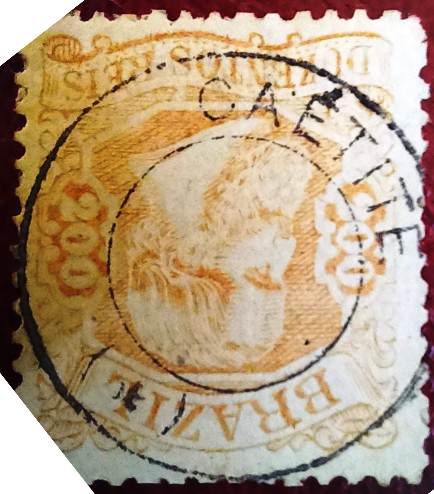
So far, no postmark with Villa Nova do Principe has been seen. The first stamp with the new place name is CBA-0200a, which is listed in Paulo Ayres’ Catálogo de Carimbos Brasil-Império (S. Paulo, 1937, 1942) under no. 1132. However, its illustration shows considerable differences from the original (here fig. RHM catalogue):

CBA-0200a (P.A. 1132, RHM P-BA-06, recte) 1837-1866ff

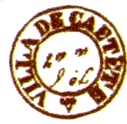
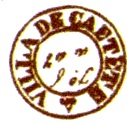
It was followed by VBA-0880a, which is illustrated in the RHM catalogue and was in circulation from about 1843 to 1847:

VBA-0880a (RHM)

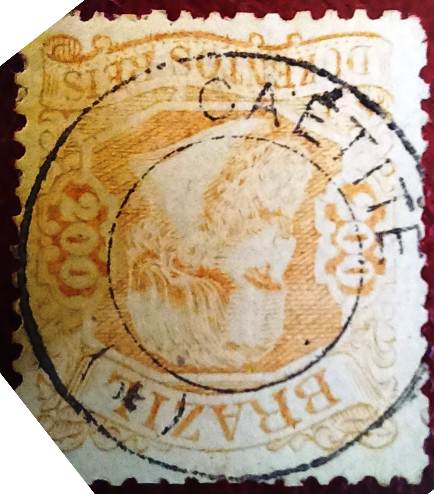
In the meantime, another postmark has also appeared in the Fuad Ferreira Fo. collection. CBA-0200b is a previously unknown French type:

CBA-0200b (FF) ca. 1882

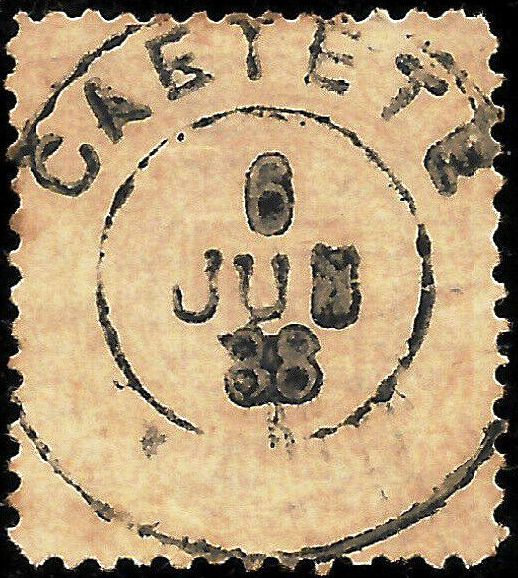
The plain double circle CBA-0200c (collect. FM) bears the dates 1882ff-1890 in the centre:

CBA-0200c (FM) 1882ff-1890

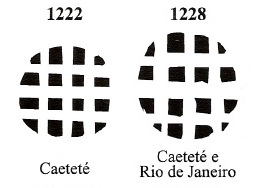
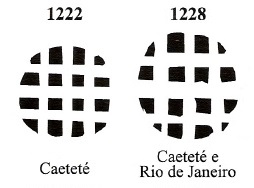
Finally, James Dingler and Klerman W. Lopes have listed two mute cancellations from Caetité in Mute Cancellations of the Brazil Empire/ Carimbos Mudos do Brasil Império (Brazil Philatelic Association, Rio de Janeiro, 2000):

BPA 1222, 1228
Villiers de l’Ile Adam: Carta (…) da Provincia da Bahia, 1848

Textaktualisierung am 15. August 2023

Siehe auch: Villa de Caetete (VBA-0880); Vila Nova do Principe (RK XXXII)

Die Freguesia namens “Villa” Nova do Principe wurde bereits 1754 urkundlich erwähnt und lag am Westufer des Flusses São João, 630 km südwestlich der Provinzhauptstadt Salvador da Bahia entfernt. Ein königliches Dekret (Decreto Real) aus Februar 1810 hob den Ort zu einer Vila auf, die im Oktober 1867 zur Stadt Sant’Anna de Caeteté aufstieg, heute Caetité geschrieben. Das Wort der Tupi-Sprache bedeutet Wald mit großen Steinen.

Zwei Gründungsdaten fürs örtliche Postamt wurden gefunden. Nova Monteiro schreibt dafür in Administrações e Agencias Postaes do Brasil Imperio (Brasil Filatelico/RJ, 1934-5; Reprint SPP 1994-1999) den August 1841, während Reinhold Koester den Mai 1865 notiert. Wenn Nova Monteiros Angabe stimmt, gab es vermutlich einen Präphila-Poststempel aus Villa Nova do Principe. Allerdings wurde die Agentur bereits im November 1846 Caeteté offiziell genannt:

Gazeta Official/RJ, 25.11.1846

Bisher war kein Poststempel mit Villa Nova do Principe zu sehen. Der erste Stempel mit dem neuen Ortsnamen ist CBA-0200a, der in Paulo Ayres‘ Catálogo de Carimbos Brasil-Império (S. Paulo, 1937, 1942) unter der Nr. 1132 verzeichnet ist. Seine Abbildung weist jedoch erhebliche Unterschiede zum Original auf (hier Abb. RHM-Katalog):

CBA-0200a (P.A. 1132, RHM P-BA-06, recte) 1837-1866ff

Ihm folgte VBA-0880a. Er ist im RHM-Katalog abgebildet und war von ca. 1843 bis 1847 im Umlauf:

VBA-0880a (RHM)

Inzwischen ist auch ein weiterer Poststempel in der Sammlung Fuad Ferreira Fo. aufgetaucht. CBA-0200b ist ein bisher unbekannter, französischer Typ:

CBA-0200b (FF) ca. 1882

Der einfache Doppelkreis CBA-0200c (Samml. FM) trägt in der Mitte die Jahreszahlen 1882ff-1890:

CBA-0200c (FM) 1882ff-1890

James Dingler und Klerman W. Lopes haben schließlich in Mute Cancellations of the Brazil Empire/ Carimbos Mudos do Brasil Império (Brazil Philatelic Association, Rio de Janeiro, 2000) zwei stumme Entwertungen aus Caetité aufgelistet:

BPA 1222, 1228