Categories
Carimbologia A-B

Arraial Queimado, Paraná (APR-0015)

Estado do Paraná, 1892

Other names: Queimados, Bocaiuva, Imbuial, Bocaiuva do Sul (1947)

The freguesia of Sto. Antonio do Arraial Queimado came into being in April 1870 and was located more than 40 km north of the provincial capital Curitiba. Just one year later, the place was promoted to Município. Two relegations as a district followed: in May 1875 back to Curitiba and in July 1932 to the then newly founded Município of Capivari. In between there was a period as a município that began in April 1876 and continued in January 1890 under the name of Bocaiúva. Since March 1934, Bocaiúva has finally been independent. However, the name changed thereafter twice: in October 1943 to Imbuial and four years later to Bocaiúva do Sul, which is still valid today. The name originally refers to a palm tree (Acrocomia totai), but it is meant to remember the politician Quintino Bocaiúva (1836-1912), whose real name was Quintino Antonio Ferreira de Souza:

Sc 948, Mi 1026

The local post office was established in 1879; the first postal employee had already been replaced in October:

Relatorio do Presidente da Provincia, February 1880

So far, no imperial-era postmark has been seen from this locality.
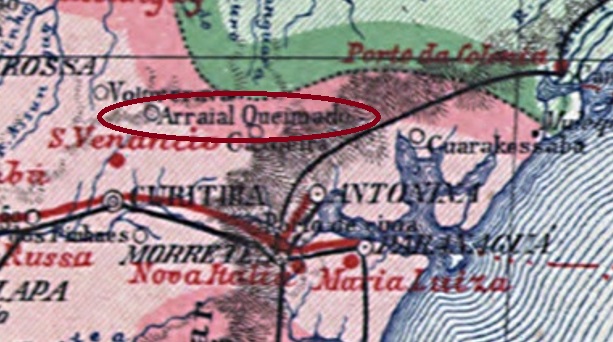
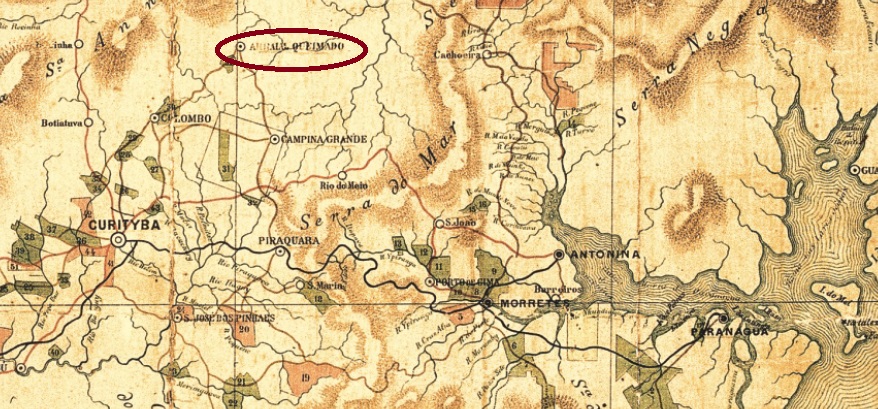
Carta da Republica dos Estados Unidos do Brazil, 1892

Andere Namen: Queimados, Bocaiuva, Imbuial, Bocaiuva do Sul (1947)

Die Freguesia von Sto. Antonio do Arraial Queimado entstand im April 1870 und lag über 40 km nördlich der Provinzhauptstadt Curitiba entfernt. Gleich ein Jahr später stieg der Ort zum Município auf. Es folgten zwei Abstiege als Distrikt: im Mai 1875 zurück zu Curitiba und im Juli 1932 zum damals neu gegründeten Município von Capivari. Dazwischen lag eine Periode als Município, die im April 1876 begann und im Januar 1890 unter dem Namen Bocaiúva weiter ging. Seit März 1934 ist Bocaiúva endgültig eigenständig. Allerdings wechselte der Name wieder zweimal: im Oktober 1943 zu Imbuial und vier Jahre später zum heute noch gültigen Bocaiúva do Sul. Der Name bezeichnet zwar ursprünglich eine Palme (Acrocomia totai), soll aber an den Politiker Quintino Bocaiúva (1836-1912) erinnern, der eigentlich Quintino Antonio Ferreira de Souza hieß:

RHM C-482, Sc 948, Mi 1026

Das örtliche Postamt entstand 1879; der erste Postangestellte wurde im Oktober bereits ersetzt:

Relatorio do Presidente da Provincia, Februar 1880

Bisher wurde kein Poststempel der Kaiserzeit aus dieser Ortschaft gesehen.
Categories
Carimbologia A-B

Arraial do Falcão, Rio de Janeiro (ARJ-0075)

agenciaspostais.com.br

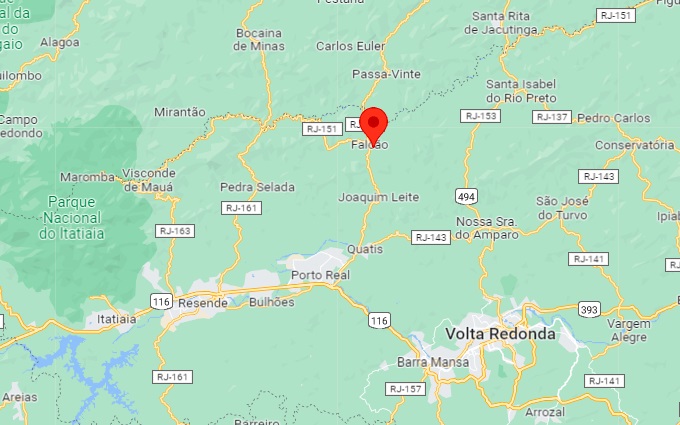
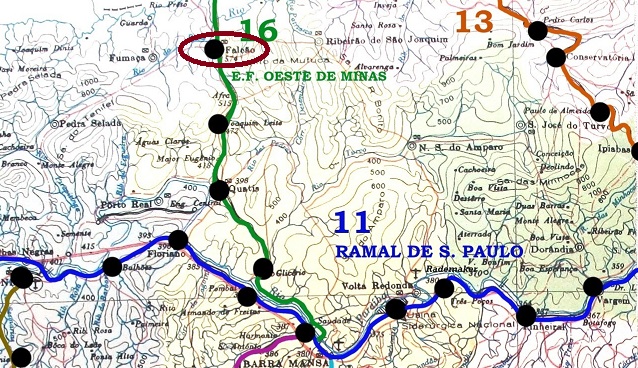
This locality originally belonged to the Freguesia of São Joaquim in the Vila of Barra Mansa and was close to the provincial border with Minas Gerais, 170 km northwest of the capital Rio de Janeiro. In November 1919, it became a district, which has belonged to the newly created Município of Quatis from January 1991 on.

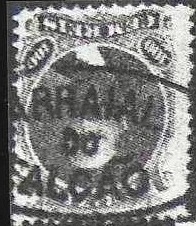
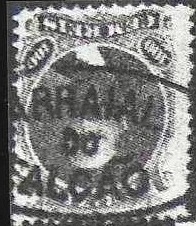
As Paulo Novaes writes in agenciaspostais.com.br, there was a post office there since December 1873. The first postmark is ARJ-0075a, already known by R. Koester in Carimbologia XIX:

ARJ-0075a (RK) 1873ff

It was followed by ARJ-0075b (agenciaspostais.com.br): a plain double circle with the inscription FALCAO above and internal dates from 1885 to 1893.

Google Maps

Dieser Ortschaft gehörte ursprünglich der Freguesia von São Joaquim in der Vila von Barra Mansa und lag nah an der Provinzgrenze zu Minas Gerais, 170 km nordwestlich der Hauptstadt Rio de Janeiro entfernt. Im November 1919 wurde daraus ein Distrikt, der seit Januar 1991 dem neu gegründeten Município von Quatis gehört.

Wie Paulo Novaes in agenciaspostais.com.br schreibt, gab es dort ein Postamt seit Dezember 1873. Der erste Poststempel ist ARJ-0075a, der bereits durch R. Koester in Carimbologia XIX bekannt ist:

ARJ-0075a (RK) 1873ff

Ihm folgte ARJ-0075b (agenciaspostais.com.br): ein einfacher Doppelkreis mit der obigen Inschrift FALCAO und inneren Daten von 1885 bis 1893.

Categories
Carimbologia A-B

Arraial do Espirito Santo, Espirito Santo (AES-0025)

Briguiet: Estado do Espirito Santo, 1923

Other names: Espírito Santo do Rio Pardo, Muniz Freire (1896)

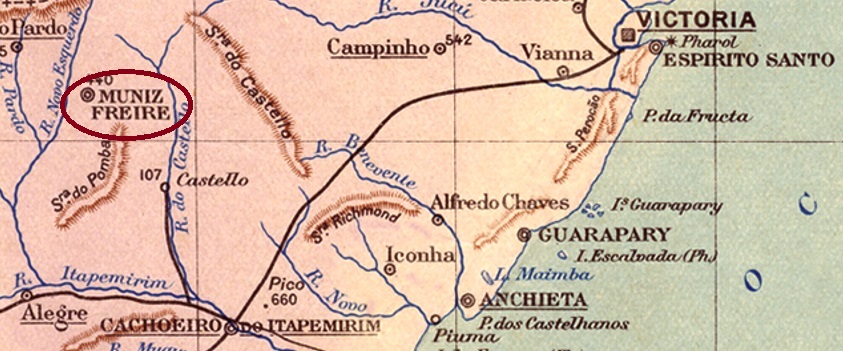
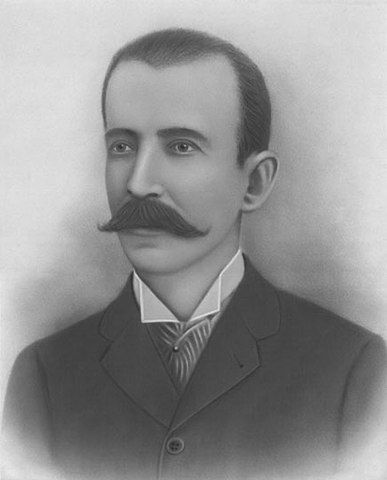
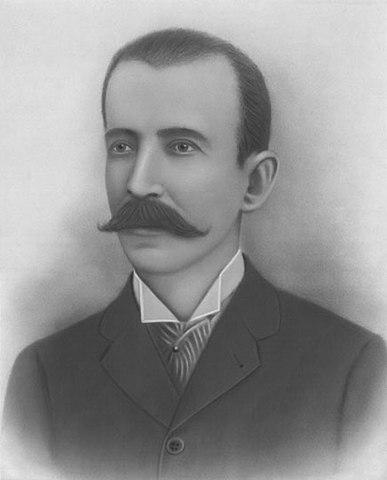
The parish of Espirito Santo do Rio Pardo was established in May 1750, located at the vila of Cachoeiro do Itapemirim, 170 km west of the future provincial capital Vitória. In November 1890, the place was declared a vila, which was renamed Muniz Freire six years later. The name commemorates José de Melo Carvalho Muniz Freire (1861-1918), lawyer, journalist, politician and for two times governor of the state of Espirito Santo in the early Republic.

Muniz Freire (SCHAIDER, José P: História do Espirito Santo, 2014)

The local post office was created in April 1881, as Paulo Novaes writes in agenciaspostais.com.br. The imperial postmark is AES-0025a (coll. Jorge L. Pedreira). A double circle – which also exists in turquoise – which presents the inscription ARRAL DO ESPTO SANTO above and an ornament in lozenge below, formed by four small lozenges. The dates in the middle are from the period 1885-1891.

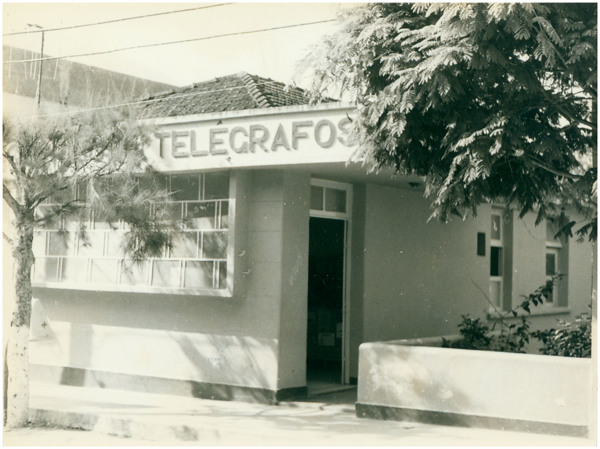
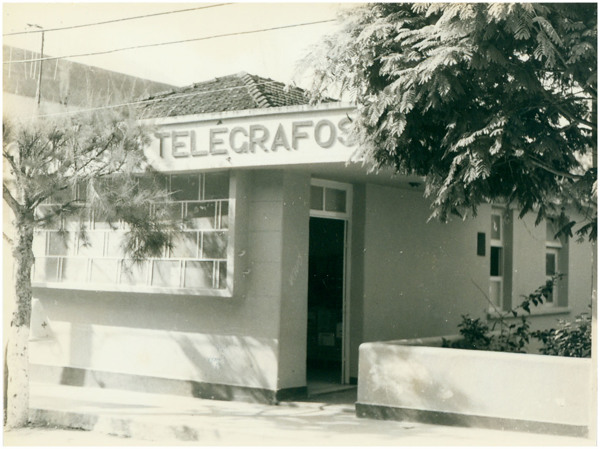
Muniz Freire, Post Office ca. 1975
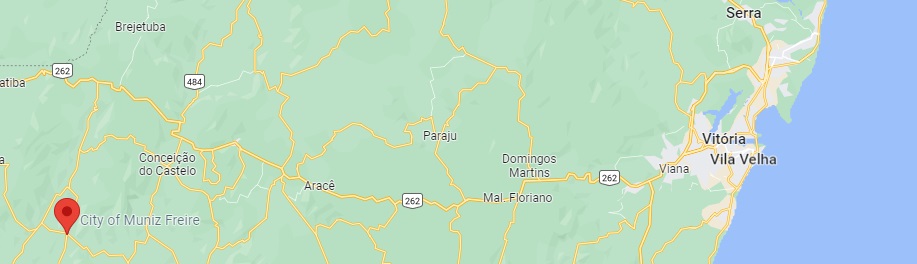
Google Maps

Andere Namen: Espírito Santo do Rio Pardo, Muniz Freire (1896)

Die Pfarrei von Espirito Santo do Rio Pardo wurde im Mai 1750 errichtet und lag bei der Vila von Cachoeiro do Itapemirim, 170 km westlich der späteren Provinzhauptstadt Vitória entfernt. Im November 1890 wurde der Ort zu einer Vila erklärt, die sechs Jahre später zu Muniz Freire umbenannt wurde. Der Name erinnert an José de Melo Carvalho Muniz Freire (1861-1918), Anwalt, Journalist, Politiker und zweiter Gouverneur des Staates Espirito Santo in der frühen Republik.

Muniz Freire (SCHAIDER, José P: História do Espirito Santo, 2014)

Das örtliche Postamt wurde im April 1881 ins Leben gerufen, wie Paulo Novaes in agenciaspostais.com.br schreibt. Der kaiserliche Poststempel ist AES-0025a (Samml. Jorge L. Pedreira). Ein Doppelkreis – den es auch in türkis gibt – mit der Inschrift ARRAL DO ESPTO SANTO oben und einem Ornament in Raute unten, das durch vier kleine Rauten gebildet wird. Die Daten in der Mitte entstammen aus dem Zeitraum 1885-1891.

Postamt von Muniz Freire, ca. 1975
Categories
Carimbologia A-B

Arraial de Na. Sa. do Livramento, Rio de Janeiro (ARJ-1010)

Estado do Rio de Janeiro, 1922

Other names: Livramento do Valão do Barro, Valão do Barro (ca. 1911)

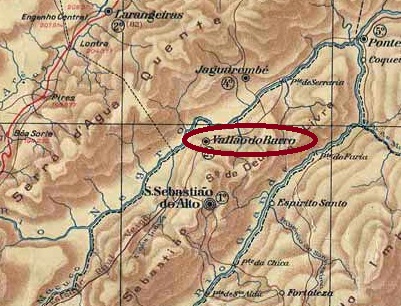
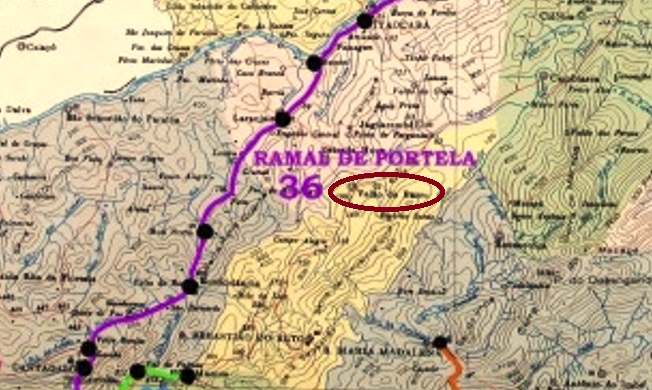
The settlement called Arraial de Nossa Senhora do Livramento do Valão de Barro (Village of Our Lady of Salvation at the Mud Ditch) was established in October 1861 and belonged to the Freguesia of S. Sebastião do Alto in the Município of Sta. Maria Magdalena. The village was close to the south bank of the Rio Negro, 230 km northeast of the capital Rio de Janeiro. In April 1891 it became a district, which since 1911 has been called Valão do Barro (Mud Ditch).  

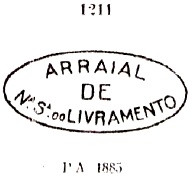
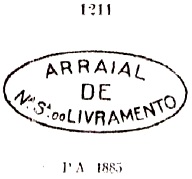
There was a post office there since February 1877 as Paulo Novaes writes in agenciaspostais.com.br. The first postmark ARJ-1010a was already presented by Paulo Ayres in Catálogo de Carimbos Brasil-Império (S. Paulo, 1937, 1942) under no. 1211:

ARJ-1010a (P.A. 1211) 1877ff

Its successor ARJ-1010b (Coll. Roberto Assef Jr.) is a double circle with the inscriptions LIVRAMENTO above and (ARRAIAL) below, with inner dates from 1889 to 1897.

agenciaspostais.com.br

Andere Namen: Livramento do Valão do Barro, Valão do Barro (ca. 1911)

Die Siedlung namens Arraial de Nossa Senhora do Livramento do Valão de Barro (Dorf von Unseren Lieben Frau der Erlösung am Schlammgraben) entstand im Oktober 1861 und gehörte der Freguesia von S. Sebastião do Alto im Município von Sta. Maria Magdalena. Der Ort lag nah am Südufer des Rio Negro, 230 km nordöstlich der Hauptstadt Rio de Janeiro entfernt. Im April 1891 wurde daraus ein Distrikt, der seit 1911 Valão do Barro (Schlammgraben) heißt.   

Dort gab es ein Postamt seit Februar 1877 wie Paulo Novaes in agenciaspostais.com.br schreibt. Der erste Posttempel ARJ-1010a wurde bereits durch Paulo Ayres in Catálogo de Carimbos Brasil-Império (S. Paulo, 1937, 1942) unter Nr. 1211 vorgestellt:

ARJ-1010a (P.A. 1211) 1877ff

Sein Nachfolger ARJ-1010b (Samml. Roberto Assef Jr.) ist ein Doppelkreis mit den Inschriften LIVRAMENTO oben und (ARRAIAL) unten, mit inneren Daten von 1889 bis 1897.

Categories
Carimbologia A-B

Arraial da Divisa, Minas Gerais (AMG-0143)

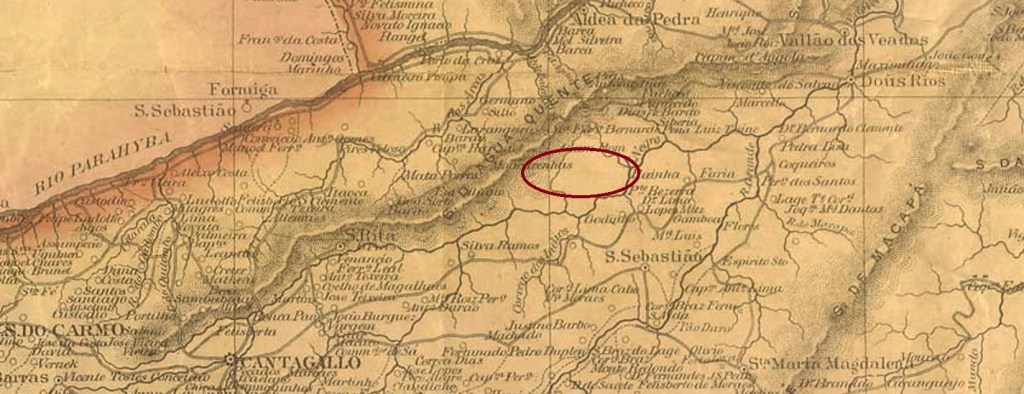
Atlas do Imperio do Brasil, 1868

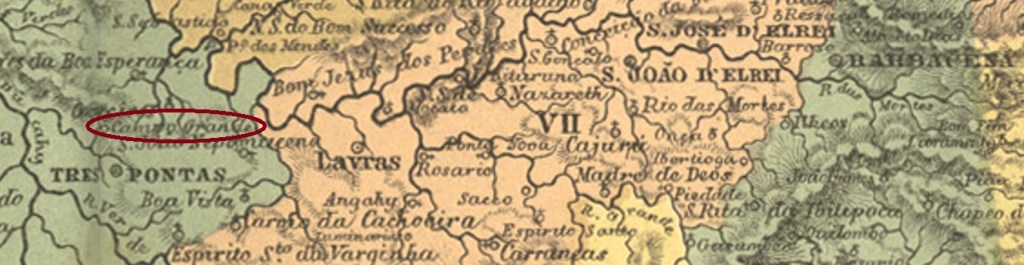
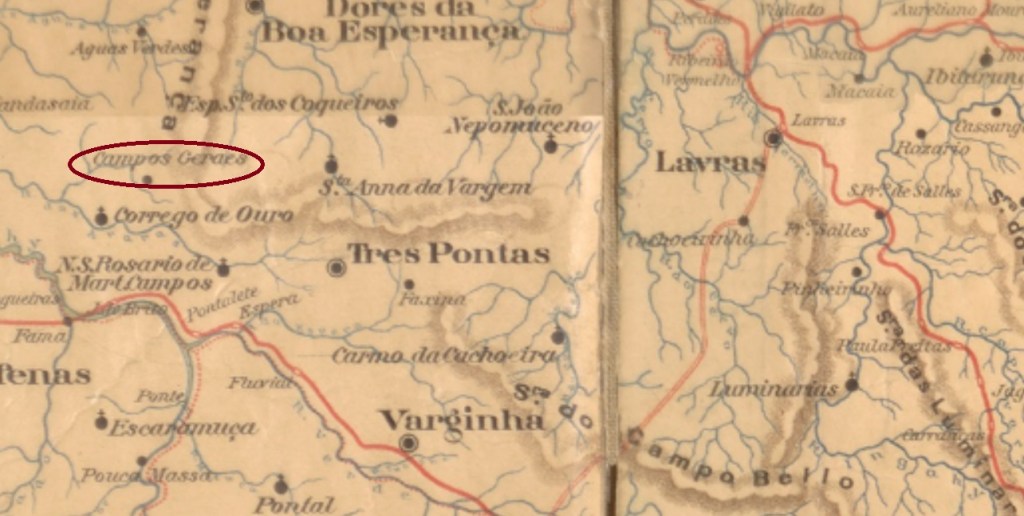
Other names: Carmo do Campo Grande, Campos Gerais (1901)

The freguesia of Carmo do Campo Grande was founded as early as September 1870 at the Vila of Tres Pontas and was located directly on the Divisa (border) stream. This actually represented the border between two hostile family estates in the region, 350 km southwest of the provincial capital Ouro Preto. In September 1901, it became the Vila of Campos Gerais, which has been a town since September 1915.

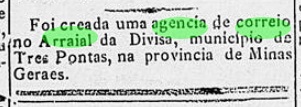
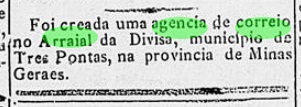
There had been a post office there since October 1883, as reported by the Rio press:

Gazeta da Tarde/RJ, 25/10/1883

So far, no imperial postmark has been sighted from this place.

Estado de Minas Geraes, 1910

Andere Namen: Carmo do Campo Grande, Campos Gerais (1901)

Die Freguesia von Carmo do Campo Grande wurde bereits im September 1870 bei der Vila von Tres Pontas gegründet und lag direkt am Bach Divisa (Grenze). Dieser stellte tatsächlich die Grenze zwischen zwei verfeindeten Familienbesitzen der Region dar, 350 km südwestlich der Provinzhauptstadt Ouro Preto entfernt. Im September 1901 wurde daraus die Vila von Campos Gerais, die seit September 1915 eine Stadt ist.

Dort gab es ein Postamt seit Oktober 1883, wie die Presse aus Rio meldete:

Gazeta da Tarde/RJ, 25.10.1883

Bisher wurde kein kaiserlicher Poststempel aus diesem Ort gesichtet.

Categories
Carimbologia A-B

Arraial da Conceição, Rio de Janeiro (ARJ-0065)

Colton: Provincia do Rio de Janeiro, 1866

Other names: Arraial do Tatu, Itapexirica, Estrada Nova.

See also Conceição da Estrada Nova (Koester: Carimbologia XIII)

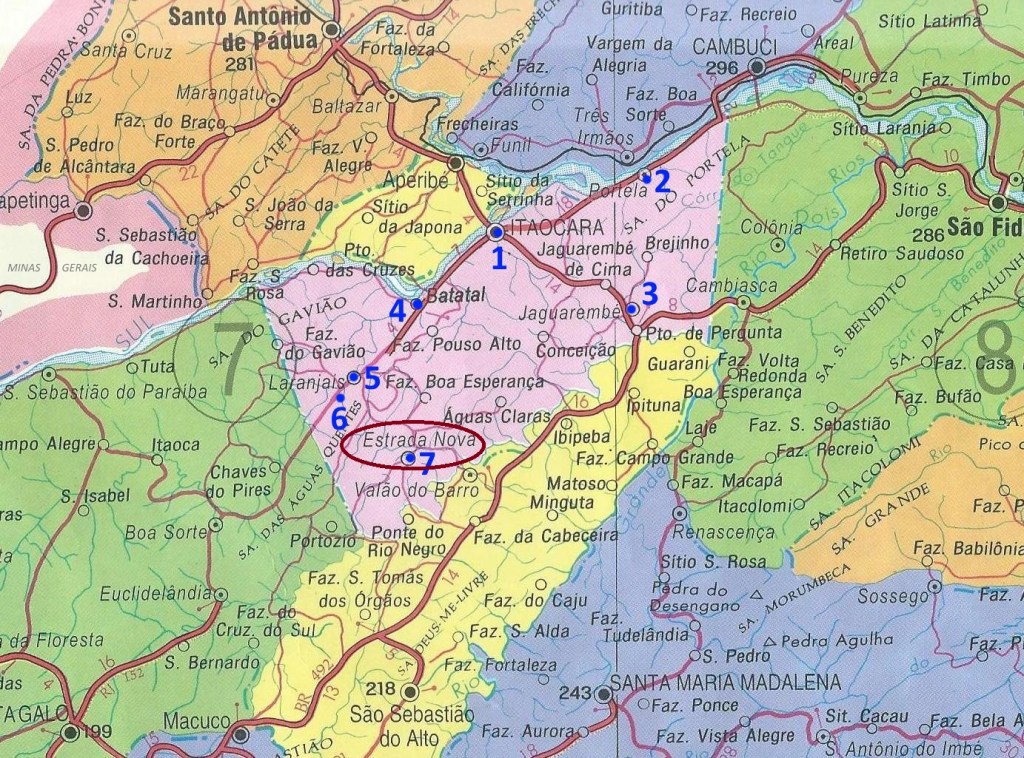
This settlement was originally called Arraial do Tatu or Itapexirica and was located near Cantagallo, 240 km northeast of the capital Rio de Janeiro. In 1859 it was renamed N. Sa. da Conceição da Estrada Nova, and in September 1890 it became a district, changing to the newly created Município of Itaocara the following month. Finally, in November 1924, the district was given the simplified name of Estrada Nova.

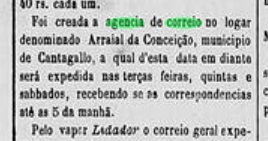
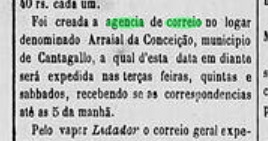
The local post office was established in December 1873, as reported by the regional press:

A Reforma, 06.12.1873

The first postmark is ARJ-0065a, which also exists in brown, blue, green and dark purple. It was in use until about 1879 and is already known by Paulo Ayres (Catálogo de Carimbos Brasil-Império, S. Paulo, 1937, 1942) under No. 1210:

ARJ-0065a (P.A. 1210, MPT 351)

Later postmarks (from c. 1881) bear the place name Estrada Nova and were already presented by R. Koester in Carimbologia XIII.

agenciaspostais.com.br

Andere Namen: Arraial do Tatu, Itapexirica, Estrada Nova

Siehe auch Conceição da Estrada Nova (Koester: Carimbologia XIII)

Diese Siedlung hieß ursprünglich Arraial do Tatu bzw. Itapexirica und lag bei Cantagallo, 240 km nordöstlich der Hauptstadt Rio de Janeiro entfernt. 1859 erfolgte eine Umbenennung zu N. Sa. da Conceição da Estrada Nova, und im September 1890 wurde daraus ein Distrikt, der im darauffolgenden Monat zum neu gegründeten Município von Itaocara wechselte. Schließlich erhielt der Distrikt im November 1924 den verinfachten Namen Estrada Nova.

Das örtliche Postamt wurde im Dezember 1873 ins Leben gerufen, wie die Regionalpresse meldete:

A Reforma, 06.12.1873

Der erste Poststempel ist ARJ-0065a, den es auch in braun, blau, grün und dunkelviolett gibt. Er war bis ca. 1879 in Verwendung und ist bereits durch Paulo Ayres (Catálogo de Carimbos Brasil-Império, S. Paulo, 1937, 1942) unter Nr. 1210 bekannt:

ARJ-0065a (P.A. 1210, MPT 351)

Spätere Poststempel (ab ca. 1881) tragen den Ortsnamen Estrada Nova und wurden bereits durch R. Koester in Carimbologia XIII vorgestellt.

Categories
Carimbologia A-B

Arraial da Capella, Município Neutro (AMN-0055)

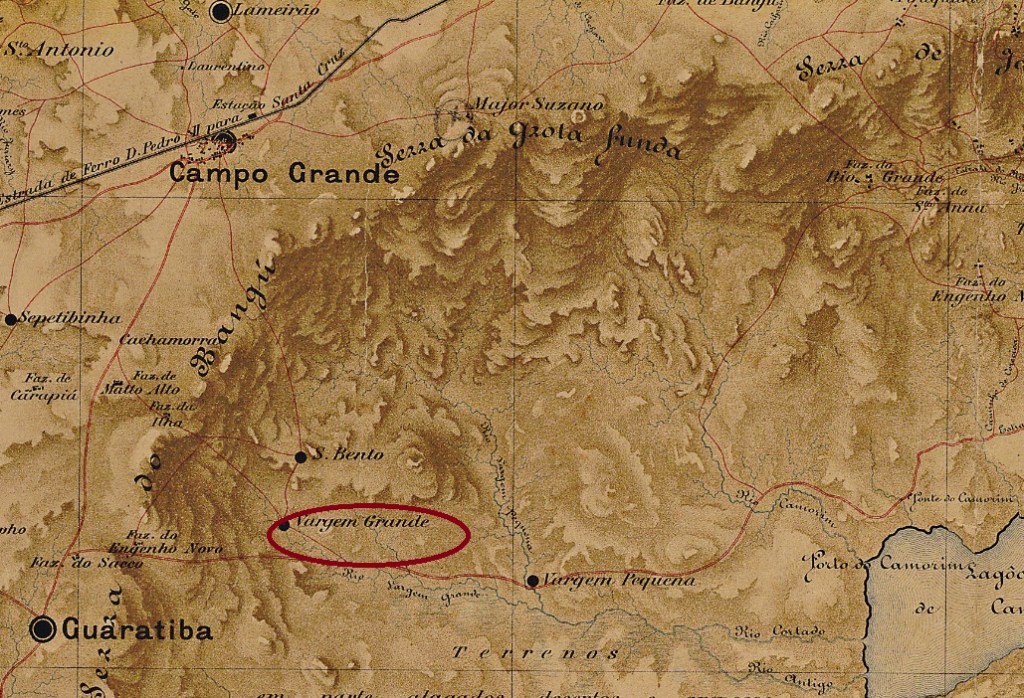
Mappa do Municipio Neutro, ca. 1875

Another name: Campo da Capella

See also Vargem Grande (VMN-0205)

This post office presents another enigma. There is no entry under this name in the press, but the agency is listed in the Imperial Postal Guide (Guia Postal do Império, 1880) under No. 63 and according to Paulo Novaes (agenciaspostais.com.br) it is said to have been in operation between about 1879 and about 1889. However, there is nothing about it in the Directory of Imperial Post Offices (Tabella das Agencias do Correio do Imperio, Rio de Janeiro, 1885). Why?

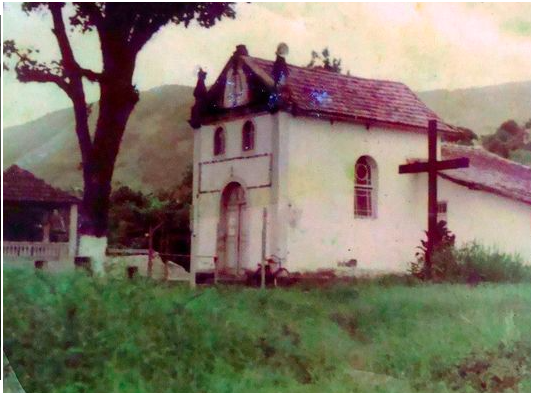
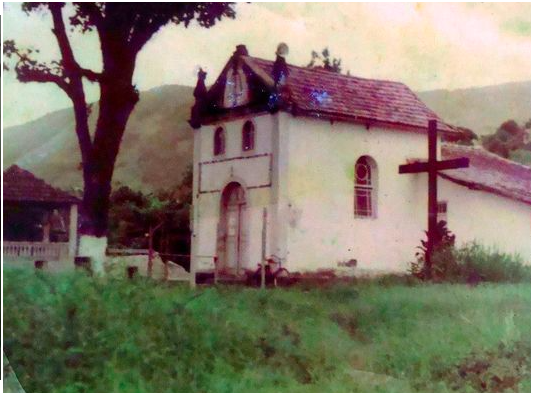
My hypothesis: the post office is identical with the agency in Vargem Grande of Guaratiba (VMN-0205). The latter is mentioned in the Directory of 1885 as having been established in 1879, but is missing from the Postal Guide of 1880. Moreover, from 1827 to about 1985, there was a chapel in honour of St. Sebastian in Vargem Grande:

ecomuseusertaocarioca.blogspot.com

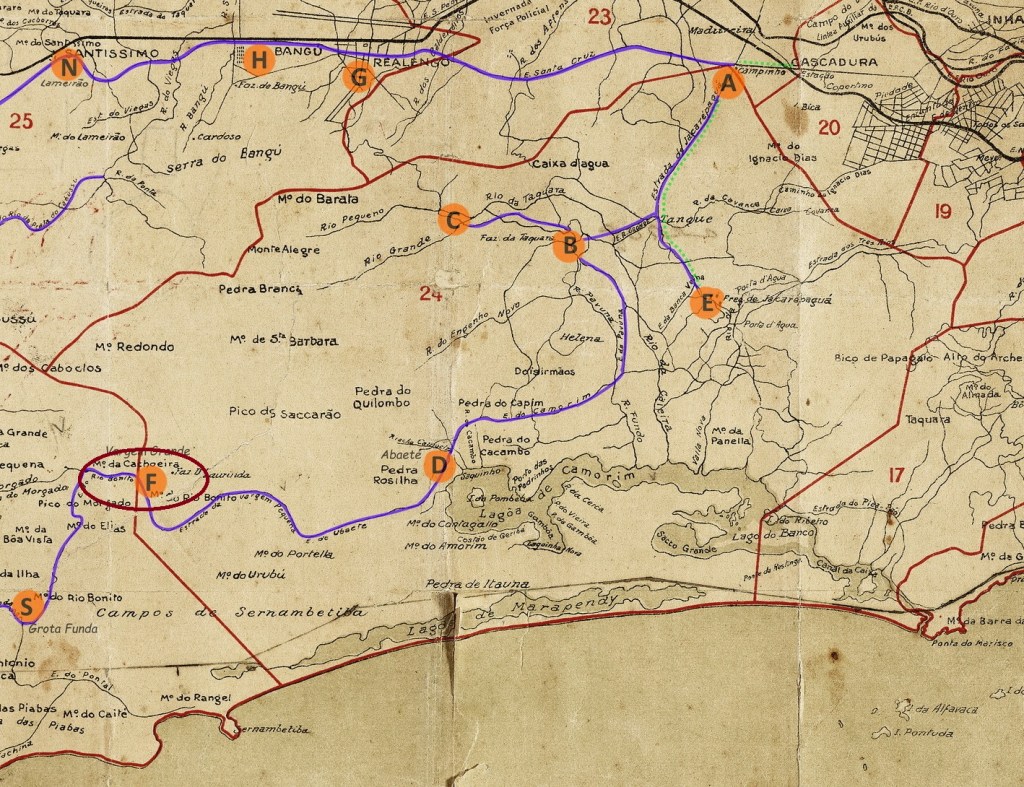
It seems very unlikely that such a tiny suburb had two active post offices next to each other at the same time. The settlement originated as a large fazenda more than 40 km west of the capital Rio de Janeiro. It belonged to the freguesia of Guaratiba and was separated from this locality by the Serra do Bangu. Today, Vargem Grande is part of the district of Barra da Tijuca in the município of Rio de Janeiro. 

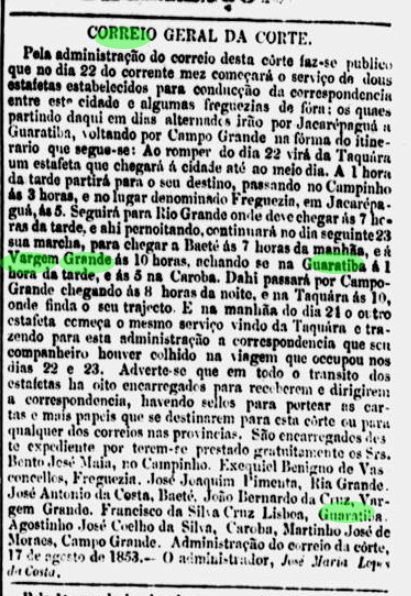
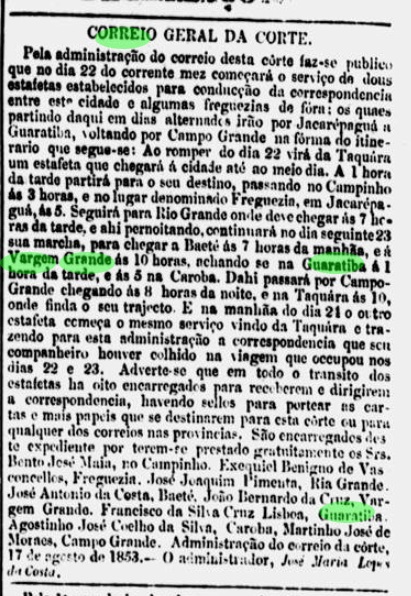
From August 1853 onwards, there was both a postal relay service there and stamp sales on place, according to the Rio press:

Jornal do Commercio 18.08.1853

So far, no Imperial postmark has been seen for this locality.

Mappa do Distrito Federal, 1920 ( in agenciaspostais.com.br)

Anderer Name: Campo da Capella

Siehe auch Vargem Grande (VMN-0205)

Auch dieses Postamt stellt einen Rätsel dar. Unter diesem Namen findet sich keine Eintragung in der Presse, aber die Agentur ist im kaiserlichen Postführer (Guia Postal do Império, 1880) unter Nr. 63 aufgelistet und soll laut Paulo Novaes (agenciaspostais.com.br) zwischen ca. 1879 und ca. 1889 in Betrieb gewesen sein. Allerdings findet sich nichts darüber im Verzeichnis der kaiserlichen Postämter (Tabella das Agencias do Correio do Imperio, Rio de Janeiro, 1885). Warum?

Meine Hypothese: das Postamt ist identisch mit der Agentur in Vargem Grande von Guaratiba (VMN-0205). Denn letztere wird im Verzeichnis (1885) mit Entstehungsjahr 1879 genannt, fehlt aber im Postführer aus 1880. Außerdem gab es von 1827 bis ca. 1985 in Vargem Grande eine Kapelle zum Ehren vom Hl. Sebastian:

ecomuseusertaocarioca.blogspot.com

Es scheint sehr unwahrscheinlich, dass so ein winziger Vorort damals zur gleichen Zeit zwei aktive Postämter nebeneinander hatte. Die Siedlung entstand als eine große Fazenda, die über 40 km westlich von der Hauptstadt Rio de Janeiro entfernt lag. Sie gehörte der Freguesia von Guaratiba und war von dieser Ortschaft durch die Serra do Bangu getrennt. Heute ist Vargem Grande ein Ortsteil des Distrikts von Barra da Tijuca im Município von Rio de Janeiro. 

Es gab ab August 1853 sowohl einen Poststafettendienst dorthin als auch Briefmarkenverkauf vor Ort, wie die Presse aus Rio mitteilte:

Jornal do Commercio 18.08.1853

Bisher wurde kein Poststempel des Kaiserreichs für diese Ortschaft gesehen.

Categories
Carimbologia A-B

Arraial, Ceará (ACE-0032)

Atlas do Imperio do Brasil, 1868

Other names: S. João da Imperatriz, Uruburetama (1938)

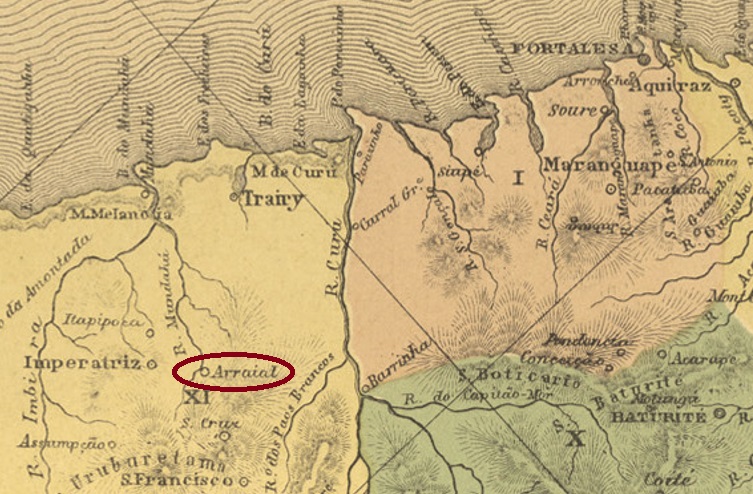
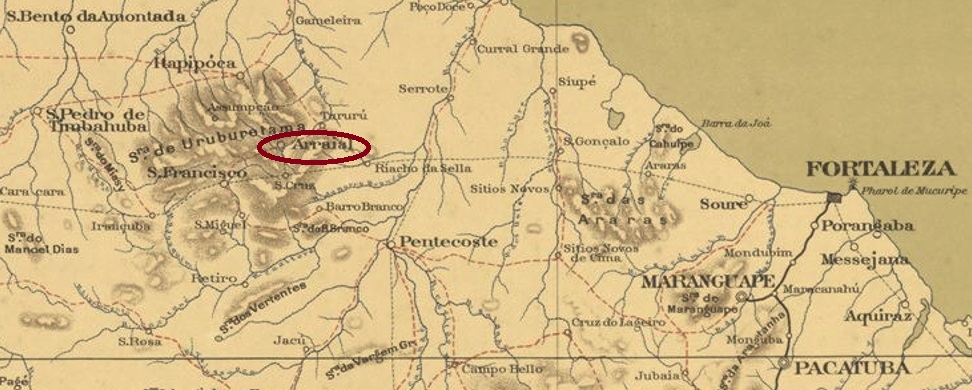
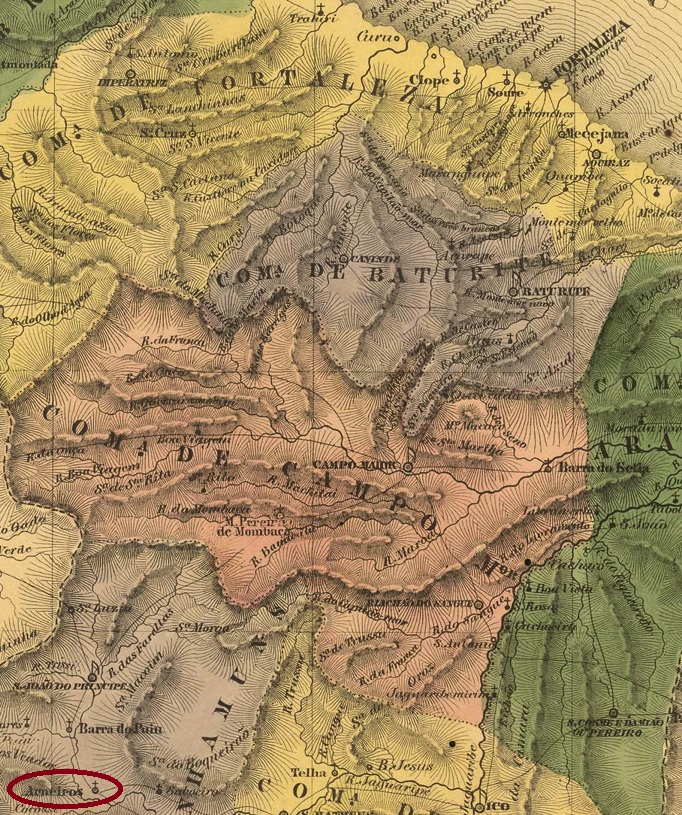
The Portuguese word Arraial actually means small settlement, neither a freguesia nor a vila. But semantics do not matter for this village on the north bank of the Mundaú River, 120 km west of Fortaleza. It became a district in the Município of São Francisco in September 1869, changed as a freguesia to the Município of S. João da Imperatriz (today: Itapipoca) in December 1885 and became an independent vila (called Arraial) in August 1890. This status was lost eight years later: Arraial became a district of São Francisco again. After that, the place name changed three times: in August 1899 – again as Município – to S. João de Uruburetama, in May 1931 again to Arraial, and finally in December 1938 to Uruburetama, which is still valid today. The Tupi word means land of vultures. Better to be called Arraial then…

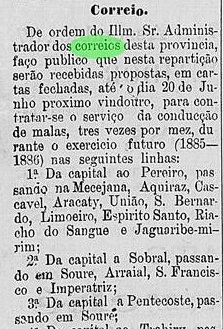
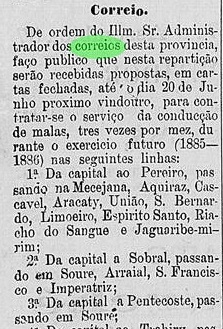
It is not certain whether the place had an imperial post office, but evidence suggests it did. In the Directory of Imperial Post Offices (Tabella das Agencias do Correio do Imperio, Rio de Janeiro, 1885), no agency was listed there, but in the same year 1885, a forthcoming postal route through Arraial was announced in the regional press:

A Constituição, 21.05.1885

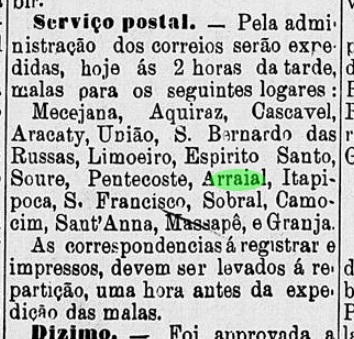
And also in July 1890 – i.e., in the early Republic – there were reported regular postal routes to and from Arraial:

Cearense, 03.07.1890

Until now, no imperial postmark has turned up.

Serviço Geologico e Mineralogico do Brasil, 1910

Andere Namen: S. João da Imperatriz, Uruburetama (1938)

Das portugiesische Wort Arraial bedeutet eigentlich kleine Siedlung, also weder eine Freguesia noch einer Vila. Aber die Semantik spielt keine Rolle bei dieser Ortschaft am Nordufer des Flusses Mundaú, 120 km westlich von Fortaleza gelegen. Sie wurde im September 1869 zum Distrikt im Município von São Francisco, wechselte als Freguesia im Dezember 1885 zur Município von S. João da Imperatriz (heute: Itapipoca) und wurde eine eigenständige Vila (mit Namen Arraial) im August 1890. Dieser Status ging acht Jahre später verloren: Arraial wurde wieder ein Distrikt von São Francisco. Danach wechselte der Ortsname dreimal: im August 1899 – wieder als Município – zu S. João de Uruburetama, im Mai 1931 wieder zu Arraial, und schließlich im Dezember 1938 zum heute noch gültigen Uruburetama. Der Begriff der Tupi-Sprache bedeutet Land der Geier. Dann doch lieber Arraial heißen…
Es ist nicht sicher, ob der Ort ein kaiserliches Postamt hatte, aber die Indizien sprechen eher dafür. Im Verzeichnis der kaiserlichen Postämter (Tabella das Agencias do Correio do Imperio, Rio de Janeiro, 1885) war keine Agentur dort aufgelistet, aber im gleichen Jahr 1885 waren Postrouten durch Arraial in der Regionalpresse angekündigt:

A Constituição, 21.05.1885

Und auch im Juli 1890 – also in der frühen Republik – waren regulären Postlinien von und nach Arraial vorhanden:

Cearense, 03.07.1890

Nun ist bisher kein kaiserlicher Poststempel aufgetaucht.

Categories
Carimbologia A-B

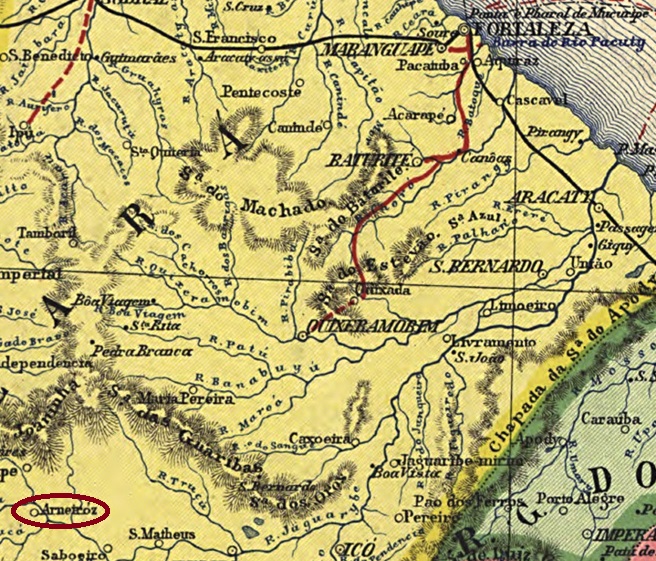
Arneiroz, Ceará (ACE-0030)

Villiers de l’Ile Adam: Carta (…) da Provincia do Ceara, 1849

The Freguesia of Arneiroz was established in August 1784 and was located at the Vila of Quixeramobim on the south bank of the river Jaguaribe, more than 380 km southwest of the provincial capital Fortaleza. It was declared a vila in November 1864 but lost this status in May 1931 and became a district of the municipality of Tauá. Since March 1957, Arneiroz has once again been an independent município. The name recalls a Portuguese freguesia near Lamego in the district of Viseu.

The local post office was created in 1874, according to the Directory of Imperial Post Offices (Tabella das Agencias do Correio do Imperio, Rio de Janeiro, 1885), and closed in April 1891, according to the Postal Bulletin (Boletim Postal) of that year. No imperial postmark from this locality has been found so far.

Carta da Republica dos Estados Unidos do Brazil, 1892

Die Freguesia von Arneiroz wurde im August 1784 errichtet und lag bei der Vila von Quixeramobim am Südufer des Flusses Jaguaribe, über 380 km südwestlich der Provinzhauptstadt Fortaleza entfernt. Sie wurde im November 1864 zur Vila erklärt, verlor aber diesen Status im Mai 1931 und wurde ein Distrikt der Gemeinde Tauá. Seit März 1957 ist Arneiroz wieder ein eigenständiger Município. Der Name erinnert an einer portugiesischen Freguesia bei Lamego im Bezirk Viseu.

Das örtliche Postamt wurde 1874 ins Leben gerufen, wie im Verzeichnis der kaiserlichen Postämter (Tabella das Agencias do Correio do Imperio, Rio de Janeiro, 1885) zu lesen ist, schloss aber im April 1891, wie der Postbulletin (Boletim Postal) d. Jh. berichtet. Bisher wurde kein kaiserlicher Poststempel aus dieser Ortschaft gefunden.
Categories
Carimbologia A-B

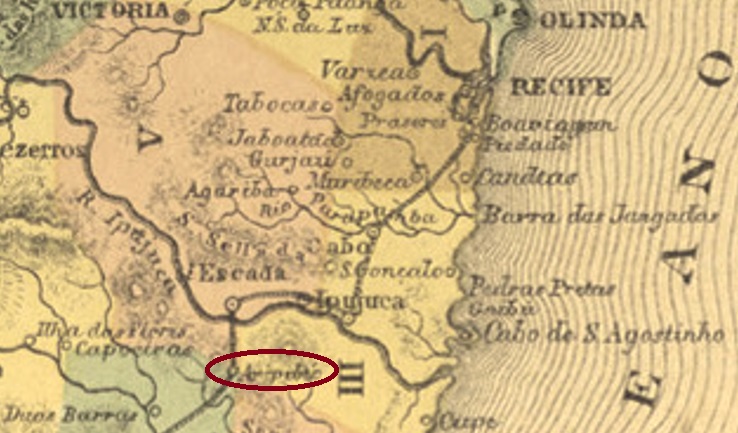
Aripibú (train station/Bahnhof), Pernambuco (APE-0055)

Atlas do Imperio do Brasil, 1868

Another name: Arapibú

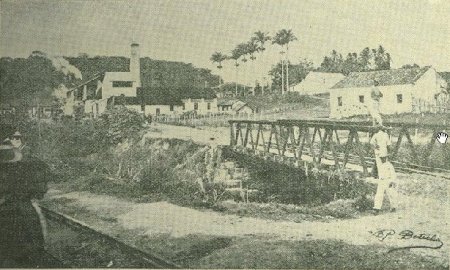
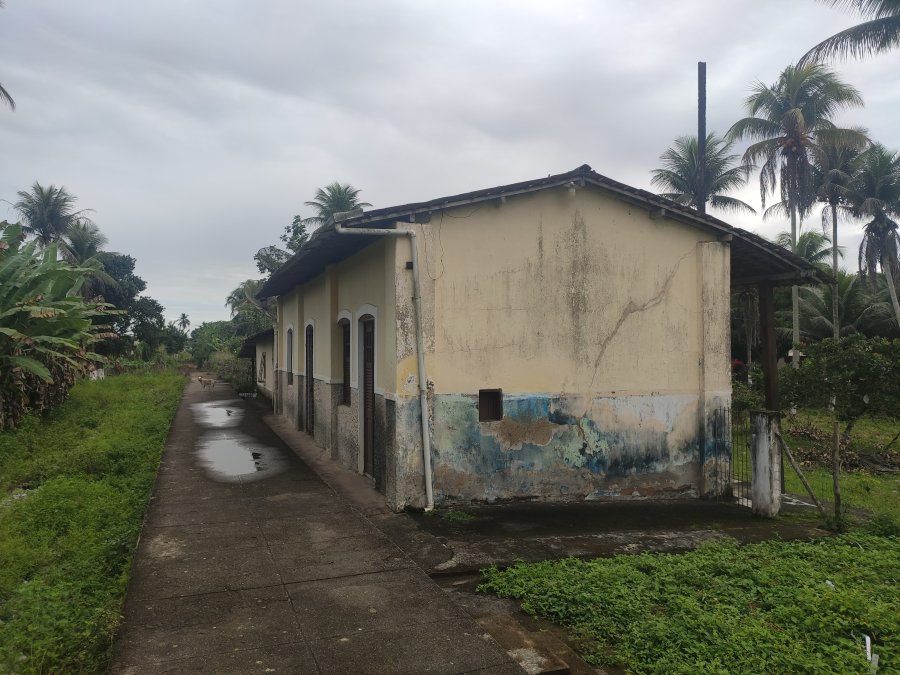
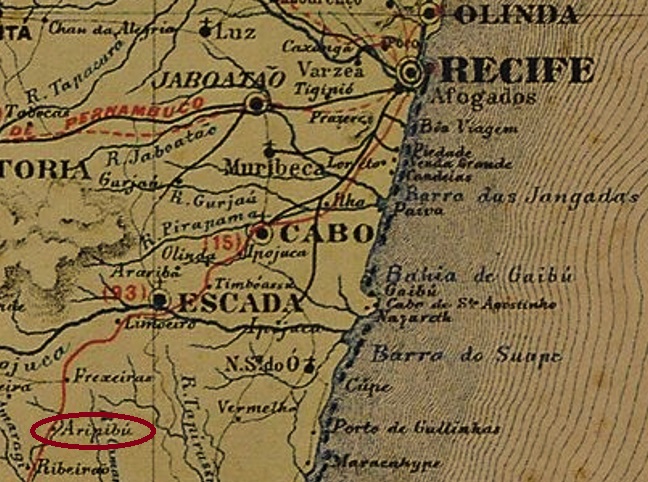
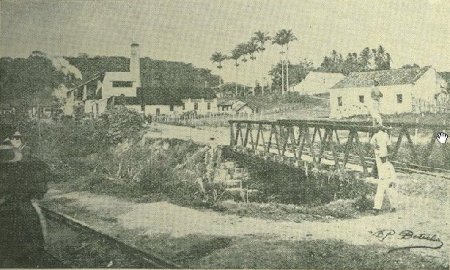
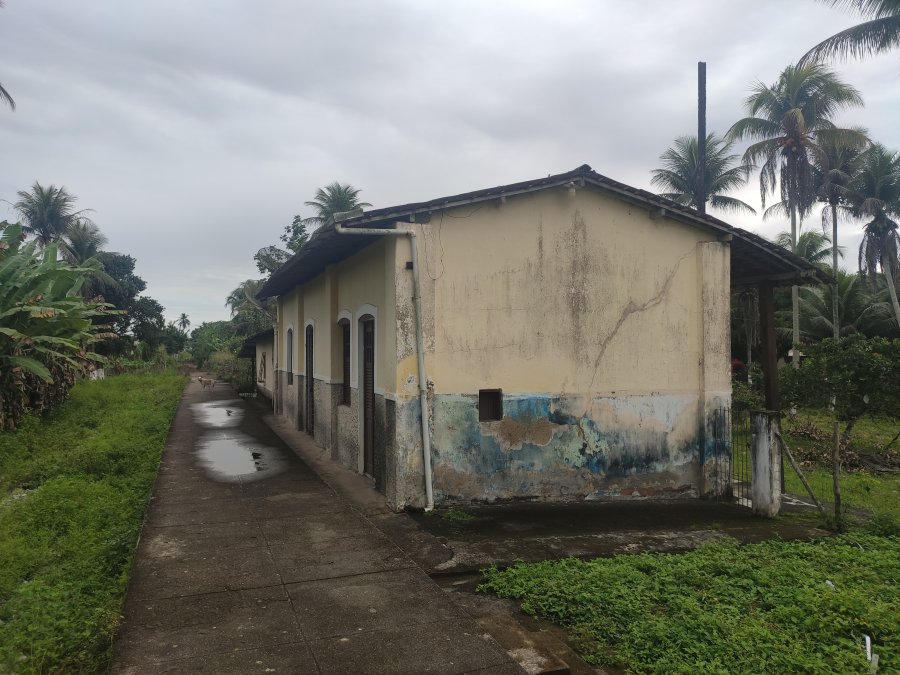
Aripibú station was inaugurated in May 1862 by the E.F. do Recife ao São Francisco (Southern Line) railway company and was located directly on the Engenho (sugar cane plantation) Aripibú in the Município of Escada, 75 km southwest of the provincial capital Recife. The railway line went to the Great Western company in 1901, to Rede Ferroviária do Nordeste in 1950 and from 1975 until its closure in 1996 it belonged to Rede Ferroviária Federal S.A. (estacoesferroviarias.com.br). Today, the rails are gone and the station building serves as a residence for the widow of the last stationmaster.
1906 (O Malho, after estacoesferroviarias.com.br)
2022 (Photo: Rodrigo Henrique, after estacoesferroviarias.com.br)

The settlement around the station continued to grow slowly and from November 1889 it belonged to the Vila of Amaracy, which has been called Amaragy since September 1890. Since December 1938, the station has been in the Município of Ribeirão.

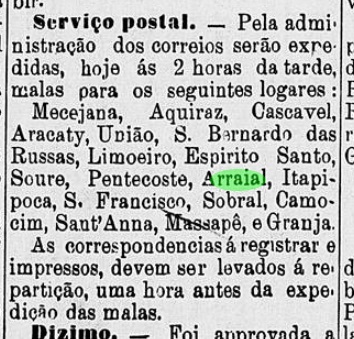
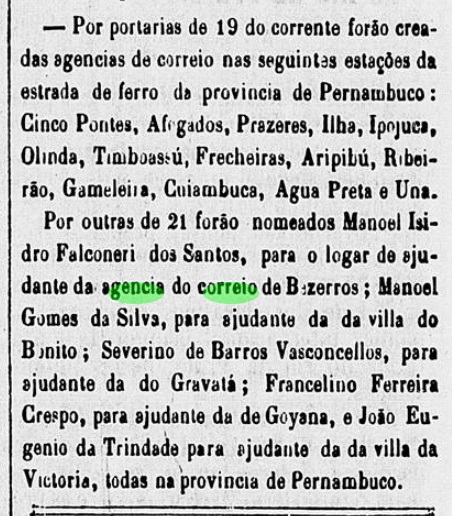
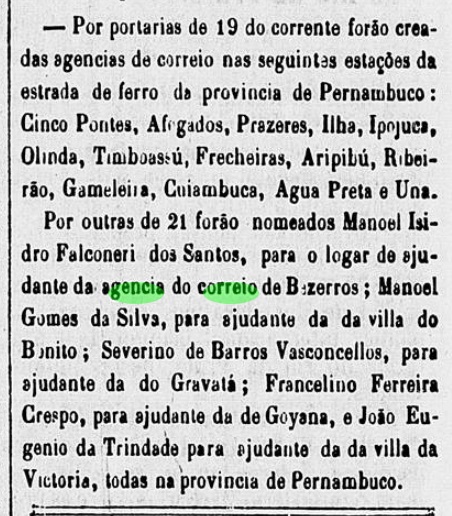
Three dates of origin have been found for the station post office. The first was in December 1864, according to the Rio press:

Constitucional/RJ, 21.12.1864

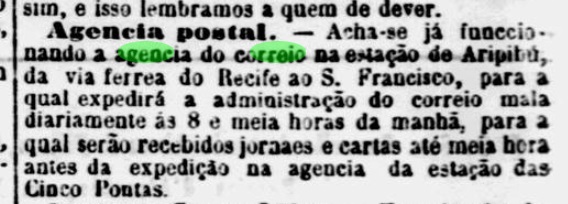
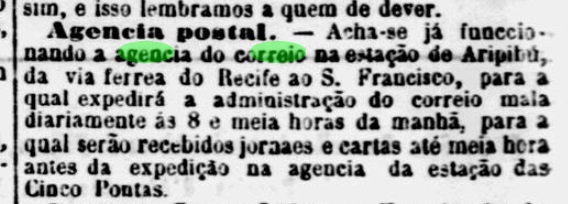
Then again in June 1875, as reported by the regional press:

Diario de Pernambuco, 10.06.1875

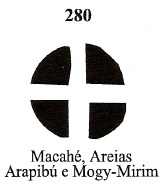
The third date of creation of the agency would be around 1879, since this creation was mentioned on page VI of the Empire’s Postal Guide (Guia Postal do Império), published at the end of that year. A station and a mute postmark have also been recorded. APE-0055b (Coll. Roberto Assef Jr.) is a French type, with the above inscription ESTÇÃO ARIPIBÚ and the star between brackets at the bottom. The dates in the centre – mostly written by hand – go from 1881 to 1888.

The mute postmark has already been presented by James Dingler and Klerman W. Lopes in Mute Cancellations of the Brazil Empire / Carimbos Mudos do Brasil Império (Brazil Philatelic Association, Rio de Janeiro, 2000) under No. 280:

BPA 280
Carta Corographica da Provincia de Pernambuco, 1880

Anderer Name: Arapibú

Der Bahnhof Aripibú wurde im Mai 1862 durch die Bahngesellschaft E.F. do Recife ao São Francisco (Südlinie) eingeweiht und lag direkt am Engenho (Zuckerrohrplantage) Aripibú im Município von Escada, 75 km südwestlich der Provinzhauptstadt Recife entfernt. Die Bahnlinie ging 1901 zur Great Western-Gesellschaft, 1950 zur Rede Ferroviária do Nordeste und von 1975 bis zur Stilllegung 1996 gehörte sie der Rede Ferroviária Federal S.A. (estacoesferroviarias.com.br). Heute sind die Schienen weg, und das Bahnhofsgebäude dient als Wohnhaus für die Witwe des letzten Bahnvorstehers.

1906 (O Malho, nach estacoesferroviarias.com.br)
2022 (Foto: Rodrigo Henrique, nach estacoesferroviarias.com.br)

Die Siedlung um den Bahnhof wuchs langsam weiter und gehörte ab November 1889 zur Vila von Amaracy, die seit September 1890 Amaragy heißt. Seit Dezember 1938 liegt der Bahnhof im Município von Ribeirão.

Es wurden drei Entstehungsdaten fürs Bahnhofspostamt gefunden. Erstmals im Dezember 1864, wie die Presse aus Rio mitteilte:

Constitucional/RJ, 21.12.1864

Dann wieder im Juni 1875, wie aus der Regionalpresse hervorgeht:

Diario de Pernambuco, 10.06.1875

Das dritte Datum der Gründung der Agentur wäre um 1879, da diese Neugründung auf Seite VI des am Ende des Jahres veröffentlichten Kaiserlichen Postführer (Guia Postal do Império) erwähnt wurde. Ein Bahnhofs- und ein stummer Stempel sind auch erfasst worden. APE-0055b (Samml. Roberto Assef Jr.) ist ein Französischer Typus, mit der obigen Inschrift ESTÇÃO ARIPIBÚ und dem Stern zwischen Klammern unten. Die Daten in der Mitte – meistens per Hand eingetragen gehen von 1881 bis 1888.

Der stumme Poststempel wurde bereits durch James Dingler und Klerman W. Lopes in Mute Cancellations of the Brazil Empire / Carimbos Mudos do Brasil Império (Brazil Philatelic Association, Rio de Janeiro, 2000) unter Nr. 280 vorgestellt:

BPA 280