Other names: Nossa Sra. do Rosário do Serrito, Cerrito Velho
See also Serrito do Cangussu (SRS-0425)
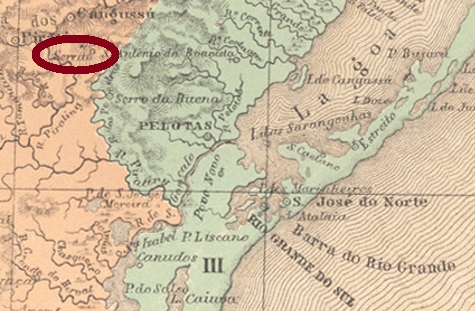
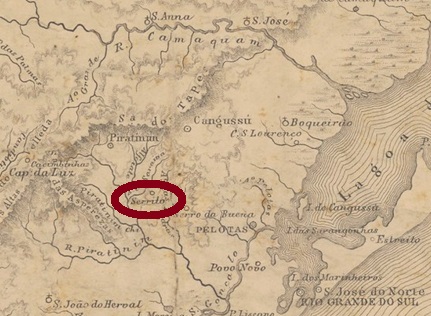
The old settlement of Nossa Senhora do Rosário do Serrito near Pelotas only in about 1890 became a district in the Município of Cangussu (now spelled Canguçu), located a good 300 km southwest of the provincial capital Porto Alegre. In April 1959, the town transferred as Cerrito to the newly created Município of Pedro Osório and received its administrative autonomy in December 1995.
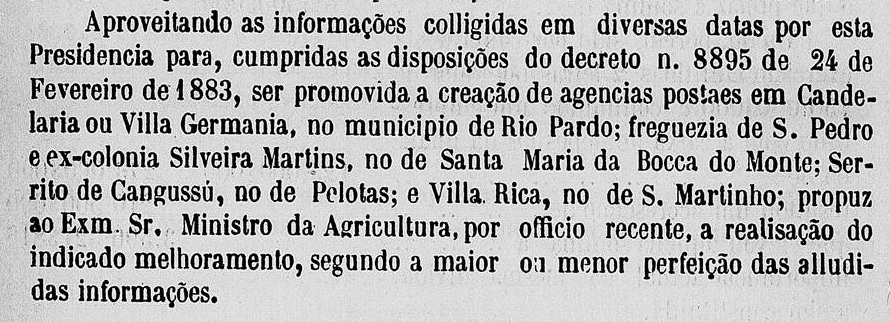
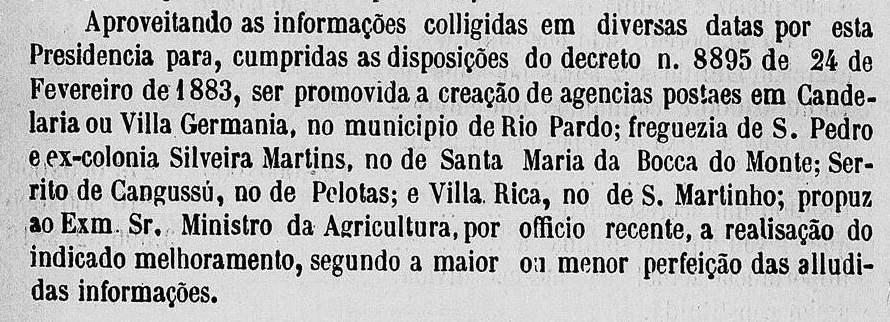
The local post office came into being in August 1887, as Luís Claudio Fritzen writes in Agencias Postais da Provincia de São Pedro do Sul durante o Império Brasileiro (Rio Grande Filatélico 49, Porto Alegre, 2007). This is confirmed by the report of the Provincial President:
Relatório do Presidente da Província, 1887
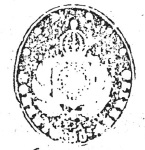
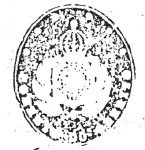
The only imperial postmark under this place name so far is CRS-0100a, as shown in Koester’s Carimbologia XI:
CRS-0100a (RK)Provincia de S. Pedro do Rio Grande, 1877
Andere Namen: Nossa Sra. do Rosário do Serrito, Cerrito Velho
Siehe auch Serrito do Cangussu (SRS-0425)
Die alte Siedlung von Nossa Senhora do Rosário do Serrito bei Pelotas wurde erst ca. 1890 zu einem Distrikt im Município von Cangussu (heute Canguçu geschrieben), der gut 300 km südwestlich der Provinzhauptstadt Porto Alegre entfernt lag. Im April 1959 wechselte der Ort als Cerrito zum neu gegründeten Município von Pedro Osório und erhielt seine Verwaltungsautonomie im Dezember 1995.
Das örtliche Postamt entstand im August 1887, wie Luís Claudio Fritzen in Agencias Postais da Provincia de São Pedro do Sul durante o Império Brasileiro (Rio Grande Filatélico 49, Porto Alegre, 2007) schreibt. Dies wird durch den Bericht des Provinzpräsidenten bestätigt:
Relatório do Presidente da Província, 1887
Der einzige kaiserliche Poststempel unter diesem Ortsnamen ist CRS-0100a, wie im Koesters Carimbologia XI abgebildet:
Estações (…) do Rio de Janeiro, São Paulo e Minas Geraes, 1880
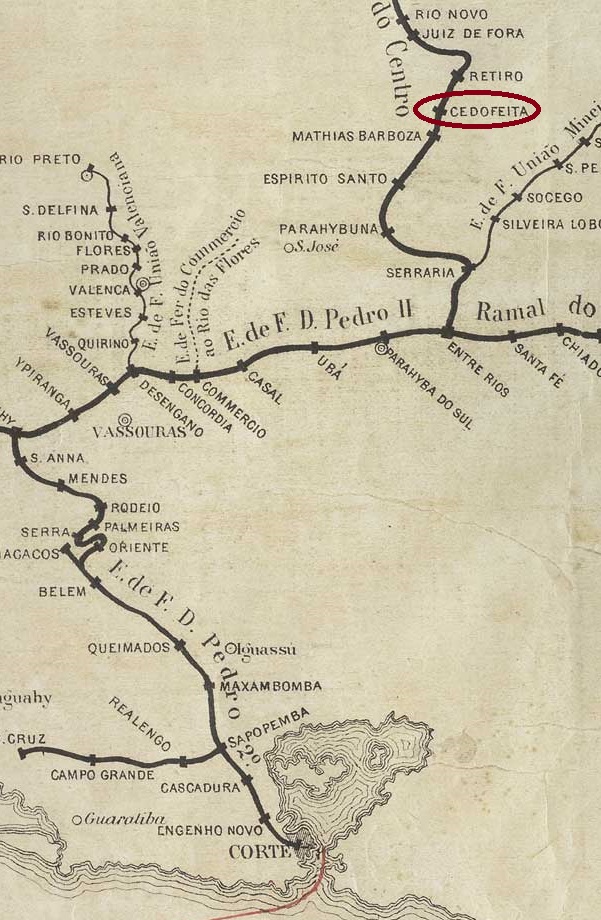
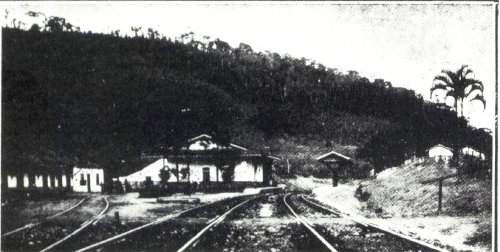
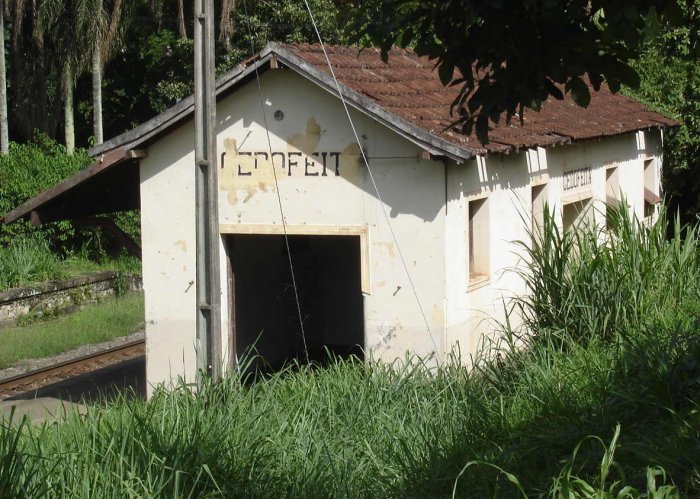
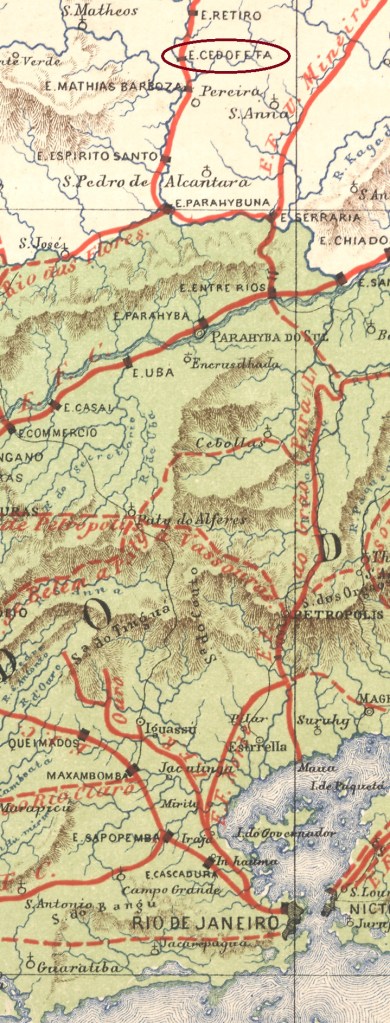
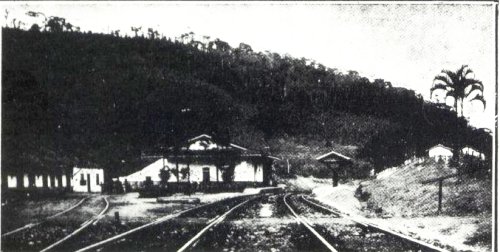
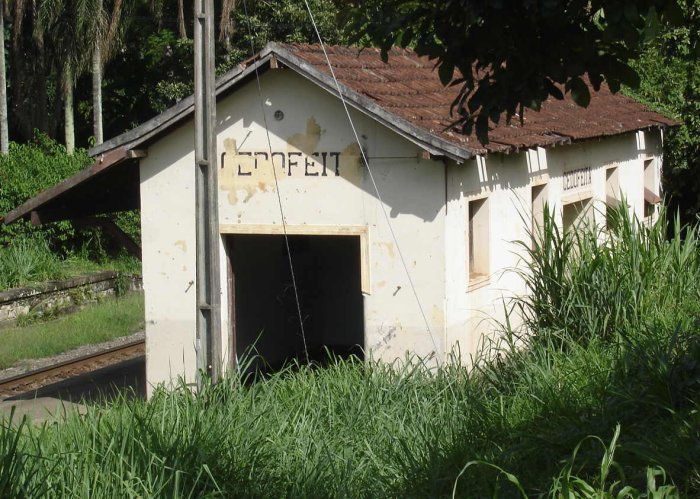
Cedofeita station was opened in December 1875 by the railway company E.F. D. Pedro II (Central Line) in the Município de Juiz de Fora on the east bank of the Paraibuna, 240 km south of the provincial capital Ouro Preto. The line was transferred to E.F. Central do Brasil in 1889 and belonged to Rede Ferroviaria Federal S.A. (estacoesferroviarias.com.br) from 1975 until the line was closed in 1996. From September 1923, the station belonged to the Município de Matias Barbosa. Today the station building is an abandoned ruin, but the tracks are still there.
In 1915 (Album of Juiz de Fora, on estacoesferroviarias.com.br)2010 (Photo: Gutierrez L. Coelho, on estacoesferroviarias.com.br)
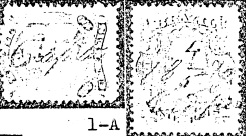
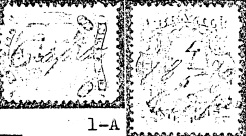
Two dates of origin have been found for the station post office. Firstly in January 1876, as Paulo Novaes writes (agenciaspostais.com.br). Then in September 1878, as stated by Paula Sobrinho (História Postal de Minas Gerais, Belo Horizonte, 1997) and R. Koester (Carimbologia XI). Koester, however, shows a handwritten cancellation from Cedofeita dated May 1876, which on the one hand contradicts his own information and on the other hand is a hint that the postmark did not arrive at the station in time:
1876 (fig. R. Koester, op. cit.)
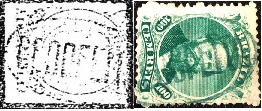
The oldest postmark is probably CMG-0720a (fig. R. Koester and Lelio Cimini), which can be seen on the D. Pedro issues from 1866:
CMG-0720a (RK/Lelio Cimini) 1876ff-1878ff
The cancel CMG-0720b was made known by P. Ayres (Catálogo de Carimbos Brasil-Império, S. Paulo, 1937, 1942) with no. 1275 and appeared almost simultaneously:
CMG-0720b (P.A. 1275) 1876ff-1878ff
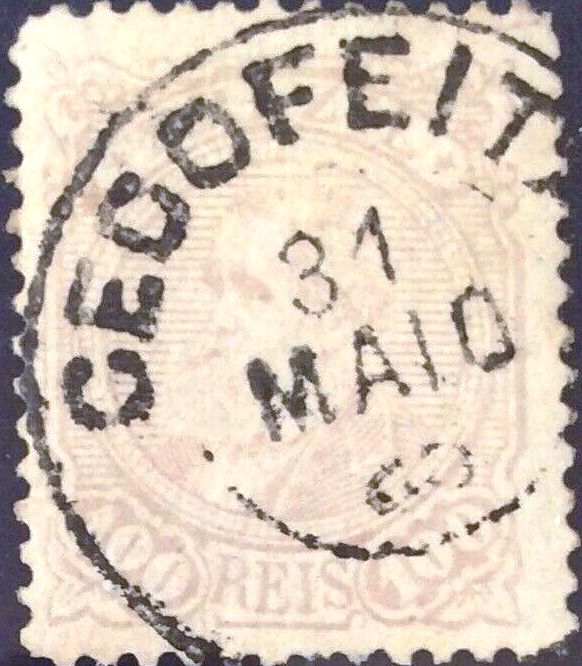
This was followed by the double circle CMG-0720c (illustration from the Internet):
CMG-0720c (EB) 1884-1885
Near the end of the empire finally came CMG-0720d (illustration by R. Koester):
CMG-0720d (RK) 1885-1889ffE. F. Central do Brasil, 1890
Der Bahnhof Cedofeita wurde im Dezember 1875 von der Eisenbahngesellschaft E.F. D. Pedro II (Hauptstrecke) eröffnet und liegt im Município de Juiz de Fora am Ostufer des Paraibuna, 240 km südlich der Provinzhauptstadt Ouro Preto. Die Strecke ging 1889 an die E.F. Central do Brasil über und gehörte von 1975 bis zur Stilllegung der Strecke 1996 der Rede Ferroviaria Federal S.A. (estacoesferroviarias.com.br). Ab September 1923 befand sich der Bahnhof im Município de Matias Barbosa. Heute ist das Bahnhofsgebäude eine verlassene Ruine, die Gleise sind noch vorhanden.
1915 (Album von Juiz de Fora, auf estacoesferroviarias.com.br)2010 (Foto: Gutierrez L. Coelho, auf estacoesferroviarias.com.br)
Für das Bahnhofspostamt wurden zwei Entstehungsdaten gefunden. Zuerst im Januar 1876, wie Paulo Novaes schreibt (agenciaspostais.com.br). Dann im September 1878, wie von Paula Sobrinho (História Postal de Minas Gerais, Belo Horizonte, 1997) und R. Koester (Carimbologia XI) angegeben. Koester zeigt jedoch eine handschriftliche Entwertung aus Cedofeita vom Mai 1876, was einerseits seiner eigenen Angabe widerspricht, andererseits ein Hinweis darauf ist, dass der Poststempel nicht rechtzeitig am Bahnhof eintraf:
1876 (Abb. R. Koester, a.a.O.)
Der älteste Poststempel ist wahrscheinlich CMG-0720a (Abb. R. Koester und Lelio Cimini), der noch auf den D.Pedro-Ausgaben von 1866 zu sehen ist:
CMG-0720a (RK/Lelio Cimini) 1876ff-1878ff
Fast gleichzeitig erschien der von P. Ayres (Catálogo de Carimbos Brasil-Império, S. Paulo, 1937, 1942) mit Nr. 1275 bekannte Stempel CMG-0720b:
CMG-0720b (P.A. 1275) 1876ff-1878ff
Es folgte der Doppelkreis CMG-0720c (Abbildung aus dem Internet):
CMG-0720c (EB) 1884-1885
Am Ende des Kaiserreichs kam schließlich CMG-0720d (Abb. R. Koester):
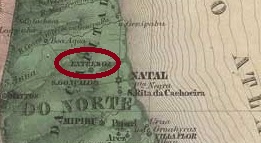
The settlement was originally named after the Portuguese Villa de Extremoz and is said to have been given the name Vila Nova de Extremoz as early as June 1755. As not uncommon in north-east Brazil, the entire settlement was relocated in August 1855 to the former Arraial de Boca da Mata on the south bank of the Ceará-Mirim, 35 kilometres north-west of the provincial capital Natal, and from then on was called Briosa Vila de Ceará-Merim. Ceará Mirim (as it is spelt today) has been a town since June 1882.
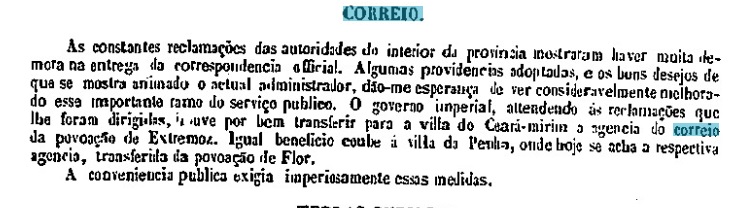
As Nova Monteiro writes in Administrações e Agencias Postaes do Brasil Imperio (Brasil Filatelico/RJ, 1934-5; reprint SPP 1994-1999), there had been a post office there since August 1860. This is confirmed by a report from the provincial president, albeit with the note that this was the relocated Extremoz post office:
Relatorio do Presidente da Provincia, 04/1861
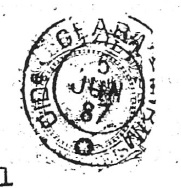
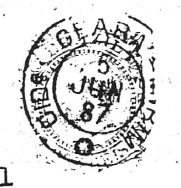
The only postmark from the imperial period to date was CRN-0055b, illustrated by R. Koester (Carimbologia XI):
CRN-0055b (RK) 1887
But in the meantime, an earlier cancel has appeared, which has a good chance of being the first one there, with image provided by Luiz C. Fritzen:
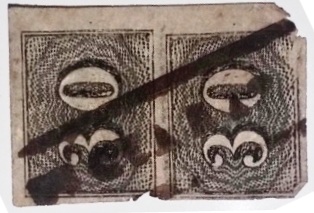
CRN-0055a (LCF) 1860ff
CRN-0055c also appeared in the early Republic (illustration from the Internet).
CRN-0055c (EB) 1893-1894Villiers de l’Ile Adam: Carta (…) das Provincias do Rio Grande do Norte e Parahiba, 1848)
Textaktualisierung am 26.12.2023
Andere Namen: Extremoz, Boca da Mata
Die Siedlung wurde ursprünglich nach der portugiesischen Villa de Extremoz benannt und soll bereits im Juni 1755 den Namen Vila Nova de Extremoz erhalten haben. Wie im Nordosten Brasiliens nicht unüblich, wurde die gesamte Siedlung im August 1855 in das ehemalige Arraial de Boca da Mata am Südufer des Ceará-Mirim, 35 km nordwestlich der Provinzhauptstadt Natal, verlegt und hieß fortan Briosa Vila de Ceará-Merim. Seit Juni 1882 ist Ceará Mirim (wie es heute geschrieben wird) eine Stadt.
Wie Nova Monteiro in Administrações e Agencias Postaes do Brasil Imperio (Brasil Filatelico/RJ, 1934-5; Reprint SPP 1994-1999) schreibt, gab es dort seit August 1860 ein Postamt. Dies wird durch einen Bericht des Provinzpräsidenten bestätigt, allerdings mit dem Hinweis, dass es sich um das verlegte Postamt von Extremoz handelt:
Relatorio do Presidente da Provincia, 04/1861
Der bisher einzige Poststempel aus der Kaiserzeit war CRN-0055b, abgebildet von R. Koester (Carimbologia XI):
CRN-0055b (RK) 1887
In der Zwischenzeit ist jedoch ein früherer Stempel aufgetaucht, der gute Chancen hat, der erste zu sein. Das Bild stammt von Luiz C. Fritzen
CRN-0055a (LCF) 1860ff
In der frühen Republik erschien auch CRN-0055c (Abbildung aus dem Internet).
Other names: Commissão de Melhoramentos do Rio de S. Francisco
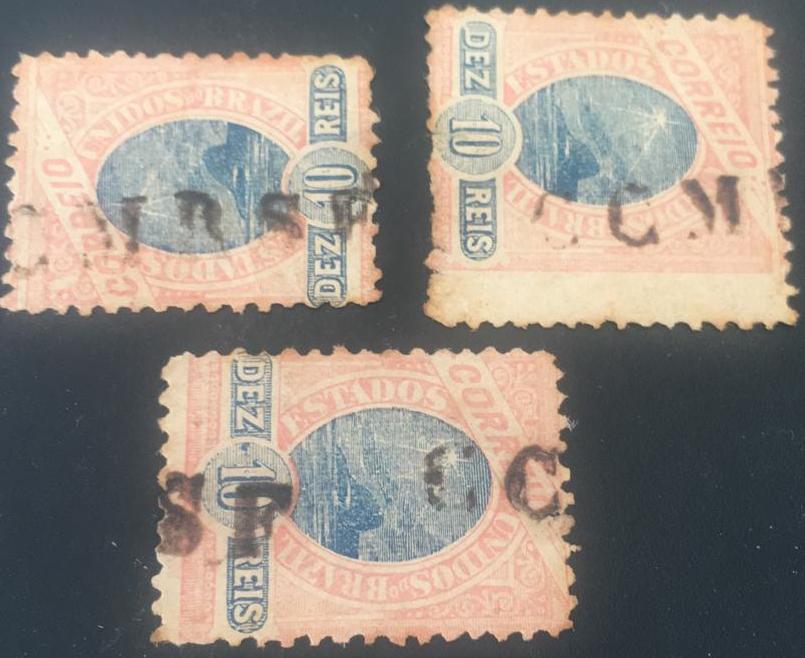
This postal agency of the Brazilian Empire presented a double enigma. On the one hand, R. Koester in Carimbologia XII (Brasil Filatélico 161, June 1970) did not know what a post office with the name Comipão meant. On the other hand, the postmark CBA-0175a (all examples: Lélio Cimini Collection) could not be categorised until recently.
CBA-0175a (Lélio Cimini) 1894ff
We can now say with good certainty that Koester was misreading a printing error at the time: it should be Commissão (not Comipão), and the abbreviation CCMRSF would mean Correio da Commissão de Melhoramentos do Rio de São Francisco: Post Office of the Commission for the Improvement of Navigation on the São Francisco.
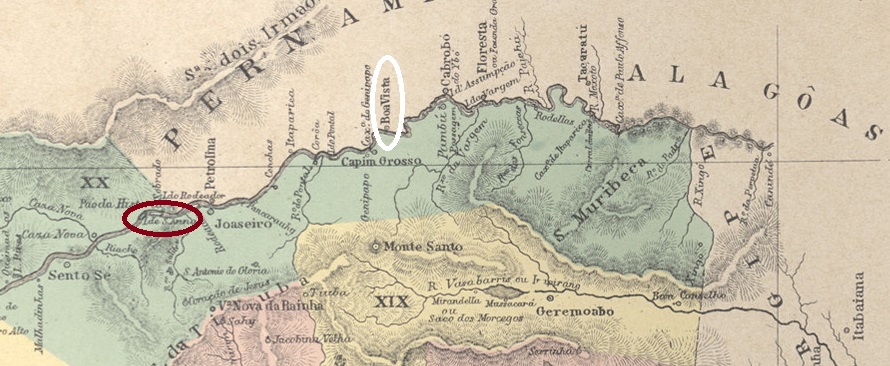
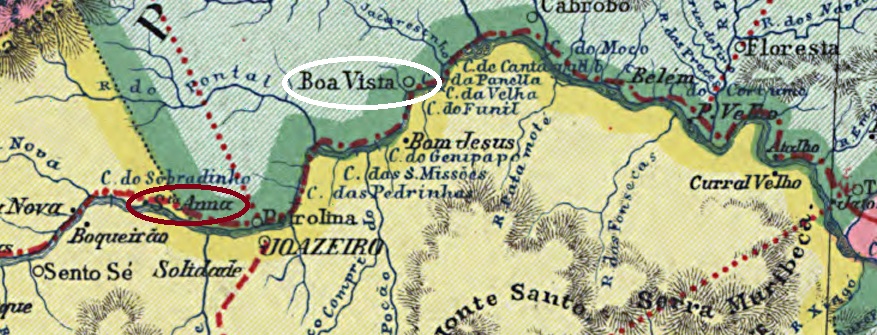
Such commissions were set up in the empire when a long and costly project was undertaken. In the south, there was the Commissão de Melhoramentos da Barra do Rio Grande, which was intended to make shipping to Porto Alegre considerably easier by clearing the Rio Grande Canal. There was also a commission for the improvement of the army, which was to better equip the imperial forces, and so on. The CMRSF intended to make the São Francisco below Juazeiro more navigable, which was a long, arduous and expensive task due to the numerous waterfalls (see maps).
The CMRSF began operations in May 1883 in the settlement of Sant’Anna, 560 kilometres northwest of the provincial capital of Salvador, now submerged by the Sobradinho dam. The main office functioned there until August 1888, when the entire Commission moved further downstream to Boa Vista, on the left bank of the S. Francisco River, in the province of Pernambuco.
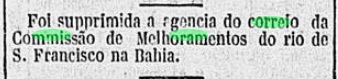
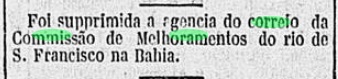
R. Koester (op. cit.) writes that the Commission had its own post office from September 1888. As the postal route there was administered by the province of Bahia, the agency was assigned to this province. The post office was only closed in March 1898, as reported by the Rio press.
Gazeta de Noticias/RJ, 03/03/1898Carta da Republica dos Estados Unidos do Brazil, 1892
Andere Namen: Commissão de Melhoramentos do Rio de S. Francisco
Diese Postagentur des brasilianischen Kaiserreichs stellte ein doppelter Rätsel dar. Einerseits wusste R. Koester in Carimbologia XII (Brasil Filatélico 161, Juni 1970) nicht, was ein Postamt mit Namen Comipão bedeuten sollte. Andererseits konnte man bis vor Kurzem den Poststempel CBA-0175a (Alle Abb.: Samml. Lélio Cimini) nicht einordnen.
CBA-0175a (Lélio Cimini) 1894ff
Inzwischen können wir mit guter Sicherheit behaupten, dass Koester damals einem Druckfehler aufgesessen war: es hieß Commissão (nicht Comipão), und die Kürzel CCMRSF würde bedeuten Correio da Commissão de Melhoramentos do Rio de São Francisco, auf Deutsch etwa: Poststelle der Kommission zur Verbesserung der Schifffahrt am São Francisco.
Solche Kommissionen wurden im Kaiserreich dann ins Leben gerufen, wenn ein langes und kostspieliges Projekt in Angriff genommen wurde. Es gab im Süden die Commissão de Melhoramentos da Barra do Rio Grande, die durch die Räumung des Rio Grande-Kanals die Schifffahrt nach Porto Alegre erheblich erleichtern sollte. Es gab auch eine Kommission für die Verbesserung der Armee, die die kaiserlichen Streitkräfte besser ausrüsten sollte, und so weiter. Die CMRSF beabsichtigte, den São Francisco unterhalb von Juazeiro schiffbarer zu machen, was aufgrund der zahlreichen Wasserfälle eine langwierige, anstrengende und teure Aufgabe war (s. Karten).
Die CMRSF-Kommission nahm den Betrieb im Mai 1883 in der Siedlung Sant’Anna auf, 560 km nordwestlich der Provinzhauptstadt Salvador. Dort funktionierte das Hauptbüro bis August 1888, als die gesamte Kommission weiter flussabwärts nach Boa Vista am linken Ufer des S. Francisco – also in der Provinz Pernambuco – umzog.
R. Koester (op. cit.) schreibt, dass die Kommission über eine eigene Poststelle ab September 1888 verfügte. Da die Postroute dorthin von der Provinz Bahia verwaltet war, wird die Agentur dieser Provinz zugeordnet. Das Postamt wurde erst im März 1898 geschlossen, wie die Presse aus Rio meldete.
Villiers de l’Ile Adam: Carta (…) da Provincia da Bahia, 1848
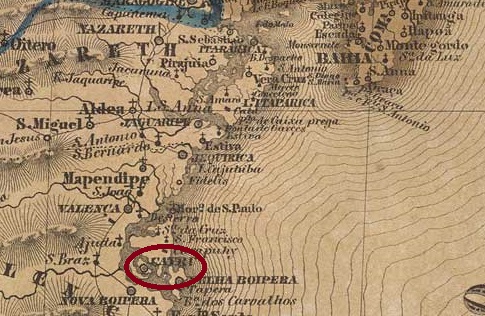
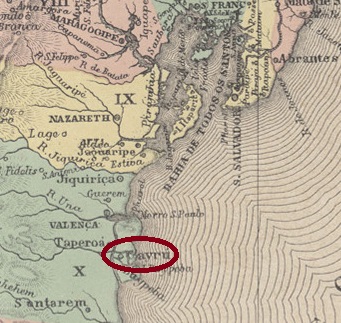
Cayru was already a parish in 1606, located 170 kilometres southwest of the then colonial capital Salvador da Bahia and belonging to the Vila de Ilhéus. In 1608, it became the Vila de N. Sra. do Rosário de Cayru, which was declared a freguesia two years later. Since March 1938, Cairu – as it is spelt today – has been a town. The name is of indigenous origin and means “abode of the sun”.
As R. Koester writes in Carimbologia X, there has been a post office there since August 1876. This was confirmed the following year by the report of the Provincial Council:
Relatorio do Conselho do Governo, 1877
The only postmark from the imperial era to date is CBA-0270a. Here is the illustration by R. Koester (op. cit.):
CBA-0270a (RK) 1888Atlas do Imperio do Brasil, 1868
Cayru war bereits 1606 eine Pfarrei, die 170 km südwestlich der damaligen Kolonialhauptstadt Salvador da Bahia lag und zur Vila de Ilhéus gehörte. 1608 wurde daraus die Vila de N. Sra. do Rosário de Cayru, die zwei Jahre später zur Freguesia erklärt wurde. Seit März 1938 ist Cairu – wie es heute geschrieben wird – eine Stadt. Der Name ist indigenen Ursprungs und bedeutet “Wohnort der Sonne”.
Wie R. Koester in Carimbologia X schreibt, gab es dort seit August 1876 ein Postamt. Dies wurde im folgenden Jahr durch den Bericht des Provinzialrates bestätigt:
Relatorio do Conselho do Governo, 1877
Der bisher einzige Poststempel aus der Kaiserzeit ist CBA-0270a. Hier die Abbildung von R. Koester (op. cit.):
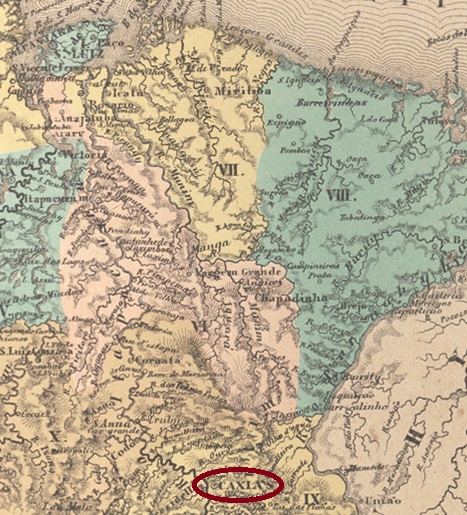
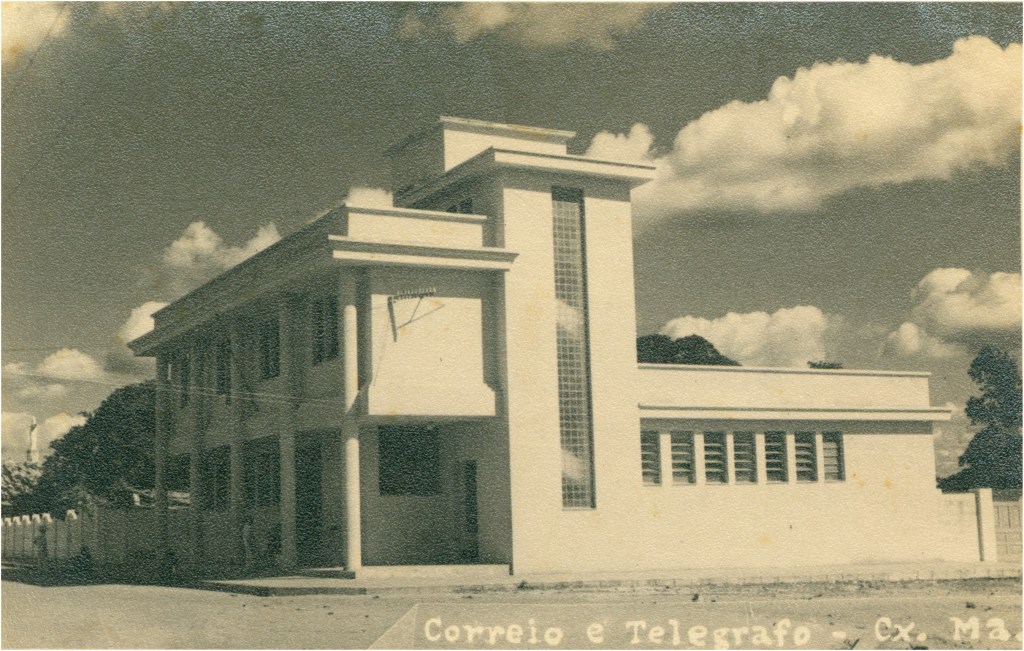
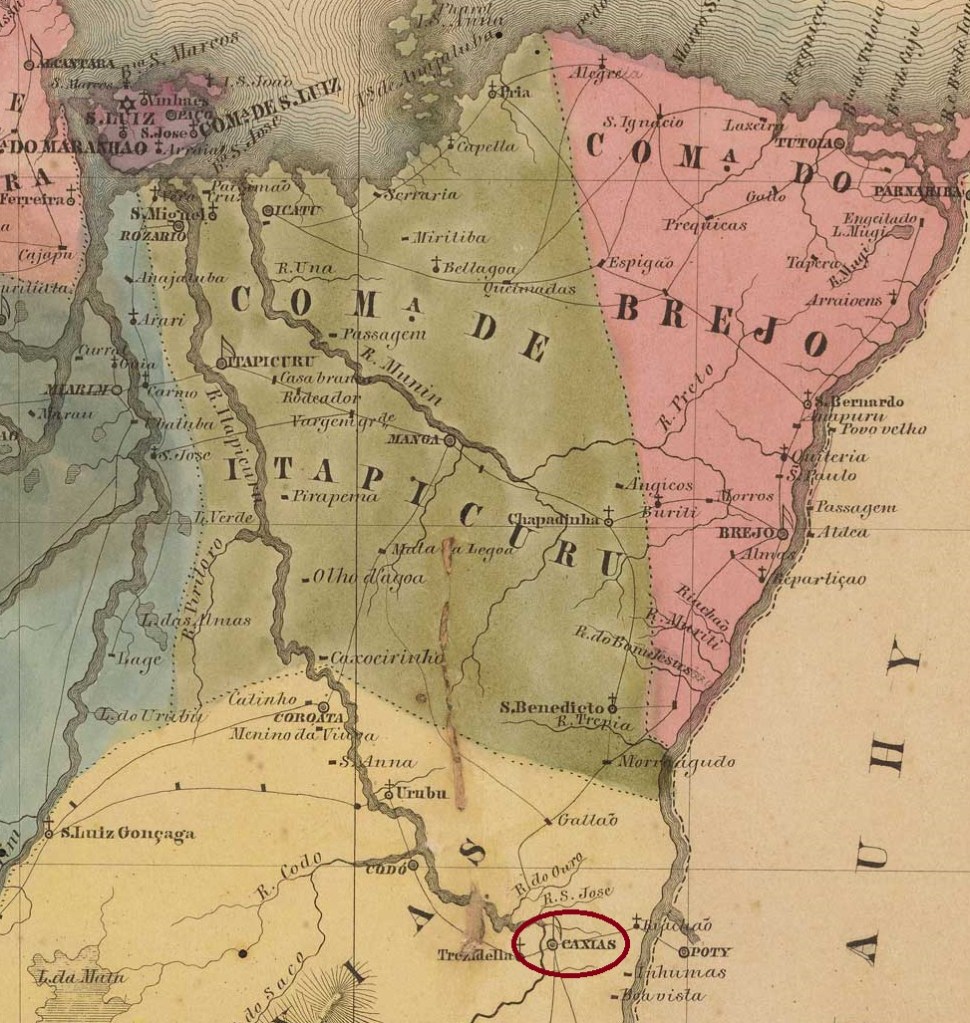
The Freguesia de Caxias das Aldeias Altas was founded around 1730 and was located on the east bank of the Itapecuru, 360 kilometres south of the later provincial capital S. Luís do Maranhão. In October 1811, it became the Vila de N. Sra. da Conceição e S. José de Caxias das Aldeias Altas, which was elevated to the status of the town of Caxias in July 1836.
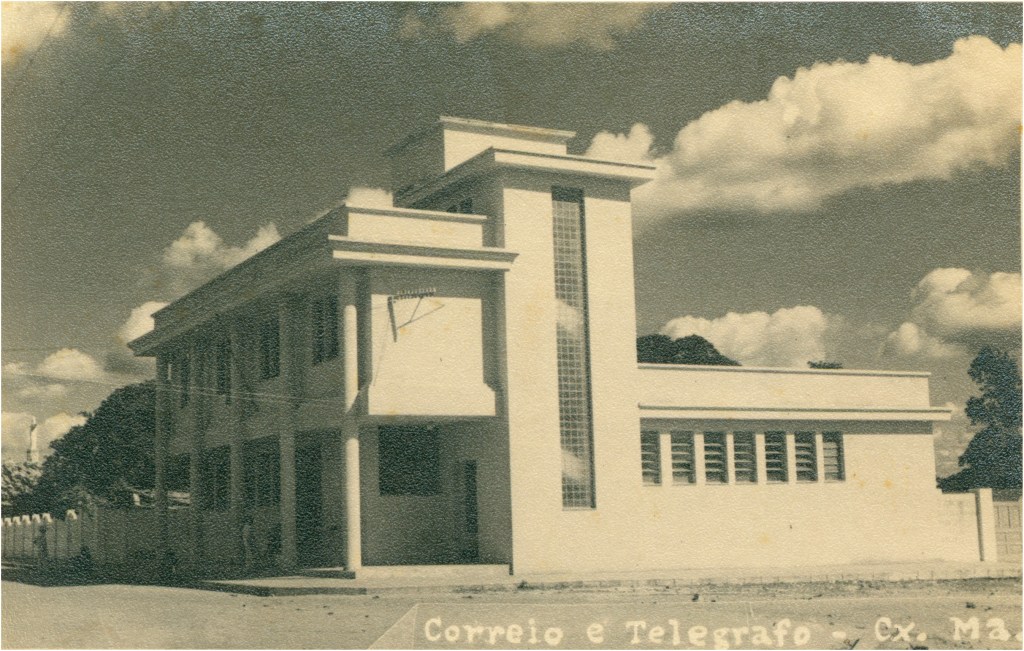
Caxias post office, ca. 1975 (IBGE)
Two foundation dates were found for the local post office. First in February 1820, as Nova Monteiro writes in Administrações e Agencias Postaes do Brasil Imperio (Brasil Filatelico/RJ, 1934-5; reprint SPP 1994-1999). Then in February 1826 according to R. Koester (Carimbologia X) and confirmed by the Directory of Imperial Post Offices (Tabella das Agencias do Correio do Imperio, Rio de Janeiro, 1885).
The oldest postmark to date is CMA-0080a, which was found in red on a letter from 1825 and is listed in the RHM catalogue under the number P-MA-01:
CMA-0080a (RHM P-MA 01) 1825
It was followed by CMA-0080b, which also exists in red and was previously seen with dates from 1842 to 1846:
CMA-0080b (RHM P-MA-02) 1842-1846
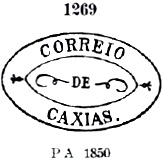
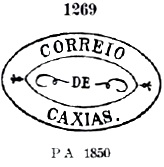
Then came the well-known CMA-0080c. This one also occurs in blue and was assigned the No. 1269 by P. Ayres in the Catálogo de Carimbos Brasil-Império (S. Paulo, 1937, 1942):
CMA-0080c (P.A. 1269, MPT 369) 1850ff-1876ff
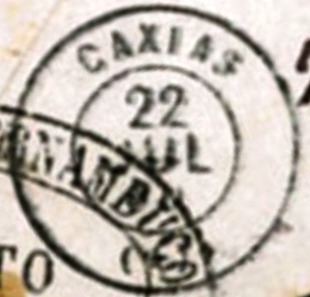
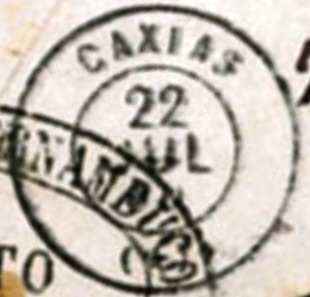
The French type CMA-0080d (illustration from the Internet) also occurs without a date. There is eventually a risk of confusion with a postmark from the town of the same name in the province of Rio Grande do Sul.
CMA-0080d (WA) 1880-1886
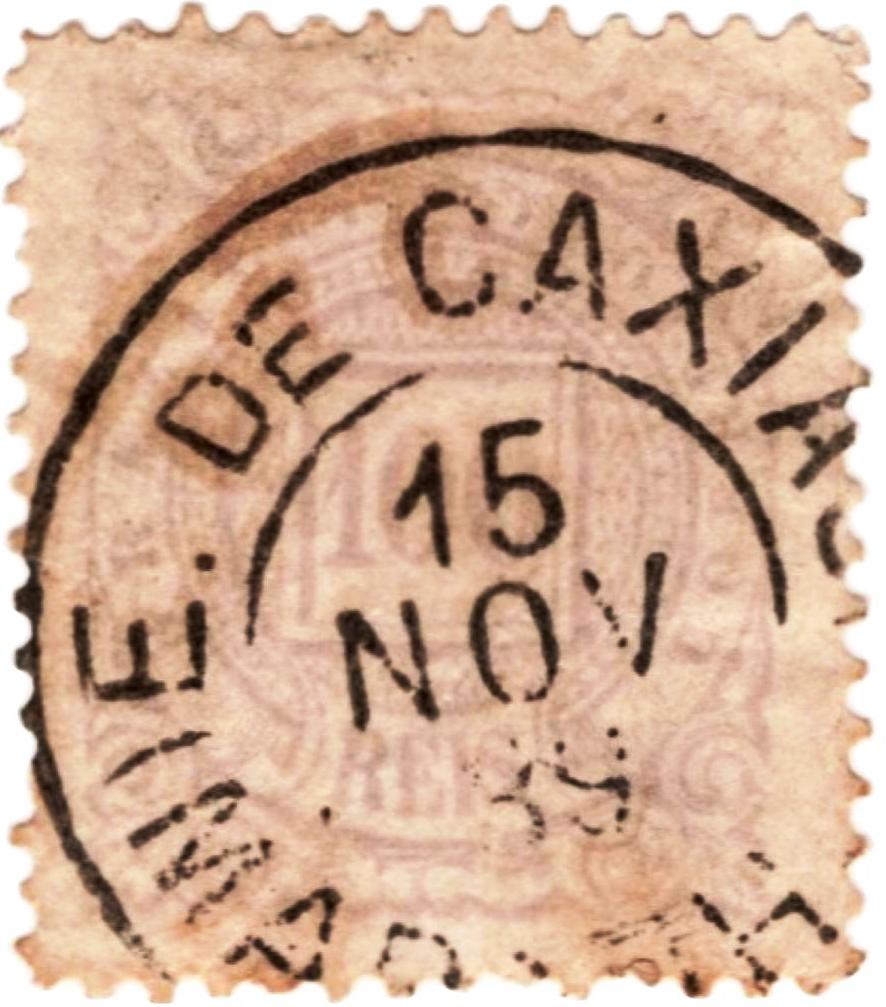
CMA-0080e (Claudio Coelho collection) was also used at the end of the Empire. This enigmatic cancel bears the abbreviation E (for Estação), which at the time was a sure indication of a railway station. In the province of Maranhão, however, the term Estação was also used for post offices at the time:
CMA-0080e (CC) 1888-1894
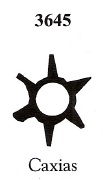
Caxias also has a mute cancellation from the Empire, which was assigned the no. 3645 by James Dingler and Klerman W. Lopes in Mute Cancellations of the Brazil Empire / Carimbos Mudos do Brasil Império (Brazil Philatelic Association, Rio de Janeiro, 2000):
BPA 3645 (1883)Villiers de l’Ile Adam: Carta (…) da Provincia do Maranhão, 1850
Die Freguesia de Caxias das Aldeias Altas entstand um 1730 und lag am Ostufer des Itapecuru, 360 km südlich der späteren Provinzhauptstadt S. Luís do Maranhão. Im Oktober 1811 wurde daraus die Vila de N. Sra. da Conceição e S. José de Caxias das Aldeias Altas, die im Juli 1836 zur Stadt Caxias erhoben wurde.
Postamt Caxias, ca. 1975 (IBGE)
Für das örtliche Postamt wurden zwei Gründungsdaten gefunden. Zuerst im Februar 1820, wie Nova Monteiro in Administrações e Agencias Postaes do Brasil Imperio (Brasil Filatelico/RJ, 1934-5; Nachdruck SPP 1994-1999) schreibt. Dann im Februar 1826 nach R. Koester (Carimbologia X) und bestätigt durch das Verzeichnis der kaiserlichen Postämter (Tabella das Agencias do Correio do Imperio, Rio de Janeiro, 1885).
Der bisher älteste Stempel ist CMA-0080a, der in roter Farbe auf einem Brief von 1825 gefunden wurde und im RHM-Katalog unter der Nummer P-MA 01 geführt wird:
CMA-0080a (RHM P-MA-01) 1825
Ihm folgte CMA-0080b, der ebenfalls in Rot existiert und bisher mit Daten von 1842 bis 1846 gesehen wurde:
CMA-0080b (RHM P-MA-02) 1842-1846
Dann kam der bekannte CMA-0080c. Dieser kommt auch in blau vor und wurde von P. Ayres im Catálogo de Carimbos Brasil-Império (S. Paulo, 1937, 1942) mit der Nr. 1269 versehen:
CMA-0080c (P.A. 1269, MPT 369) 1850ff-1876ff
Der französische Typ CMA-0080d (Abbildung aus dem Internet) kommt auch ohne Datum vor. Hier besteht Verwechslungsgefahr mit einem Poststempel aus dem gleichnamigen Ort in der Provinz Rio Grande do Sul.
CMA-0080d (WA) 1880-1886
Am Ende des Kaiserreichs wurde auch CMA-0080e (Samml. Claudio Coelho) verwendet. Dieser rätselhafte Stempel trägt die Abkürzung E (für Estação), was damals ein sicherer Hinweis auf einen Bahnhof war. In der Provinz Maranhão wurde die Bezeichnung Estação damals aber auch für Postämter verwendet:
CMA-0080e (CC) 1888-1894
Caxias hat auch einen stummen Stempel aus dem Kaiserreich, der von James Dingler und Klerman W. Lopes in Mute Cancellations of the Brazil Empire / Carimbos Mudos do Brasil Império (Brazil Philatelic Association, Rio de Janeiro, 2000) mit der Nr. 3645 versehen wurde:
Carta da Republica dos Estados Unidos do Brazil, 1892
Other names: Campo dos Bugres, Caxias do Sul (1944)
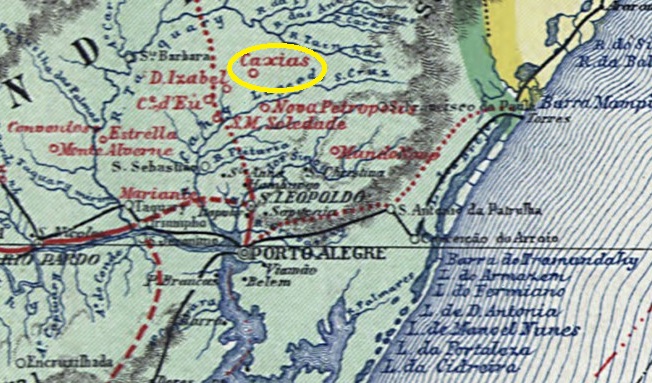
The Italian colony located 150 kilometres north of the provincial capital Porto Alegre was initially given the unflattering name Campo dos Bugres (Indian field) in 1875. Two years later, it was renamed Caxias in honour of Luiz Alves de Lima e Silva, Duke of Caxias (1803-1880), who became a national hero of Brazil as a officer and provincial administrator. In April 1884, the town became the Freguesia de Sta. Thereza de Caxias, in June 1890 a Vila and twenty years later a city, which has been called Caxias do Sul since December 1944 to avoid confusion with the city of the same name in Maranhão.
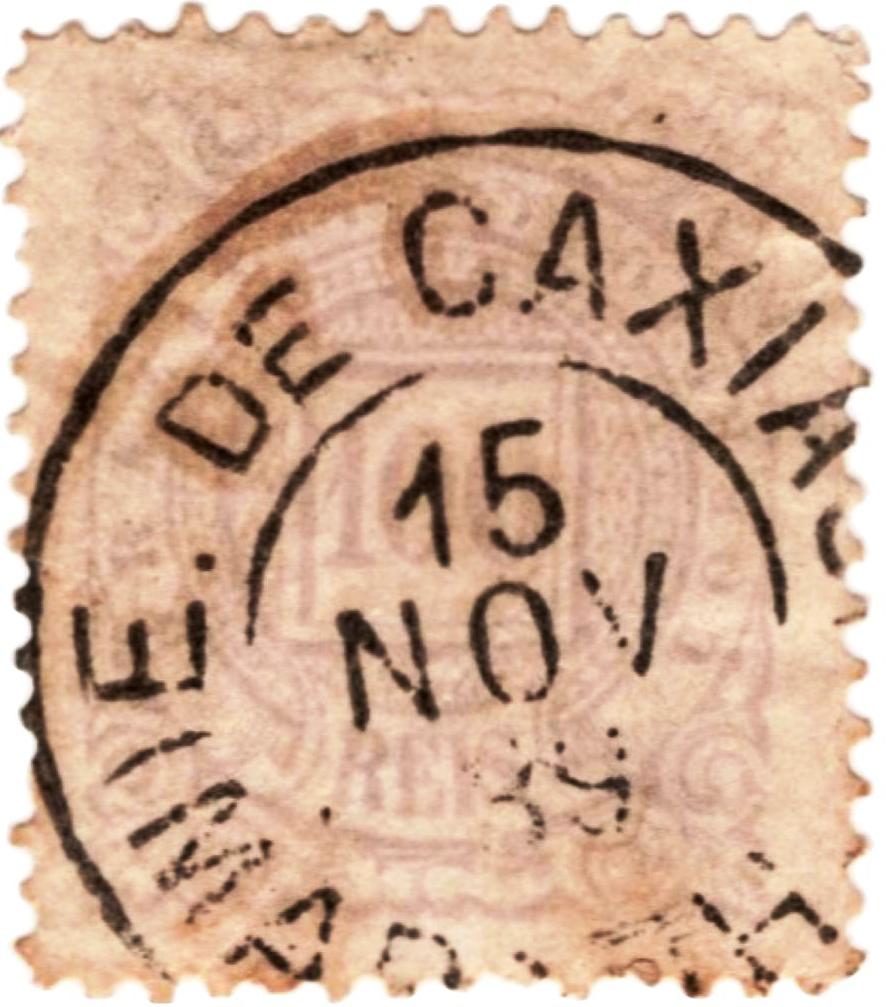
As can be seen from the list of imperial post offices (Tabella das Agencias do Correio do Imperio, Rio de Janeiro, 1885), there had been a post office there since 1881. The oldest postmark is CRS-0090a (Fig. Rölli Auctions), which has so far been found with dates from 1885 to 1893:
CRS-0090a (Rölli) 1885-1893
The Catalogo Enciclopedico RHM (S. Paulo, 1999) also mentions a postmark (French type) from Caxias in the province of Rio Grande do Sul, but this has not yet been definitively confirmed.
Estado do Rio Grande do Sul, 1891
Andere Namen: Campo dos Bugres, Caxias do Sul (1944)
Die 150 km nördlich der Provinzhauptstadt Porto Alegre gelegene italienische Kolonie erhielt 1875 zunächst den wenig schmeichelhaften Namen Campo dos Bugres (Indianerfeld). Zwei Jahre später wurde sie in Caxias umbenannt, zu Ehren von Luiz Alves de Lima e Silva, Herzog von Caxias (1803-1880), der als Feldherr und Provinzverwalter zu einem Nationalhelden Brasiliens wurde. Im April 1884 wurde der Ort zur Freguesia de Sta. Thereza de Caxias, im Juni 1890 zur Vila und zwanzig Jahre später zur Stadt, die seit Dezember 1944 Caxias do Sul heißt, um Verwechslungen mit der gleichnamigen Stadt in Maranhão zu vermeiden.
Wie aus dem Verzeichnis der kaiserlichen Postämter (Tabella das Agencias do Correio do Imperio, Rio de Janeiro, 1885) hervorgeht, gab es dort seit 1881 ein Postamt. Der älteste Poststempel ist CRS-0090a (Abb. Rölli-Auktionen), der bisher mit Daten von 1885 bis 1893 gefunden wurde:
CRS-0090a (Rölli) 1885-1893
Im Catalogo Enciclopedico RHM (S. Paulo, 1999) wird auch ein Poststempel (französischer Typ) aus Caxias in der Provinz Rio Grande do Sul erwähnt, der aber noch nicht endgültig bestätigt werden konnte.
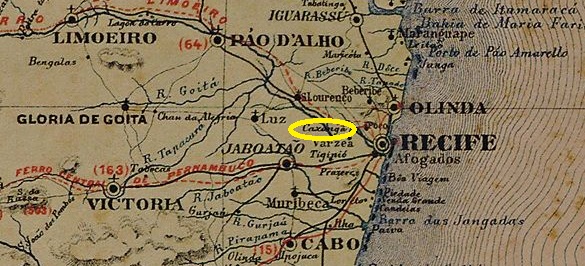
Carta Corographica da Provincia de Pernambuco, 1880
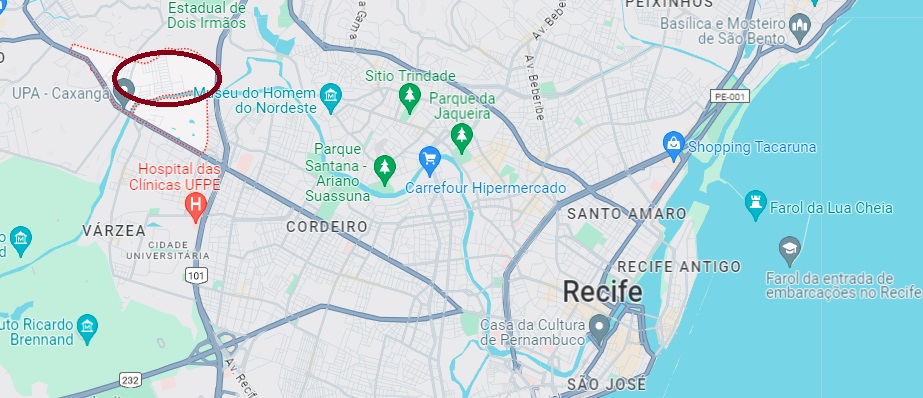
To date, it has not been possible to determine when the Arraial de S. Francisco de Paula de Caxangá was founded. All that is known is that it was on the north bank of the Capibaribe, 10 kilometres west of the provincial capital Recife. Around 1920, Caxangá became a district, but lost this status again and is now a district of Recife.
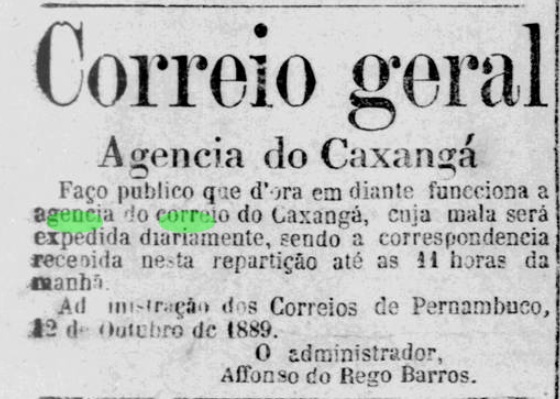
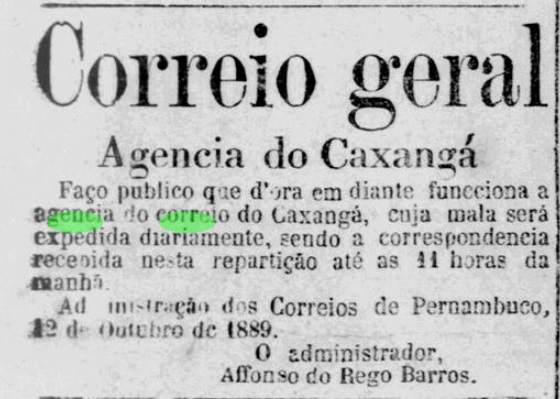
As Reinhold Koester writes in Carimbologia X, the establishment of a local post office was decided in 1875. However, it took until October 1889 for it to be put into operation, as reported in the regional press:
Diário de Pernambuco, 13/10/1889
No imperial postmark from Caxangá is known to date; it must be extremely rare.
Google Maps
Bis heute konnte nicht geklärt werden, wann der Arraial de S. Francisco de Paula de Caxangá gegründet wurde. Man weiß nur, dass er am Nordufer des Capibaribe, 10 km westlich der Provinzhauptstadt Recife, gegründet wurde. Um 1920 wurde Caxangá ein Distrikt, verlor diesen Status aber wieder und ist heute ein Stadtteil von Recife.
Wie Reinhold Koester in Carimbologia X schreibt, wurde 1875 die Einrichtung eines örtlichen Postamtes beschlossen. Es dauerte jedoch bis Oktober 1889, bis es in Betrieb genommen wurde, wie die regionale Presse berichtete:
Diário de Pernambuco, 13.10.1889
Bisher ist kein kaiserlicher Poststempel aus Caxangá bekannt, er muss äußerst selten sein.
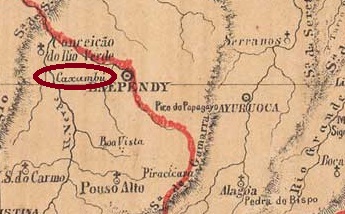
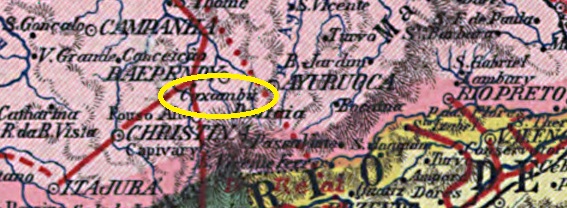
The beautiful word Caxambu comes from the Tupi-Guarani and is said to mean forest sounds. The freguesia of N. Sra. dos Remédios de Caxambu was founded in November 1844 in the Município of Baependy, 300 km southwest of the provincial capital Ouro Preto. In November 1875, the town’s name changed to Santa Maria das Águas de Caxambu. Since September 1901, Caxambu has been an independent município.
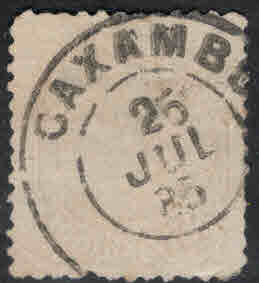
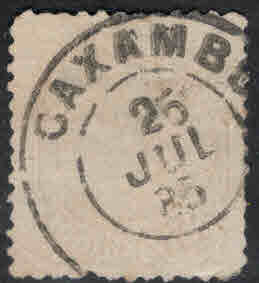
As Paula Sobrinho writes in História Postal de Minas Gerais (Belo Horizonte, 1997), there was a post office there since December 1871. The only imperial postmark with Caxambu so far is CMG-0715a (illustration from the Internet), it was seen with dates between 1879 and 1887. Thus it fits exactly between the postmarks AMG-0040a and AMG-0040b, both with the place name Águas do Caxambu (see AMG-0040):
CMG-0715a (HS) 1879-1887Carta da Republica dos Estados Unidos do Brazil, 1892
Siehe auch Aguas do Caxambu (AMG-0040)
Das schöne Wort Caxambu kommt aus dem Tupi-Guarani und soll Waldgeräusch bedeuten. Die Freguesia von N. Sra. dos Remédios de Caxambu wurde im November 1844 im Município von Baependy gegründet und lag 300 km sürwestlich der Provinzhauptstadt Ouro Preto entfernt. Im November 1875 änderte sich der Ortsname zu Santa Maria das Águas Virtuosas de Caxambu. Seit September 1901 ist Caxambu ein eigenständiger Município.
Wie Paula Sobrinho in História Postal de Minas Gerais (Belo Horizonte, 1997) schreibt, gab es dort ein Postamt seit Dezember 1871. Der bisher einzige kaiserliche Poststempel mit Caxambu ist CMG-0715a (Abb. aus dem Internet), er wurde mit Daten zwischen 1879 und 1887 gesehen. Damit passt er zeitlich genau zwischen die Poststempel AMG-0040a und AMG-0040b, beide mit der Ortsangabe Águas do Caxambu (siehe AMG-0040):
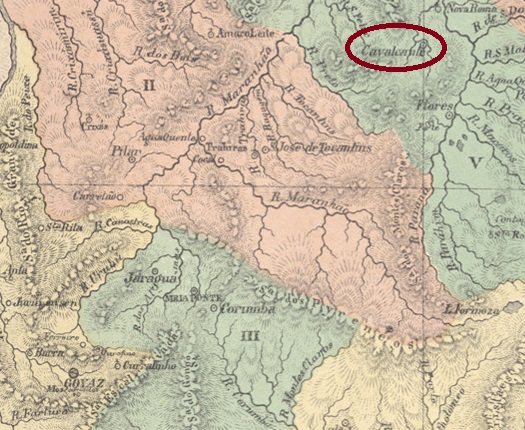
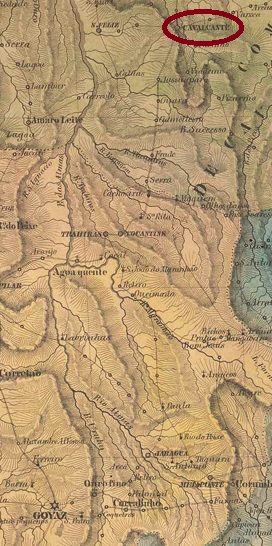
Little is known about this place. The settlement is said to have originated 580 kilometres north-east of the later provincial capital of Goyaz (today Goiás Velho) in 1740, became the Freguesia Sant’Anna de Cavalcante in 1759 and a Vila in November 1831. However, the Brazilian statistics authority IBGE records another appointment as a freguesia in July 1835, so there is still a need for research here.
Two foundation dates were found for the local post office. One is 1832, as can be read in the directory of imperial post offices (Tabella das Agencias do Correio do Imperio, Rio de Janeiro, 1885). Then again in January 1851, as Nova Monteiro writes in Administrações e Agencias Postaes do Brasil Imperio (Brasil Filatelico/RJ, 1934-5; reprint SPP 1994-1999). The only imperial postmark to date is CGO-0040a, which according to the RHM catalogue (no. P-GO-02) was used from around 1832.
CGO-0040a (RHM P-GO-02) 1832ffVilliers de l’Ile Adam: Carta (…) da Provincia de Goyaz, 1849
Über diesen Ort ist wenig bekannt. Die Siedlung soll 1740 580 km nordöstlich der späteren Provinzhauptstadt Goyaz (heute Goiás Velho) entstanden sein, wurde bereits 1759 zur Freguesia Sant’Anna de Cavalcante und im November 1831 zur Vila. Die brasilianische Statistikbehörde IBGE verzeichnet jedoch eine weitere Ernennung zur Freguesia im Juli 1835, so dass hier noch Klärungsbedarf besteht.
Für das örtliche Postamt wurden zwei Gründungsdaten gefunden. Einmal 1832, wie im Verzeichnis der kaiserlichen Postämter (Tabella das Agencias do Correio do Imperio, Rio de Janeiro, 1885) zu lesen ist. Dann wieder im Januar 1851, wie Nova Monteiro in Administrações e Agencias Postaes do Brasil Imperio (Brasil Filatelico/RJ, 1934-5; Reprint SPP 1994-1999) schreibt. Der bisher einzige kaiserliche Poststempel ist CGO-0040a, der laut RHM-Katalog (Nr. P-GO-02) ab ca. 1832 verwendet wurde.

















 Carimbologia