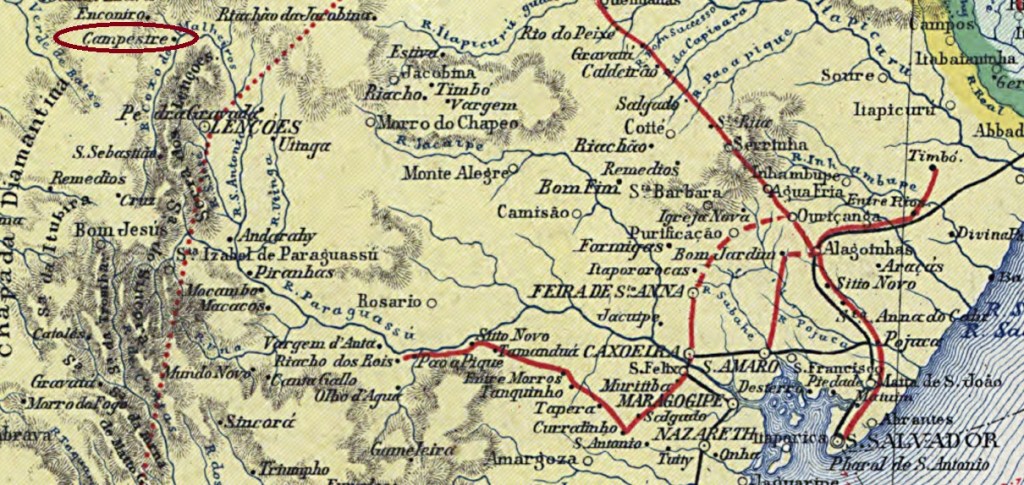
Carta da Republica dos Estados Unidos do Brazil, 1892
Other names: Doutor Seabra, Seabra (1931)
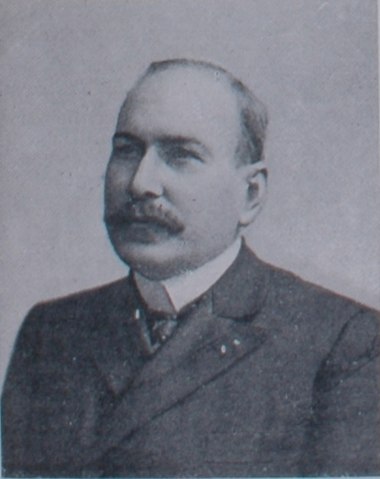
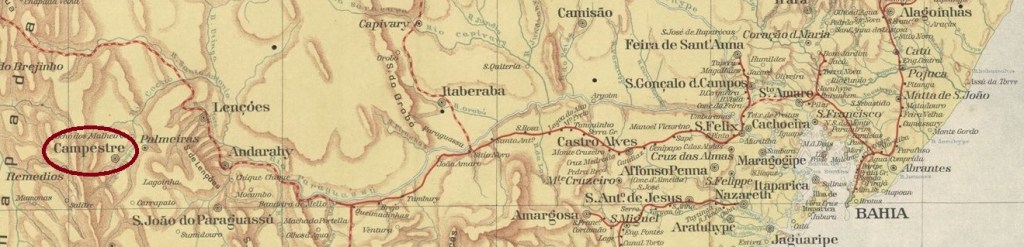
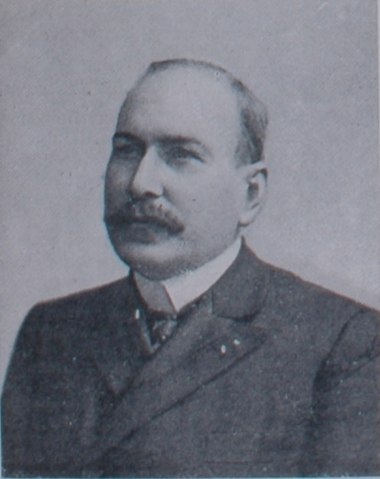
The Freguesia de N. Sra. da Conceição do Campestre was founded in May 1863 on the north bank of the Cochó, 460 km west of the provincial capital Salvador da Bahia, and belonged to the Vila de Lençóis. The village became a Vila Agrícola in May 1889 and a town in June 1891, renamed Doutor Seabra in August 1915 and simply Seabra since June 1931. The name commemorates José Joaquim Seabra (1855-1942), who was twice governor of the state of Bahia: from 1912 to 1916 and from 1920 to 1924.
J.J. Seabra (Image: Wikipedia)
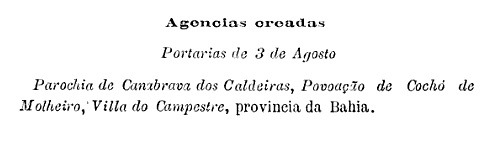
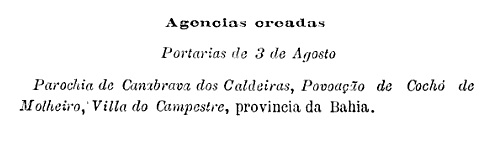
As can be seen from the postal bulletin of September 1889, there was a post office in Campestre from August of that year:
Boletim Postal No. 5, September 1889
No imperial postmark has yet been seen from this place; it must be very rare.
Estado da Bahia, 1913
Andere Namen: Doutor Seabra, Seabra (1931)
Die Freguesia de N. Sra. da Conceição do Campestre wurde im Mai 1863 gegründet, lag am Nordufer des Cochó, 460 km westlich der Provinzhauptstadt Salvador da Bahia und gehörte zur Vila de Lençóis. Das Dorf wurde im Mai 1889 zur Vila Agrícola und im Juni 1891 zur Stadt, die im August 1915 in Doutor Seabra umbenannt wurde und seit Juni 1931 einfach Seabra heißt. Der Name erinnert an José Joaquim Seabra (1855-1942), der zweimal Gouverneur des Staates Bahia war: von 1912 bis 1916 und von 1920 bis 1924.
J.J. Seabra (Bild: Wikipedia)
Wie aus dem Postbulletin vom September 1889 hervorgeht, gab es in Campestre seit August desselben Jahres ein Postamt:
Boletim Postal Nr. 5, September 1889
Bisher wurde noch kein kaiserlicher Poststempel aus diesem Ort gesehen; er muss sehr selten sein.
Other names: Capim, Desembargador Lemos, Limoeiro, Goianá (1911)
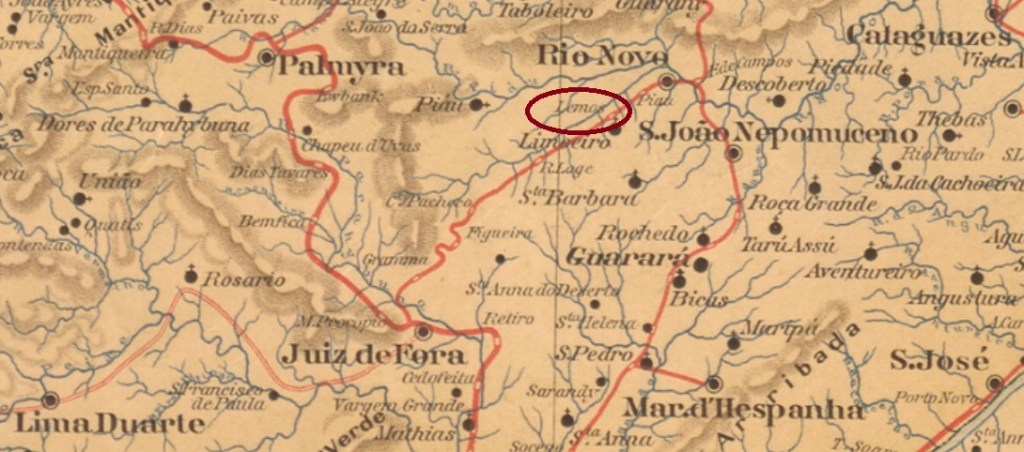
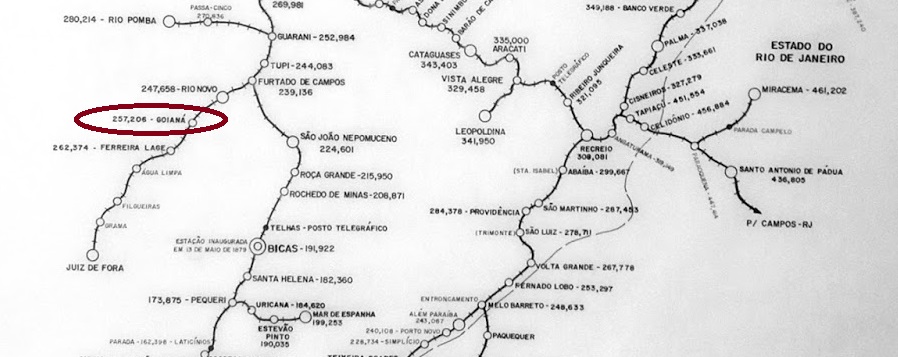
Campello station was originally called Capim, opened in July 1883 by the railway company E.F. de Juiz de Fora a Piau and located on the south bank of the Rio Novo near the vila of the same name, 240 km south of the provincial capital Ouro Preto. The following year, the line became the property of the E.F. Leopoldina and was closed in 1974. The station building is now demolished and the tracks removed. In the following decades, the name changed several times: to Desembargador Lemos (ca. 1890), Limoeiro – after the nearby settlement of Santo Antonio do Limoeiro (ca. 1900) and Goianá (1911). Under the last name, the area became a district and has been an independent município since December 1995.
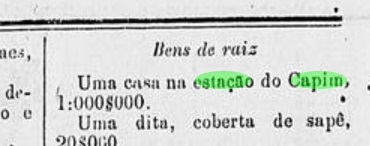
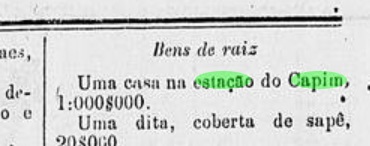
The post office at this station is an enigma. Both R. Koester (Carimbologia VIII) and Paula Sobrinho (História Postal de Minas Gerais, Belo Horizonte, 1997) write that there had been a postal agency there since July 1881, two years before the station was opened. The Directory of Imperial Post Offices (Tabella das Agencias do Correio do Imperio, Rio de Janeiro, 1885) also mentions a Capim station post office – unfortunately without a creation year – but the postal report (Relatorio Postal) at the end of 1886 no longer does, although Estação do Capim was already present in the regional press in March 1881:
O Pharol, 17 March 1881
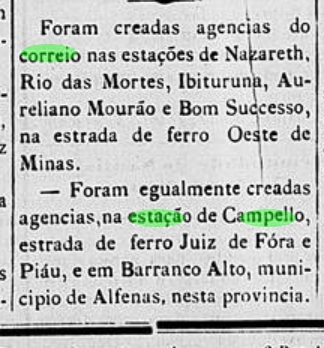
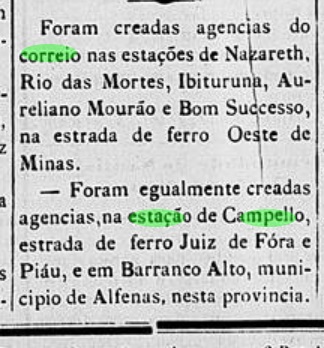
Thus, a Capim post office may have existed from 1881 to about 1885. Sure is that the postal agency was opened at Campello station at the end of 1887:
O Pharol, 19 December 1887
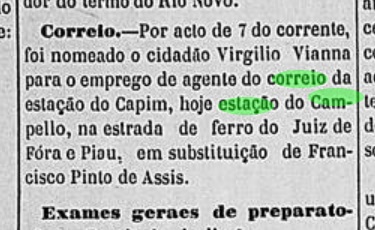
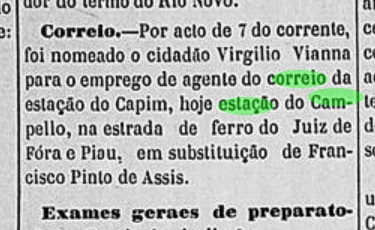
And that Campello station was identical to the Capim station:
A União, 14 December 1887
So far, no postmark has been seen from the Capim station. R. Koester (op. cit.) showed us the imperial postmark of Campello station under CMG-0500a:
CMG-0500a (RK) 1888-1889Estrada de Ferro Leopoldina – MG
Andere Namen: Capim, Desembargador Lemos, Limoeiro, Goianá (1911)
Der Bahnhof Campello hieß ursprünglich Capim, wurde im Juli 1883 von der Eisenbahngesellschaft E.F. de Juiz de Fora a Piau eröffnet und lag am Südufer des Rio Novo nahe der gleichnamigen Vila, 240 km südlich der Provinzhauptstadt Ouro Preto. Im folgenden Jahr ging die Strecke in den Besitz der E.F. Leopoldina über und wurde 1974 stillgelegt. Das Bahnhofsgebäude wurde inzwischen abgerissen, und die Gleise entfernt. In den folgenden Jahrzehnten änderte sich der Name mehrmals: Desembargador Lemos (ca. 1890), Limoeiro – nach der nahe gelegenen Siedlung Santo Antonio do Limoeiro (ca. 1900) und Goianá (1911). Mit dem letztgenannten Ortsnamen wurde das Gebiet zum Distrikt und ist seit Dezember 1995 ein eigenständiges Município.
Kopfzerbrechen bereitet das Postamt an diesem Bahnhof. Sowohl R. Koester (Carimbologia VIII) als auch Paula Sobrinho (História Postal de Minas Gerais, Belo Horizonte, 1997) schreiben, dass es dort seit Juli 1881 eine Postagentur gab, zwei Jahre vor der Inbetriebnahme des Bahnhofs. Auch im Verzeichnis der kaiserlichen Postämter (Tabella das Agencias do Correio do Imperio, Rio de Janeiro, 1885) wird ein Bahnhofspostamt Capim erwähnt – leider ohne Jahresangabe für dessen Entstehung-, im Postbericht (Relatorio Postal) Ende 1886 jedoch nicht mehr, obwohl der Begriff Estação do Capim bereits im März 1881 in der regionalen Presse zu lesen war:
O Pharol, 17. März 1881
Daraus folgt, dass ein Postamt Capim von 1881 bis etwa 1885 bestanden haben könnte. Sicher ist, dass Ende 1887 die Postagentur am Bahnhof von Campello eröffnet wurde:
O Pharol, 19. Dezember 1887
Und dieser Bahnhof Campello war identisch mit dem Bahnhof Capim:
A União, 14. Dezember 1887
Bisher wurde kein Poststempel von der Station Capim gesehen. R. Koester (op. cit.) zeigte uns den kaiserlichen Poststempel des Bahnhofs Campello mit CMG-0500a:
Other names: Campanha do Rio Verde, Campanha da Princesa da Beira
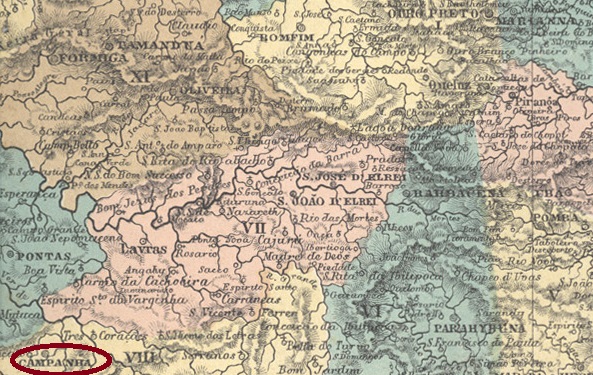
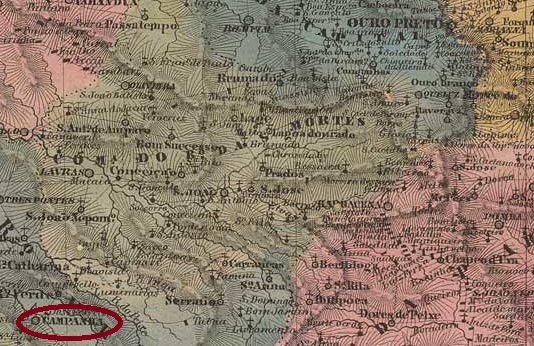
The Freguesia de Campanha do Rio Verde was founded in 1752 on the south bank of the Riacho Santo Antonio near the Vila de S. João d’El-Rei, 360 km southwest of the later provincial capital Ouro Preto. In September 1798 it became the Vila de Campanha da Princesa da Beira and in March 1840 a town with the shortened place name Campanha.
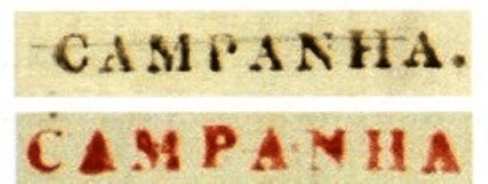
Two creation dates have been found for the local post office. Nova Monteiro gives March 1829 in Administrações e Agencias Postaes do Brasil Imperio (Brasil Filatelico/RJ, 1934-5; reprinted SPP 1994-1999). A date two decades earlier – May 1809 – was given by Paula Sobrinho in História Postal de Minas Gerais (Belo Horizonte, 1997). His dating could be correct as many covers are dated 1826 or earlier from the pre-philatelic period and bear different postmarks:
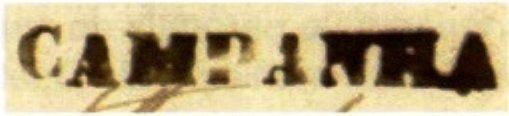
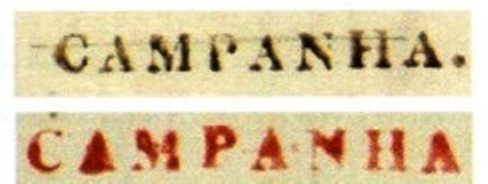
CMG-3775a (RHM P-MG-17) sepiaCMG-3775b (RHM P-MG-16) 1826 redCMG-0495a (RHM P-MG-12) 1835-1843ff, tb sepia (4.2 cm long)CMG-0495b (RHM P-MG-13) 3.0 cm longCMG-0495c (RHM P-MG-14) 2.1 cm longCMG-0495d (RHM P-MG-15) 4.2 cm long
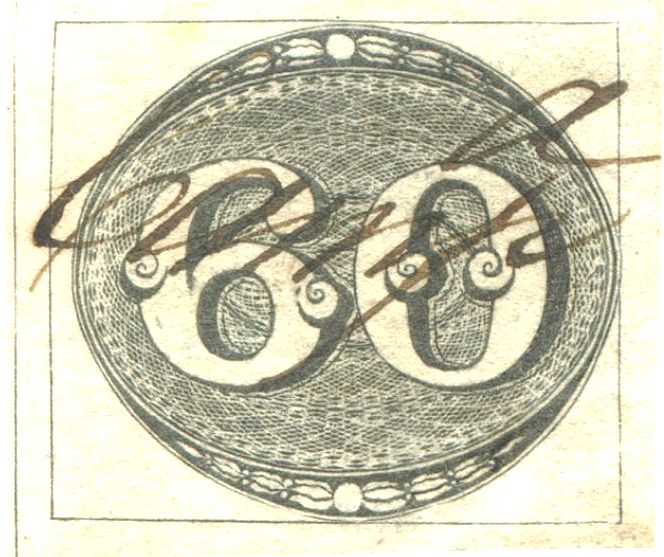
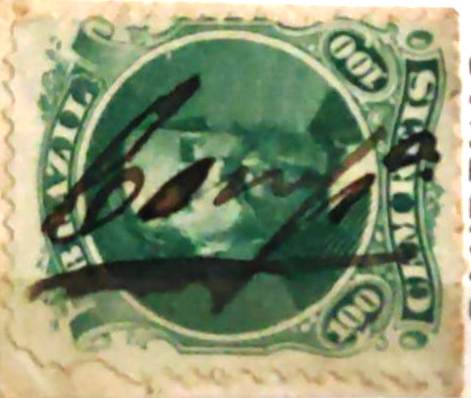
After that came – as R. Koester already noted in Carimbologia VIII – a longer period in which the letters were apparently cancelled only by hand.
1843ff (ill. Claudio Coelho)
1866ff (ill. Antonio Eleftheriou)
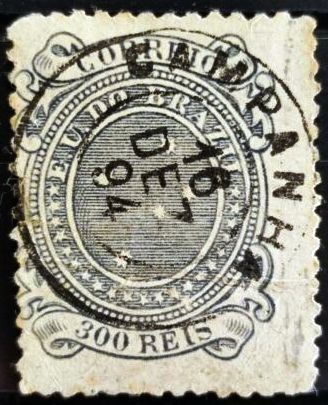
The next cancel CMG-0495e (ill. from the Internet) came only in the 1980s:
CMG-0495e (EB) 1885ff-1894
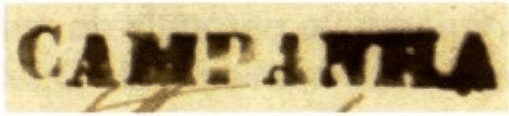
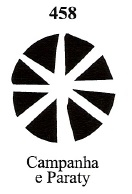
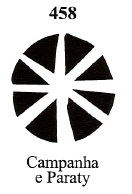
From Campanha there also comes a mute cancellation recorded by James Dingler and Klerman W. Lopes in Mute Cancellations of the Brazil Empire / Carimbos Mudos do Brasil Império (Brazil Philatelic Association, Rio de Janeiro, 2000) with no. 458.
BPA 458, 1873-1878ffVilliers de l’Ile Adam: Carta (…) da Provincia de Minas Geraes, 1849
Andere Namen: Campanha do Rio Verde, Campanha da Princesa da Beira
Die Freguesia de Campanha do Rio Verde wurde 1752 am Südufer des Riacho Santo Antonio in der Nähe der Vila de S. João d’El-Rei, 360 km südwestlich der späteren Provinzhauptstadt Ouro Preto gegründet. Im September 1798 wurde es zur Vila de Campanha da Princesa da Beira und im März 1840 zur Stadt mit dem gekürzten Ortsnamen Campanha.
Für das örtliche Postamt wurden zwei Gründungsdaten gefunden. Nova Monteiro nennt den März 1829 in Administrações e Agencias Postaes do Brasil Imperio (Brasil Filatelico/RJ, 1934-5; Nachdruck SPP 1994-1999). Ein zwei Jahrzehnte früheres Datum – Mai 1809 – wurde von Paula Sobrinho in História Postal de Minas Gerais (Belo Horizonte, 1997) angegeben. Seine Datierung könnte korrekt sein, da viele Belege aus der Vorphila-Periode (1826 oder früher) datiert sind und verschiedene Poststempel tragen:
CMG-3775a (RHM P-MG-17) sepiaCMG-3775b (RHM P-MG-16) 1826 rotCMG-0495a (RHM P-MG-12) 1835-1843ff, tb sepia (4,2 cm lang)CMG-0495b (RHM P-MG-13) 3,0 cm langCMG-0495c (RHM P-MG-14) 2,1 cm langCMG-0495d (RHM P-MG-15) 4,2 cm lang
Danach kam – wie R. Koester in Carimbologia VIII bereits bemerkte – eine längere Periode, in der die Marken anscheinend nur noch handschriftlich entwertet wurden.
1843ff (Abb. Claudio Coelho)
1866ff (Abb. Antonio Eleftheriou)
Der nächste Stempel CMG-0495e (Abb. aus dem Internet) kam erst in den 80er Jahren:
CMG-0495e (EB) 1885ff-1894
Aus Campanha stammt auch eine stumme Entwertung, die von James Dingler und Klerman W. Lopes in Mute Cancellations of the Brazil Empire / Carimbos Mudos do Brasil Império (Brazil Philatelic Association, Rio de Janeiro, 2000) mit der Nr. 458 erfasst wurde.
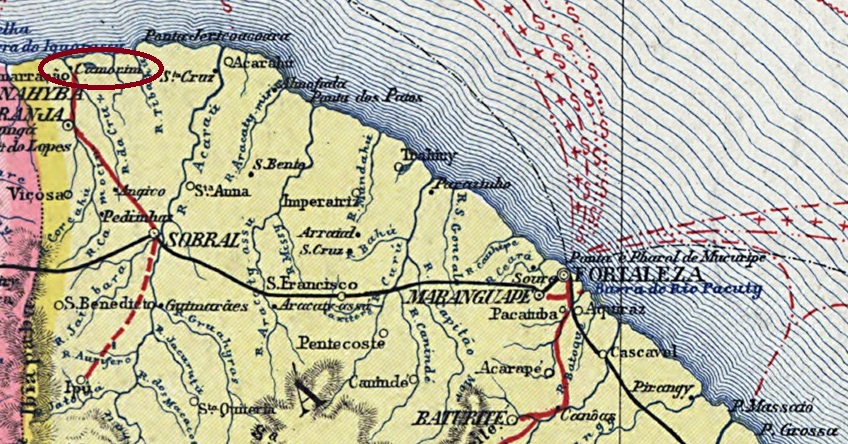
Carta da Republica dos Estados Unidos do Brazil, 1892
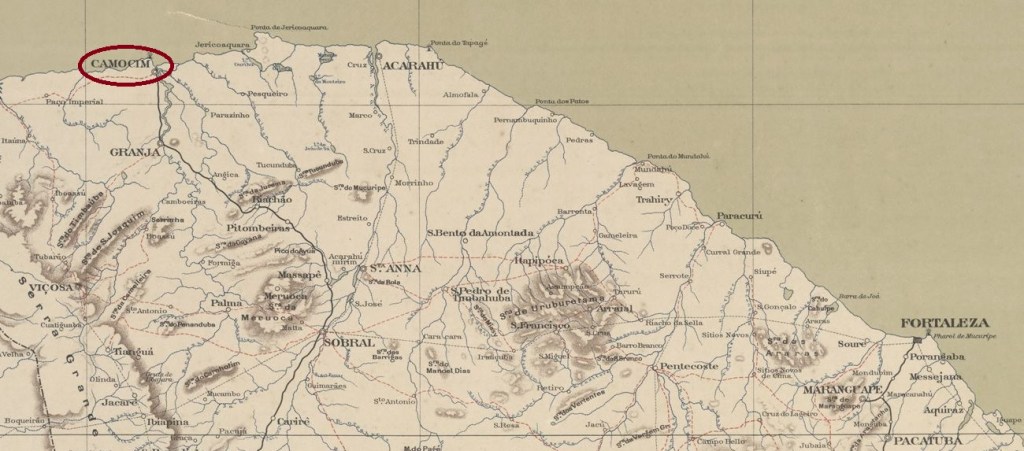
Founded in September 1873, the Freguesia de Bom Jesus dos Navegantes de Camocim, which belonged to the Vila de Granja, was located on the western bank of the mouth of the Curiaú into the Atlantic, 360 km west of the provincial capital Fortaleza. As R. Koester writes in Carimbologia VII, the village, which was not even marked on the 1868 map, experienced rapid population growth from May 1877 onwards due to the influx of refugees from the drought areas in the hinterland. As early as September 1879, Camocim was elevated to the status of a vila and ten years later to that of a town.
Koester (op. cit.) writes that the establishment of a local post office was ordered in July 1881. This is confirmed by the provincial president’s report of December of the same year.
Relatorio do Presidente da Provincia/CE, December 1881
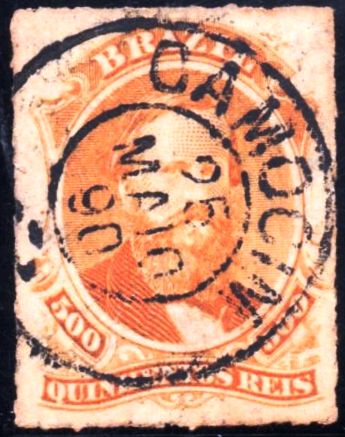
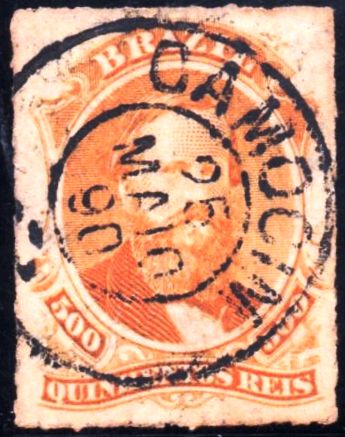
The oldest postmark so far is CCE-0070a (image from the internet):
CCE-0070a (EB) 1887-1892
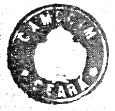
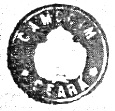
Koester also shows us a seal cancel:
CCE-0070b (RK)Serv. Geologico e Mineralogico, 1910
Die im September 1873 gegründete Freguesia de Bom Jesus dos Navegantes de Camocim, die zur Vila de Granja gehörte, lag am Westufer der Mündung des Curiaú in den Atlantik, 360 km westlich der Provinzhauptstadt Fortaleza. Wie R. Koester in Carimbologia VII schreibt, erlebte der Ort, der auf der Karte von 1868 nicht einmal eingezeichnet war, ab Mai 1877 eine rasante Bevölkerungsentwicklung durch den Zuzug von Flüchtlingen aus den Dürregebieten im Hinterland. Bereits im September 1879 wurde Camocim zur Vila und zehn Jahre später zur Stadt erhoben.
Koester (a.a.O.) schreibt, dass die Einrichtung eines örtlichen Postamts im Juli 1881 angeordnet wurde. Dies wird durch den Bericht des Provinzpräsidenten vom Dezember desselben Jahres bestätigt.
Relatorio do Presidente da Provincia/CE, Dezember 1881
Der bisher älteste Poststempel ist CCE-0070a (Abbildung aus dem Internet):
Villiers de l’Ile Adam: Carta (…) da Provincia da Bahia, 1848
Another name: Ipirá (1931)
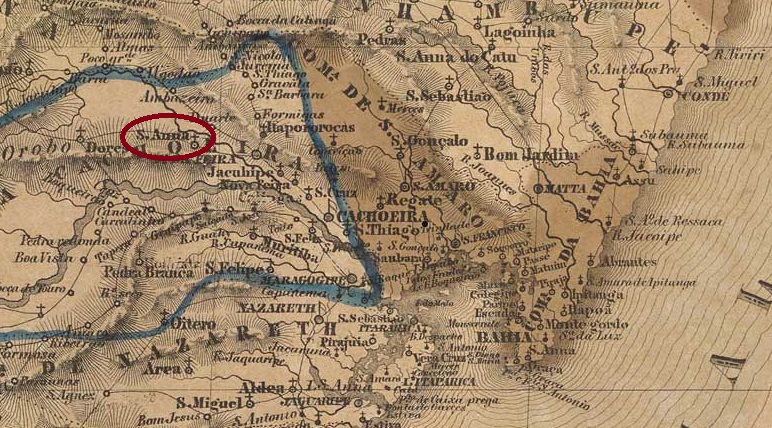
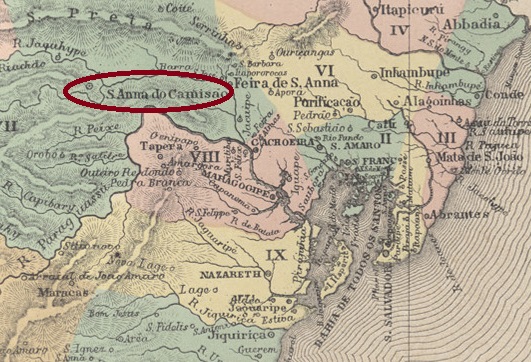
The Freguesia de Sant’Anna do Camisão was founded in 1755, belonged to the Vila de Cachoeira and was located on the south bank of the Riacho Grande, 210 km northwest of the provincial capital Salvador da Bahia. In November 1832, it joined the then-founded Vila de Feira de Sant’Anna, became a vila itself in April 1855, and has been the town of Ipirá since July 1931.
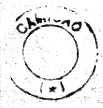
As Nova Monteiro writes in Administrações e Agencias Postaes do Brasil Imperio (Brasil Filatelico/RJ, 1934-5; Reprint SPP 1994-1999), there was a post office there since February 1859, and two imperial postmarks were found, unfortunately not the very first one. CBA-0220b (image by R. Koester, in Carimbologia VII) is a French type with dates from about 1885 to 1887.
CBA-0220b (RK) 1885ff-1887
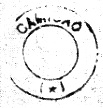
Its successor CBA-0220c (ill. Antonio Torres) is a plain double circle with the inscription CAMISÃO at the top and inner dates from 1887 to 1898.
Atlas do Imperio do Brasil, 1868
Anderer Name: Ipirá (1931)
Die Freguesia de Sant’Anna do Camisão wurde 1755 gegründet, gehörte zur Vila de Cachoeira und lag am Südufer des Riacho Grande, 210 km nordwestlich der Provinzhauptstadt Salvador da Bahia. Im November 1832 kam es zur damals gegründeten Vila de Feira de Sant’Anna, wurde im April 1855 selbst eine Vila und ist seit Juli 1931 die Stadt Ipirá.
Wie Nova Monteiro in Administrações e Agencias Postaes do Brasil Imperio (Brasil Filatelico/RJ, 1934-5; Reprint SPP 1994-1999) schreibt, gab es dort seit Februar 1859 ein Postamt, und es wurden zwei kaiserliche Poststempel gefunden, leider nicht der Allererste. CBA-0220b (Abb. R. Koester, in Carimbologia VII) ist ein französischer Typ mit Daten von ca. 1885 bis 1887.
CBA-0220b (RK) 1885ff-1887
Sein Nachfolger CBA-0220c (Abb.: Antonio Torres) ist ein schlichter Doppelkreis mit der Inschrift CAMISÃO oben und inneren Jahreszahlen von 1887 bis 1898.
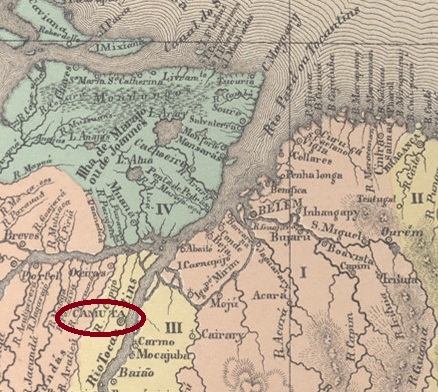
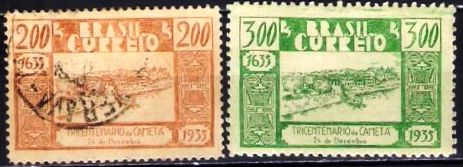
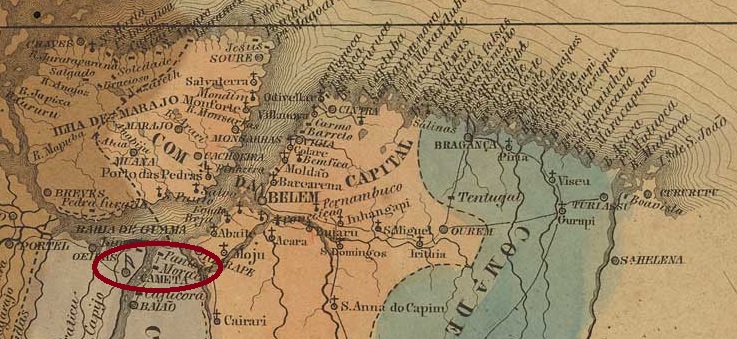
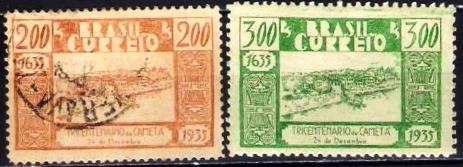
Vila Viçosa de Santa Cruz de Camutá was founded in December 1635 on the west bank of the Tocantins River, 230 km southwest of the provincial capital Belém do Pará. 301 years later, this event was even worth two special stamps to the Brazilian Post, a commemoration that was otherwise seldom used at the time:
RHM C 103-104, Scott 419-420, MiNo 443-4
Before and after that, things became quieter around the place, which was still elevated to the the town of Cametá in October 1848. The word comes from the Tupi language and is supposed to mean forest elevation.
As Nova Monteiro writes in Administrações e Agencias Postaes do Brasil Imperio (Brasil Filatelico/RJ, 1934-5; Reprint SPP 1994-1999), there was a post office there since March 1829. Three postmarks have been found for the 19th century, unfortunately not the very first one. CPA-0070b, according to R. Koester (Carimbologia VII), would be a double circle with the inscription CAMETÁ above and no ornaments below. He mentioned a copy of it, dated 1881. Its successor CPA-0070c also exists in blue and is already illustrated in Paulo Ayres’ Catálogo de Carimbos Brasil-Império, (S. Paulo, 1937, 1942) on p. 120:
CPA-0070c (P.A. p. 120) 1884-1888
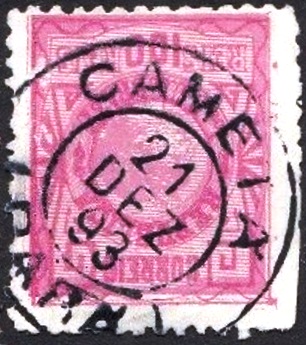
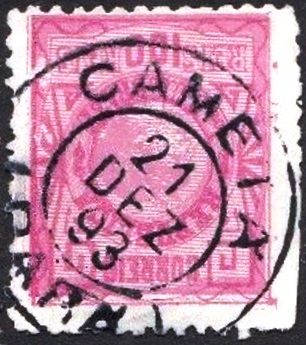
It was followed by CPA-0070d (fig. from the Internet), which could already be Republican, as it shows internal dates from 1890-1893:
CPA-0070d (EB) 1890-1893Villiers de l’Ile Adam: Carta (…) das Provincias do Grampará e Alto Amazonas, 1850
Anderer Name: Camutá
Die Vila Viçosa de Santa Cruz de Camutá wurde im Dezember 1635 am Westufer des Tocantins, 230 km südwestlich der Provinzhauptstadt Belém do Pará, gegründet. 301 Jahre später war dieses Ereignis der brasilianischen Post sogar zwei Sondermarken wert, eine seltene Ehre damals:
RHM C 103-104, Scott 419-420, MiNr. 443-4
Davor und danach wurde es ruhiger um den Ort, der noch im Oktober 1848 zur Stadt Cametá erhoben wurde. Das Wort stammt aus der Tupi-Sprache und soll Walderhebung bedeuten.
Wie Nova Monteiro in Administrações e Agencias Postaes do Brasil Imperio (Brasil Filatelico/RJ, 1934-5; Reprint SPP 1994-1999) schreibt, gab es dort ein Postamt seit März 1829. Für das 19. Jahrhundert wurden drei Poststempel gefunden, leider nicht der allererste. CPA-0070b soll nach R. Koester (Carimbologia VII) einen Doppelkreis sein, der die Inschrift CAMETÁ oben und ohne Ornament unten trägt. Er kannte ein Exemplar davon, datiert 1881. Der Nachfolgestempel CPA-0070c existiert ebenfalls in blau und ist bereits in Paulo Ayres‘ Catálogo de Carimbos Brasil-Império, (S. Paulo, 1937, 1942) auf S. 120 abgebildet:
CPA-0070c (P.A. S. 120) 1884-1888
Es folgt CPA-0070d (Abb. aus dem Internet), das bereits republikanisch sein könnte, da er interne Daten von 1890-1893 aufweist:
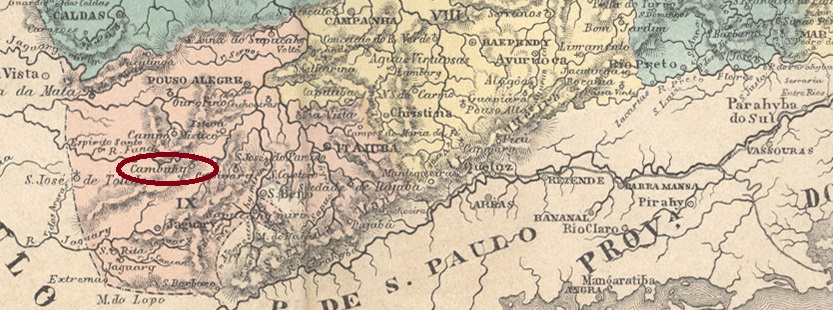
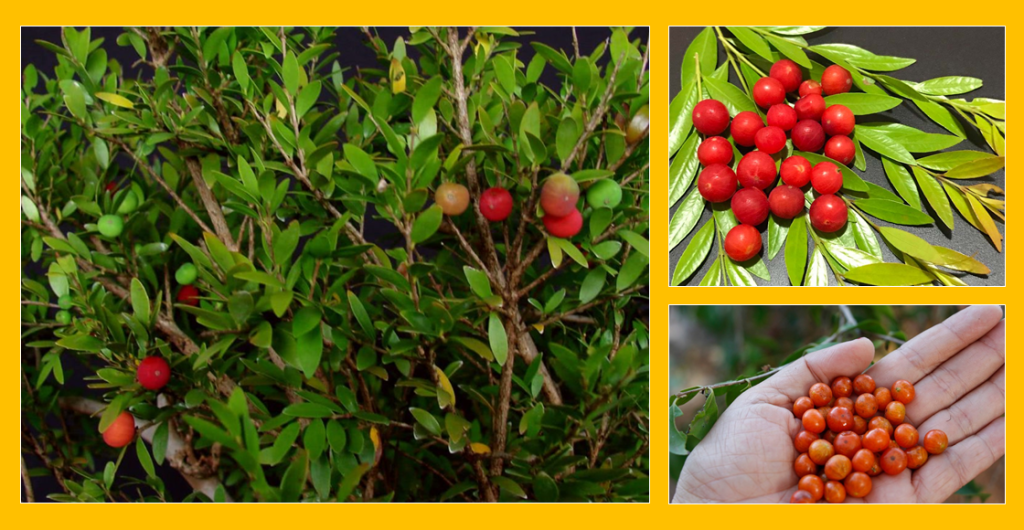
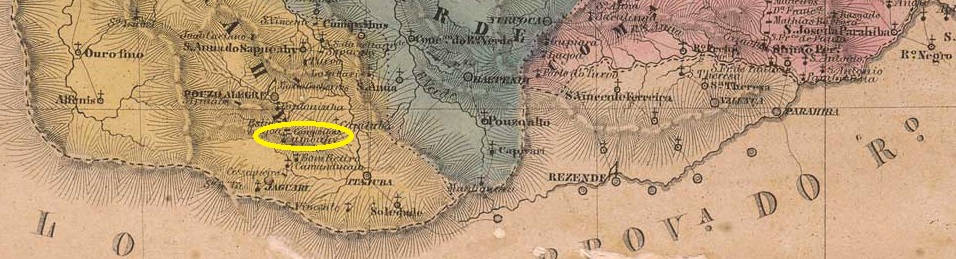
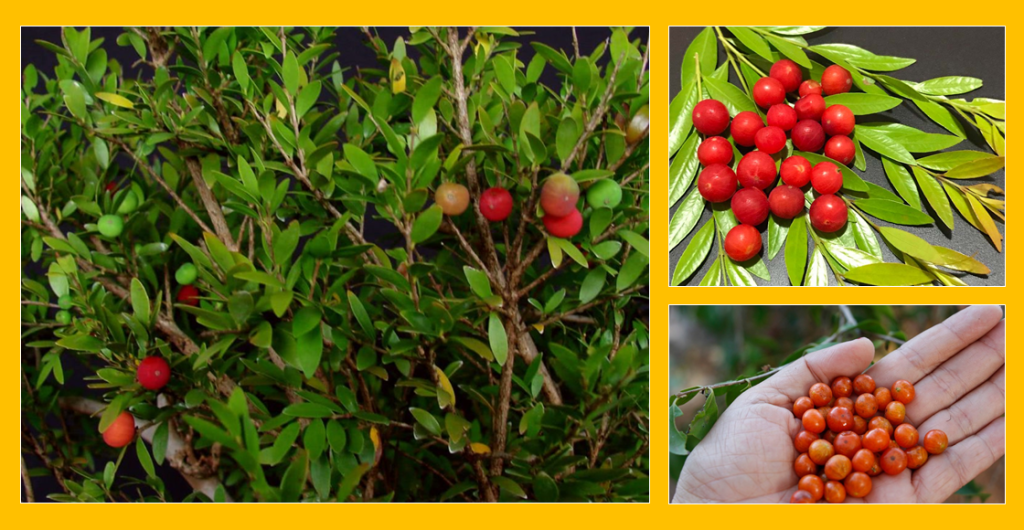
The Freguesia de N. Sra. do Carmo de Cambuhy was founded in June 1850, belonged to the Vila de Jaguary and was located on the west bank of the Itaim, 470 km southwest of the provincial capital Ouro Preto. The village became a vila in July 1889 and a town in May 1892. The native word Cambuí (as it is spelled today) refers to some plants of the myrtle family (Myrtaceae).
Myrciaria tenella (O.Berg, todafruta.com.br)
Reinhold Koester writes in Carimbologia VIII that there was a post office in Cambuhy since February 1873. The only 19th century postmark so far, CMG-0485b, is also illustrated in Koester’s work and may not be the oldest, as the postmarks known so far all show dates from the Republic period:
CMG-0485b (RK) 1890-1897Villiers de l’Ile Adam: Carta (…) da Provincia de Minas Geraes, 1849
Die Freguesia de N. Sra. do Carmo de Cambuhy wurde im Juni 1850 gegründet, gehörte zur Vila de Jaguary und lag am Westufer des Itaim, 470 km südwestlich der Provinzhauptstadt Ouro Preto. Das Dorf wurde im Juli 1889 zur Vila und im Mai 1892 zur Stadt erhoben. Das einheimische Wort Cambuí (wie es heute geschrieben wird) bezeichnet einige Pflanzen aus der Familie der Myrtengewächse (Myrtaceae).
Myrciaria tenella (O.Berg, todafruta.com.br)
Reinhold Koester schreibt in Carimbologia VIII, dass es in Cambuhy seit Februar 1873 ein Postamt gab. Der bisher einzige Poststempel aus dem 19. Jahrhundert, CMG-0485b, ist auch in Koesters Werk abgebildet und möglicherweise nicht der älteste, da die bisher bekannten Stempel alle Jahreszahlen aus der Zeit der Republik zeigen:
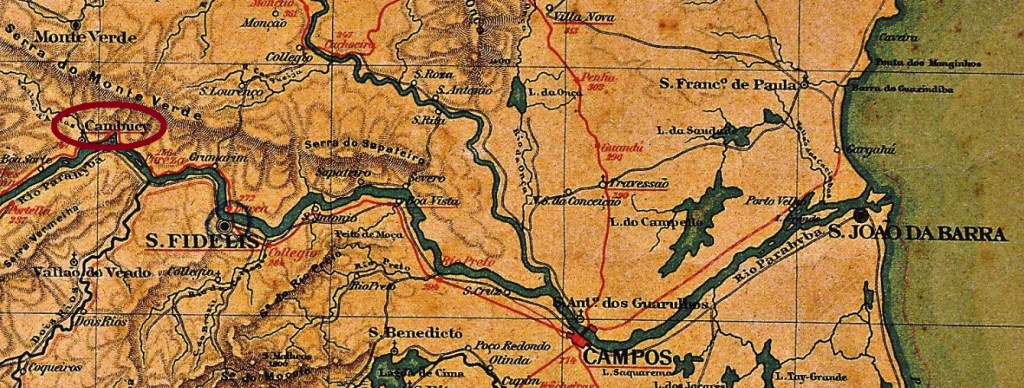
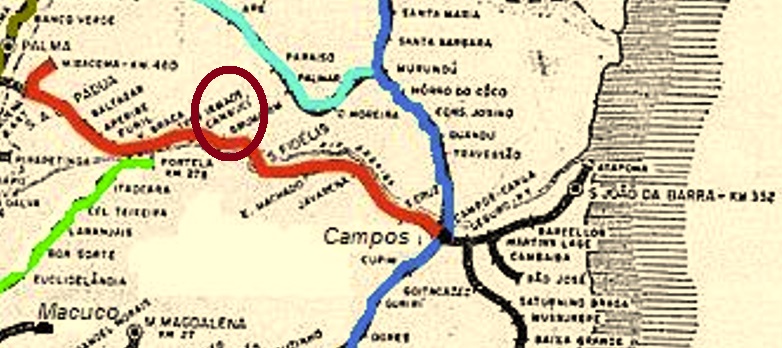
This station was inaugurated in July 1880 by the E.F. Santo Antonio de Padua Railway Company and was located on the north bank of the Paraíba do Sul River in the Município of São Fidélis, 300 km northeast of the capital Rio de Janeiro. The line changed hands in 1884 to E.F. Macahe e Campos, in 1887 to E.F. Leopoldina, and from 1975 until its closure in 1996 it belonged to Rede Ferroviária Federal S.A. (estacoesferroviarias.com.br). The name Vallão das Antas means River/Creek of the Tapirs, but from about 1886 the station was renamed Cambucy. The local jurisdiction changed to the Município of Monte Verde in May 1891, and since October 1918 Cambucy has been an independent municipality.
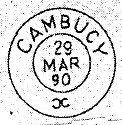
As listed in the Directory of Imperial Post Offices (Tabella das Agencias do Correio do Imperio, Rio de Janeiro, 1885), there was a station post office from 1880. The first imperial postmark with Cambucy is CRJ-0255a, which was already shown by R. Koester in Carimbologia VII:
CRJ-0255a (RK) 1886-1894
Koester also showed a seal cancel from Cambucy:
CRJ-0255b (RK)
For postmarks with Vallão das Antas see VRJ-0980.
Estrada de Ferro Leopodina
Siehe auch Vallão das Antas (VRJ-0980)
Dieser Bahnhof wurde im Juli 1880 durch die E.F. Santo Antonio de Padua Bahngesellschaft eingeweiht und lag im Município von São Fidélis, 300 km nordöstlich der Hauptstadt Rio de Janeiro entfernt. Die Linie wechselte 1884 zur E.F. Macahe e Campos, 1887 zur E.F. Leopoldina, und von 1975 bis zur Stilllegung 1996 gehörte sie der Rede Ferroviária Federal S.A. (estacoesferroviarias.com.br). Der Name Vallão das Antas bedeutet Fluss/Bach der Tapire, aber ab ca. 1886 hieß der Bahnhof Cambucy. Die Ortszuständigkeit wechselte im Mai 1891 zum Município von Monte Verde, und seit Oktober 1918 ist Cambucy ein eigenständiger Município.
Wie im Verzeichnis der kaiserlichen Postämter (Tabella das Agencias do Correio do Imperio, Rio de Janeiro, 1885) aufgelistet, gab es ein Bahnhofspostamt ab 1880. Der erste kaiserliche Poststempel mit Cambucy ist CRJ-0255a und wurde bereits durch R. Koester in Carimbologia VII gezeigt:
CRJ-0255a (RK) 1886-1894
Koester zeigte auch einen Stempel mit Siegel aus Cambucy:
CRJ-0255b (RK)
Für Poststempel mit Vallão das Antas siehe VRJ-0980.
Villiers de l’Ile Adam: Carta (…) da Provincia de Santa Catharina, 1848
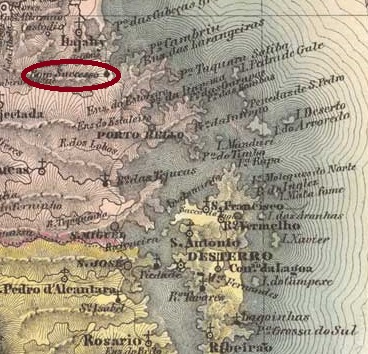
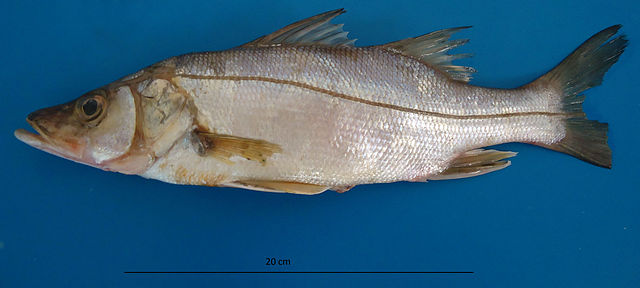
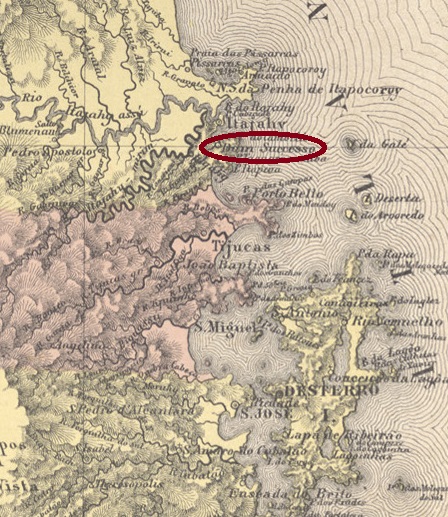
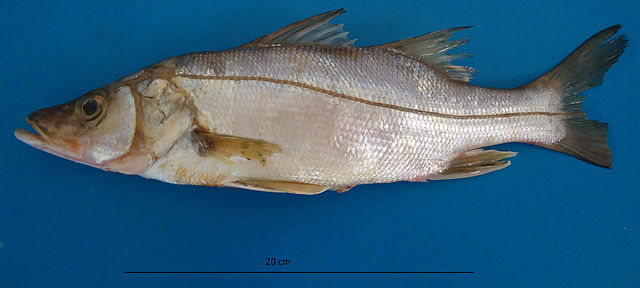
The Freguesia de N. Sra. do Bom Successo de Camboriú was founded in April 1849, belonged to the Vila de Itajahy (as it was written then) and was located on the south bank of the Camboriú, 90 km north of the provincial capital Desterro (today Florianópolis). It became a vila in its own município in April 1884. The indigenous word Camboriú means Robalos River. Robalo is the name of many South American sea bass of the family Centropomidae:
Centropomus parallelus (Poey, 1860, photo: Carla Isobel Elliff, CA BY 3.0)
Reinhold Koester writes in Carimbologia VII that there had been a post office since September 1875. This is confirmed by the provincial president’s report of March 1876:
Relatorio do Presidente da Provincia, March 1876
The only imperial postmark so far is CSC-0035b, here according to R. Koester (op. cit.):
CSC-0035b (RK)Atlas do Imperio do Brasil, 1868
Die Freguesia de N. Sra. do Bom Successo de Camboriú wurde im April 1849 gegründet, gehörte zur Vila de Itajahy (wie man damals schrieb) und lag am Südufer des Camboriú, 90 km nördlich der Provinzhauptstadt Desterro (heute Florianópolis). Es wurde im April 1884 zu einer Vila im eigenen Município. Das indigene Wort Camboriú bedeutet Fluss der Robalos. Robalo ist der Name vieler südamerikanischer Wolfsbarsche aus der Familie Centropomidae:
Centropomus parallelus (Poey, 1860, Foto: Carla Isobel Elliff, CA BY 3.0)
Reinhold Koester schreibt in Carimbologia VII, dass es seit September 1875 ein Postamt gab. Dies wird durch den Bericht des Provinzpräsidenten vom März 1876 bestätigt:
Relatorio do Presidente da Provincia, März 1876
Der bisher einzige kaiserliche Poststempel ist CSC-0035b, hier nach R. Koester (op. cit.):
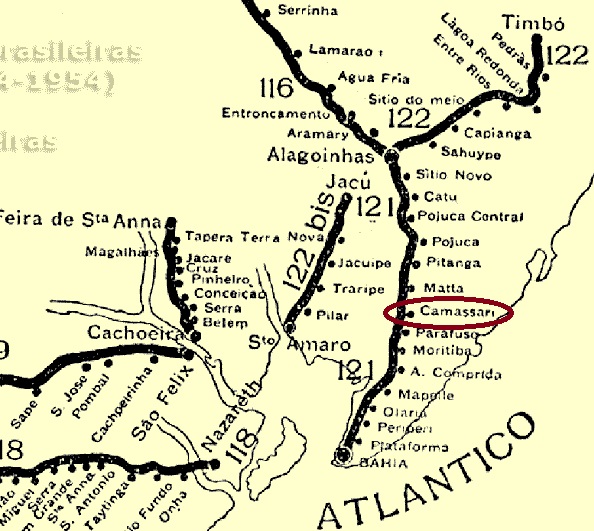
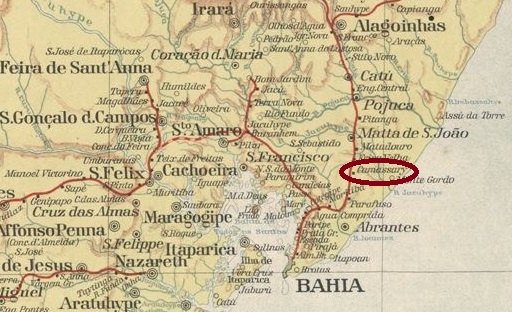
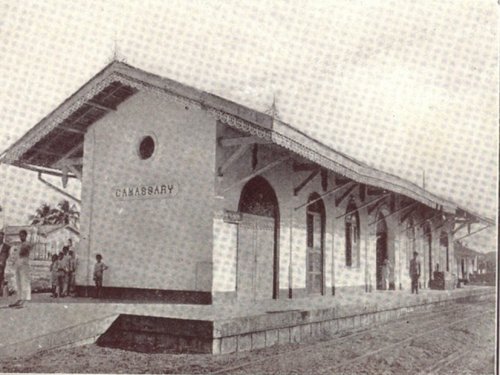
Inaugurated in September 1861 by the E.F. Bahia ao S. Francisco railway company, Camassary station is located on the banks of the river Camaçari (in the current spelling), 50 km north of the provincial capital Salvador da Bahia. The indigenous word Camaçari refers to a beautiful plant from the Callophyllaceae family:
Camaçari = Caraipa densifolia (Mart.). Photo: Alex Popovkin, Wikipedia Commons
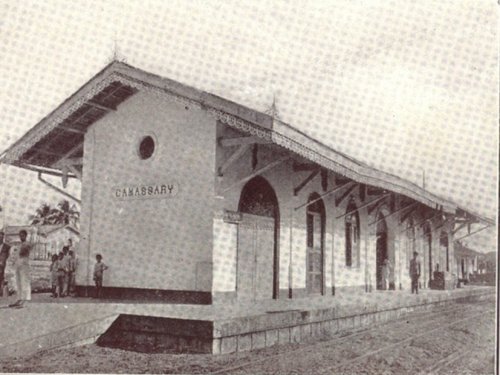
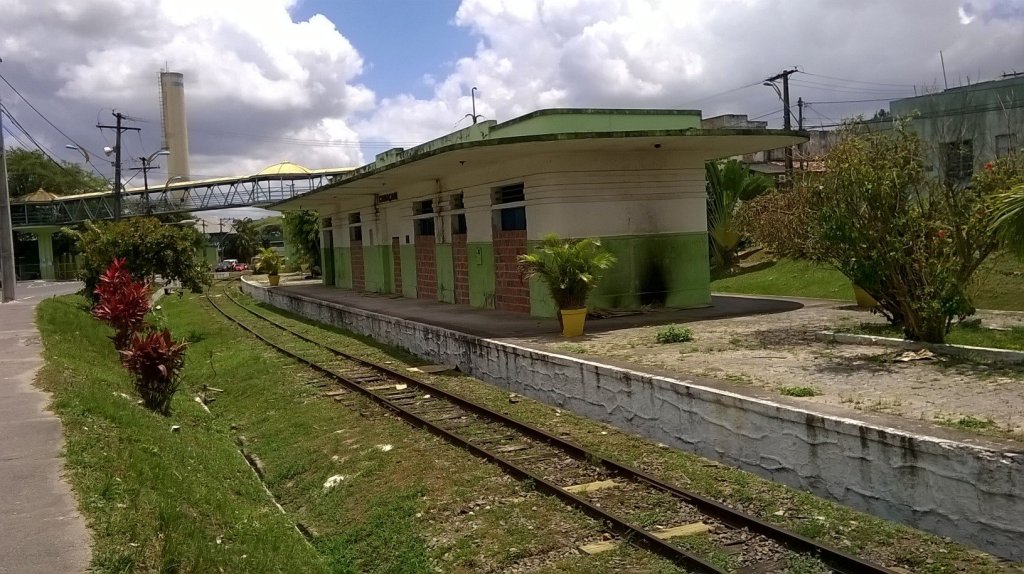
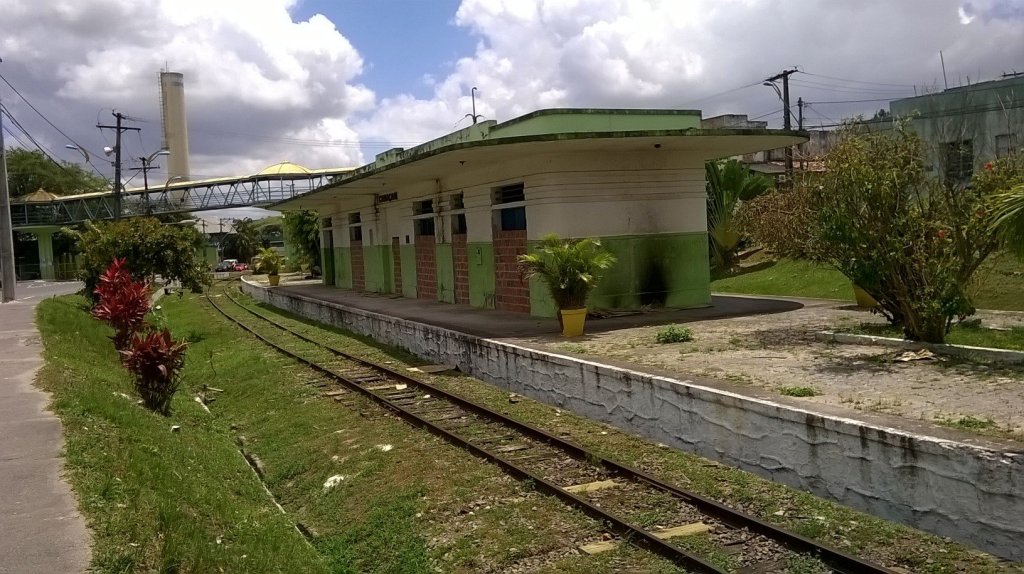
The railway line passed to the Cie Chemins de Fer Fédéraux de l’Est Brésilien in 1911, to the V.F.F. Leste Brasileiro in 1935, and belonged to Rede Ferroviária Federal S.A. (estacoesferroviarias.com.br) from 1975 until the line was closed in 1996. Today the tracks are still there, but the station is abandoned.
1923 (Ilustração Brasileira, on estacoesferroviarias.com.br)
2014 (Photo: Erivelto Souza, on estacoesferroviarias.com.br)
The area around the railway station belonged as a district to the Município Abrantes from August 1920, which became part of the newly created Município Montenegro in July 1925. Since March 1938, Camaçari has been an independent Município.
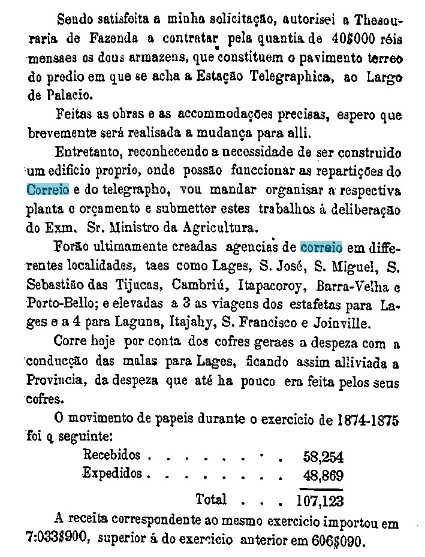
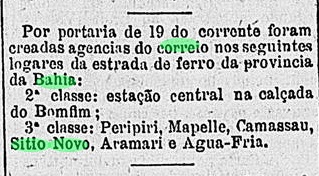
As the Rio press reported, there had been a post office at the railway station since April 1881:
Gazeta de Noticias/RJ, 21.04.1881
Reinhold Koester gives August 1881 for this in Carimbologia VII, which could perhaps be the date of the commissioning of this agency. So far, no imperial postmark from Camassary is known.
Estado da Bahia, 1913
Der Bahnhof Camassary wurde im September 1861 von der Eisenbahngesellschaft E.F. Bahia ao S. Francisco eingeweiht und liegt am Ufer des Flusses Camaçari (so die heutige Schreibweise), 50 km nördlich der Provinzhauptstadt Salvador da Bahia. Das indigene Wort Camaçari bezeichnet eine schöne Pflanze aus der Familie der Callophyllaceae:
Camaçari = Caraipa densifolia (Mart.). Foto: Alex Popovkin, Wikipedia Commons
Die Bahnlinie ging 1911 an die Cie Chemins de Fer Fédéraux de l’Est Brésilien, 1935 an die V.F.F. Leste Brasileiro über und gehörte von 1975 bis zur Stilllegung der Strecke 1996 der Rede Ferroviária Federal S.A. (estacoesferroviarias.com.br). Heute sind die Gleise noch vorhanden, aber der Bahnhof ist verlassen.
1923 (Ilustração Brasileira, auf estacoesferroviarias.com.br)2014 (Foto: Erivelto Souza, in estacoesferroviarias.com.br)
Das Gebiet um den Bahnhof gehörte ab August 1920 als Distrikt zum Município Abrantes, der im Juli 1925 in das neu gegründete Município Montenegro überging. Seit März 1938 ist Camaçari ein unabhängiges Município.
Wie die Presse von Rio berichtete, gab es seit April 1881 ein Postamt am Bahnhof:
Gazeta de Noticias/RJ, 21.04.1881
Reinhold Koester gibt dafür in Carimbologia VII den August 1881 an, was vielleicht der Beginn der Inbetriebnahme dieser Agentur sein könnte. Bisher ist kein kaiserlicher Poststempel aus Camassary bekannt.
























 Carimbologia