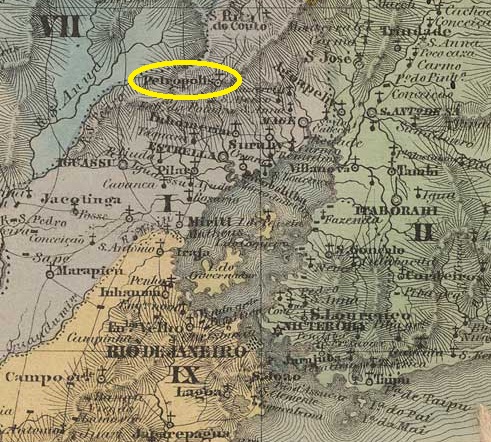
The town, built on the Serra do Mar in honour of the Brazilian emperor, was still a fazenda known as Córrego Seco (Dry Creek) around 1840 and was situated near the western bank of the Itaipava River in the municipality of Paraíba do Sul, 70 kilometres north of the capital, Rio de Janeiro. From September 1845, a colony for European immigrants was established there, which became the Freguesia de D. Pedro de Alcântara de Petrópolis in May of the following year. Since September 1857, Petrópolis has been a town in its own municipality.
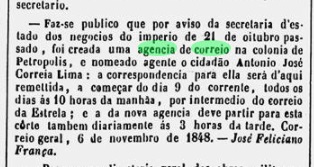
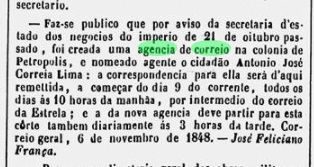
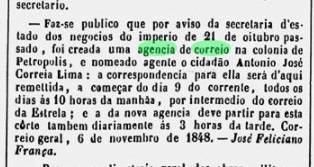
As reported by the capital’s press, the local post office was created in October 1848:
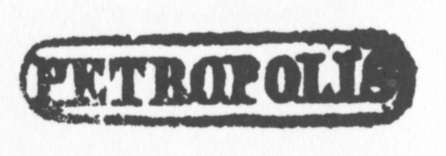
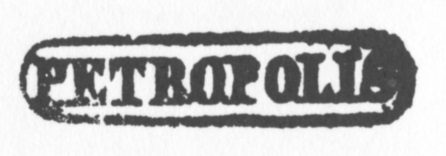
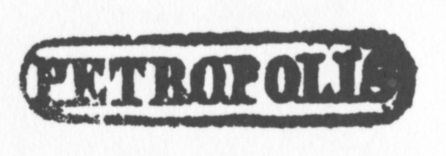
The oldest postmark is PRJ-0780a, which was assigned the number 1396 by P. Ayres in Catálogo de Carimbos Brasil-Império (S. Paulo, 1937, 1942):
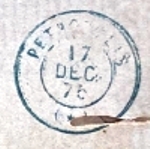
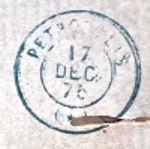
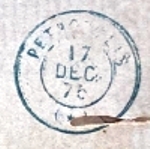
This was followed by the French type PRJ-0780b (fig. Felipe Piccinini), which also appears in blue:
This was followed by the double-circle PRJ-0780c (fig. Felipe Piccinini):
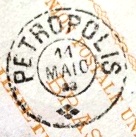
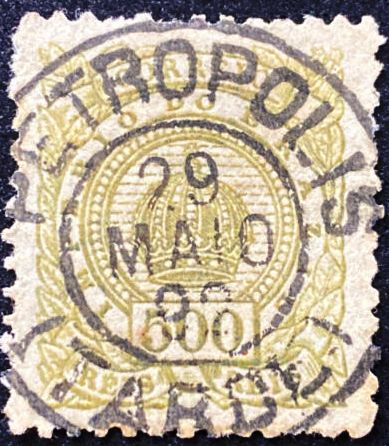
Before the end of the Empire, four further circular postmarks also appeared, beginning with PRJ-0780d (Ill. From the internet and agenciaspostais.com.br):
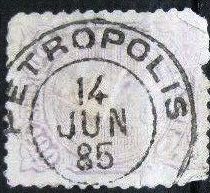
The successor, PRJ-0780e (ill. Koester, in Carimbologia XXX), also occurs in light blue:
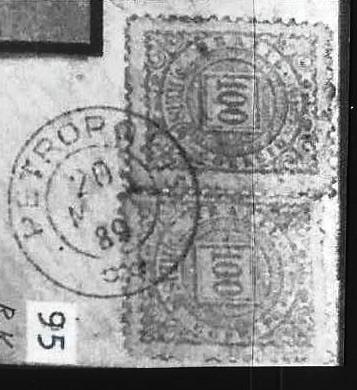
The appearance of the morning and afternoon postmarks PRJ-0780f (illustration from the internet) and PRJ-0780g (illustration by Roberto Assef Jr.) in the final year of the Empire indicates a brisk postal service from Petrópolis.
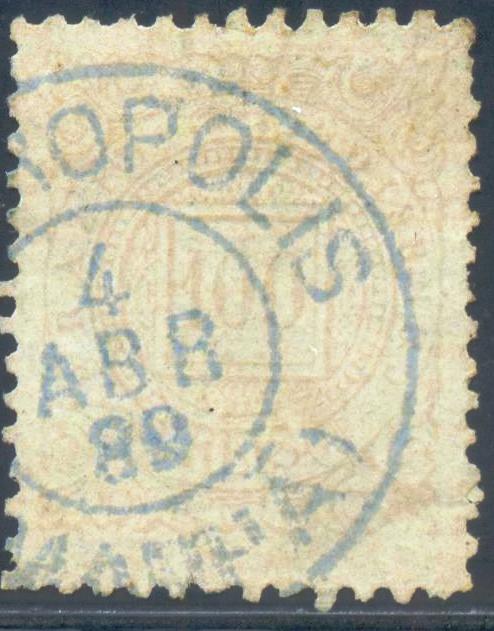
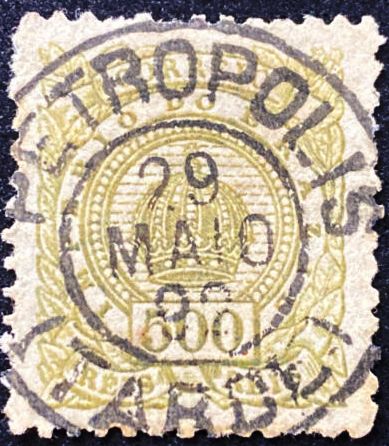
R. Koester (op. cit.) also showed a postmark bearing the imperial seal PRJ-0780f from Petrópolis.

From Koester we also have an image of a curious handwritten cancellation from Petrópolis:

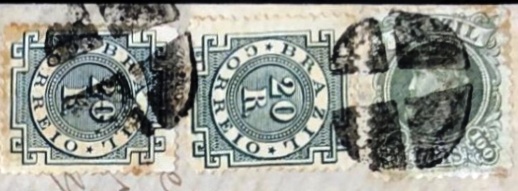
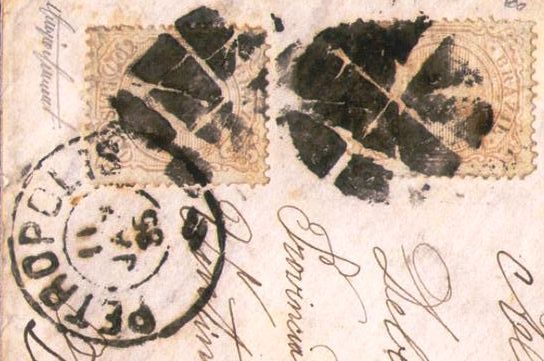
James Dingler and Klerman W. Lopes have listed two mute postmarks in Mute Cancellations of the Brazil Empire / Carimbos Mudos do Brasil Império (Brazil Philatelic Association, Rio de Janeiro, 2000):
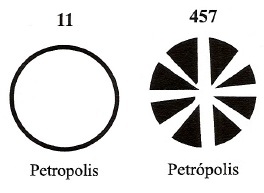
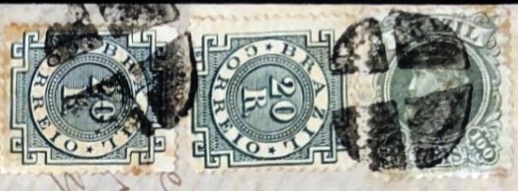
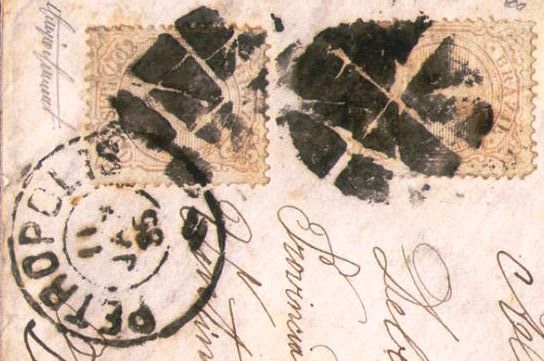
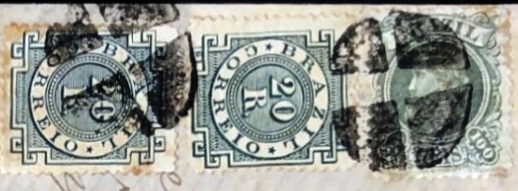
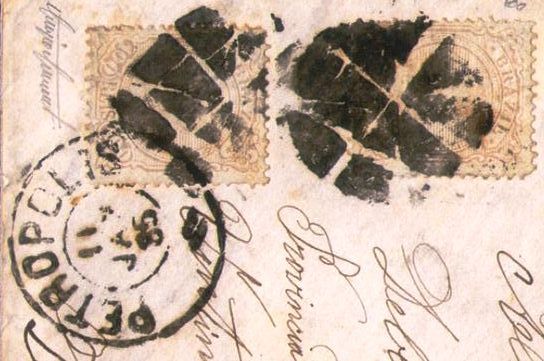
Further mute postmarks from Petrópolis are known through Luiz C. Fritzen and Claudio Coelho.
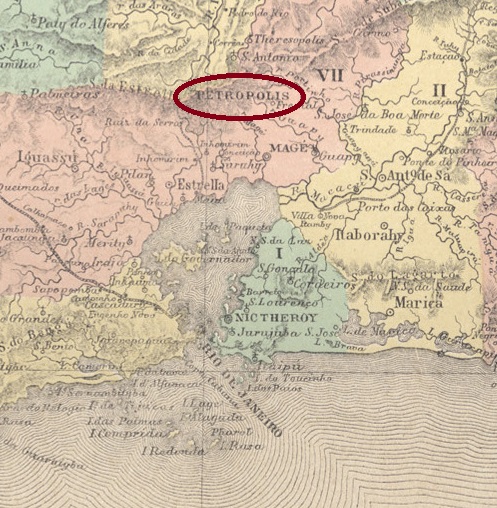
A cidade, fundada em homenagem ao imperador brasileiro na Serra do Mar, era, por volta de 1840, ainda uma fazenda chamada Córrego Seco e ficava próxima à margem oeste do Itaipava, no município de Paraíba do Sul, 70 quilômetros ao norte da capital, Rio de Janeiro. A partir de setembro de 1845, foi estabelecida ali uma colônia para imigrantes europeus, que em maio do ano seguinte se tornou a Freguesia de D. Pedro de Alcântara de Petrópolis. Desde setembro de 1857, Petrópolis é uma cidade com município próprio.
Conforme noticiou a imprensa da capital, em outubro de 1848 foi criada a agência postal local:
O carimbo postal mais antigo é o PRJ-0780a, que recebeu o nº 1396 de P. Ayres no Catálogo de Carimbos Brasil-Império (S. Paulo, 1937, 1942):
Seguiu-se o tipo francês PRJ-0780b (Ilustração de Felipe Piccinini), que também existe na cor azul:
Depois disso, surgiu o carimbo de duplo círculo PRJ-0780c (fig. Felipe Piccinini):
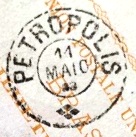
Antes do fim do Império, apareceram também mais quatro carimbos circulares, começando com o PRJ-0780d (EB-PN):
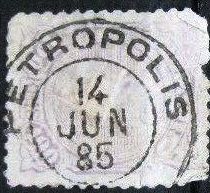
O sucessor PRJ-0780e (Ilustração de Koester, em Carimbologia XXX) também existe em azul claro:
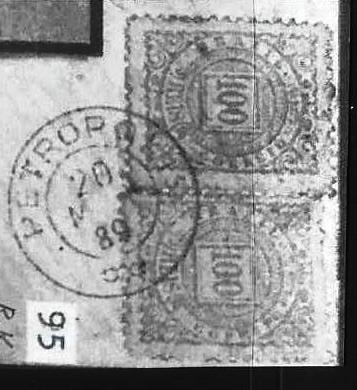
O surgimento dos carimbos da manhã e da tarde PRJ-0780f (fig. da Internet) e PRJ-0780g (fig. Roberto Assef Jr.) no último ano do Império demonstra um intenso tráfego postal de Petrópolis.
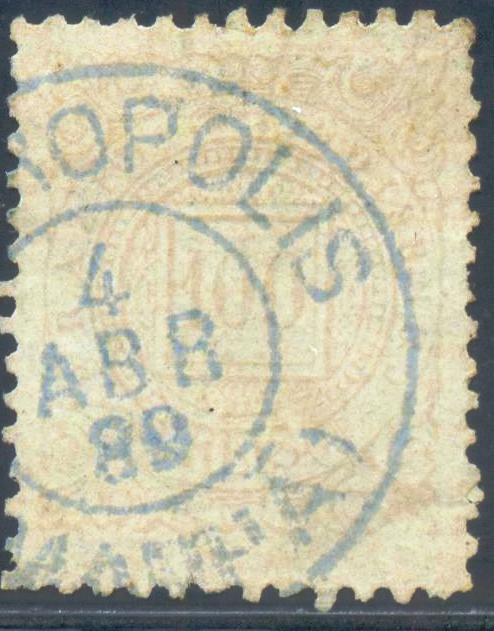
R. Koester (op. cit.) também mostrou um carimbo postal com o selo imperial PRJ-0780f de Petrópolis.

De Koester, temos também a imagem de um curioso carimbo manuscrito de Petrópolis:

James Dingler e Klerman W. Lopes listaram em Mute Cancellations of the Brazil Empire / Carimbos Mudos do Brasil Império (Clube Filatélico do Brasil, Rio de Janeiro, 2000) dois carimbos postais mudos:
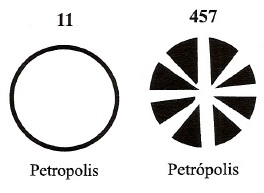
Outros carimbos mudos de Petrópolis são conhecidos por meio de Luiz C. Fritzen e Claudio Coelho.
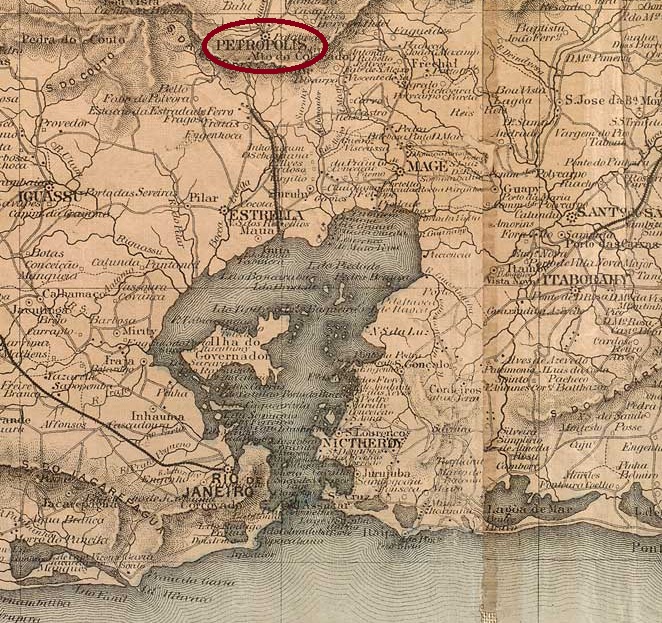
Die Stadt, die zu Ehren des brasilianischen Kaisers an der Serra do Mar errichtet wurde, war um 1840 noch eine Fazenda namens Córrego Seco (Trockener Bach) und lag in der Nähe des Westufers des Itaipava im Município de Paraíba do Sul, 70 Kilometer nördlich der Hauptstadt Rio de Janeiro. Ab September 1845 wurde dort eine Kolonie für europäische Einwanderer eingerichtet, die im Mai des Folgejahres zur Freguesia de D. Pedro de Alcântara de Petrópolis wurde. Seit September 1857 ist Petrópolis eine Stadt im eigenen Município.
Wie die Hauptstadtpresse meldete, wurde im Oktober 1848 die Einrichtung des örtlichen Postamts beschlossen:
Der älteste Poststempel ist PRJ-0780a, der von P. Ayres in Catálogo de Carimbos Brasil-Império (S. Paulo, 1937, 1942) die Nr. 1396 erhielt:
Es folgte der französische Typ PRJ-0780b (Abb. Felipe Piccinini), der auch in Blau vorkommt:
Danach kam der Doppelkreis PRJ-0780c (Abb. Felipe Piccinini):
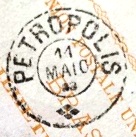
Vor dem Ende des Kaiserreichs erschienen auch vier weitere Kreisstempel, beginnend mit PRJ-0780d (EB-PN):
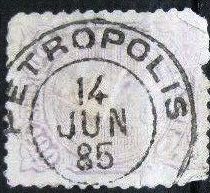
Den Nachfolger PRJ-0780e (Abb. Koester, in Carimbologia XXX) gibt es auch in Hellblau:
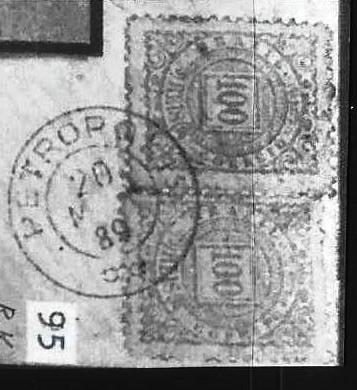
Die Erscheinung von Vor- und Nachmittagsstempeln PRJ-0780f (Abb. aus dem Internet) und PRJ-0780g (Abb. Roberto Assef Jr.) im letzten Jahr des Kaiserreichs zeugt von regem Postverkehr von Petrópolis.
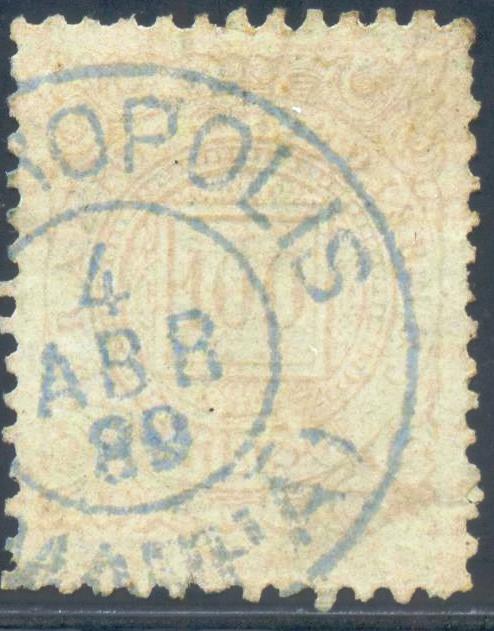
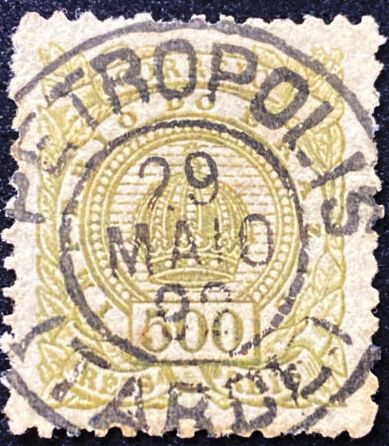
R. Koester (op. cit.) zeigte auch einen Poststempel mit dem kaiserlichen Siegel PRJ-0780f aus Petrópolis.

Von Koester haben wir auch das Bild einer kuriosen handschriftlichen Entwertung aus Petrópolis:

James Dingler und Klerman W. Lopes haben in Mute Cancellations of the Brazil Empire / Carimbos Mudos do Brasil Império (Brazil Philatelic Association, Rio de Janeiro, 2000) zwei stumme Poststempel aufgeführt:
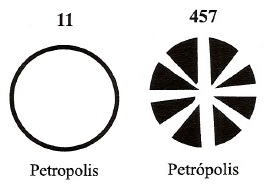
Weitere stumme Stempel aus Petrópolis sind durch Luiz C. Fritzen und Claudio Coelho bekannt.

 Carimbologia