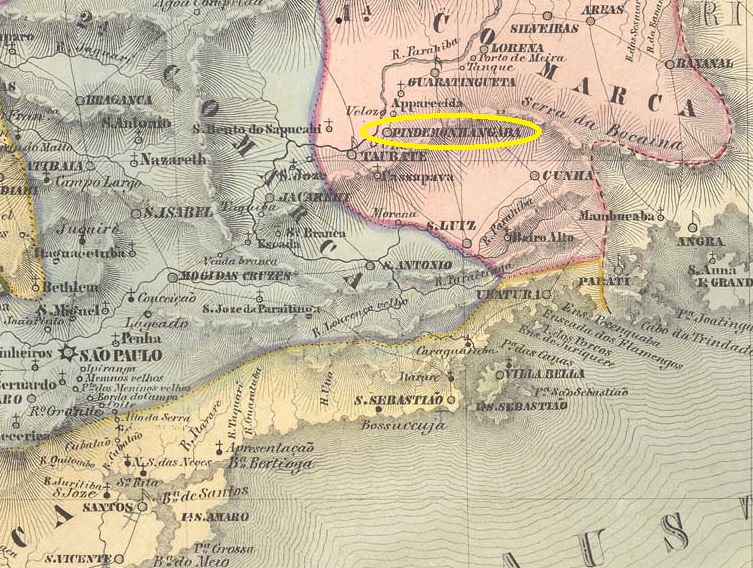
Alternative spelling: Pindaminhangaba
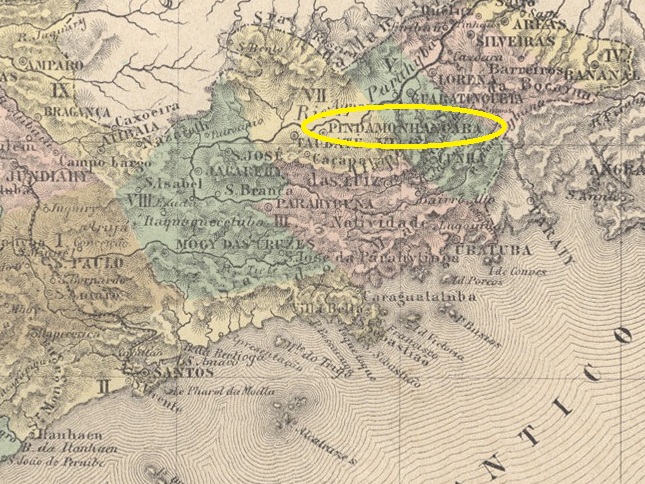
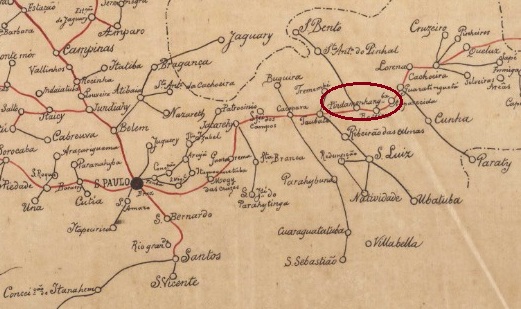
The settlement of São José de Pindamonhangaba has been documented since 1690. It was part of the Vila de Taubaté, situated on the south bank of the Paraíba do Sul river, 150 kilometres north-east of what would later become the provincial capital, São Paulo. In July 1705, it became Vila N. Sra. do Bom Successo de Pindamonhangaba and has been a town since April 1849. The name derives from the Tupi-Guarani language and means ‘place where fishing rods are made’.
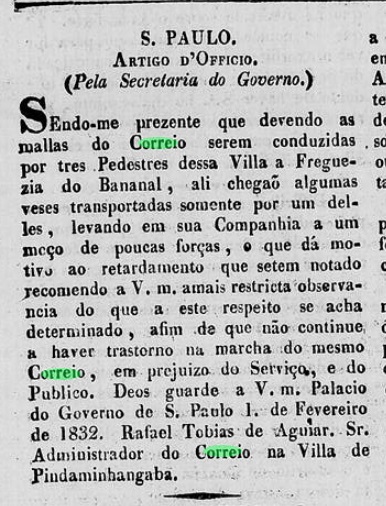
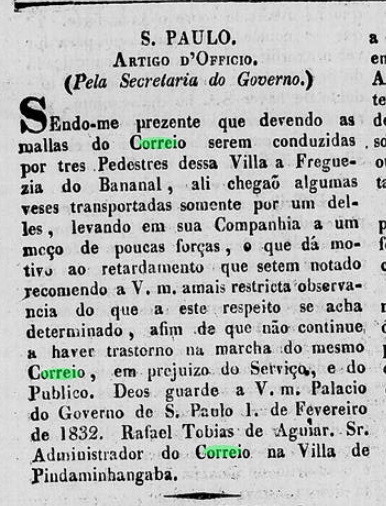
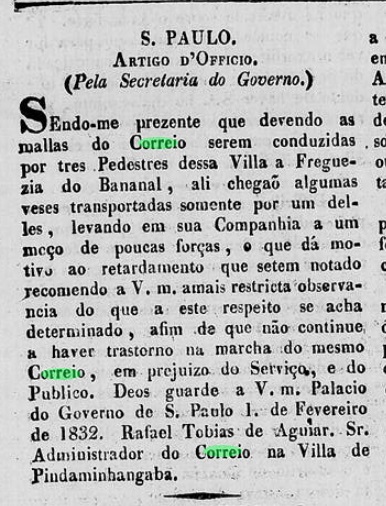
According to Nova Monteiro, there had been a post office there since September 1848, as described in Administrações e Agências Postaes do Brasil Imperio (Brasil Filatelico/RJ, 1934–1935; reprinted by SPP 1994–1999). However, this was listed in the directory of imperial post offices (Tabella das Agências do Correio do Império, Rio de Janeiro, 1885) with the year of creation given as 1846. According to the regional press, there was not only postal traffic but also a local postal administration in Pindamonhangaba as early as February 1832.
The oldest postmark for which there is evidence is PSP-0930a, which was assigned the number 1402 by P. Ayres in the Catálogo de Carimbos Brasil-Império (S. Paulo, 1937, 1942). It also exists in red, sepia and blue.

The RHM catalogue also lists the postmark PSP-0930b under P-SP-30, unfortunately without further details. This rare postmark is likely to be even older than the previous one.

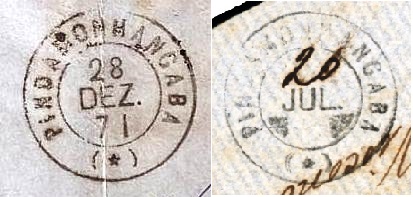
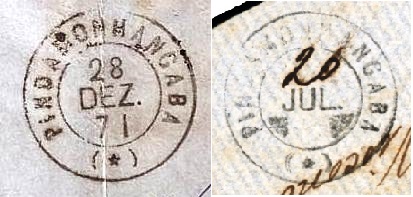
This was followed by the French type PSP-0930c (collection of Fuad Ferreira Fo.). Towards the end of its period of use, the year is often missing, as shown in the illustration by Walter Sonnenberg:
This was followed by the simple circular postmark PSP-0930d (José A. Junges collection):
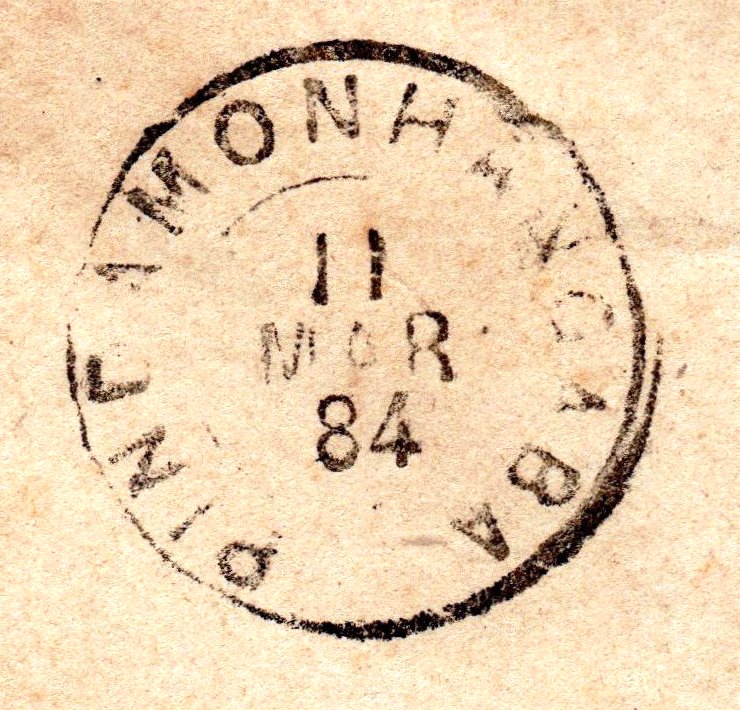
Subsequently, the French type made a surprising return. It was presumably repaired, as the greater spacing between the letters N and G on PSP-0930e (Karlheinz Wittig collection) suggests. The postmark is also available in violet.

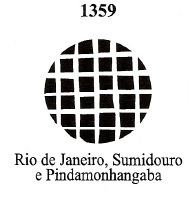
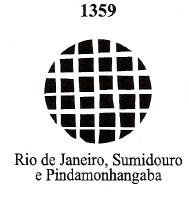
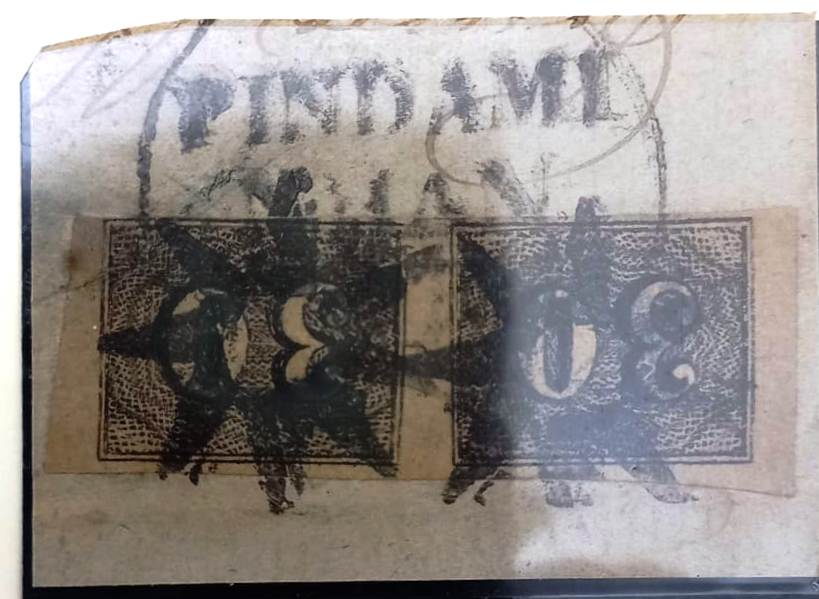
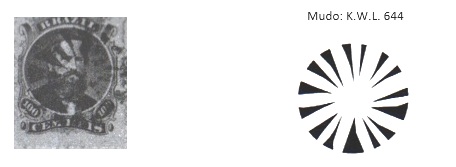
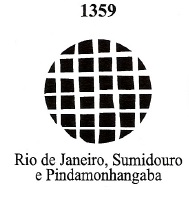
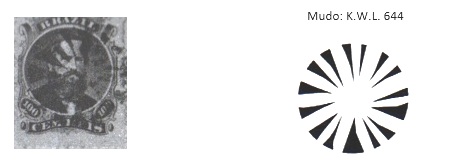
James Dingler and Klerman W. Lopes have listed a mute postmark from Pindamonhangaba bearing the number 1359 in Mute Cancellations of the Brazil Empire (Carimbos Mudos do Brasil Império, Brazil Philatelic Association, Rio de Janeiro, 2000):
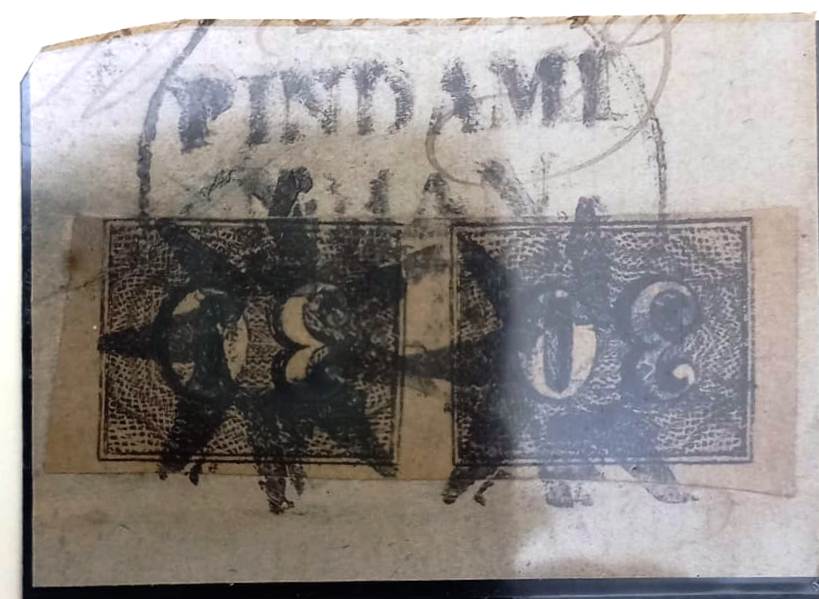
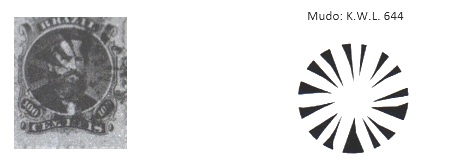
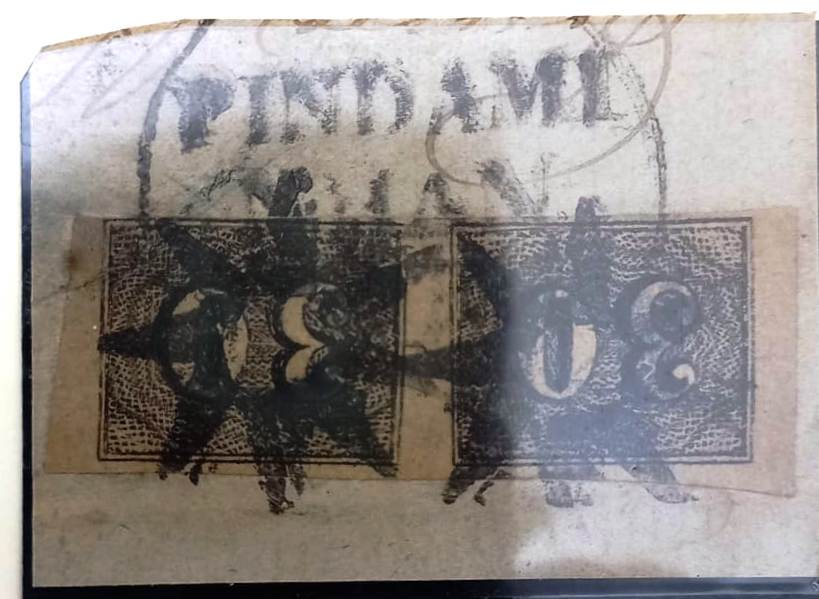
Three further mute postmarks were shown by Fuad Ferreira Fo., the Feldman auction house and Mário Celso Orsi Jr.:

Outra grafia: Pindaminhangaba
O povoado de São José de Pindamonhangaba é mencionado desde 1690. Pertencia à Vila de Taubaté, ficava na margem sul do rio Paraíba do Sul e situava-se a 150 quilômetros a nordeste da futura capital provincial, São Paulo. Em julho de 1705, tornou-se a Vila N. Sra. do Bom Sucesso de Pindamonhangaba e é município desde abril de 1849. O nome tem origem na língua tupi-guarani e significa “lugar onde se fabricam anzois de pesca”.
Segundo Nova Monteiro, havia ali uma agência dos correios desde setembro de 1848, conforme descrito em Administrações e Agências Postais do Brasil Império (Brasil Filatélico/RJ, 1934–1935; reimpressão SPP 1994–1999). No entanto, esta foi listada na Tabela das Agências do Correio do Império (Rio de Janeiro, 1885) com o ano de fundação de 1846. De acordo com a imprensa regional, já em fevereiro de 1832 havia não apenas tráfego postal, mas também uma administração postal local em Pindamonhangaba.
O carimbo postal comprovadamente mais antigo é o PSP-0930a, que recebeu o nº 1402 de P. Ayres no Catálogo de Carimbos Brasil-Império (S. Paulo, 1937, 1942). Ele também existe nas cores vermelho, sépia e azul.

No catálogo RHM, o carimbo postal PSP-0930b é listado sob o número P-SP-30, infelizmente sem mais detalhes. Esse carimbo raro deve ser ainda mais antigo que o anterior.

Seguiu-se o tipo francês PSP-0930c (Coleção Fuad Ferreira Fo.). No final do seu período de utilização, falta frequentemente a indicação do ano, como mostra a ilustração de Walter Sonnenberg:
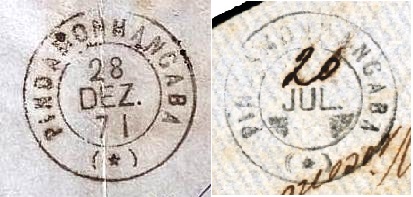
Depois veio o carimbo circular simples PSP-0930d (Coleção José A. Junges):
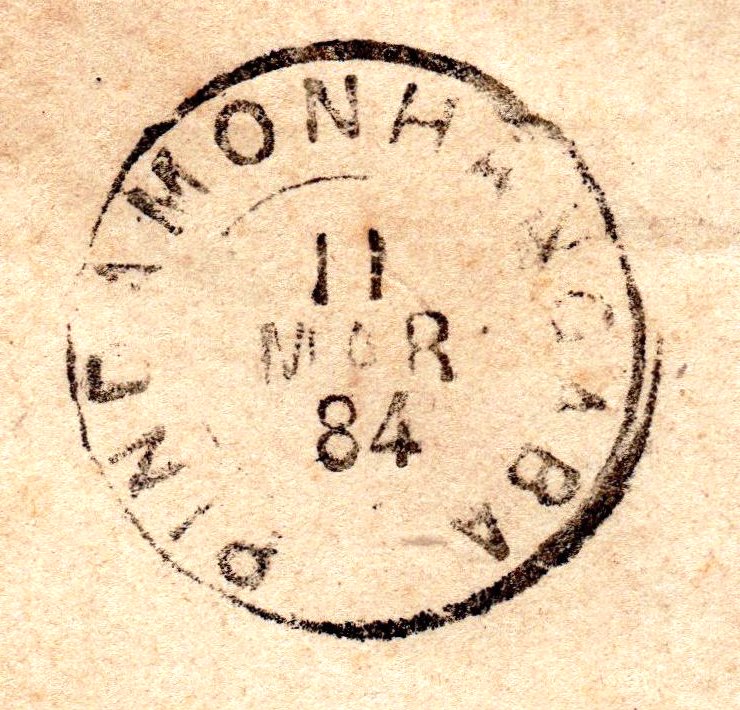
Em seguida, o tipo francês retornou de forma surpreendente. Presumivelmente, ele foi reparado, pois a maior distância entre as letras N e G no PSP-0930e (Coleção Karlheinz Wittig) revela isso. O carimbo também ocorre na cor violeta.

James Dingler e Klerman W. Lopes listaram um carimbo postal mudo de Pindamonhangaba com o nº 1359 em Mute Cancellations of the Brazil Empire / Carimbos Mudos do Brasil Império, (Clube Filatélico do Brasil, Rio de Janeiro, 2000):
Três outros carimbos postais mudos foram apresentados por Fuad Ferreira Fo., pela casa de leilões Feldman e por Mário Celso Orsi Jr.:

Andere Schreibweise: Pindaminhangaba
Die Siedlung São José de Pindamonhangaba ist seit 1690 überliefert. Sie gehörte zur Vila de Taubaté, lag am Südufer des Paraíba do Sul und befand sich 150 Kilometer nordöstlich der späteren Provinzhauptstadt São Paulo. Im Juli 1705 wurde sie zur Vila N. Sra. do Bom Successo de Pindamonhangaba und ist seit April 1849 eine Stadt. Der Name stammt aus der Sprache der Tupi-Guaraní und bedeutet „Ort, wo Angelruten gemacht werden“.
Laut Nova Monteiro gab es dort seit September 1848 ein Postamt, wie in Administrações e Agencias Postaes do Brasil Imperio (Brasil Filatelico/RJ, 1934–1935; Nachdruck SPP 1994–1999) beschrieben. Dieses wurde jedoch im Verzeichnis der kaiserlichen Postämter (Tabella das Agencias do Correio do Imperio, Rio de Janeiro, 1885) mit dem Entstehungsjahr 1846 aufgeführt. Laut der regionalen Presse gab es zudem bereits im Februar 1832 nicht nur Postverkehr, sondern auch eine lokale Postverwaltung in Pindamonhangaba.
Der nachweislich älteste Poststempel ist PSP-0930a, der von P. Ayres im Catálogo de Carimbos Brasil-Império, (S. Paulo, 1937, 1942) die Nr. 1402 erhielt. Es gibt ihn auch in den Farben Rot, Sepia und Blau.

Im RHM-Katalog wird auch der Poststempel PSP-0930b unter P-SP-30 aufgeführt, leider ohne weitere Angaben. Dieser seltene Poststempel dürfte noch älter sein als der vorherige.

Es folgte der französische Typ PSP-0930c (Sammlg. Fuad Ferreira Fo.). Am Ende seiner Verwendungszeit fehlt oft die Jahresangabe, wie die Abbildung von Walter Sonnenberg zeigt:
Danach kam der einfache Kreisstempel PSP-0930d (Sammlg. José A. Junges):
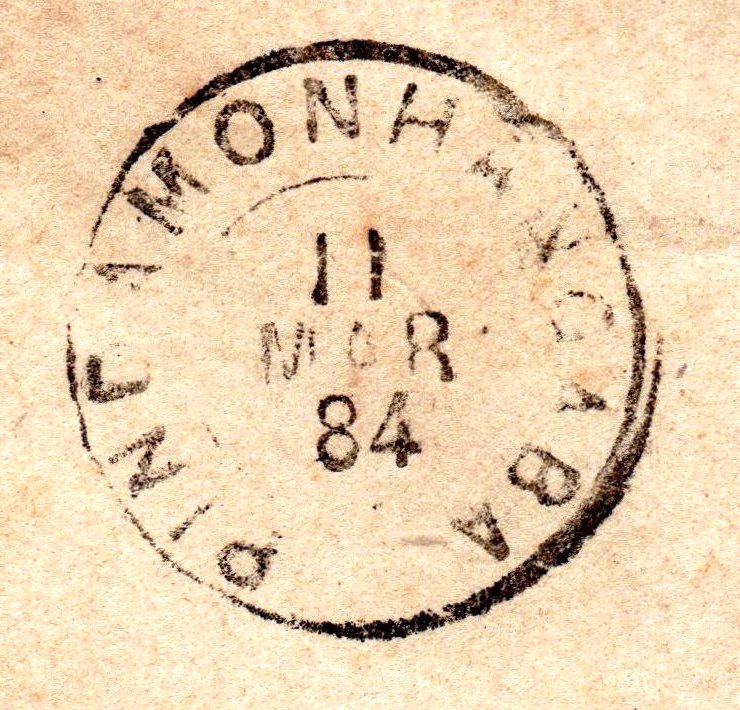
Anschließend kehrte überraschend der französische Typ zurück. Vermutlich wurde er repariert, denn der größere Abstand zwischen den Buchstaben N und G bei PSP-0930e (Sammlung Karlheinz Wittig) verrät dies. Der Stempel ist auch in Violett erhältlich.

James Dingler und Klerman W. Lopes haben einen stummen Poststempel aus Pindamonhangaba mit Nr. 1359 in Mute Cancellations of the Brazil Empire (Carimbos Mudos do Brasil Império, Brazil Philatelic Association, Rio de Janeiro, 2000) aufgeführt:
Drei weitere stumme Poststempel zeigten Fuad Ferreira Fo., das Auktionshaus Feldman und Mário Celso Orsi Jr.:


 Carimbologia