Alternative spelling: Pitangueira
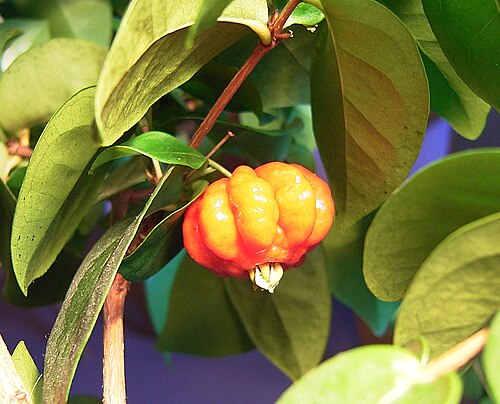
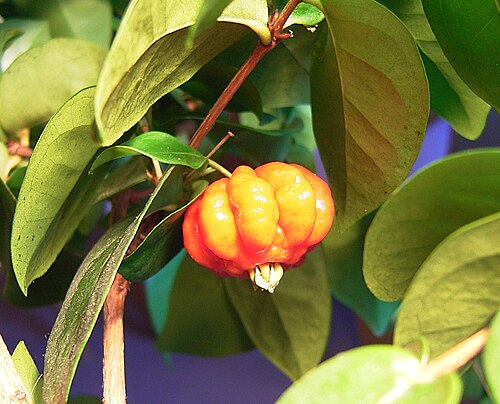
In Brazil, the Surinam cherry tree (Eugenia uniflora, L.), of the Myrtaceae family, is known as the pitangueira. This fruit is popular throughout the country and is widely eaten.
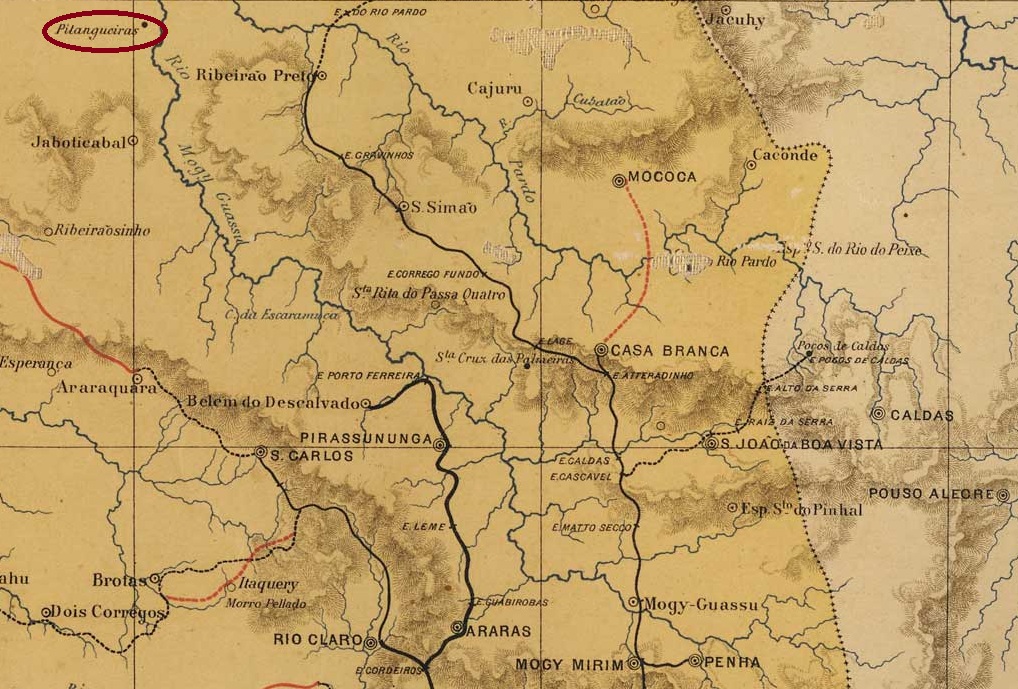
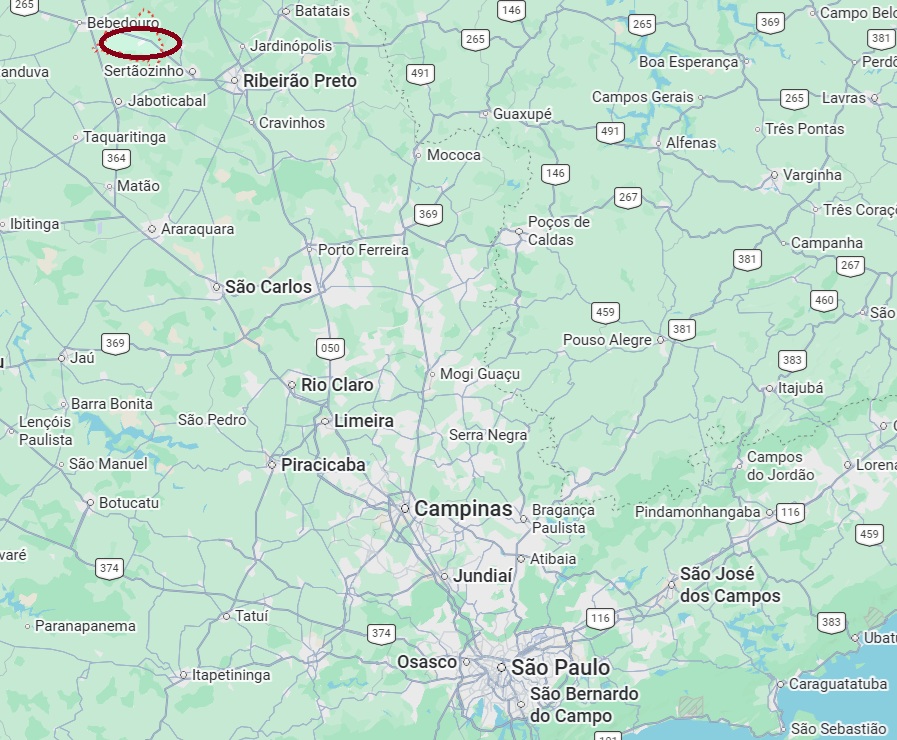
The parish of São Sebastião de Pitangueiras was established in July 1881, belonged to the municipality of Jaboticabal, and was situated near the western bank of the Mogi-Guaçu River, 370 kilometres north-west of the provincial capital, São Paulo. In July 1893, the settlement was elevated to the status of a town, and in December 1906, it became a city.
R. Koester writes in Carimbologia XXXI that the local post office was established in August 1888. The imperial postmark is PSP-0960a (José A. Junges collection):

Outra grafia: Pitangueira
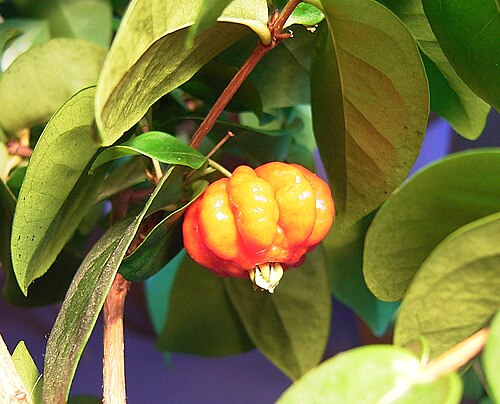
Pitangueira é a árvore da pitanga (Eugenia uniflora, L.), da família das mirtáceas. Esse fruto é muito apreciado e consumido em todo o país.
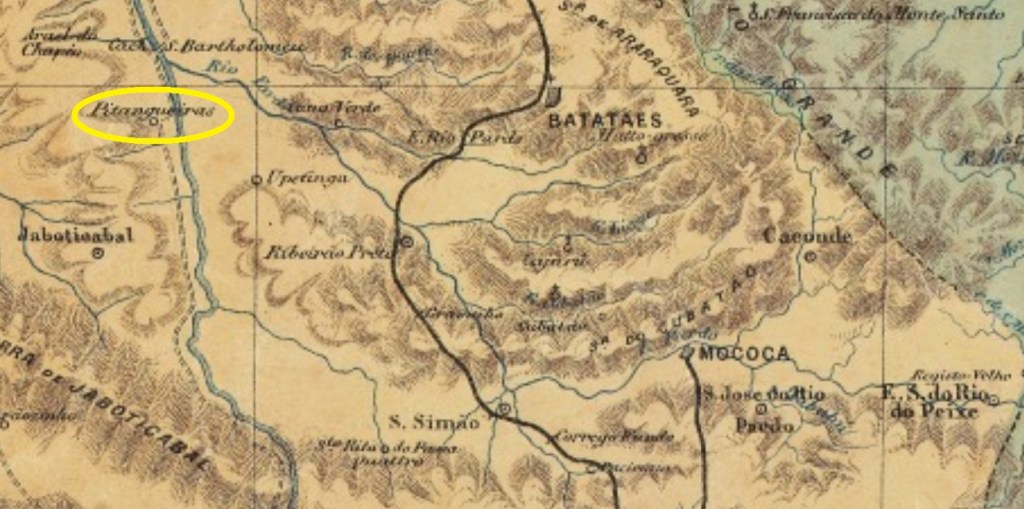
A Freguesia de São Sebastião de Pitangueiras existia desde julho de 1881, pertencia ao Município de Jaboticabal e ficava próxima à margem oeste do rio Mogi-Guaçu, a 370 quilômetros a noroeste da capital provincial, São Paulo. Em julho de 1893, o local foi elevado à categoria de vila e, em dezembro de 1906, à de cidade.
R. Koester escreve na Carimbologia XXXI que a agência dos correios local foi fundada em agosto de 1888. O carimbo postal imperial é o PSP-0960a (Coleção José A. Junges):

Andere Schreibweise: Pitangueira
Pitangueira nennt man in Brasilien den Baum der Surinam-Kirsche (Eugenia uniflora, L.), aus der Familie Myrtaceae. Diese Frucht ist landesweit gern gesehen und auch gegessen.
Die Freguesia de São Sebastião de Pitangueiras bestand seit Juli 1881, gehörte zum Município de Jaboticabal und lag in der Nähe des Westufers des Mogi-Guaçu, 370 Kilometer nordwestlich der Provinzhauptstadt São Paulo. Im Juli 1893 wurde der Ort zur Vila und im Dezember 1906 zur Stadt erhoben.
R. Koester schreibt in Carimbologia XXXI, dass das dortige Postamt im August 1888 gegründet wurde. Der kaiserliche Poststempel ist PSP-0960a (Sammlg. José A. Junges):


 Carimbologia