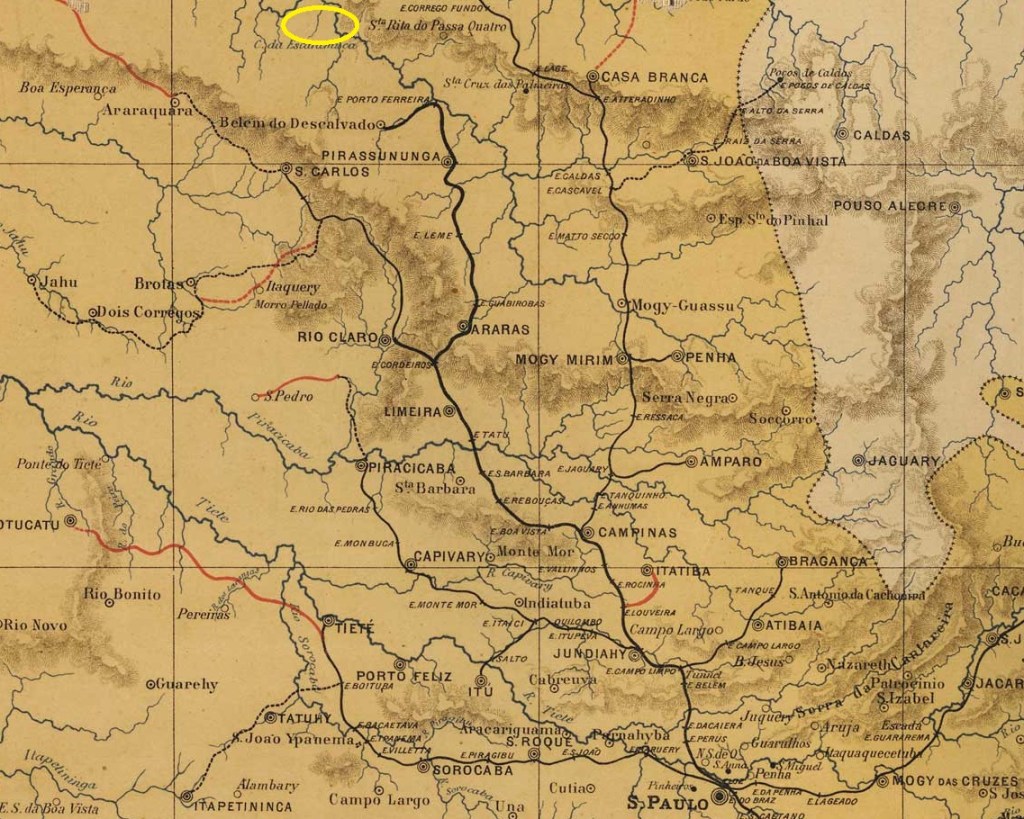
Porto (do) Pulador, in the province of São Paulo, was one of around seven short-lived ports operated by the Companhia Paulista de Vias Férreas e Fluviais – then the full name of the railway company – on the Mojiguaçu River. From May 1887, it was authorised to transport passengers, freight and mail from Porto Ferreira station (built in 1880) along the River Mojiguaçu to its confluence with the Rio Pardo at Pontal. Following the acquisition of the railway company Cia. Rio Clarense by Cia. Paulista in 1892, a parallel railway line was developed along the lower Mojiguaçu. This rendered transport by ship unprofitable. Paulista’s shipping operations declined dramatically and were officially discontinued in May 1904.
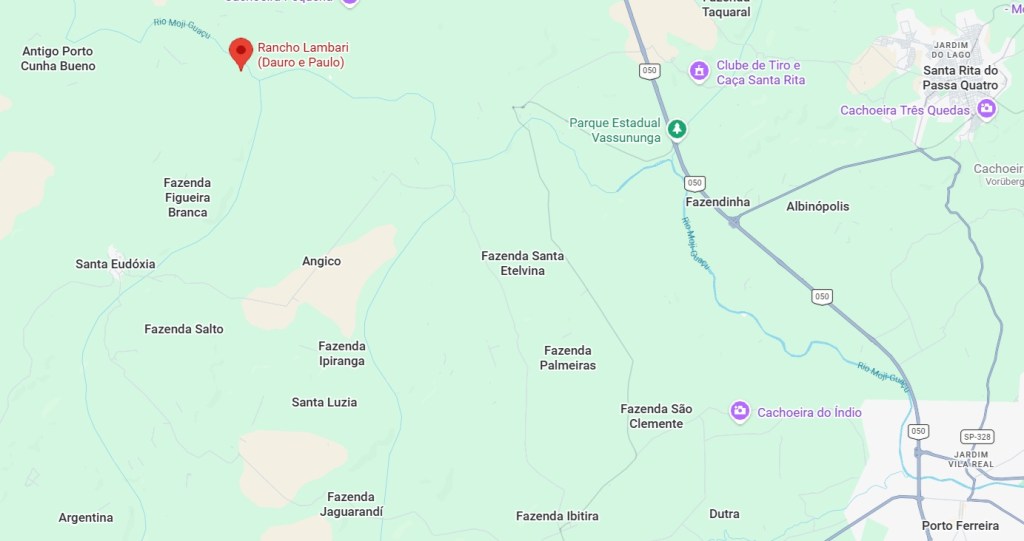
Porto (do) Pulador was probably situated on the south bank of the Mojiguaçu, close to the mouth of the River Quilombo in the municipality of São Simão, 230 km north-west of the provincial capital, São Paulo. Since February 1959, the area has been part of the municipality of Luís Antônio.
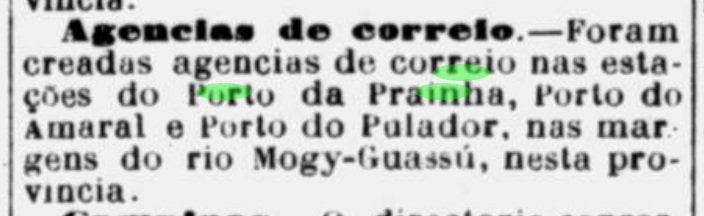
A post office was established there in September 1885:
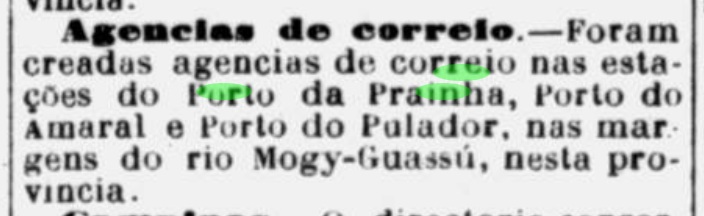
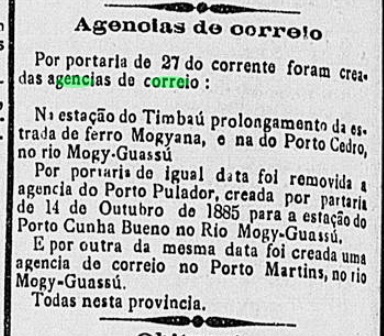
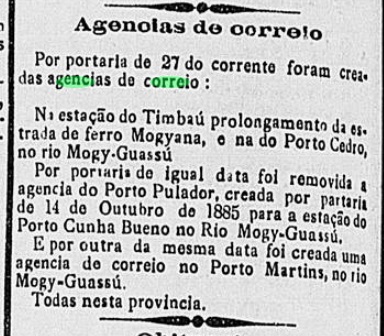
The post office was relocated to Porto Cunha Bueno in March 1888, as reported by the regional press:

To date, no imperial postmark from Porto (do) Pulador has been sighted. If one exists at all, it is likely to be very rare.
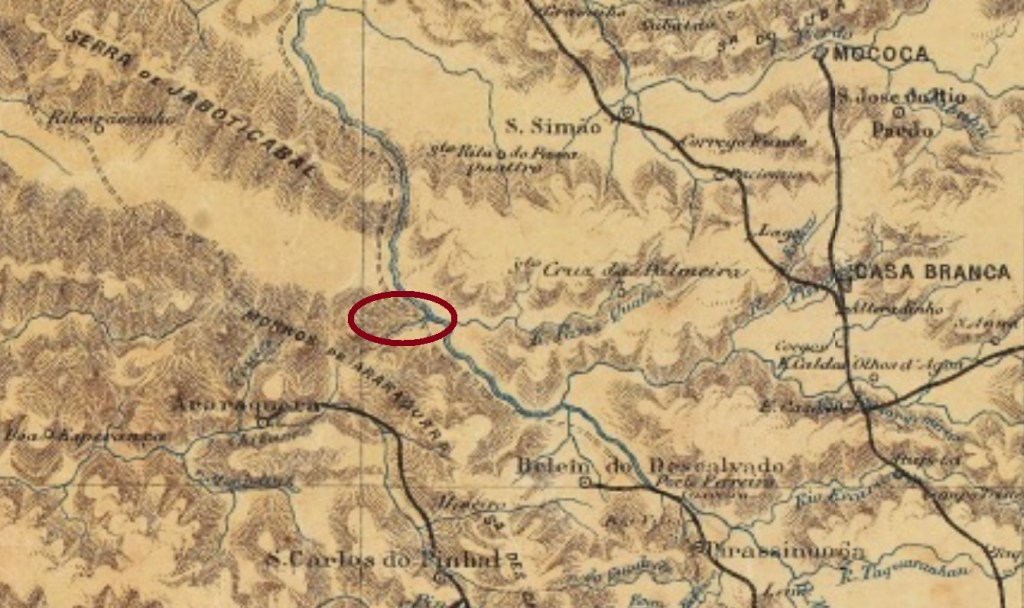
Porto (do) Pulador, na província de São Paulo, foi um dos cerca de sete portos de curta duração da Companhia Paulista de Vias Férreas e Fluviais, como se chamava por completo a Paulista naqueles tempos, no Rio Mojiguaçu. A partir de maio de 1887, ela passou a ter permissão para transportar passageiros, carga e correspondência da estação de Porto Ferreira (construída em 1880) ao longo do rio até sua foz no rio Pardo, perto de Pontal. Após a aquisição da empresa ferroviária Cia. Rio Clarense pela Cia. Paulista, em 1892, foi construída uma linha ferroviária paralela na parte baixa do rio Mojiguaçu. Com isso, o transporte por navio tornou-se inviável economicamente. O tráfego fluvial da Paulista diminuiu drasticamente e foi oficialmente encerrado em maio de 1904.
Porto (do) Pulador provavelmente ficava na margem sul do rio Mojiguaçu, próximo à foz do rio Quilombo, no município de São Simão, a 230 km a noroeste da capital do estado, São Paulo. Desde fevereiro de 1959, a área pertence ao município de Luís Antônio. Lá foi criada, em setembro de 1885, uma agência dos correios:
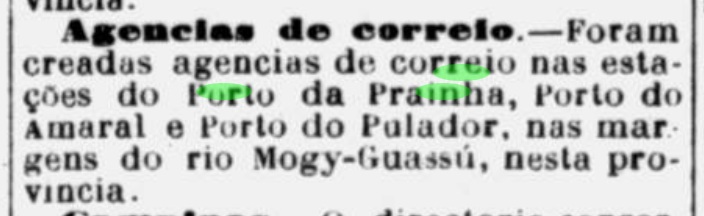
A agência foi transferida para Porto Cunha Bueno em março de 1888, conforme noticiou a imprensa regional:
Até o momento, ainda não foi avistado nenhum carimbo postal imperial de Porto (do) Pulador. Caso ele exista, deve ser muito raro.
Porto (do) Pulador in der Provinz São Paulo war am Fluss Mojiguaçu einer von etwa sieben kurzlebigen Häfen der Companhia Paulista de Vias Férreas e Fluviais, so der volle Name der Eisenbahngesellschaft damals. Sie durfte ab Mai 1887 Passagiere, Fracht und Post vom Bahnhof Porto Ferreira (erbaut 1880) aus entlang des Flusses Mojiguaçu bis zu dessen Mündung in den Rio Pardo bei Pontal befördern. Nach dem Kauf der Eisenbahngesellschaft Cia. Rio Clarense durch die Cia. Paulista im Jahr 1892 wurde eine parallele Bahnverbindung am unteren Mojiguaçu ausgebaut. Dadurch wurde die Beförderung per Schiff unrentabel. Der Schiffsverkehr der Paulista ging drastisch zurück und wurde im Mai 1904 offiziell eingestellt.
Porto (do) Pulador lag vermutlich am Südufer des Mojiguaçu nah an der Mündung des Flusses Quilombo im Município de São Simão, 230 km nordwestlich der Provinzhauptstadt São Paulo. Seit Februar 1959 befindet sich das Areal im Município de Luís Antônio. Dort wurde im September 1885 ein Postamt ins Leben gerufen:
Die Agentur wurde im März 1888 nach Porto Cunha Bueno verlegt, wie die regionale Presse meldete:
Bisher wurde noch kein kaiserlicher Poststempel aus Porto (do) Pulador gesichtet. Falls es ihn überhaupt gibt, dürfte er sehr selten sein.


