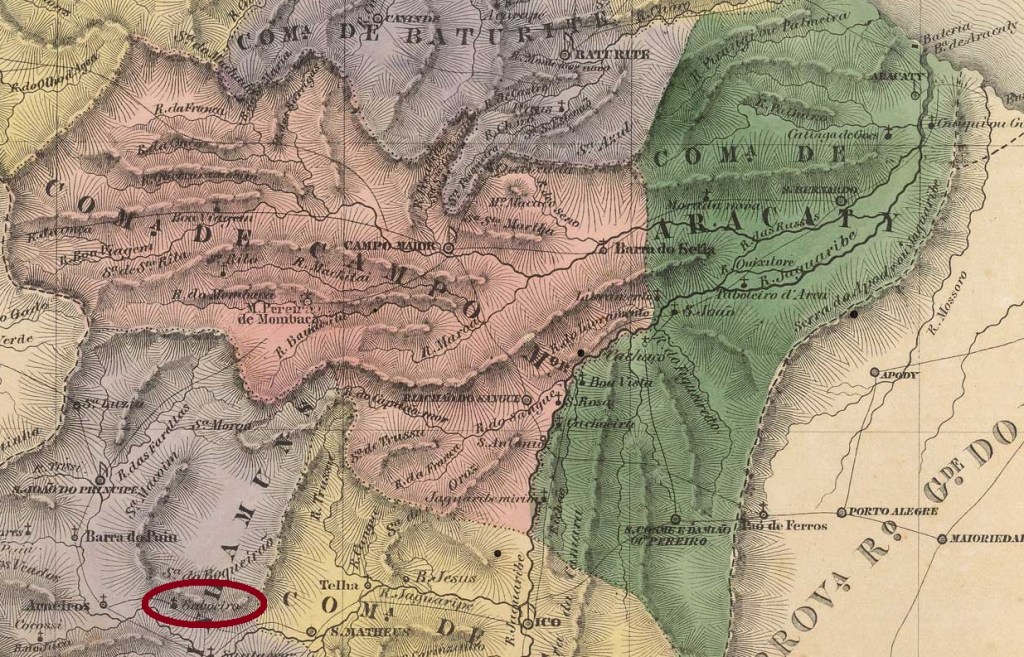
Villiers de l’Ile Adam: Carta (…) da Provincia do Ceará, 1849
See also São Matheus (SCE-0295)
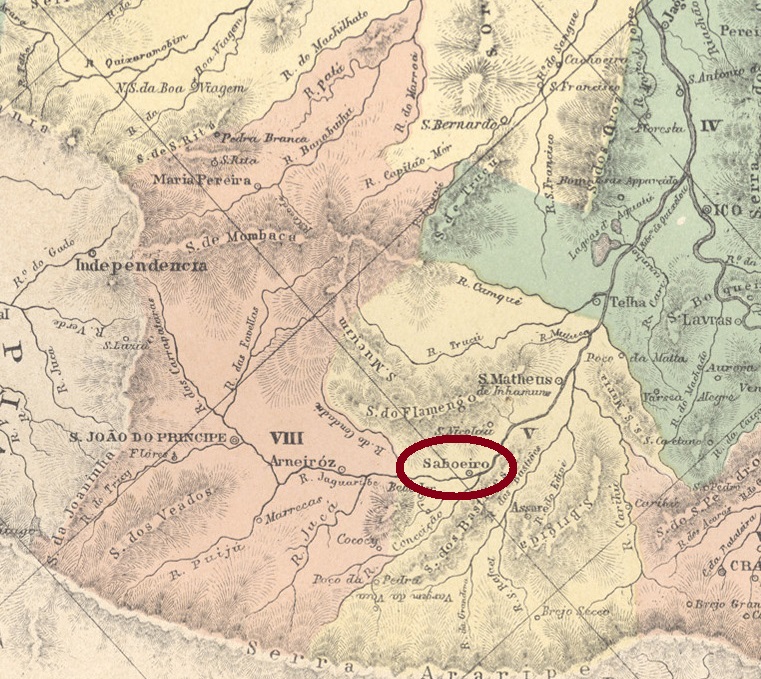
Since the word Saboeiro derivates from sabão (= soap), presumably among the first settlers there were important soap merchants. Anyway, the history of this locality is close related to the neighbour São Matheus, of which it was a dependency in February 1823, having been separated from and annexed to for many times during more than a century. Saboeiro became a Villa for the first time in November 1851, and has an own municipality since May 1935.
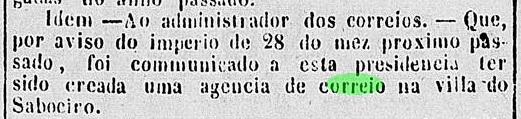
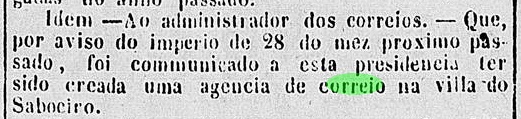
Nova Monteiro (Administrações e Agencias Postaes do Brasil Imperio, in Brasil Filatelico/RJ, 1934-5; Reprint SPP 1994-1999) lists the post office with creation date in October 1852, but this possibly took place one month later, as the local press reports:
O Cearense, December 13, 1852
Only one early cancel is known, and certainly it is not the earliest, for the sole copy is dated 1896. SCE-0305b (Coll. José A. Junges) has a double circle with the inscription SABOEIRO above, and the date in the centre.
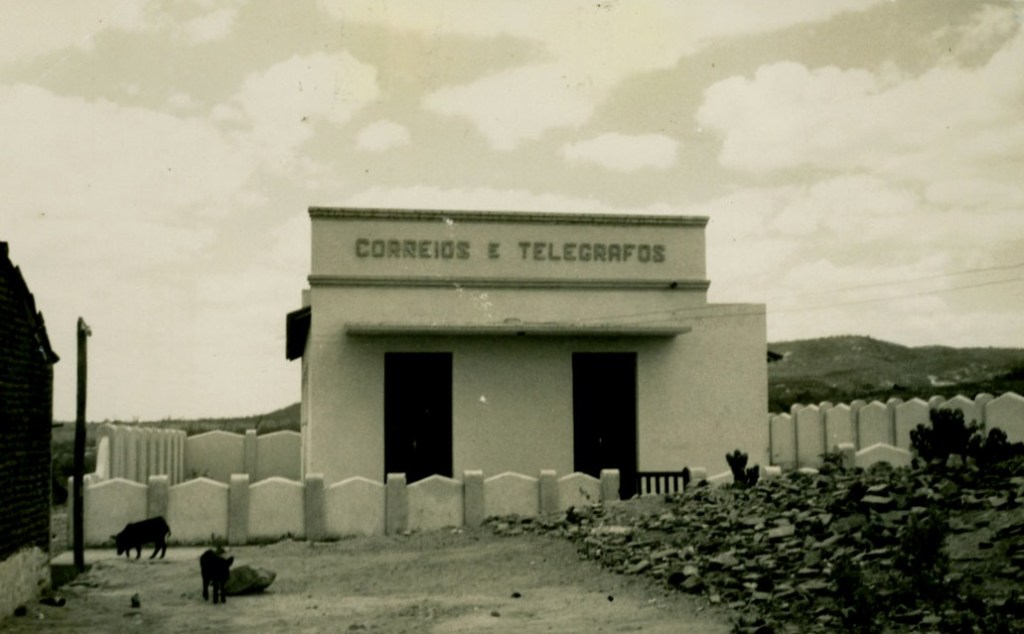
Saboeiro Post Office/Postamt (ca. 1950, IBGE)Atlas do Imperio do Brasil, 1868
Siehe auch São Matheus (SCE-0295)
Da das Wort Saboeiro aus sabão (= Seife) stammt, ist es anzunehmen, dass unter den ersten Siedlern wichtige Seifenhändler dabei waren. Wie es dem auch sei, die Geschichte dieser Ortschaft ist eng mit dem Nachbarort São Matheus verbunden. Saboeiro war in Februar 1823 São Matheus unterstellt, als dieser erstmals zur Villa aufstieg, und im Lauf der kommenden 110 Jahren würden sich beide Orte mehrmals voneinander trennen und wieder zusammen tun. Im November 1851 wurde Saboeiro erstmals eine Villa, und seit Mai 1935 ist es ein eigener Município.
Nova Monteiro (Administrações e Agencias Postaes do Brasil Imperio, in Brasil Filatelico/RJ, 1934-5; Reprint SPP 1994-1999) listet diese Postagentur mit Entstehungsdatum im Oktober 1852, aber möglicherweise fand dies genau ein Monat später statt, wie aus der Lokalpresse hervorgeht:
O Cearense, 13. Dezember 1852
Nur ein früher Stempel ist überliefert, und dieser ist sicherlich nicht der älteste, da das einzig vorhandene Exemplar dar Jahr 1896 trägt. SCE-0305b (Samml. José A. Junges) hat einen Doppelkreis mit der Inschrift SABOEIRO oben, dazu das Datum in der Mitte.
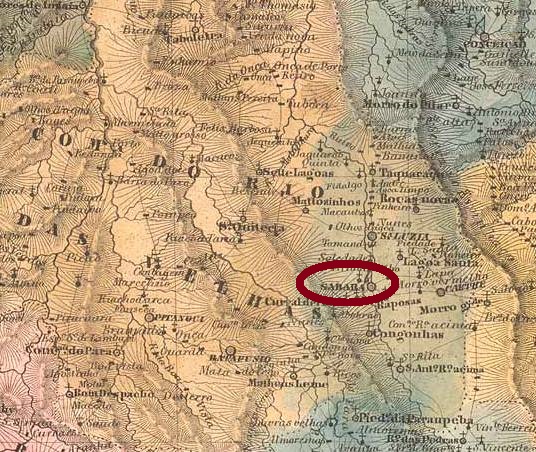
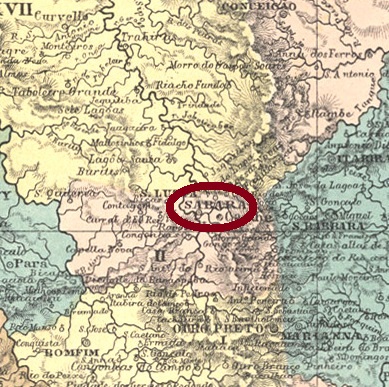
Villiers de l’Ile Adam, Carta (…) da Provincia de Minas Geraes, 1849
The Villa Real de Nossa Senhora da Conceição de Sabará was founded through a king’s decree (Provisão Real) in July 1711, before the creation of the Minas Gerais captain possession in 1720. The name Sabará derives from the tupi-guarani itá’berab’ (= brilliant stone), a direct reference to the abundant precious stones which determined the further wealth and history of the region. Sabará was soon made the capital of the Rio das Velhas county and ascended to a town in 1838.
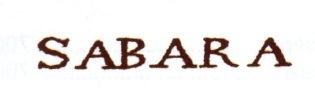
Nova Monteiro (Administrações e Agencias Postaes do Brasil Imperio, in Brasil Filatelico/RJ, 1934-5; Reprint SPP 1994-1999) states the post office creation date already in March 1798, whereas the Imperial Mail Register (Tabella das Agencias do Correio do Imperio) of 1885 writes the year 1829. The first known cancel is pre-philatelic: SMG-2675a (RHM P-MG-57) occurs in sepia:
SMG-2675a, RHM P-MG-57
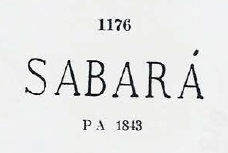
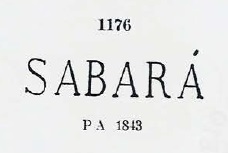
It is followed by SMG-2675b, which occurs in black, red and sepia on stamps between 1843 and 1850ff and was already presented by Paulo Ayres (Catálogo de Carimbos Brasil-Império, S. Paulo, 1937, 1942) under # 1176, although the accent over the last letter A apparently does not exist:
SMG-2675b, Paulo Ayres # 1176
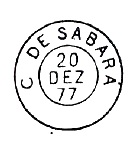
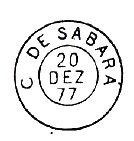
The two next cancels were also published by P. Ayres. SMG-2675c (on page 126) is found in black and red between 1877 and 1892, but in the supplied image there is a missing dot after letter C:
SMG-2675c, (P. Ayres op.cit.)
The French-type SMG-2675d (Ayres op. cit. p. 118) shows dates between 1885 and 1889:
SMG-2675d,(P. Ayresop.cit.)
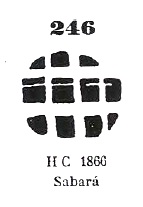
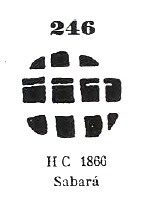
The last early Sabará cancel might be already republican, for the found copies have dates between 1890 and 1896. SMG-2675e (image from the internet) has a double circle with the inscriptions SABARÁ above and (MINAS) below, with the date in the centre. Finally, Paulo Ayres has also shown a mute cancel under # 246:
Paulo Ayres #246Atlas do Imperio do Brasil, 1868
Die Villa Real de Nossa Senhora da Conceição de Sabará wurde im Juli 1711 durch ein königliches Dekret (Provisão Real) gegründet, also noch vor der Entstehung von Minas Gerais in 1720. Der Name Sabará hat einen tupi-guarani-Ursprung, itá’berab’ (= glänzender Stein): ein direkter Hinweis auf die reichlich vorkommenden Edelsteine, die das Reichtum und die Geschichte der ganzen Region bestimmen würden. Sabará wurde bald die Hauptstadt des Verwaltungsbezirks Rio das Velhas und stieg 1838 zur Stadt auf.
Nova Monteiro (Administrações e Agencias Postaes do Brasil Imperio, in Brasil Filatelico/RJ, 1934-5; Reprint SPP 1994-1999) datiert die Entstehung des Postamtes im März 1798, während das Verzeichnis der kaiserlichen Postämter (Tabella das Agencias do Correio do Imperio) von 1885 dafür das Jahr 1829 schreibt. Der erste Stempel, SMG-2675a (RHM P-MG-57) stammt bereits aus der Vorphila-Zeit und kommt in der Farbe sepia vor:
SMG-2675a, RHM P-MG-57
Ihm folgt SMG-2675b, der in Schwarz, rot und sepia auf Marken zu sehen ist, die zwischen 1843 und 1850ff gebraucht wurden. Dieser Stempel wurde bereits durch Paulo Ayres (Catálogo de Carimbos Brasil-Império, S. Paulo, 1937, 1942) unter Nr. 1176 vorgestellt, wobei es den Akzent über dem letzten A offenbar nicht gibt:
SMG-2675b, Paulo Ayres Nr. 1176
Die beiden nächsten Abstempelungen wurden auch von P. Ayres publik gemacht. SMG-2675c (auf S. 126) kommt in schwarz und rot zwischen 1877 und 1892 vor, aber in seiner Abbildung fehlt ein Punkt nach Buchstabe C:
SMG-2675c, (Paulo Ayres, op. cit.)
SMG-2675d (Ayres op. cit. S. 118) ist ein „französischer-Typus“ und weist Daten zwischen 1885 und 1889 vor:
SMG-2675d, (Paulo Ayres, op. cit)
Der letzte frühe Stempel Sanbarás könnte bereits republikanisch sein, da die bisher gefundene Exemplare Daten zwischen 1890 und 1896 haben. SMG-2675e (Abb. aus dem Internet) hat einen Doppelkreis mit den Inschriften SABARÁ oben und (MINAS) unten, dazu das Datum in der Mitte. Schließlich hat Paulo Ayres (op. cit.) auch einen stummen Stempel aus Sabará unter Nr. 246 aufgelistet:
This post deals among others with all unsolved cases related to post offices beginning with Q-R. One can find here alternative toponyms, unknown localities and eventually also mysterious cancels to be identified, listed alphabetically, whenever possible.
Diese Post soll unter anderem alle unerledigten Fälle bei den Q-R-Postämtern auflisten. Hier werden alternative Ortsnamen, unbekannte Ortschaften und eventuell auch rätselhafte Stempel vorgestellt. Alles in alphabetischer Folge, wenn immer möglich.
Q (MN): to be presented under / wird besprochen unterRio de Janeiro in Provincial Capitals and Administrations / Provinzhauptstädten und –postverwaltungen (2023)
R (MN): to be presented under / wird besprochen unterRio de Janeiro in Provincial Capitals and Administrations / Provinzhauptstädten und –postverwaltungen (2023)
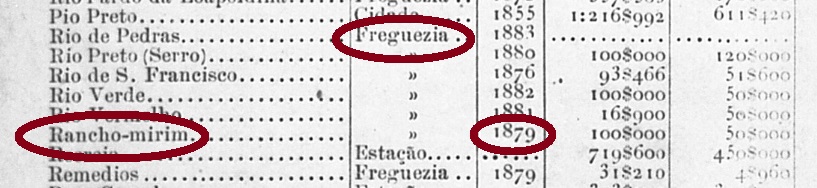
Rancho-Mirim (MG): This freguesia post office in Minas Gerais was listed in the Imperial Mail Register (Tabella das Agencias do Correio do Imperio) of 1885 with creation year 1879. The economic data indicate a rather small agency. It is possibly a misprint, for no further information has been found to date.
Tabella das Agencias do Correio do Imperio, 1885
Diese Freguesia in Minas Gerais hatte laut Verzeichnis der Kaiserlichen Postämter (Tabella das Agencias do Correio do Imperio) von 1885 seit 1879 ein eigenes Postamt. Die aufgelisteten Wirtschaftsdaten weisen auf eine eher kleine Agentur hin. Möglicherweise liegt hier ein Druckfehler vor, da bisher keine weitere Information auffindbar ist.
Recife (PE): to be presented under / wird besprochen unterPernambuco in Provincial Capitals and Administrations / Provinzhauptstädten und –postverwaltungen (2023)
Retiro da Lagoa (MG): see/sieheSanto Antonio da Lagoa (SMG-2965)
Ribeirão de Sant’Anna (RJ): see/sieheSant’Anna dos Tocos (SRJ-2170)
Rio Bonito de Valença (RJ): see/sieheSanto Antonio do Rio Bonito (SRJ- 0910)
Rio Grande do Norte (RN): to be presented under / wird besprochen unterRio Grande do Norte in Provincial Capitals and Administrations / Provinzhauptstädten und –postverwaltungen (2023)
Rio Grande do Sul (RS): to be presented under / wird besprochen unterRio Grande do Sul in Provincial Capitals and Administrations / Provinzhauptstädten und –postverwaltungen (2023)
Rio de Janeiro (MN): to be presented under / wird besprochen unterRio de Janeiro in Provincial Capitals and Administrations / Provinzhauptstädten und –postverwaltungen (2023)
Rio Preto do Serro (MG): see/sieheSão Gonçalo do Rio Preto (SMG-2325)
Rizonha (MG): see/sieheSão Romão (SMG-2565), Villa Risonha (VMG-3825) and/und Villa da Manga (VMG-3660)
Rua … (MN): to be presented under / wird besprochen unterRio de Janeiro in Provincial Capitals and Administrations / Provinzhauptstädten und –postverwaltungen (2023)
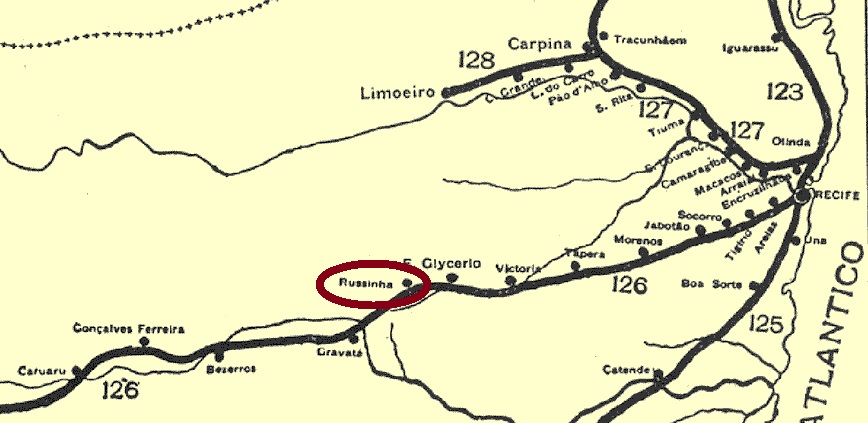
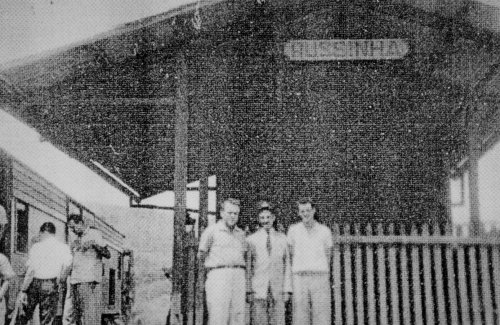
Russinha was a small village in the Serra das Russas situated in the municipality of Gravatá, over 70 km west of the province capital Recife, which hosted a train station of the Estrada de Ferro de Recife a Caruaru railway from 1887 on. Originally, the station should be called Serra, but the name Russinha has appeared in the regional press from the beginning.
From 1904 until 1950 the railway was run by the Great Western Co., between 1950 and 1975 it belonged to the Rede Ferroviária do Nordeste, and from then on until operation end in 1996, to the Rede Ferroviária Federal S.A. Now the station house is demolished, but the tracks are still there (estacoesferroviarias.com.br).
We assume that the station post office was created between 1887 and 1889, but the search for an exact date remains unsuccessful. No imperial cancel has been found either.
ca. 1960 (Photo: L.R.F. de A. Bonfim, apud estacoesferroviarias.com.br)
Russinha war ein Dörfchen im Município von Gravatá in der Serra das Russas, etwas über 70 km westlich von der Provinzhauptstadt Recife gelegen, das in 1887 ein Bahnhof der Estrada de Ferro de Recife a Caruaru erhielt. Ursprünglich sollte der Bahnhof Serra heißen, aber vom Anfang an taucht der Name Russinha in der Regionalpresse auf.
Zwischen 1904 bis 1950 war die Bahnstrecke Eigentum der Great Western Co., danach bis 1975 gehörte sie der Rede Ferroviária do Nordeste, und von 1975 bis Betriebsende in 1996 fuhren die Züge der Rede Ferroviária Federal S. A. Heute ist das Bahnhaus abgerissen, die Schienen sind aber noch da (estacoesferroviarias.com.br).
Wir nehmen an, dass das Bahnhofspostamt irgendwann zwischen 1887 und 1889 entstanden ist, konnten aber bisher leider kein Datum davon ermitteln. Ein Poststempel der Kaiserzeit wurde ebenso wenig gefunden.
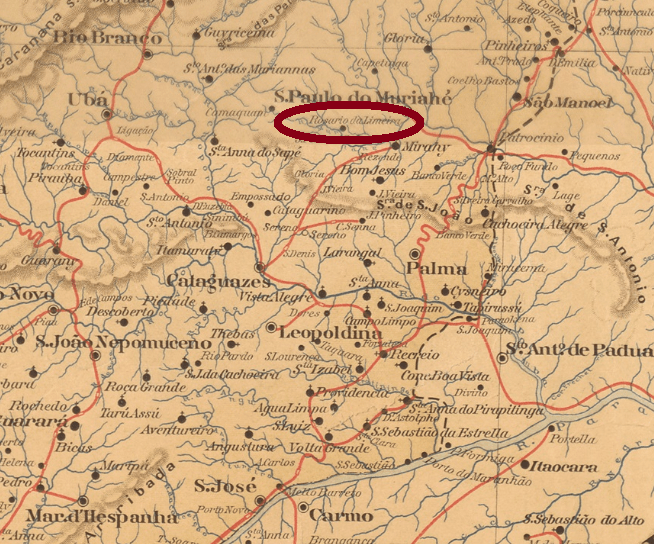
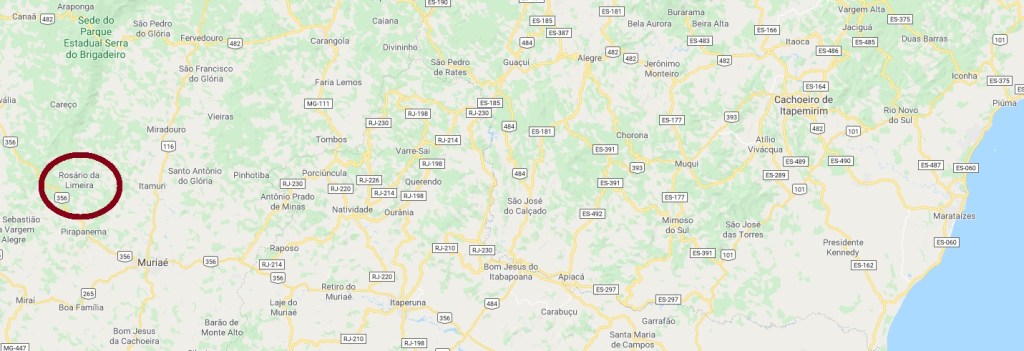
The freguesia of Nossa Senhora do Rozario (or Rosário) da Limeira was founded in June 1876 in the municipality of São Paulo de Muriahé, round 200 km southeast of the former province capital Ouro Preto. With an economy based in coffee production, Rosário da Limeira emancipated as a municipality in December 1995.
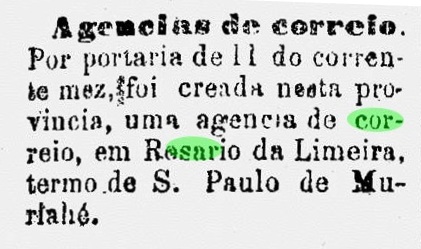
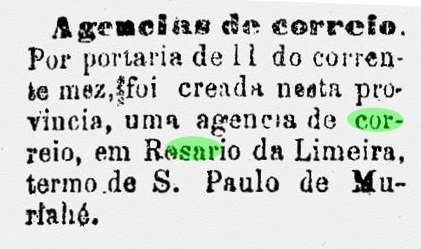
According to Paula Sobrinho (História Postal de Minas Gerais, Belo Horizonte, 1997), the post office was created in June 1887. This can be ratified by the regional press:
União Postal, June 19, 1887
One early cancel is known: RMG-2205a (Coll. José A. Junges) has a double circle with the inscriptions ROZARIO DA LIMEIRA above and (MINAS) below, with the date in the centre. Only one copy found, dated 1890.
Google Maps
Die Freguesia von Nossa Senhora do Rozario (oder Rosário) da Limeira wurde im Juni 1876 im Município von São Paulo de Muriahé gegründet und lag ca. 200 km südöstlich der ehemaligen Provinzhauptstadt Ouro Preto entfernt. Große Kaffeeplantagen haben zum Wohlstand der Gemeinde beigetragen, und Rosário da Limeira wurde ein eigenständiger Município im Dezember 1995.
Laut Paula Sobrinho (História Postal de Minas Gerais, Belo Horizonte, 1997) entstand das örtliche Postamt im Juni 1887, was durch die Regionalpresse bestätigt wird:
União Postal, 19. Juni 1887
Nur ein früher Stempel ist bekannt: RMG-2205a (Samml. José A. Junges) hat einen Doppelkreis mit den Inschriften ROZARIO DA LIMEIRA oben und (MINAS ) unten, dazu das Datum in der Mitte. Nur ein Exemplar aus 1890 überliefert.
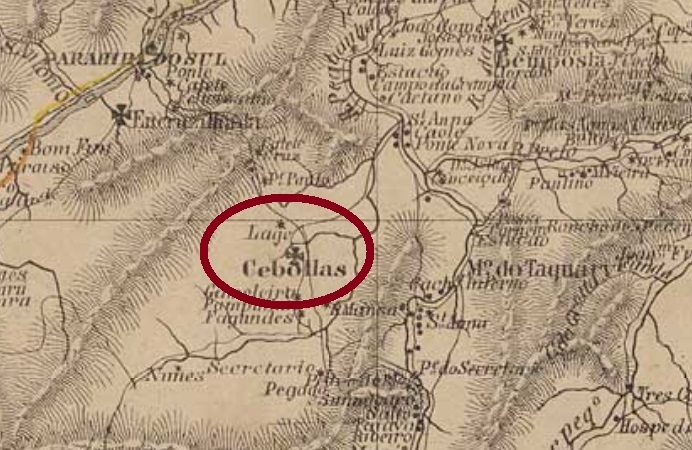
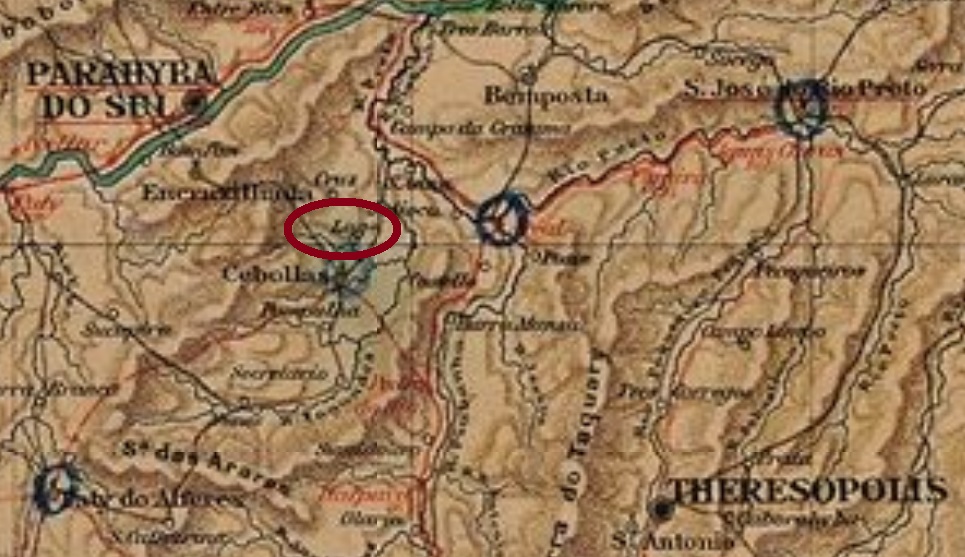
Bellegard-Niemeyer: Charta Corographica do Rio de Janeiro, 1867
Rumo da Lage (= Ledge Way) was a tiny locality in the environs of the freguesia of Santana de Cebollas (also written Sebollas) in the municipality of Parahyba do Sul, located over 100 km north of Rio de Janeiro. It must remain one of the mysteries of Brazil’s postal history why such a village, which is barely visible on contemporary maps, was given a post office during 14 years. Since no office in the much bigger Santana de Cebollas is known to date, we must assume that the mail to and from it had to pass through Rumo da Lage.
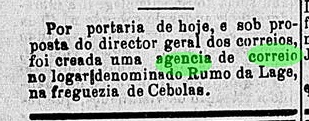
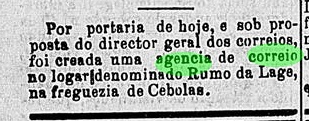
According to Paulo Novaes (agenciaspostais.com.br), the post office was created in November 1882, which is ratified by this press note:
Gazeta da Tarde, November 6, 1882
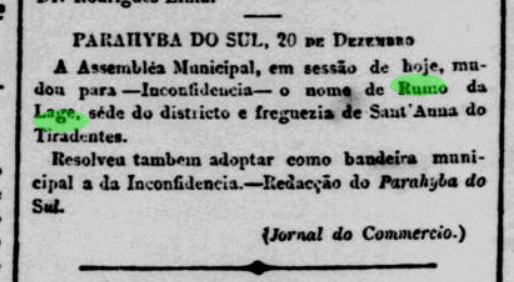
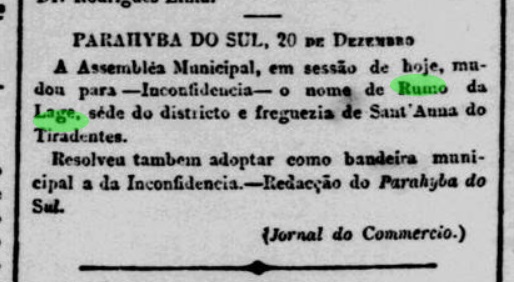
The agency was renamed Inconfidência in February 1896. At that time, Santana de Cebollas had also changed the toponym, to Santana de Tiradentes, a name that soon had to disappear as unnoticed as it had appeared. A press release of December 1895 reveals that Rumo da Lage, which was from then on to be called Inconfidência, had been the principal office of the whole freguesia:
Jornal do Commercio, December 21, 1895
Two imperial cancels of Rumo da Lage are known. RRJ-2165a (Coll. José A. Junges) is found on stamps with dates between 1886 and 1888: a double circle with the inscription RUMO DA LAGE above an a diamond ornament below, which consists of four small diamonds. RRJ-2165b is found on pieces between 1888 and 1893, and was already presented by Paulo Ayres (Catálogo de Carimbos Brasil-Império, S. Paulo, 1937, 1942), on page 123:
Rumo da Lage (= Felsplattenweg) war eine winzige Ortschaft der Freguesia von Santana de Cebollas (ou Sebollas) im Município von Parahyba do Sul, die über 100 km nördlich von Rio de Janeiro lag. Es bleibt ein Geheimnis der brasilianischen Postgeschichte, warum solcher Ort, kaum auf damaligen Landkarten sichtbar, ein eigenes Postamt 14 Jahre lang haben durfte. Da kein Agentur in Santana de Cebollas bisher bekannt ist, nehmen wir an, dass der ganze Postverkehr von und nach dieser Freguesia durch Rumo da Lage gehen musste.
Laut Paulo Novaes (agenciaspostais.com.br) entstand das Postamt im November 1882, was durch die Presse bestätigt wird:
Gazeta da Tarde, 6. November 1882
Die Agentur wurde im Februar 1896 in Inconfidência umbenannt. Damals hieß Santana de Cebollas bereits Santana de Tiradentes, ein Ortsname, der bald so geräuschlos verschwinden würde, wie er aufgetaucht war. Eine Pressemittelung vom Dezember 1895 erklärt außerdem, dass Rumo da Lage der Hauptsitz der Freguesia war, und den neuen Namen zu diesem Zeitpunkt bekam:
Jornal do Commercio, 21. Dezember 1895
Zwei Abstempelungen der Kaiserzeit sind überliefert. RRJ-2165a (Samml. José A. Junges) ist auf Stempeln zu finden, die Daten zwischen 1886 und 1888 aufweisen: ein Doppelkreis mit der Inschrift RUMO DA LAGE oben und einem Ornament in Rautenform unten, das aus vier kleinen Rauten besteht. RRJ-2165b, bereits durch Paulo Ayres (Catálogo de Carimbos Brasil-Império, S. Paulo, 1937, 1942) auf S. 123 vorgestellt, wurde auf Marken und Belegen von 1888-1893 gefunden:
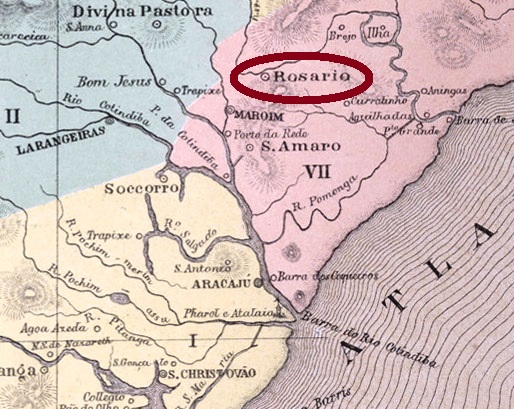
The district of Nossa Senhora do Rosario do Catete was founded in October 1831 in the municipality of Santo Amaro, ca. 50 km north of the early province capital São Cristóvão. In March 1836 it ascended to a Villa, and in July 1932, to the town of Rosario. The old name Rosario do Catete returned finally in December 1943.
Nova Monteiro (Administrações e Agencias Postaes do Brasil Imperio, in Brasil Filatelico/RJ, 1934-5; Reprint SPP 1994-1999) lists this post office with creation date on November 8, 1867, but the Imperial Mail Registers (Tabellas das Agencias do Correio do Imperio) of 1859 and 1885 report the year 1853. This would imply this post office was closed in the meantime.
Unfortunately, no early cancellation from this agency could be found to date. The only 19th century cancel, RSE-0145a (Coll. José A. Junges), could be already republican, for the dates are between 1895 and 1901. It has a double circle with the inscriptions ROZARIO above and (SERGIPE) below, with the date in the centre.
Villiers de l’Ile Adam: Carta (…) das Provincias de Pernambuco, Alagoas e Sergipe, 1848
Der Distrikt von Nossa Senhora do Rosario do Catete wurde im Oktober 1831 im Município von Santo Amaro gegründet und lag etwa 50 km nördlich der ehemaligen Provinzhauptstadt São Cristóvão. Im März 1836 stieg er zur Villa auf und im Juli 1932 zur Stadt Rosário. Der alte Ortsname Rosário do Catete kehrte dann im Dezember 1943 zurück.
Nova Monteiro (Administrações e Agencias Postaes do Brasil Imperio, in Brasil Filatelico/RJ, 1934-5; Reprint SPP 1994-1999) listet dieses Postamt mit Gründungsdatum 8. November 1867 auf, aber die Verzeichnisse der kaiserlichen Postämter (Tabellas das Agencias do Correio do Imperio) aus 1859 und 1885 haben 1853 als Gründungsjahr. Das würde bedeuten, das Postamt wurde zwischendurch geschlossen.
Leider wurde bisher keine frühe Abstempelung aus dieser Agentur gefunden. Der einzige Stempel aus dem 19. Jahrhundert, RSE-0145a (Samml. José A. Junges), könnte bereits republikanisch sein, da er Jahrgänge von 1895 bis 1901 vorweist. Er hat einen Doppelkreis mit den Inschriften ROZARIO oben und (SERGIPE) unten, dazu das Datum in der Mitte.
Villiers de l’Ile Adam: Carta (…) da Provincia do Maranhão, 1850
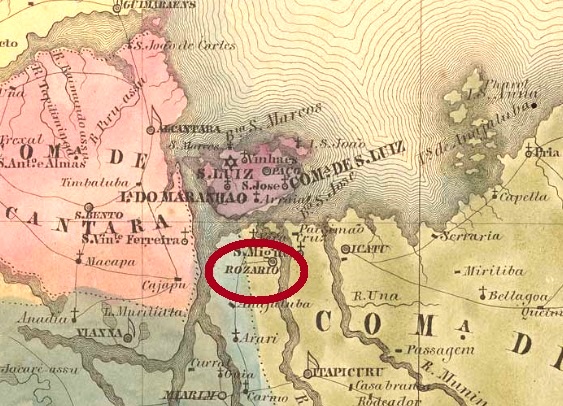
The freguesia of Nossa Senhora do Rozario (sometimes also written Rosario) was founded in the colonial period, in September 1801, on the left bank of the Itapecuru River, around 70 km south of the later province capital São Luís. It ascended to a villa, emancipating from the municipality of Itapecuru-Mirim, in April 1833, and was declared a town in April 1915.
According to Nova Monteiro (Administrações e Agencias Postaes do Brasil Imperio, in Brasil Filatelico/RJ, 1934-5; Reprint SPP 1994-1999), the post office was created in October 1840, a year which is confirmed by the Imperial Mail Register (Tabella das Agencias do Correio do Imperio) of 1885. The earliest cancellation, RMA-0345a, occurs in black, red and violet with dates until 1877 and was already presented by Paulo Ayres (Catálogo de Carimbos, Brasil-Império, S. Paulo, 1937, 1942) under # 1442:
RMA-0345a, Paulo Ayres # 1442
It is followed by RMA-0345b (Coll. José A. Junges): a double circle with the inscription ROZARIO above and the date in the centre. Dates found between 1877 and 1883. The last early cancel might be already republican, for the only copy of RMA-0345c (Coll. FM) is dated 1890. It is a double circle with the inscriptions ROSARIO (or ROZARIO, the image is not quite clear) above and (MARANHÃO) below, with the date in the centre.
Atlas do Imperio do Brasil, 1868
Die Freguesia von Nossa Senhora do Rozario (manchmal auch Rosario geschrieben) wurde noch in der Kolonialzeit, im September 1801, gegründet und lag am linken Ufer des Flusses Itapecuru, etwa 70 südlich der späteren Provinzhauptstadt São Luís. Sie stieg zur Villa – und löste sich damit vom Município von Itapecuru-Mirim – im April 1833 und wurde in 1915 eine Stadt.
Laut Nova Monteiro (Administrações e Agencias Postaes do Brasil Imperio, in Brasil Filatelico/RJ, 1934-5; Reprint SPP 1994-1999) entstand das örtliche Postamt im Oktober 1840; das Jahr wird durch das Verzeichnis der kaiserlichen Postämter (Tabella das Agencias do Correio do Imperio) von 1885 bestätigt. Der erste Stempel, RMA-0345a, erscheint in schwarz, rot und violett datiert bis 1877 und wurde bereits durch Paulo Ayres (Catálogo de Carimbos, Brasil-Império, S. Paulo, 1937, 1942) unter Nr. 1442 vogestellt:
RMA-0345a, Paulo Ayres Nr. 1442
Ihm folgte RMA-0345b (Samml. José A. Junges): ein Doppelkreis mit der Inschrift ROZARIO oben und dem Datum in der Mitte. Vorhandene Exemplare kommen zwischen 1877 und 1883 vor. Danach erschien RMA-0345c (Samml. FM), eine Abstempelung, die vielleicht republikanisch sein könnte, denn das einzige bisher gefundene Exemplar wurde in 1890 benutzt: ein Doppelkreis mit den Inschriften ROSARIO (oder ROZARIO, die Abbildung ist nicht eindeutig) oben und (MARANHÃO) unten, dazu das Datum in der Mitte.
Here we have a similar story to the former Roseta (RRJ-1345): a post office associated to a train station which apparently was never built. There are although two significant differences between both cases: the Roseta agency was active during over a century, i.e. at least 25 years longer than Roza Machado, and the only surviving cancel from Roza Machado proudly presents EST. for station.
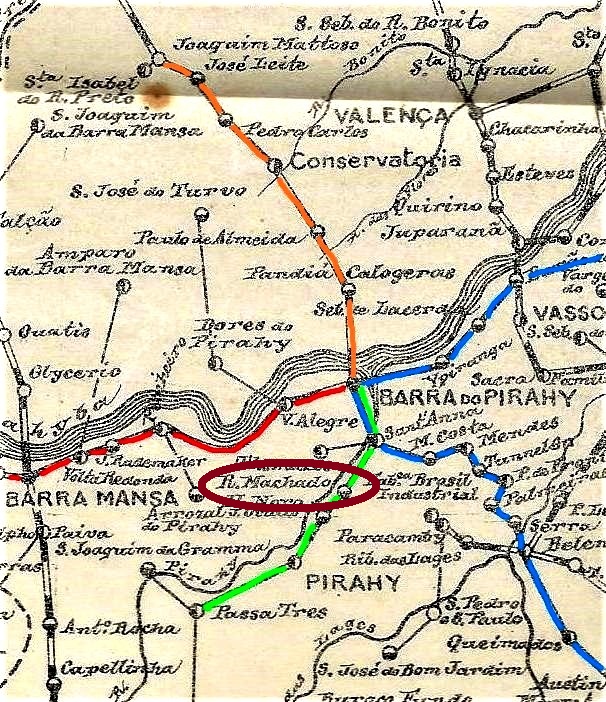
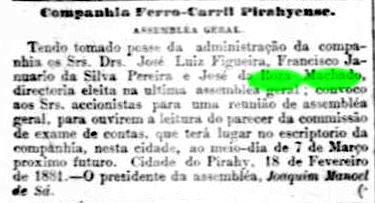
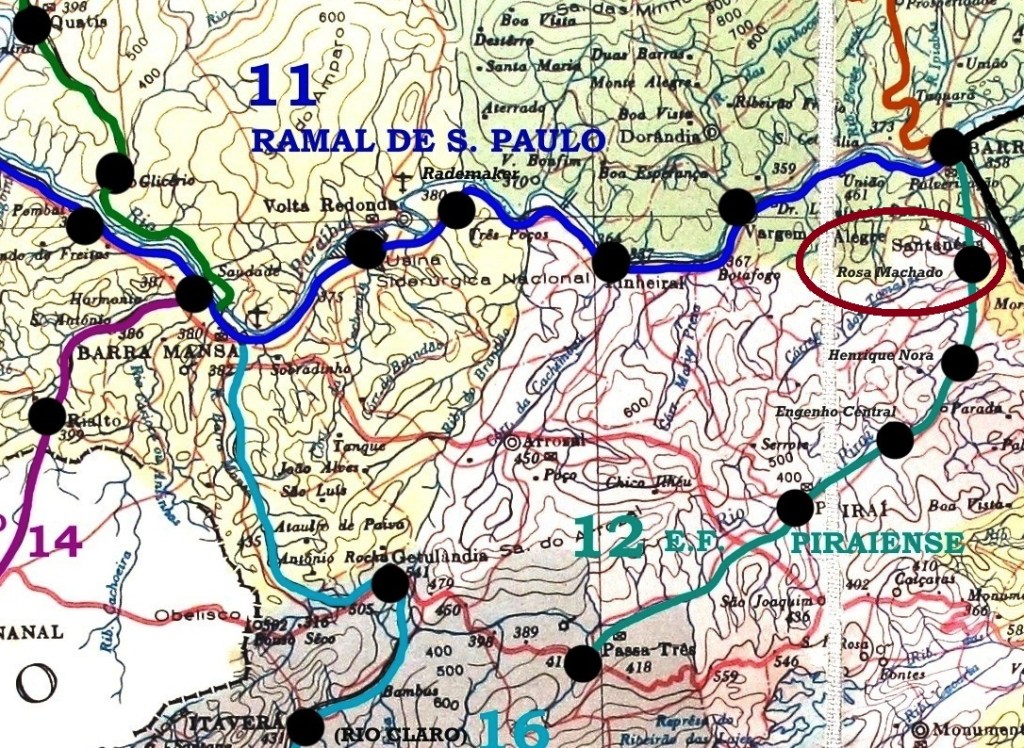
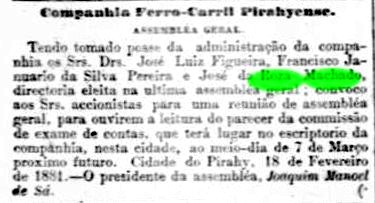
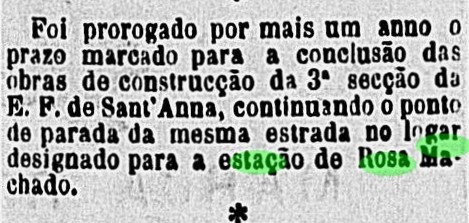
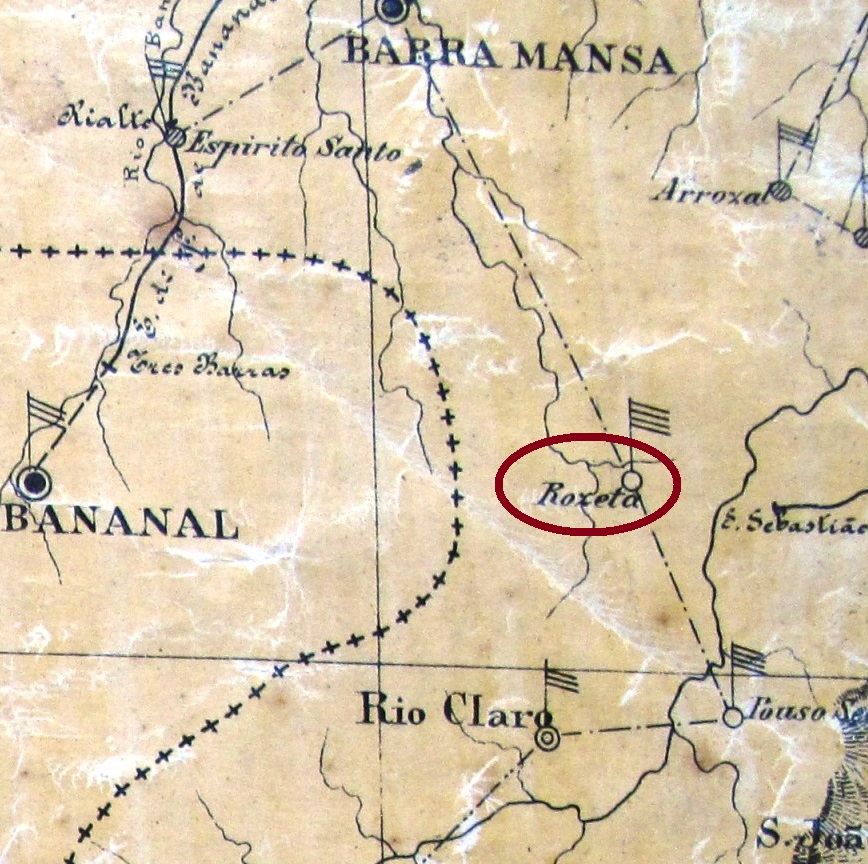
The Rosa Machado (Rosa with s instead z, according to all press notes) station was planned in the municipality of Pirahy by the Companhia Ferro-Carril Pirahyense railway. The line went along the Pirahy River and should originally link Barra do Pirahy to the final stop São Sebastião, another station which was never constructed, situated near Roseta! Coincidentally or not, one of the railway directory board members was a certain José da Rosa Machado:
Jornal do Commercio, February 26, 1881
The rail line was set to operate in 1883, two years later it was undertaken by the Estrada de Ferro de Sant’Anna railway, in 1889 its control passed to the Viação Férrea Sapucahy, in 1910 to the Rede Sul-Mineira, and finally in 1931 to the Rede Mineira de Viação, until the operation end in 1942. Now all rails are removed (estacoesferroviarias.com.br).
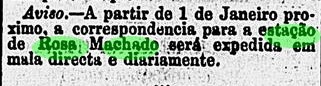
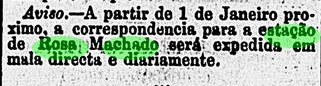
According to Paulo Novaes (agenciaspostais.com.br), the post office was created in December 1885, which can be confirmed by the press:
Diario de Noticias, December 30, 1885
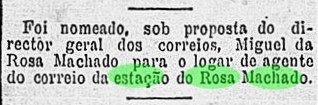
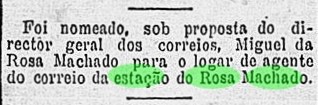
The first mail agent was, surprisingly or not, a wealthy farmer and businessman on place, who bears meanwhile a known family name:
Gazeta de Noticias, January 5, 1886
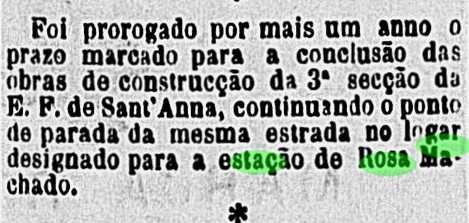
By November 1886, i.e. already under the Sant’Anna railway, no Rosa Machado station had been built, but the trains had a mail stop there:
Diario de Noticias, November 19, 1886
No further record about the station building has been found. The sole early cancel, RRJ-2048a (image from the internet), must be very rare. It has a double circle with the inscription EST. DE ROZA MACHADO above and a cross-cut black circular ornament below, with the dates in the centre. Only one copy found, dated 1895.
agenciaspostais.com.br
Hier haben wir eine ähnliche Geschichte wie die vorherige aus Roseta (RRJ-1345): ein Postamt, das einem niemals gebauten Bahnhof zugeordnet wird. Es gibt allerdings zwei wesentliche Unterschiede: das Postamt Roseta war über ein Jahrhundert lang in Betrieb – und damit mindestens 25 Jahre länger als das Postamt in Roza Machado – und der (einzige) Stempel aus Roza Machado trägt stolz die Bezeichnung EST, für estação (= Bahnhof).
Der Bahnhof Rosa Machado (Rosa mit s anstatt z, wie überall in der Presse zu lesen war) wurde von der Gesellschaft Companhia Ferro-Carril Pirahyense im Município von Pirahy geplant. Die Bahnlinie sollte entlang des Flusses Pirahy die Ortschaft Barra do Pirahy mit der Endstation São Sebastião verbinden. Diese letzte Station lag nah an Roseta und wurde ebenso wenig gebaut. Vielleicht nicht ganz zufällig hieß einer der Vorstandsmitglieder in der Bahngesellschaft José da Rosa Machado:
Jornal do Commercio, 26. Februar 1881
Die Bahnlinie startet den Betrieb in 1883, zwei Jahre später wurde sie durch die Estrada de Ferro de Sant’Anna übernommen, in 1889 ging sie zur Viação Férrea Sapucahy, von 1910 an gehörte sie der Rede Sul-Mineira, und schließlich von 1931 bis Betriebsende in 1942 war sie Eigentum der Rede Mineira de Viação. Nun sind alle Schienen entfernt (estacoesferroviarias.com.br).
Laut Paulo Novaes (agenciaspostais.com.br) entstand das Postamt im Dezember 1885, was durch die Presse bestätigt wird:
Diario de Noticias, 30. Dezember 1885
Der erste Postangestellte vor Ort war – auch bestimmt kein Zufall – ein wohlhabender Großgrundbesitzer und Geschäftsmann der Region, dessen Familienname uns inzwischen vertraut klingt:
Gazeta de Noticias, 5. Januar 1886
Noch im November 1886, d.h. schon unter der Sant’Anna Bahngesellschaft, war kein Bahnhof Rosa Machado gebaut worden, aber die Züge hatten dort eine Posthaltestelle:
Diario de Noticias, 19. November 1886
Keine weitere Notiz über ein Bahnhofsgebäude konnte in der Presse gefunden werden. Der einzige aus der Frühzeit überlieferte Stempel, RRJ-2048a (Abb. aus dem Internet), muss wohl ziemlich selten sein. Er hat einen Doppelkreis mit der Inschrift EST. DE ROZA MACHADO oben und einem schwarzen Kreis unten, das durch ein Kreuz geschnitten wird, dazu das Datum in der Mitte. Das einzige vorhandene Exemplar wurde in 1895 abgestempelt.
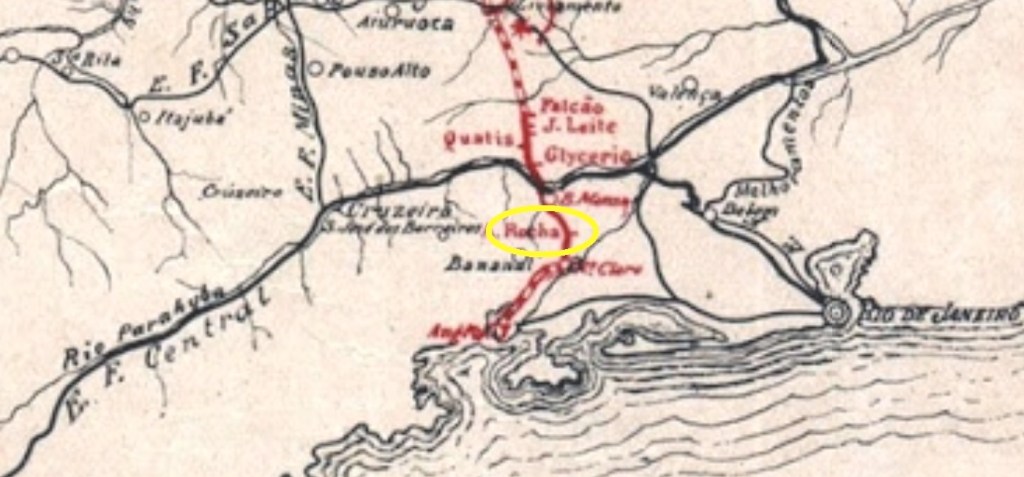
Roseta was a tiny locality in the municipality of Barra Mansa, situated over 130 km west of Rio de Janeiro, which has surprisingly run an own post office during over a century. This can only be explained through ambitious coffee and sugar cane farmers on place, who eventually also planned to build a train station related to the post office. Indeed, a Roseta station appears frequently not only in address lists of physicians and farmers but also in many mail guides like the Guia Postal do Império of 1880 and the São Paulo Mail Timetable (Horário Postal) of 1887. Probably a station house was built before a railway has been installed. Nonetheless, when the Estrada de Ferro Oeste de Minas rail line finally arrived in 1897, the train station was placed in the neighbour village of Antonio Rocha.
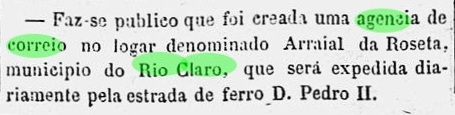
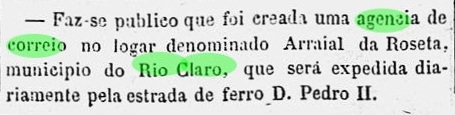
According to Paulo Novaes (agenciaspostais.com.br), the post office was created in July 1877, that can be ratified by the Rio press:
Diario do Rio de Janeiro, July 27, 1877
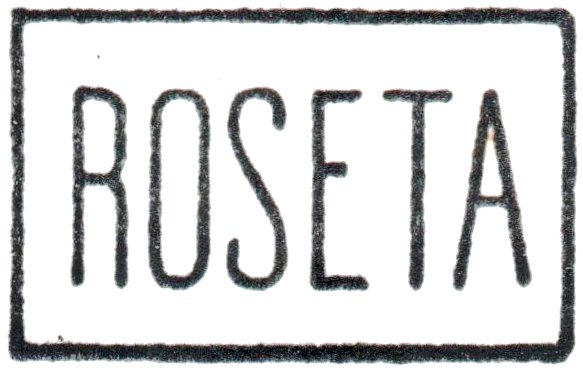
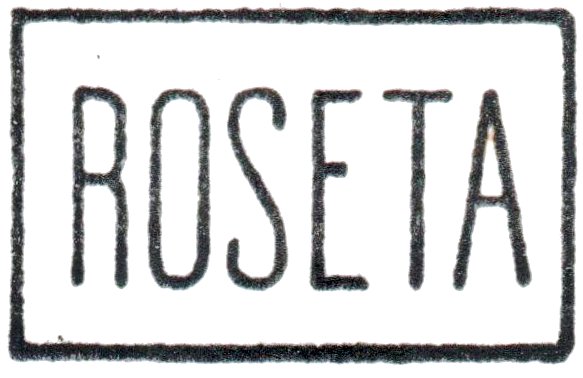
Two imperial cancels are known. The first one, RRJ-1345a, was already presented by Paulo Ayres (Catálogo de Carimbos Brasil-Império, S. Paulo, 1937, 1942) under #1441:
RRJ-1345a, P.Ayres #1441
The second cancel RRJ-1345b (Coll. José A. Junges) has a double circle with the inscription ROSETA above and the date in the centre. The existing copies have dates between 1887 and 1890.
Estrada de Ferro Oeste de Minas, 1903
Roseta war ein Weiler im Município von Barra Mansa, etwa 130 km westlich von Rio de Janeiro gelegen, der erstaunlicherweise ein eigenes Postamt über ein Jahrhundert lang unterhielt. Das kann man sich nur durch den Ehrgeiz von lokalen Zuckerrohr- und Kaffeefarmern erklären, die ebenfalls einen eigenen Bahnhof mit einplanten. Tatsächlich geistert ein Bahnhof Roseta nicht nur auf Adressenlisten von Ärzten und Großgrundbesitzern, sondern auch in mehreren postalischen Führern wie der Guia Postal do Império aus 1880 und der Horário Postal von 1887 aus São Paulo. Wahrscheinlich wurde sogar ein Bahnhäuschen vor Ankunft der Schienen errichtet. Als es dann soweit wurde, und die Estrada de Ferro Oeste de Minas die Bahnlinie aus Barra Mansa in 1897 eingeweiht hat, stand der Bahnhof im Nachbarort Antonio Rocha.
Laut Paulo Novaes (agenciaspostais.com.br) entstand das Postamt im Juli 1877, was durch die regionale Presse bestätigt werden kann:
Diario do Rio de Janeiro, 27. Juli 1877
Zwei Stempel der Kaiserzeit sind überliefert. Der erste davon, RRJ-1345a, wurde bereits durch Paulo Ayres (Catálogo de Carimbos Brasil-Império, S. Paulo, 1937, 1942) unter der Nr.1441 vorgestellt:
RRJ-1345a, P. Ayres Nr. 1441
Die zweite Abstempelung RRJ-1345b (Samml. José A. Junges) hat einen Doppelkreis mit der Inschrift ROSETA oben und dem Datum in der Mitte. Vorhandene Exemplare tragen Daten zwischen 1887 und 1890.







 Carimbologia