Categories
Carimbologia H-L

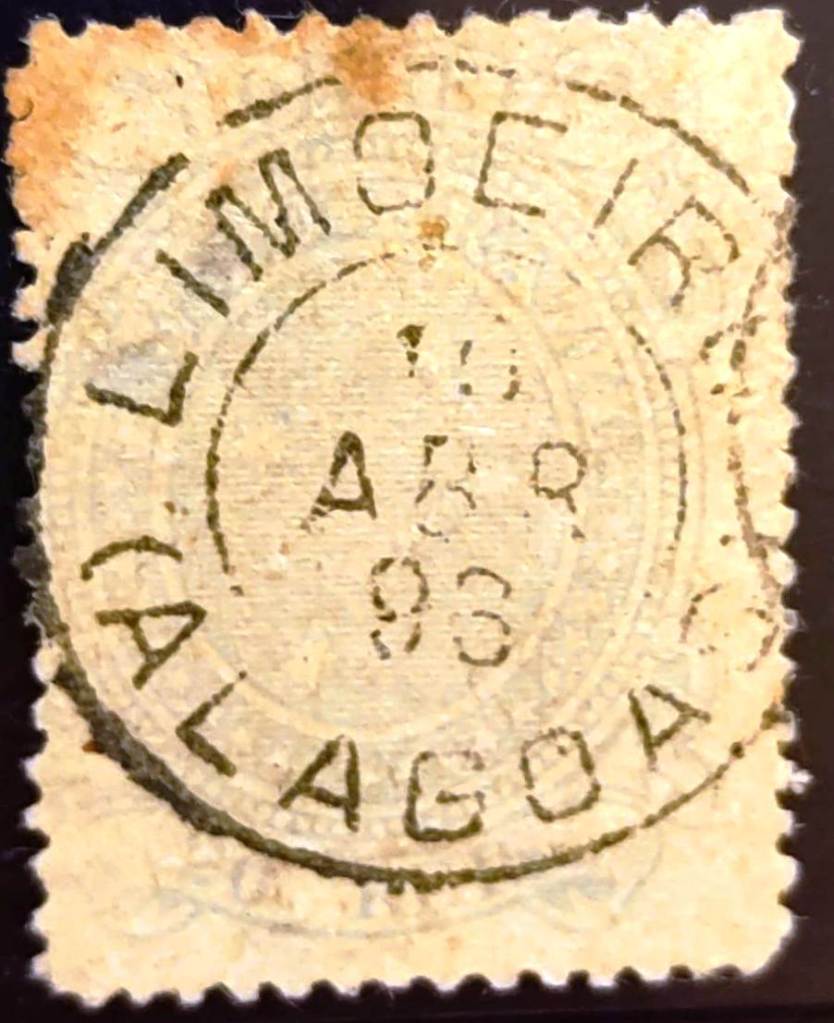
Jequiriçá, Bahia (JBA-0870)

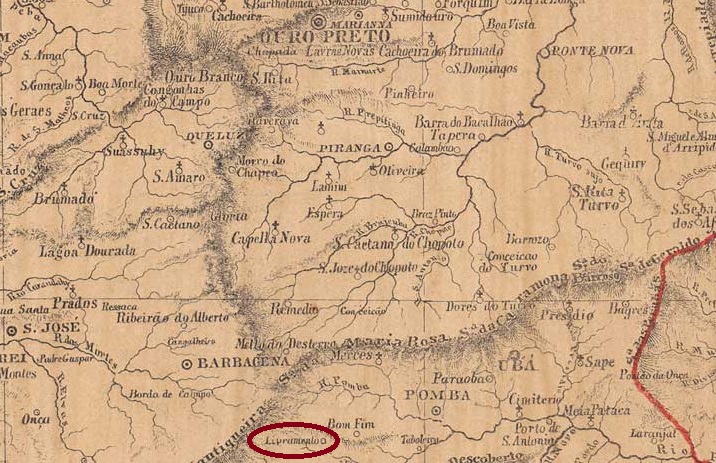
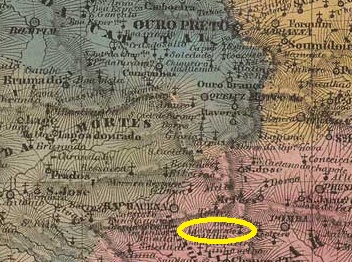
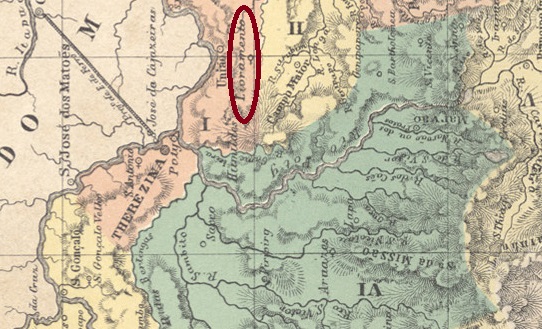
Atlas do Imperio do Brasil, 1868

Other names: Capella Nova, Jiquiriçá (1944)

Jequiriçá supposedly became a Vila as early as November 1832, but this is rather unlikely as it only became a Freguesia do Senhor do Bomfim da Capella Nova in June 1868, which belonged to the Vila de S. Vicente Ferrer d’Areia and was situated on the west bank of the Jequiriçá, 180 kilometres west of the provincial capital Salvador da Bahia. As a freguesia, it was transferred to the Vila de Valença in September 1878. In January 1891 it became the Vila de Capella Nova de Jequiriçá and in March 1938 it became a town, which has been spelt Jiquiriçá since June 1944.

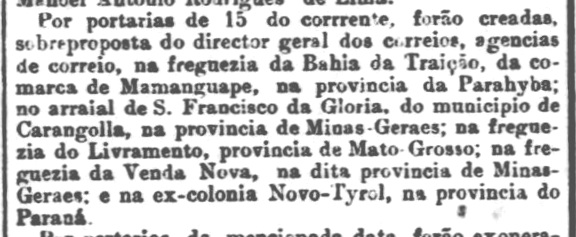
According to the Ceará press, there has been a post office there since around May 1864:

O Cearense/07/06/1864

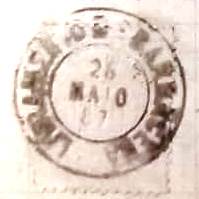
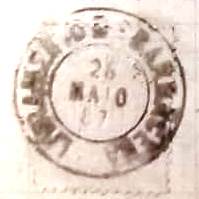
R. Koester mentions a second opening in May 1890 in Carimbologia XXV. So far, no imperial postmarks from Jequiriçá have surfaced.

Villiers de l’Ile Adam: Carta (…) da Provincia da Bahia, 1848

Andere Namen: Capella Nova, Jiquiriçá (1944)
Angeblich wurde Jequiriçá bereits im November 1832 eine Vila, was aber eher unwahrscheinlich ist, da sie erst im Juni 1868 zur Freguesia do Senhor do Bomfim da Capella Nova wurde, die zur Vila de S. Vicente Ferrer d’Areia gehörte und am Westufer des Jequiriçá lag, 180 km westlich der Provinzhauptstadt Salvador da Bahia. Als Freguesia wechselte sie im September 1878 zur Vila de Valença. Im Januar 1891 wurde sie die Vila de Capella Nova de Jequiriçá und im März 1938 zur Stadt, die seit Juni 1944 Jiquiriçá geschrieben wird.

Wie aus der Presse von Ceará hervorgeht, gab es dort seit spätestens Mai 1864 ein Postamt:

O Cearense/07.06.1864

R. Koester erwähnt in Carimbologia XXV eine zweite Eröffnung im Mai 1890. Bisher sind keine kaiserlichen Poststempel aus Jequiriçá aufgetaucht.

Categories
Carimbologia H-L

Jequié, Bahia (JBA-0865)

Estado da Bahia, 1913

Today’s city of Jequié looks back on a young and eventful history. Since August 1880, it had been a district of the Vila de Maracás on the north bank of the Rio de Contas, 300 kilometres southwest of the provincial capital Salvador da Bahia. Jequié first became Município (July 1897) and then Freguesia (1899). Jequié has been a city since June 1910. Shortly afterwards, it became the capital of the state of Bahia for a few weeks, in one of the most bizarre episodes in Brazilian history: regional politicians from opposing camps allowed a provincial dispute to escalate into a civil war, during which the army bombed the state parliament in Salvador. The national library and the national archives went up in flames and countless historical documents were destroyed.

The postal bulletin (Boletim Postal) of 1889 shows that the local post office was established a few days before the end of the empire. This practically rules out the existence of imperial postmarks in Jequié. The oldest, JBA-0865a (fig. Felipe Piccinini), already bears Republican dates:

JBA-0865a (FP) 1894
Mappa Geral do Brasil, 1911

Die heutige Stadt Jequié blickt auf eine junge und bewegte Geschichte zurück. Sie war seit August 1880 ein Distrito der Vila de Maracás am Nordufer des Rio de Contas, 300 km südwestlich der Provinzhauptstadt Salvador da Bahia. Jequié wurde zuerst Município (Juli 1897) und dann Freguesia (1899). Seit Juni 1910 ist Jequié eine Stadt. Kurz darauf wurde sie für wenige Wochen Hauptstadt des Bundesstaates Bahia, in einer der bizarrsten Episoden der brasilianischen Geschichte: Regionalpolitiker verfeindeter Lager ließen eine Provinzposse zum Bürgerkrieg eskalieren, in dessen Verlauf die Armee das Landesparlament in Salvador bombardierte. Dabei gingen die Nationalbibliothek und das Nationalarchiv in Flammen auf, unzählige historische Dokumente wurden vernichtet.

Aus dem Postbulletin (Boletim Postal) von 1889 geht hervor, dass das lokale Postamt wenige Tage vor dem Ende des Kaiserreichs eingerichtet wurde. Dies schließt die Existenz von kaiserlichen Poststempeln in Jequié praktisch aus. Der älteste, JBA-0865a (Abb. Felipe Piccinini), trägt bereits republikanische Daten:

JBA-0865a (FP) 1894
Categories
Carimbologia H-L

Jequery, Minas Gerais (JMG-1420)

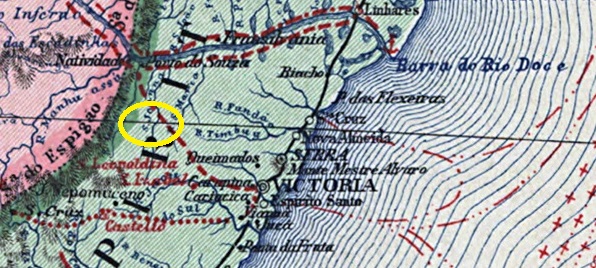
Provincia de Minas Geraes, 1873

Other names: Vargem Alegre da Constituição, Jiquiri
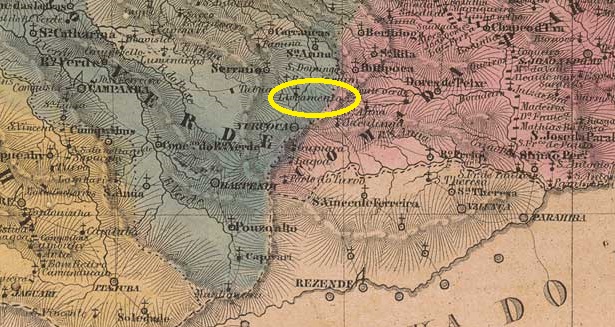
From May 1855 Jequery was a district of the Vila de Ponte Nova, situated on the west bank of the river Casca, 120 kilometres east of the provincial capital Ouro Preto. In June 1858, the village became the Freguesia de Sant’Anna do Jequery and in September 1923 the Município de Jequeri (as it is spelt today).

The name refers to several prickly climbing plants from the nightshade families (Solanaceae or Fabaceae):

Solanum alternatopinnatum, Steud (Photo: Leandro Jacomin, CC BY-SA)
Macherium lunatum, Ducke (Photo: Celine Pirat, CC BY-SA 2.0)

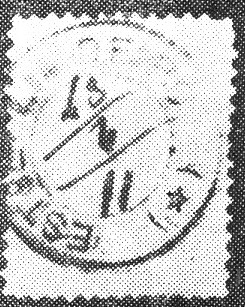
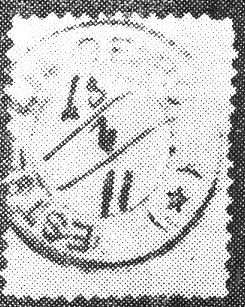
The directory of imperial post offices (Tabella das Agencias do Correio do Imperio, Rio de Janeiro, 1885) lists this agency as having been founded in 1840, which is probably an error. The postal report of 1886 gives September 1880, which is confirmed by Paula Sobrinho in História Postal de Minas Gerais (Belo Horizonte, 1997) and R. Koester (Carimbologia XXV). Earlier letters from Jequery are also known to bear the Ponte Nova cancellations. The imperial postmark here is JMG-1420a (illustration from the Internet):

JMG-1420a (EB) 1880ff-1893
Atlas do Imperio do Brasil, 1868

Andere Namen: Vargem Alegre da Constituição, Jiquiri

Seit Mai 1855 war Jequery ein Distrito der Vila de Ponte Nova, gelegen am Westufer des Flusses Casca, 120 km östlich der Provinzhauptstadt Ouro Preto. Im Juni 1858 wurde der Ort zur Freguesia de Sant’Anna do Jequery und im September 1923 zum Município de Jequeri (wie es heute geschrieben wird).

Der Name bezieht sich auf mehrere stachelige Kletterpflanzen aus den Familien der Nachtschattengewächse (Solanaceae oder Fabaceae):

Solanum alternatopinnatum, Steud (Foto: Leandro Jacomin, CC BY-SA)
Macherium lunatum, Ducke (Foto: Celine Pirat, CC BY-SA 2.0)

Das Verzeichnis der kaiserlichen Postämter (Tabella das Agencias do Correio do Imperio, Rio de Janeiro, 1885) führt diese Agentur mit dem Gründungsjahr 1840 auf, was ein Fehler sein dürfte. Der Postbericht von 1886 gibt September 1880 an, was von Paula Sobrinho in História Postal de Minas Gerais (Belo Horizonte, 1997) und R. Koester (Carimbologia XXV) bestätigt wird. Es sind auch frühere Briefe aus Jequery bekannt, die stumme Stempel aus Ponte Nova tragen. Der kaiserliche Portostempel ist hier JMG-1420a (Abbildung aus dem Internet):

JMG-1420a (EB) 1880ff-1893
Categories
Carimbologia H-L

Javary, Amazonas (JAM-0135)

Carta da Republica dos Estados Unidos do Brazil, 1892

See also Olivença (R. Koester: Carimbologia XXIX), São Paulo de Olivença (SAM-0085)

São Paulo de Olivença was already in the mid-18th century a freguesia in the Capitania of Grão-Pará, located on the south bank of the Amazon (the river is now called Solimões there), almost 1,000 km west of the future provincial capital Manaus. In 1833, it became a district called Javary in the municipality of Teffé, which was then elevated to a villa under the old place name in May 1882.

As can be read in the Provincial President’s Report for 1888, there has been a post office there since 1884:

Relatório do Presidente da Provincia, 1888

R. Koester shows in Carimbologia XXV a handwritten cancellation with the place name Javary:

1884ff (RK)
Atlas do Imperio do Brasil, 1868

Siehe auch Olivença (R. Koester: Carimbologia XXIX), São Paulo de Olivença (SAM-0085)

São Paulo de Olivença war bereits Mitte des 18. Jahrhunderts eine Freguesia in der Capitania von Grão-Pará, die am Südufer des Amazonas (der Fluss heißt dort eigentlich Solimões) lag, fast 1.000 km westlich der künftigen Provinzhauptstadt Manaus entfernt. In 1833 wurde daraus ein Distrikt namens Javary im Município von Teffé, der dann im Mai 1882 zu einer Villa mit dem alten Ortsnamen erhoben wurde.

Wie im Bericht des Provinzpräsidenten für 1888 zu lesen ist, gab es dort ein Postamt seit 1884:

Relatório do Presidente da Provincia, 1888

R. Koester zeigt in Carimbologia XXV eine handschriftliche Entwertung mit Ortsbezeichnung Javary:

1884ff (RK

Categories
Carimbologia H-L

Jatobá (Brejo), Pernambuco (JPE-0350)

Arthur D. Ribeiro: Estado de Pernambuco, 1924

Other names: Jataúba (1943)

The village was located 220 kilometres west of the provincial capital Recife and since June 1862 was a district of the Freguesia de Jacarará, which in turn belonged to Vila do Brejo. In December 1943 the place name was changed to Jataúba and 15 years later it was elevated to Município under this name.

According to the Ceará press, in July 1883 it was decided to establish a post office in Jatobá:

O Cearense, 12/08/1883

However, as this agency does not appear in the list of imperial post offices (Tabella das Agencias do Correio do Imperio, Rio de Janeiro, 1885), it can be assumed that it was not put into operation until later.

Only one handwritten cancellation is known from the imperial era on a cypher issue of 1885, as illustrated in Carimbologia XXV by R. Koester:

1885ff (RK)
Google Maps

Andere Namen: Jataúba (1943)

Der Ort liegt 220 km westlich der Provinzhauptstadt Recife und war seit Juni 1862 ein Distrikt der Freguesia de Jacarará, die wiederum zu Vila do Brejo gehörte. Im Dezember 1943 wurde der Ortsname in Jataúba geändert und 15 Jahre später erfolgte unter diesem Namen die Erhebung zum Município.

Wie aus der Presse von Ceará hervorgeht, wurde im Juli 1883 beschlossen, in Jatobá ein Postamt einzurichten:

O Cearense, 12.08.1883

Da diese Agentur jedoch nicht im Verzeichnis der kaiserlichen Postämter (Tabella das Agencias do Correio do Imperio, Rio de Janeiro, 1885) auftaucht, ist davon auszugehen, dass sie erst später in Betrieb genommen wurde.

Aus der Kaiserzeit ist nur eine handschriftliche Entwertung auf einer Ziffer-Ausgabe von 1885 bekannt, wie sie in der Carimbologia XXV von R. Koester abgebildet ist:

1885ff (RK)
Categories
Carimbologia Q-R

Jatobá de Tacaratu (train station/Bahnhof), Pernambuco (JPE-0345)

Carta Corographica da Provincia de Pernambuco, 1880

The settlement belonged to the Vila de Tacaratu and was located on the east bank of the São Francisco, 410 kilometres west of the provincial capital Recife. In May 1887 it became the seat of the Vila de Tacaratu and in July 1909 was elevated to the Cidade de Jatobá. In September 1928, it was downgraded to Distrito de Jatobá de Tacaratu in the reconstituted Município de Tacaratu. This was followed by two renamings: in December 1937 to Itaparica (which was declared a município a year later) and in December 1943 to Petrolândia. Today there is also a Município de Jatobá in the region, located 30 kilometres further south.

As can be read in the Rio press, there had been a post office since January 1885:

O Paiz/RJ, 01/02/1885

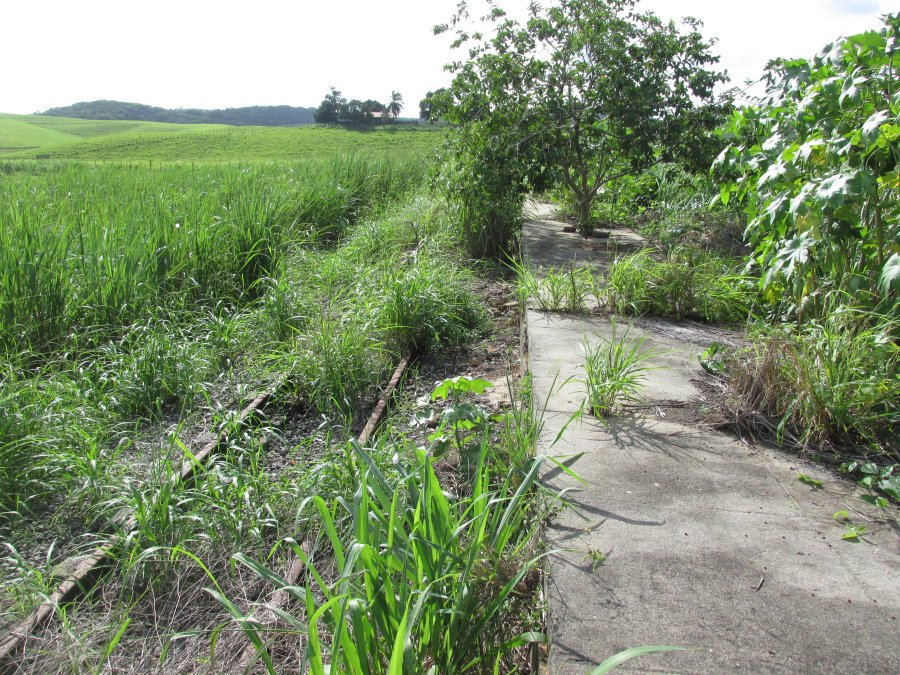
However, the directory of imperial post offices (Tabella das Agencias do Correio do Imperio, Rio de Janeiro, 1885) lists a Jatobá station post office, founded 1884. This is probably directly related to the opening of the railway station of the E.F. Paulo Afonso railway company in July 1883. The railway line was transferred to Great Western in 1903 and belonged to Rede Ferroviária do Nordeste (estacoesferroviarias.com.br) from 1950 until its closure in 1964. The tracks are still there today, but the station building has long since been demolished.

Around 1950 (IBGE)
Around 1980 (photo: ferias.tur.br)

The oldest postmark is the archaic-looking JPE-0345a (José A. Junges collection):

JPE-0345a (JJ) 1885ff-1890

JPE-0345b (Dieter Kerkhoff collection) followed towards the end of the century:

JPE-0345b (DK) 1891
Arthur D. Ribeiro: Estado de Pernambuco, 1924

Die Siedlung gehörte zur Vila de Tacaratu und lag am Ostufer des São Francisco, 410 km westlich der Provinzhauptstadt Recife. Im Mai 1887 wurde sie Sitz der Vila de Tacaratu und im Juli 1909 zur Cidade de Jatobá erhoben. Im September 1928 erfolgte die Herabstufung zum Distrito de Jatobá de Tacaratu im wiederhergestellten Município de Tacaratu. Es folgten zwei Umbenennungen: im Dezember 1937 in Itaparica (das ein Jahr später zum Município erklärt wurde) und im Dezember 1943 in Petrolândia. Heute gibt es in der Region auch ein Município de Jatobá, dieses liegt 30 km weiter südlich.

Wie in der Presse von Rio zu lesen ist, gab es seit Januar 1885 ein Postamt:

O Paiz/RJ, 01.02.1885

Im Verzeichnis der Kaiserlichen Postämter (Tabella das Agencias do Correio do Imperio, Rio de Janeiro, 1885) ist jedoch ein Bahnhofspostamt Jatobá mit dem Gründungsjahr 1884 aufgeführt. Dies dürfte in direktem Zusammenhang mit der Eröffnung des Bahnhofs der Eisenbahngesellschaft E.F. Paulo Afonso im Juli 1883 stehen. Die Bahnlinie ging 1903 an die Great Western über und gehörte von 1950 bis zu ihrer Schließung 1964 der Rede Ferroviária do Nordeste (estacoesferroviarias.com.br). Heute sind die Gleise noch vorhanden, das Bahnhofsgebäude ist längst abgerissen.

Ca. 1950 (IBGE)
Ca. 1980 (Foto: ferias.tur.br)

Der älteste Poststempel ist der archaisch anmutende JPE-0345a (Samml. José A. Junges):

JPE-0345a (JJ) 1885ff-1890

Gegen Ende des Jahrhunderts folgte JPE-0345b (Sammlung Dieter Kerkhoff):

JPE-0345b (DK) 1891
Categories
Carimbologia H-L

Jatahy, Paraná (JPR-0120)

Atlas do Imperio do Brasil, 1868

Other names: São Jerônimo, Jataizinho (1943)

The beautiful indigenous word jataí refers to both a tree from the Fabaceae family (Himenaea courbaril, L.), which is also called jatobá-do-mato in Brazil, and a stingless bee (Tetragonisca angustula), which likes to nest in this tree.

Hymenaea courbaril (Photo: Voytech Zavadil, CC BY-SA 3.0)
Tetragonisca angustula (Photo: demeter)

Jatahy was also the name of a military colony founded in January 1851, which belonged to the Vila de Tibagy and was located on the east bank of the Tibagi, 400 kilometres northwest of the provincial capital Curitiba. In April 1872, it was elevated to the Freguesia de N. Sra. da Conceição do Jatahy and incorporated into the Município de Tomazina as a district around 1910. In February 1920 it was elevated to the Município de S. Jerônimo and in March 1929 it became a town. The original place name Jatahy returned in May 1932, but in October 1938 the place was downgraded to a distrito in the Município de S. Jerônimo, before being renamed again in December 1943, this time to Jataizinho, now in the Município de Assaí. It was not until October 1947 that Jataizinho became a município again.

According to the São Paulo press, the local post office was created in May 1887:

Correio Paulistano, 24/05/1887

No imperial postmarks have yet been found from Jatahy in the province of Paraná.

Provincia do Paraná, 1881

Andere Namen: São Jerônimo, Jataizinho (1943)

Das schöne indigene Wort jataí bezeichnet sowohl einen Baum aus der Familie der Fabaceae (Himenaea courbaril, L.), der in Brasilien auch jatobá-do-mato genannt wird, als auch eine stachellose Biene (Tetragonisca angustula), die gerne in diesem Baum nistet.

Hymenaea courbaril (Foto: Voytech Zavadil, CC BY-SA 3.0)
Tetragonisca angustula (Foto: demeter)

Jatahy war auch der Name einer im Januar 1851 gegründeten Militärkolonie, die zur Vila de Tibagy gehörte und am Ostufer des Tibagi, 400 km nordwestlich der Provinzhauptstadt Curitiba, lag. Im April 1872 wurde sie zur Freguesia de N. Sra. da Conceição do Jatahy erhoben und um 1910 als Distrikt in das Município Tomazina eingegliedert. Im Februar 1920 erfolgte die Erhebung zum Município de S. Jerônimo und im März 1929 zur Stadt. Der ursprüngliche Ortsname Jatahy kehrte im Mai 1932 zurück, aber im Oktober 1938 wurde der Ort zum Distrito im Município de S. Jerônimo herabgestuft, bevor im Dezember 1943 eine weitere Umbenennung erfolgte, diesmal in Jataizinho, nun im Município de Assaí. Erst im Oktober 1947 wurde Jataizinho wieder ein Município.

Wie aus der Presse von São Paulo hervorgeht, wurde im Mai 1887 die Einrichtung eines örtlichen Postamtes beschlossen:

Correio Paulistano, 24.05.1887

Aus Jatahy in der Provinz Paraná wurden bisher keine kaiserlichen Poststempel gefunden.

Categories
Carimbologia H-L

Jatahy, Goiás (JGO-0095)

Carta da Provincia de Goyaz, 1875

Other names: Paraíso (1882-1885)

The village was originally called Capela do Divino Espírito Santo do Jatahy, belonged to the Vila do Rio Verde and was located on the east bank of the Rio Claro, 380 kilometres southwest of the provincial capital of Goyaz (today: Goiás Velho). In August 1864 it was elevated to the Freguesia de Paraíso do Jatahy and in July 1882 to the Vila de Paraíso. In February 1885 it was renamed Vila de Jatahy, and in May 1895 it became a town.

In August 1881, the creation of a post office was reported in the Rio press:

Jornal do Commercio/RJ, 20/08/1881

The only postmark from the 19th century to date is the double circle JGO-0095b (image from the Internet):

JGO-0095b (EB) 1898
Carta da Republica dos Estados Unidos do Brazil, 1892

Andere Namen: Paraíso (1882-1885)

Der Ort hieß ursprünglich Capela do Divino Espírito Santo do Jatahy, gehörte zur Vila do Rio Verde und lag am Ostufer des Rio Claro, 380 km südwestlich der Provinzhauptstadt Goyaz (heute: Goiás Velho). Im August 1864 wurde er zur Freguesia de Paraíso do Jatahy und im Juli 1882 zur Vila de Paraíso erhoben. Im Februar 1885 erfolgte die Umbenennung in Vila de Jatahy, die im Mai 1895 zur Stadt erhoben wurde.

Im August 1881 wurde in der Presse von Rio die Einrichtung eines Postamtes beschlossen:

Jornal do Commercio/RJ, 20.08.1881

Der bisher einzige Poststempel aus dem 19. Jahrhundert ist der Doppelkreis JGO-0095b (Abbildung aus dem Internet):

JGO-0095b (EB) 1898
Categories
Carimbologia H-L

Jardim, Rio Grande do Norte (JRN-0095)

Atlas do Imperio do Brasil, 1868

Other names: Conceição do Azevedo, Jardim do Seridó (ca. 1892)

The Freguesia de N. Sra. da Conceição do Azevedo, which had existed since September 1856, belonged to the Vila de Acary and was located on the east bank of the Seridó, 240 km south-west of the provincial capital Natal. In September 1858 it was elevated to Vila de Jardim and in August 1874 to a town, which has been called Jardim do Seridó since around 1892 to avoid confusion with Vila de Jardim de Angicos, which was established in Rio Grande do Norte at the time.

As R. Koester writes in Carimbologia XXV, there had been a post office there since May 1887. So far, no imperial postmark could be assigned to this place with certainty.

Carta da Republica dos Estados unidos do Brazil, 1892

Andere Namen: Conceição do Azevedo, Jardim do Seridó (ca. 1892)

Die seit September 1856 bestehende Freguesia de N. Sra. da Conceição do Azevedo gehörte zur Vila de Acary und lag am Ostufer des Seridó, 240 km südwestlich der Provinzhauptstadt Natal. Im September 1858 wurde sie zur Vila de Jardim und im August 1874 zur Stadt erhoben, die seit etwa 1892 Jardim do Seridó heißt, um Verwechslungen mit der damals in Rio Grande do Norte entstandenen Vila de Jardim de Angicos zu vermeiden.

Wie R. Koester in Carimbologia XXV schreibt, gab es dort seit Mai 1887 ein Postamt. Bisher konnte kein kaiserlicher Poststempel mit Sicherheit diesem Ort zugeordnet werden.

Categories
Carimbologia H-L

Jardim, Pernambuco (JPE-0090)

Arthur D. Ribeiro: Estado de Pernambuco, 1924

See also Bello Jardim (BPE-0090)

According to previous research, this locality is identical to Bello Jardim, but had its own postmark in the imperial period (JPE-0090a, fig. R. Koester in Carimbologia XXV), presumably due to a communication error between the municipal, provincial and postal administrations in Rio.

JPE-0090a (RK) 1885-1900

In March 1882, it was decided to open a post office in ‘Jardim’, as reported in the Rio press:

O Globo/RJ, 24/03/1882

However, there was no place called Jardim in the municipality of Brejo. Instead, Bello Jardim was probably meant. In July of this year, the above decision was cancelled and simultaneously a post office was established in Bello Jardim instead:

Diario de Pernambuco, 03/08/1882

In the meantime, the postmark JPE-0090a had been provided and sent to Pernambuco, where it was used despite the incorrect place name.

Carta Corographica da Provincia de Pernambuco, 1880

Siehe auch Bello Jardim (BPE-0090)

Nach den bisherigen Recherchen ist diese Ortschaft identisch mit Bello Jardim, hat aber in der Kaiserzeit einen eigenen Poststempel (JPE-0090a, Abb. R. Koester in Carimbologia XXV) bekommen, vermutlich aufgrund eines Kommunikationsfehlers zwischen Gemeinde-, Provinz- und Postverwaltung in Rio.

JPE-0090a (RK) 1885-1900

Im März 1882 wurde beschlossen, in „Jardim“ ein Postamt zu eröffnen, wie die Presse in Rio berichtete:

O Globo/RJ, 24.03.1882

Allerdings gab es in der Gemeinde Brejo keinen Ort namens Jardim. Stattdessen war wohl Bello Jardim gemeint. Im Juli d. J. wurde obiger Beschluss aufgehoben und stattdessen ein Postamt in Bello Jardim eingerichtet:

Diario de Pernambuco, 03.08.1882

Inzwischen war der Poststempel JPE-0090a fertiggestellt und nach Pernambuco geschickt worden, wo er trotz der falschen Ortsbezeichnung verwendet wurde.