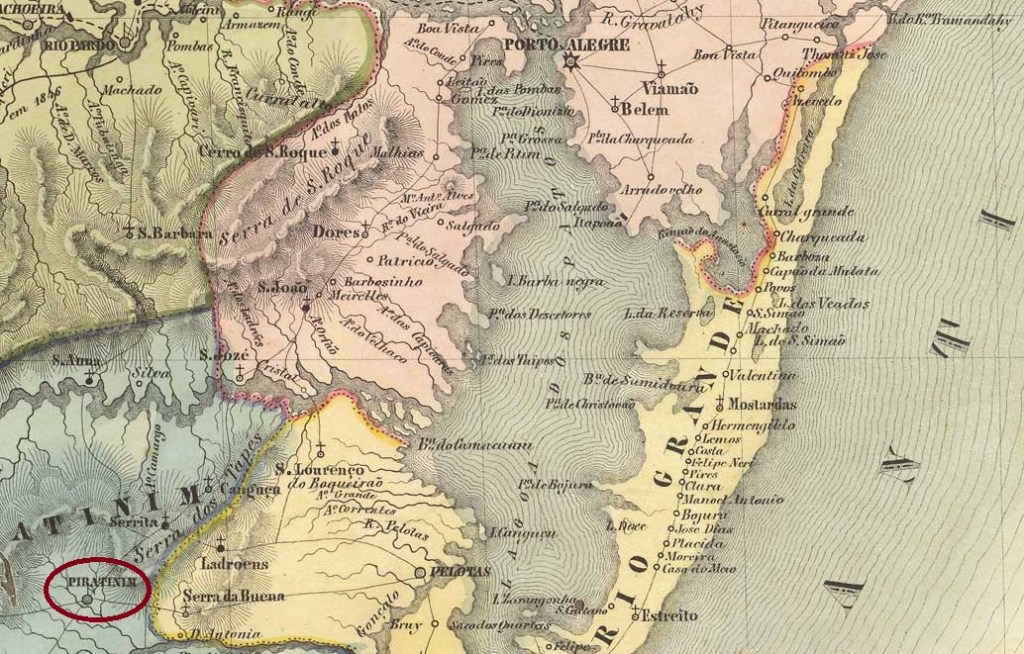
Alternative spelling: Piratini
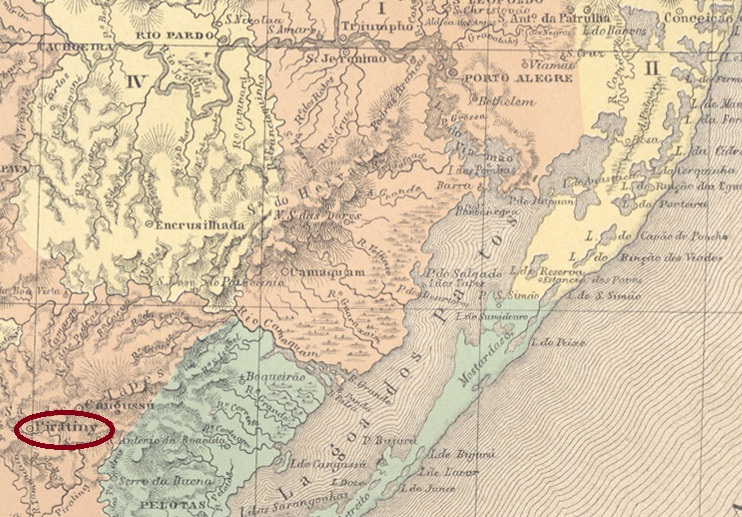
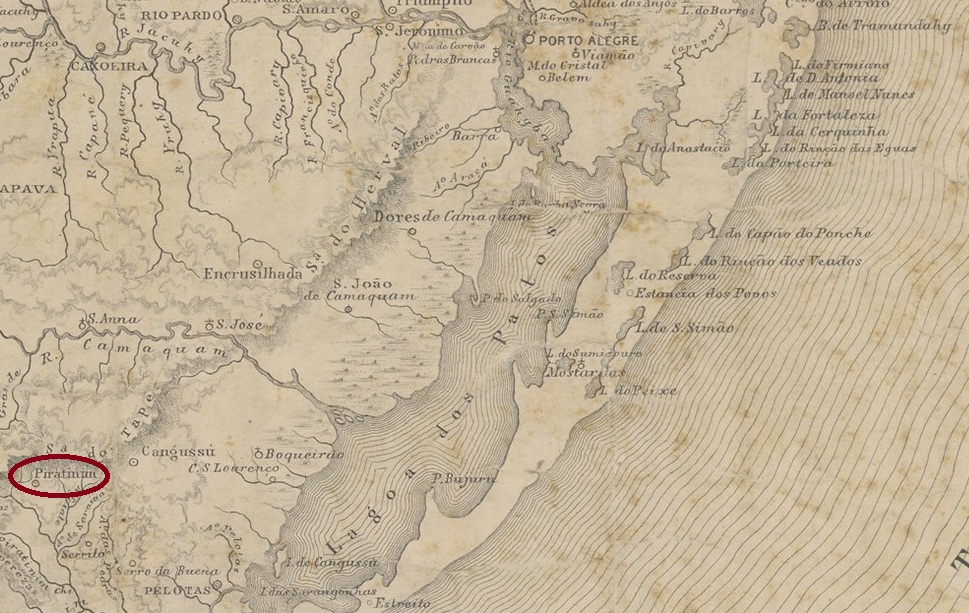
The settlement was founded in July 1789 by colonists from the Azores and was situated on the eastern bank of the Piratini River, 330 km south-west of what would later become the provincial capital, Porto Alegre. In April 1810, it became the Freguesia de N. Sra. da Conceição do Piratini, which was elevated to the status of Vila in April 1830 and became a town six years later. From September 1836 to July 1842, Piratini was the capital of the Rio-Grandense Republic, which emerged from the Farroupilha Rebellion. After the end of the civil war in March 1845, Piratini (in its current spelling) was downgraded to a vila and only regained city status in March 1938. The name, derived from the Guarani language, means “sounds of fish”.
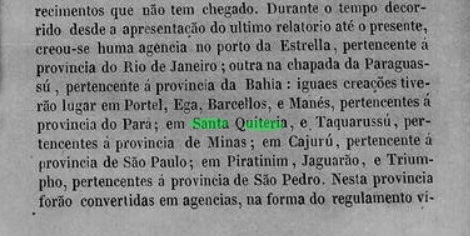
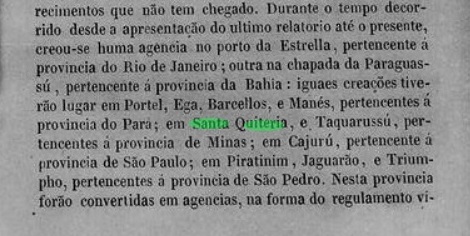
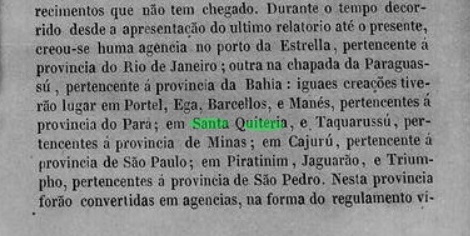
Nova Monteiro writes in ‘Administrações e Agências Postais do Brasil Império’ (Brasil Filatelico/RJ, 1934–1935; reprinted by SPP 1994–1999) that a post office had been created there in October 1831. This was reopened after the end of the revolution, as stated in the Imperial Yearbook of Politics and History:
The oldest postmark to date, PRS-0515a (fig. RHM catalogue), is likely to date from the years of the revolution (1835–1845):

It was not until the 1860s that its successor, PRS-0515b (José A. Junges Collection), appeared, which must be rare:
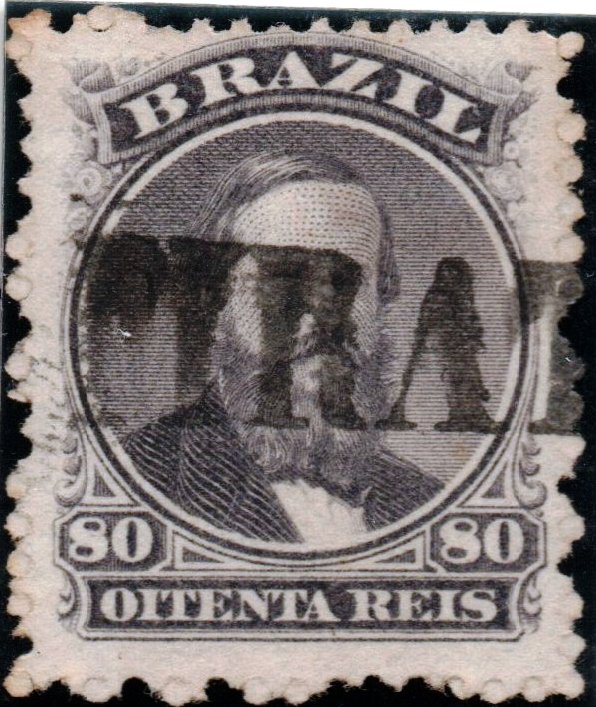
Around the same time, the better-known PRS-0515c (José A. Junges Collection) appeared:
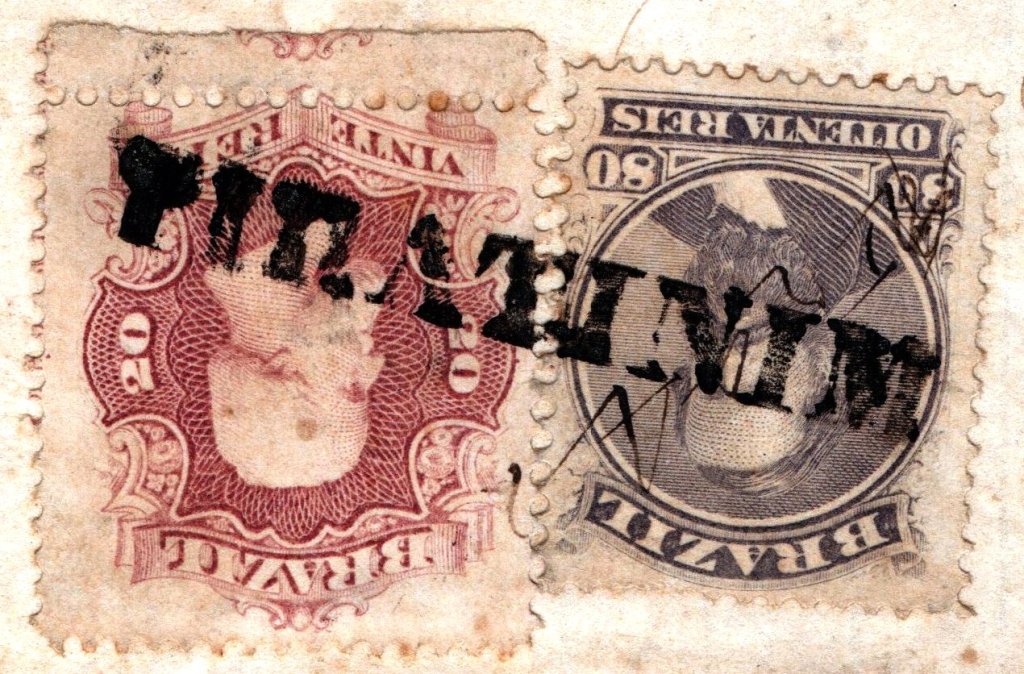
This was followed by the double-circle PRS-0515d (José A. Junges Collection):
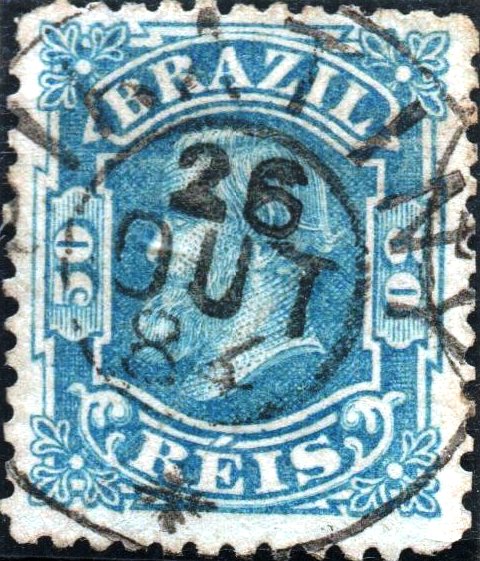
This was followed by the relatively unknown PRS-0515e (José A. Junges Collection):
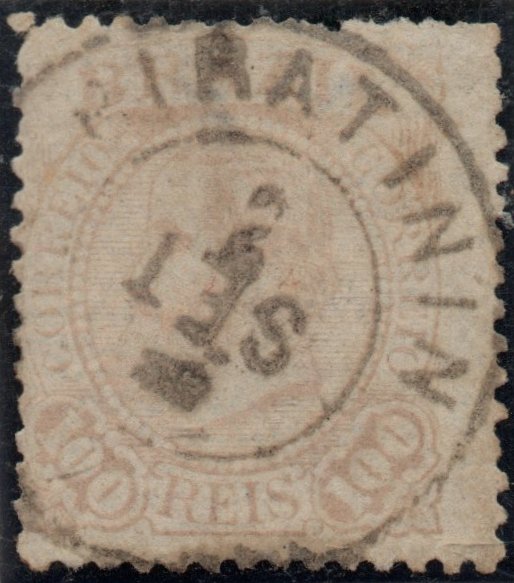
Towards the end of the Empire, a postmark bearing the imperial seal also appeared, PRS-0515f (José A. Junges collection):
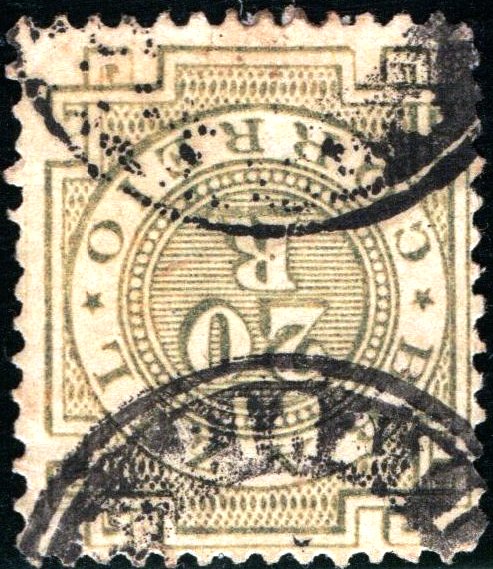
The Junges collection also includes a mute postmark from Piratiny:
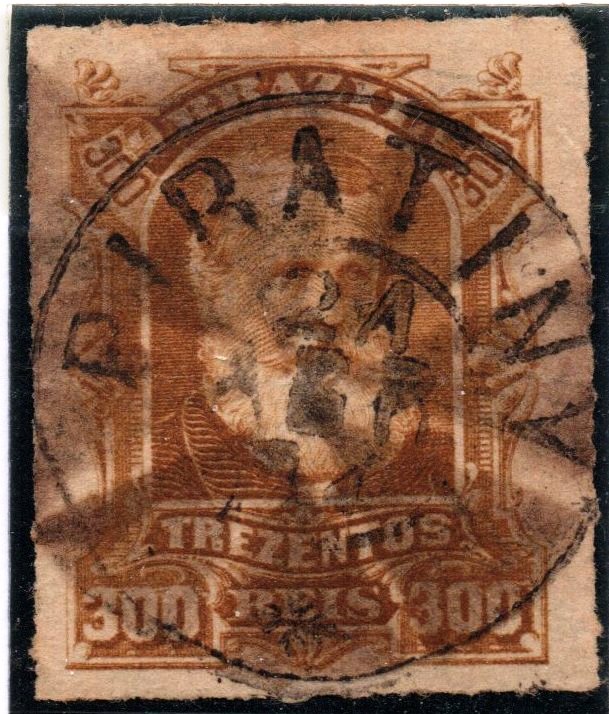
Outra grafia: Piratini
O povoado foi fundado em julho de 1789 por colonos dos Açores e ficava na margem leste do Rio Piratini, a 330 km a sudoeste da futura capital provincial, Porto Alegre. Em abril de 1810, tornou-se a Freguesia de N. Sra. da Conceição do Piratini, que em abril de 1830 passou a ser Vila e, seis anos depois, cidade. De setembro de 1836 a julho de 1842, Piratini foi a capital da República Rio-Grandense, surgida da Revolta dos Farroupilhas. Após o fim da guerra civil, em março de 1845, Piratini (na grafia atual) foi rebaixada a vila e só recuperou o status de cidade em março de 1938. O nome, de origem guarani, significa “sons de peixes”.
Nova Monteiro escreve em “Administrações e Agências Postais do Brasil Império” (Brasil Filatélico/RJ, 1934–1935; reimpressão SPP 1994–1999) que havia ali uma agência postal desde outubro de 1831. Esta foi reaberta após o fim da Revolução, conforme consta no Anuário Imperial:
O carimbo postal mais antigo até então, PRS-0515a (fig. Catálogo RHM), deve datar dos anos da Revolução (1835-1845):

Somente a partir da década de 1860 surgiu o sucessor PRS-0515b (Coleção José A. Junges), que deve ser raro:
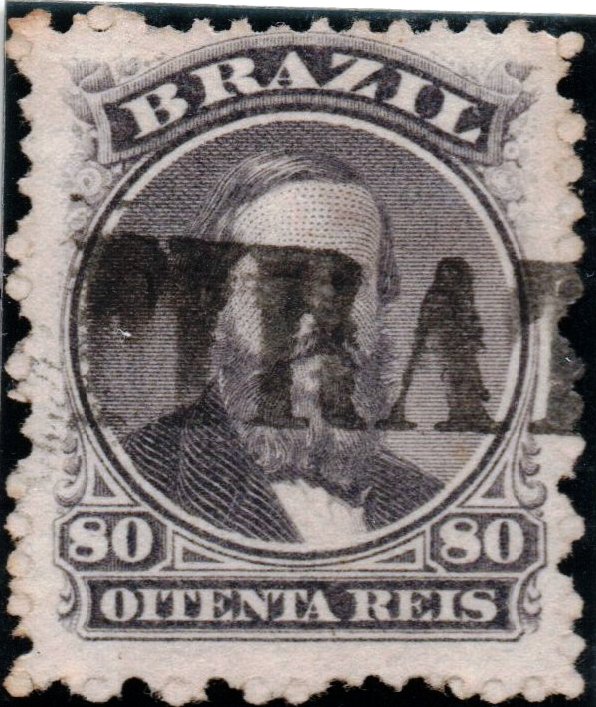
Por volta da mesma época, surgiu o mais conhecido PRS-0515c (Coleção José A. Junges):
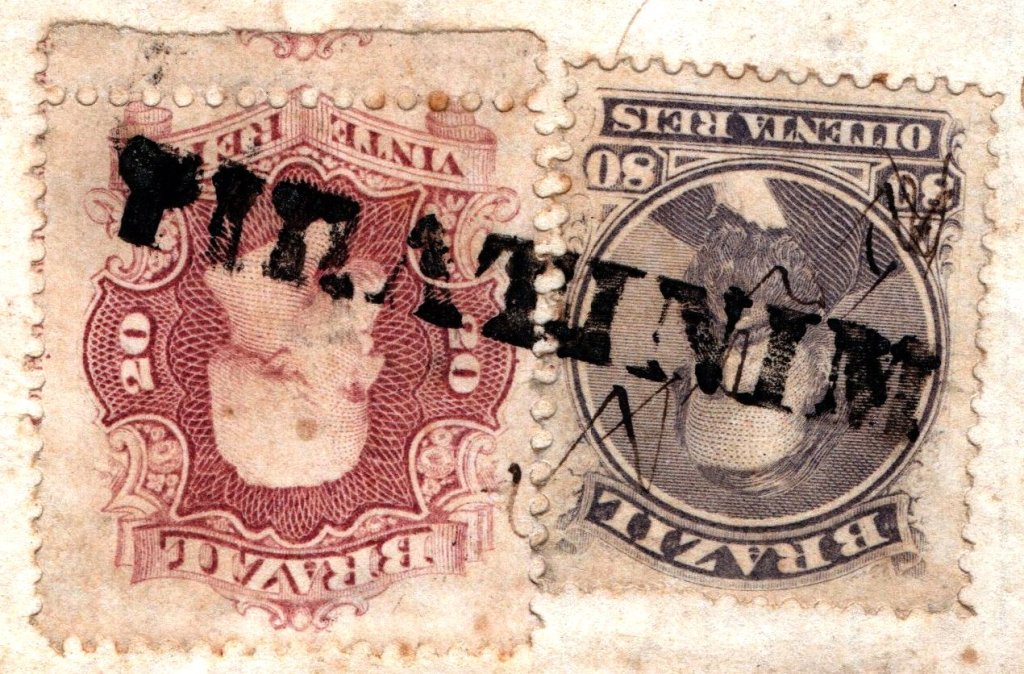
Seguiu-se o círculo duplo PRS-0515d (Coleção José A. Junges):
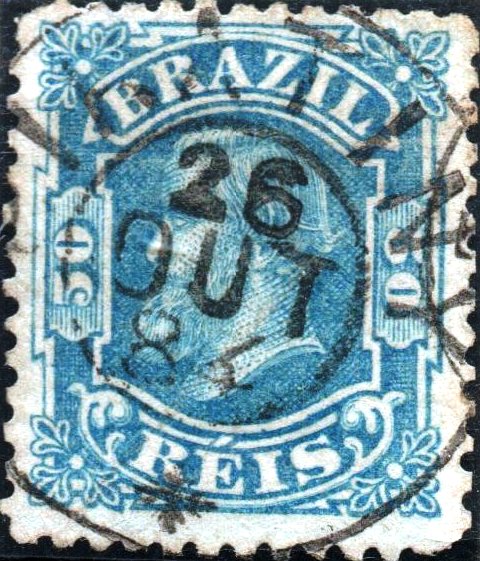
Em seguida, surgiu o relativamente desconhecido PRS-0515e (Coleção José A. Junges):
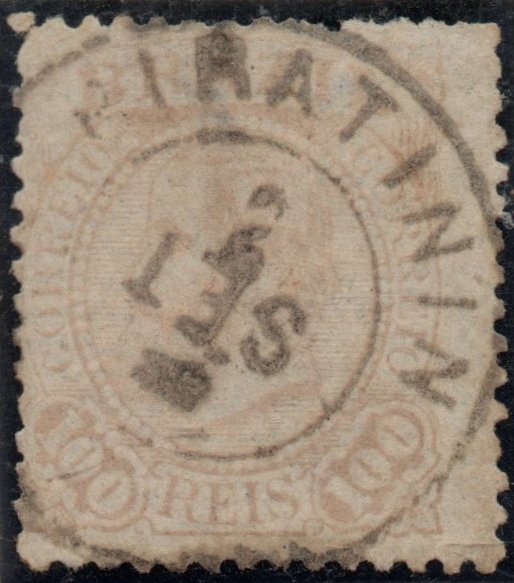
No final do Império, surgiu também o carimbo postal com o sinete imperial PRS-0515f (Coleção José A. Junges):
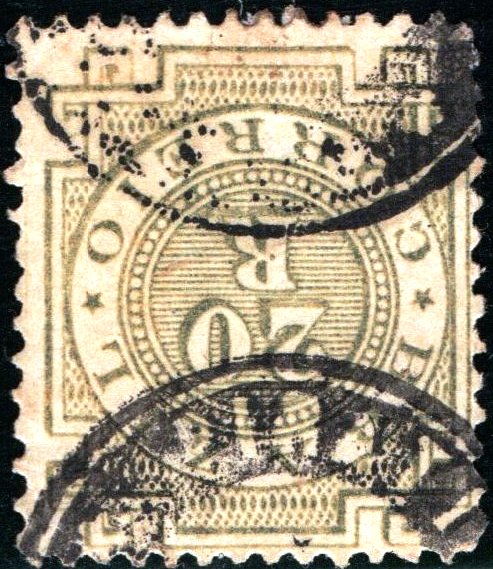
Da coleção Junges provém também um carimbo mudo de Piratiny:
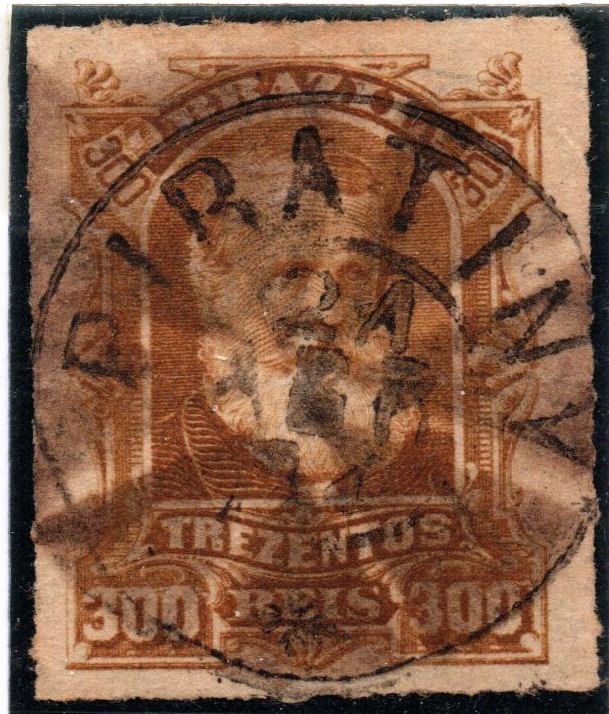
Andere Schreibweise: Piratini
Die Siedlung wurde im Juli 1789 von Kolonisten aus den Azoren gegründet und lag am Ostufer des Piratini, 330 km südwestlich der späteren Provinzhauptstadt Porto Alegre. Im April 1810 wurde sie zur Freguesia de N. Sra. da Conceição do Piratini, die im April 1830 zur Vila und sechs Jahre später zur Stadt wurde. Vom September 1836 bis Juli 1842 war Piratini die Hauptstadt der aus dem Farroupilha-Aufstand hervorgegangenen Rio-Grandense-Republik. Nach dem Ende des Bürgerkriegs im März 1845 wurde Piratini (in der heutigen Schreibweise) zur Vila herabgestuft und erhielt erst im März 1938 den Stadtstatus wieder. Der Name aus dem Guarani bedeutet “Fischgeräusche”.
Nova Monteiro schreibt in „Administrações e Agencias Postaes do Brasil Imperio” (Brasil Filatelico/RJ, 1934–1935; Nachdruck SPP 1994–1999), dass es dort seit Oktober 1831 ein Postamt gab. Dieses wurde nach dem Ende der Revolution wiedereröffnet, wie aus dem Kaiserlichen Jahrbuch für Politik und Geschichte hervorgeht:
Der bisher älteste Poststempel PRS-0515a (Abb. RHM-Katalog) dürfte aus den Jahren der Revolution (1835-1845) stammen:

Erst ab den 1860er Jahren kam der Nachfolger PRS-0515b (Sammlg. José A. Junges) der selten sein muss:
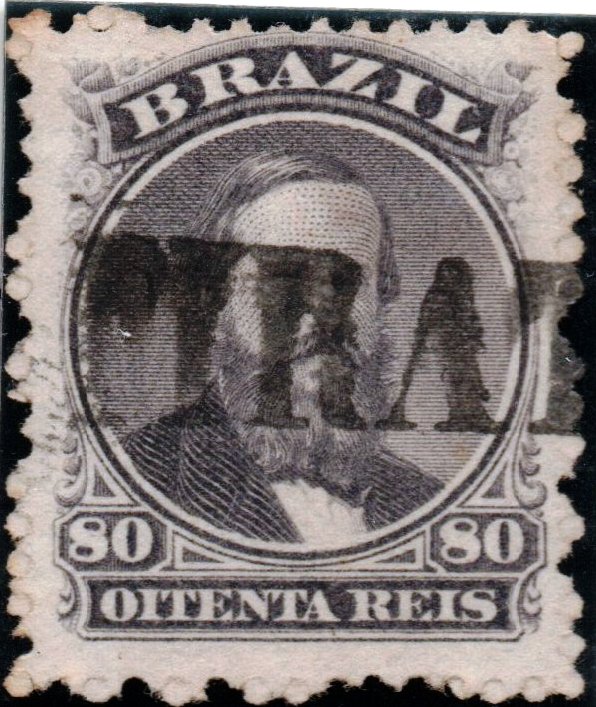
Etwa zur gleichen Zeit erschien der bekanntere PRS-0515c (Sammlg. José A. Junges):
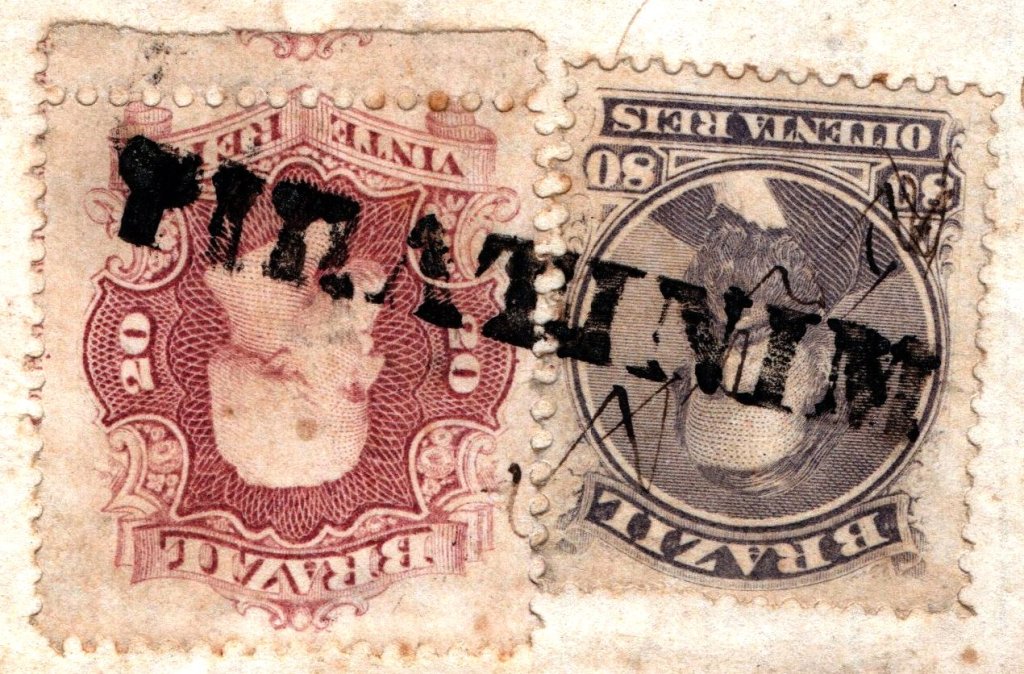
Es folgte der Doppelkreis PRS-0515d (Sammlg. José A. Junges):
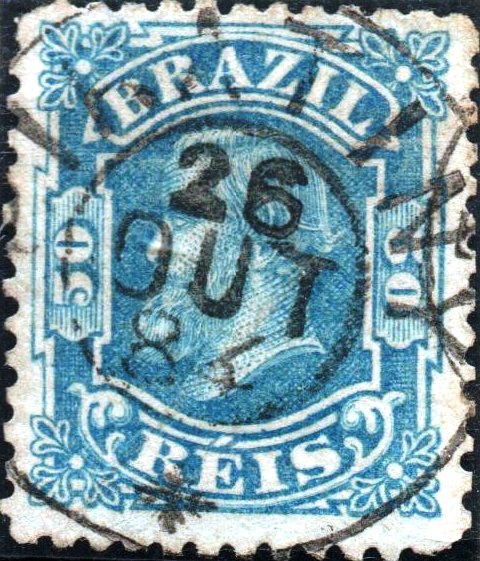
Danach kam der eher unbekannte PRS-0515e (Sammlg. José A. Junges):
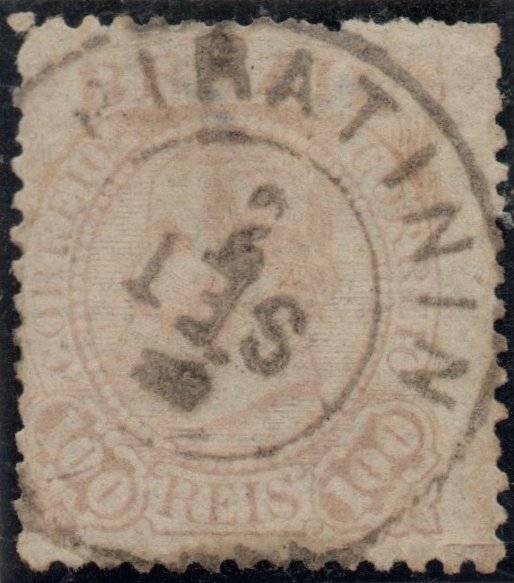
Gegen Ende des Kaiserreichs erschien auch der Poststempel mit dem kaiserlichen Siegel PRS-0515f (Sammlg. José A. Junges):
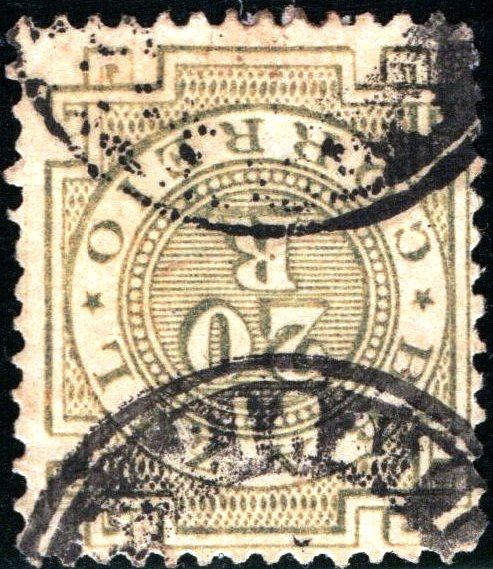
Aus der Sammlung Junges kommt auch ein stummer Poststempel aus Piratiny:
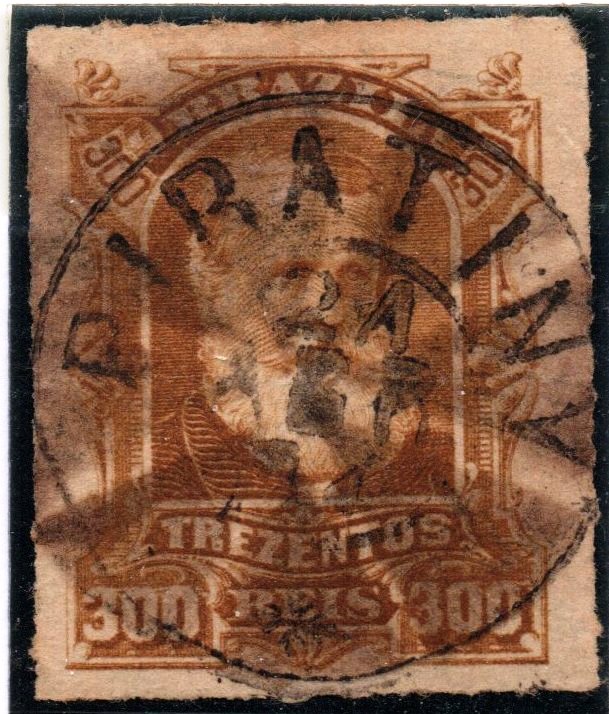

 Carimbologia